
The main difference between a BLDC motor and a “normal” motor lies in how the magnetic field is created and switched. In everyday fan applications, “normal motor” usually means an AC induction motor. A BLDC (brushless DC) motor uses permanent magnets on the rotor and electronic commutation, whereas an induction motor uses electromagnetic induction to create rotor currents and has no permanent magnets or electronic switching in its basic form.
In a BLDC motor, the stator carries windings, and the rotor is made of permanent magnets. An electronic controller supplies DC power and switches current between the stator windings using semiconductor devices (such as MOSFETs), based on rotor position feedback from sensors or sensorless algorithms. This controlled switching creates a rotating magnetic field that pulls the rotor around. Because there are no brushes and the rotor has low losses, BLDC motors can achieve high efficiency, good torque at low speed and very precise speed control.
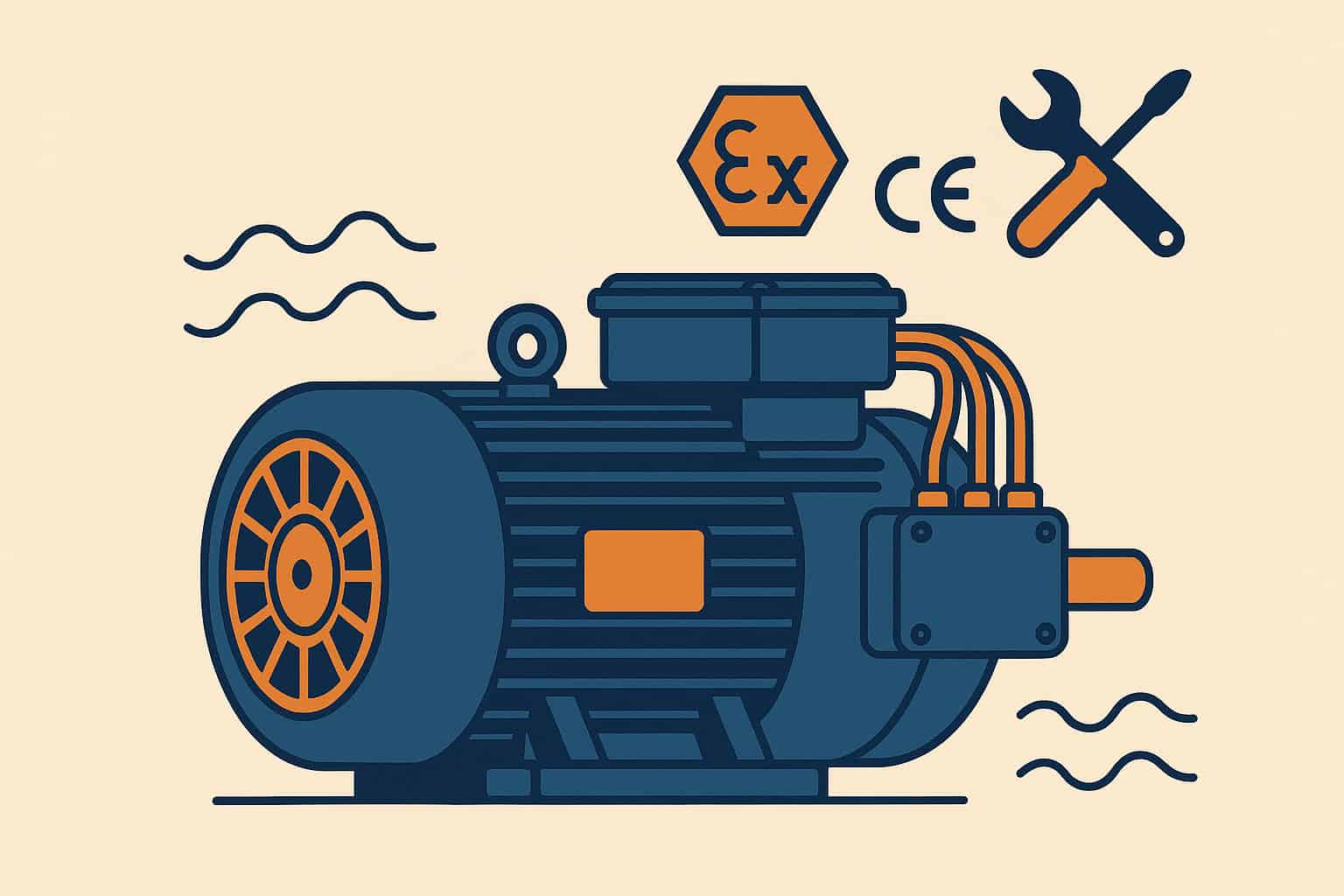
In a typical AC induction motor, both stator and rotor are made of laminated steel cores, but only the stator has windings connected to the AC supply. The alternating current in the stator produces a rotating magnetic field, which induces currents in the rotor bars (squirrel cage). These currents create their own magnetic field that interacts with the stator field to produce torque. No power electronics or permanent magnets are required; the motor runs directly from the AC supply or through a variable frequency drive.
For fans, these differences lead to distinct advantages and trade-offs:
Efficiency and energy use: BLDC motors are typically more efficient than equivalent induction motors, especially at part load. This makes them attractive for high-efficiency ceiling fans, EC plug fans, small ventilation units and electronic cooling fans, where energy regulations are strict and running hours are long.
Speed control: BLDC motors are inherently suited to precise electronic speed control, since the controller already manages the waveform and commutation. They can maintain efficiency over a wide speed range. Induction motors can also be speed-controlled using variable frequency drives, but this adds an external device, and efficiency at very low speed may be lower.
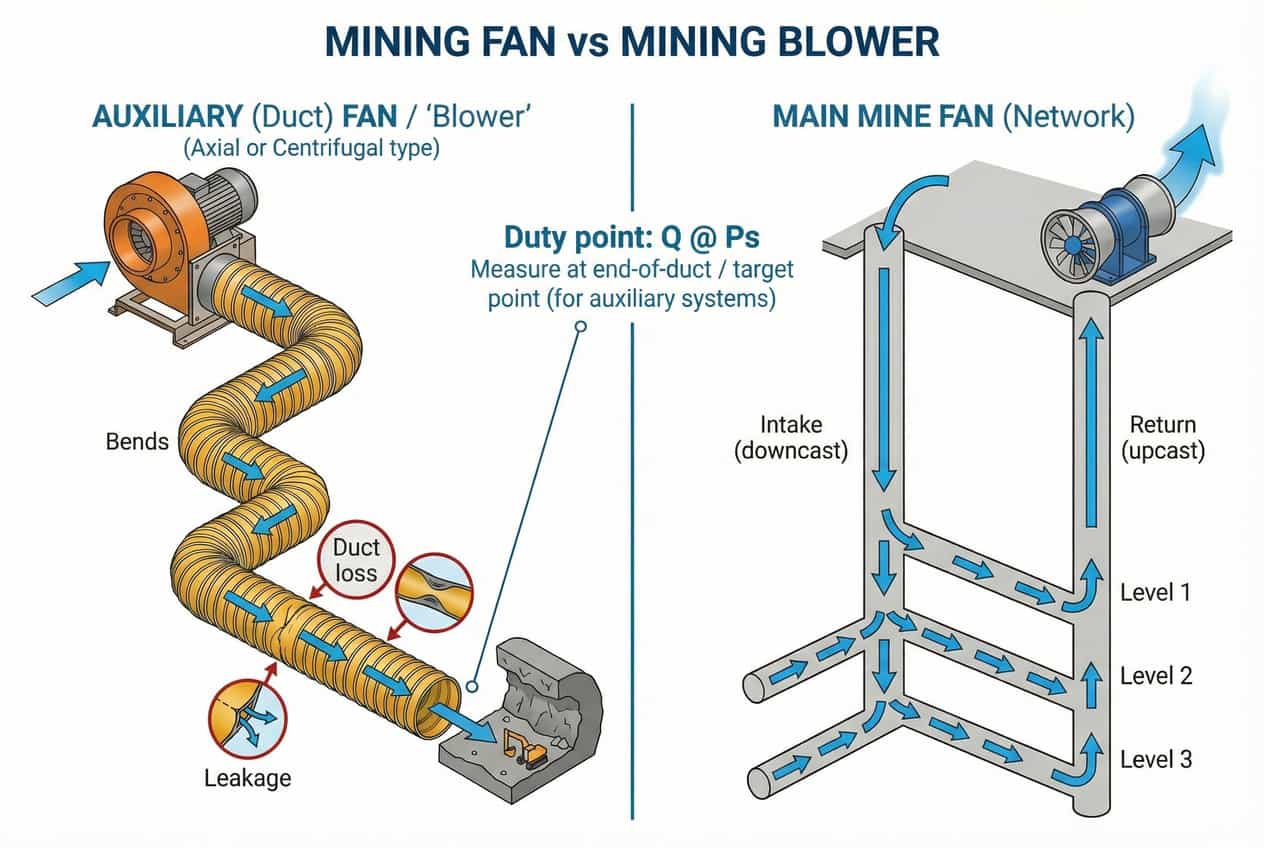
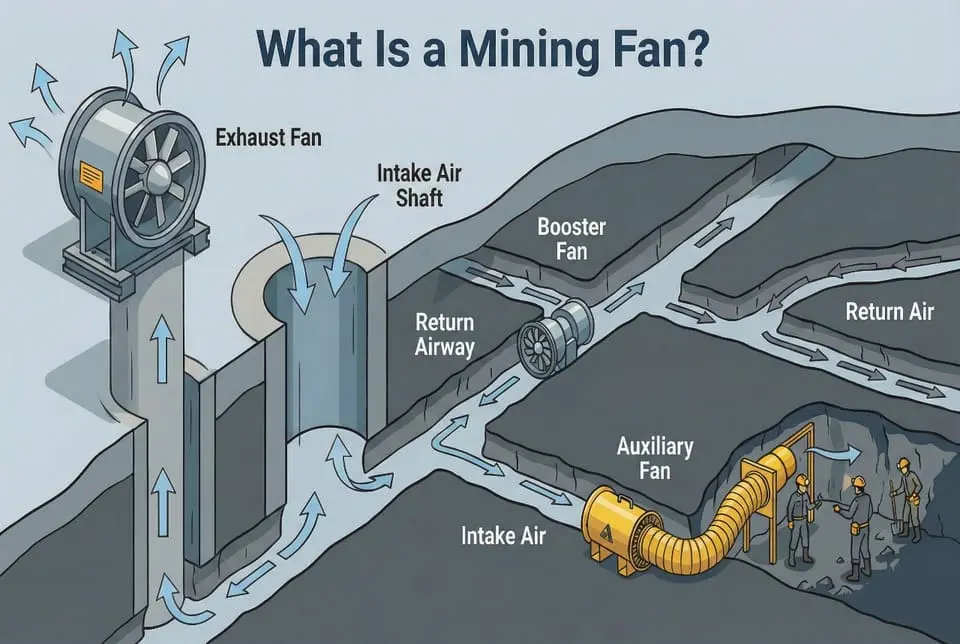
Complexity and cost: BLDC systems combine a motor and an electronic controller, which increases complexity and initial cost. If the electronics fail, the entire unit may need specialised repair. Induction motors are mechanically and electrically simple, robust and relatively inexpensive. In heavy industrial and mining ventilation, standard induction motors are still preferred for large fans because of their proven reliability, ease of maintenance and wide availability.
Noise and size: BLDC motors can be designed to operate very quietly and with compact form factors, which is ideal for domestic fans, IT equipment and compact HVAC units. Induction motors are bulkier for the same power and may generate more audible hum, but this is usually acceptable in large plant and mine ventilation systems.
In summary, BLDC motors use permanent magnets and electronic commutation to deliver high efficiency, excellent speed control and low noise, while normal AC induction motors rely on electromagnetic induction, offering simplicity, ruggedness and lower upfront cost. The best choice for a fan depends on size, duty, control needs and desired balance between efficiency and robustness.