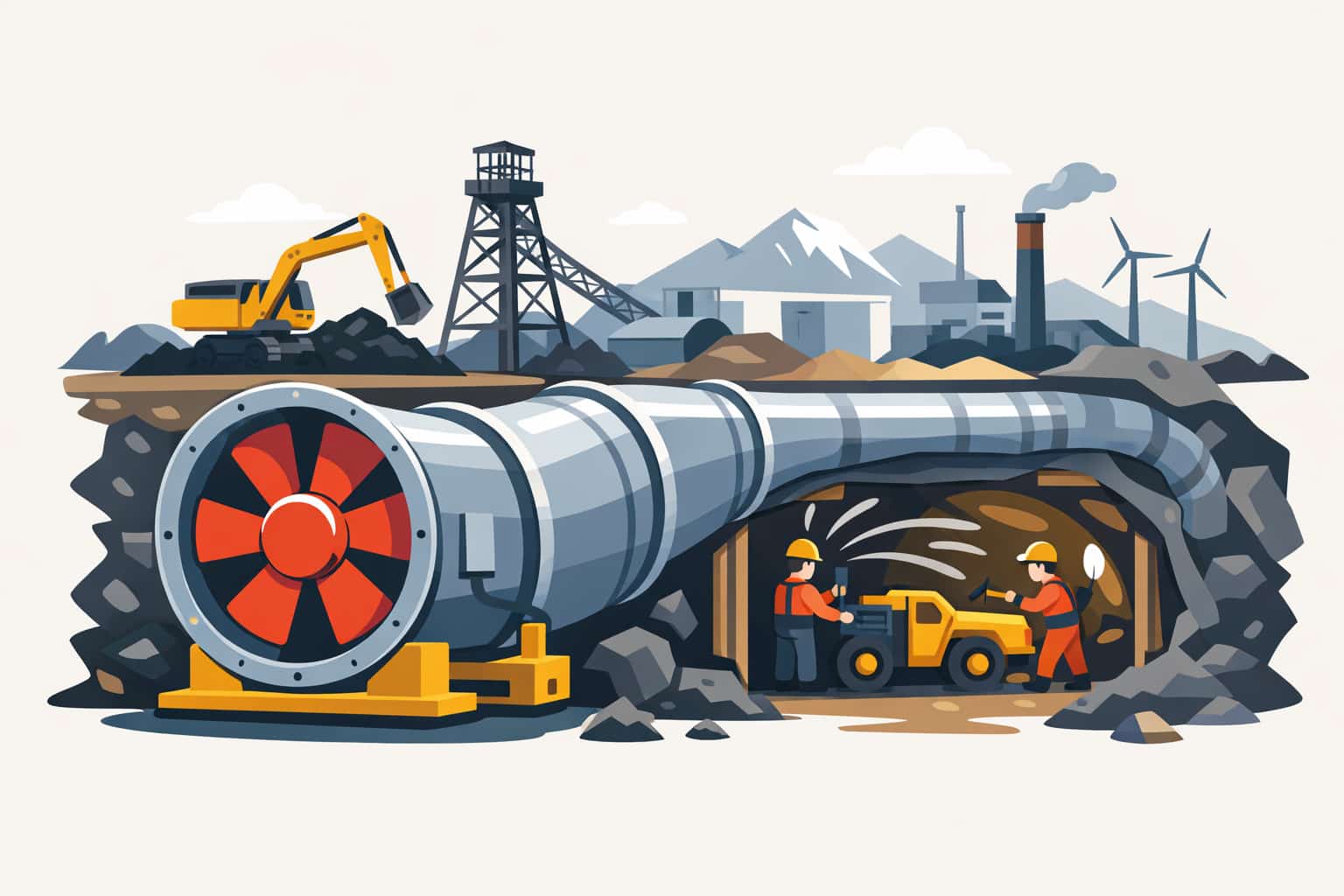
mine fan selection
Mine fan selection is a critical engineering task that directly affects ventilation performance, energy consumption and safety in underground operations. Selecting the wrong fan type or size can lead to insufficient airflow, unstable operation, excessive noise or unnecessary power costs. A systematic approach to mine fan selection compares axial and centrifugal designs, evaluates fan performance curves and ensures that the chosen fan matches the mine’s ventilation network and operating conditions.
The starting point for mine fan selection is an accurate description of the ventilation system, including required airflow, estimated system resistance, gas conditions and future expansion plans. Engineers use ventilation network calculations to determine the total pressure required from main fans and any booster fans. The result is a system resistance curve that can be plotted against available fan performance curves from different manufacturers.
Axial mining fans are typically used where high air volumes are required at moderate pressures, such as main intake and exhaust fans or large auxiliary fans with ducting. Centrifugal mining fans are better suited for high-pressure, lower-volume applications, including dust collection and systems with long ducts and filters. When selecting between the two, designers consider efficiency, noise levels, space constraints, reversibility requirements and whether explosion-proof construction is needed.
Final mine fan selection involves choosing a fan that operates near its best efficiency point under normal conditions, with sufficient margin to handle seasonal changes, system aging and possible future increases in resistance. Options such as variable-pitch blades, adjustable inlet guide vanes or variable-frequency drives can provide flexibility to fine-tune airflow and reduce energy use. By carefully matching fan characteristics to the mine ventilation system, mine fan selection supports safe, reliable and cost-effective underground operations.
Contact Us
Contact Us