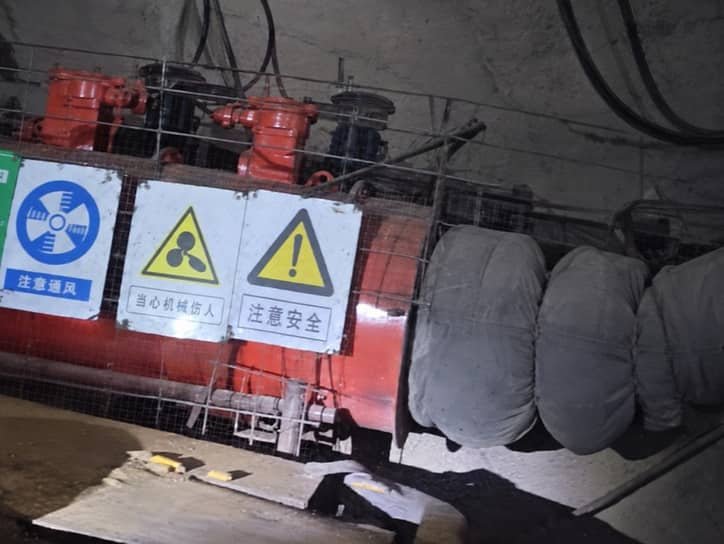
Actual on-site operating data for this installation, reflecting the connected duct system and site conditions rather than catalog performance ratings.
- Airflow measurement location
- Pressure measurement points
- Pressure type

Powering Ventilation, Driving Progress — Mining ventilation fans, mine fans & mining blowers for underground mines, tunnel ventilation, and industrial sites.
+86 15863109911
No. 001, Industrial Park, Nanjiao Town, Zhoucun District, Zibo City, Shandong Province, P.R.China
Mon - Fri, 9am - 5pm
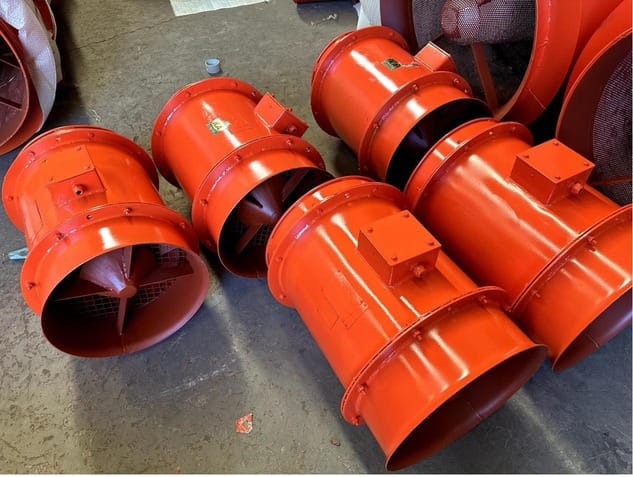
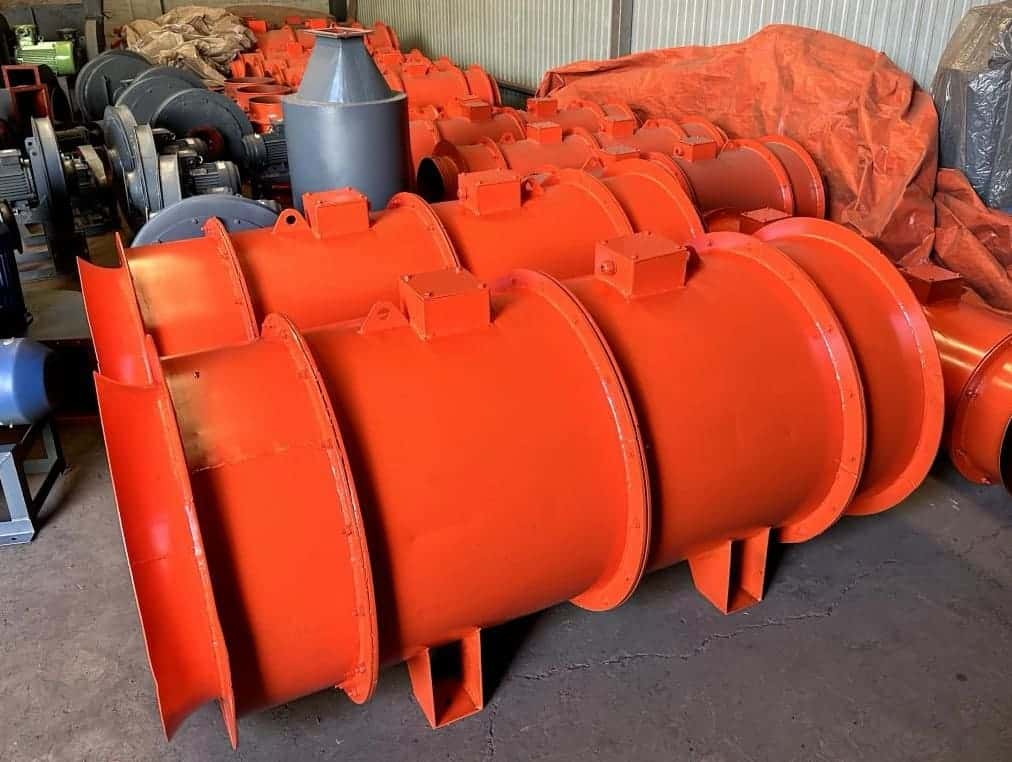
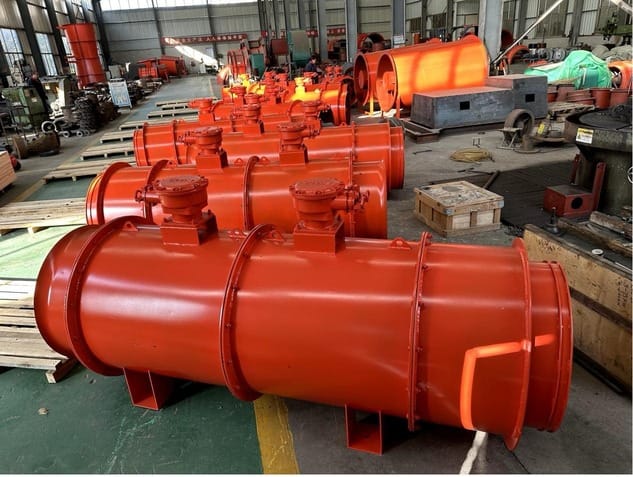
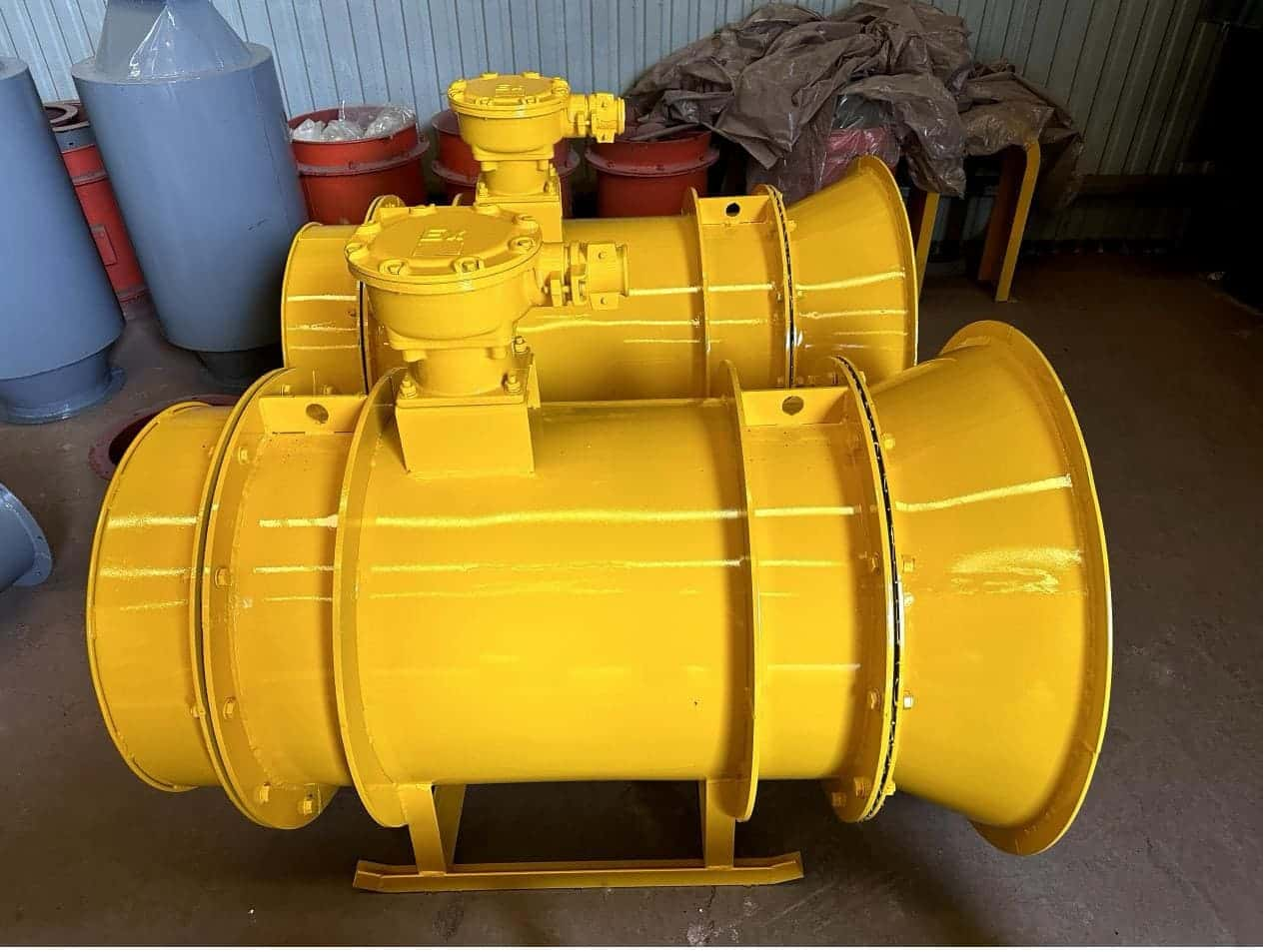
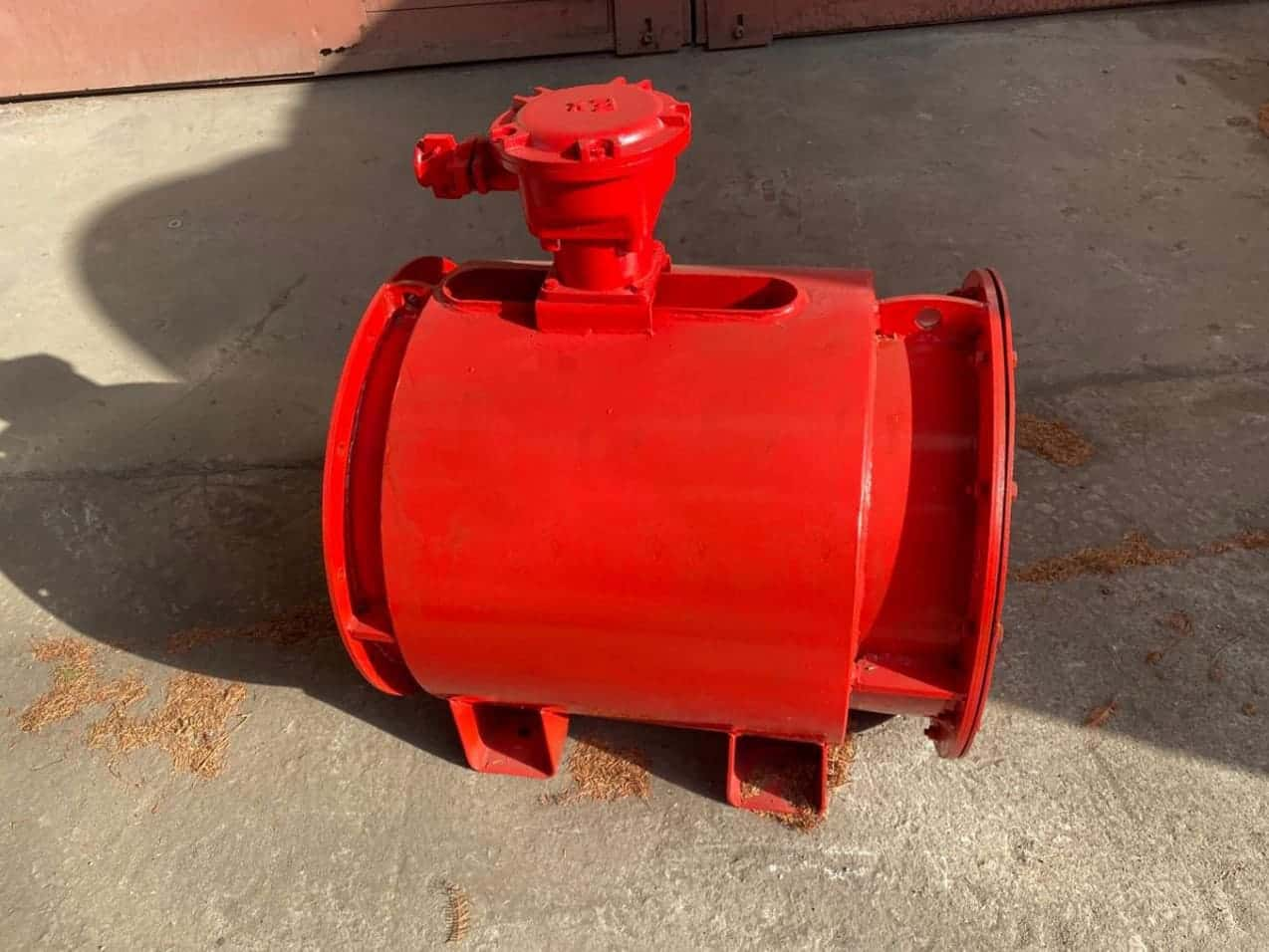
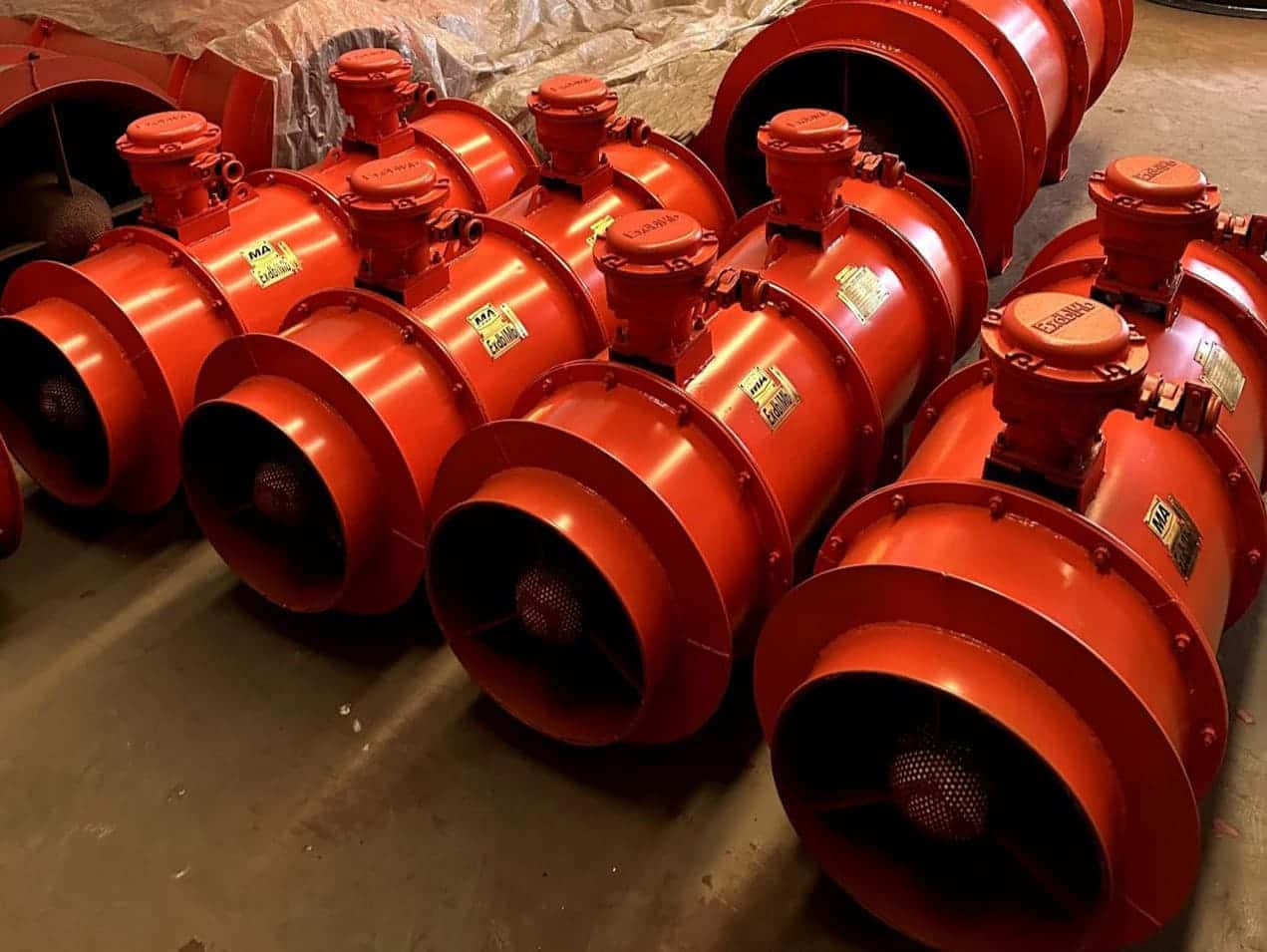
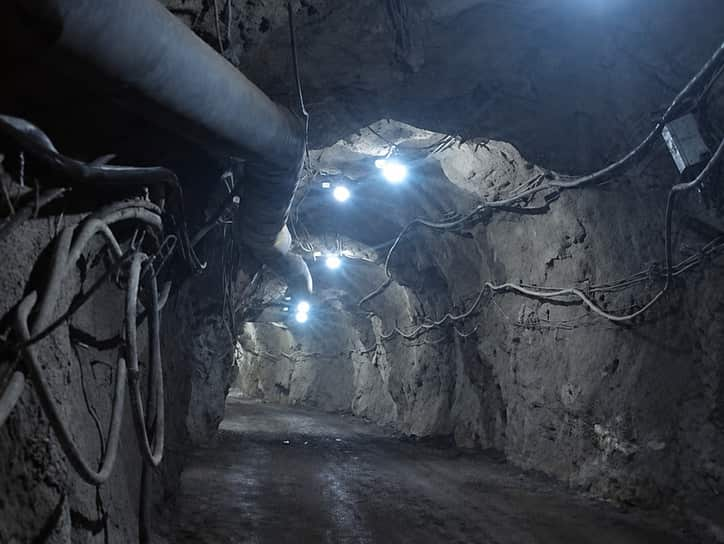
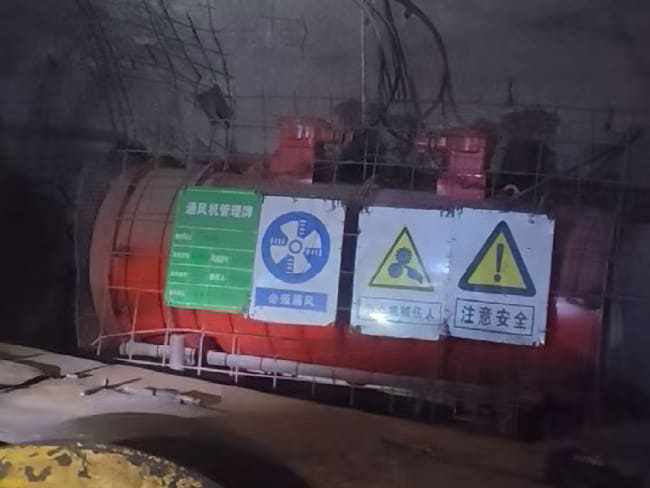
BOFENG manufactures mine auxiliary fans for local ventilation at underground development headings, blind ends, raises and other working areas. Connected to ventilation ducting, these fans supply fresh air or extract air locally while working with the mine's main ventilation circuit.
The range covers FK, FKD, FB, FBD, FBC and FBCD axial and counter-rotating auxiliary fans. Start with forcing or exhausting duty and the required airflow at the duct outlet or extraction inlet. Duct diameter, length, resistance, leakage and site protection requirements determine the suitable fan configuration.
Shandong Bofeng Fan Co., Ltd. provides model recommendations, performance curves, connection information and quotations based on your operating requirements. Fan size, motor power, duct transitions, silencers and control options can be reviewed as part of the proposed supply.
The table below provides a quick comparison of the auxiliary fan series based on configuration, explosion-proof requirement and suitable mine application.
| Series | Motor / Configuration | Explosion-Proof | Suitable Mines | Key Feature |
|---|---|---|---|---|
| FK | Single motor | No | Metal mines and non-metal mines | Standard auxiliary ventilation for routine local airflow supply |
| FKD | Dual motor, counter-rotating | No | Metal mines and non-metal mines | Higher pressure support for longer ducts or higher-resistance conditions |
| FB | Single motor | Yes | Coal mines, and metal or non-metal mines with explosion-proof requirements | Safe auxiliary ventilation for explosion-proof duty |
| FBD | Dual motor, counter-rotating | Yes | Coal mines, and metal or non-metal mines with explosion-proof requirements | Explosion-proof design with stronger pressure performance for demanding duct ventilation |
| FBC | Single motor | Yes | Coal mines, and metal or non-metal mines with explosion-proof requirements | Local extraction through negative-pressure-rated ducting |
| FBCD | Dual motor, counter-rotating | Yes | Coal mines, and metal or non-metal mines with explosion-proof requirements | Higher-pressure local extraction for higher-resistance duct systems |
Confirm the selected model, motor, protection requirements and applicable product approval against the actual project conditions.
Request an auxiliary fan selection with your duct-end airflow, duct diameter and length, ventilation duty, voltage and site requirements.
In a simple forcing arrangement, fresh air enters through the duct and return air travels outside it towards the designated return route. In an exhausting arrangement, fresh air approaches along the roadway while the duct carries extracted air away.
| Selection Item | Forcing / Blowing | Exhausting / Extraction |
|---|---|---|
| Air movement | The fan pushes fresh air through the duct towards the working area. | The fan draws air from an inlet near the working area through the duct. |
| Duct pressure | The delivery duct downstream of the fan is under positive pressure. | The suction duct upstream of the fan is under negative pressure. |
| Duct construction | Positive-pressure-rated lay-flat, rigid or other suitable ducting. | Reinforced or rigid ducting rated to resist collapse under suction. |
| Effect of leakage | Outward leakage reduces the air reaching the delivery outlet. | Inward leakage adds air to the duct without increasing extraction at the working-area inlet. |
| Airflow to specify | Required airflow at the delivery outlet near the working area. | Required extraction at the duct inlet near the working area. |
Match the fan location, fresh-air availability and discharge route to the mine ventilation plan. A forcing fan cannot be treated as an exhaust fan simply by reversing its motor. See the forcing and exhausting ventilation guide for the overall arrangement.
Specify the airflow needed at the delivery outlet or extraction inlet, not just the fan airflow. Leakage can reduce delivered air in a forcing system or add unwanted intake along an exhaust duct. The fan must be selected for the required end airflow together with the connected system resistance.
| Input | Information to Provide |
|---|---|
| Required airflow | Airflow in m³/s or m³/min and its location: at the fan, delivery outlet or working-area extraction inlet. |
| Duct diameter and type | Internal diameter, duct construction and pressure rating. Include the existing duct specification where available. |
| Duct length and route | Initial and planned maximum length, bends, branches and transitions. A route sketch or layout drawing is useful. |
| Leakage and condition | Joint details, damaged sections and any available leakage data. |
| Pressure and air conditions | Static or total pressure if known, together with altitude, temperature and relevant conveyed-air conditions. |
| Operating point | Airflow and pressure together on the fan curve at the intended speed and air conditions, including motor loading and accessory losses. |
Check both the current and planned duct lengths. Extending the duct changes system resistance, so motor power or a fixed delivery-distance claim alone is not enough for selection. Keep static and total pressure requirements separate; maximum airflow and maximum pressure are not one operating point.
When pressure is unknown, send BOFENG the duct layout, required duct-end airflow and any existing fan curve or nameplate information. Our technical team can review duct resistance and leakage for preliminary selection. Include the duct inlet or outlet position and the ventilation arrangement around the working area.
For a replacement fan or an existing duct system, confirm the actual interfaces before ordering. The fan model number alone does not establish the duct connection size.
| Item | Project Information |
|---|---|
| Duct interfaces | Actual connection diameter, flange or coupling details, and interface photographs or drawings. Identify any required adapter or transition. |
| Installation and access | Available space, transport constraints, support arrangement, lifting requirements and maintenance access. |
| Silencers and transitions | Required inlet or outlet accessories, their dimensions and their contribution to system pressure loss. |
| Power and controls | Voltage, frequency, starting method and any speed-control requirement. VFD suitability depends on the motor and operating environment. |
| Scope of supply | Identify the ducts, connections, supports, silencers, controls and technical documents to include in the quotation. |
Accessories and control equipment are included only as agreed in the quotation and must suit the operating environment.
Actual on-site operating data for this installation, reflecting the connected duct system and site conditions rather than catalog performance ratings.
Send your required duct-end airflow, duct diameter and length, forcing or exhausting duty, voltage, frequency and site conditions. BOFENG will provide a recommended fan model, the corresponding performance curve, connection information and quotation.
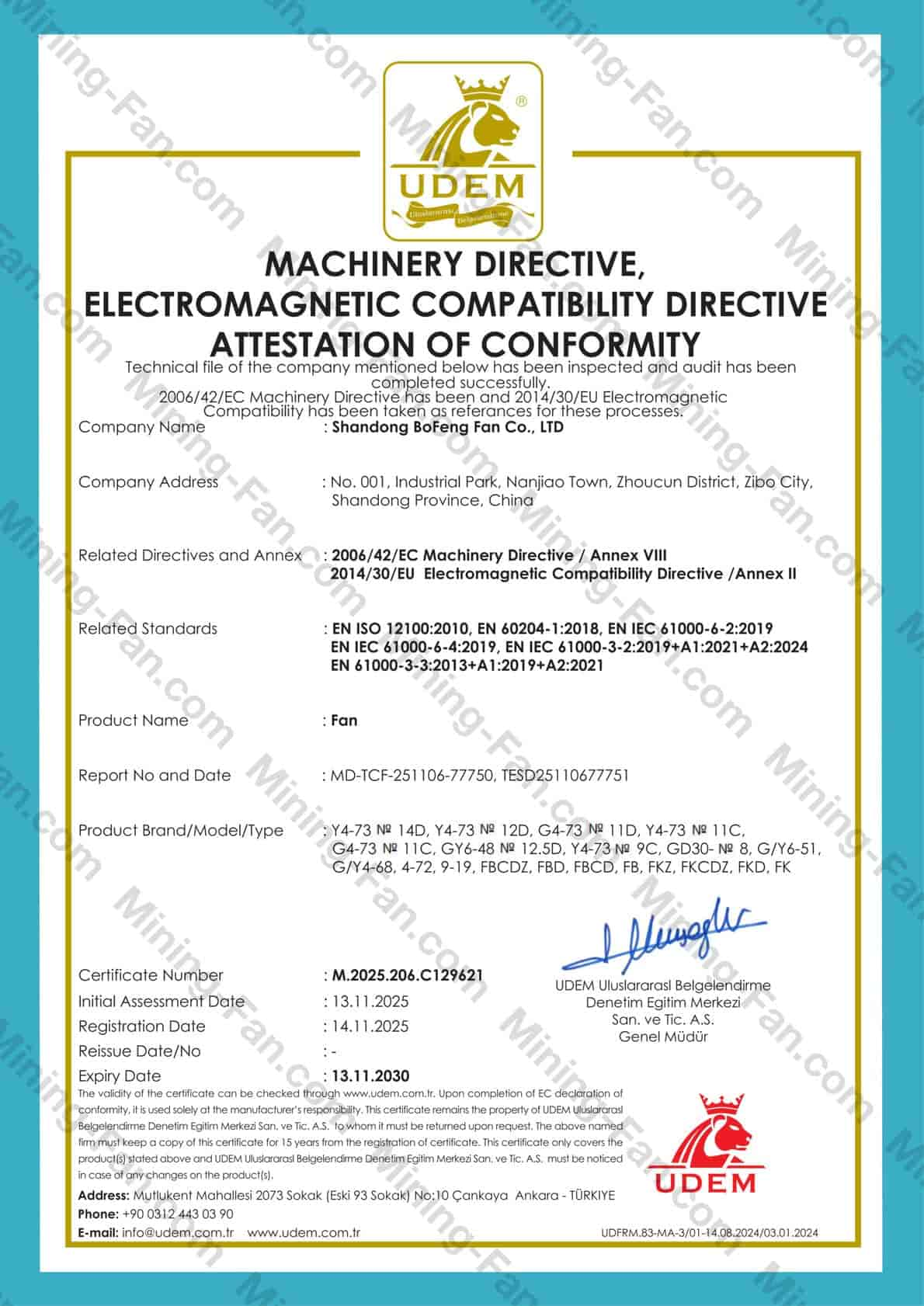
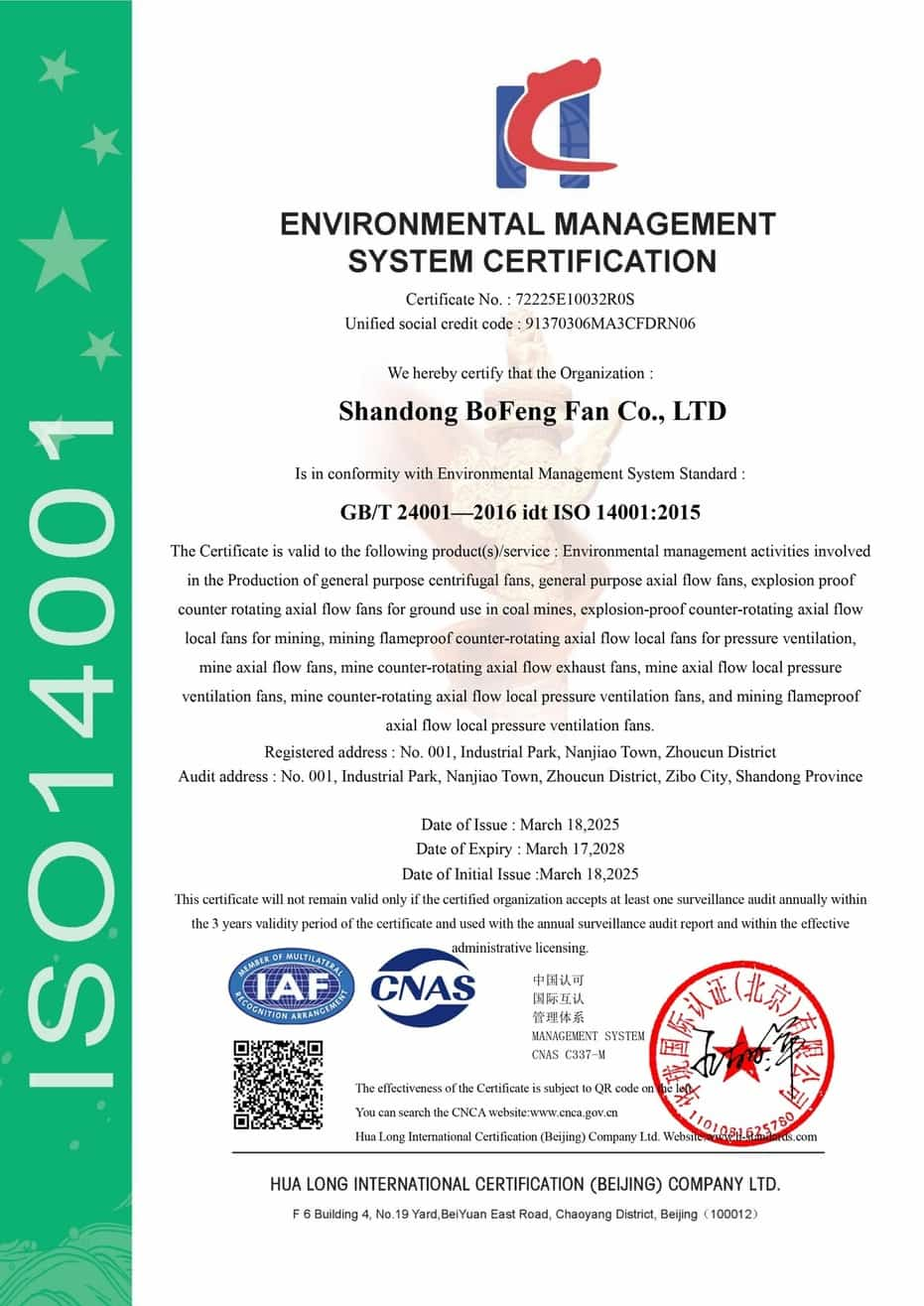
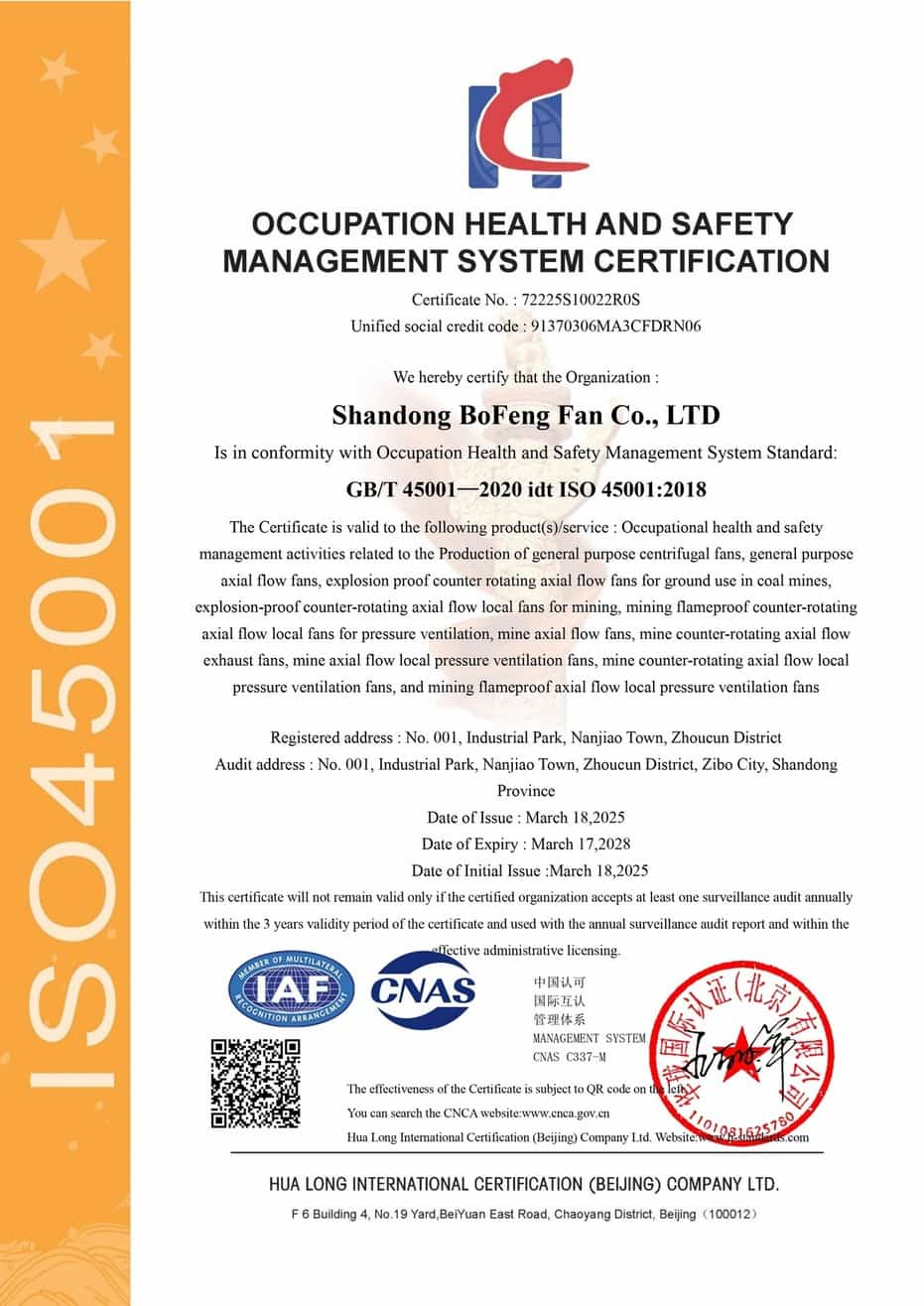
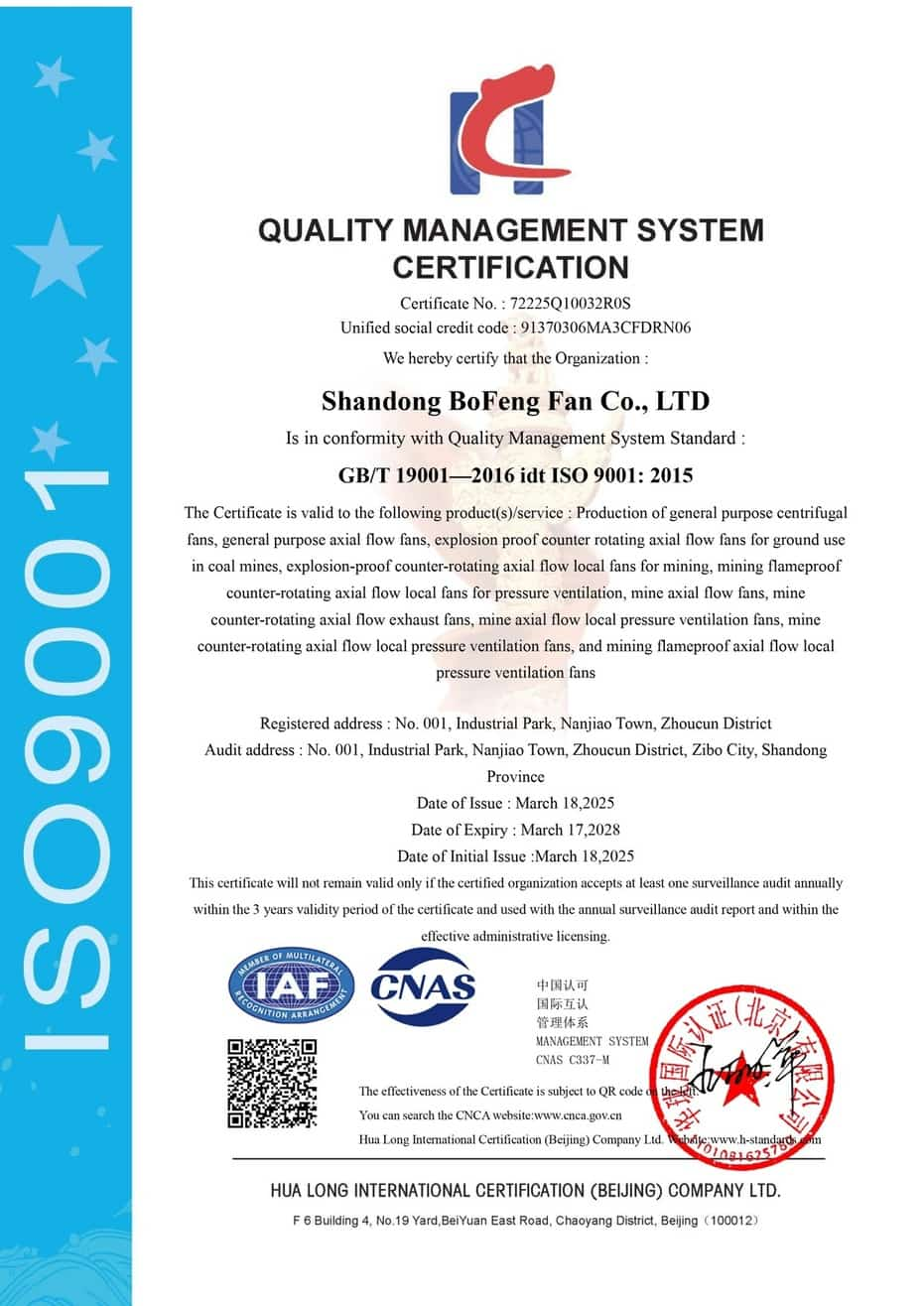
Selected certificates include CE, ISO 9001, ISO 14001 and ISO 45001. Additional documents such as MA/KA mining product certificates, patent certificates, inspection reports and technical files can be provided upon request for project review and supplier evaluation.