
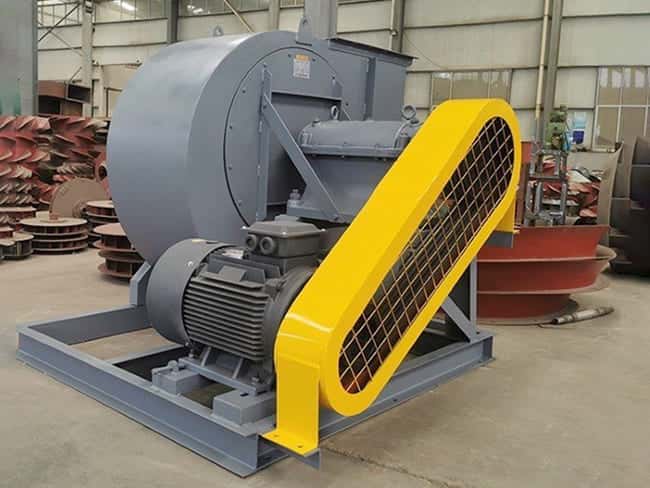
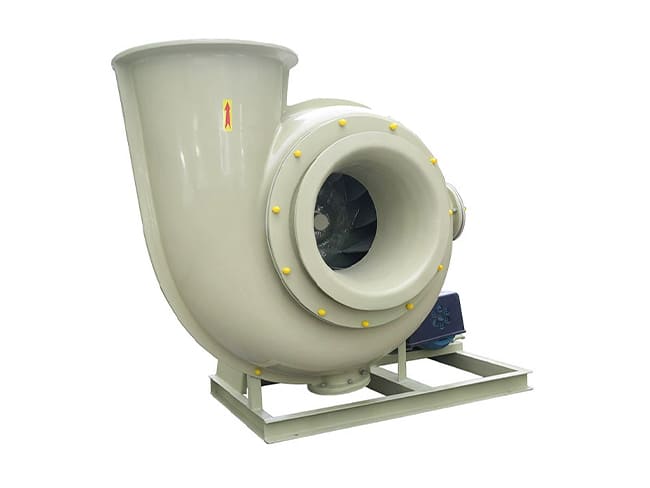
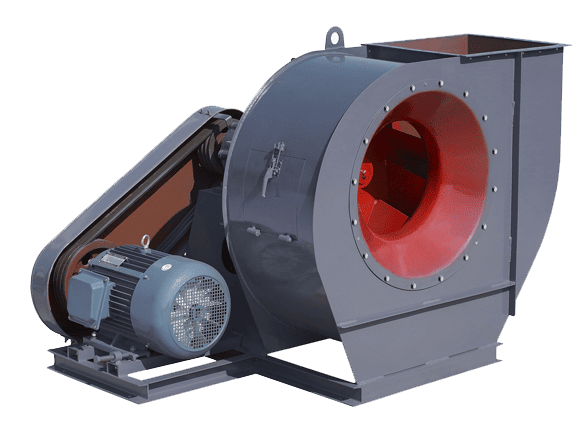
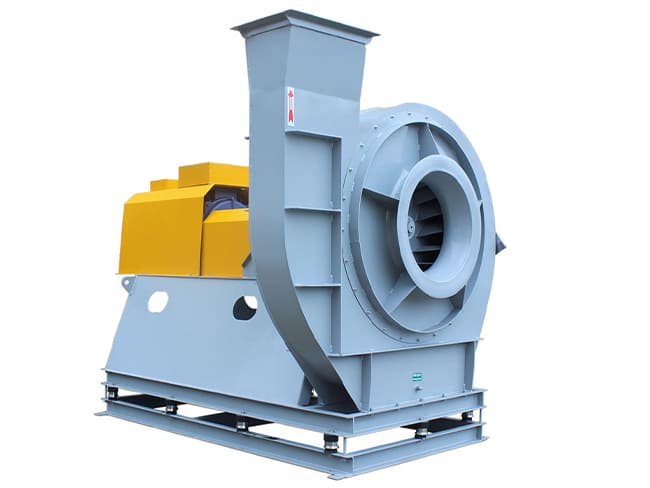
People often ask whether centrifugal fans are reversible, especially when they want a single fan to handle both supply and exhaust duties. In theory you can reverse the rotation of almost any electric motor, so the wheel will spin in the opposite direction. In practice, however, a standard centrifugal fan is not truly reversible in terms of usable airflow and efficiency. The blades and casing are designed to work best in one direction, and reversing rotation normally leads to a strong drop in pressure, unstable flow and sometimes serious mechanical stress.
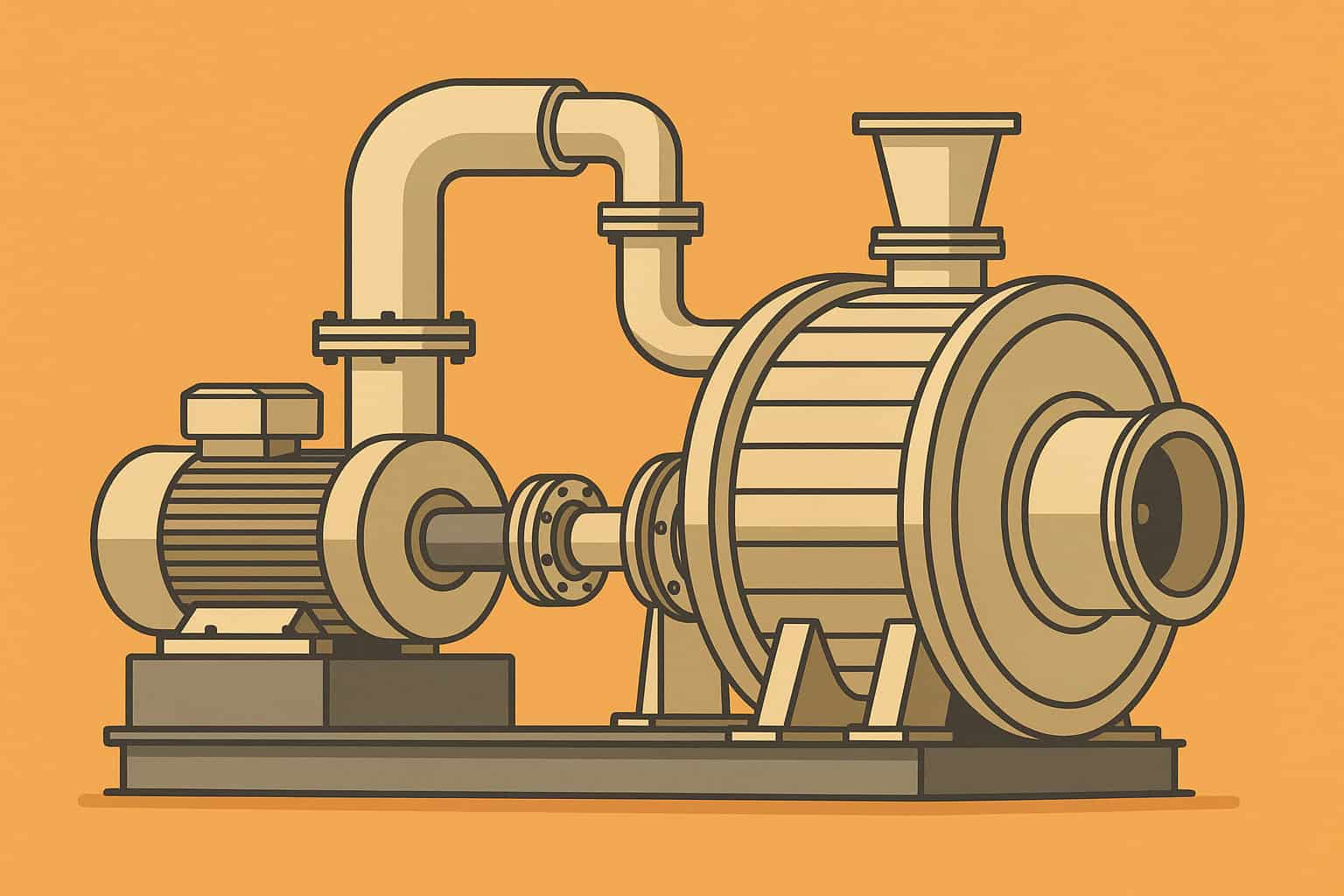
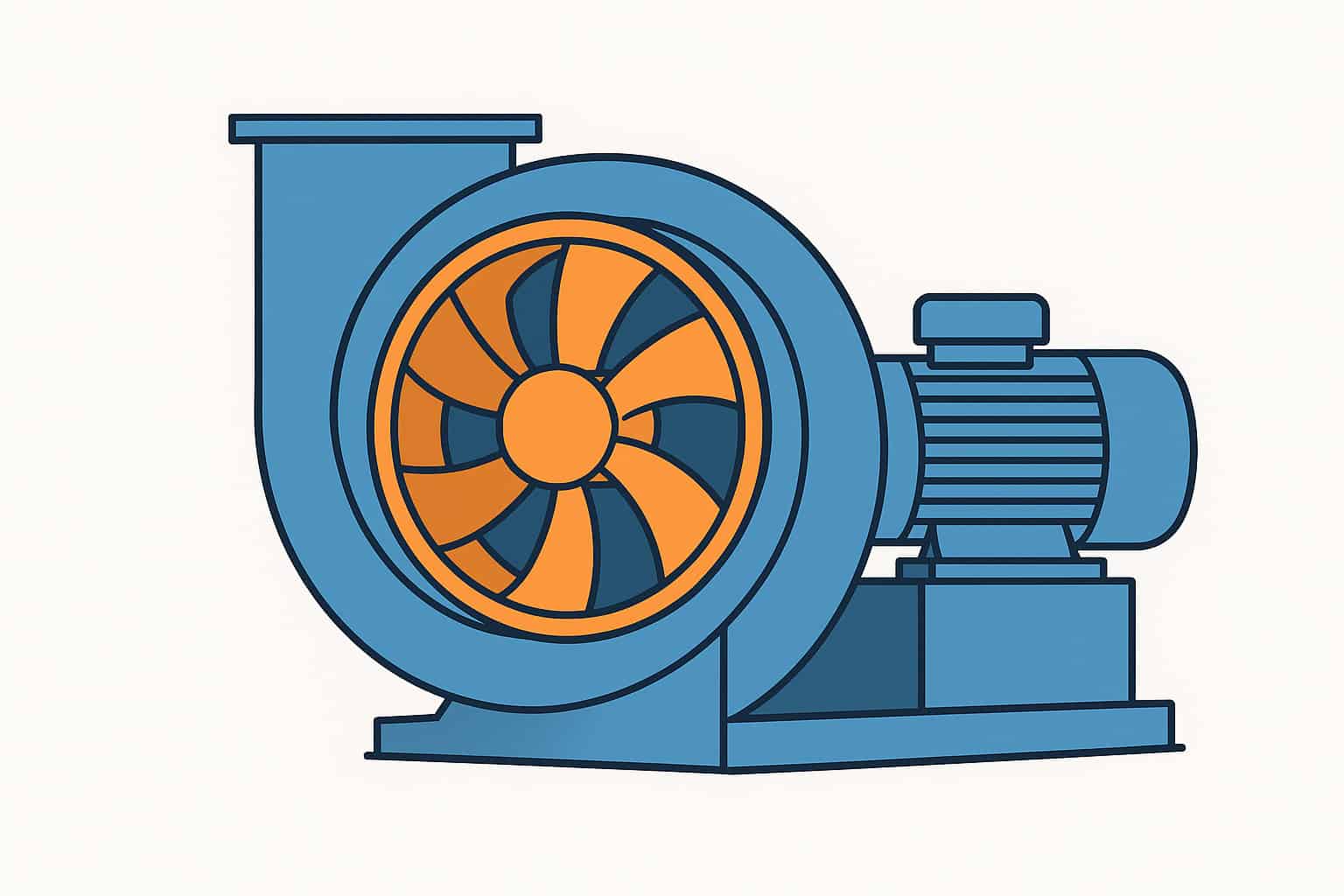
In a typical centrifugal fan, the impeller blades are shaped and angled to scoop air from the inlet and throw it into the scroll casing as the wheel turns. Backward-curved, forward-curved and radial blades all rely on the correct direction of rotation to guide air smoothly and generate pressure efficiently. If you reverse the motor, air still moves, but the flow pattern is disturbed. The fan develops far less pressure, may surge or stall, and noise and vibration can increase. For industrial and mining ventilation, this kind of performance is usually unacceptable for normal duty.
Because of this, most manufacturers describe standard centrifugal fans as non-reversible in normal service, even though the motor can technically be wired to rotate either way. The usual recommendation is to operate the fan only in the specified rotation direction indicated by the arrow on the casing. If the fan is accidentally wired to run backwards, technicians often notice reduced airflow, high current or unusual sound, and correct the rotation before putting the fan into permanent service.
There are, however, special centrifugal designs and arrangements that can provide reversible airflow. One option is to use a pair of fans and ducts, one for intake and one for exhaust, and switch which fan is running depending on the required direction of flow. Another is to use two inlets and dampers so that the same fan can pull from or discharge to different airways without changing rotation. In certain niche applications, impellers and casings may be specially shaped to tolerate two-way operation, but this is not common and usually involves performance compromise.
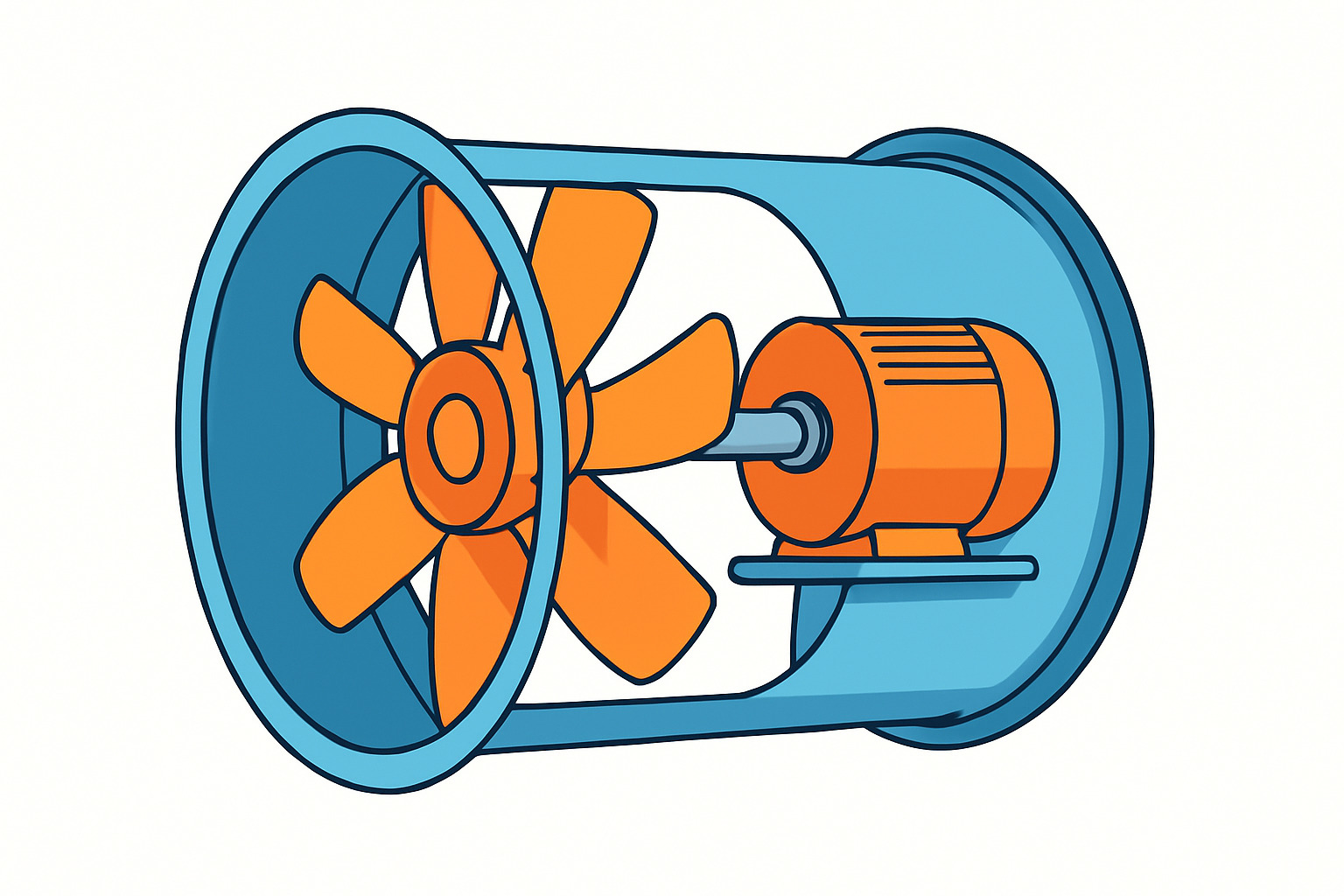
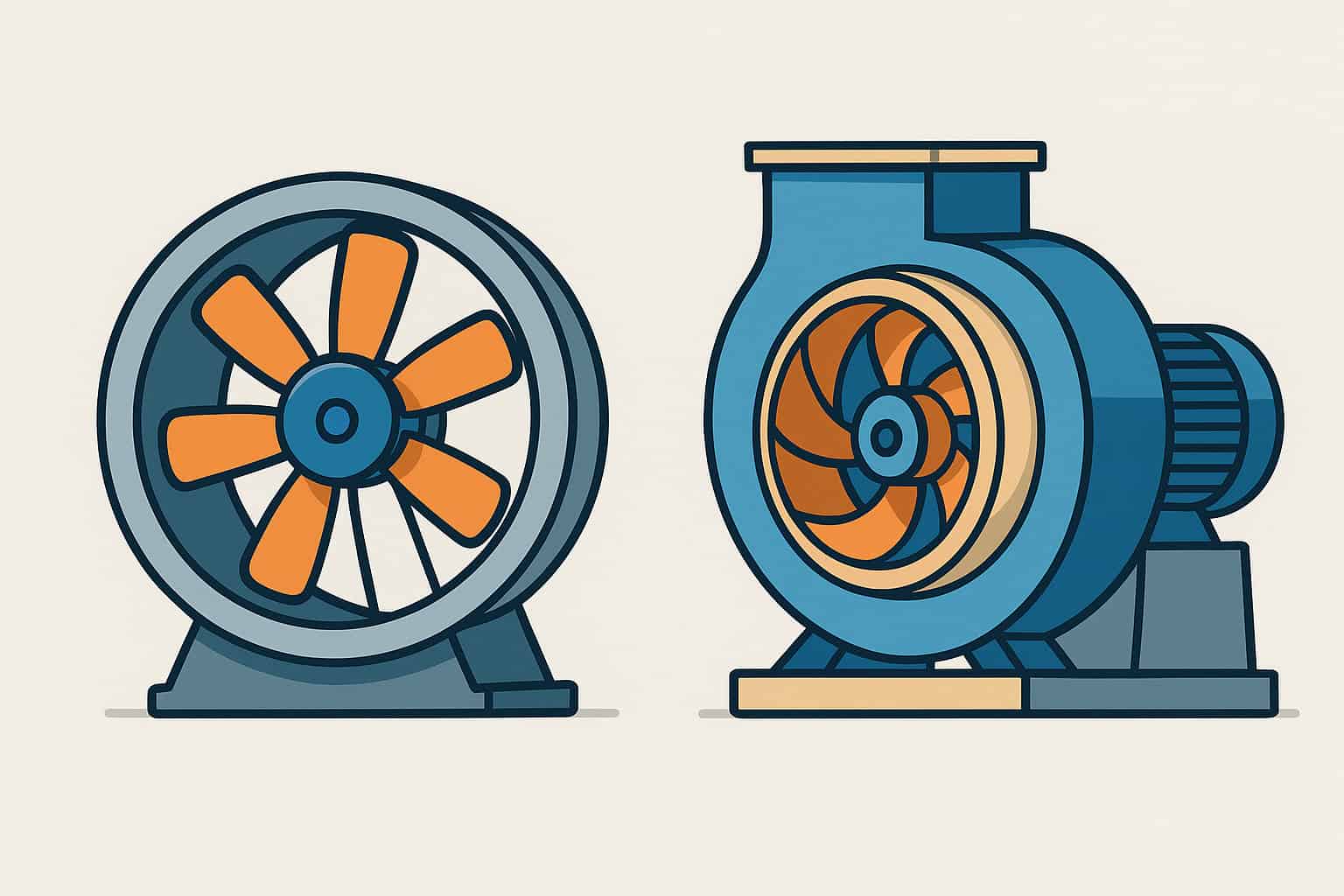
In underground mining and heavy industry, reversible ventilation is more often achieved with large axial fans, which can be designed for efficient two-way operation or used in pairs for rapid air reversal in emergencies. Centrifugal fans remain the preferred choice where higher pressure and dust-handling capability are needed, but they are almost always operated in a single, well-defined flow direction.
In summary, while you can reverse the rotation of a centrifugal fan motor, a standard centrifugal fan is not truly reversible from an airflow and efficiency standpoint. If you need reliable two-way ventilation, you usually require special design features, duct arrangements or separate fans rather than simply reversing a conventional centrifugal fan.