
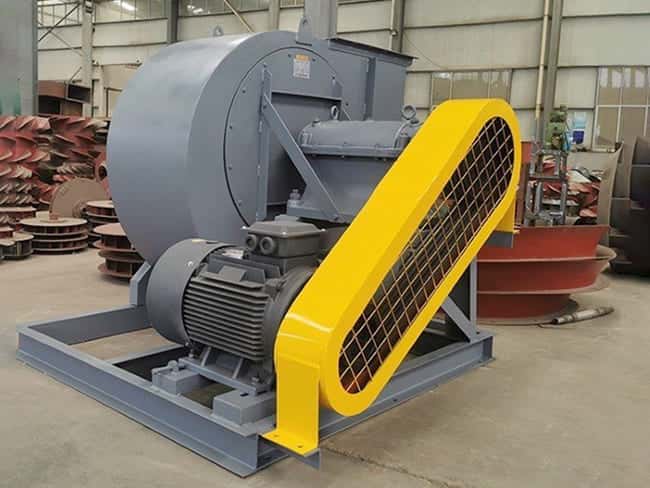
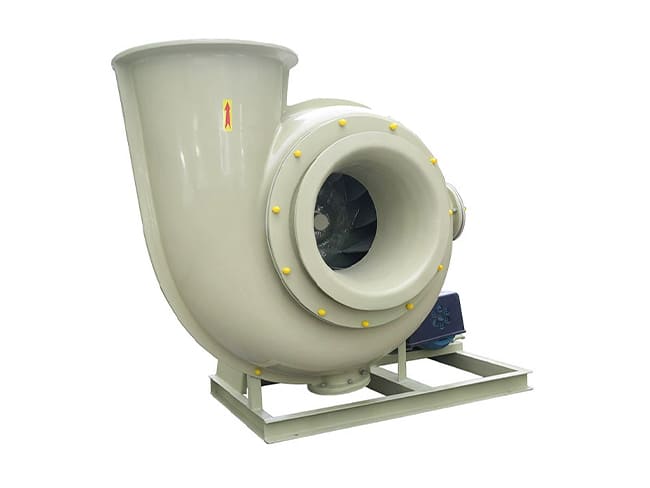
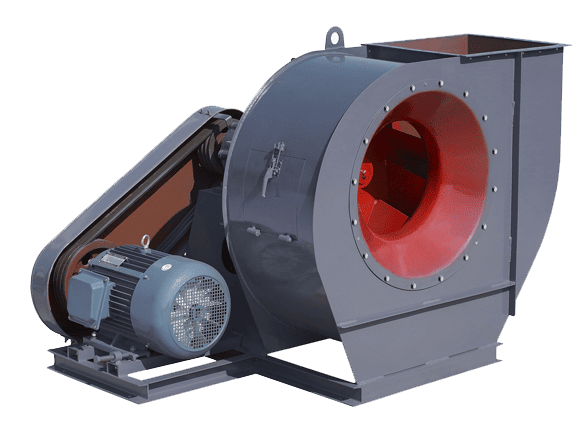
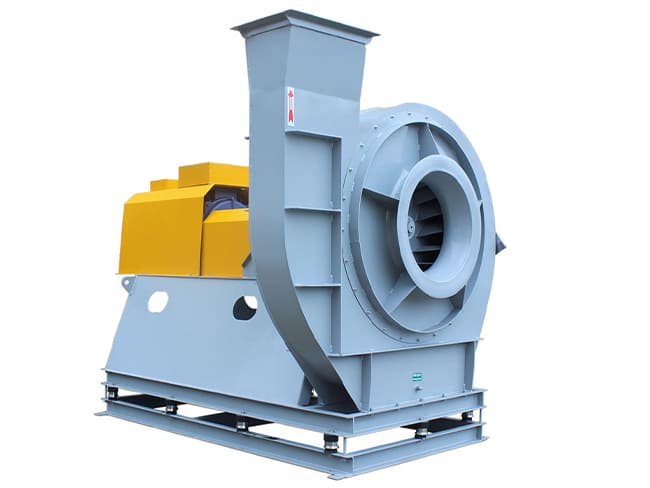
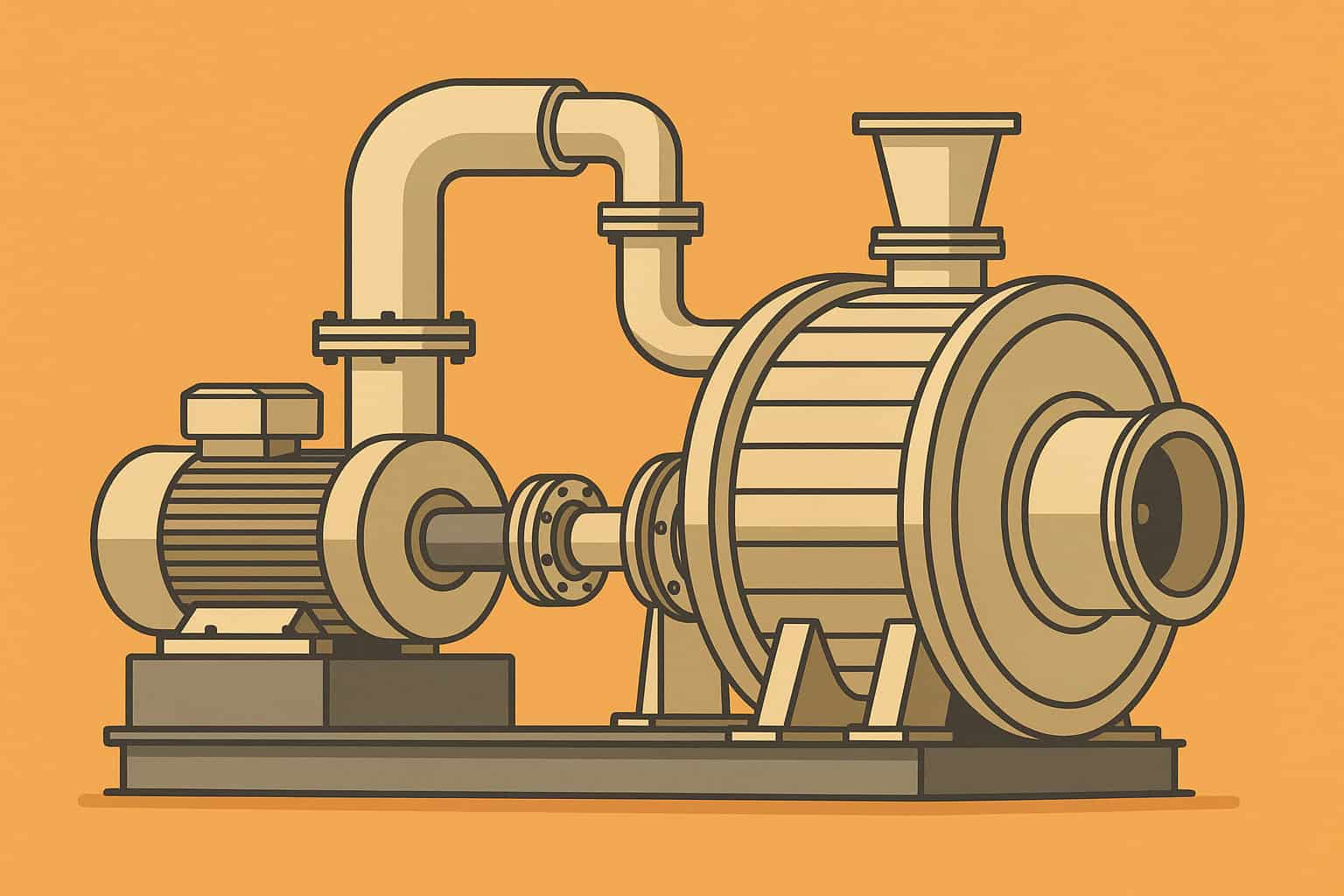

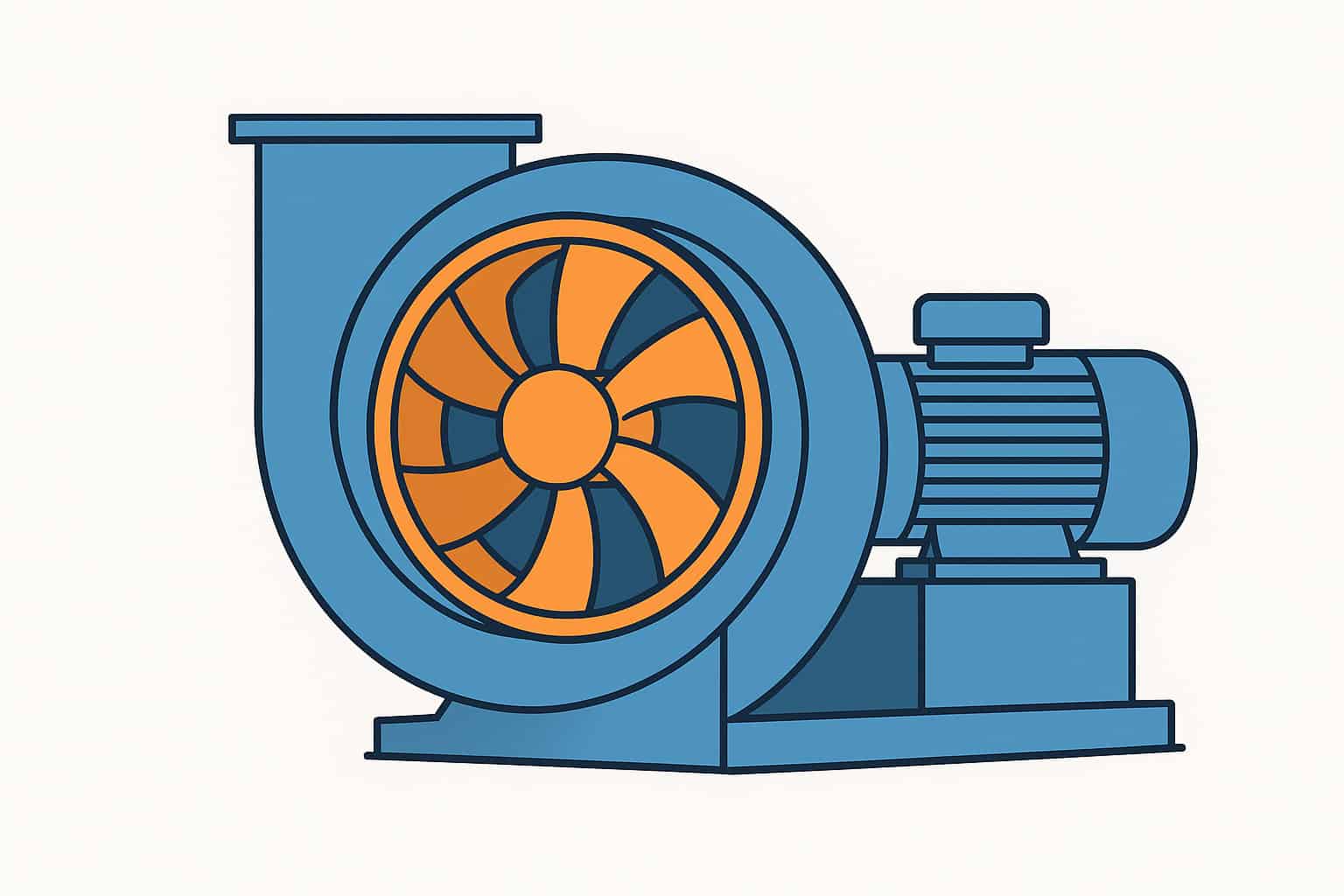
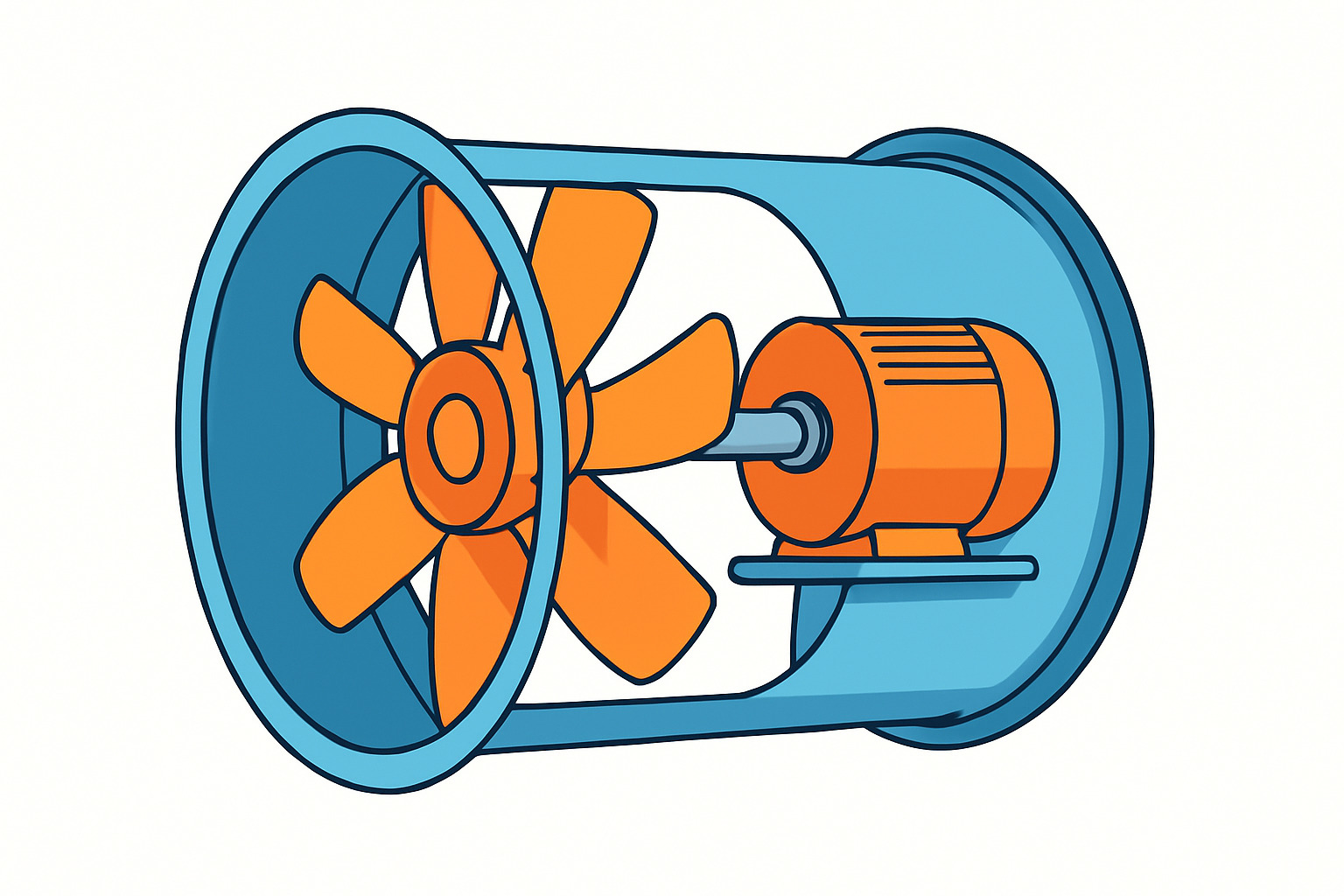
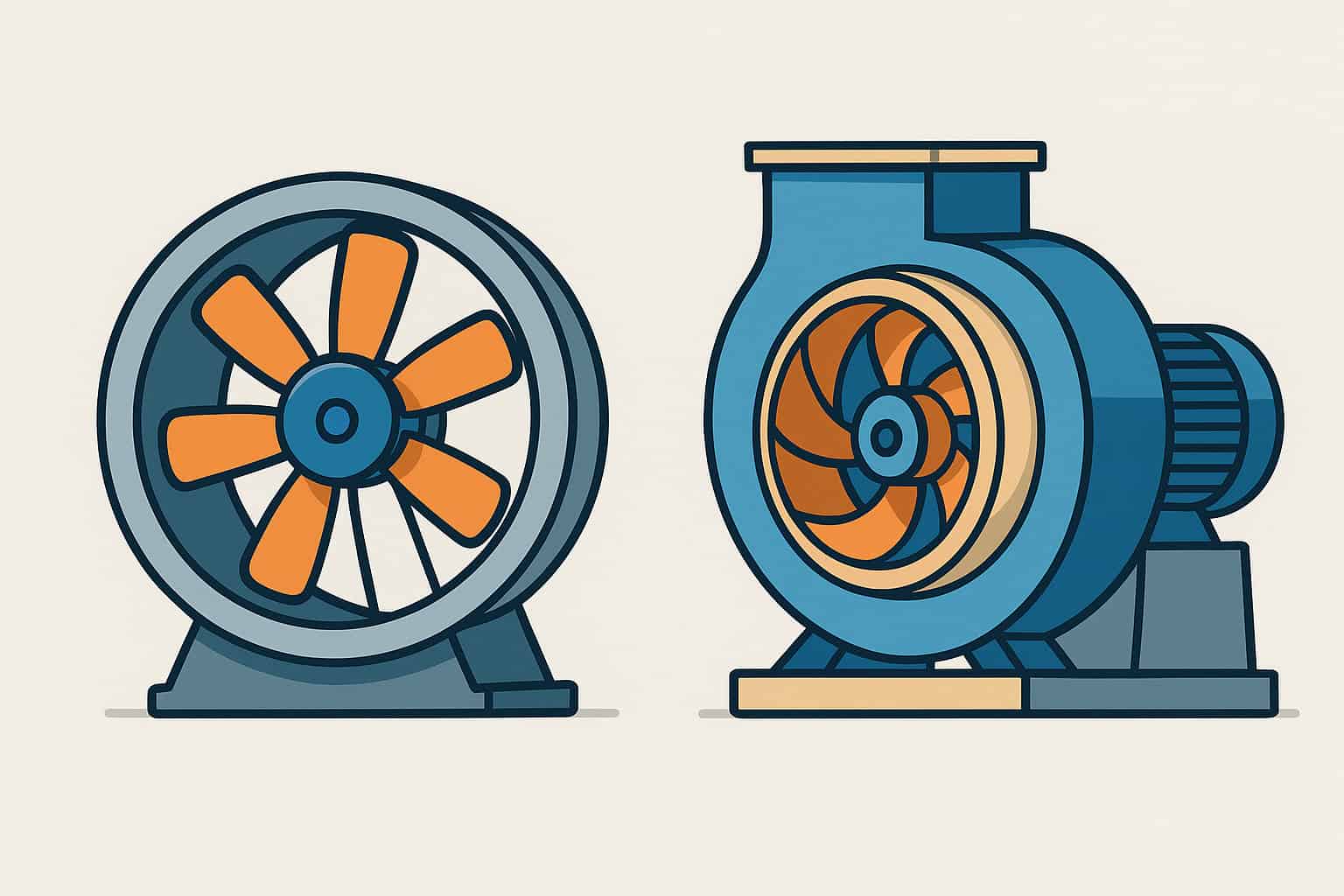
Centrifugal blowers work by converting mechanical rotation into a pressure rise using centrifugal force. They draw air or gas into the centre of a spinning impeller and throw it outward into a scroll-shaped casing, where part of the velocity is turned into static pressure. This pressure difference then pushes air through ducts, filters and process equipment in industrial plants and mines.
The working process starts at the inlet or eye of the impeller. As the blower rotates, low pressure is created at the impeller centre, causing air to flow in axially through the inlet. The impeller consists of multiple blades attached to a hub; they may be forward-curved, backward-curved or radial, depending on the design. The shape and angle of these blades determine how efficiently the blower can convert shaft power into airflow and pressure.
As the impeller spins, it imparts tangential velocity to the air. Centrifugal force pushes the air outward along the blades toward the periphery of the impeller. The faster the impeller rotates and the larger its diameter, the higher the velocity gained by the air. At this stage, much of the energy added to the air is in the form of kinetic energy, not yet static pressure.
The air then enters the scroll or volute casing that surrounds the impeller. This casing grows wider as it wraps around the impeller, creating a diffuser effect. As the high-velocity air slows down, some of its kinetic energy is converted into static pressure. The scroll also directs the flow towards the discharge opening, maintaining a smooth flow path and preventing excessive recirculation around the impeller.
The discharge duct or plenum carries the now pressurised air to the process or ventilation system. Pressure at the outlet is higher than at the inlet, so air flows from the blower through ducts, filters, cyclones, scrubbers or mine roadways until it meets the resistance of the system. The actual operating point—how much air flows at what pressure—depends on the interaction between the blower curve and the system resistance curve.
Several factors influence how a centrifugal blower works in practice: impeller diameter, speed, blade shape, housing design and clearances. Increasing speed or diameter increases both pressure and airflow, but also raises power demand according to the fan laws. Different blade shapes balance efficiency, noise and ability to handle dust or particles. In mining and heavy industry, robust radial-blade designs are common for dusty gases, while backward-curved designs are used where high efficiency and cleaner air are expected.
In summary, centrifugal blowers work by drawing air into a rotating impeller, using centrifugal force to accelerate it outward and converting part of that velocity into pressure in the casing and connected ducts. This simple but powerful principle allows them to move air through systems with significant resistance, making them essential in many industrial and mining applications.