
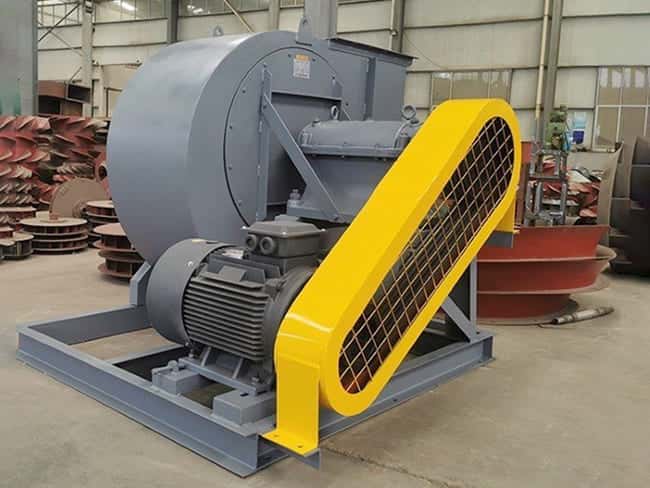
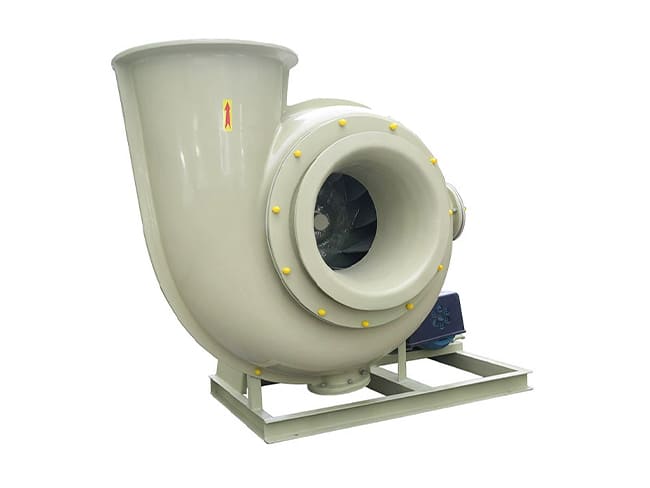
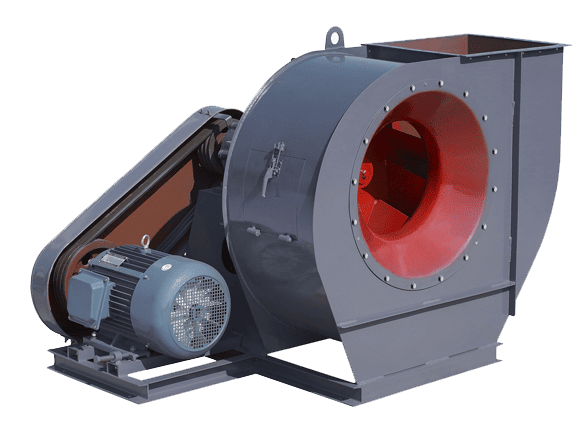
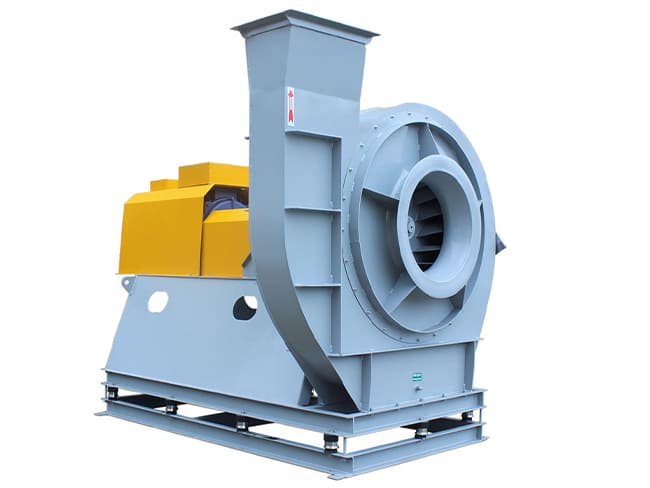



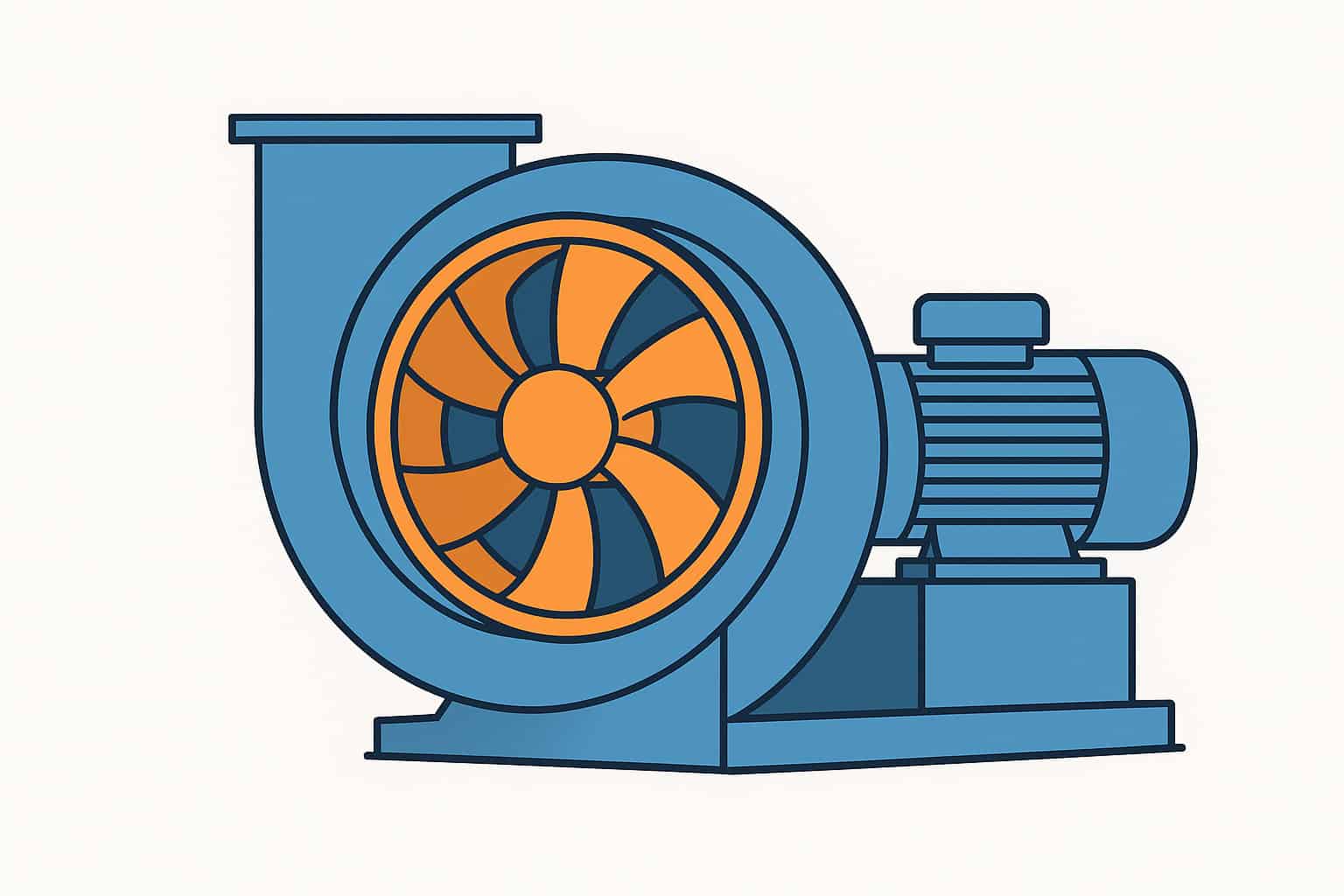
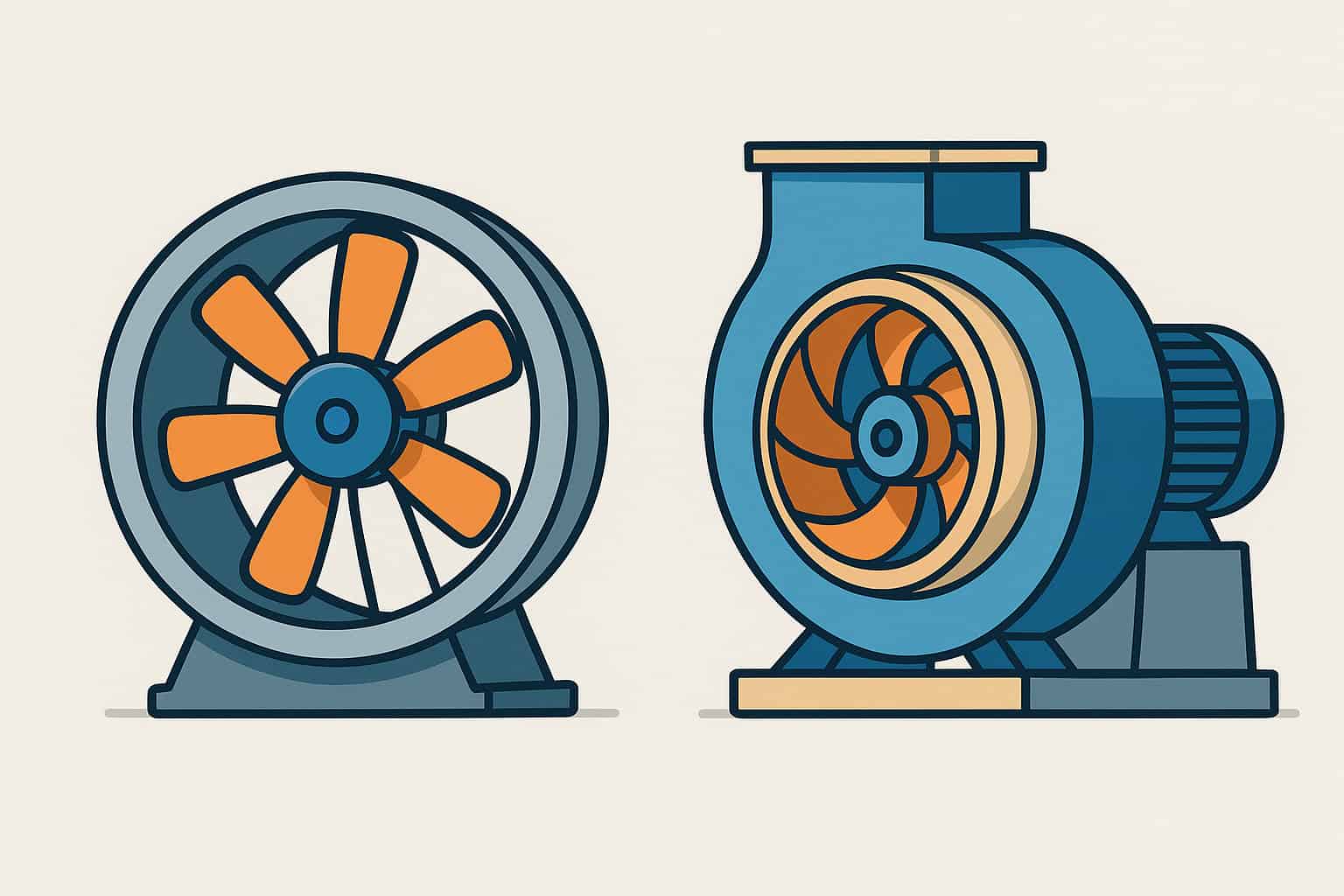
A centrifugal fan works by converting mechanical energy from a motor into airflow and pressure using a rotating impeller and a scroll-shaped housing. It is designed to pull air into the centre of the impeller and then fling it outward by centrifugal force, generating the static pressure needed to push air through ducts, filters and mine airways.
Air enters the fan through the inlet or eye of the impeller, usually in line with the shaft. As the impeller spins, the blades accelerate the air radially outward. This motion increases the air’s velocity and kinetic energy. The air is then collected in the spiral or scroll housing that surrounds the impeller. As the cross-sectional area of the scroll gradually increases, the air slows down and part of its velocity is converted into static pressure. This is how a centrifugal fan creates the pressure needed to overcome system resistance.
The shape of the blades influences how the fan works. Radial blades throw air straight out and are robust for dusty, abrasive gases. Backward-curved and airfoil blades provide higher efficiency for clean or lightly contaminated air. Forward-curved blades are used in some HVAC applications at lower pressure. In all cases, the rotating action of the impeller and the geometry of the scroll housing work together to transform rotational energy into useful airflow and pressure.
Centrifugal fans follow the fan laws. At constant air density, airflow is roughly proportional to speed, pressure to the square of speed and power to the cube. This means that increasing speed raises the amount of air moved and the pressure generated, but power demand rises much faster. In industrial plants and mines, engineers use these relationships to predict how the fan will respond to speed changes through variable-frequency drives.
In a complete ventilation system, the centrifugal fan operates against the system resistance curve, which represents losses in ducts, filters, dampers and airways. The intersection of the fan pressure–flow curve and the system curve determines the actual operating point. If resistance increases because filters clog or mine airways change, the operating point shifts, and the fan delivers different airflow and pressure.
In summary, a centrifugal fan works by drawing air into the centre of a spinning impeller, accelerating it outward by centrifugal force and converting part of that velocity into static pressure in a scroll housing. This process makes centrifugal fans ideal for ducted industrial and mining ventilation systems with significant resistance.