
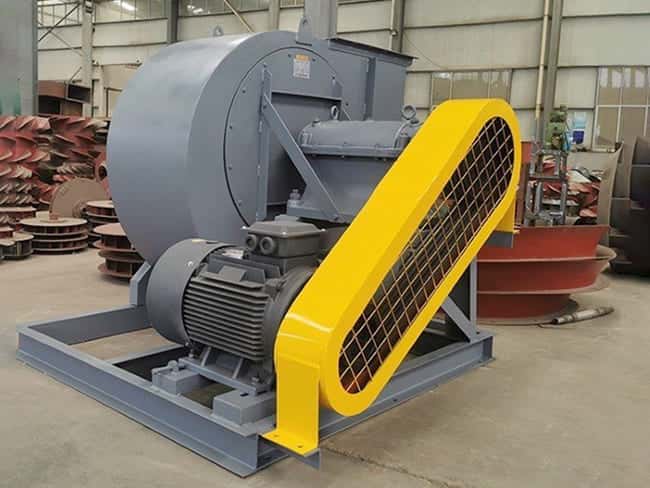
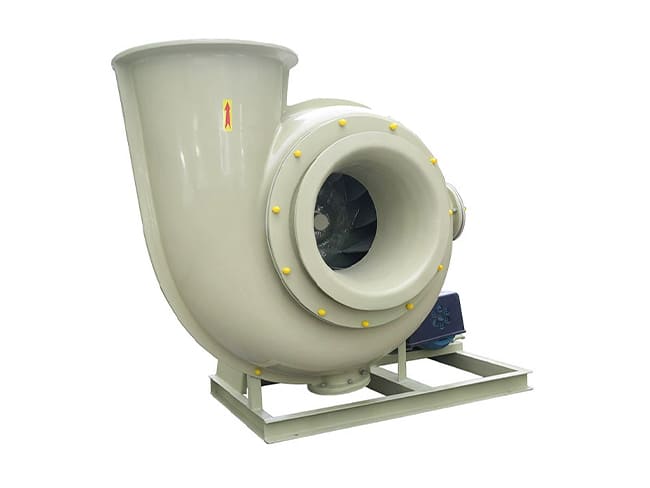
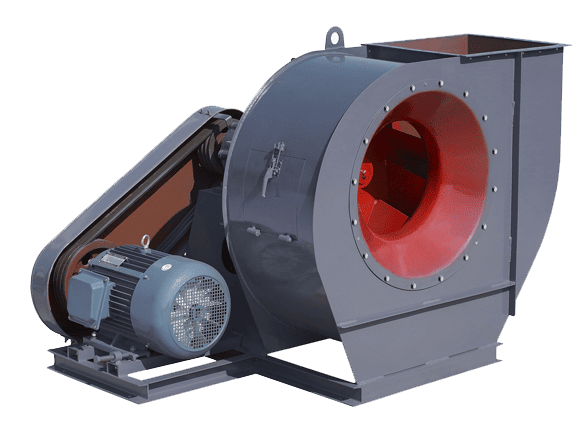
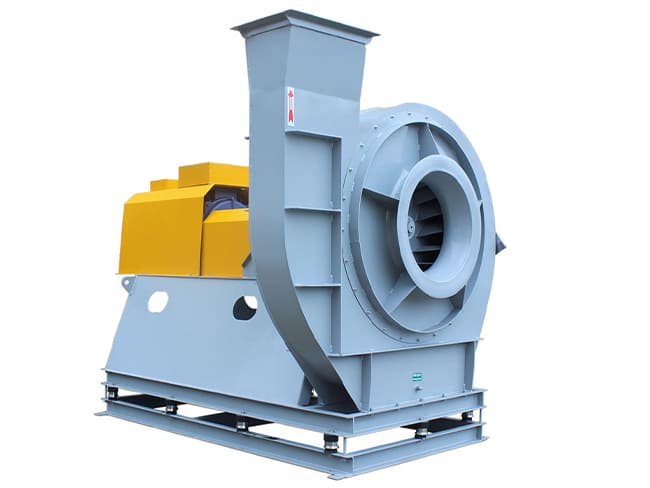


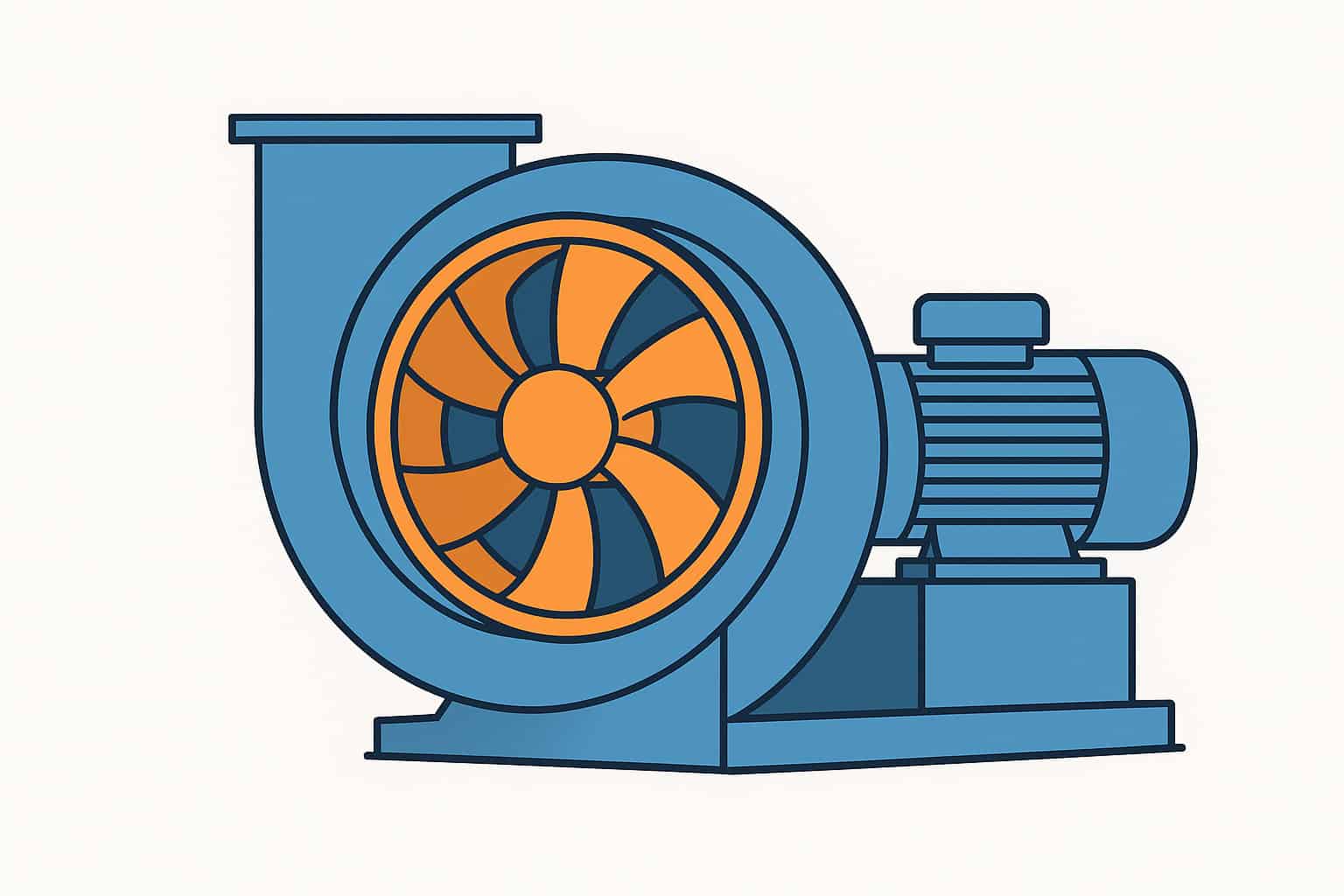

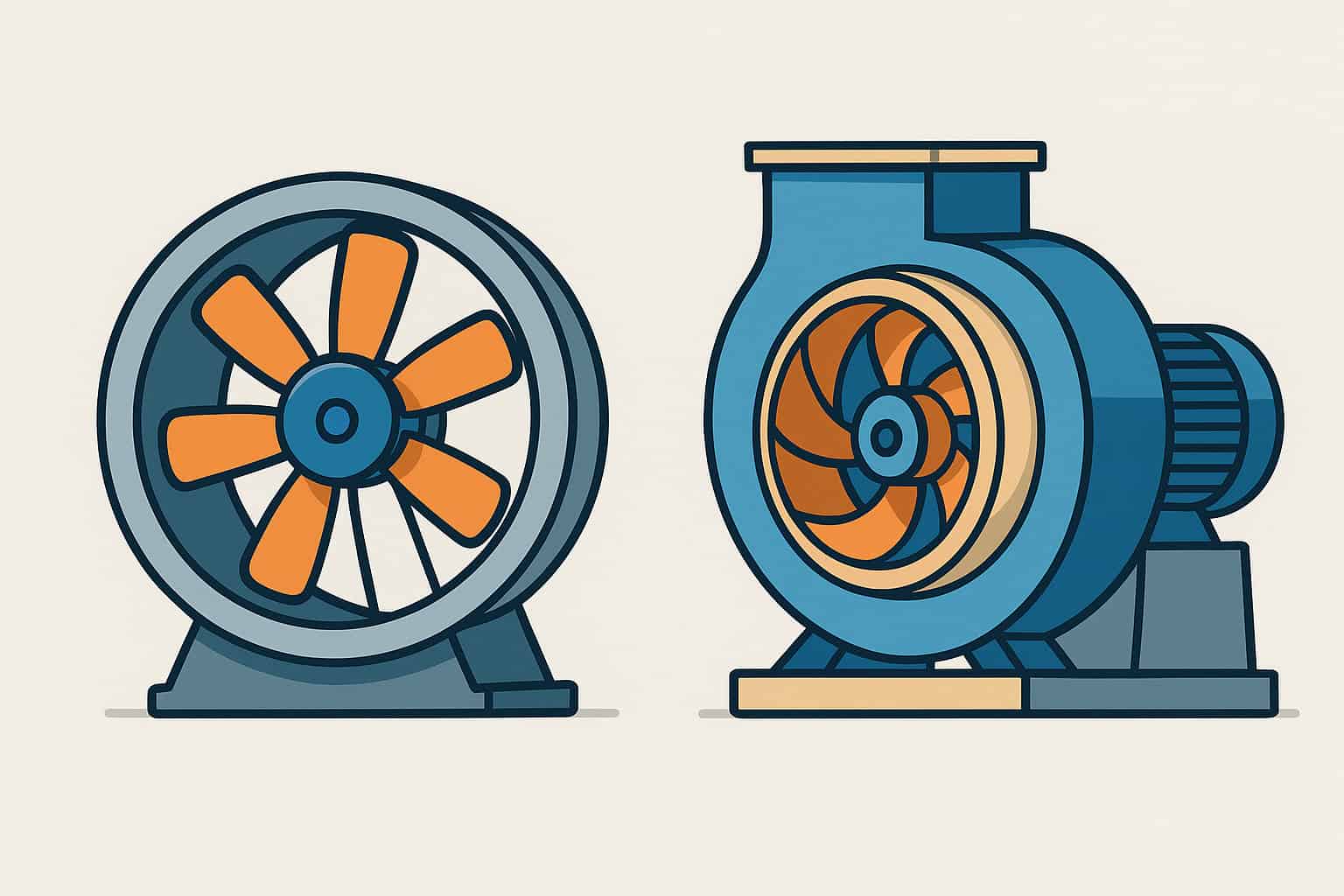
Centrifugal fans are not limited to one or two designs; they are grouped into several classes based on blade shape, pressure range, construction strength and application. Different standards and manufacturers use slightly different naming systems, but the main classes appear consistently across industrial and mining ventilation practice.
The most common way to classify centrifugal fans is by impeller blade form:
- Radial blade fans: Blades extend straight out from the hub. These fans are rugged and well suited to dusty, abrasive and material-handling duties. They are widely used in heavy industry, mining exhaust and under cyclone or bag filter systems.
- Backward curved and backward inclined fans: Blades curve away from the direction of rotation. They are highly efficient for clean or lightly dusty air at medium to high pressures, often used in process ventilation, air handling units and clean industrial exhaust.
- Airfoil (backward curved airfoil) fans: A refined form of backward curved fans with airfoil-shaped blades. They typically offer the highest efficiencies for clean air and are used where energy performance is critical.
- Forward curved fans: Blades curve in the direction of rotation. These are usually used in small HVAC and low-pressure applications rather than heavy industrial or mining services, because they are more sensitive to dust and have different power characteristics.
Another common classification is by pressure class and construction strength. Fans may be described as low pressure, medium pressure or high pressure centrifugal fans, each designed for a specific static pressure range. As pressure class increases, impeller and housing construction becomes more robust to safely withstand higher mechanical stresses. In mining, high-pressure centrifugal fans are often used in dust collection and booster systems where strong pressure is needed to overcome resistance.
Centrifugal fans are also grouped into clean air, industrial duty and material-handling classes. Clean air fans prioritise efficiency and quieter operation. Industrial duty fans balance efficiency with stronger construction for moderate dust and temperature. Material-handling fans focus on ruggedness, wear resistance and clearances capable of passing particles without plugging.
In addition, some standards and manufacturers define classes based on temperature rating, explosion protection and corrosion resistance. For example, there are special classes for high-temperature exhaust fans, spark-resistant fans for explosive atmospheres and corrosion-resistant fans built from stainless steel or FRP.
In summary, there is no single fixed number of classes, but centrifugal fans are typically divided into several main classes according to blade shape (radial, backward, forward, airfoil), pressure range, construction duty, dust-handling capability and special environmental ratings. Understanding these classes helps engineers pick the right centrifugal fan for industrial and mining ventilation systems.