
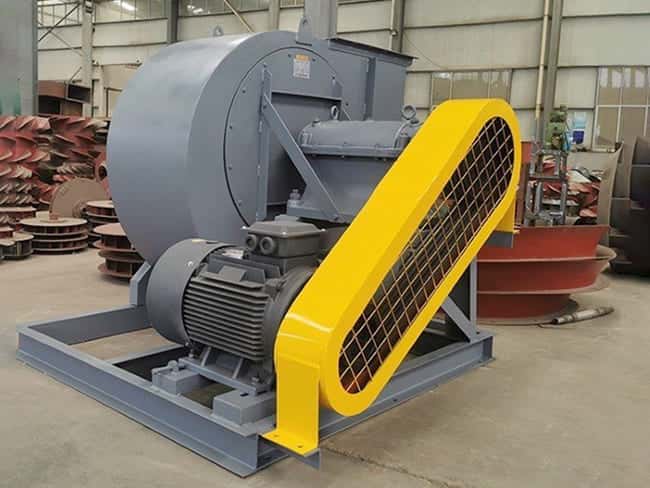
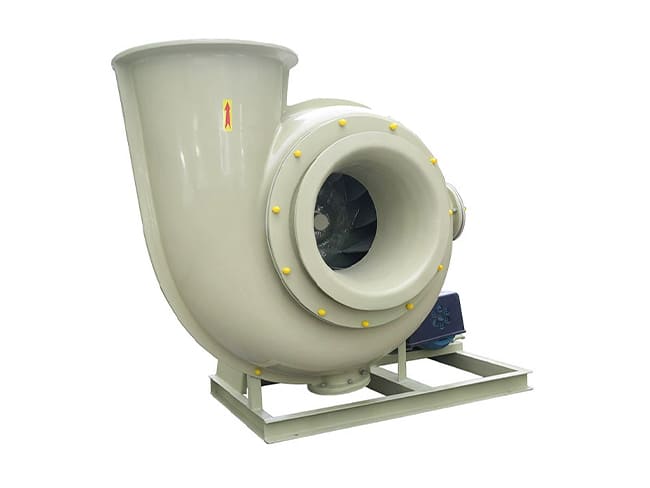
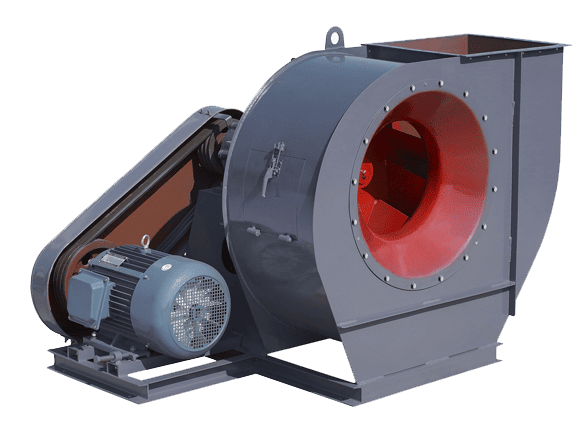
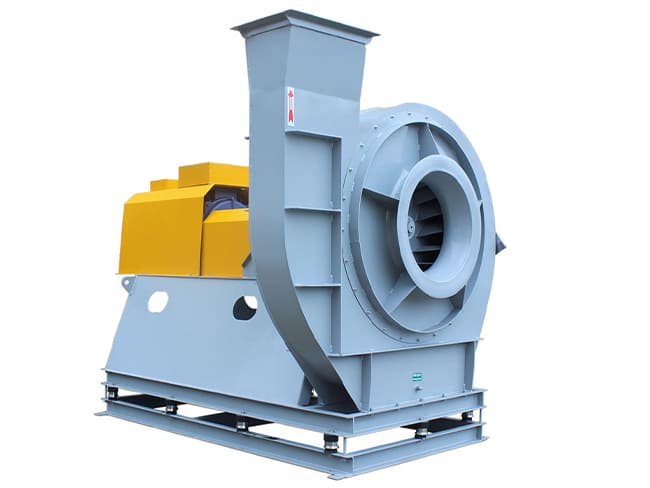

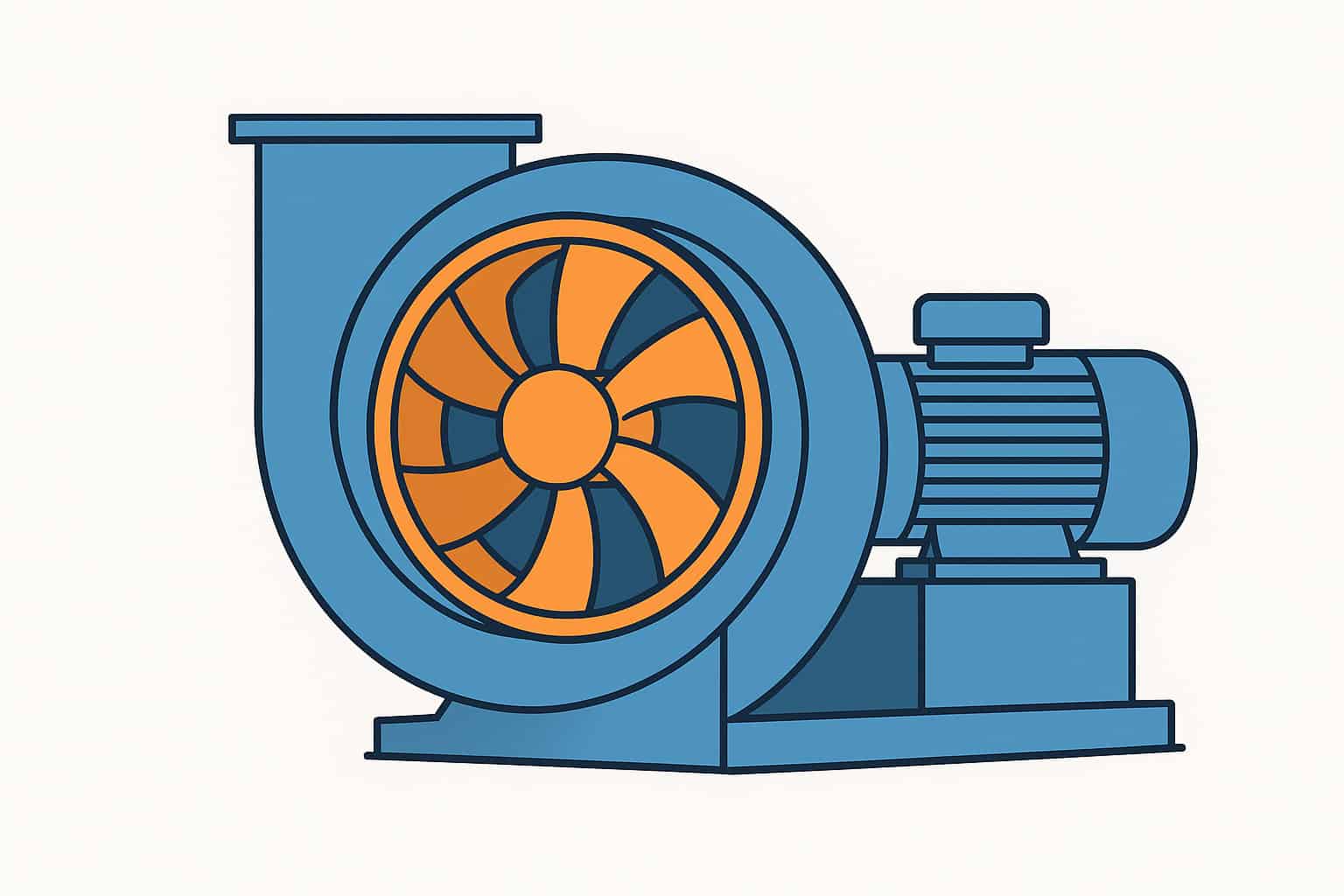
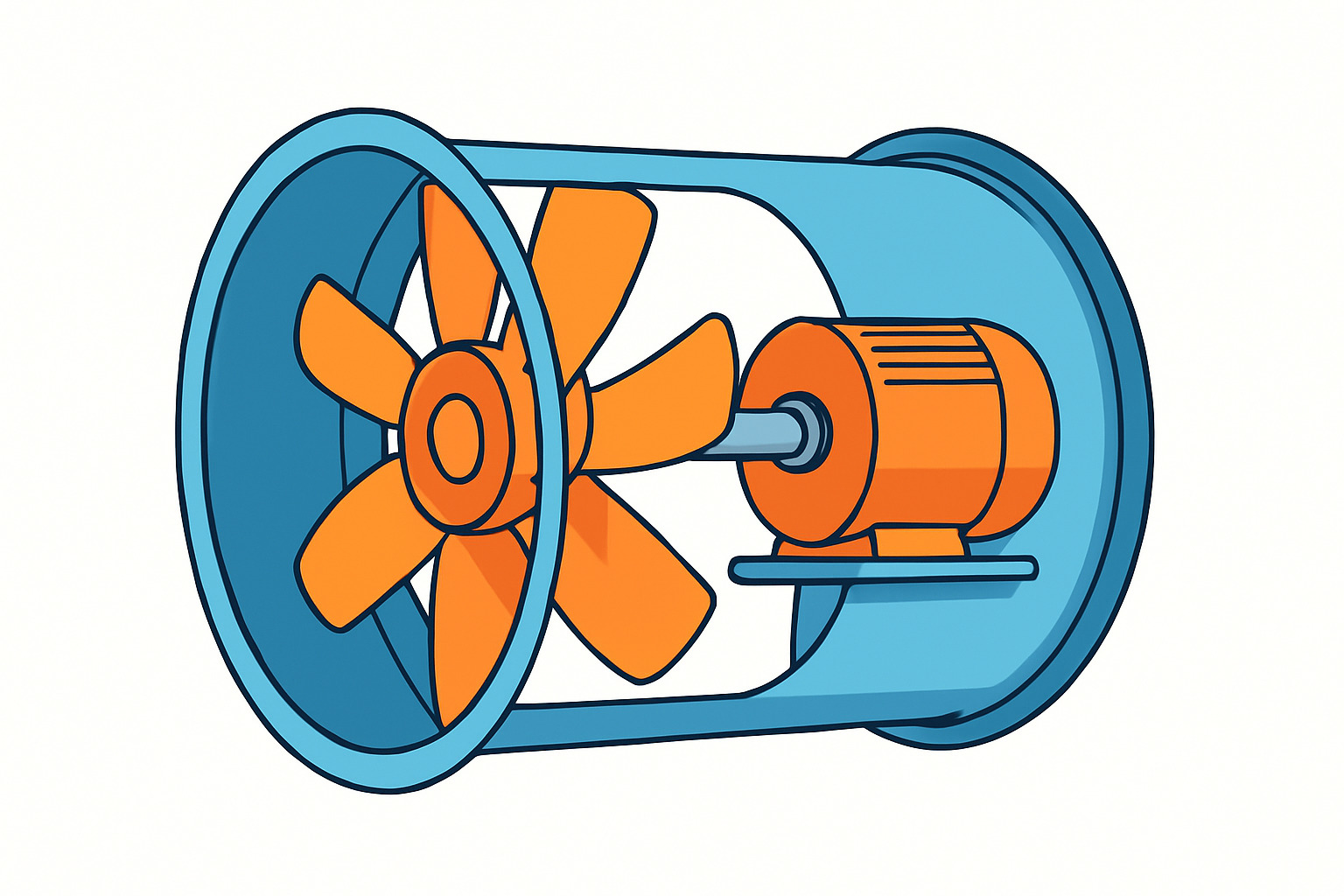
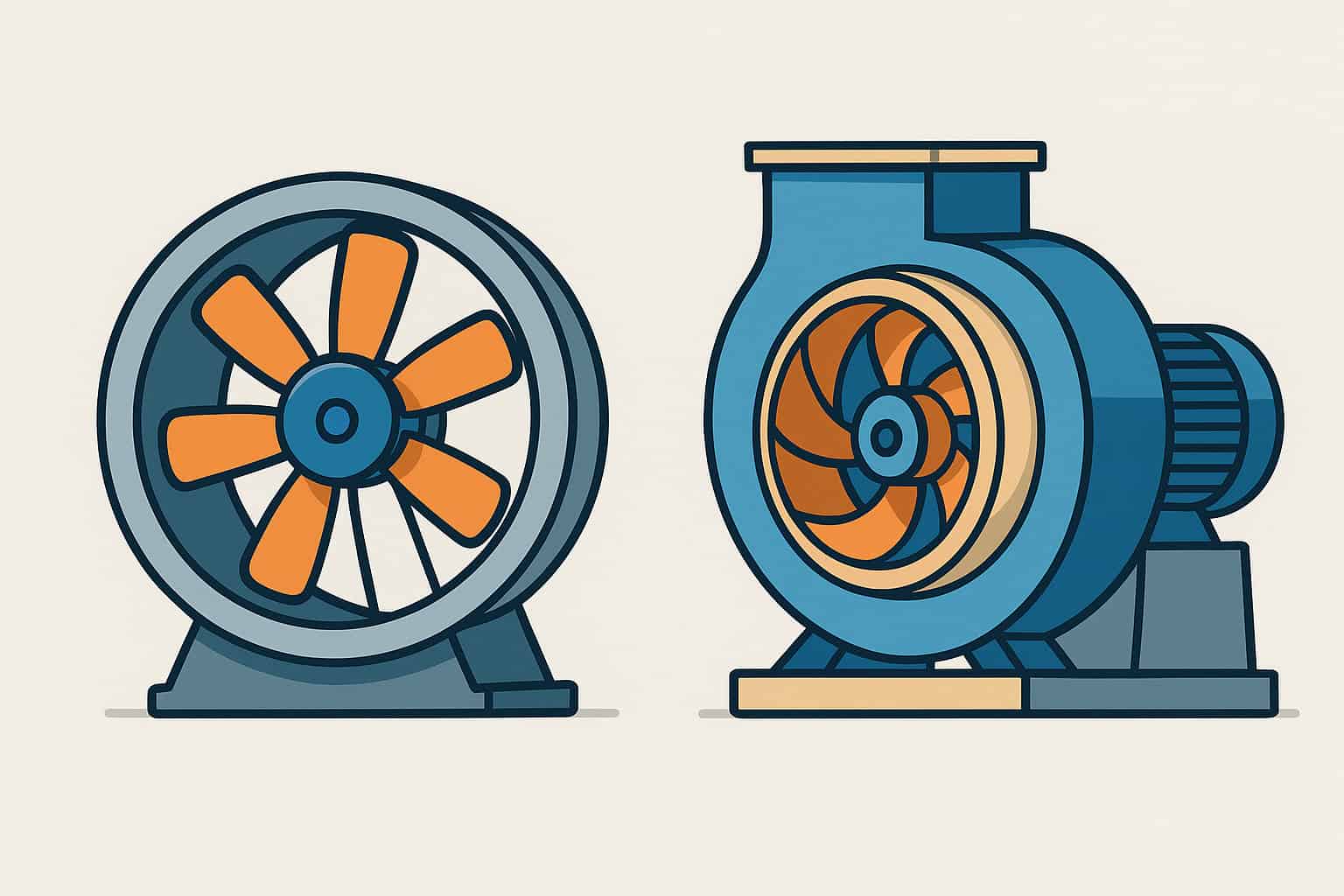
Centrifugal fans are available in several distinct blade and housing designs, each optimised for different combinations of pressure, efficiency, space and dust loading. Knowing the main types helps you choose the right fan for HVAC, process, dust collection and mining applications.
One of the most common types is the forward-curved centrifugal fan. Its many small blades curve in the direction of rotation, and it typically runs at relatively low speed. Forward-curved fans are compact and can deliver high volumes at low to medium pressure, which makes them popular in air-handling units, packaged HVAC systems and small industrial ventilators. However, they are less tolerant of dust and have lower peak efficiency than some other designs.
Backward-curved or backward-inclined centrifugal fans have blades that lean away from the direction of rotation. They usually operate at higher speed and offer better efficiency and a broader stable operating range than forward-curved fans. Because of their robust performance and lower power consumption, backward-curved fans are widely used in industrial exhaust, process air and clean gas applications, including many fans in plants associated with mining and mineral processing.
Radial-blade centrifugal fans, sometimes called paddle-wheel fans, feature straight blades extending radially from the hub. This design is rugged and relatively simple, making it ideal for handling dusty, dirty or abrasive gases. Dust collection systems, chip extractors and some corrosive or high-temperature exhaust duties rely on radial-blade fans because they are less prone to clogging and erosion than curved-blade designs, even though their efficiency may be somewhat lower.
More advanced shapes include airfoil centrifugal fans, where blades are shaped like aircraft wings to maximise efficiency and reduce noise. These are used in large clean-air systems where energy savings over long operating hours justify the higher initial cost. There are also radial-tip and mixed-flow designs that combine features of radial and backward-curved fans to provide high pressure in a compact package.
In mining and heavy industry, centrifugal fans are often further classified by duty: ID (induced draft) fans on boilers and kilns, dust collection fans on baghouses and cyclones, and process fans on mills and smelters. Within each duty, the specific blade type is chosen to handle the required pressure, gas composition and particulate loading.
In summary, the main types of centrifugal fans are forward-curved, backward-curved, radial-blade, airfoil and several hybrid designs. Each type offers a different balance of efficiency, pressure capability and dust-handling, and the right choice depends on the real conditions of your industrial or mining ventilation system.