
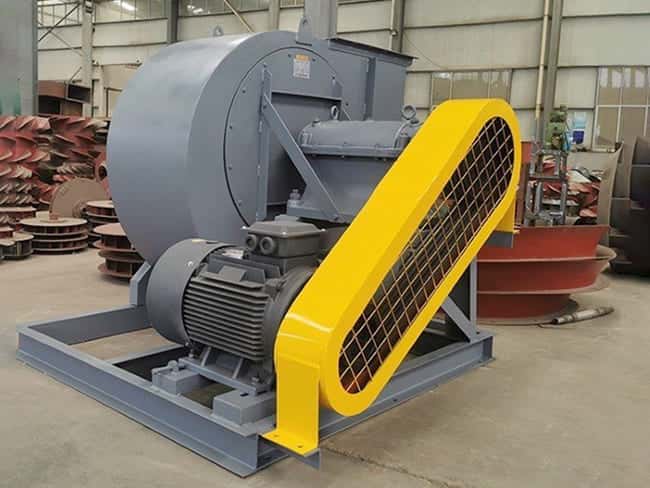
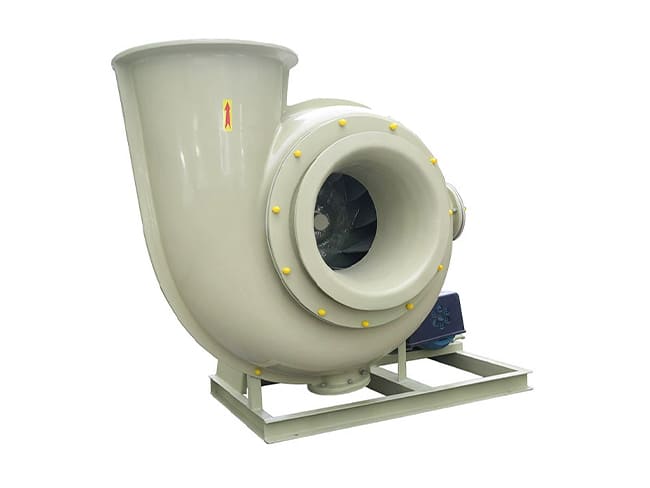
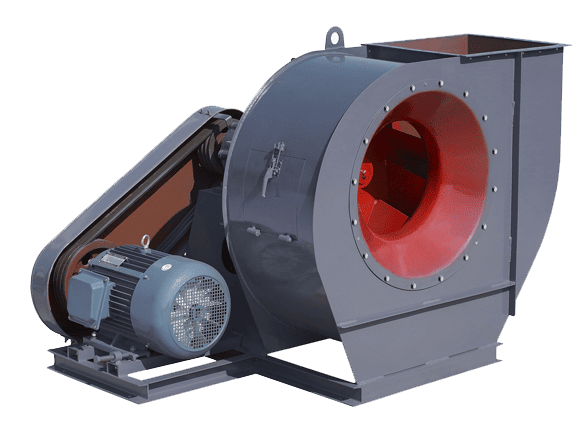
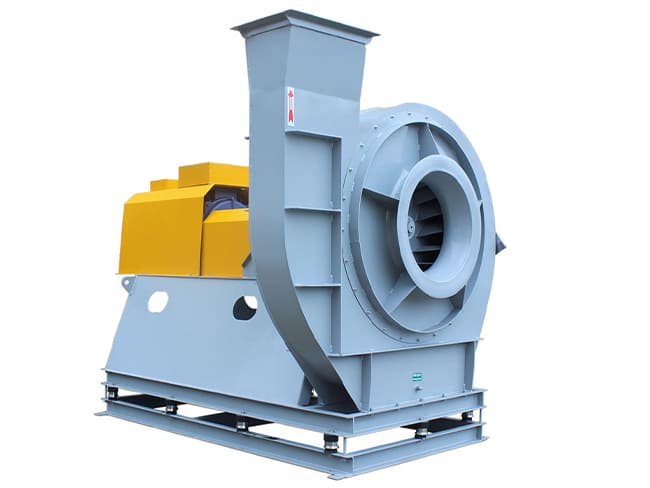
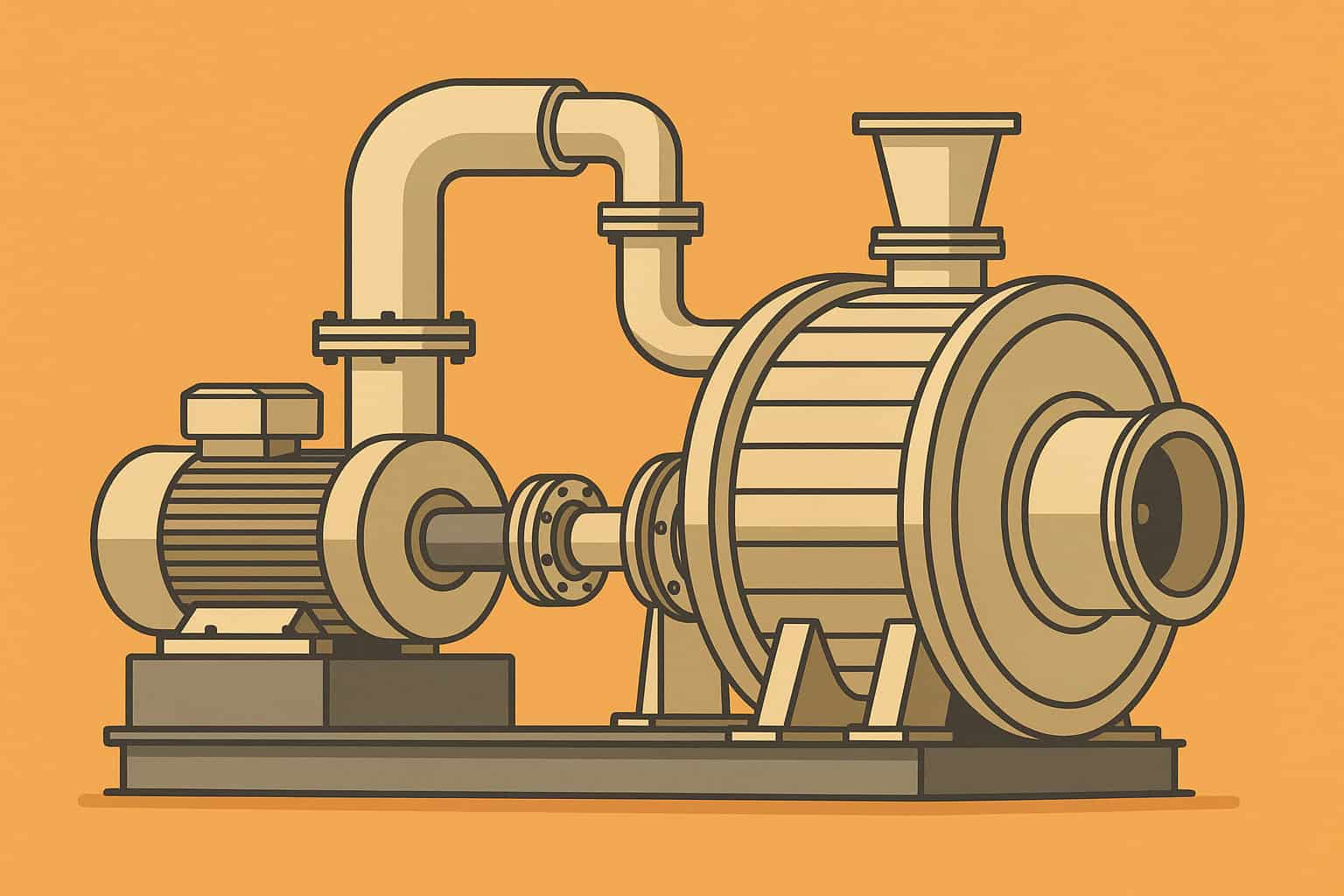
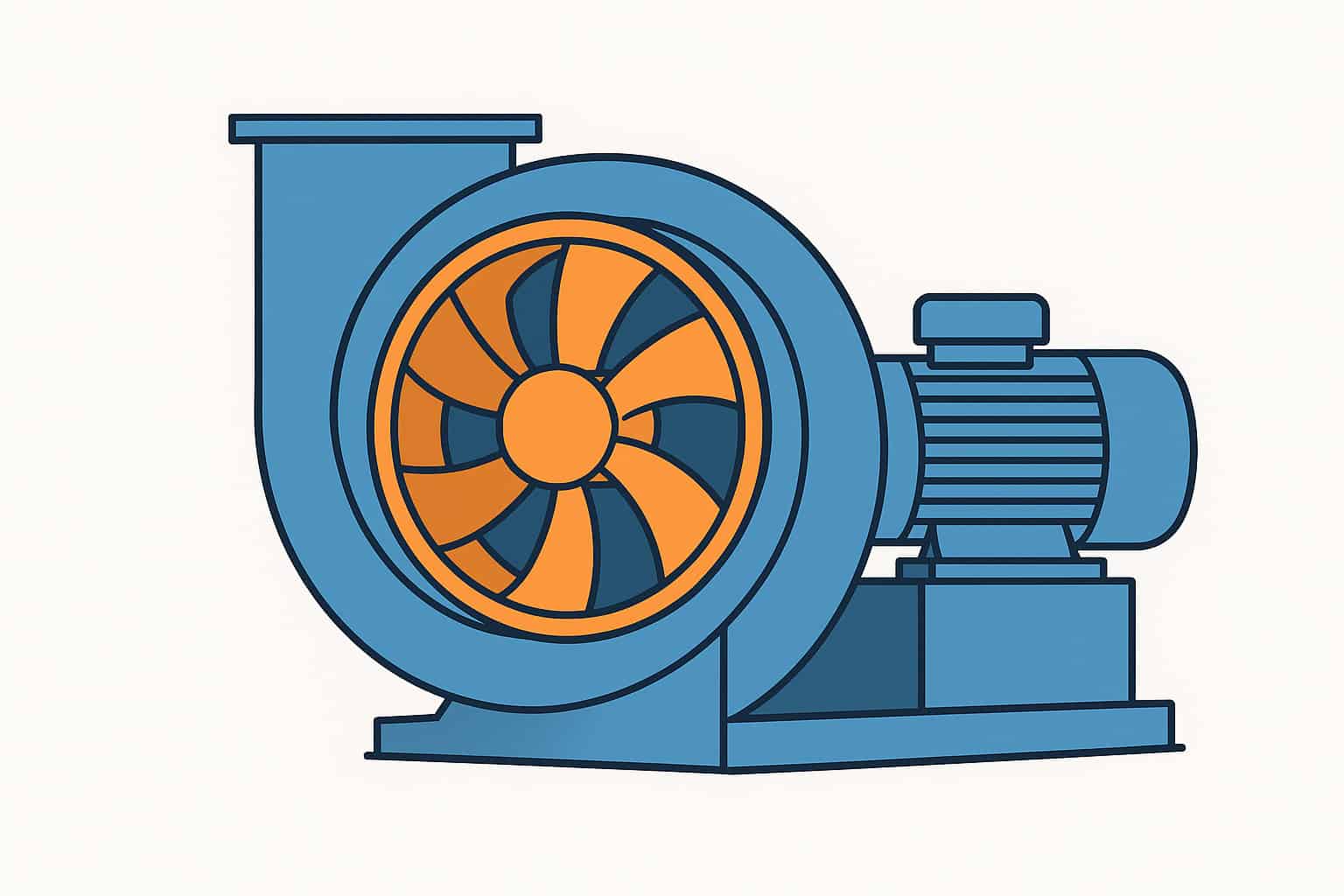
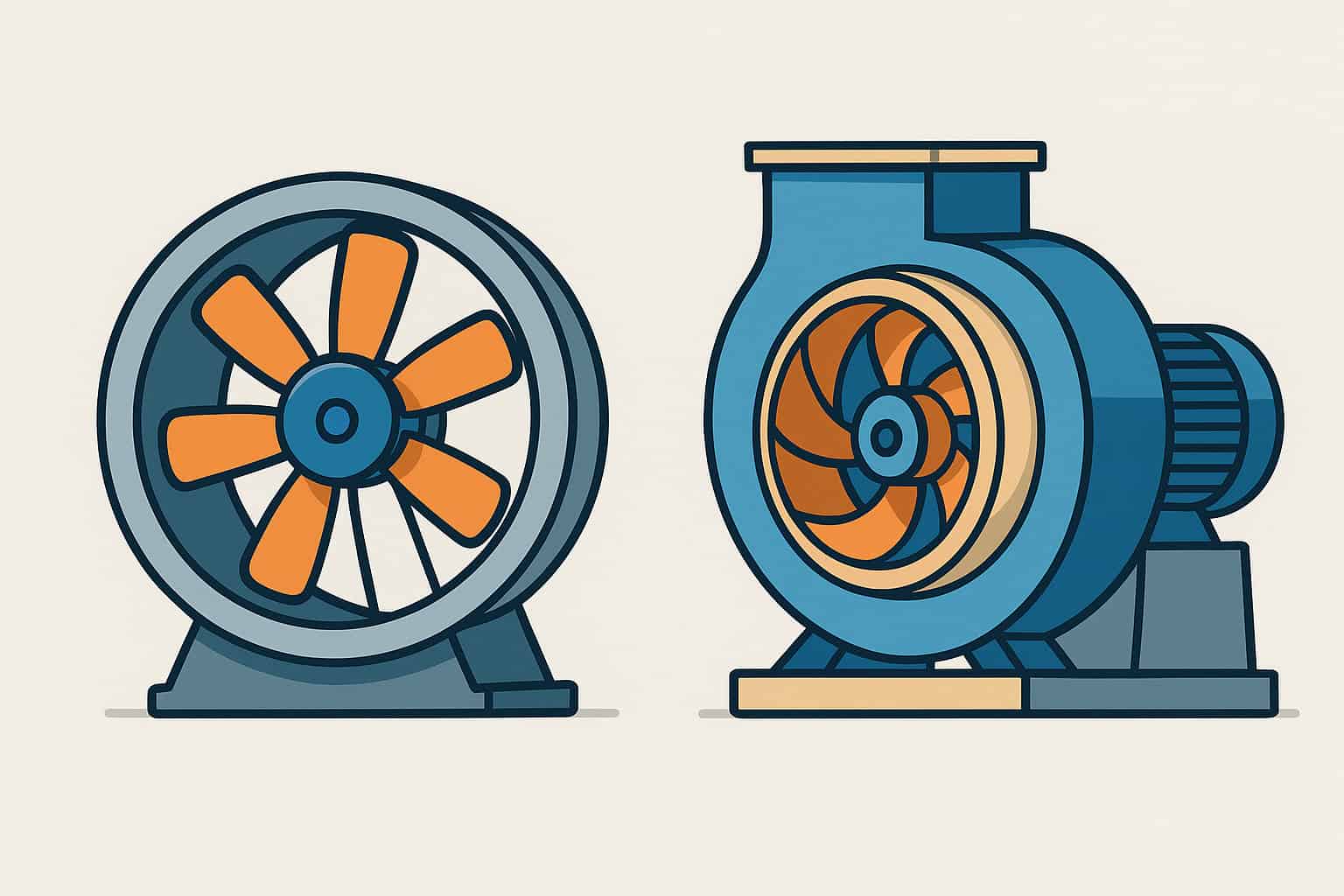
Engineers often classify centrifugal fans into three main types based on blade shape: forward-curved centrifugal fans, backward-curved (or backward-inclined) centrifugal fans and radial (straight) blade centrifugal fans. All three types of centrifugal fans move air by spinning an impeller inside a scroll casing and throwing air outward by centrifugal force, but their performance characteristics and typical applications are different.
Forward-curved centrifugal fans have blades that curve in the direction of rotation. They are sometimes called squirrel-cage or blower wheels. Forward-curved centrifugal fans produce relatively high airflow at low to medium pressure and can be compact for a given duty. They are common in HVAC units, air handling cabinets and smaller clean-air applications. However, these fans are more sensitive to dust build-up, and their efficiency is usually lower than that of backward-curved designs. Their power curve can rise steeply if operated beyond the design point, so motor selection and control must be handled carefully.
Backward-curved or backward-inclined centrifugal fans have blades that lean away from the direction of rotation. Variants include plain backward-curved blades, backward-inclined flat plates and backward-curved airfoil blades. These centrifugal fans typically offer higher efficiency and more stable performance than forward-curved types, especially at medium to relatively high pressures. Their power curve tends to flatten or even fall beyond the best-efficiency point, which reduces the risk of motor overloading if system resistance changes. Backward-curved centrifugal fans are widely used in industrial ventilation, process exhaust, dust collection (when combined with suitable protection) and air handling systems.
Radial (straight) blade centrifugal fans have blades that extend straight outward from the hub, like paddles. These fans are mechanically robust and can handle high dust loads, fibrous material and even small solids better than other centrifugal fan types. Radial centrifugal fans are often chosen for tough industrial duties such as material handling, high-temperature gases, high-pressure air supply and certain mining ventilation tasks where erosion and build-up are concerns. Their efficiency is generally lower than that of well-designed backward-curved centrifugal fans, but their simplicity and ruggedness make them valuable in harsh environments.
In heavy industry and mining, engineers choose between these three types of centrifugal fans based on airflow, pressure, efficiency and gas or dust quality. Forward-curved centrifugal fans are more common in clean-air HVAC applications. Backward-curved and airfoil centrifugal fans are preferred where efficiency and energy savings are important and dust levels are moderate. Radial blade centrifugal fans are selected for high-dust, high-wear or high-pressure duties where reliability and robustness outweigh pure efficiency.
In summary, the three main types of centrifugal fans are forward-curved, backward-curved or backward-inclined and radial (straight) blade designs. Recognising the differences between these centrifugal fan types helps in selecting the right fans for specific industrial and mining ventilation applications.