
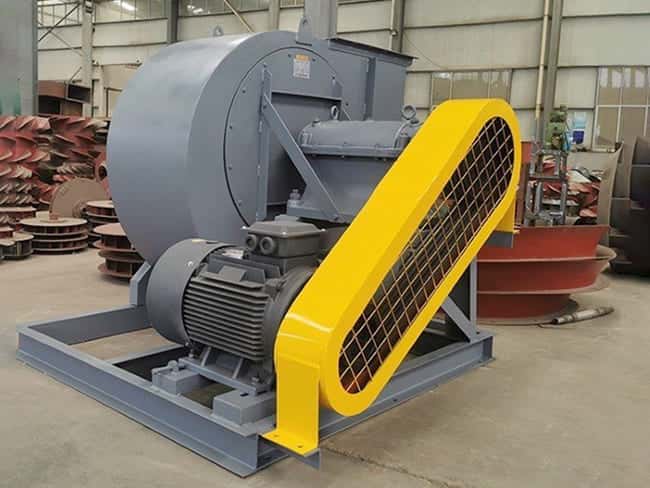
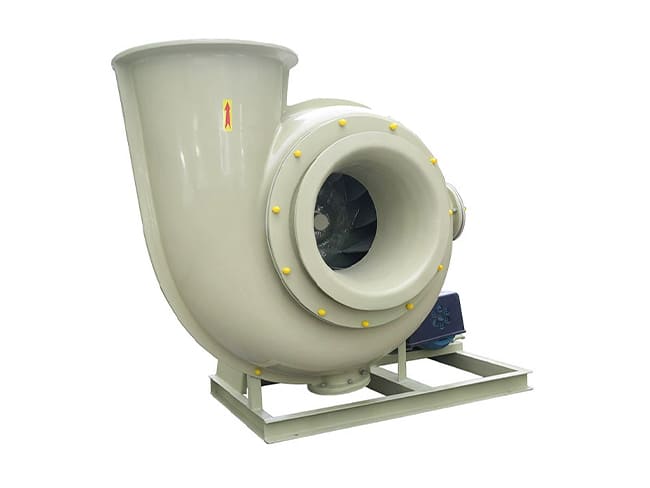
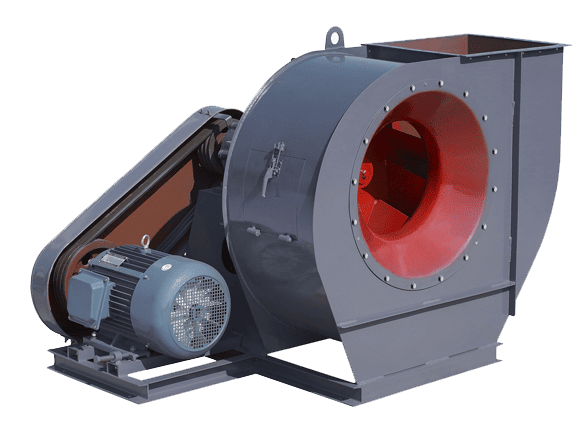
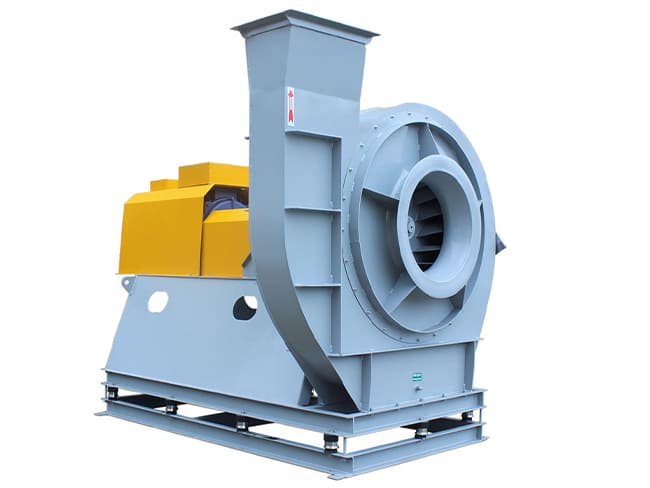
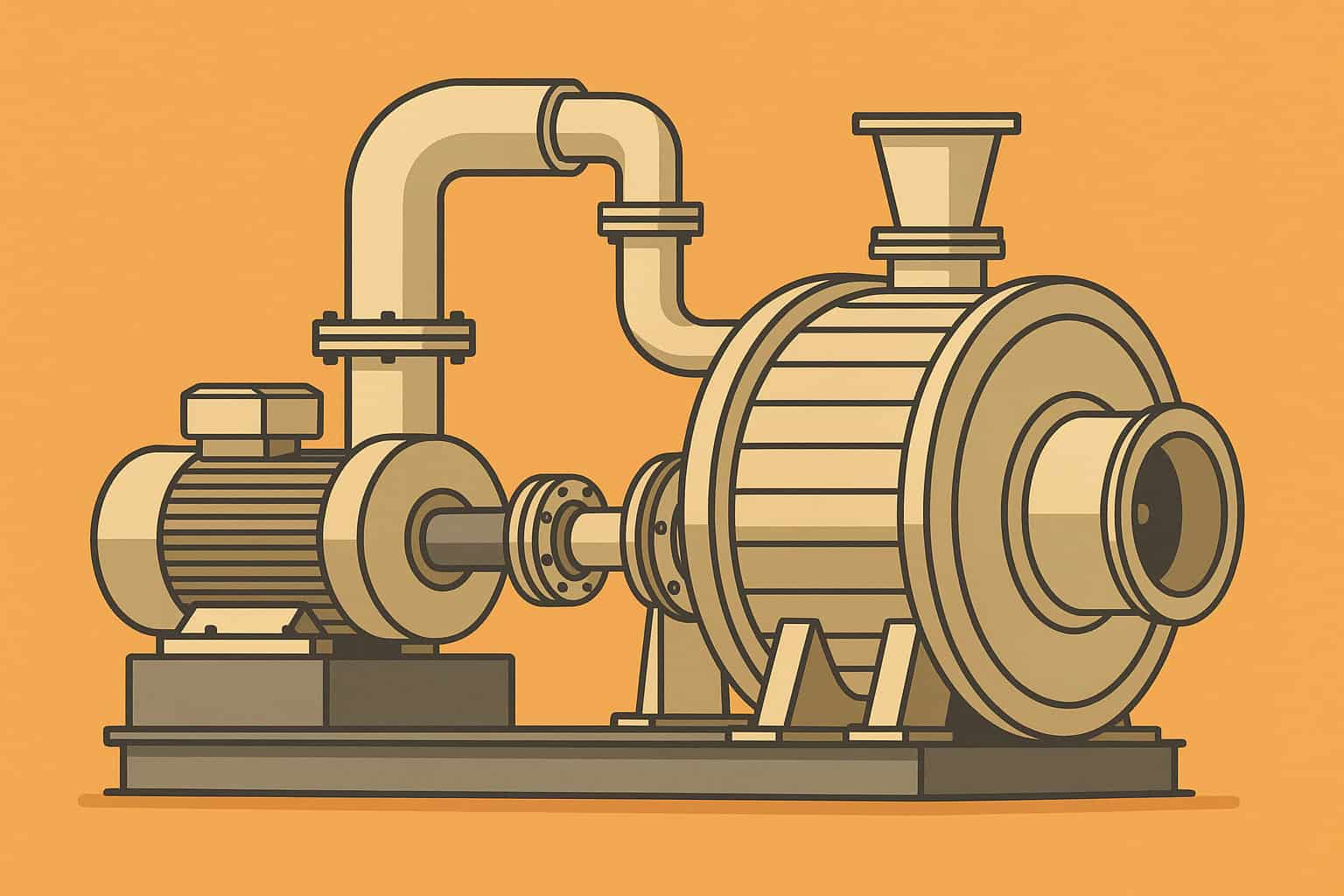

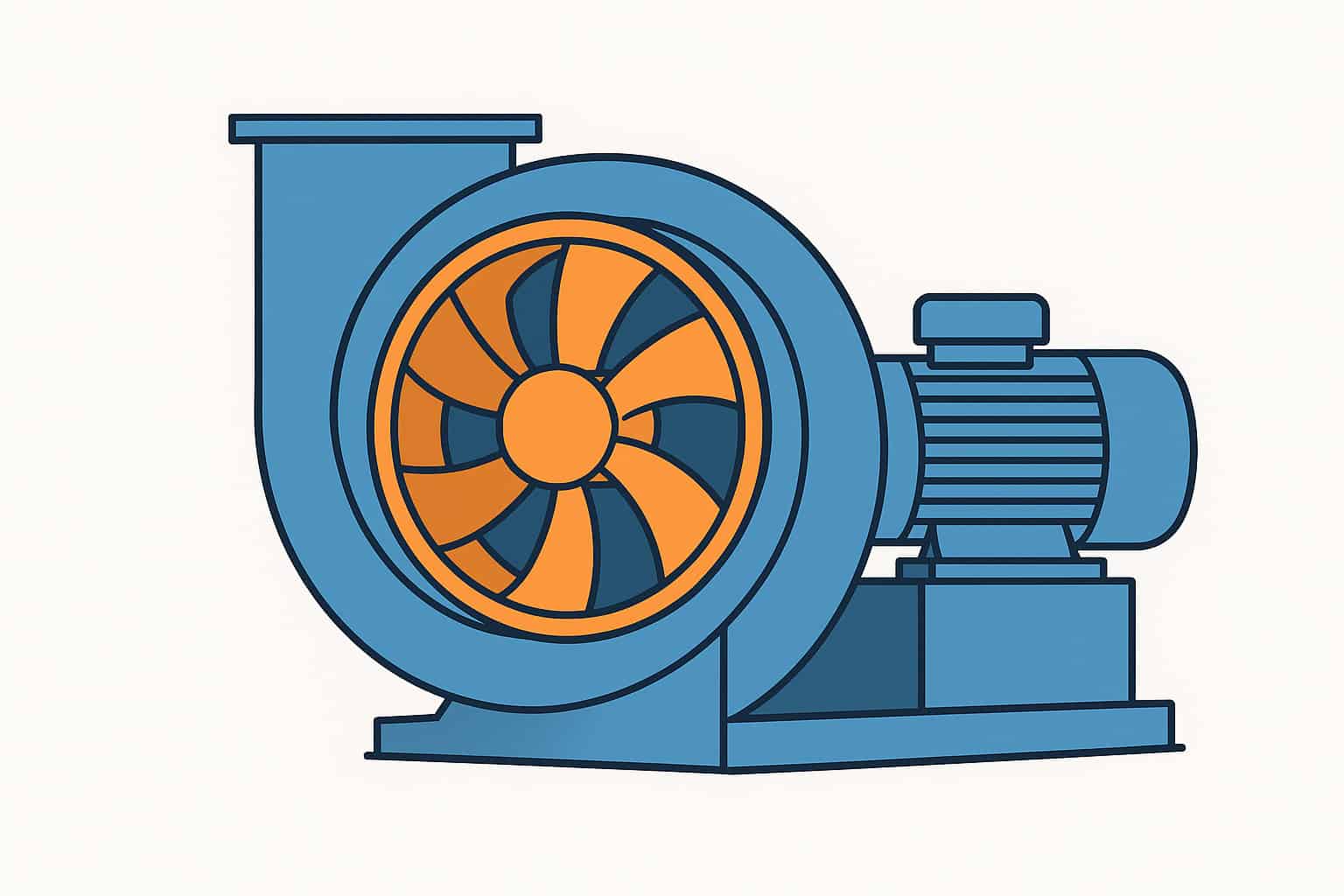
A centrifugal fan in mining is a radial-flow ventilation fan that draws air into the center (eye) of a rotating impeller and accelerates it outward into a scroll-shaped housing, converting velocity into static pressure. This design is widely used in mining and heavy industry wherever the ventilation system must overcome higher resistance, such as long duct runs, high-friction airways, or filtration and dust-collection systems.
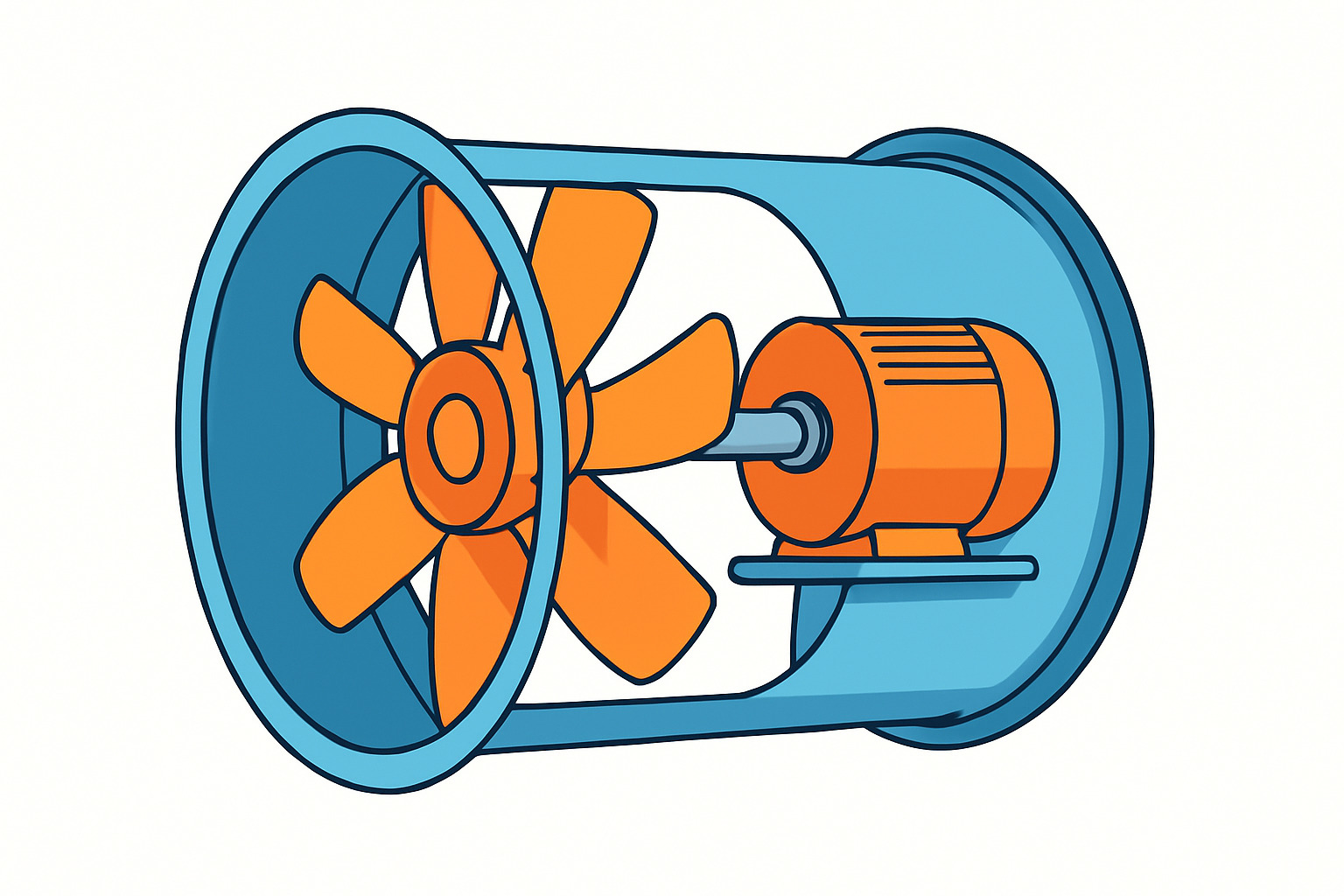
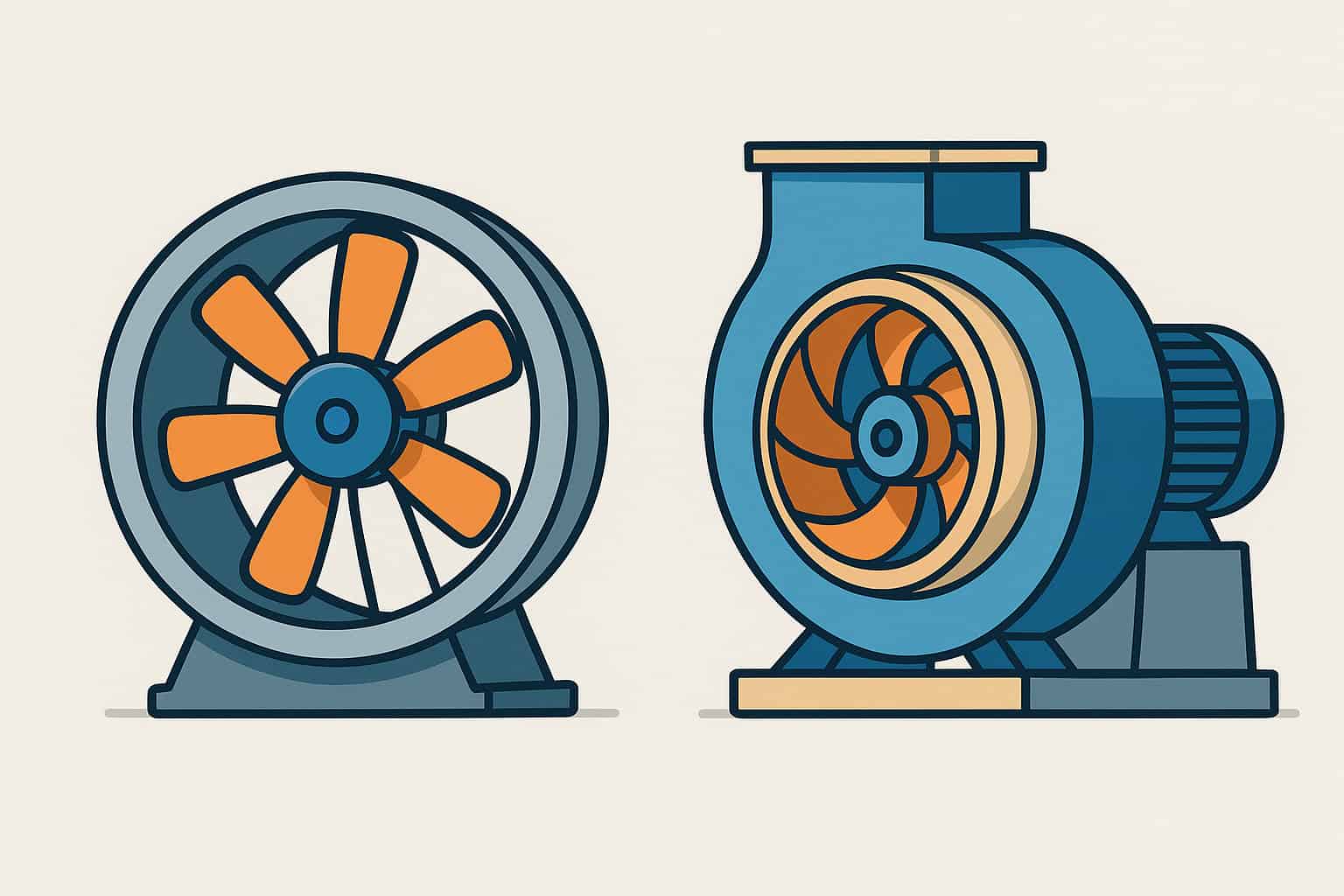
Compared with axial fans, which move air primarily parallel to the shaft, centrifugal fans are often chosen when the priority is higher static pressure at moderate airflows. In mining, they can be used as main fans, booster fans, or industrial process fans around crushing, screening, and processing areas. Their robust construction and pressure capability make them a strong option in demanding applications.
Key characteristics of centrifugal fans in mining
- Radial airflow path: air enters near the shaft and is thrown outward by the impeller blades, gaining energy before entering the casing and discharge.
- Higher static pressure capability: centrifugal fans typically deliver more pressure than axial fans at the same speed and diameter, which is valuable when the system has high resistance.
- Versatile configurations: single-inlet or double-inlet, single-stage or multi-stage designs can be selected to match the required duty point.
- Rugged construction: commonly designed for dusty, abrasive, and high-load environments with strong casings, sealed bearings, and balanced impellers.
In a mining context, centrifugal fans are often used for:
- Ventilation of high-resistance networks: where airways are long, rough, or partially restricted, and higher pressure is needed to maintain airflow.
- Dust extraction and filtration: fans connected to ducted hood systems, baghouses, or scrubbers in crushing plants, conveyor transfer points, or loading stations.
- Process and building ventilation: industrial ventilation in workshops, process halls, and auxiliary facilities around the mine site.
Selection considerations for mining centrifugal fans
When specifying a centrifugal fan, engineers evaluate the required airflow and static pressure, the characteristics of the ventilation network, and the expected operating hours. Efficiency is important because many mining fans run for long periods and energy cost can dominate lifecycle cost. Attention is also paid to:
- Impeller design: backward-curved, radial, and forward-curved blade profiles each have different efficiency, pressure, and dust-handling characteristics.
- Wear resistance: additional protection may be required in dusty or abrasive conditions, such as wear liners or special materials.
- Noise and vibration: proper foundation, balancing, and silencers help control noise levels and mechanical stress.
- Safety features: guards, appropriate electrical protection, and, where required, explosion-proof or flameproof motor and enclosure options.
In summary, a centrifugal fan in mining is a pressure-focused ventilation solution that uses radial flow to deliver higher static pressure for tough ventilation duties. It is widely applied where duct or airway resistance is significant, and when selected correctly, it provides reliable, efficient performance for both mine ventilation and industrial process ventilation around mining operations.