
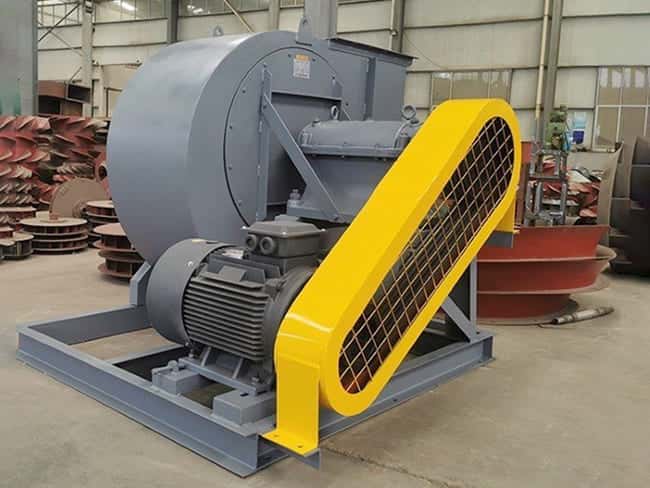
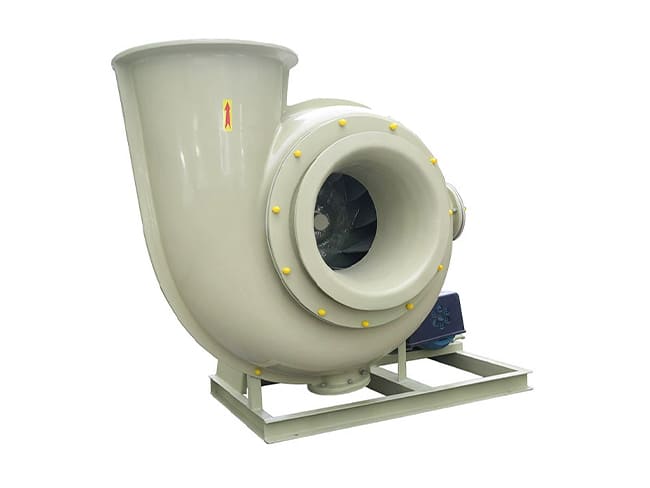
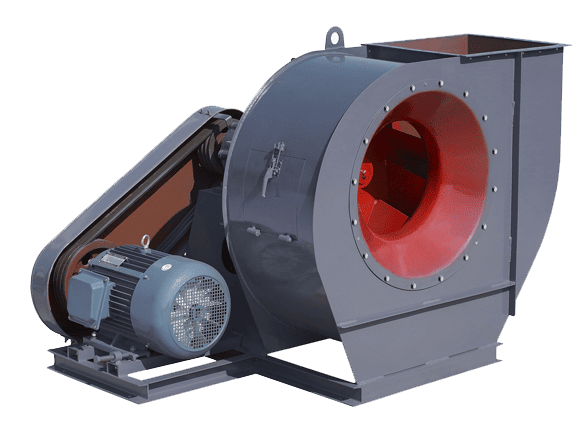
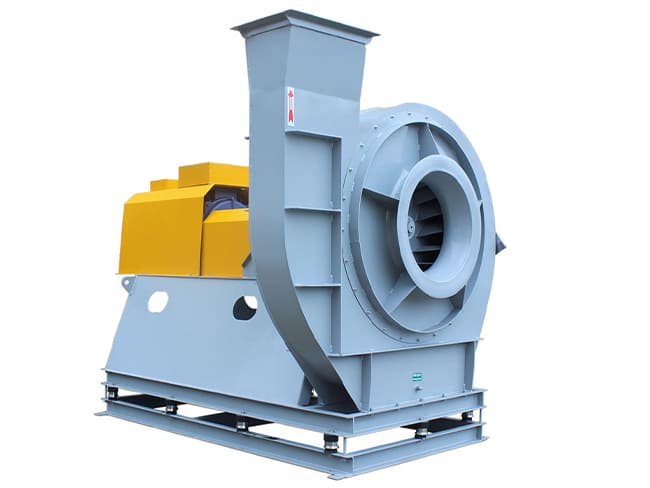
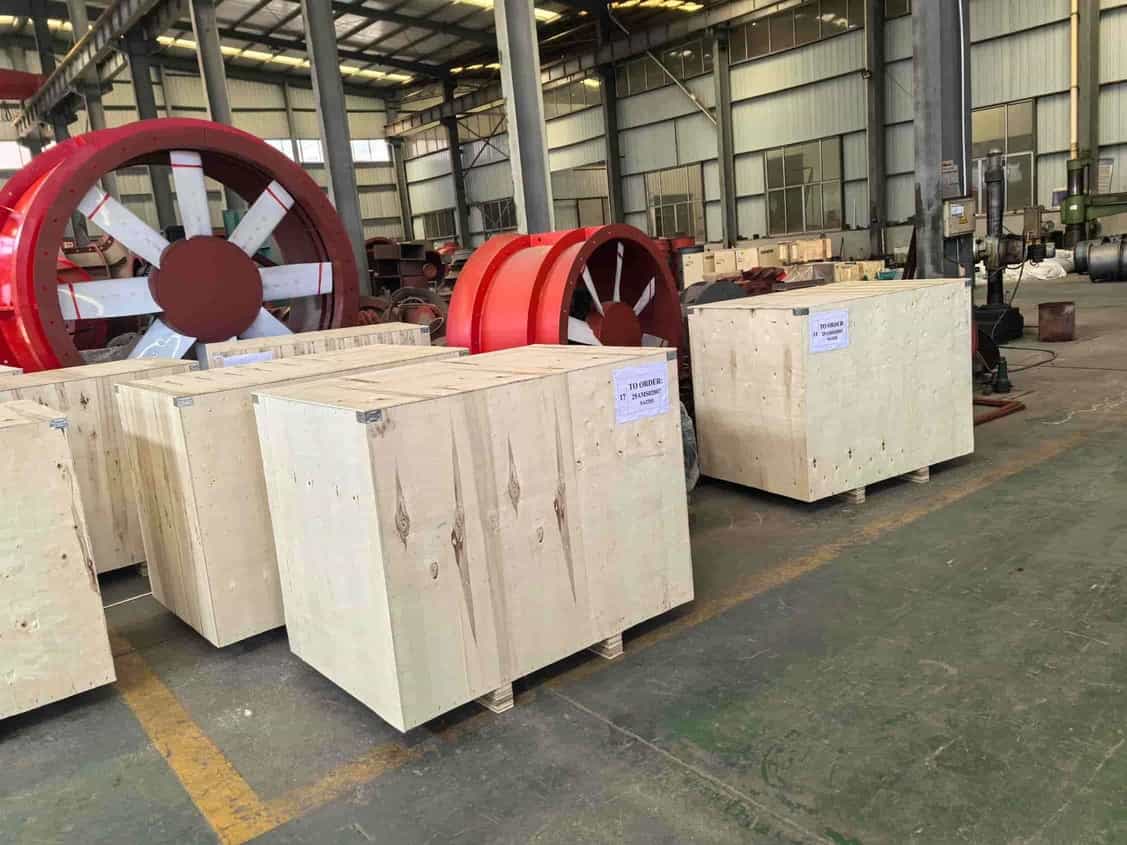
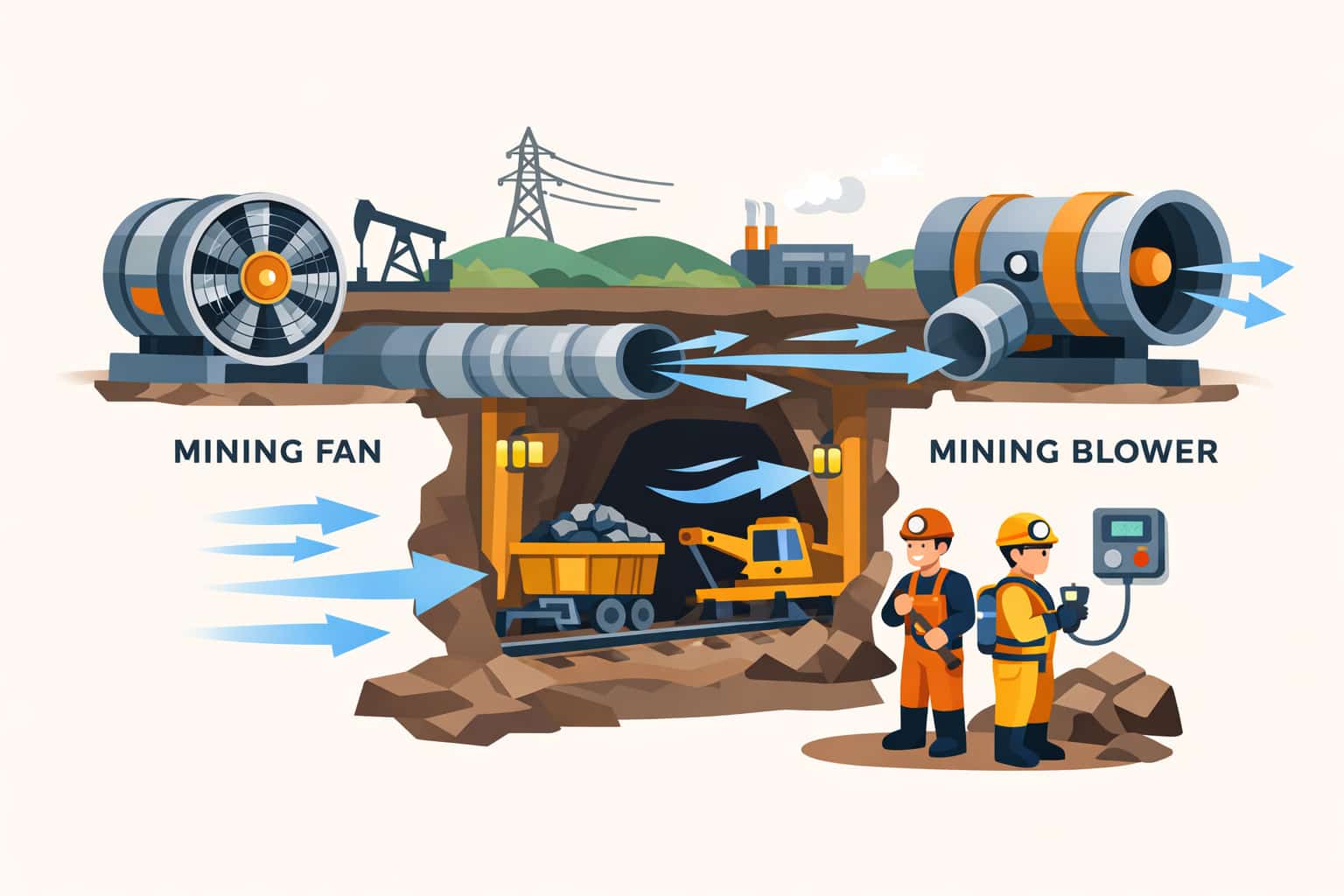
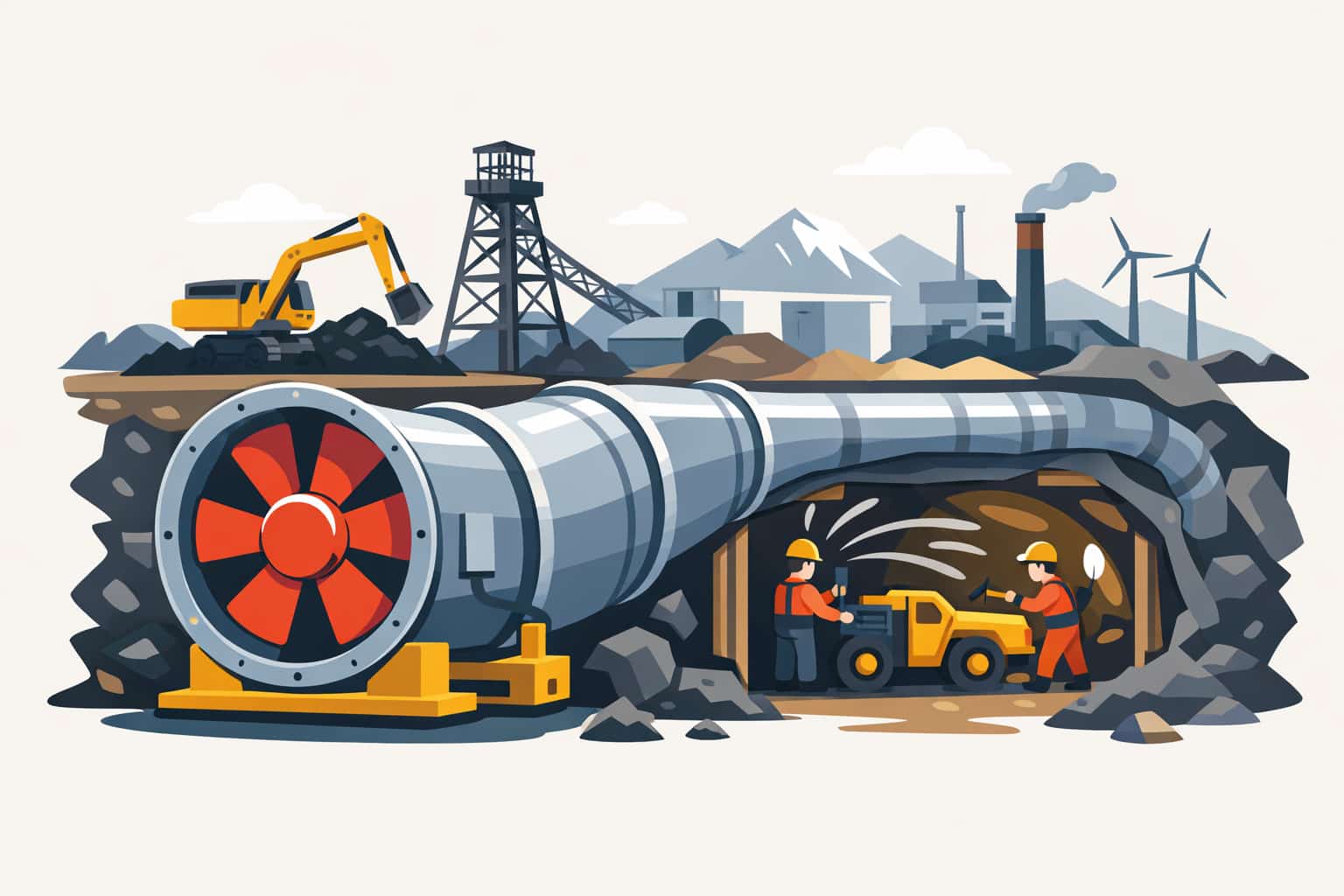
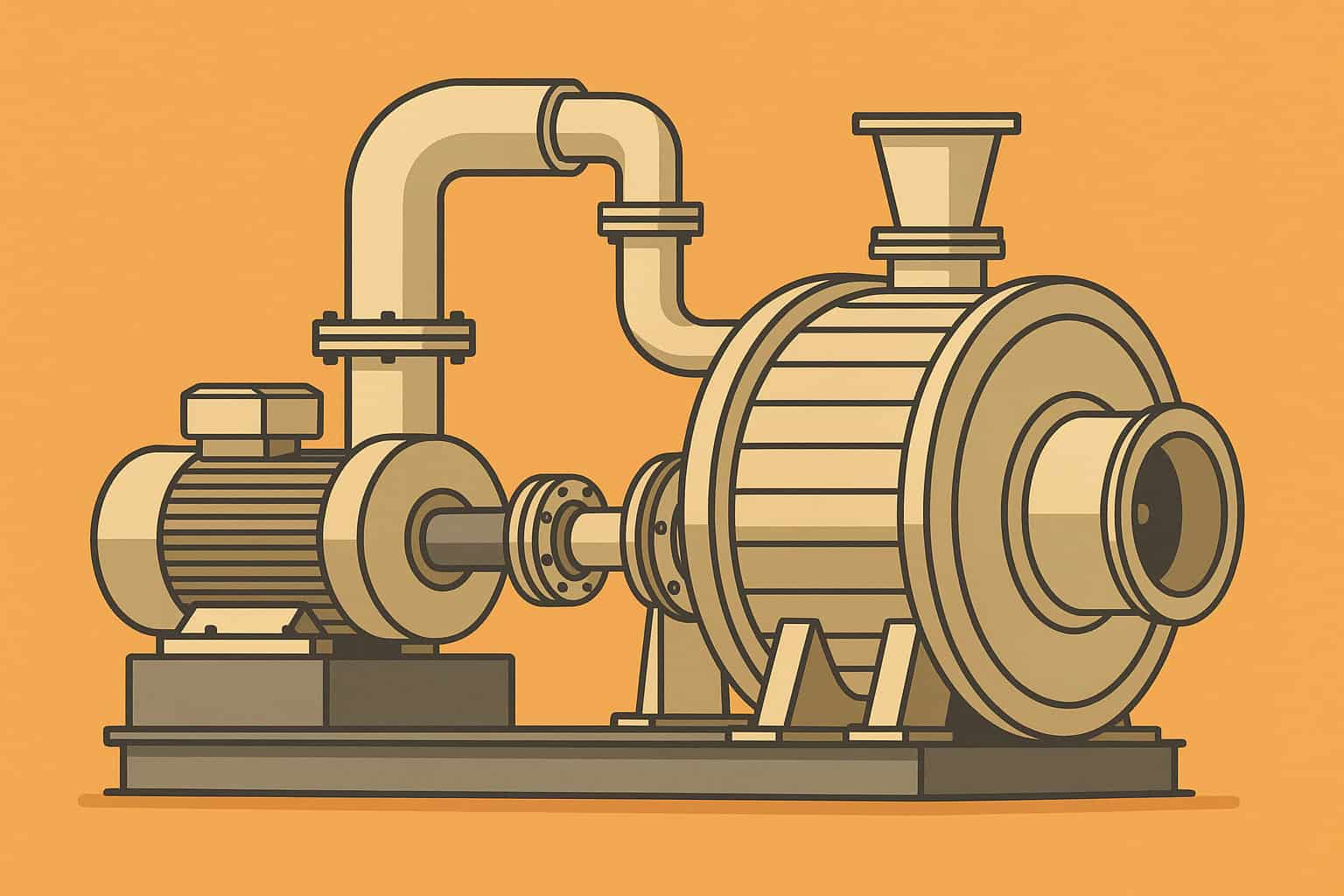
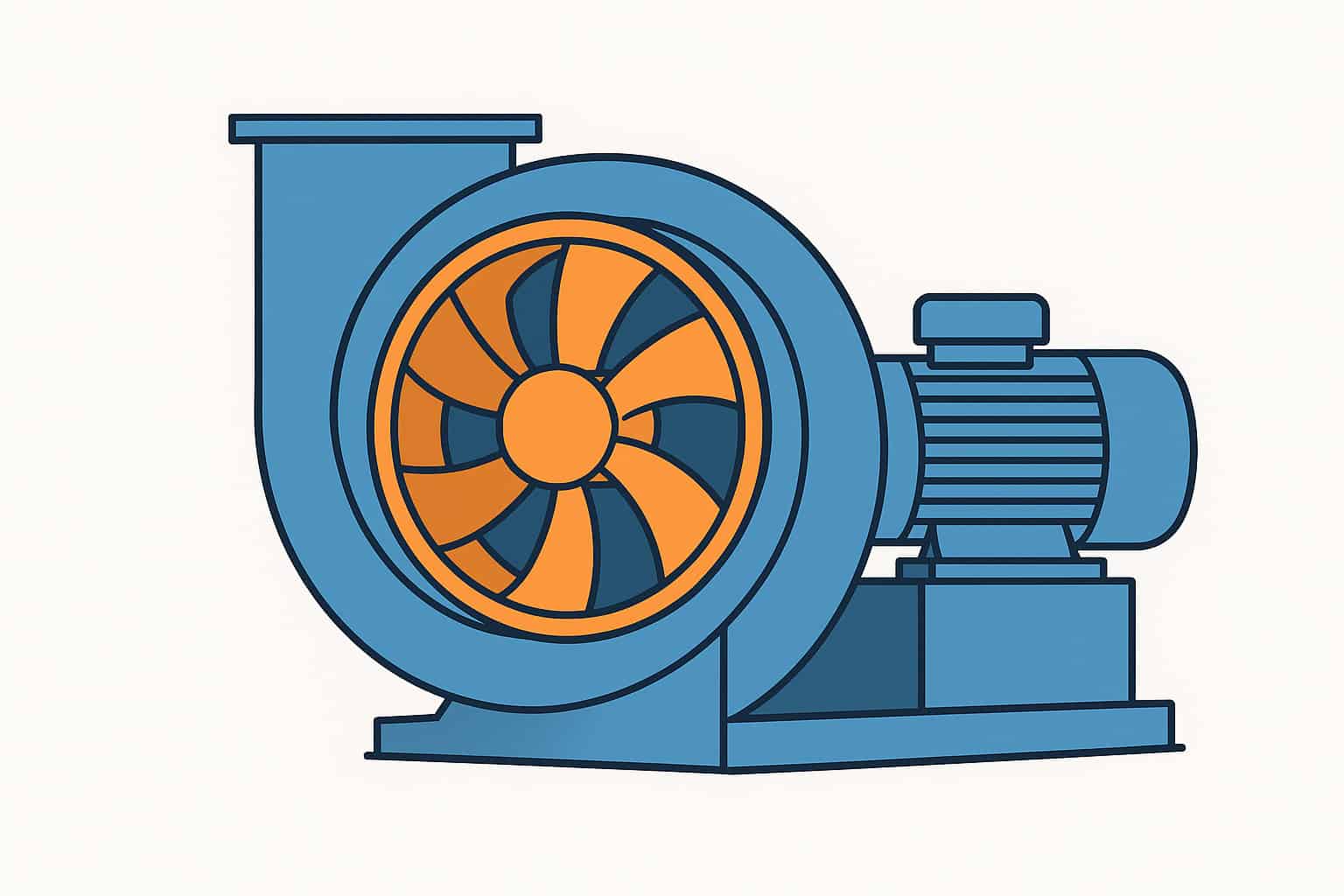
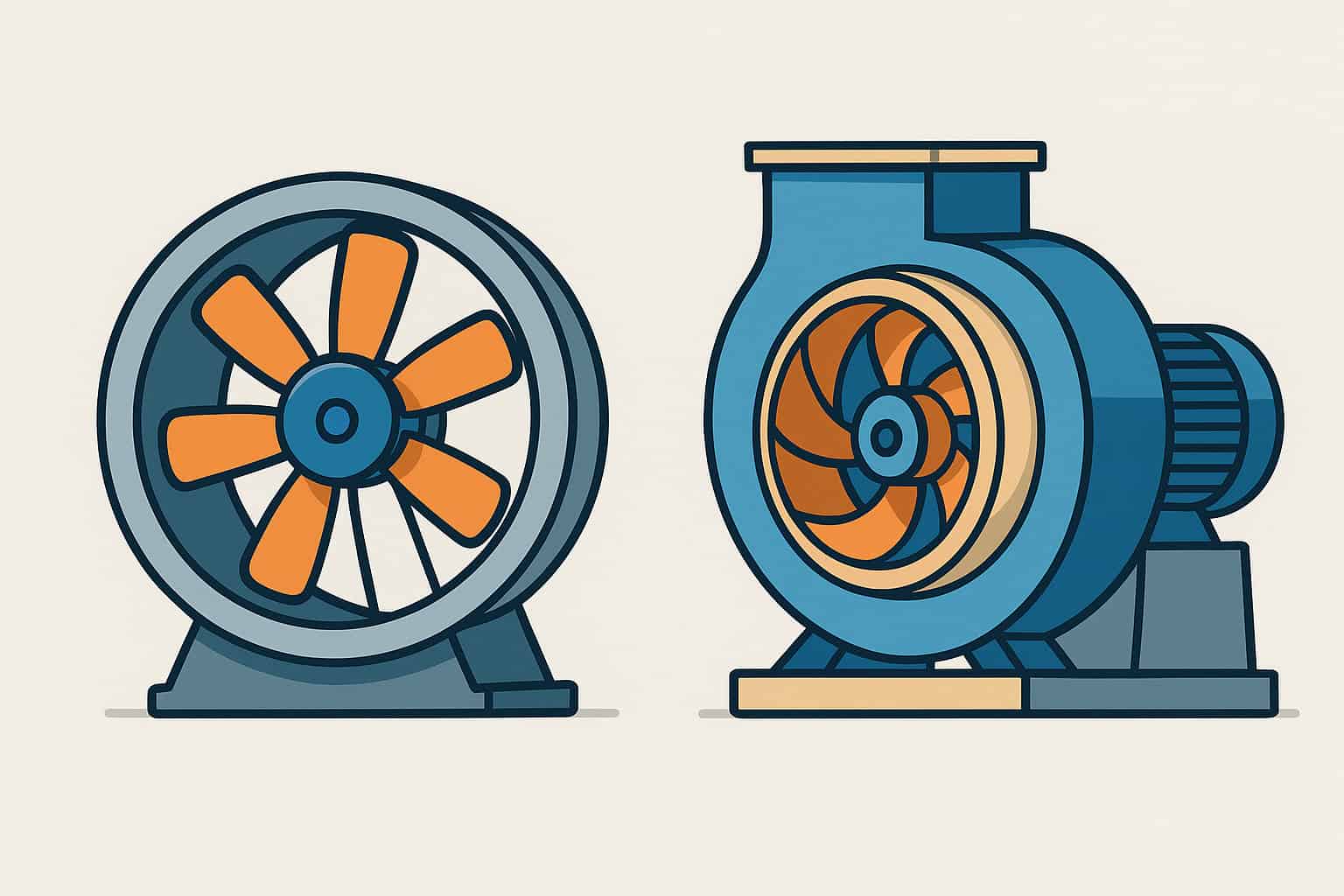
A centrifugal fan and a blower are closely related machines, and in many cases a blower is simply a centrifugal fan designed for higher pressure duties. Both use a rotating impeller to draw air into the centre and fling it outward into a scroll-shaped housing. However, the terms are used differently in practice, especially in industrial ventilation and mining.
A centrifugal fan is the broader category. It includes a wide range of impeller designs—forward-curved, backward-curved, backward-inclined and radial blade—covering everything from light HVAC units to heavy-duty industrial exhaust fans. Centrifugal fans can operate at low, medium or relatively high pressures, depending on their size, speed and blade geometry. Many are used for general ventilation, dust collection, process exhaust and combustion air.
The word blower is usually reserved for centrifugal fans that operate at the upper end of the pressure range, or for machines used in more demanding process roles. A blower typically develops higher static pressure than a comfort fan and is designed to overcome significant system resistance: long ducts, tight bends, filters, cyclones, scrubbers and restrictive hoods. In many technical standards, the dividing line between “fan” and “blower” is based on outlet pressure or the ratio of outlet to inlet pressure.
In terms of design and construction, centrifugal blowers often have heavier casings, more robust impellers and stronger shafts and bearings than light-duty centrifugal fans. They may include special sealing arrangements, high-temperature materials, wear-resistant linings or gas-tight housings for hazardous or corrosive gases. Noise control (such as inlet and outlet silencers) is also more common because blowers often run at higher speeds and pressures.
From an application point of view, centrifugal fans in the lower-pressure range are used for general building ventilation, low-resistance duct systems and comfort cooling. Blowers are chosen for dust collection, pneumatic conveying, combustion air, process gas handling and auxiliary mine ventilation where pressure requirements are higher. In underground mines, smaller high-pressure units are typically called blowers, while very large main ventilation machines are often described as fans, even though they may also be centrifugal.
In summary, all blowers are centrifugal fans, but not all centrifugal fans are blowers. The main difference lies in the pressure level and application: a blower is a centrifugal fan that is designed, rated and used for higher-pressure duties in more demanding industrial and mining systems.