
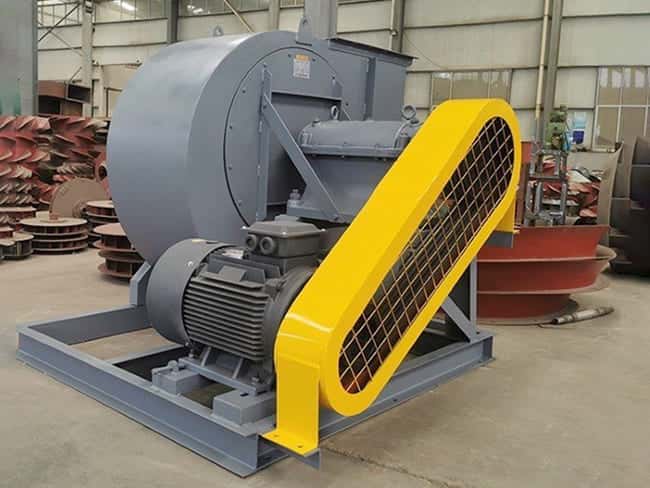
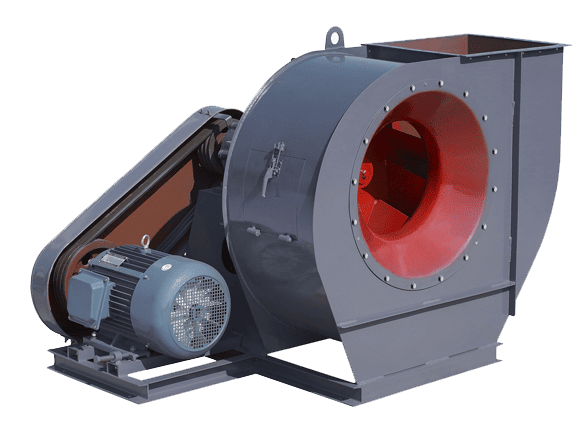
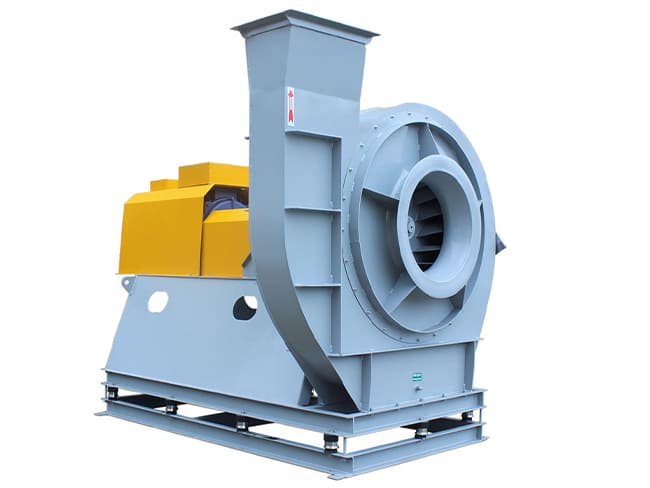
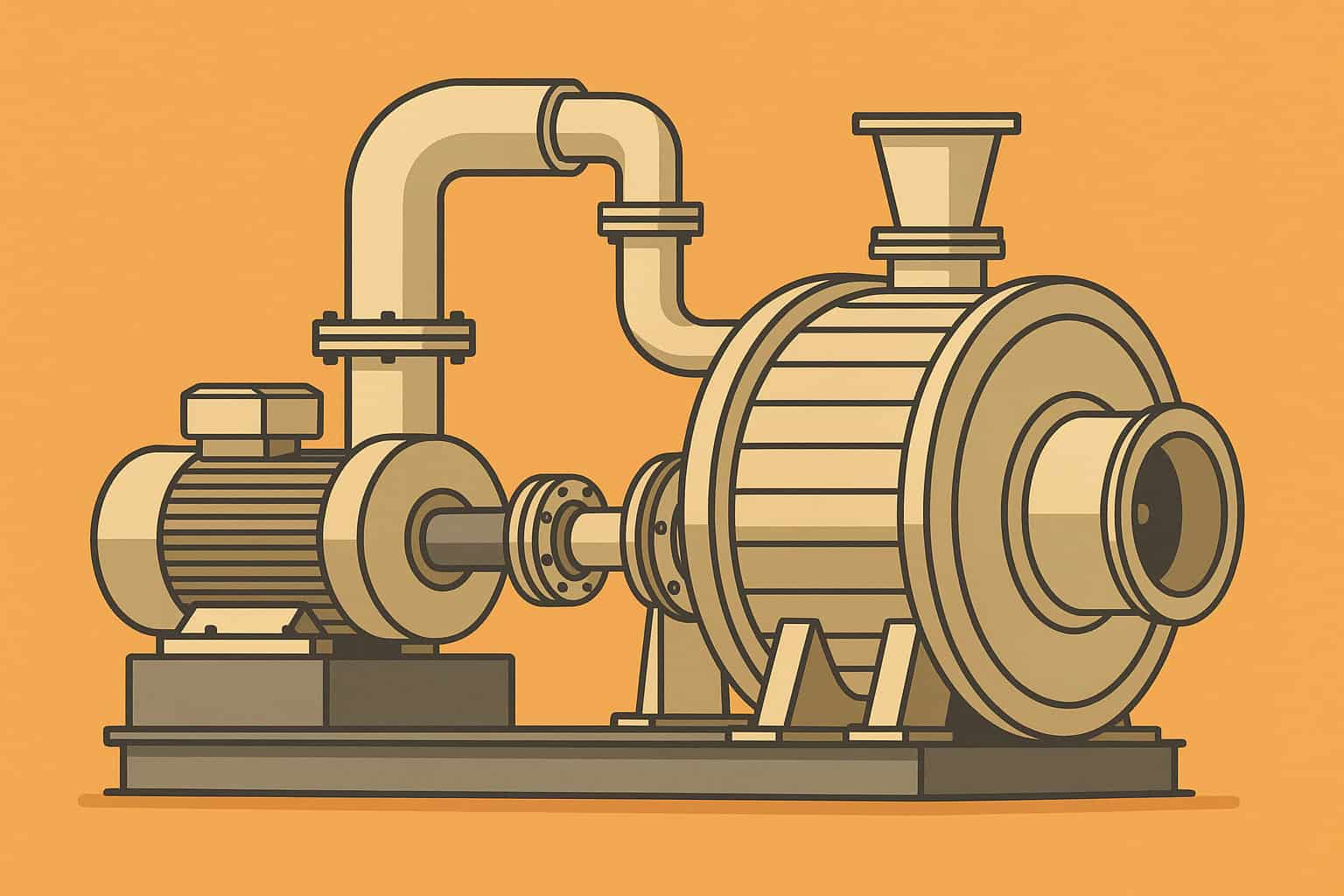

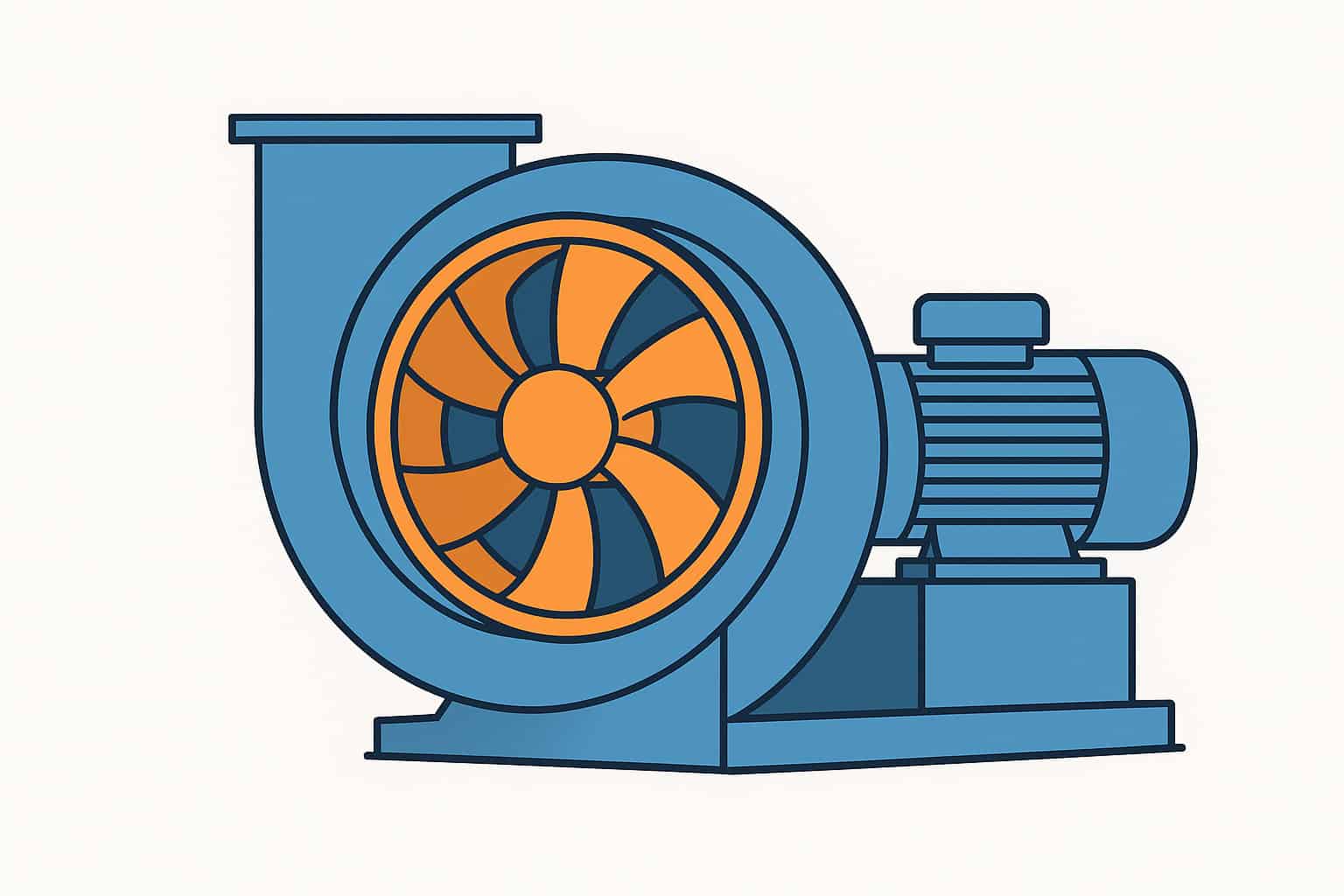
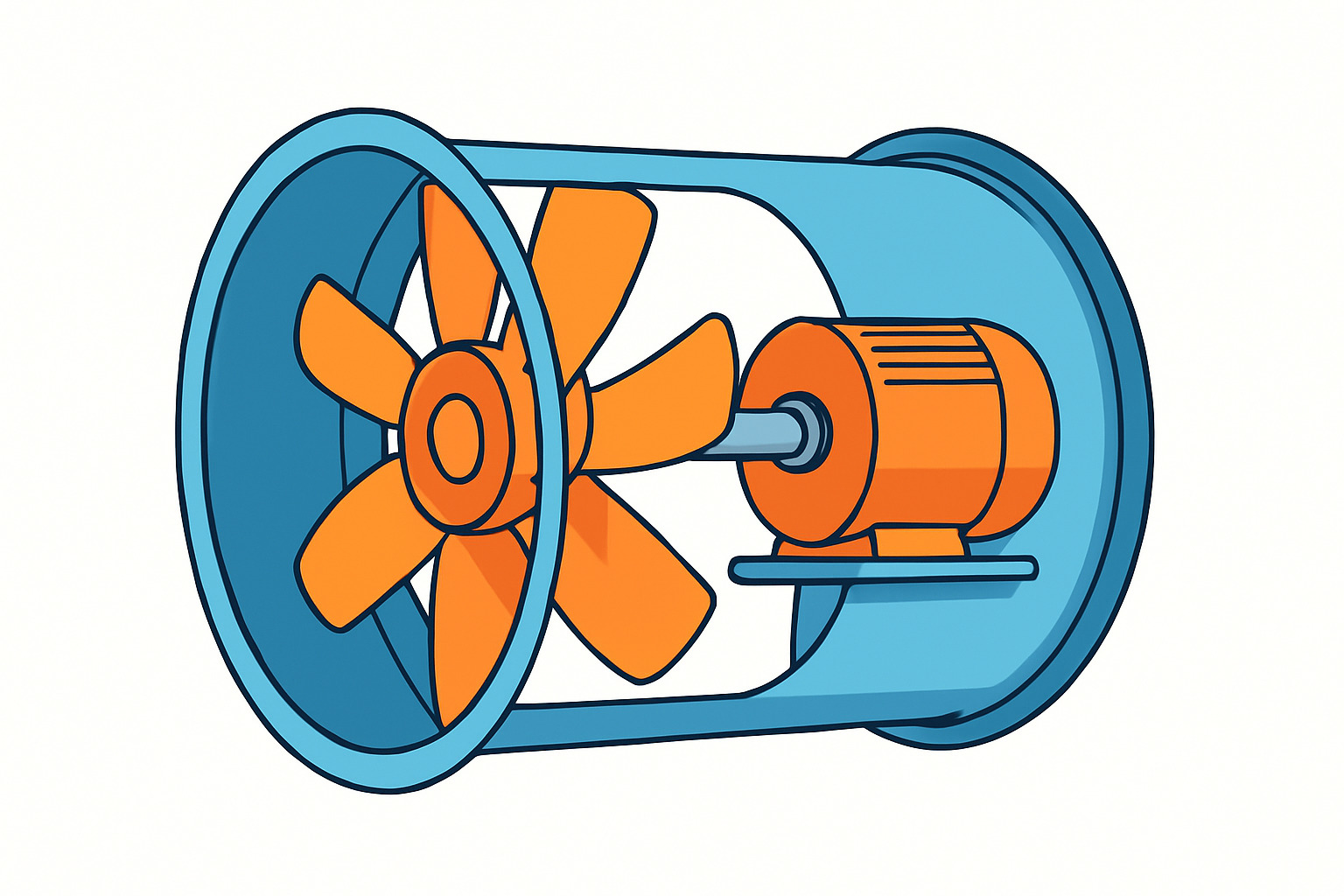
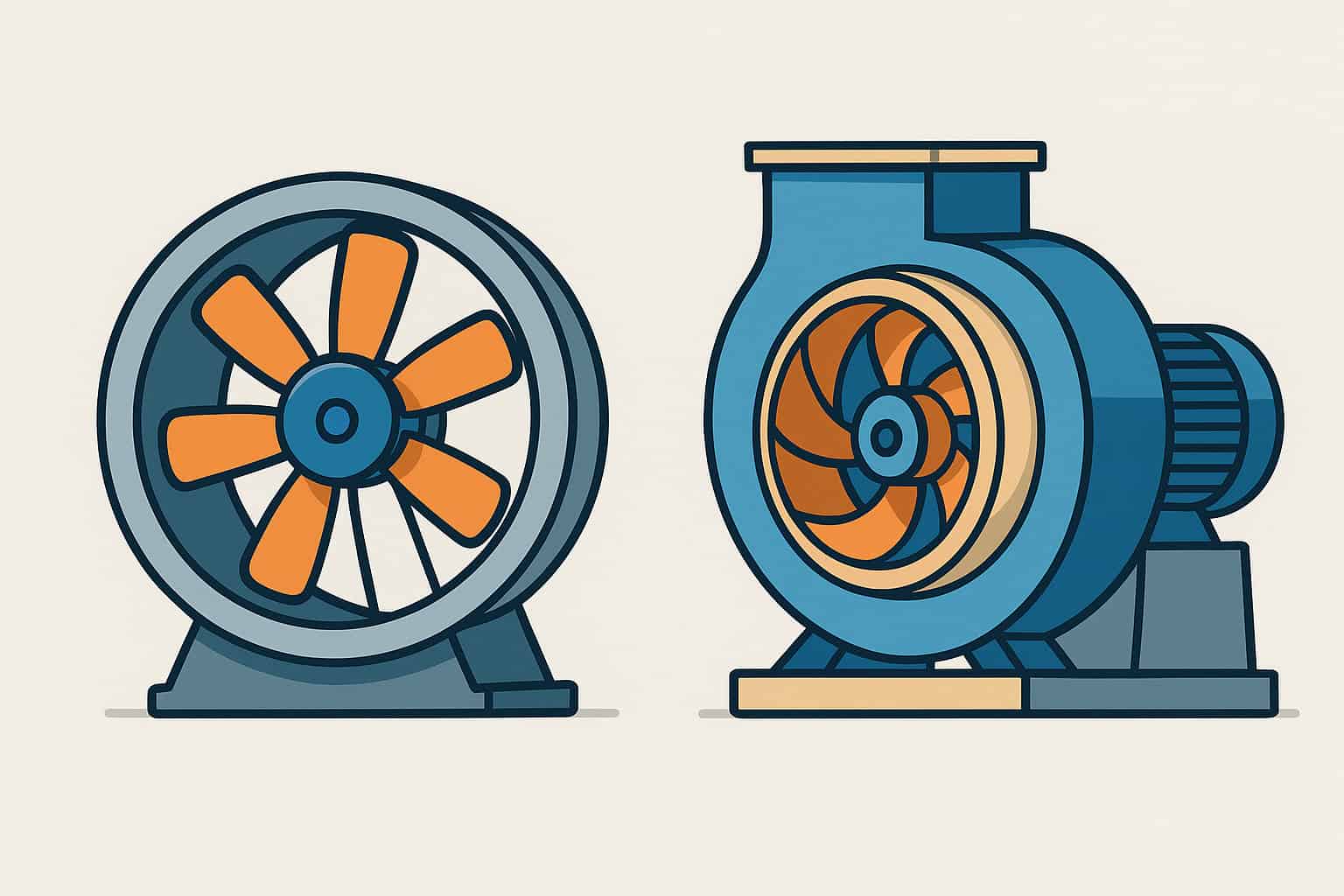
You should use a centrifugal fan when your ventilation system requires higher static pressure, the air is dirty or hot, or the airflow must pass through complex ducting and equipment. In these situations, a centrifugal fan usually performs better and more reliably than a simple axial fan.
Centrifugal fans are the preferred choice when system resistance is high. Long duct runs, narrow ducts, multiple elbows, filters, heat exchangers, scrubbers and dampers all add pressure drop to the system. A centrifugal fan is designed to generate higher static pressure, making it well suited to dust collection systems, process exhaust lines, and intricate HVAC networks where an axial fan might stall or deliver insufficient airflow.
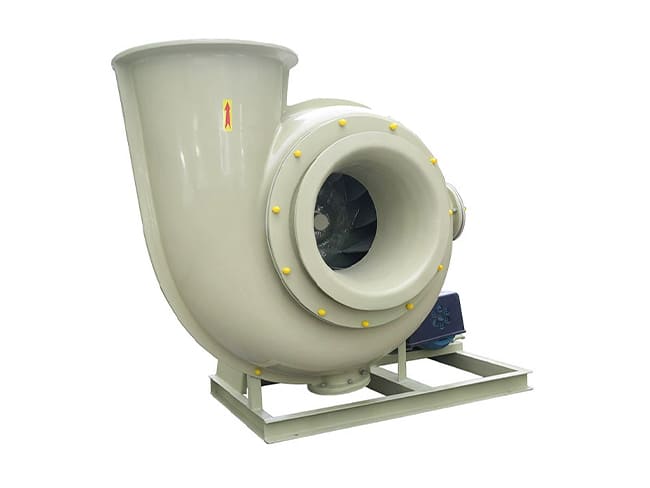
You should also consider a centrifugal fan when the air contains dust, particles or corrosive components. Radial and material-handling centrifugal fans have robust, open blade designs and strong housings that can cope with dust, chips, and abrasive particles better than most axial fans. When the gas stream is corrosive or hot, centrifugal fans can be built from special alloys or FRP, or equipped with cooling and lining, to withstand these conditions.
In industrial and mining applications, use centrifugal fans for local exhaust at crushers, transfer points and loading stations, for pulling air through bag filters and cyclones, for furnace and kiln exhaust, and for supplying combustion air. They are also suitable for booster ventilation systems and auxiliary circuits where pressure demand is higher than what an axial fan can comfortably provide.
Centrifugal fans are a good option when you need controlled, ducted airflow to specific points rather than just general air movement in open spaces. In HVAC air handling units, backward-curved centrifugal fans push conditioned air through coils, filters, silencers and duct branches to many zones in a building. Their ability to maintain pressure and flow over a wide range of conditions is a key advantage.
On the other hand, if your application is high-volume, low-pressure airflow in relatively open passages, such as main tunnel ventilation or large open cooling areas, an axial fan may be more efficient and compact. The choice is not about which fan is universally better, but about which fan type matches the pressure, flow, air quality and layout requirements of your system.
In summary, you use a centrifugal fan when your ventilation system needs higher pressure, handles dusty or harsh air, or includes complex ducting and equipment. In these roles, centrifugal fans provide reliable, controllable airflow for industrial plants, HVAC systems and mining operations.