airflow distribution
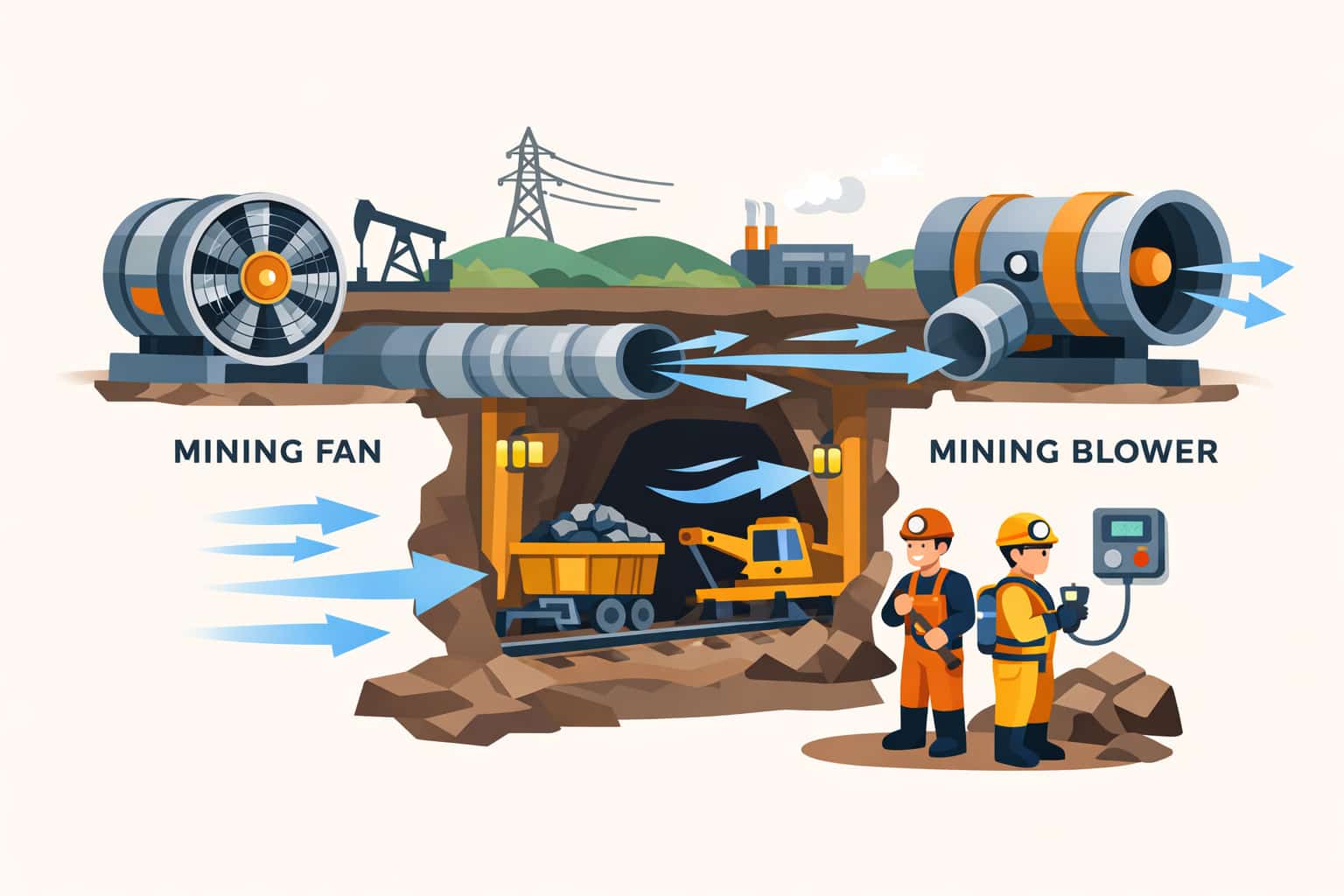
Airflow distribution is how total mine ventilation airflow is divided across different branches of the underground network. Even with a strong main fan, poor distribution can leave key work areas under-ventilated while other paths receive excess airflow. Distribution changes over time as headings advance, doors and regulators are adjusted, and resistance patterns shift across the network.
In mining, airflow follows the path of least resistance. That means small changes—new stoppings, damaged doors, additional leakage, or a new connection—can redirect significant airflow. Booster fans can help support specific districts, but they must be integrated carefully because they can also cause unstable flow patterns or recirculation if the network is not properly controlled.
Key practical drivers of airflow distribution include:
- Network resistance: changes in airway size, roughness, obstructions, and leakage shift airflow pathways.
- Control devices: regulators, doors, and stoppings set branch resistances and influence balancing.
- Fan interactions: main and booster fan duty points must be coordinated to avoid unwanted pressure relationships.
- Operational changes: new districts, production changes, and seasonal density effects can alter distribution.
Managing distribution requires measurement and adjustment. Regular surveys at defined points help confirm that target air quantities are being met. When issues appear, the solution is often system-based: improve leakage control, adjust regulators, remove obstructions, or revise booster fan control (often using VFD) to match evolving duty points.
Bottom line: airflow distribution is the real “performance” of mine ventilation. It is not fixed by buying a larger fan; it is maintained by controlling resistance, verifying airflow, and coordinating fans and regulators as a connected system.
Contact Us
Contact Us