duct ventilation
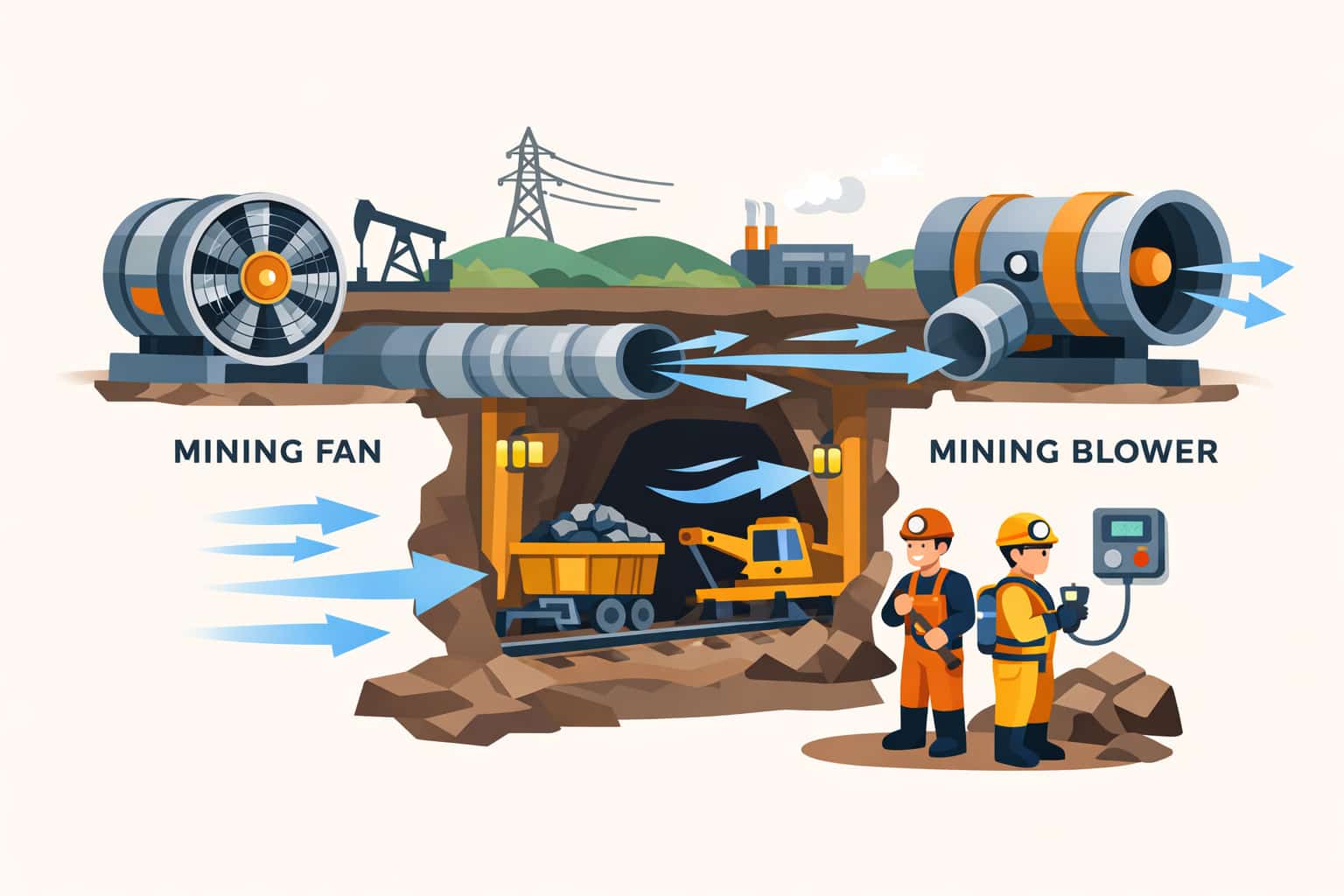
Duct ventilation is the standard method for delivering air to underground headings where the main airflow path cannot directly supply the face. A duct system looks simple—fan + duct + outlet—but performance is controlled by the same rule as any ventilation system: delivered airflow depends on the operating point, where the fan curve meets the system resistance.
In underground mines, duct resistance can rise quickly. The longer the duct, the more friction loss accumulates. Every bend, reducer, connector, and damaged section adds additional loss. Most importantly, leakage is not a minor detail: poor joints and tears can steal a large share of airflow before it reaches the working face. That is why “free-air” airflow ratings (near 0 Pa) are often misleading for ducted applications.
To keep duct ventilation effective, focus on what the face receives:
- Target end-of-duct airflow: specify the required airflow at the face (not at the fan outlet).
- Estimate static pressure: include duct length/diameter, bends, fittings, expected leakage condition, and any regulators or restrictions.
- Plan for change: headings advance, ducts extend, and resistance grows—build margin into your duty point range.
There are two common arrangements. Forcing duct ventilation blows fresh air to the face and is widely used for stable delivery. Exhausting duct ventilation extracts contaminated air and can improve contaminant control in certain conditions, but may be more sensitive to leakage because leaks can draw in surrounding air and reduce effective capture at the face. Selection should follow site procedures and the ventilation plan, with careful attention to leakage management.
Operationally, a VFD often improves duct ventilation by allowing speed adjustment as the system evolves, helping maintain target airflow and reducing noise and power when conditions permit. Combined with disciplined duct practices—tight joints, fewer sharp bends, appropriate duct quality, and routine inspection—duct ventilation becomes reliable, measurable, and easier to manage over the full heading cycle.
Contact Us
Contact Us