duty point (Q@Ps)
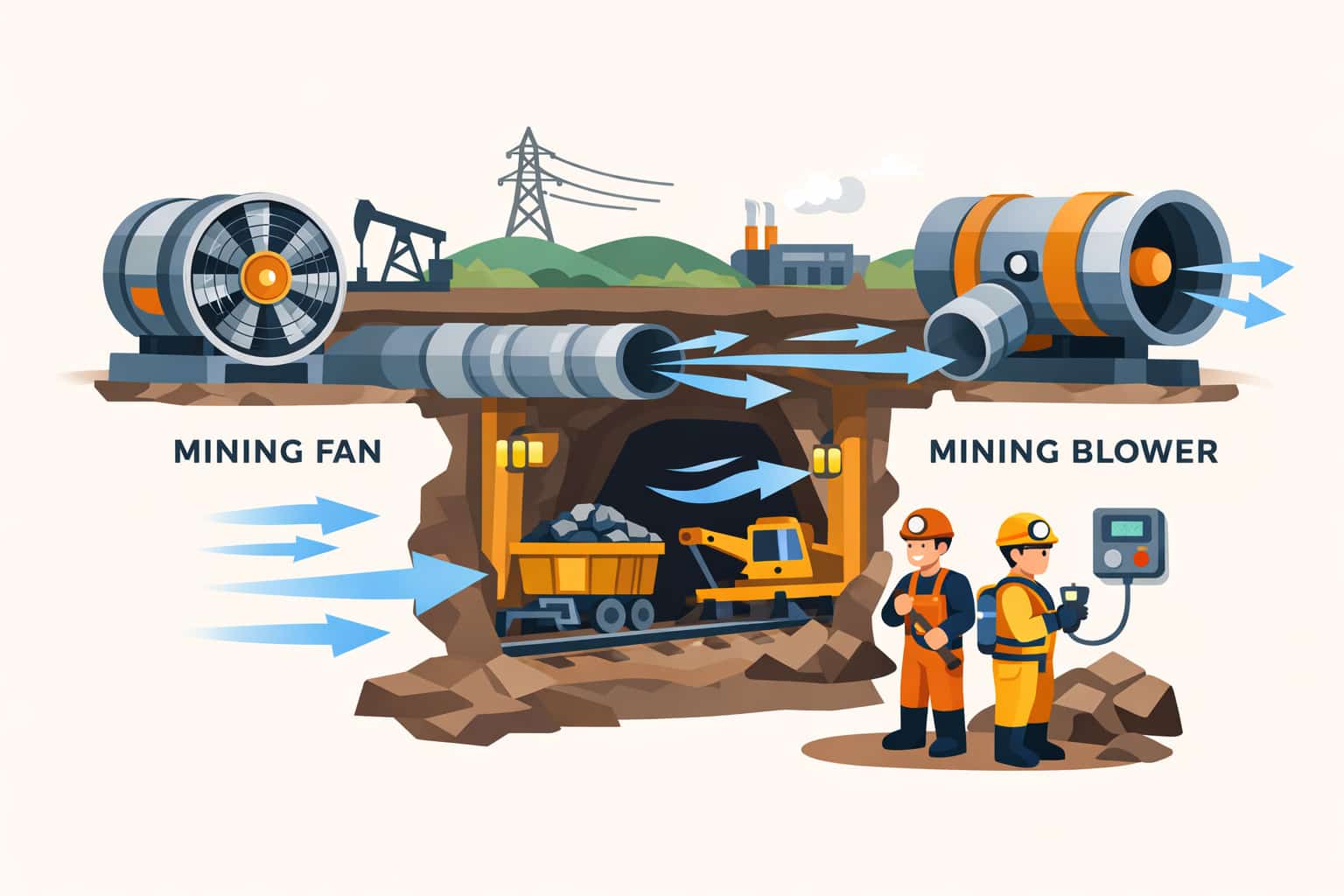
The duty point (Q@Ps) is the operating requirement a ventilation fan must meet: a specific airflow (Q) at a specific static pressure (Ps). In mining ventilation, duty point thinking is the fastest way to avoid selection mistakes caused by labels, free-air numbers, or oversimplified comparisons. Whether the equipment is called a “fan” or a “blower,” it must deliver the required Q at the required Ps in the real system.
Technically, the duty point is where the fan performance curve intersects the system resistance curve. The system curve represents how much Ps is required as airflow changes, based on duct length, bends, fittings, leakage, regulators, and network resistance. When the mine develops and resistance changes, the system curve shifts—and the operating point shifts with it. This is why an auxiliary unit that worked last month may fail today after duct extension and additional bends.
Using duty point correctly involves four practical steps:
- Define Q at the target location (often end-of-duct airflow at the face).
- Estimate Ps realistically including friction losses, local losses, and expected leakage condition.
- Select by curve ensuring the fan meets Q@Ps with usable margin and acceptable efficiency.
- Plan a duty range for expected resistance growth and control with a VFD when appropriate.
Duty point selection also improves communication between operations, planning, and procurement. Instead of requesting a “bigger blower,” a site can specify the required Q@Ps and duct conditions, allowing suppliers to recommend an appropriate fan type, speed, and motor size with confidence.
Bottom line: the duty point is the single most important technical statement in mining ventilation fan selection. If Q@Ps is correct and the system assumptions are realistic, performance in the mine becomes predictable and verifiable.
Contact Us
Contact Us