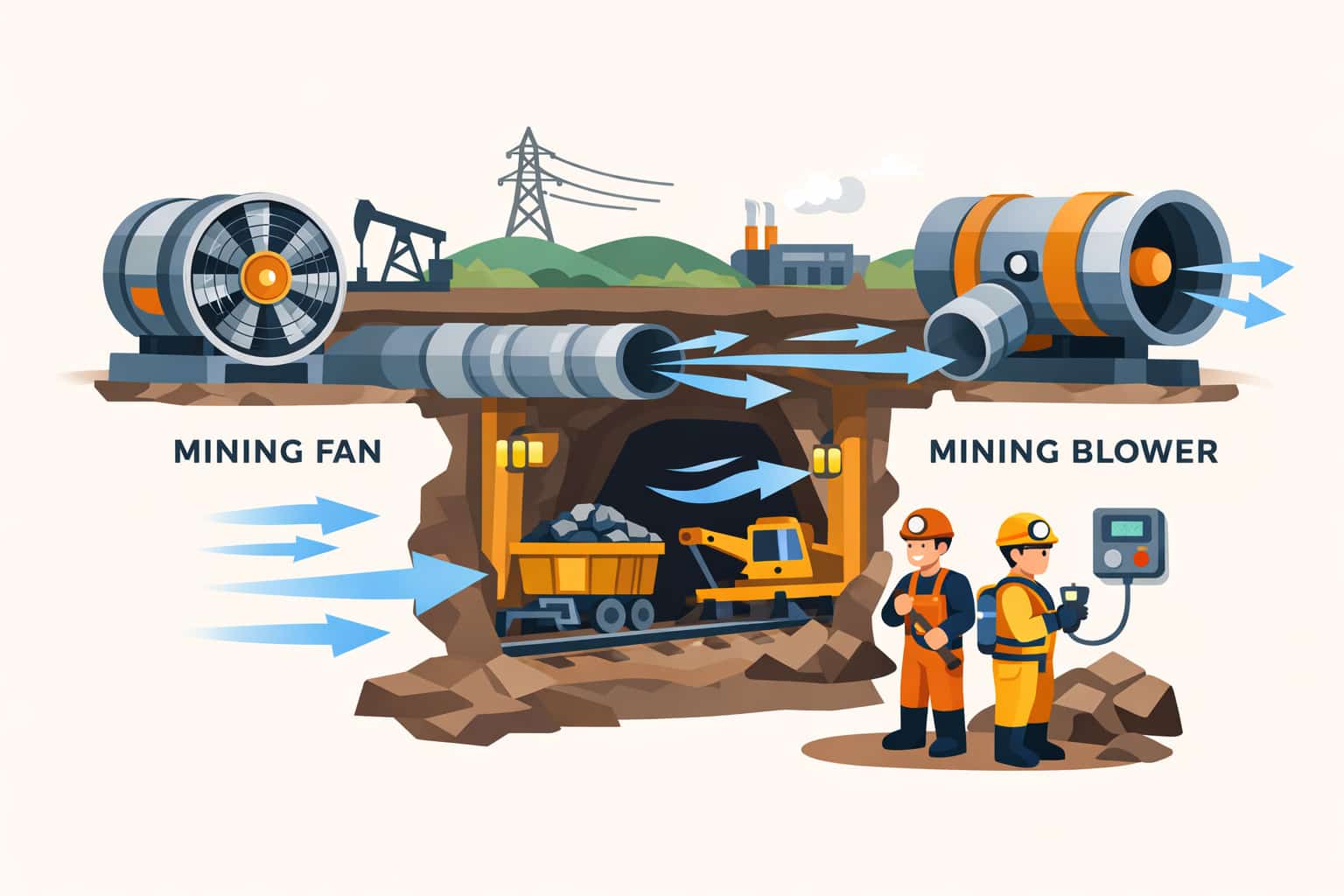
end of duct airflow
End of duct airflow is the airflow that actually reaches the face or target location at the end of a ventilation duct. In underground mining, this is often the number that matters most for health and safety because it represents the real fresh-air delivery to headings, raises, and localized work areas. Many ventilation problems happen when teams select a fan by a high catalog airflow figure without checking what airflow remains after duct resistance and leakage are applied.
In duct ventilation, the correct selection target is the duty point: the required Q @ Ps at the duct end. As headings advance, duct length increases and pressure losses rise. Bends, reducers, and poor transitions add additional resistance. At the same time, leakage from worn duct fabric and loose joints can steal a significant portion of airflow before it ever reaches the face. All of these factors shift the operating point and reduce end-of-duct delivery.
To protect end-of-duct airflow in real mines, focus on three practical controls:
- System discipline: minimize sharp bends, use proper reducers, keep duct routing smooth, and choose an appropriate diameter.
- Leakage control: seal joints, maintain couplings, and repair damaged sections promptly.
- Performance verification: measure airflow at consistent locations and adjust speed (often via VFD) to stay within a stable operating zone.
Measurement should be tied to the ventilation plan. “Fan outlet airflow” is not the same as face delivery. A mine-first workflow is to define the required face airflow, estimate realistic duct losses and leakage, then select a fan whose curve meets Q@Ps at the duct end with usable margin for duct extension. This avoids the common failure mode where a system looks strong on paper but feels starved at the face.
Bottom line: end-of-duct airflow is the true performance indicator for auxiliary duct ventilation. If you design and select around it, you get predictable delivery and fewer surprises as the heading advances.
Contact Us
Contact Us