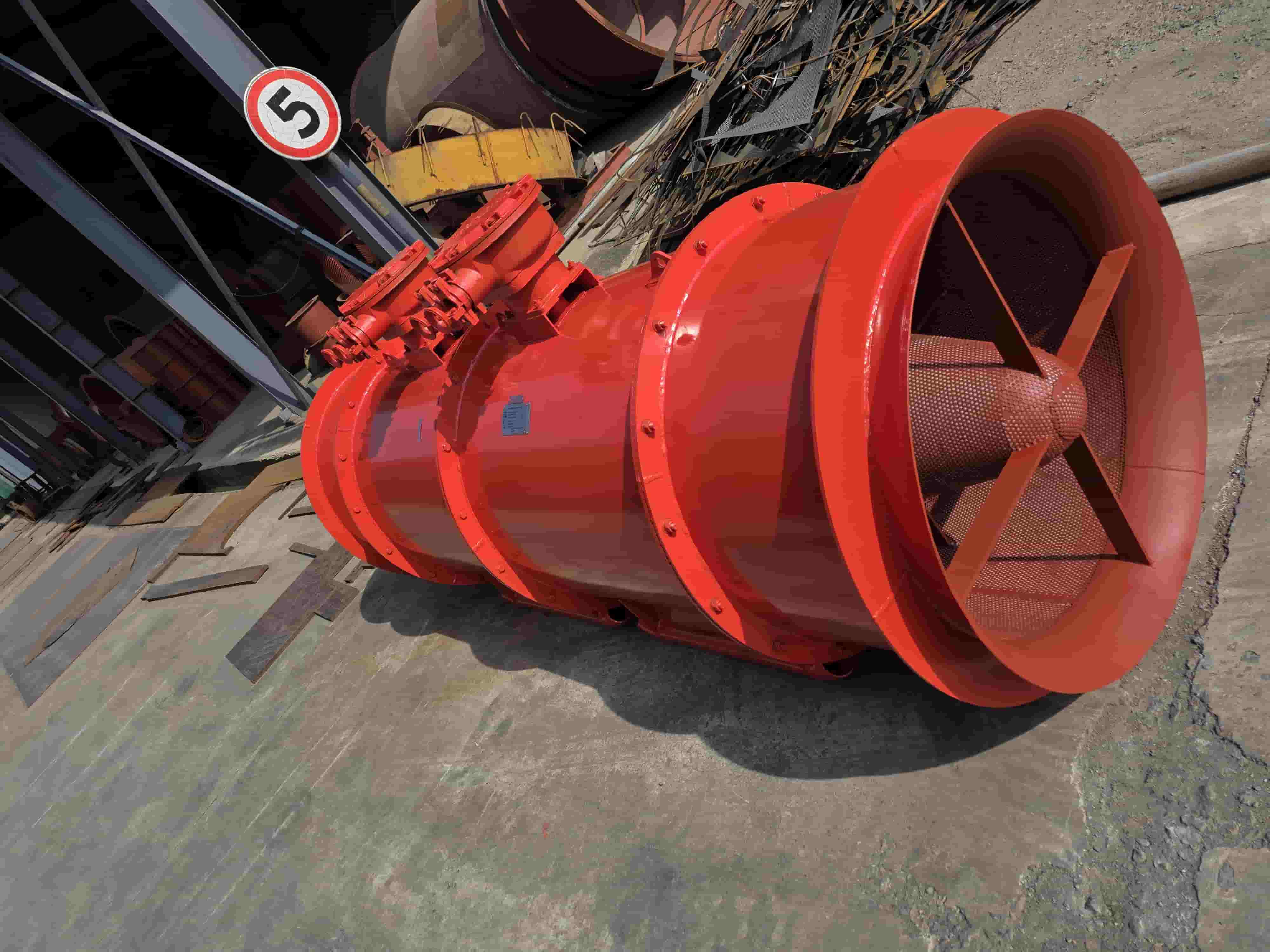
flameproof auxiliary fan
A flameproof auxiliary fan is used to provide local ventilation in specific sections of an underground mine, such as development headings, crosscuts and production faces, where workers and equipment operate away from the main airways. In these confined areas, the concentration of gas, dust and fumes can increase rapidly, so a dedicated auxiliary fan delivers fresh air and dilutes contaminants to safe levels. When explosive gases like methane are present, the auxiliary fan must be flameproof, ensuring that internal faults or sparks cannot ignite the surrounding atmosphere.
Typically, a flameproof auxiliary fan is of axial-flow design, compact and easy to relocate as the heading advances. It is connected to flexible ducting that directs air close to the working face, providing adequate airflow for drilling, blasting, loading and bolting operations. The flameproof motor and terminal enclosure are built to withstand internal explosions and prevent flame propagation, while the fan casing and impeller are designed with non-sparking clearances. This combination of safety features makes the fan suitable for use in gassy coal mines and metal mines with potentially explosive atmospheres.
The selection of a flameproof auxiliary fan depends on the required air quantity, duct length, pressure losses and allowable noise levels. Engineers evaluate the resistance of ducting, bends, leakage and shock losses to choose a fan that can maintain sufficient flow at the face. Where operational flexibility is needed, the auxiliary fan may be controlled by a variable-frequency drive located in a safe area or in a suitably protected enclosure. This allows operators to adjust the ventilation rate according to workforce presence, equipment operation and gas monitoring results.
Proper installation and maintenance are essential for the reliable performance of a flameproof auxiliary fan. The fan should be securely mounted, duct connections must be tight to avoid leaks, and electrical connections must comply with explosion-protection standards. Regular inspection of flamepaths, gaskets and fasteners, as well as cleaning of dust deposits, helps maintain certification and operational safety. By using flameproof auxiliary fans in combination with the main ventilation system, mine operators can create safer working conditions in development areas and reduce the risk associated with explosive atmospheres in local zones.
Contact Us
Contact Us