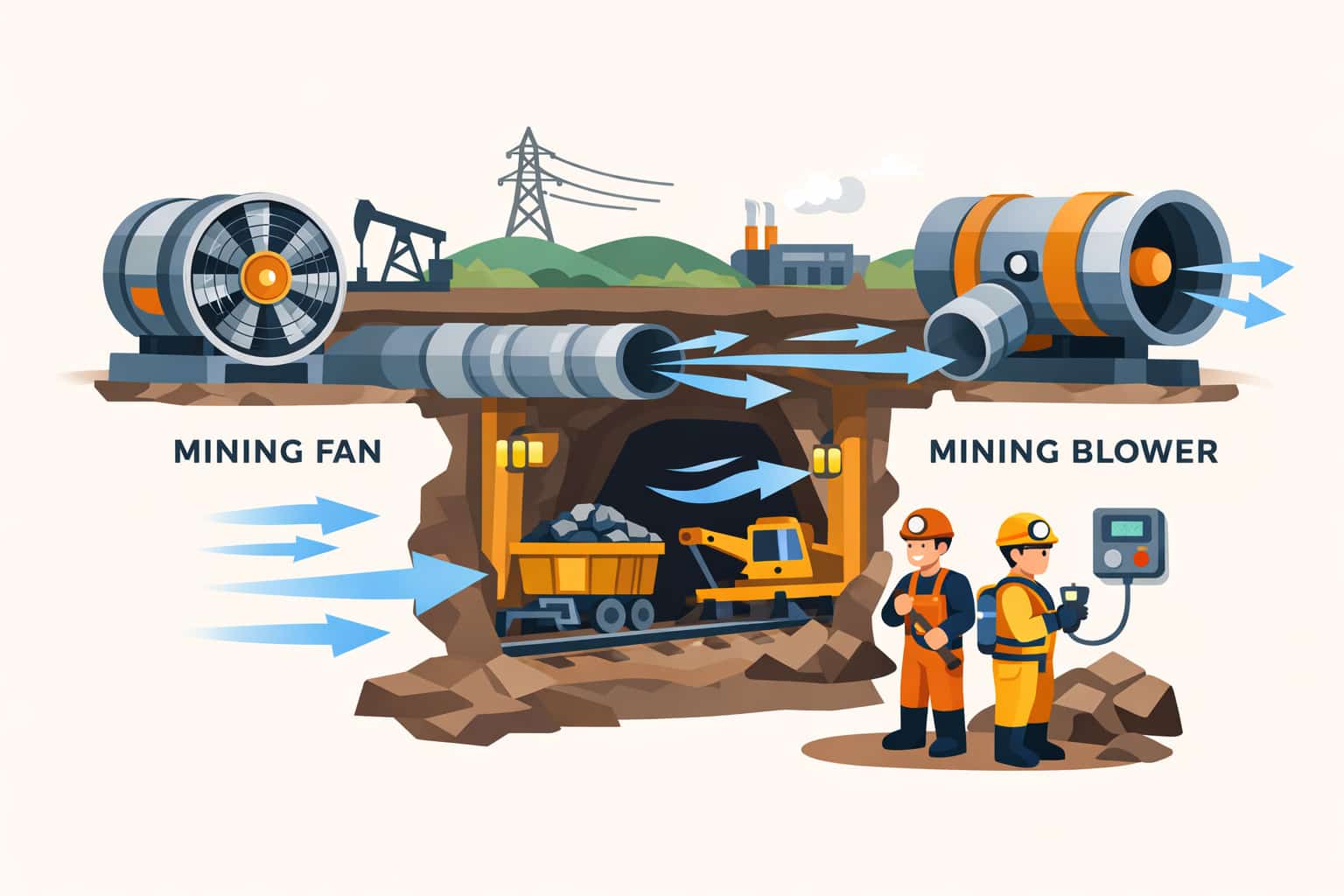
mine ventilation blower
A mine ventilation blower is commonly the on-site term for a ducted auxiliary ventilation unit used to deliver air to development headings and localized work areas. In many mines, “blower” is used interchangeably with “auxiliary ventilation fan,” especially when the unit connects to ducting and must overcome higher local resistance than the main mine network branches.
The critical point is that “blower” is not a guaranteed performance class. The correct selection is based on whether the unit can achieve the required end-of-duct airflow at the necessary static pressure (Ps). In real headings, duct length increases over time, bends add losses, reducers create turbulence, and leakage can steal a large portion of airflow before it reaches the face. These factors shift the operating point and can reduce delivered airflow even if the nameplate rating seems strong.
For practical selection, define the duty point as Q@Ps at the duct end. Then confirm the fan curve provides usable margin for:
- Duct extension as the heading advances.
- Leakage deterioration from damaged joints and wear.
- Operational variability where airflow requirements change with work cycles.
VFD control is often used to adjust speed and keep performance stable as resistance changes. However, system fixes still matter: improving duct integrity, minimizing sharp bends, and using proper transitions can lower required static pressure and increase end-of-duct delivery without increasing power consumption.
Bottom line: a mine ventilation blower is best treated as a duty-point machine. When specified and selected by Q@Ps with realistic duct losses and leakage, it delivers predictable airflow to the face and supports safer, more stable heading ventilation.
Contact Us
Contact Us