mine ventilation fan selection
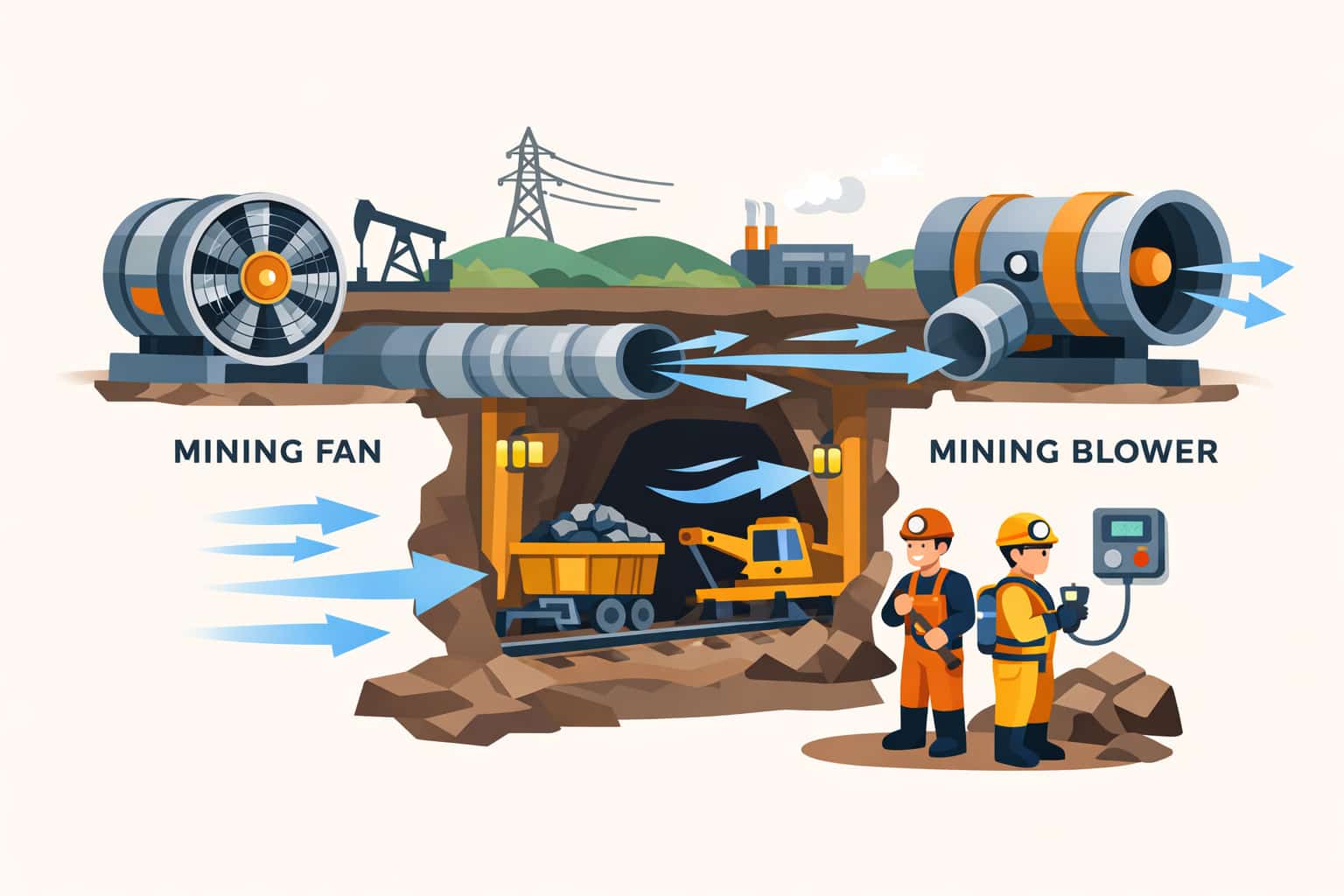
Mine ventilation fan selection is often misunderstood as choosing a “bigger fan” or selecting by a catalog airflow number. In reality, ventilation fans must be matched to the mine system. The correct fan is the one that can reliably deliver the required airflow (Q) at the required static pressure (Ps) at the location that matters—whether that’s the overall mine network (main fan), a district circuit (booster), or the end of duct at a heading (auxiliary).
The foundation of selection is the duty point (Q@Ps). Every mine has changing resistance: development increases airway length, regulators change, stoppings evolve, and duct systems extend. These changes shift the system resistance curve, which shifts the operating point. If you size only for today’s conditions, tomorrow’s airflow can fall short.
A practical selection workflow looks like this:
- Define the target: where is airflow required (shaft, district, face, end of duct), and what is the required quantity?
- Estimate resistance: use realistic assumptions for airway/duct losses, bends, fittings, leakage, and future growth.
- Match curves: confirm the fan curve meets the duty point with usable margin, and stays in a stable, efficient region across expected variability.
- Plan control: specify control strategy (often VFD) to manage changing resistance and reduce the risk of unstable operation or wasted power.
Selection priorities differ by duty. Main fans emphasize reliability, efficiency, redundancy, and long-term monitoring. Booster fans require careful integration to avoid recirculation and unexpected airflow redistribution. Auxiliary fans must overcome duct losses and leakage, making end-of-duct performance the deciding factor.
Finally, don’t forget site conditions: air density changes with altitude and temperature, affecting pressure behavior and motor power. Confirm density correction and motor margin before finalizing the specification. Done correctly, fan selection is not guesswork—it’s controlled system matching backed by duty-point verification.
Contact Us
Contact Us