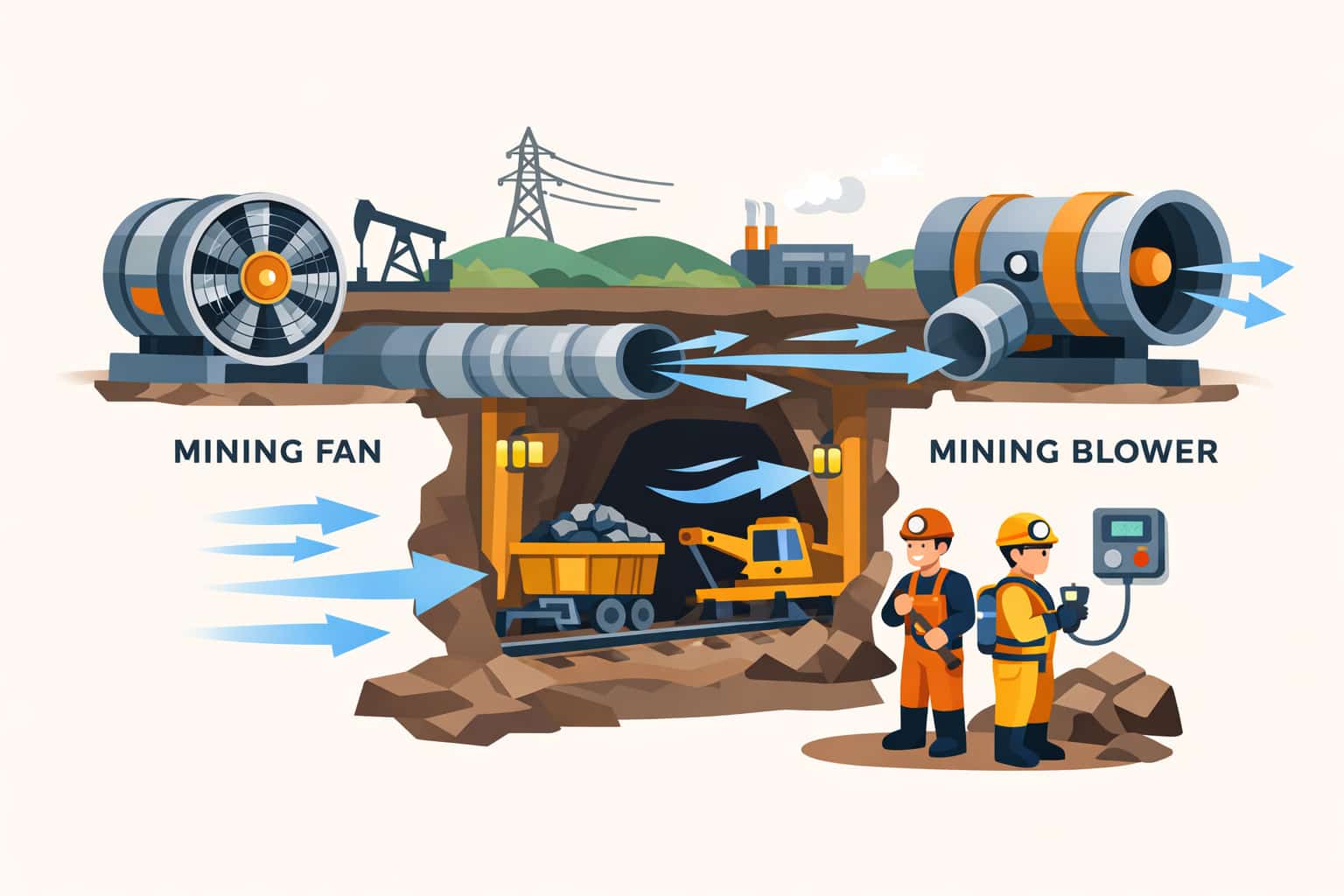
mine ventilation planning
Mine ventilation planning is the operational roadmap that defines how much air is required, where it must go, and how it will be delivered as the mine changes. In practice, planning turns safety objectives—gas dilution, dust control, heat and humidity management—into measurable airflow targets and equipment requirements. The plan should be specific about locations, measurement points, and how changes in development will be managed.
A strong plan does not stop at “install a fan.” It defines the expected duty point (Q@Ps) for main fans, booster fans, and auxiliary duct units. This matters because resistance increases as headings advance, new districts open, and duct runs get longer. If the plan does not account for resistance growth and leakage deterioration, end-of-duct airflow can fall below target even when equipment is operating normally.
Effective ventilation planning typically includes:
- Airflow requirements by area (shaft, district, face) with clear measurement locations.
- Resistance assumptions and how they will change with development and production.
- Auxiliary duct ventilation rules for duct routing, leakage control, and relocation practices.
- Control and monitoring requirements, including airflow measurement frequency and corrective actions.
- Contingency and redundancy planning for outages, maintenance, and emergency scenarios.
When planning is duty-point driven, procurement and operations become aligned. A site can request equipment that meets Q@Ps with usable margin, select VFD control where appropriate, and set measurable performance expectations. Bottom line: mine ventilation planning is most effective when it anticipates change, defines realistic duty points, and requires verification through consistent airflow measurement.
Contact Us
Contact Us