static pressure (Ps)
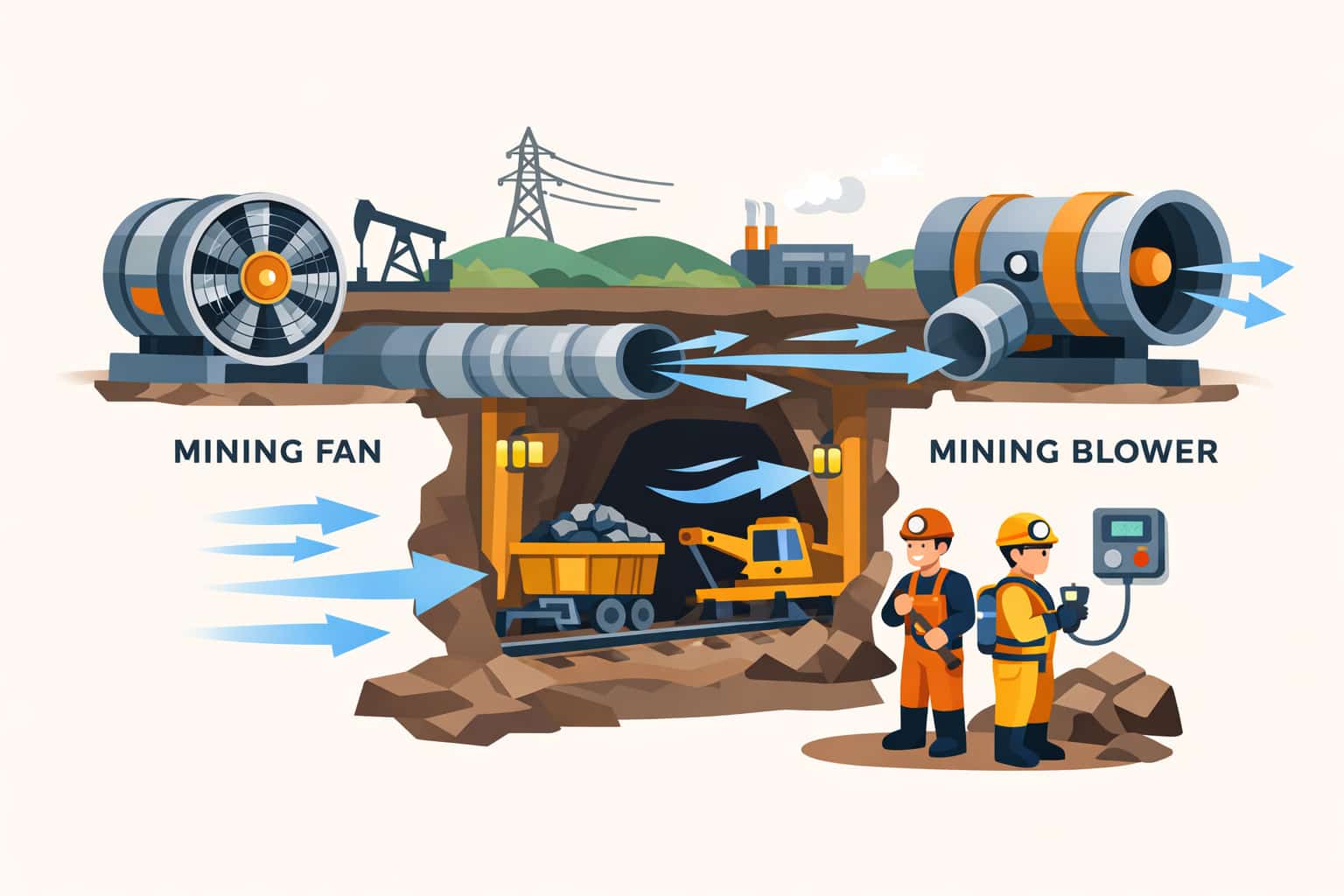
Static pressure (Ps) is the pressure difference a fan must generate to move airflow through a ventilation system’s resistance. In mining, Ps is the “cost” of pushing air through networks, regulators, ducts, bends, and fittings. Without enough Ps, a fan cannot deliver the required airflow to the target location—even if it has a high free-air airflow rating.
Ps is especially critical in ducted auxiliary ventilation. As headings advance, duct runs become longer and more complex, and pressure loss rises. Leakage and damaged duct sections can worsen performance further by shifting the system behavior. In this environment, the correct way to size equipment is to define the required airflow (Q) at the face or duct end and estimate the Ps required to deliver it. This defines the duty point (Q@Ps) on the fan curve.
Key points for applying Ps in mine ventilation selection:
- Ps is system-dependent: it changes with duct length, bends, fittings, and network adjustments.
- Free-air ratings are misleading: airflow at near 0 Pa is not representative of underground duty points.
- Use curves, not labels: “fan” vs “blower” naming does not guarantee Ps capability.
- Plan for change: as resistance increases, the operating point shifts; allow usable margin and consider VFD control.
In operation, Ps can also be used as a diagnostic signal. If airflow falls and the system requires more Ps than expected, likely causes include longer ducting, more bends, partially collapsed sections, or increased roughness. Improving duct routing and integrity can reduce required Ps and restore airflow without overspeeding the fan. Bottom line: in mining ventilation, Ps is not an abstract engineering term—it is the practical constraint that determines whether you can achieve safe, reliable airflow at the face.
Contact Us
Contact Us