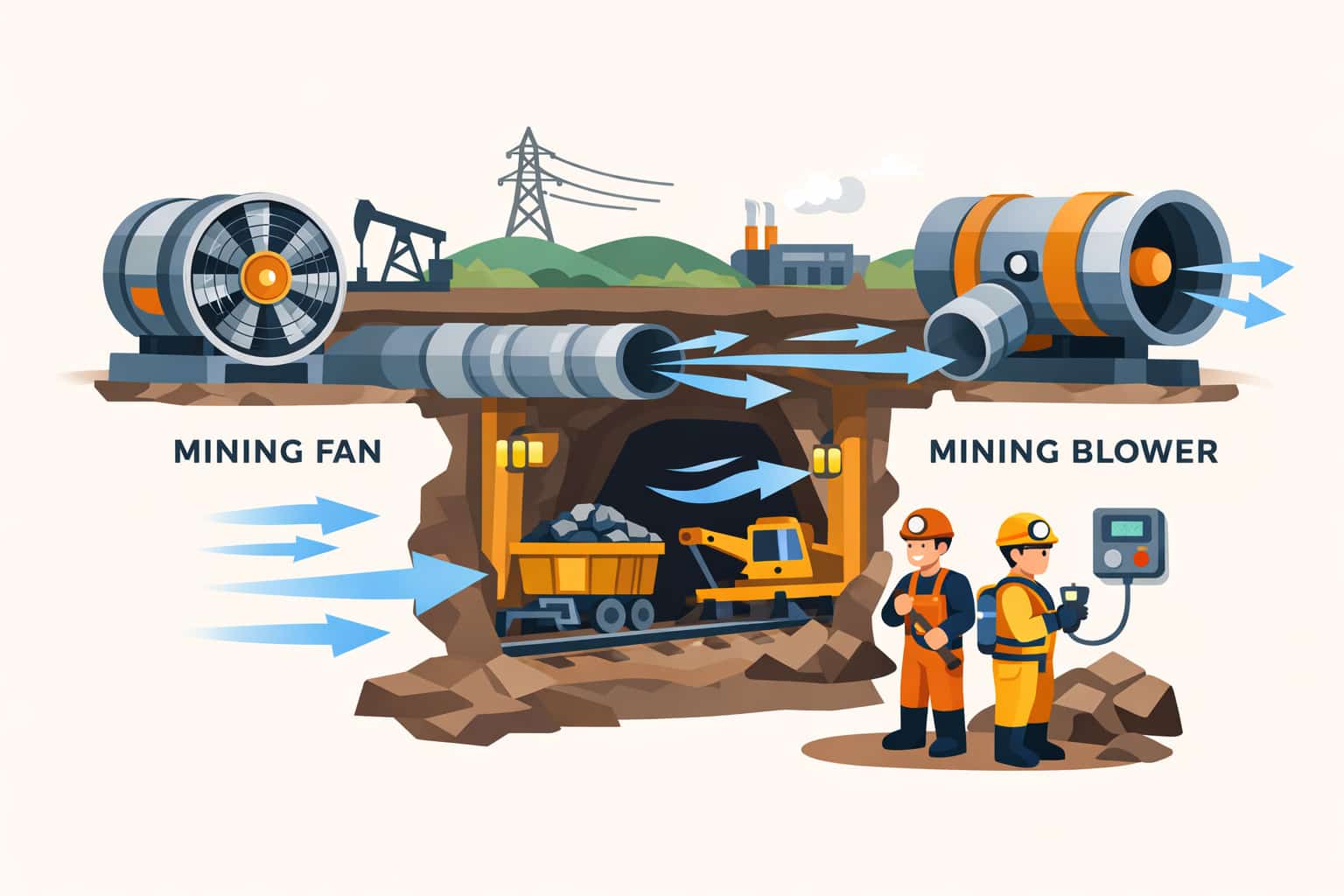
ventilation system design
Ventilation system design in mining is the structured process of delivering the right airflow to the right places—reliably, safely, and efficiently—while the mine layout and resistance continuously change. Good design is not just selecting a main fan. It includes the network concept (intake/return paths), airflow distribution strategy, control devices, auxiliary duct ventilation for headings, and how all components behave together as development advances.
A mining ventilation system is fundamentally a resistance network. As airways extend, regulators change, and production districts evolve, the system resistance curve shifts. That means operating points for main fans, booster fans, and auxiliary duct fans can move over time. The most practical design language is therefore Q@Ps duty points: specify required airflow (Q) and required static pressure (Ps) at defined locations, then validate that equipment and controls can meet those targets under expected operating ranges.
Key design considerations include:
- Airflow distribution: ensure sufficient quantity reaches each working area; avoid dead zones and unintended short circuits.
- Control strategy: regulators, doors, stoppings, and monitoring should support stable distribution as conditions change.
- Fan integration: main and booster fans must be coordinated to avoid recirculation and unstable flow; VFD control is often used for flexibility.
- Auxiliary duct ventilation: design duct layouts to minimize losses, manage leakage, and protect end-of-duct airflow at headings.
Practical mine-first design also includes maintainability and operational discipline. Duct damage, leakage, and poor routing can reduce delivered airflow more than expected. Monitoring and measurement close the loop by verifying performance in real conditions. When ventilation design is treated as a dynamic system—planned, measured, and adjusted—fan selection becomes predictable and safety outcomes improve.
Contact Us
Contact Us