
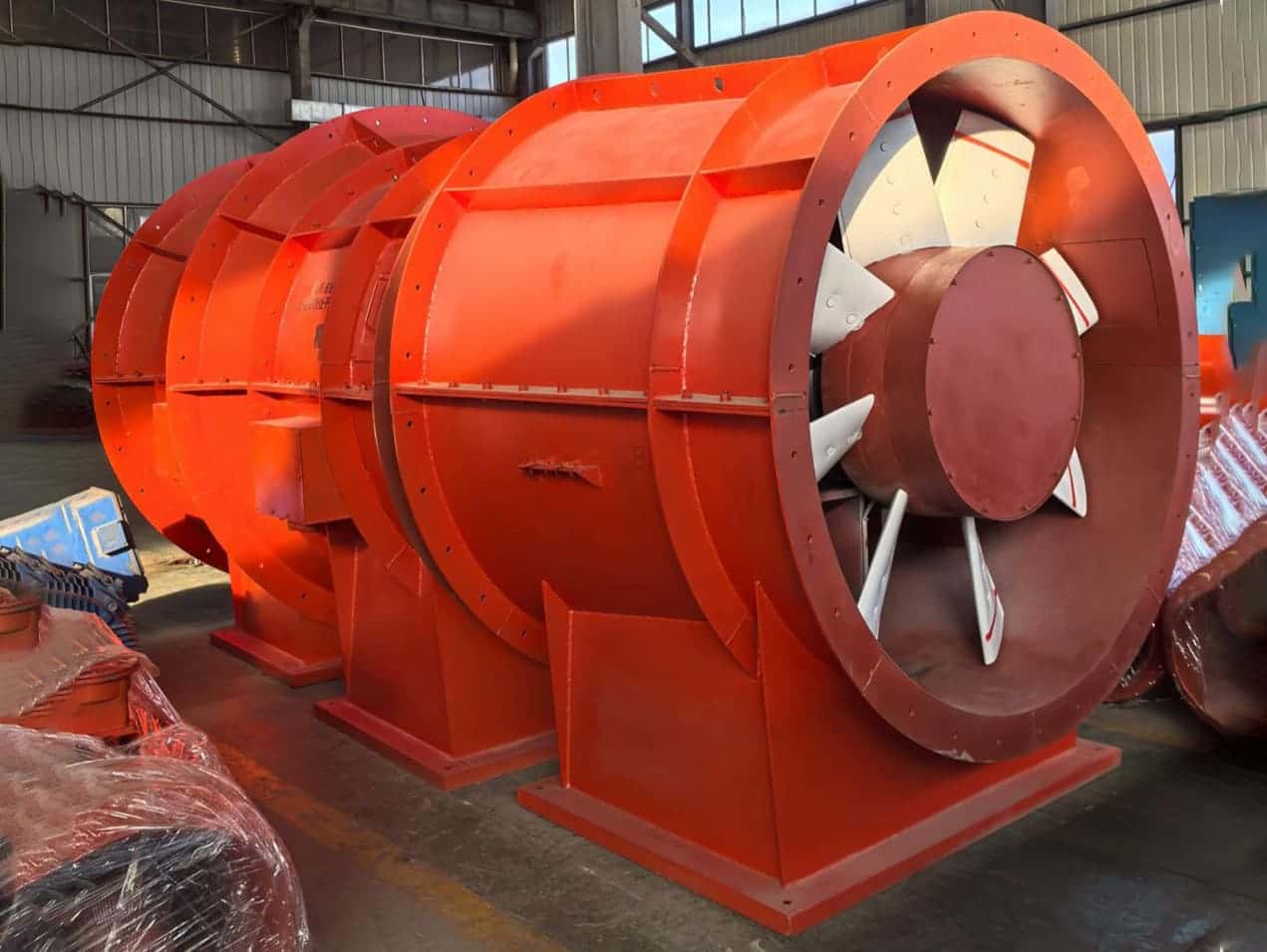
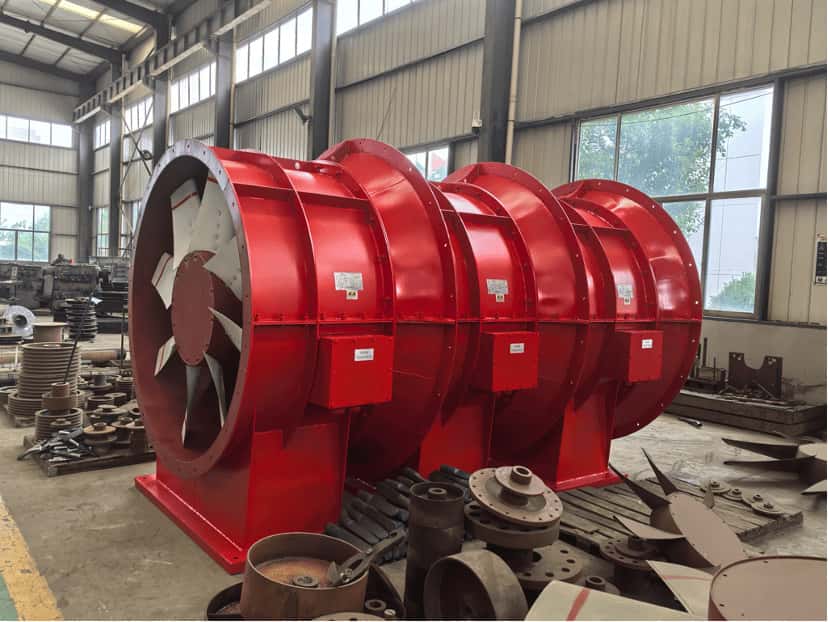
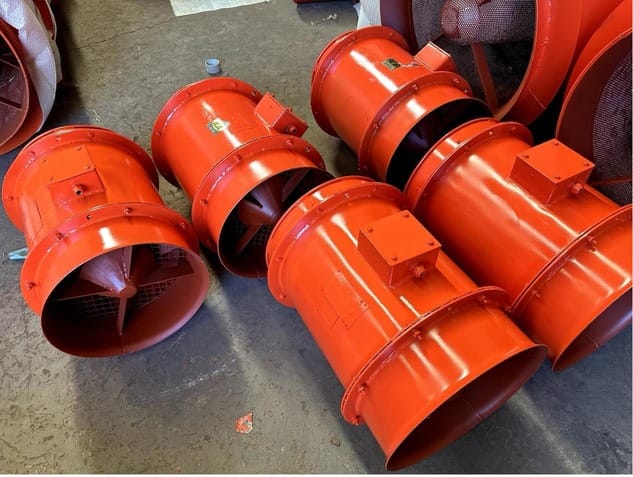
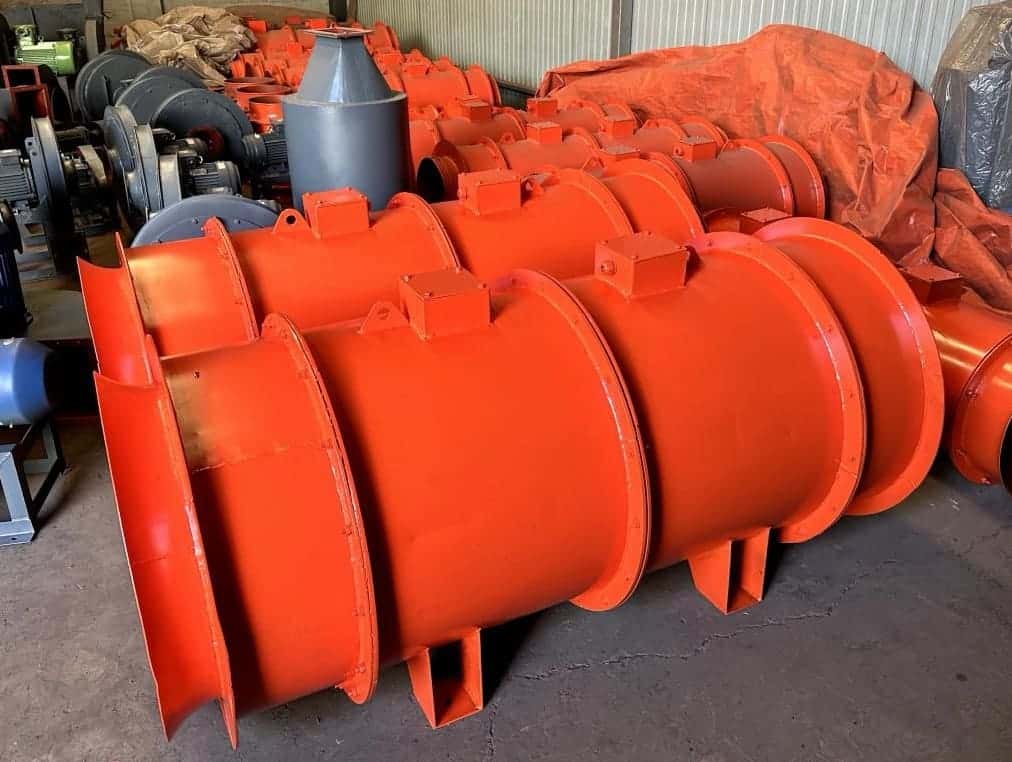
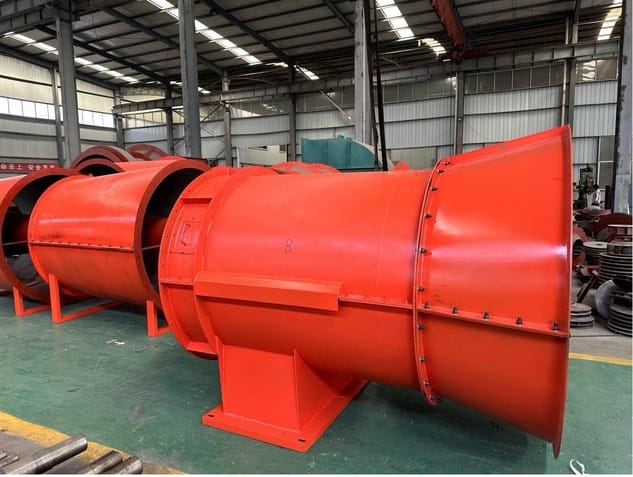
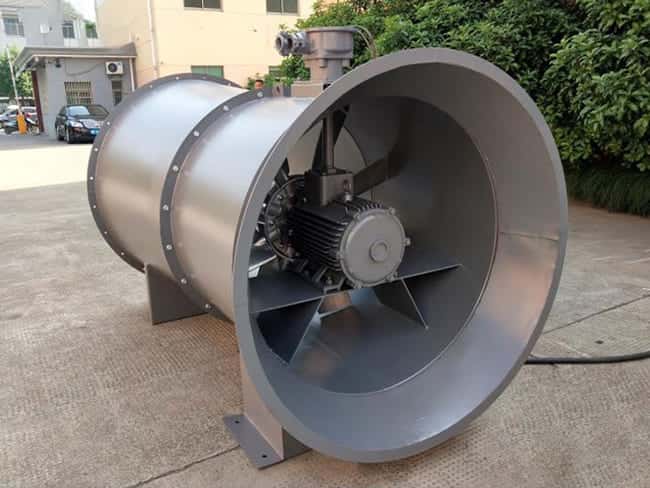
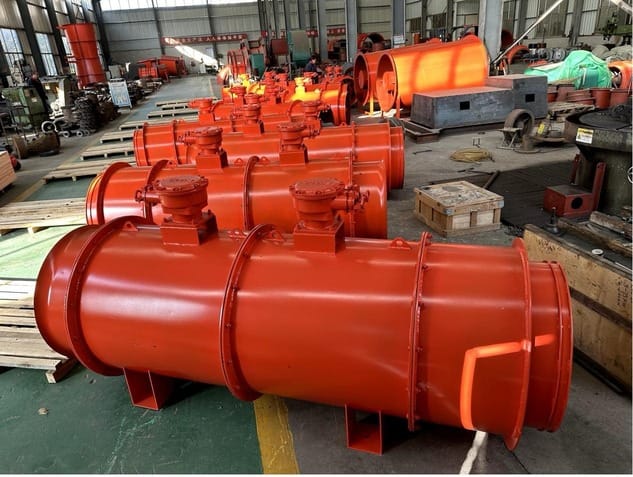
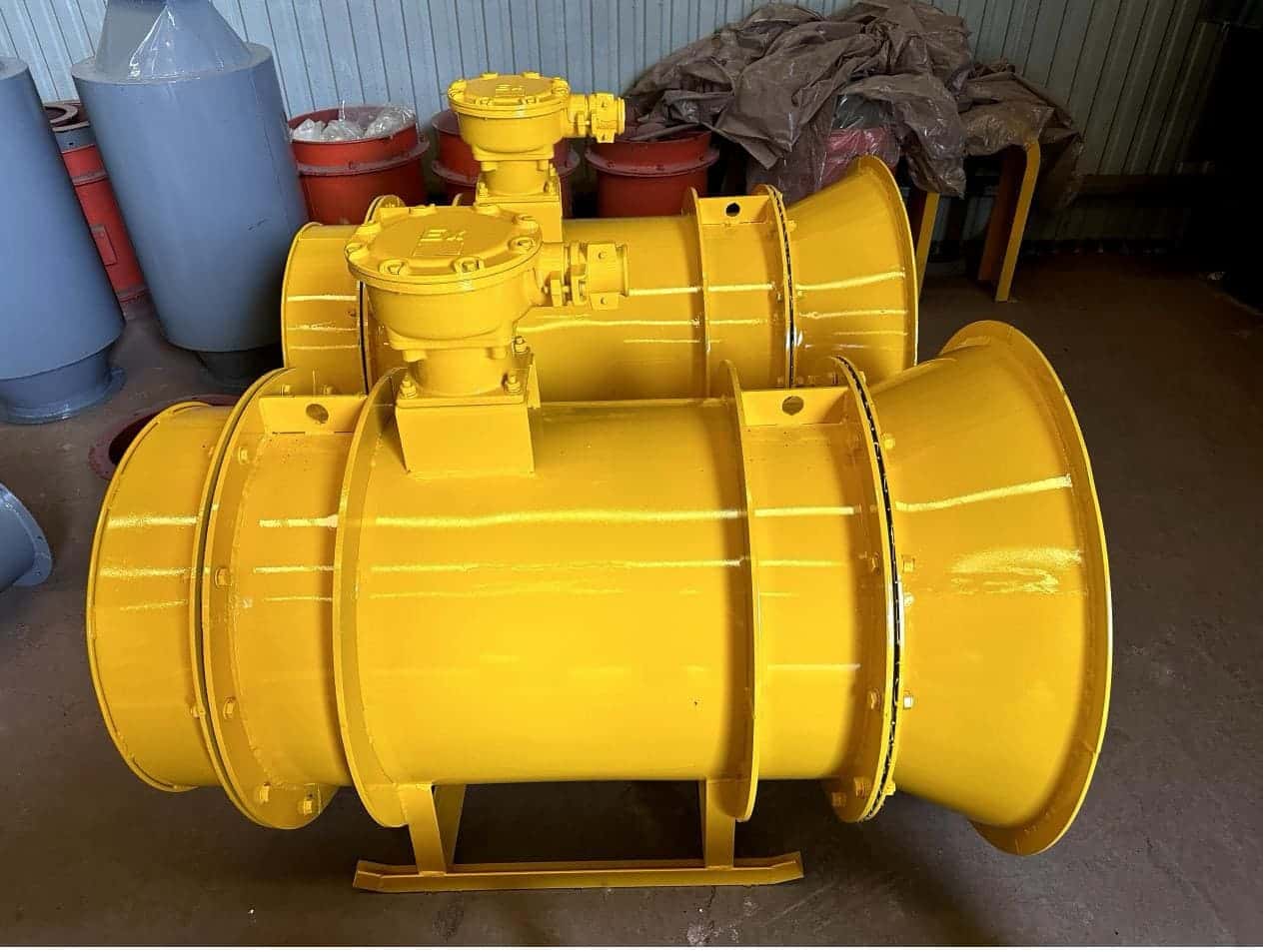




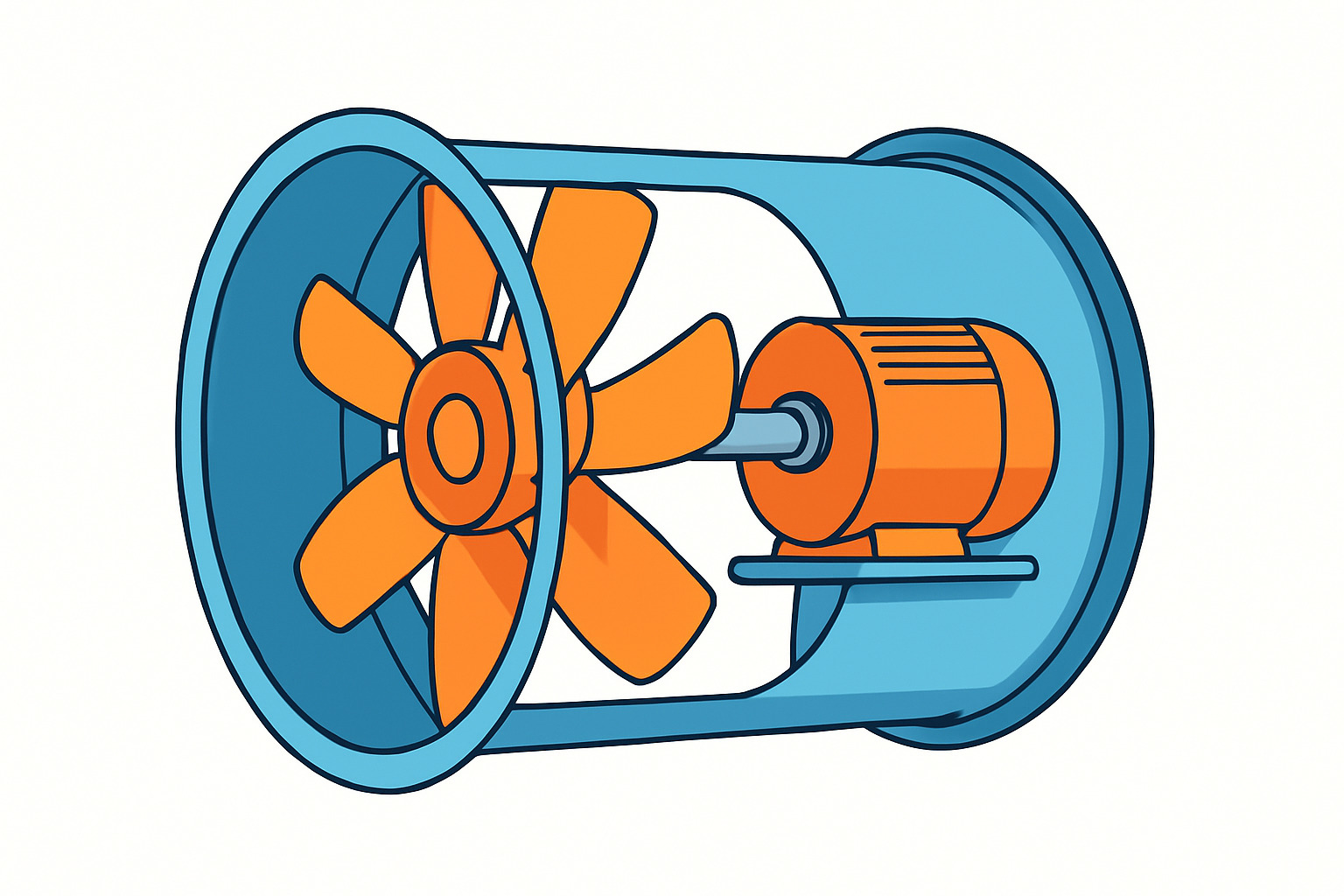

Axial fans can be loud, but they do not have to be. Their noise level depends on tip speed, blade design, operating point and installation conditions. In many industrial and mining projects, axial fans are successfully used within strict noise limits through careful selection and noise control measures.
Axial fans generate noise mainly from aerodynamic processes around the blades and from mechanical components such as motors and bearings. The higher the tip speed (the speed of the blade tips as they rotate), the higher the frequency and level of the sound they produce. This is why very high-speed axial fans can be noticeably louder than larger, slower fans delivering the same airflow.
Blade design also plays a major role. Well-shaped blades with smooth surfaces and optimised angles produce less turbulence, and therefore less noise, than crude or damaged blades. Vane axial fans with properly designed guide vanes can improve efficiency and reduce some swirling losses, which may also reduce noise at a given duty. On the other hand, operating an axial fan far from its best efficiency point, such as at severe throttling or near stall, increases turbulence and noise.
Installation factors are equally important. If air approaches the fan through short or obstructed inlets, tight elbows or partially closed dampers, flow becomes highly non-uniform and noisy. Likewise, discharge into cramped spaces or against sharp turns can increase broadband noise. Good practice is to provide straight inlet runs, smooth transitions and diffusers to keep flow as even as possible around the fan.
In industrial plants and mines, noise limits around fans are managed using a combination of strategies: selecting larger fans that can run at lower speed for the same airflow, using variable-frequency drives to reduce speed during off-peak periods, fitting silencers on fan inlets and outlets, enclosing fans and motors in acoustic housings where necessary, and arranging airways to minimise sound transmission to occupied areas.
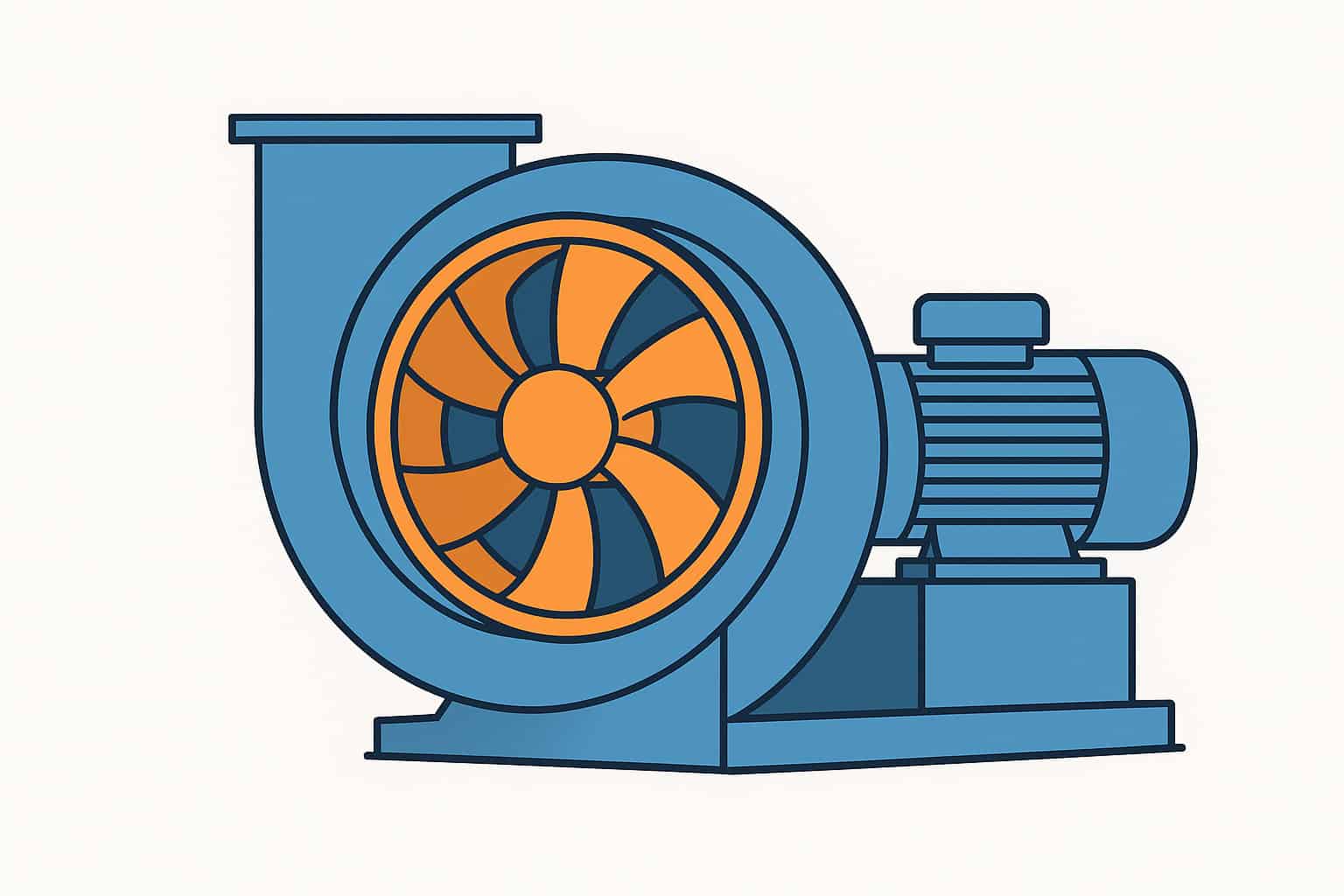
Compared with centrifugal fans, axial fans are not inherently noisier or quieter; it depends on the specific models and operating conditions. A poorly selected or installed centrifugal fan can be just as loud as an axial fan. The key is to examine manufacturer sound data at the required duty point and to treat noise control as part of the initial design, not as an afterthought.
In summary, axial fans can be loud when run at high speeds or in poor installations, but by choosing the right size and speed, optimising blade and duct design, and applying silencers or enclosures, their noise can be reduced to acceptable levels in industrial and mining environments.