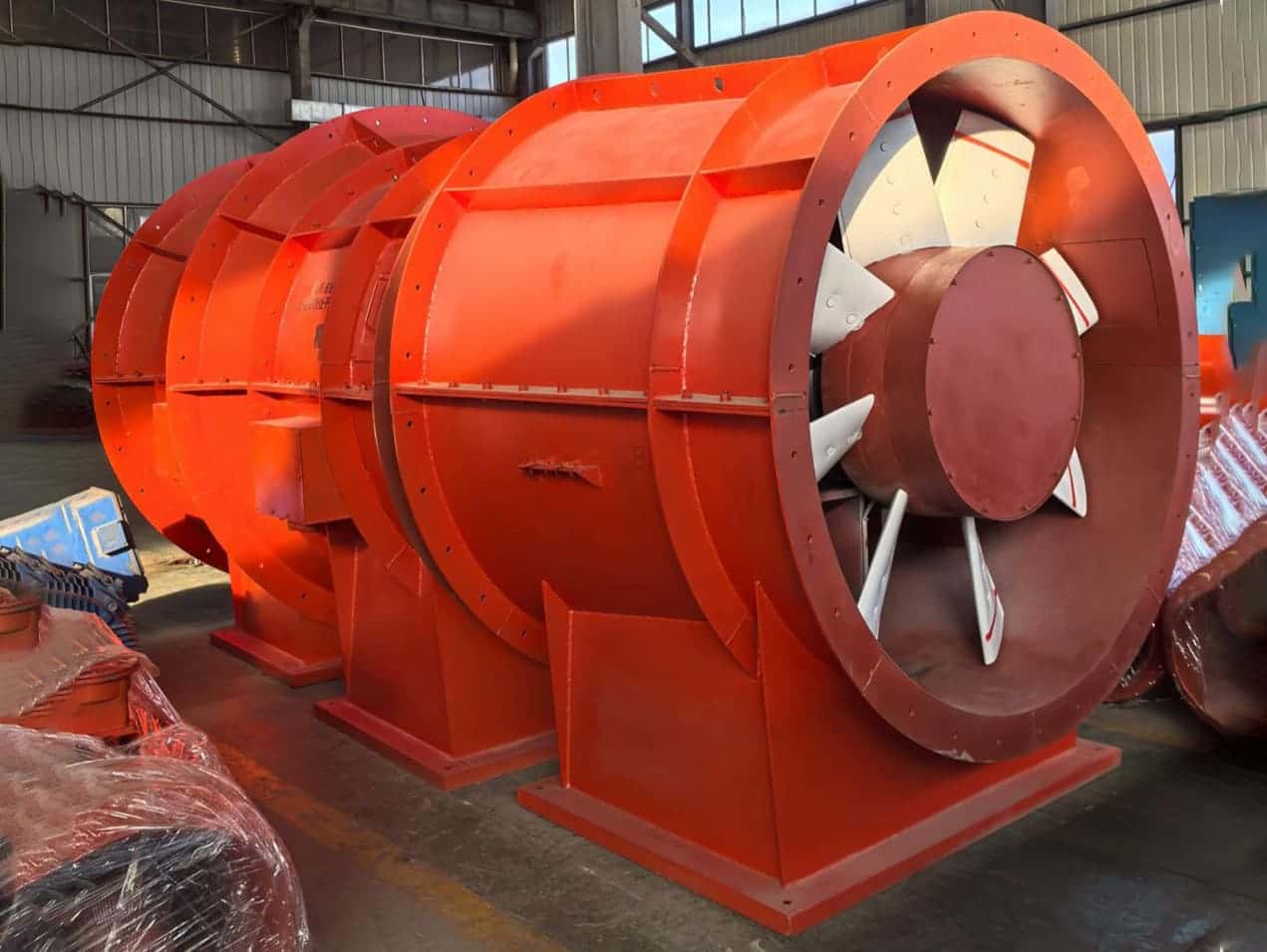
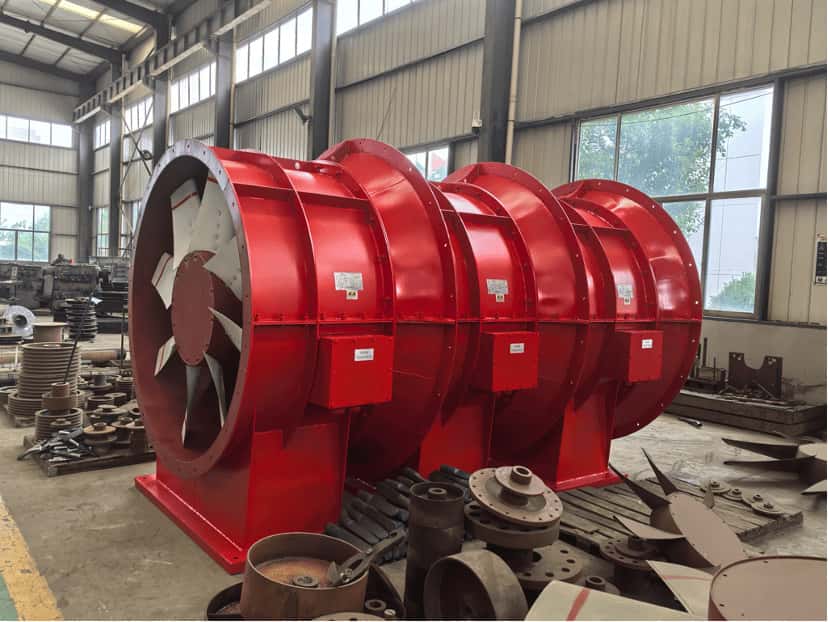
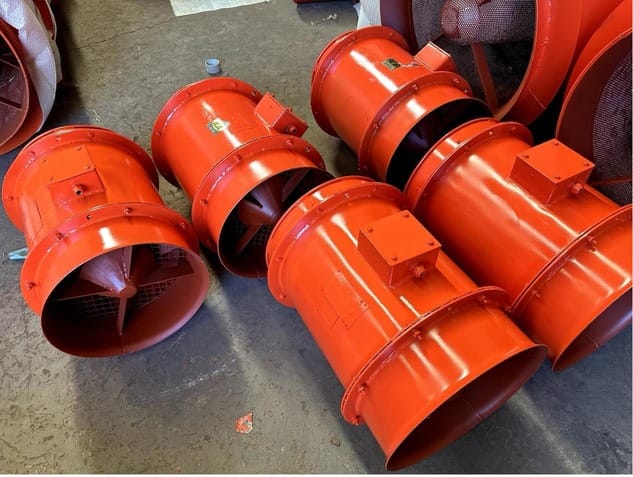
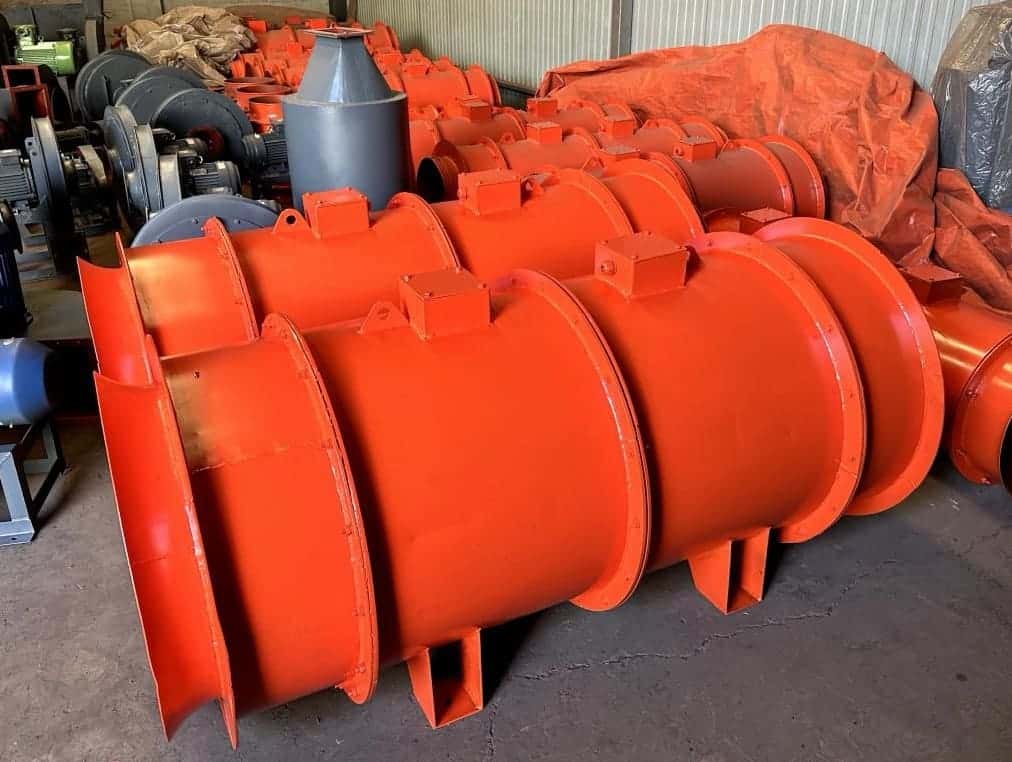
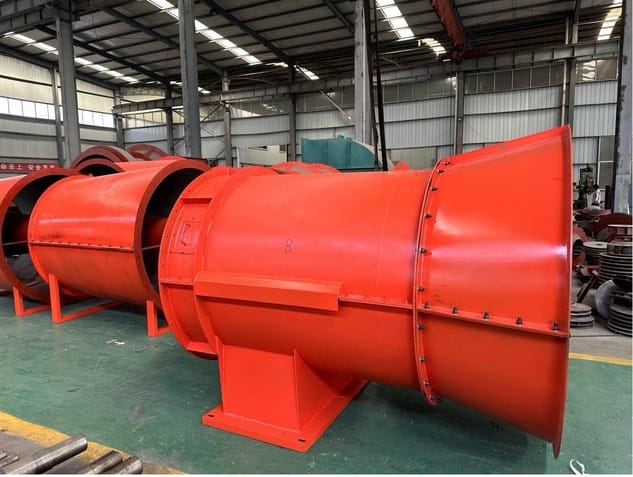
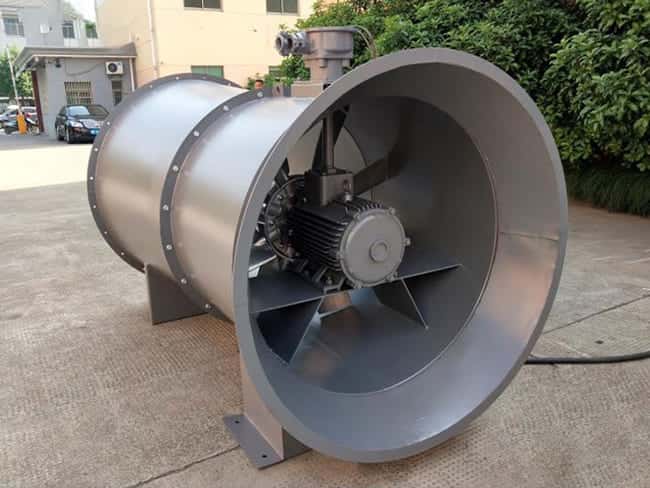
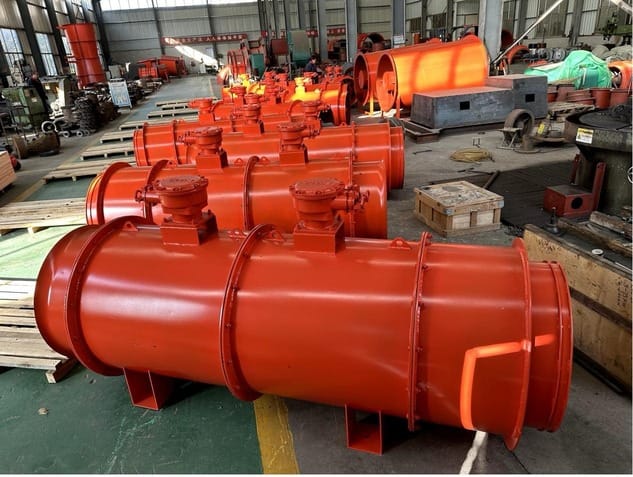
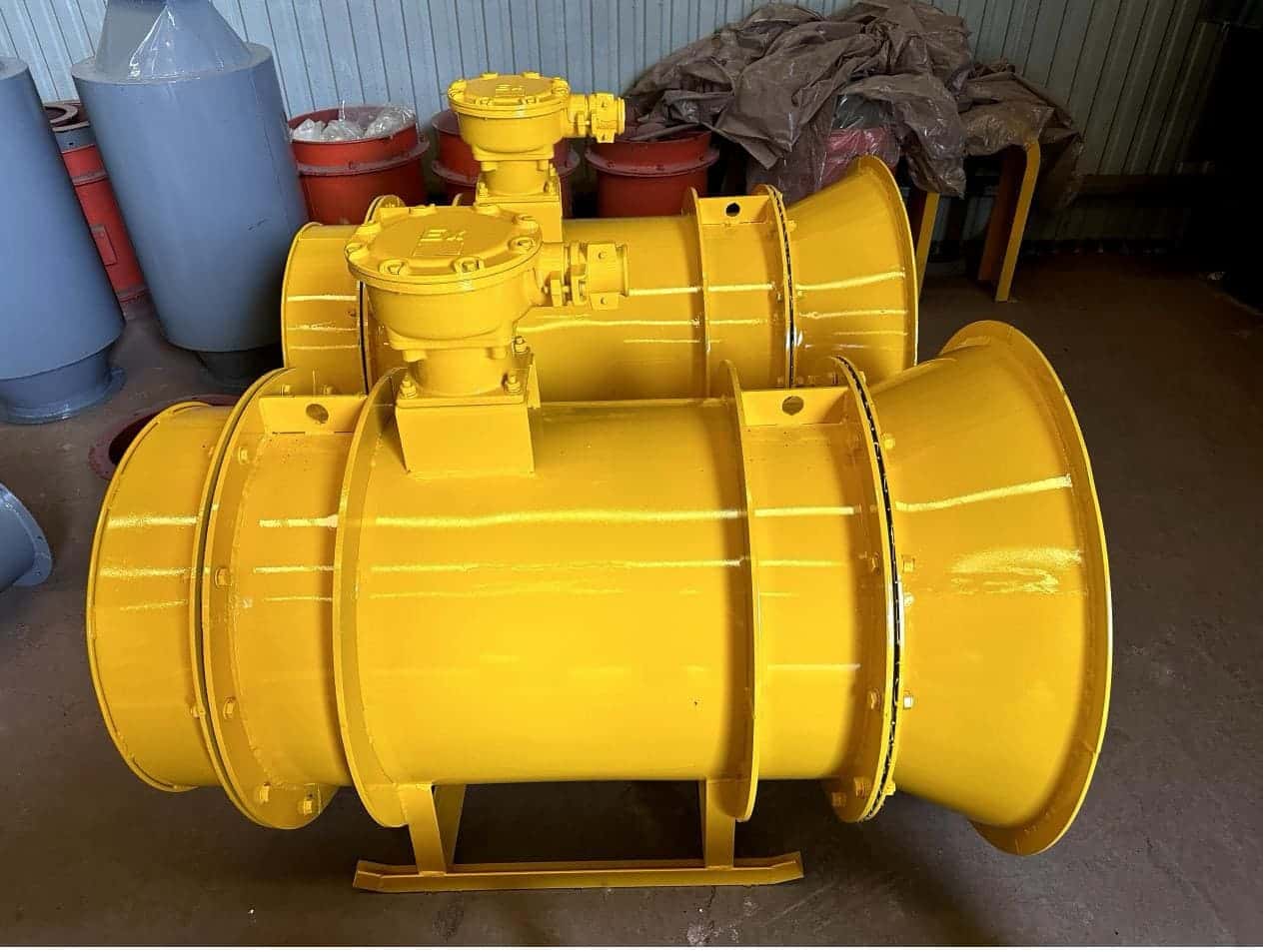




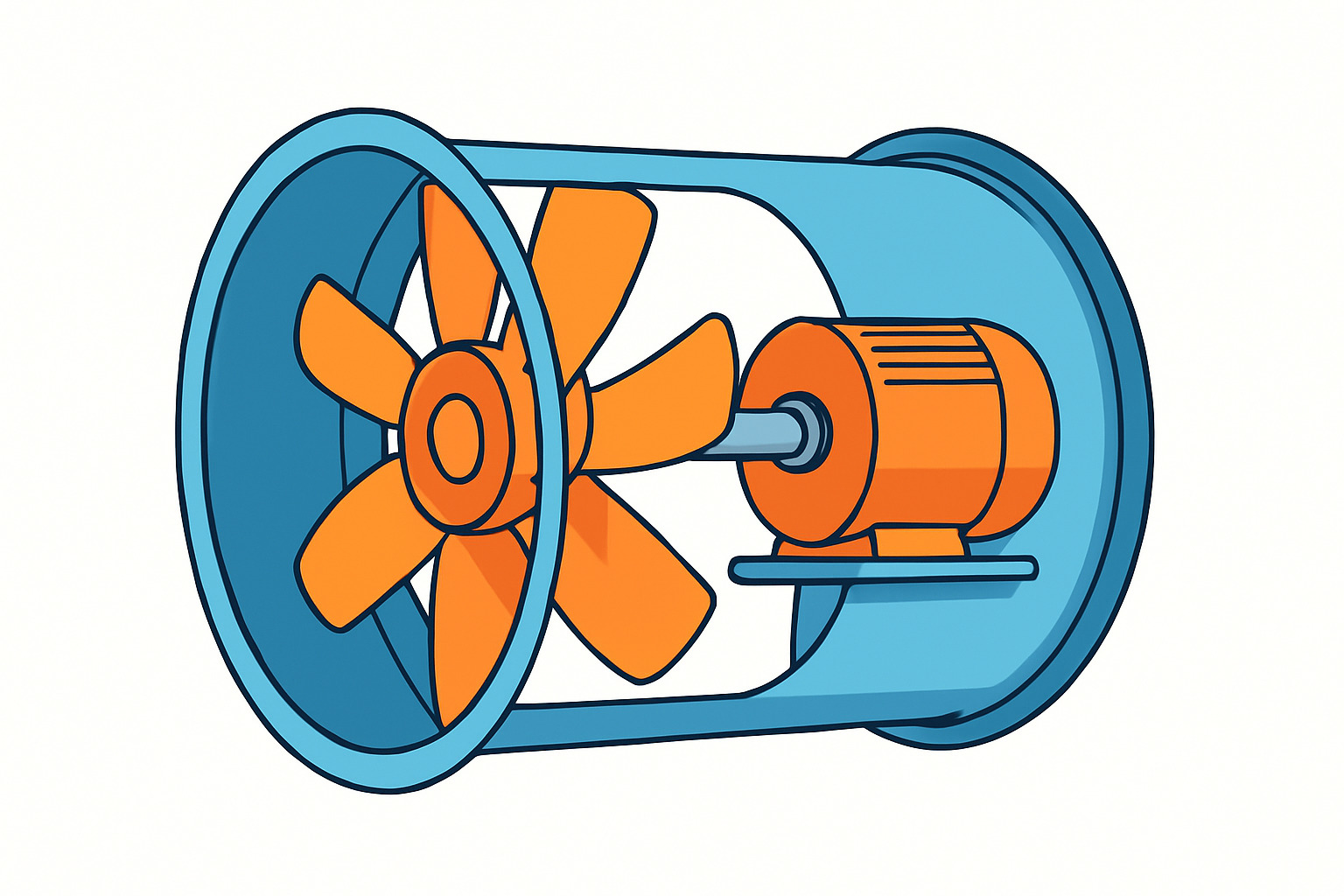
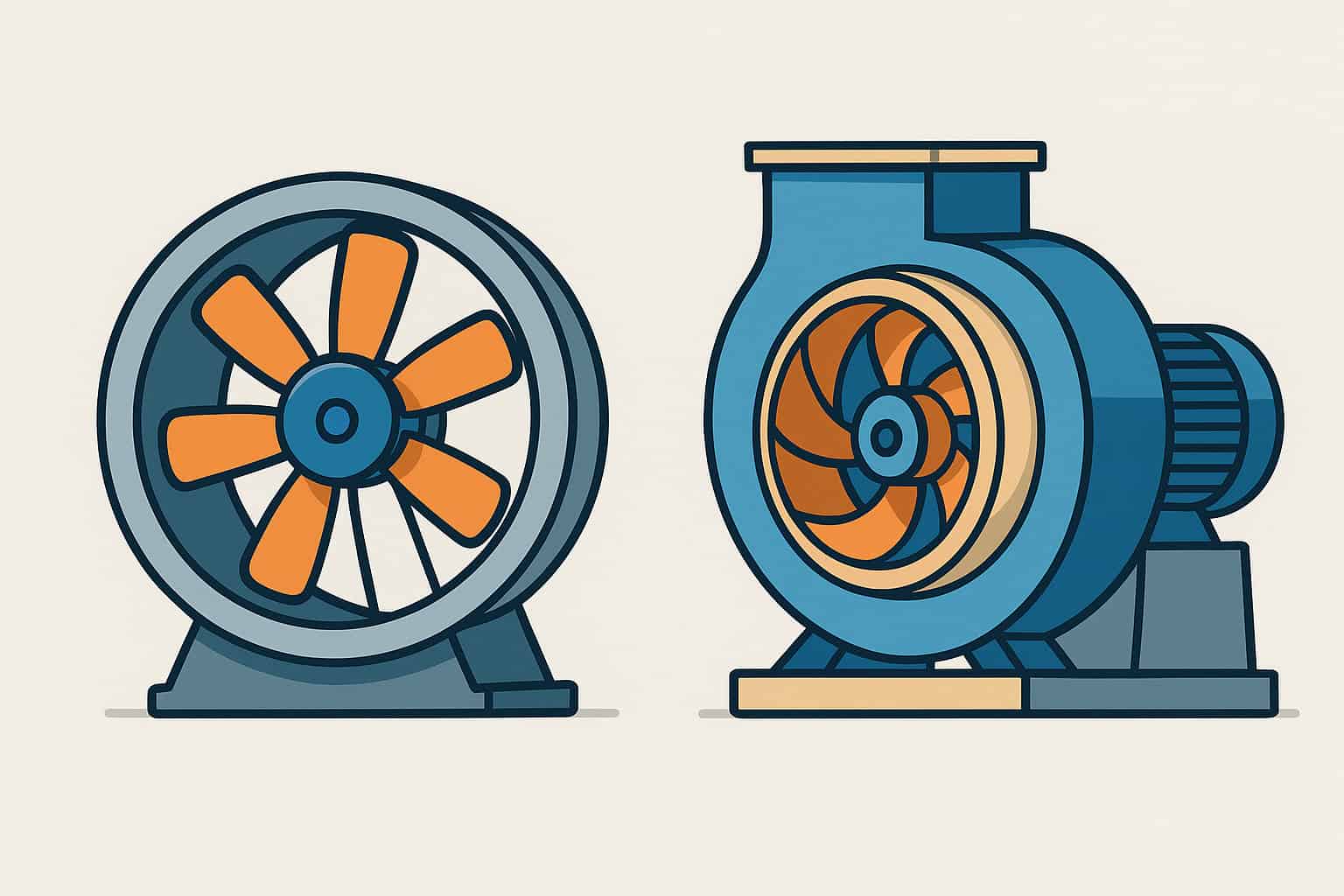
Axial fans can be noisy, especially when they operate at high speed or are poorly installed, but they are not automatically louder than other fan types. Noise from any fan is mainly influenced by tip speed, blade design, operating point and installation details, rather than the simple fact that it is axial. Many modern axial ventilation fans are designed to deliver high airflow with controlled noise levels, particularly when used with silencers and proper duct connections.
The main sources of axial fan noise are aerodynamic. As blades move through the air, they generate pressure fluctuations and vortices. Higher tip speeds usually mean more noise, because the airflow separates and re-attaches more violently around the blade edges. Blade passing frequency (the tone related to the number of blades and rotation speed) and broadband turbulence noise both contribute to the sound you hear.
Axial fans are often operated at relatively high rotational speeds to achieve the required pressure, which can make them seem noisier than some slower-speed centrifugal fans. However, if an axial fan is correctly sized so that it does not need to run excessively fast, and if its blades are designed with smooth aerodynamic profiles, noise can be significantly reduced. Large-diameter axial fans that achieve duty through size rather than speed are often quieter for the same airflow.
Installation has a big impact on noise. Poor inlet or outlet conditions—such as sharp bends very close to the fan, partially blocked inlets or badly shaped inlet boxes—can cause flow distortion, separation and extra turbulence, all of which increase noise and vibration. In contrast, smooth inlets, straight duct sections and correctly designed diffusers help the fan operate more quietly and efficiently.
In mining and industrial ventilation, noise from large axial main fans and auxiliary fans is controlled using silencers, acoustic lining and careful siting. Silencers fitted on the intake and discharge sides can dramatically reduce noise transmitted through airways and to the surrounding environment. Choosing a fan with appropriate blade design and operating it near its best efficiency point also helps keep noise within acceptable limits.
In summary, axial fans can be noisy if they run fast, are badly matched to the system or are installed with poor inlet and outlet conditions. With good design—lower tip speeds, efficient blades, proper ducting and effective silencers—axial ventilation fans can provide high airflow with manageable noise levels in both industrial plants and underground mines.