
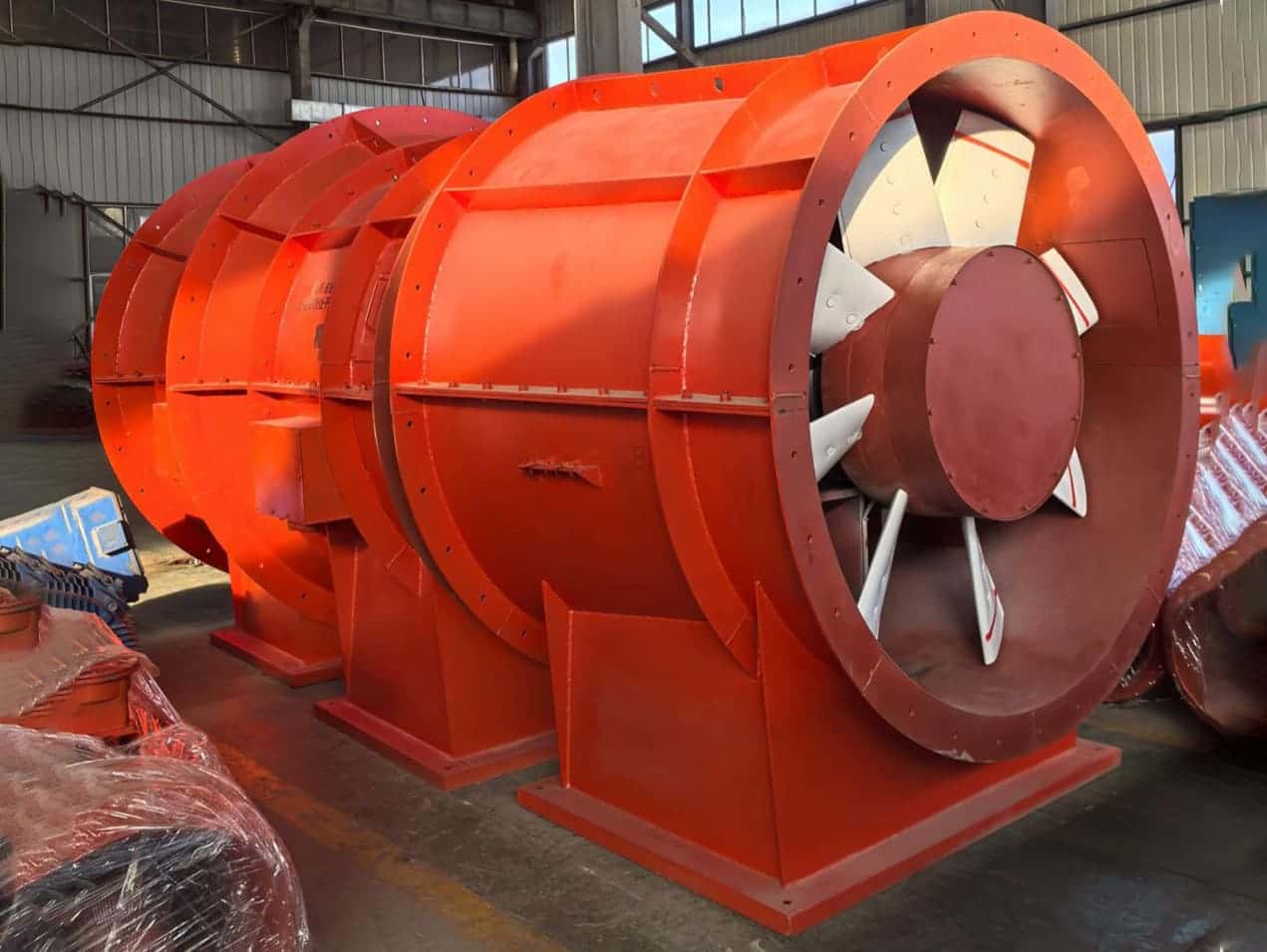
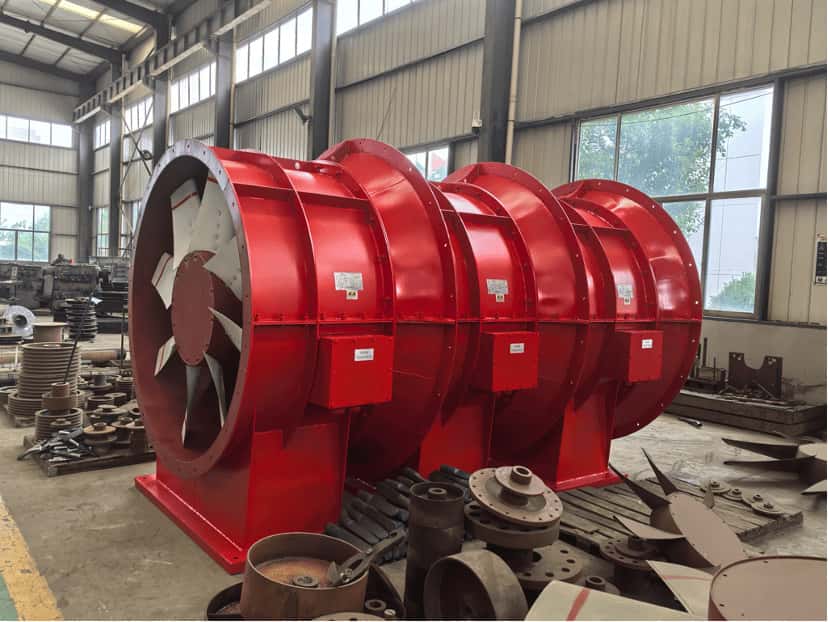
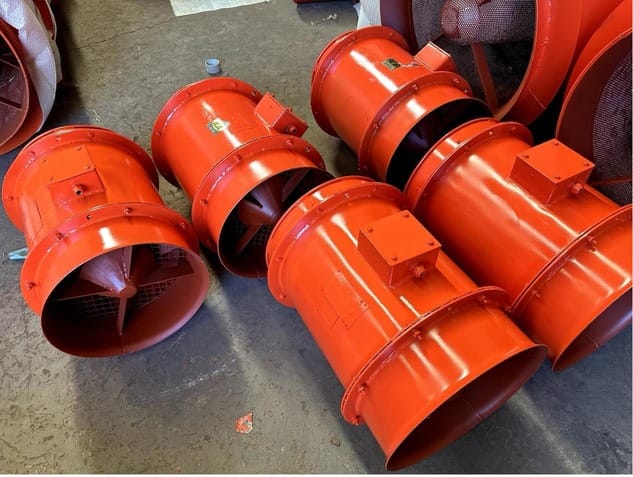
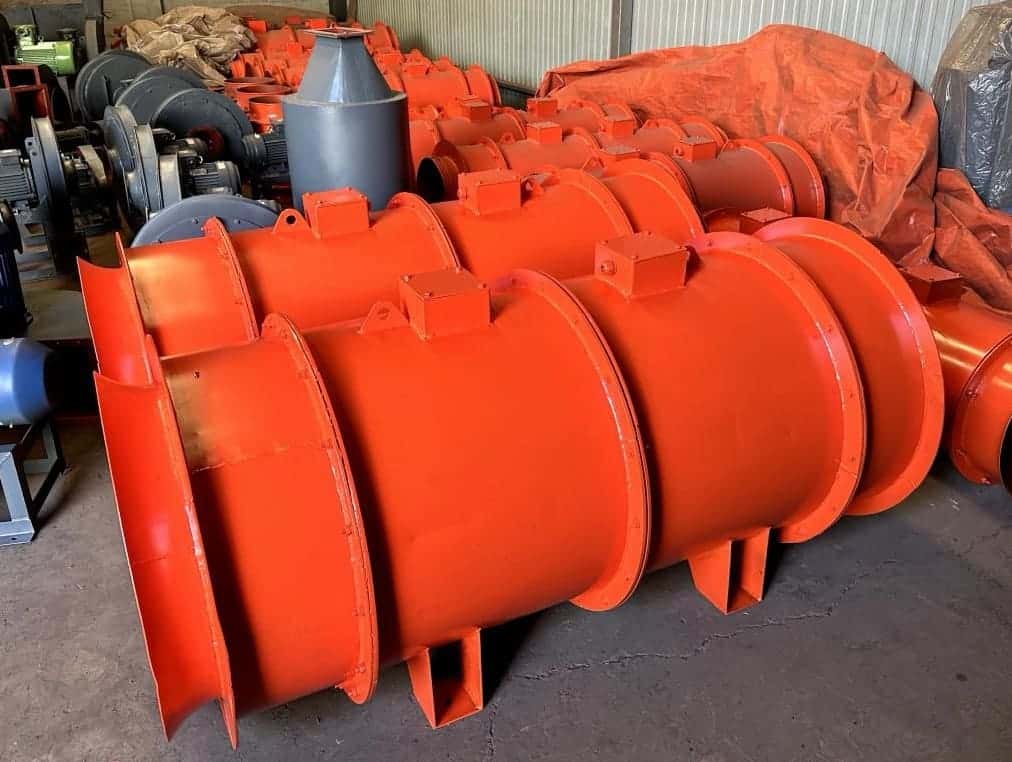
Ball bearing fans are generally better than sleeve bearing fans for heavy-duty industrial and mining ventilation, but they also cost more. The best choice depends on temperature, mounting position, run time and the reliability level you need from the fan.
Ball bearing fans use rolling elements between the inner and outer races of the bearing. This design provides stable support for the shaft over a wide range of speeds and temperatures. In industrial plants and underground mines, ball bearing fans are preferred for continuous operation, higher ambient temperatures and installations where the fan may be mounted in any orientation (horizontal, vertical or inclined). They typically offer longer service life, better performance at elevated temperatures and more consistent noise levels over time.
Sleeve bearing fans support the shaft in a lubricated sleeve or bush. They are simpler and cheaper to manufacture, and in low-temperature, horizontal installations they can run quietly for many hours. However, sleeve bearings tend to have shorter life at high temperatures, are more sensitive to lubrication breakdown and usually do not perform well when mounted vertically for long periods. As lubricant dries out or migrates, friction increases, leading to noise, wear and eventual failure.
For industrial and mining ventilation systems, reliability and safety are critical. Main fans, booster fans and important process fans often operate 24/7 and may be installed in hot, dusty environments. In these duties, ball bearing fans are usually the better choice because they maintain clearances and lubrication more effectively, even when subject to vibration, temperature swings and difficult orientations. The higher purchase cost is often recovered through longer bearing life, fewer shutdowns and lower maintenance cost.
That said, sleeve bearing fans still have a place. In light-duty applications such as small booster fans, cabinet cooling or low-cost exhaust fans running at moderate temperature and mostly horizontal orientation, sleeve bearings can be adequate and economical. For these duties, the quieter operation and lower initial price may be acceptable trade-offs.
In summary, ball bearing fans are usually better for demanding, high-temperature or continuous ventilation in industrial plants and mines, thanks to their longer life and orientation flexibility. Sleeve bearing fans can be suitable for lighter, cooler and mostly horizontal applications where cost is a priority and the consequences of failure are limited.