
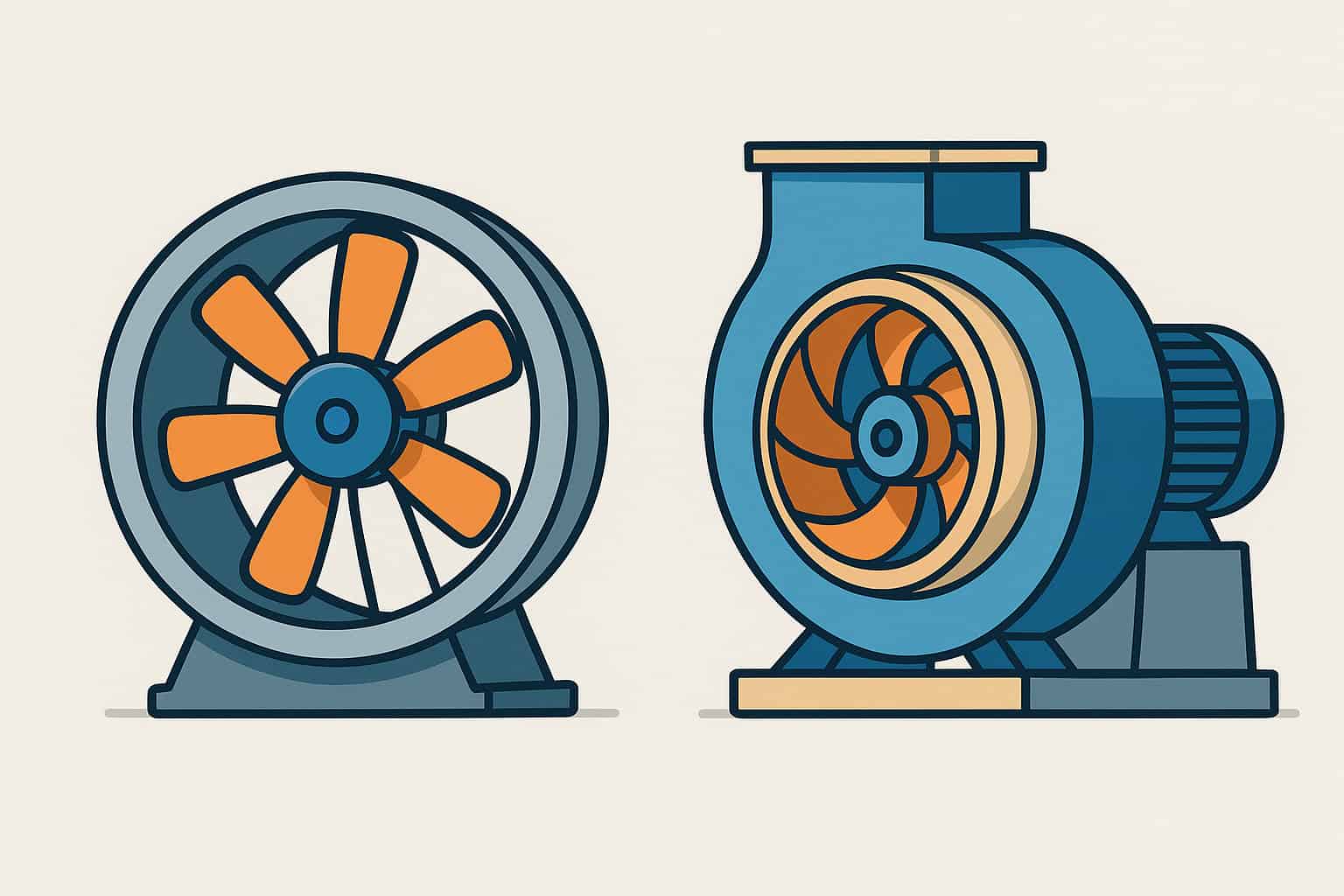
Centrifugal fans are not automatically better than axial fans, and axial fans are not automatically better than centrifugal fans. Each type has advantages and limitations, so the best choice depends on the specific ventilation duty in your plant or mine.
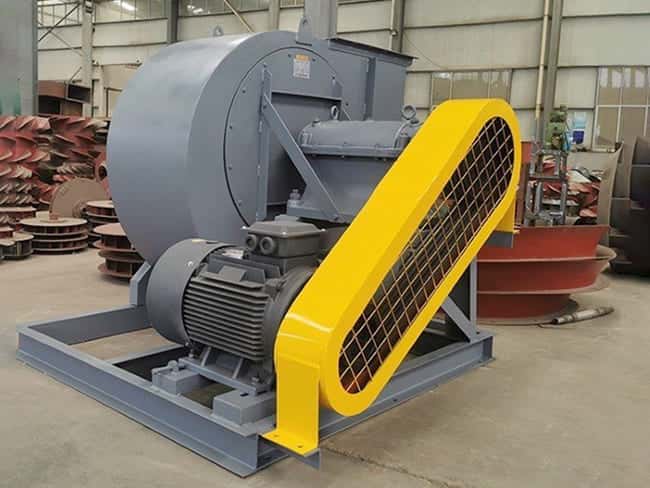
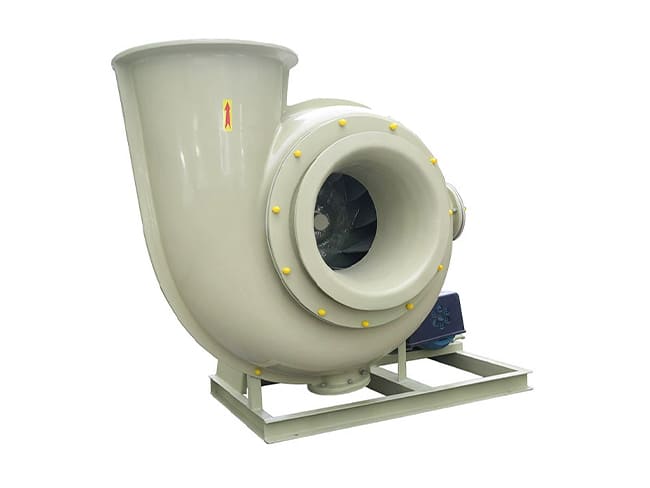
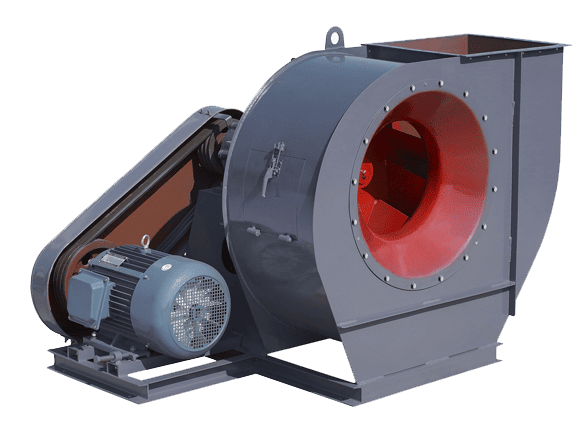
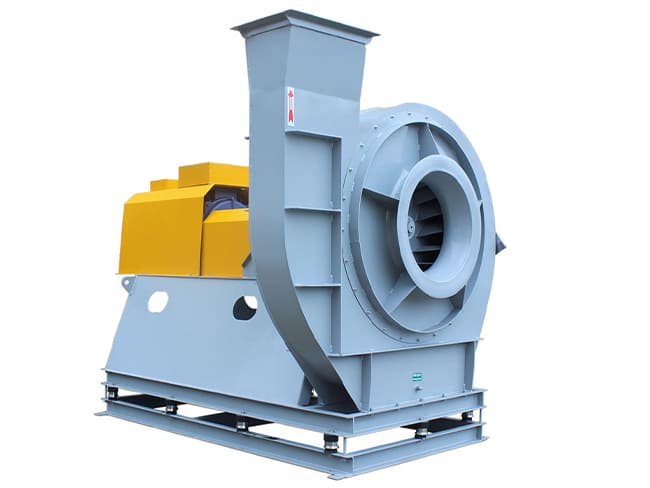
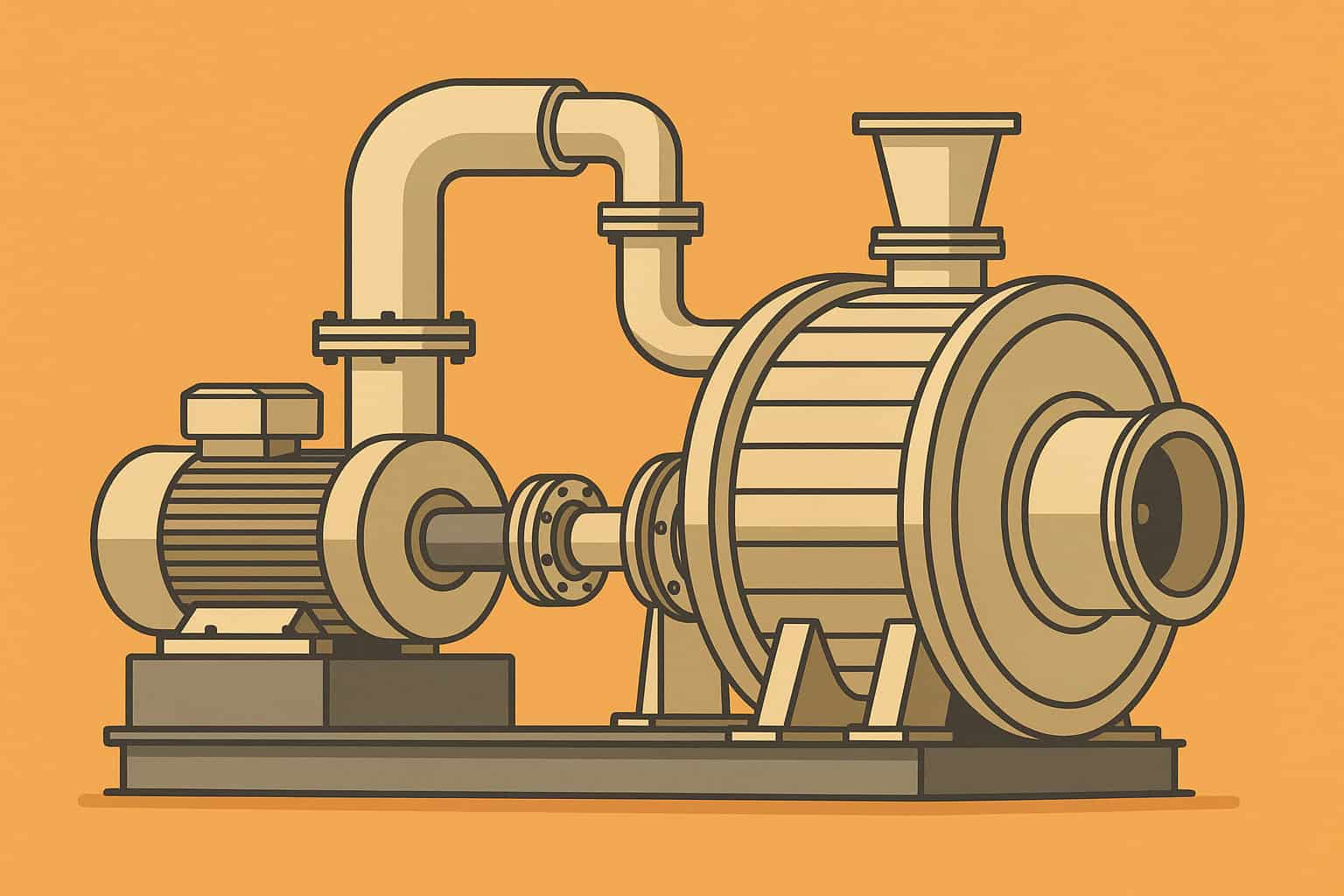
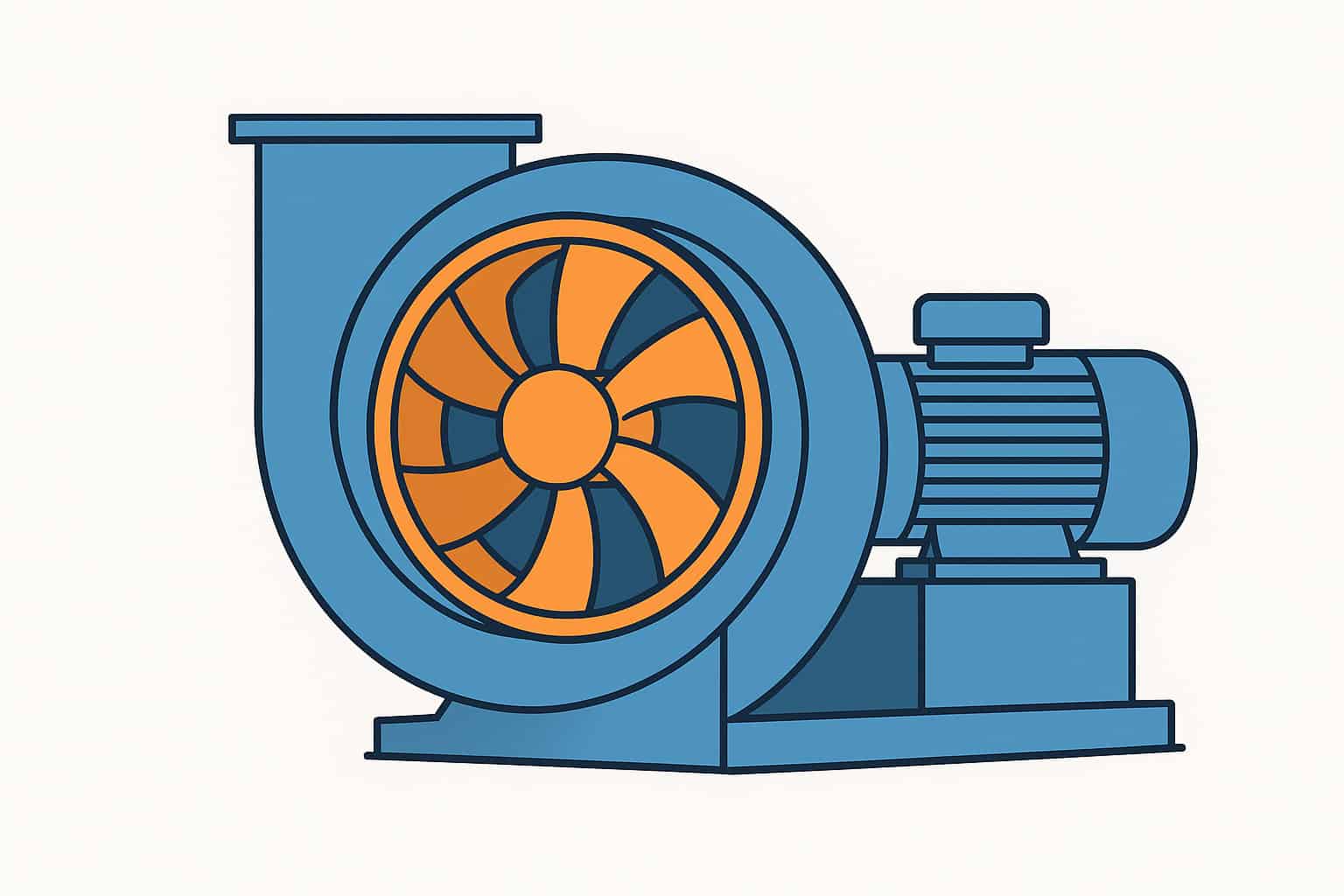
Centrifugal fans excel when you need higher static pressure and robust performance in systems with high resistance. They are typically chosen for dust collection systems, scrubbers, long and complex duct networks, combustion air for kilns and some high-pressure mine ventilation duties. Radial blade designs handle dirty, abrasive or sticky air well. Backward-curved designs are efficient and suitable for cleaner air at medium to high pressures.
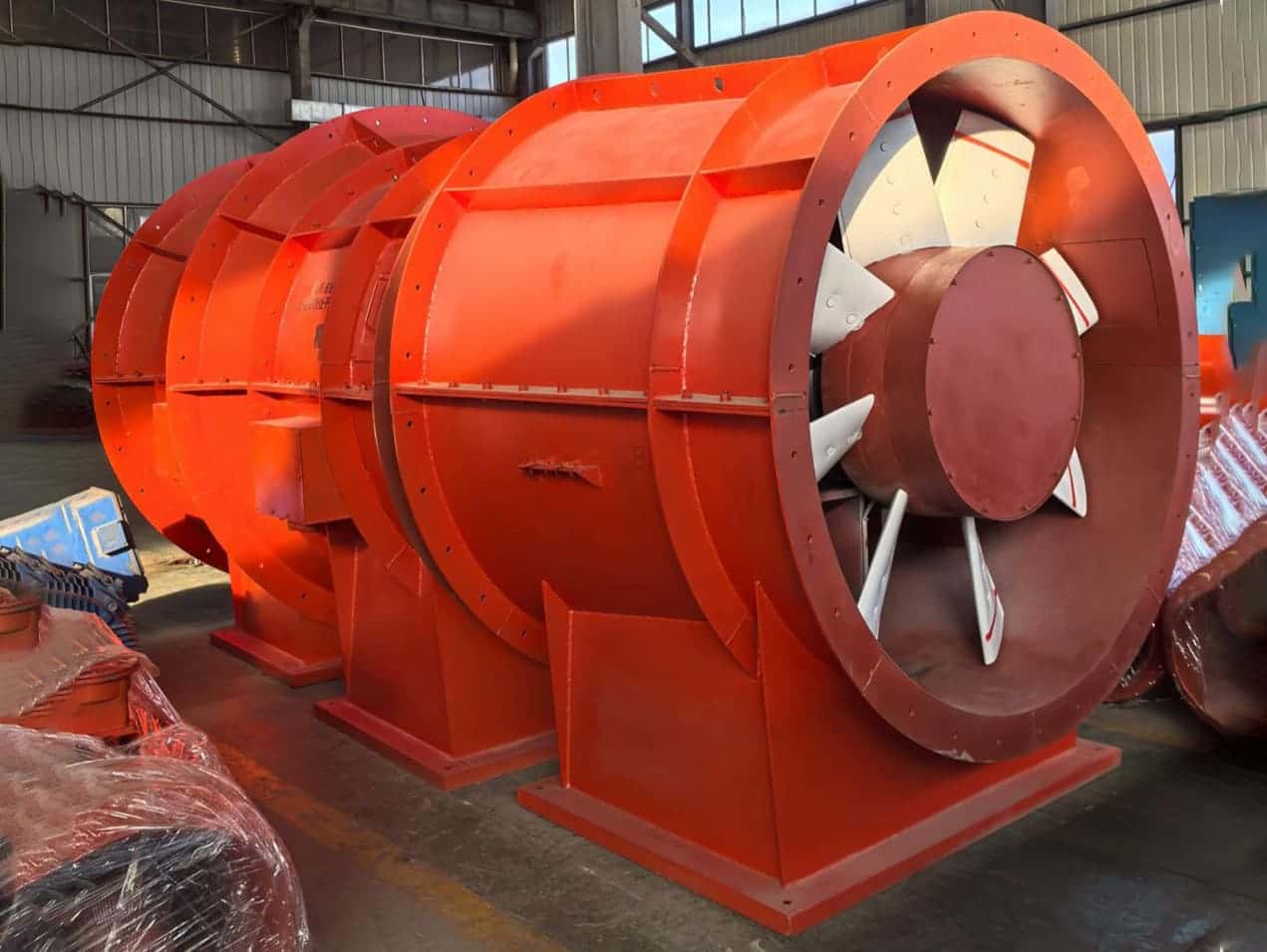
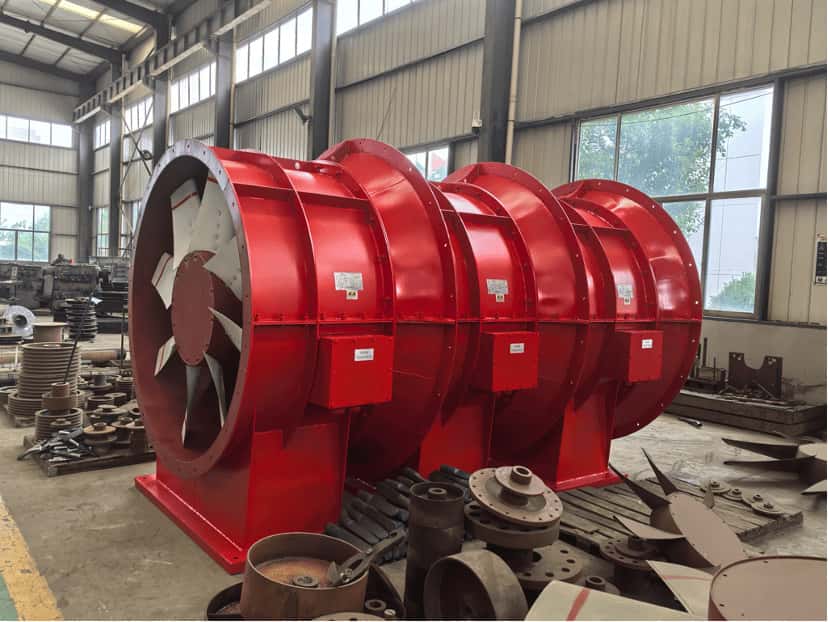
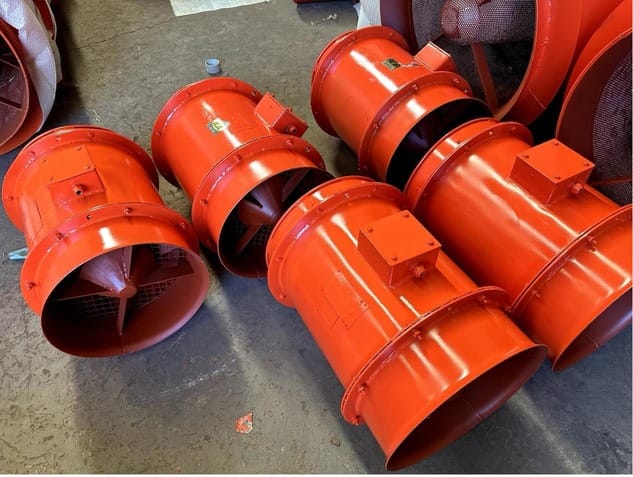
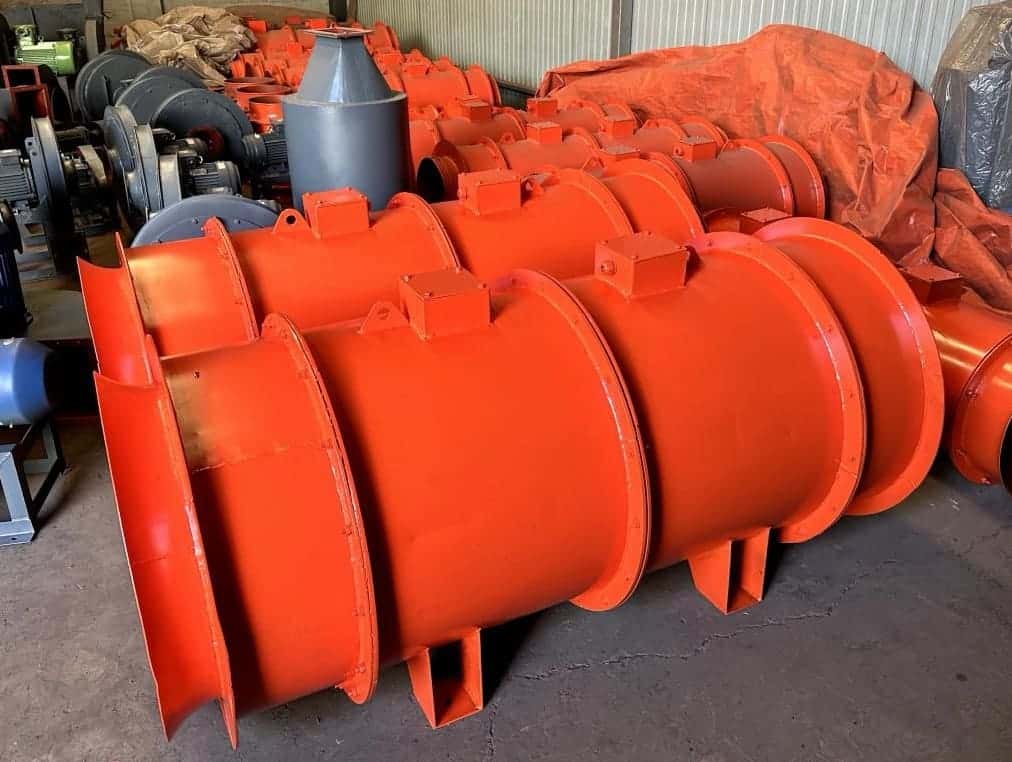
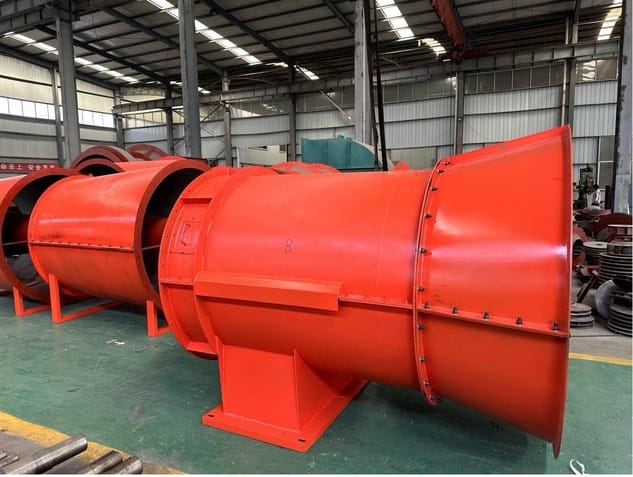
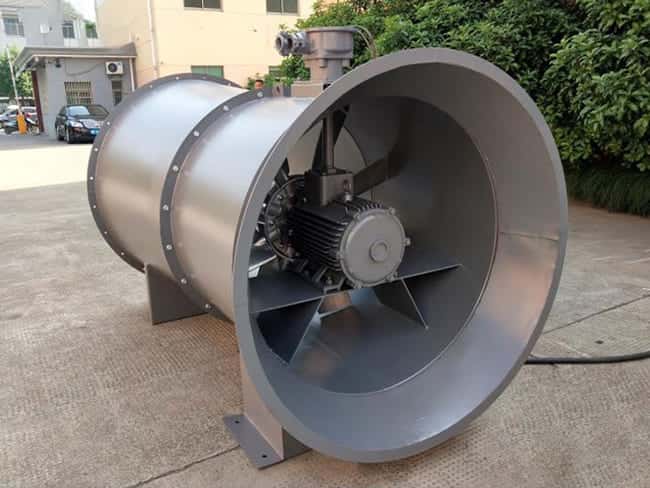
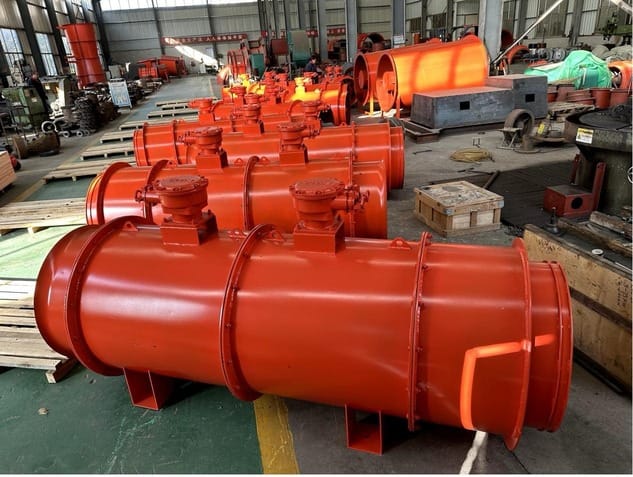
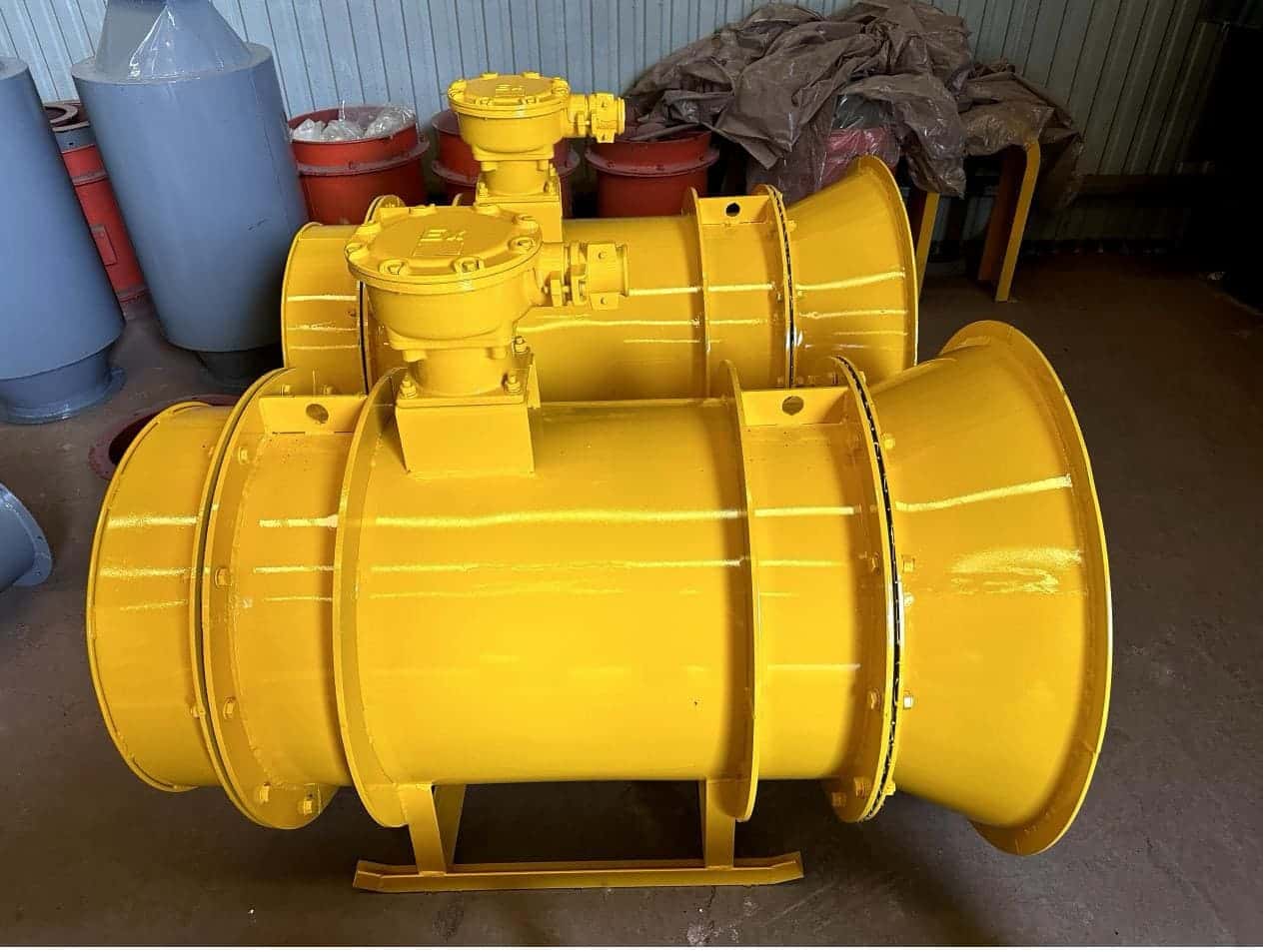
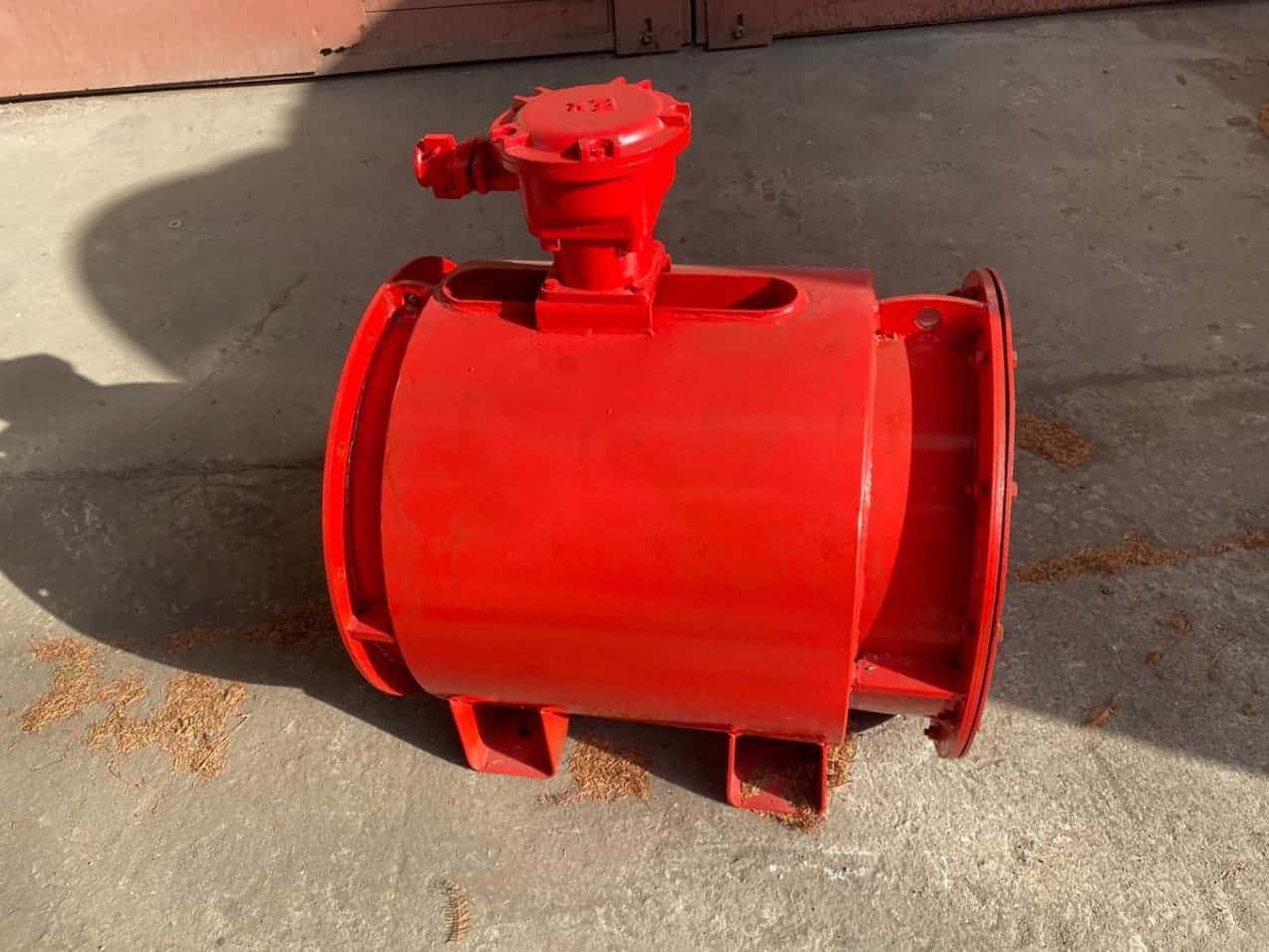
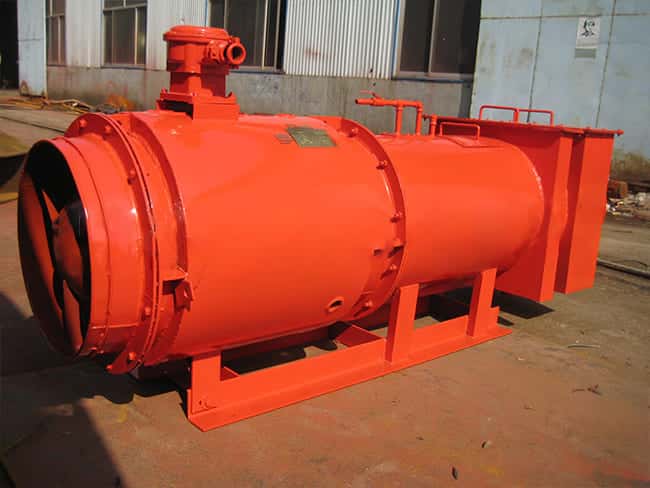
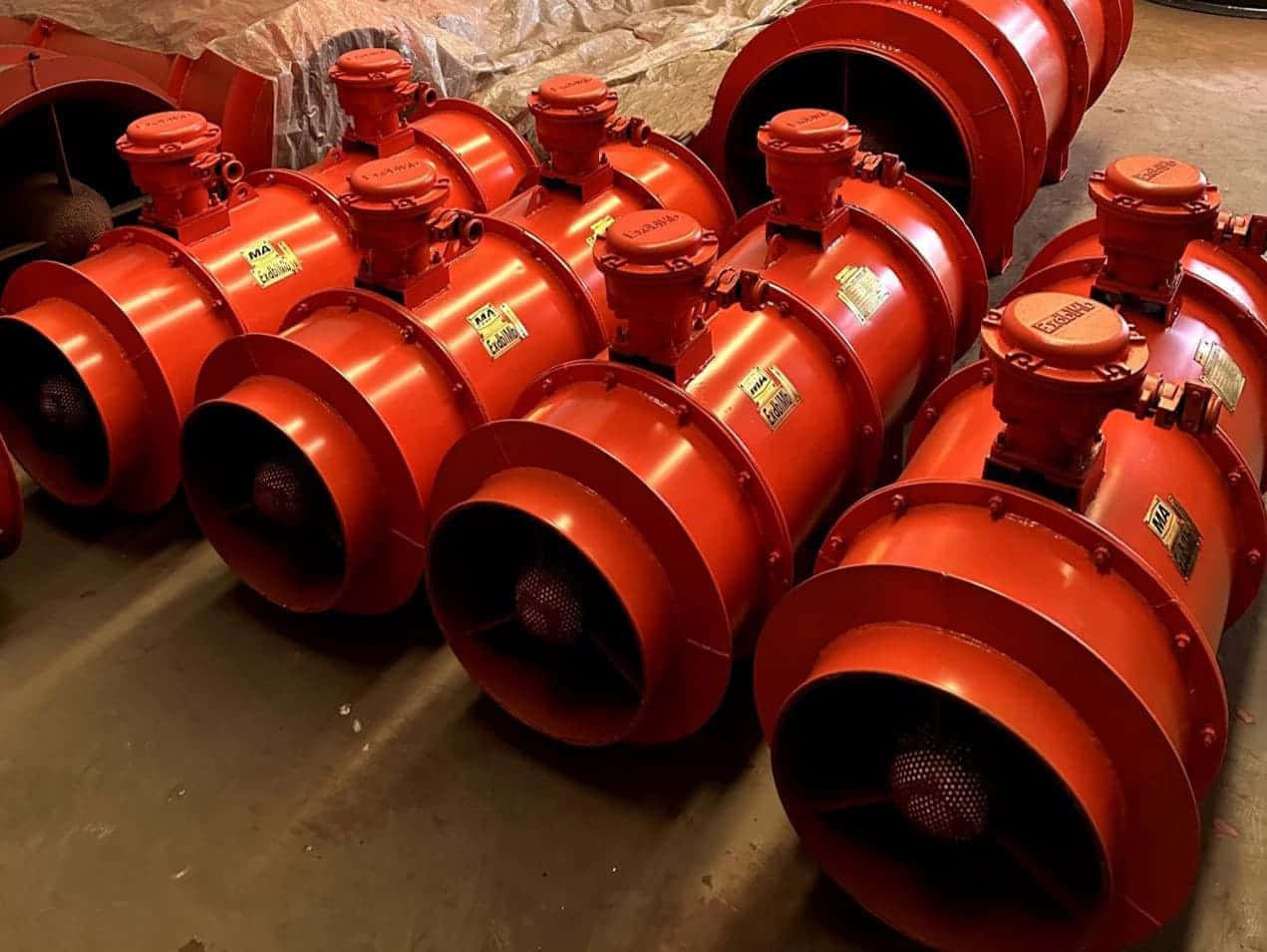
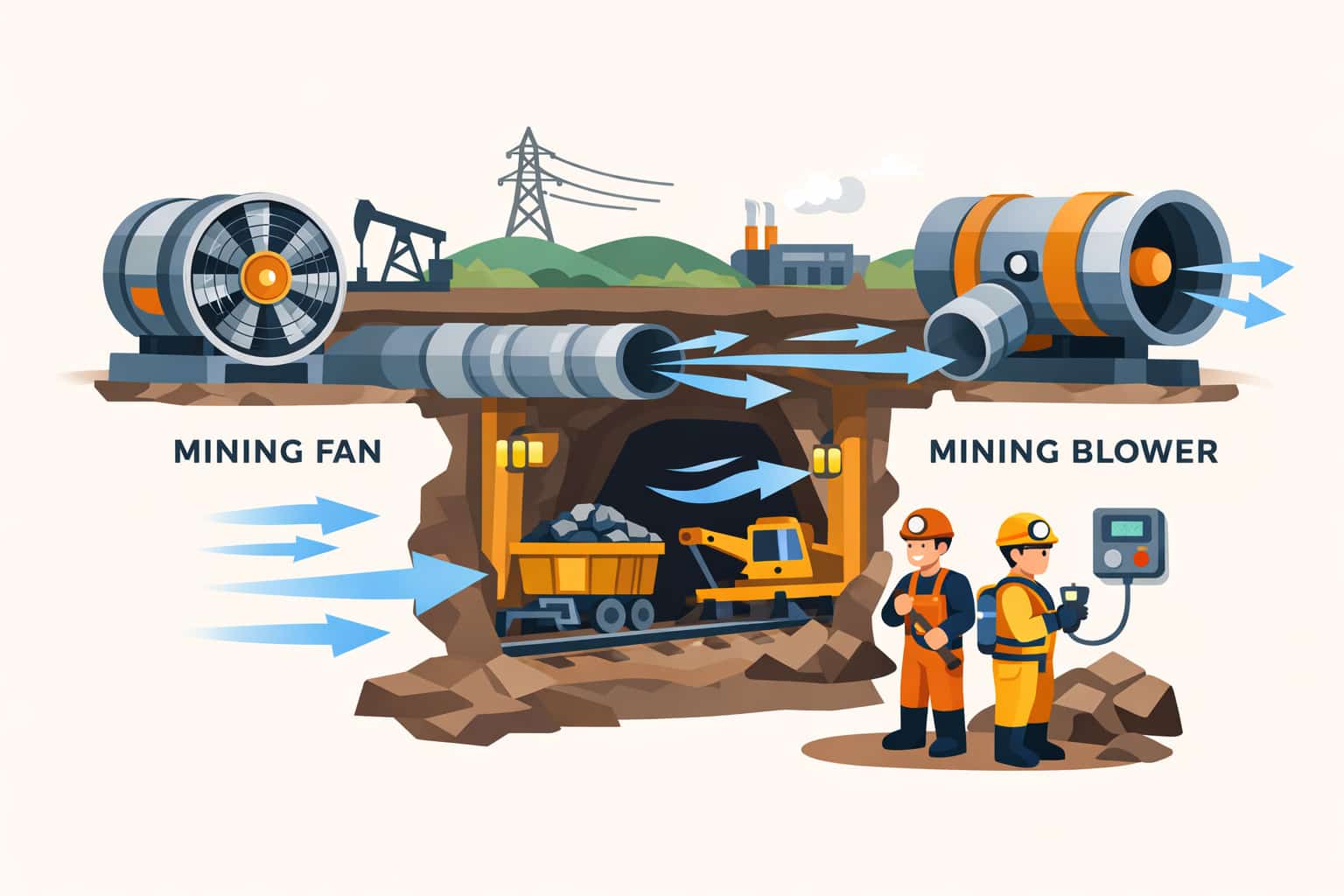
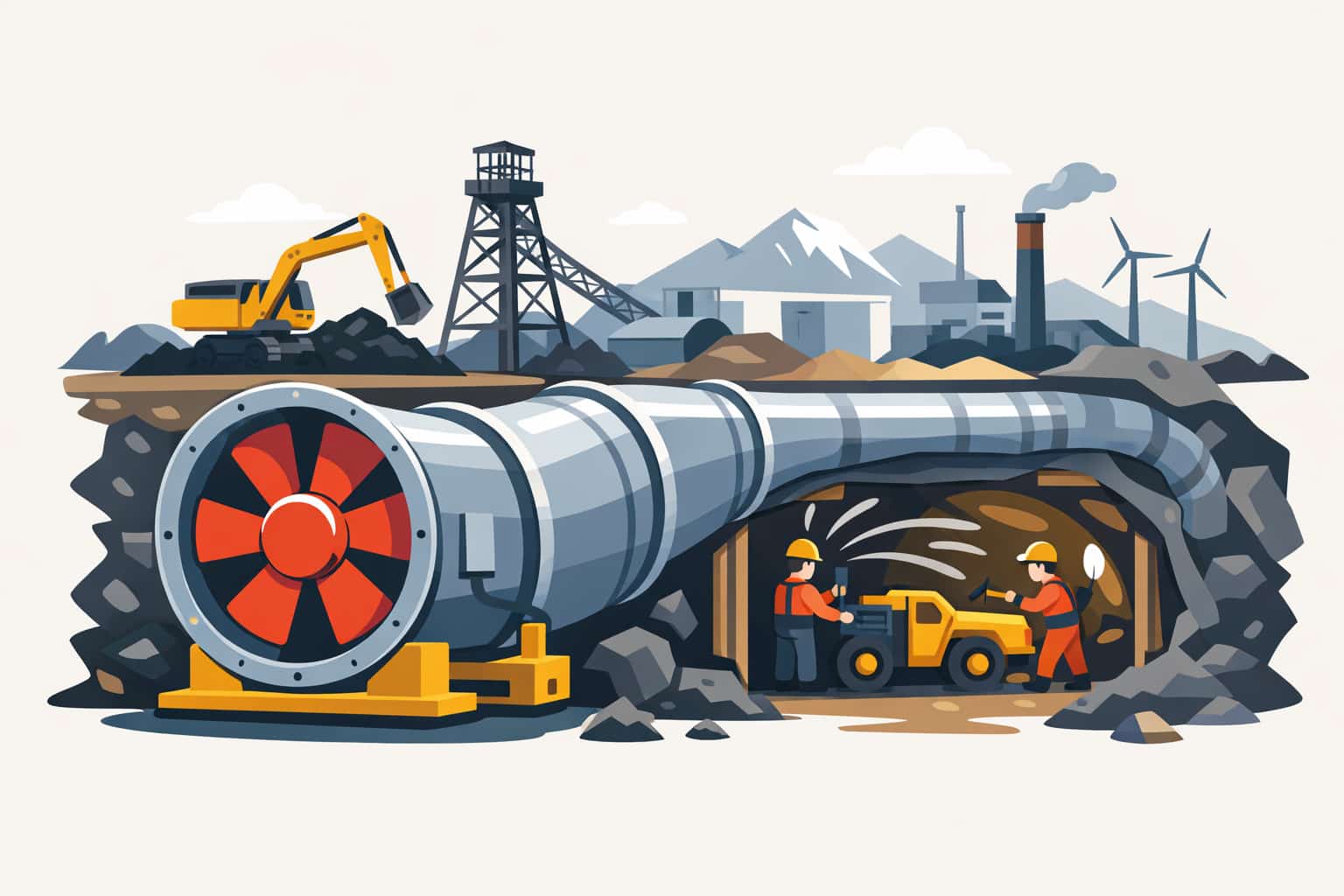
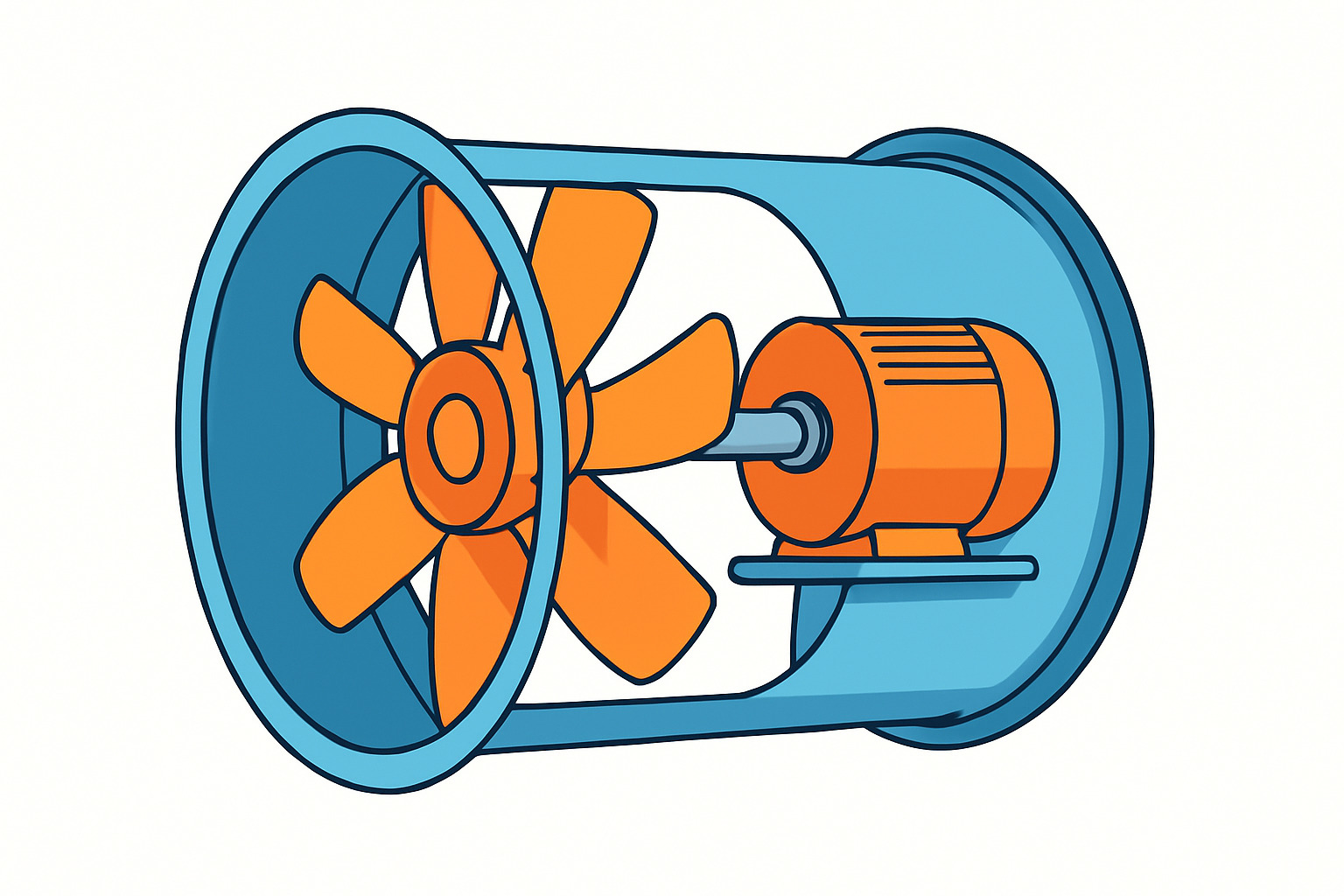
Axial fans are usually superior when the requirement is very high airflow at low to medium pressure. This is common in tunnels, underground haulageways, main mine exhaust systems and large industrial halls. Axial tunnel fans and mine fans can move thousands of cubic metres per minute with relatively compact equipment and straightforward inline duct installation. They are often more economical than centrifugal fans for these high-volume, lower-pressure applications.
When deciding which is “better” for a project, engineers evaluate several factors:
- System pressure and resistance: If filters, scrubbers or long duct runs demand high pressure, a centrifugal fan is likely the better option. For low-resistance airways, axial fans are usually more efficient.
- Air volume: For very large volumes, especially in tunnels and mines, axial fans often provide the best cost-performance ratio.
- Dust and particulate: Heavy dust loads or particle-laden gas streams may favour rugged centrifugal designs.
- Space and layout: Axial fans are convenient when you want airflow straight through in a compact footprint. Centrifugal fans require more space but offer flexible discharge directions.
- Noise and efficiency: Both types can meet noise and efficiency targets if properly selected. Detailed analysis of performance curves and sound data is needed.
In many mines and industrial plants, the optimal solution is a combination: axial fans for main or tunnel ventilation where high volume is needed, and centrifugal fans for local exhaust, dust collection and process air. Instead of asking whether one type is globally better, it is more useful to ask which fan type matches the required flow, pressure, contaminant load and layout.
In summary, centrifugal fans are better for high-pressure, often dusty systems, while axial fans are better for high-volume, moderate-pressure ventilation. The right choice depends on your system requirements, not on a simple label of one fan being universally superior.