
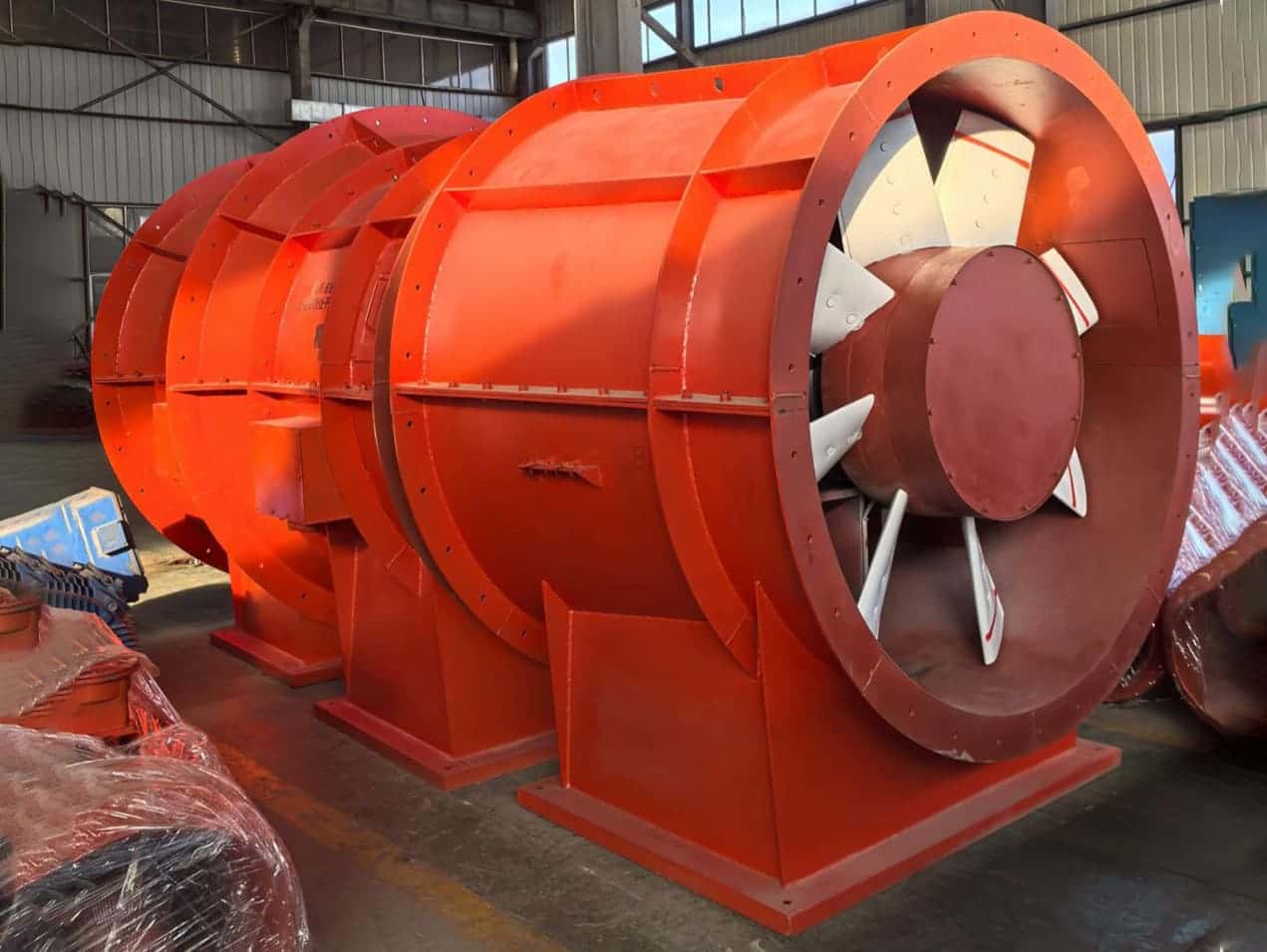
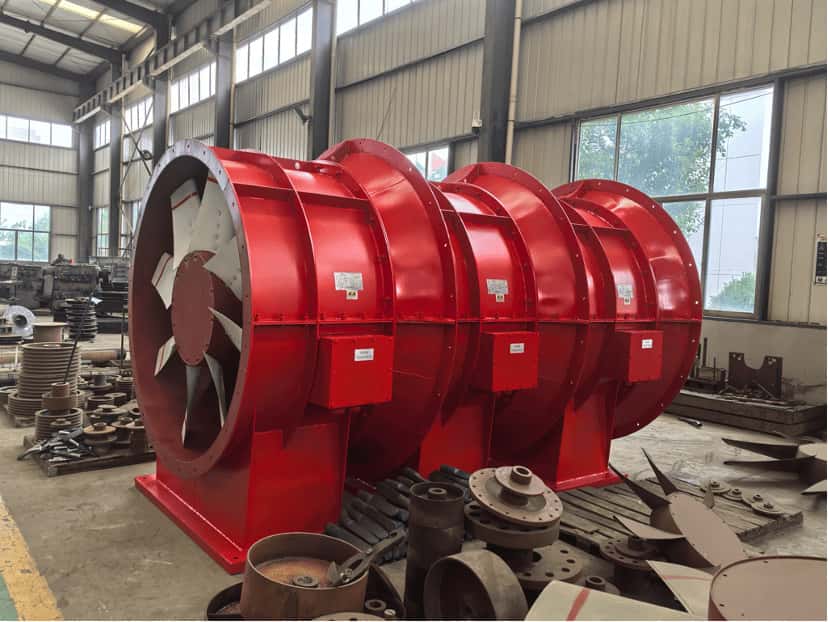
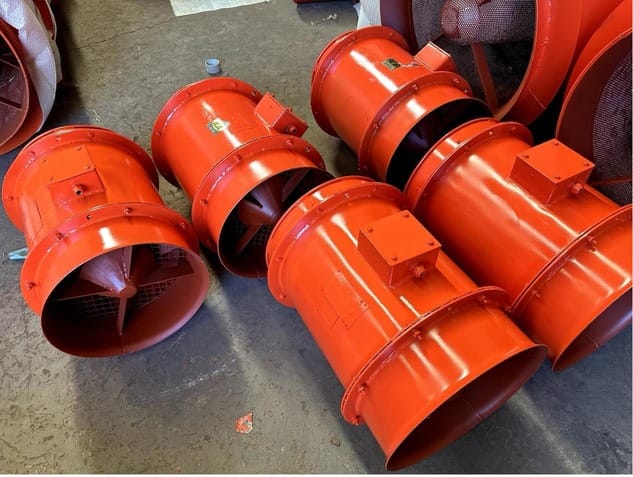
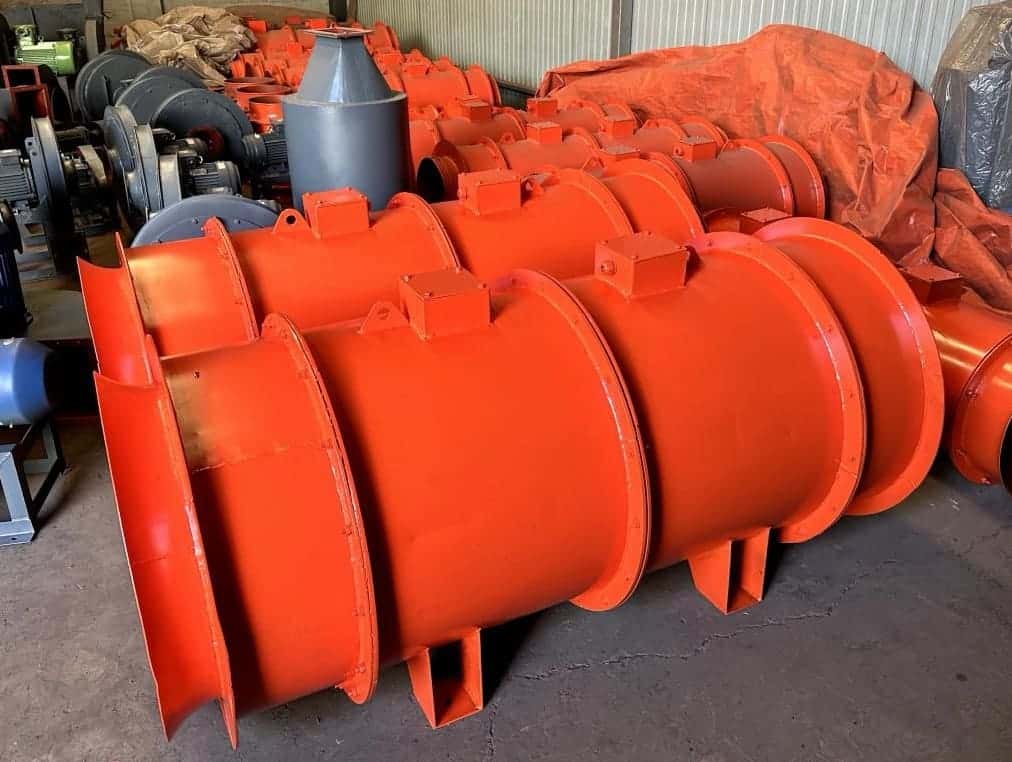

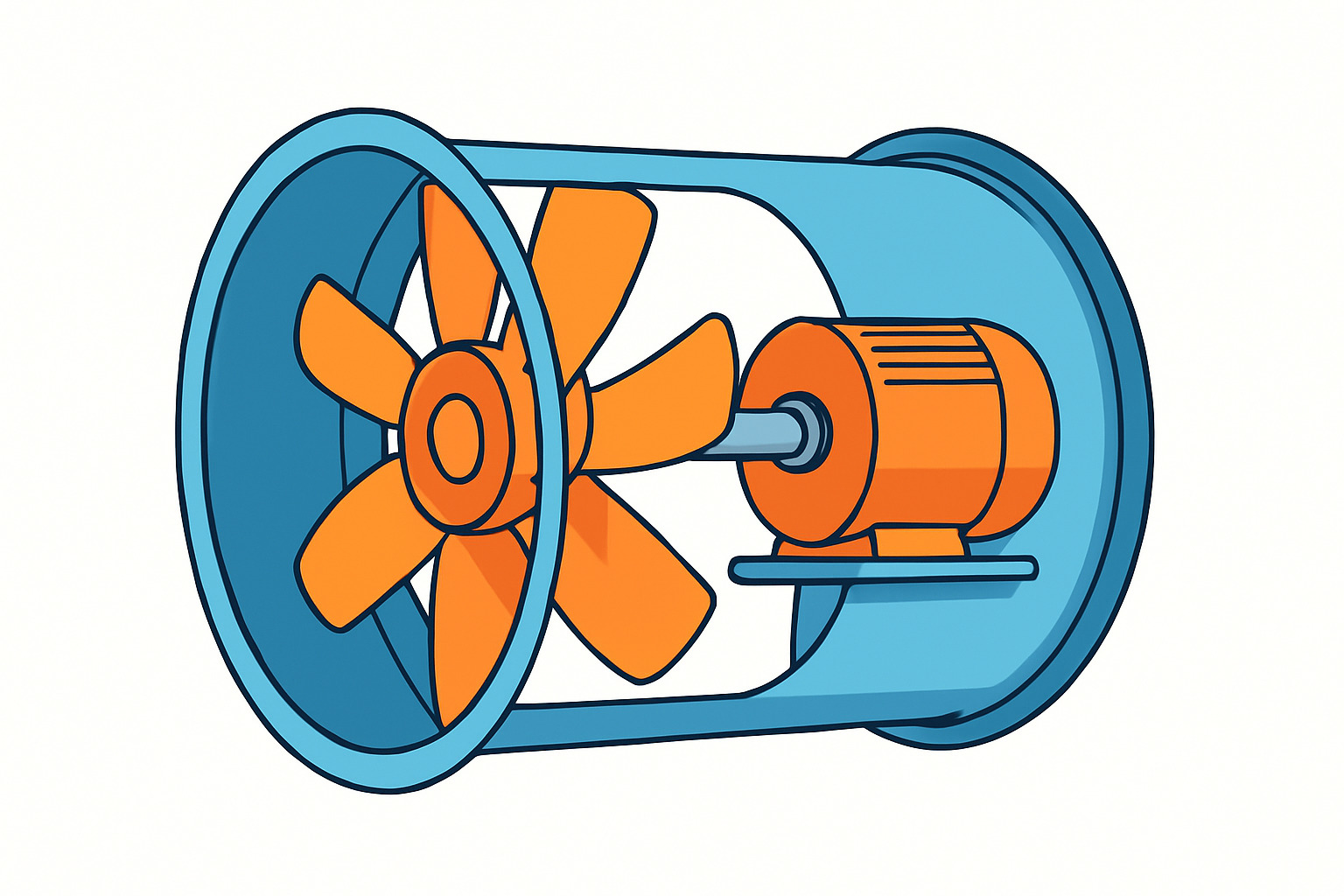
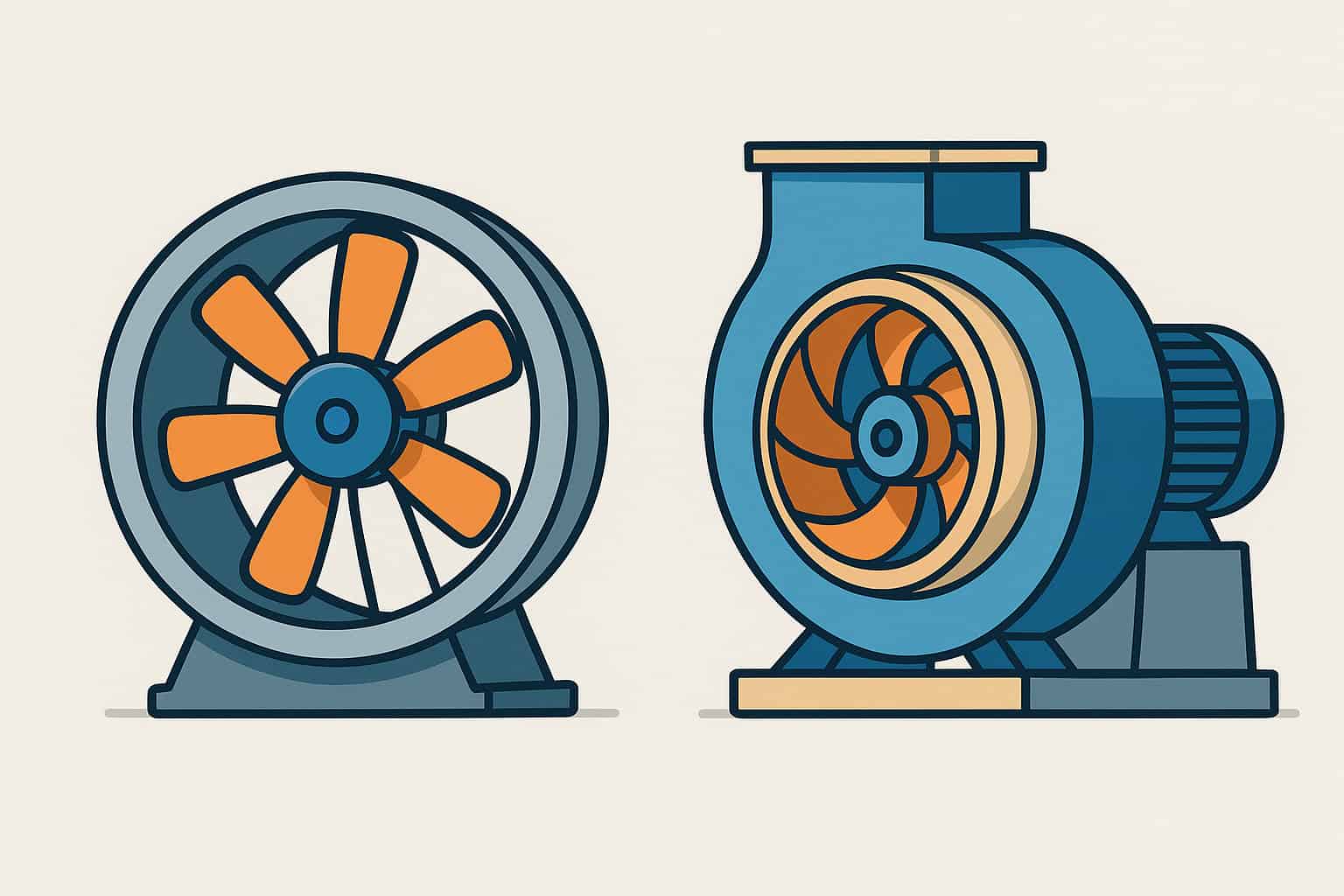
Industrial ventilation fans can influence humidity in underground mines, but they do not control it in the same way that a dedicated dehumidifier or air conditioning system does. A fan on its own does not remove water from the air; instead, it moves air. Humidity control comes from how that air movement interacts with sources of moisture, cooling systems, and the mine’s overall ventilation layout.
In many underground mines, especially deep or hot operations, humidity becomes a concern because of groundwater inflow, water sprays, and heat. When warm air contacts water or wet rock surfaces, evaporation adds moisture to the air. High humidity combined with elevated temperatures can cause discomfort and heat stress, reduce equipment reliability, and create condensation on electrical components and ventilation ducting.
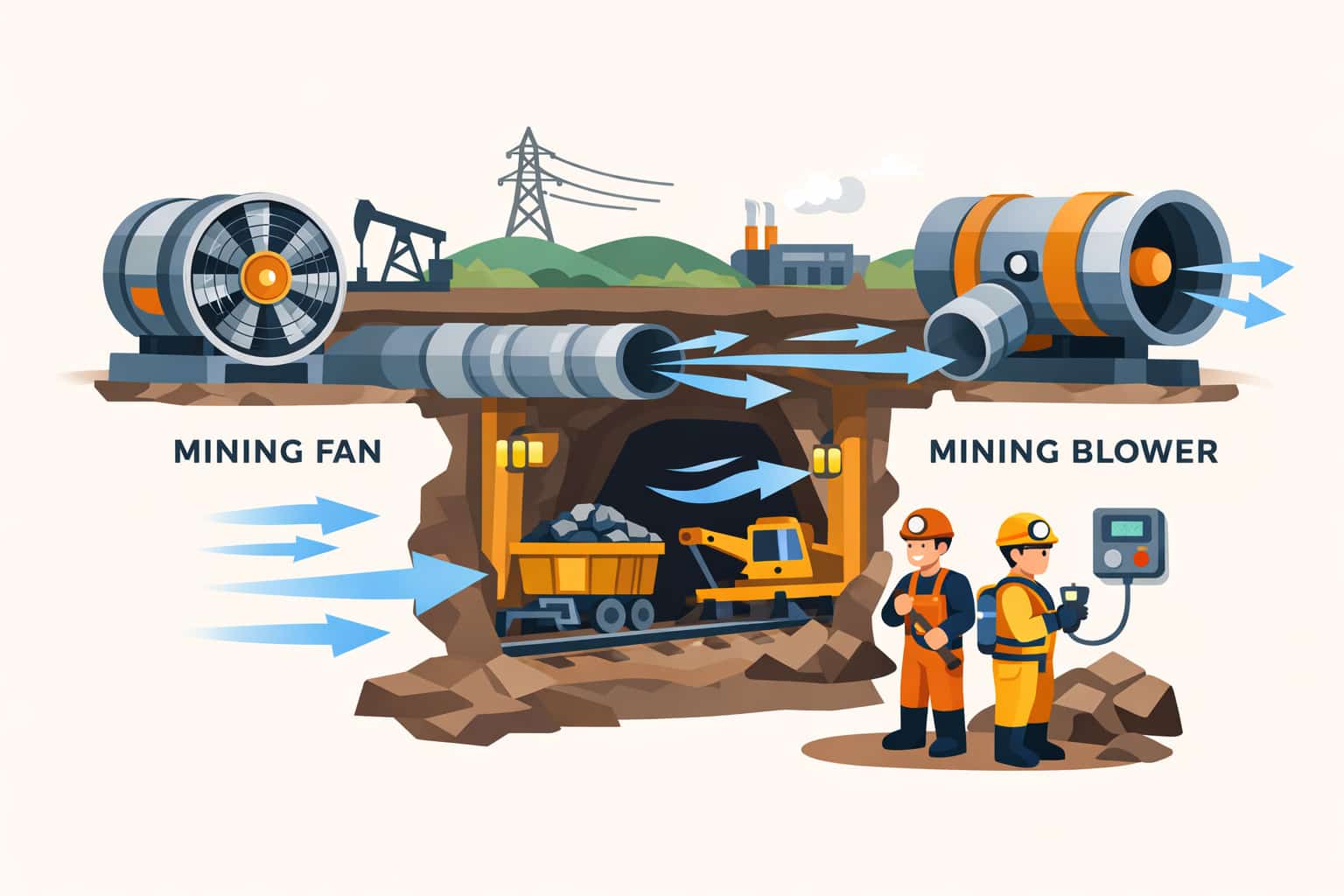
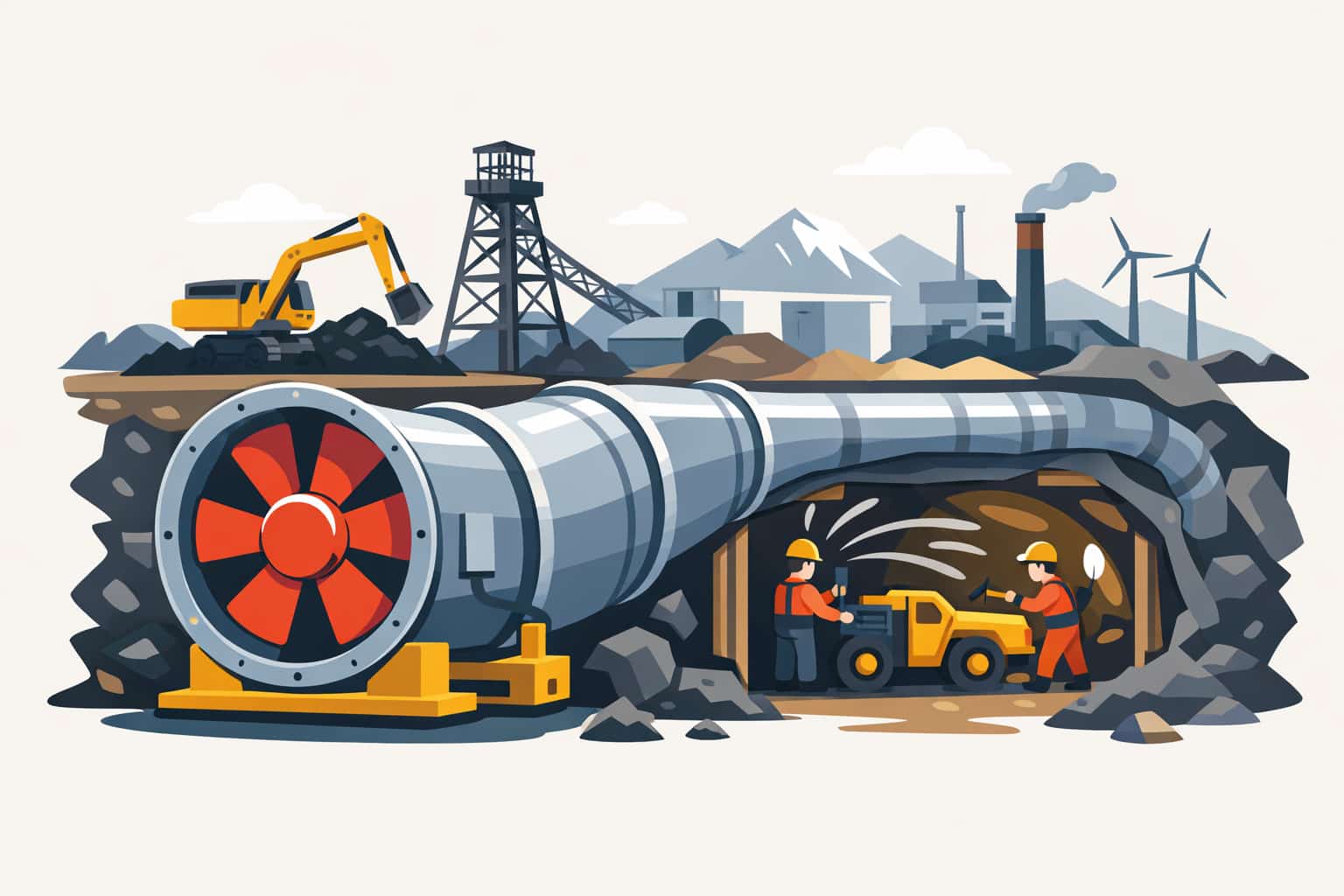
Industrial and mining ventilation fans help manage this by moving moist air out of headings and districts and replacing it with fresher air from intake routes. If the intake air has lower absolute humidity or lower temperature, the net effect can be a reduction in perceived humidity and improved comfort. Where surface air is cool and dry, increasing airflow with powerful mine ventilation fans can significantly improve both temperature and humidity conditions underground.
However, in regions where outside air is already warm and humid, ventilation alone may not be enough. In such cases, fans become part of a broader cooling and dehumidification strategy. Air may be cooled in refrigeration plants or through chilled water systems before being distributed by ventilation fans. Cooling air reduces its capacity to hold moisture and can cause condensation and drainage, which lowers humidity before the air reaches the work areas. Ventilation fans are then used to deliver this conditioned air to the right locations and remove moist return air.
Fans also help limit localized humidity problems by reducing stagnant air pockets. In poorly ventilated corners or blind ends, moisture can accumulate and surfaces remain wet, promoting corrosion and mold. Properly placed auxiliary fans and ducting improve air circulation, which helps dry these areas more quickly and prevents condensation on equipment. In this sense, good ventilation is an important support for humidity control, even if fans are not directly removing water from the air.
It is important to recognize the limits: if all air supplied to the mine is already near saturation, ventilation fans alone cannot significantly lower relative humidity—they will simply exchange one humid air mass for another. Effective humidity control then depends on combining ventilation with cooling, drainage, and water management. Pumping and directing groundwater, optimizing spray usage, and insulating cold surfaces all contribute to a more stable humidity profile underground.
In summary, industrial ventilation fans in underground mines do not directly dehumidify air, but they play a crucial role in moving moist air out of work areas, distributing cooler and sometimes drier air, and supporting mechanical cooling and water management systems. Together, these measures can achieve practical humidity control and improve both comfort and equipment reliability underground.
