
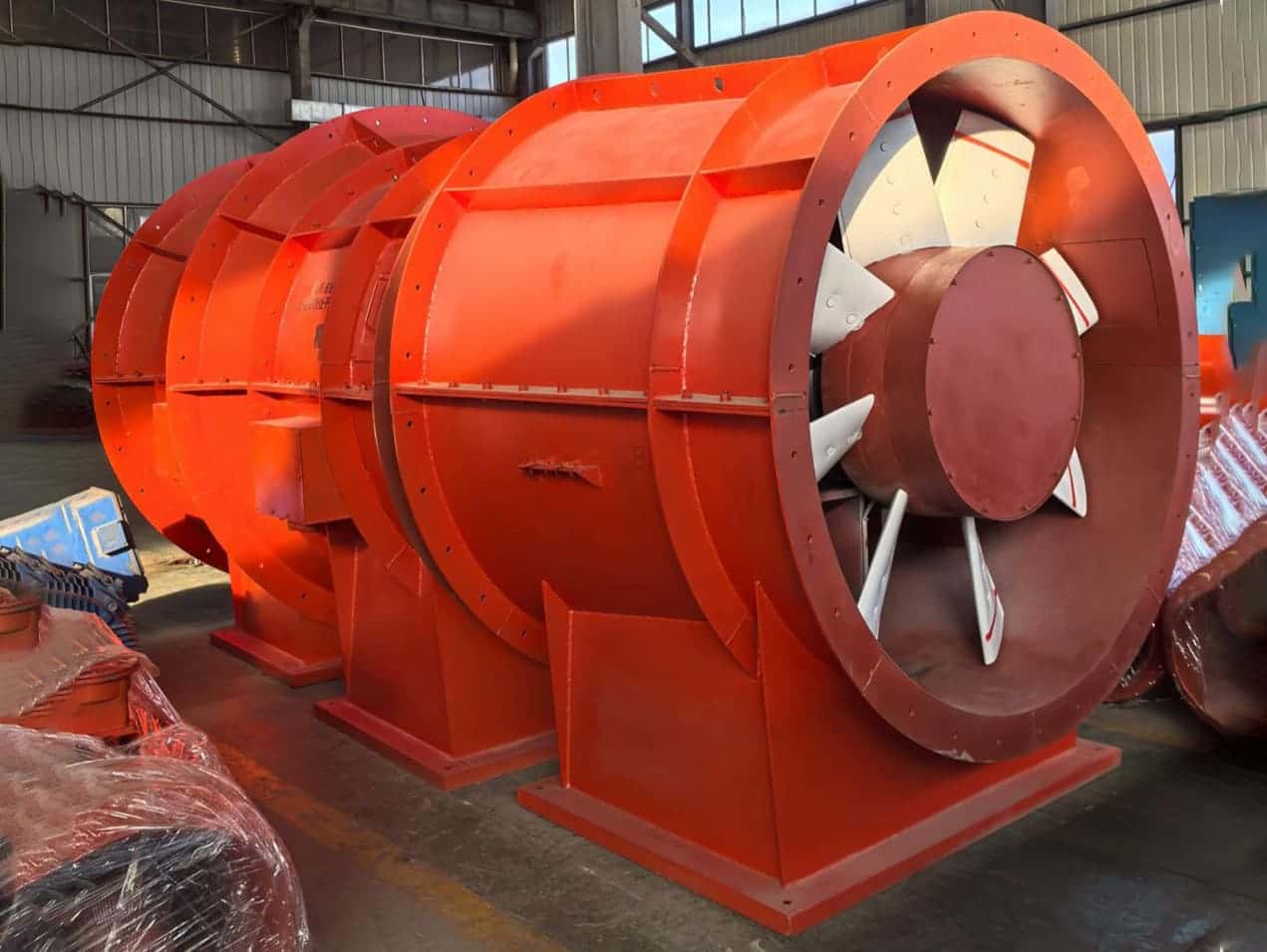
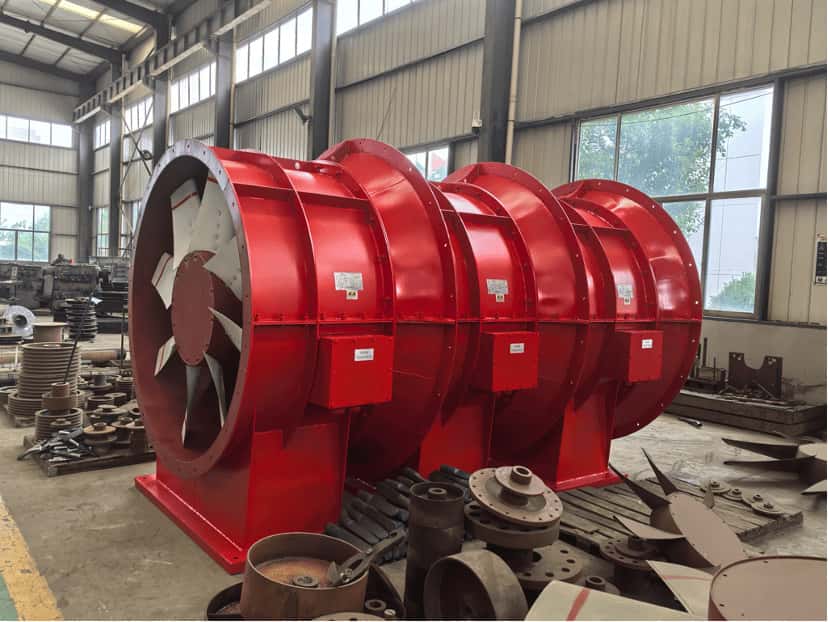
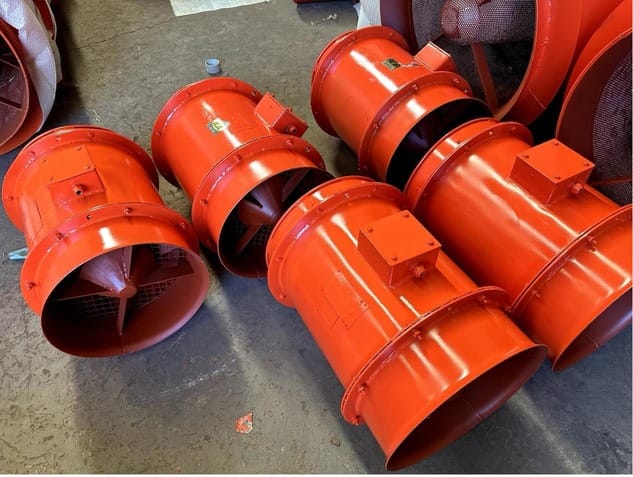
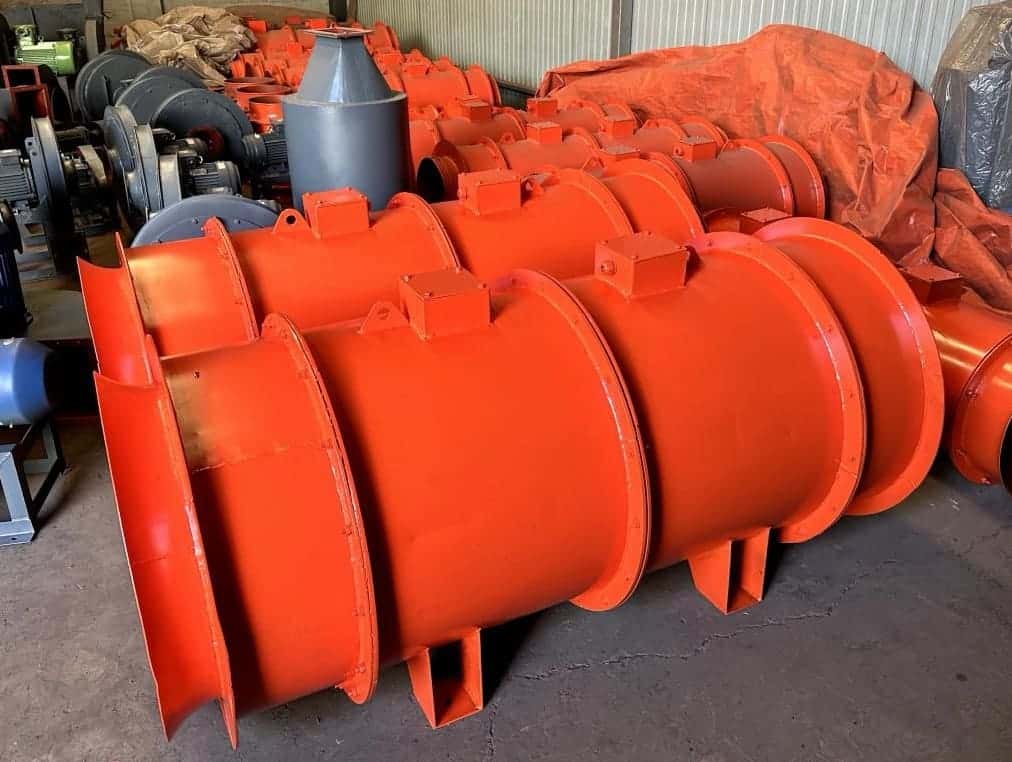
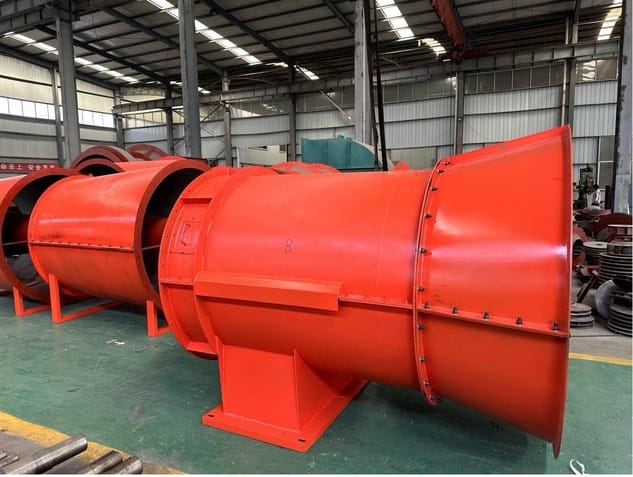
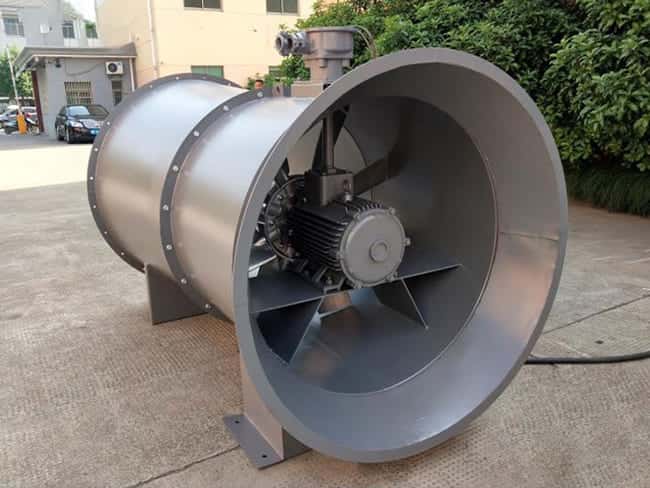
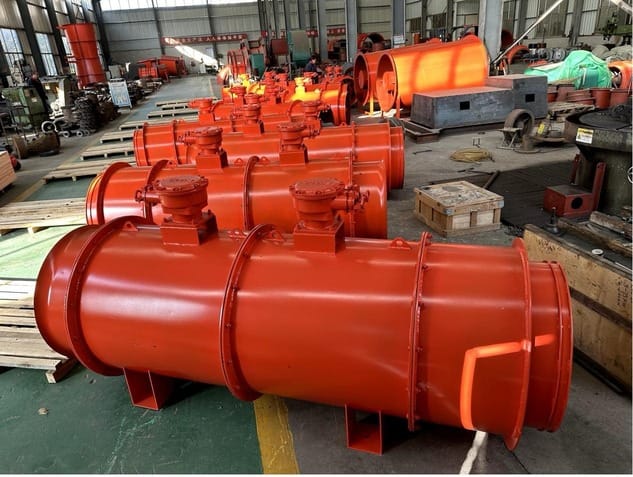
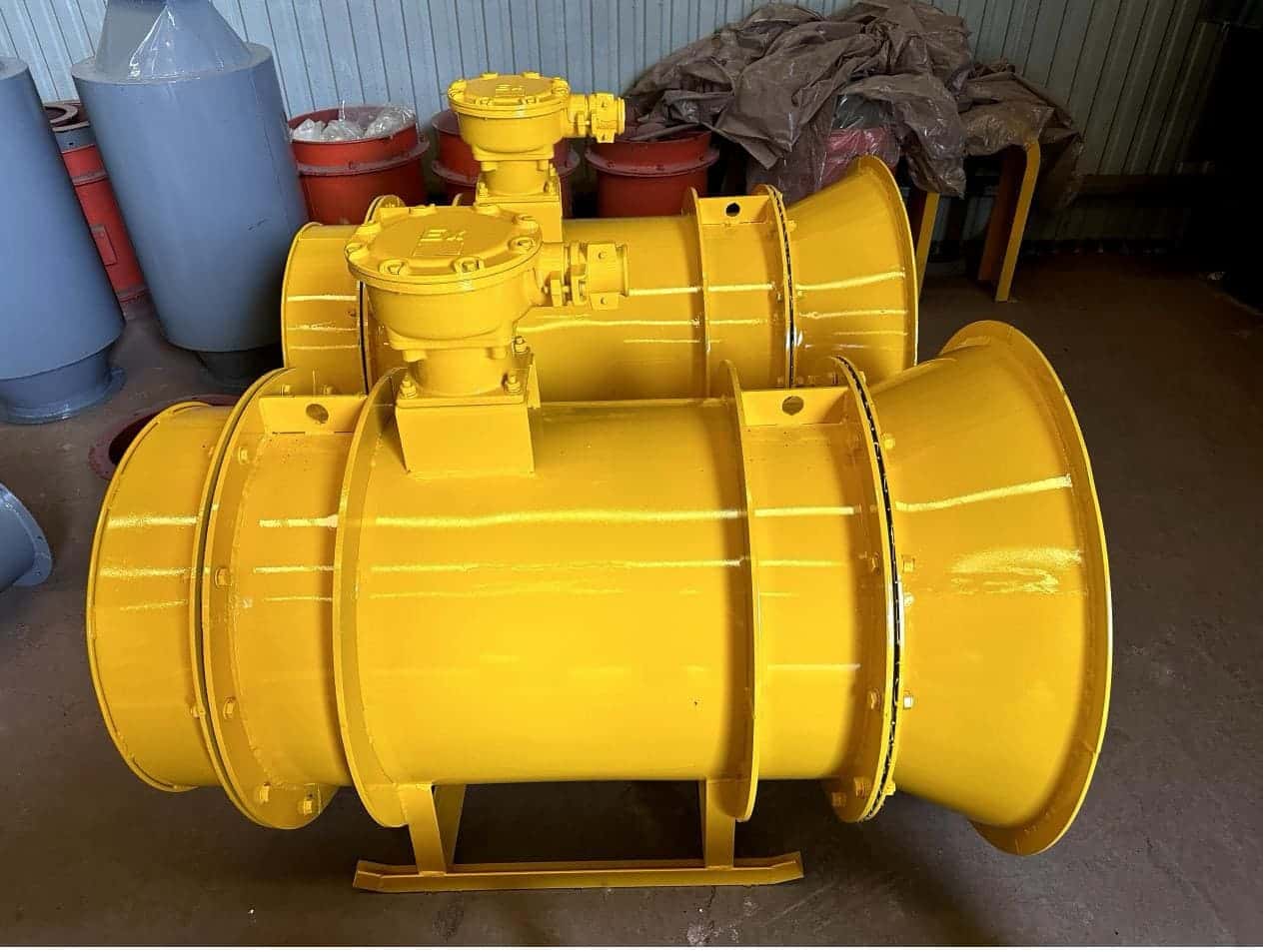

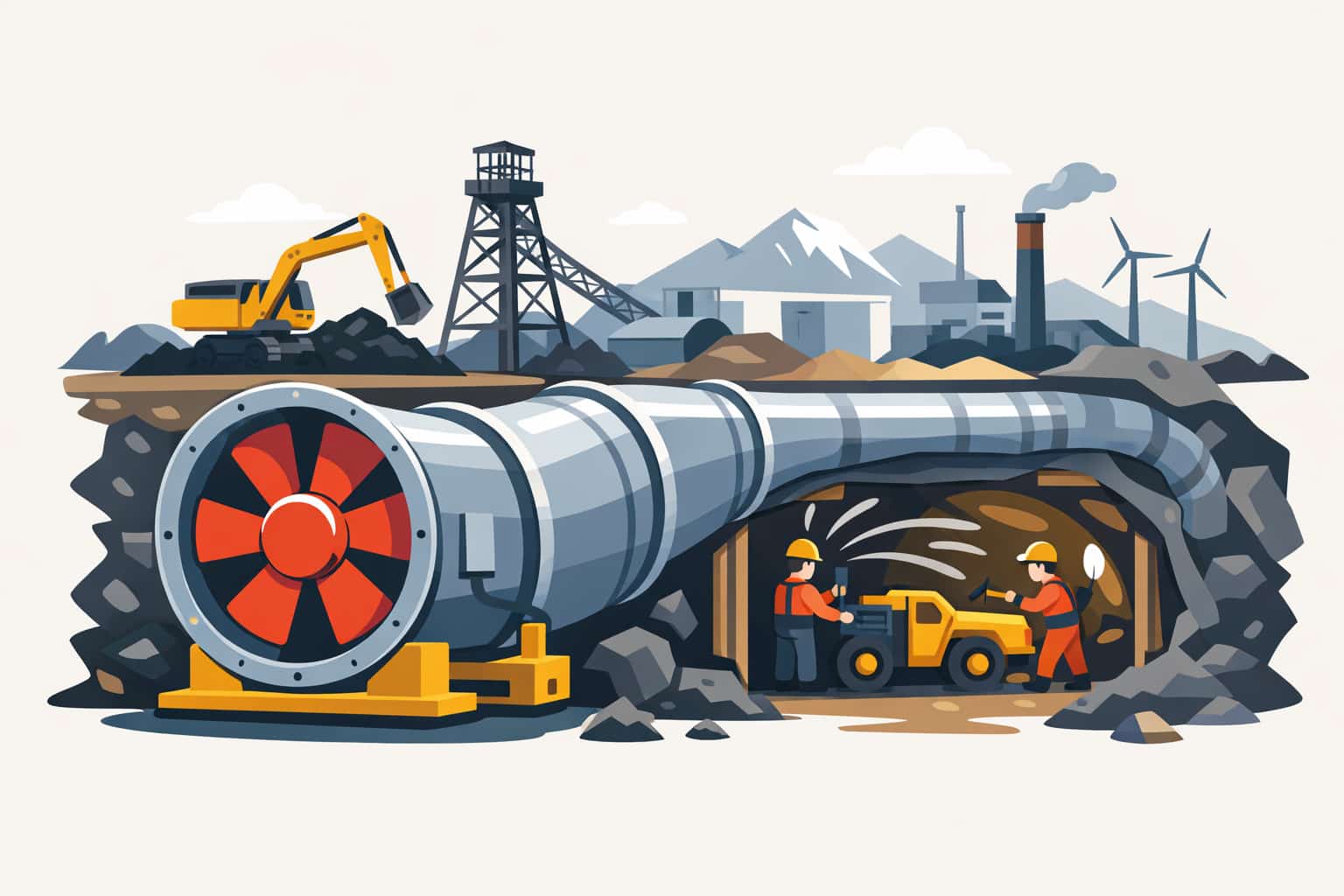


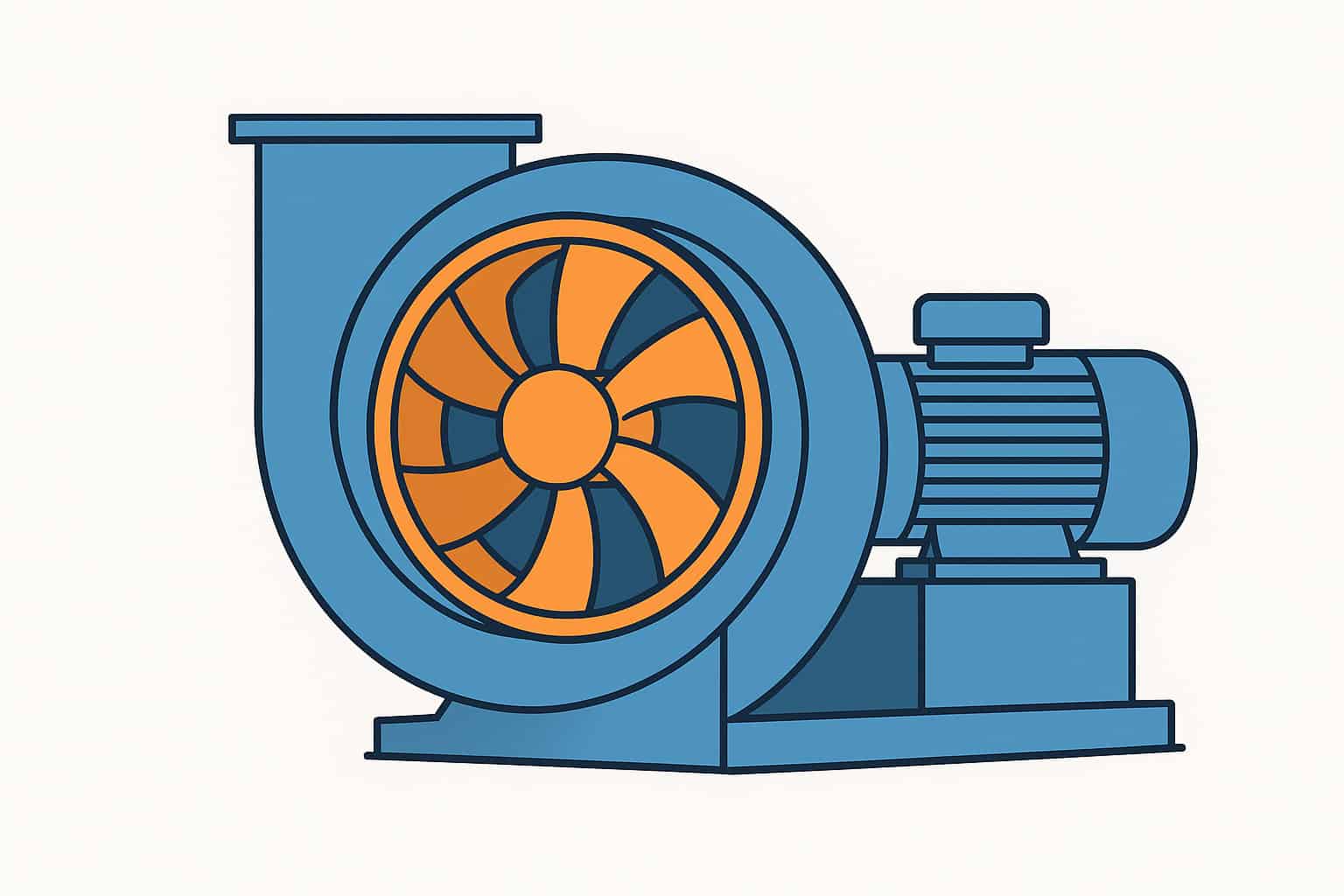
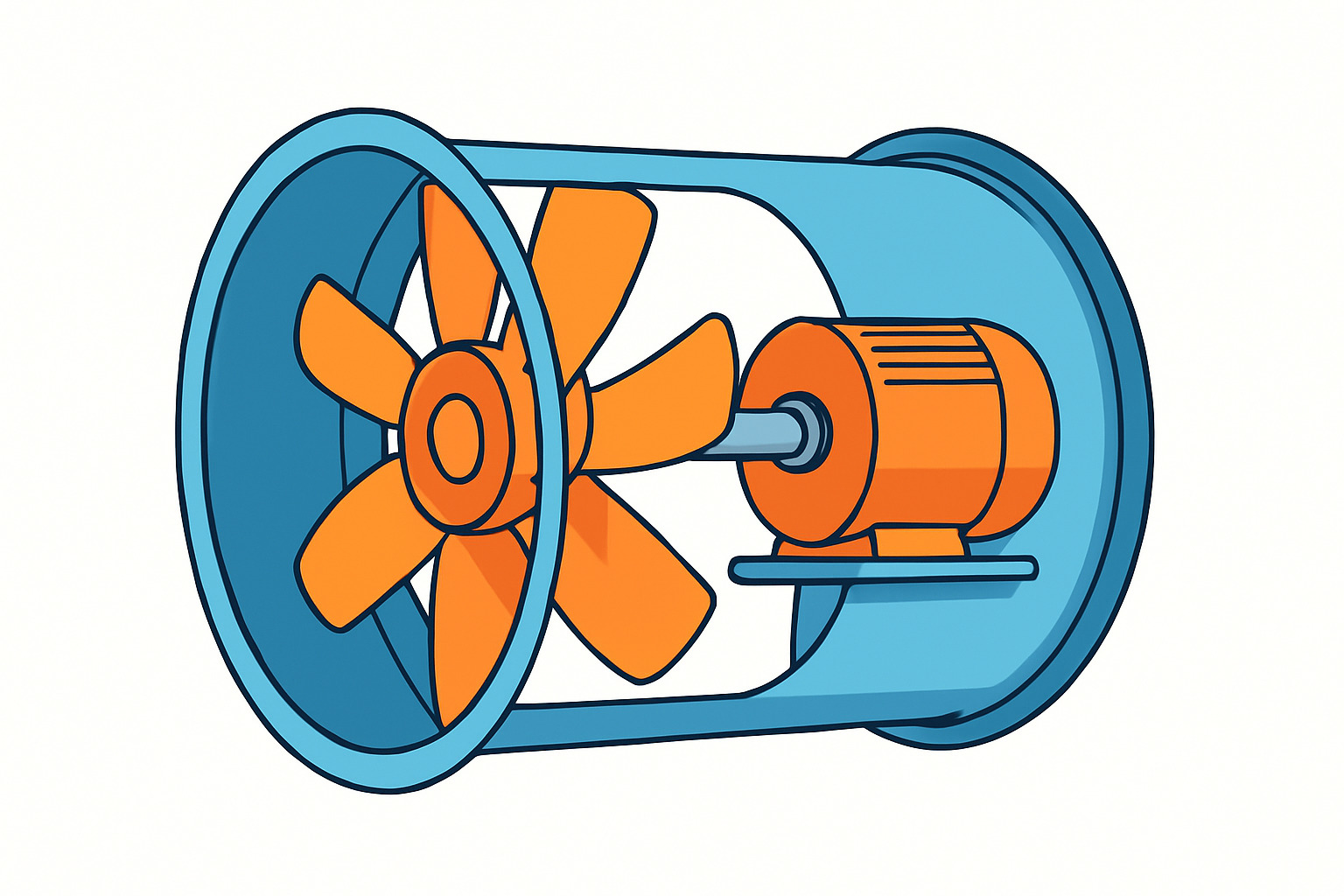
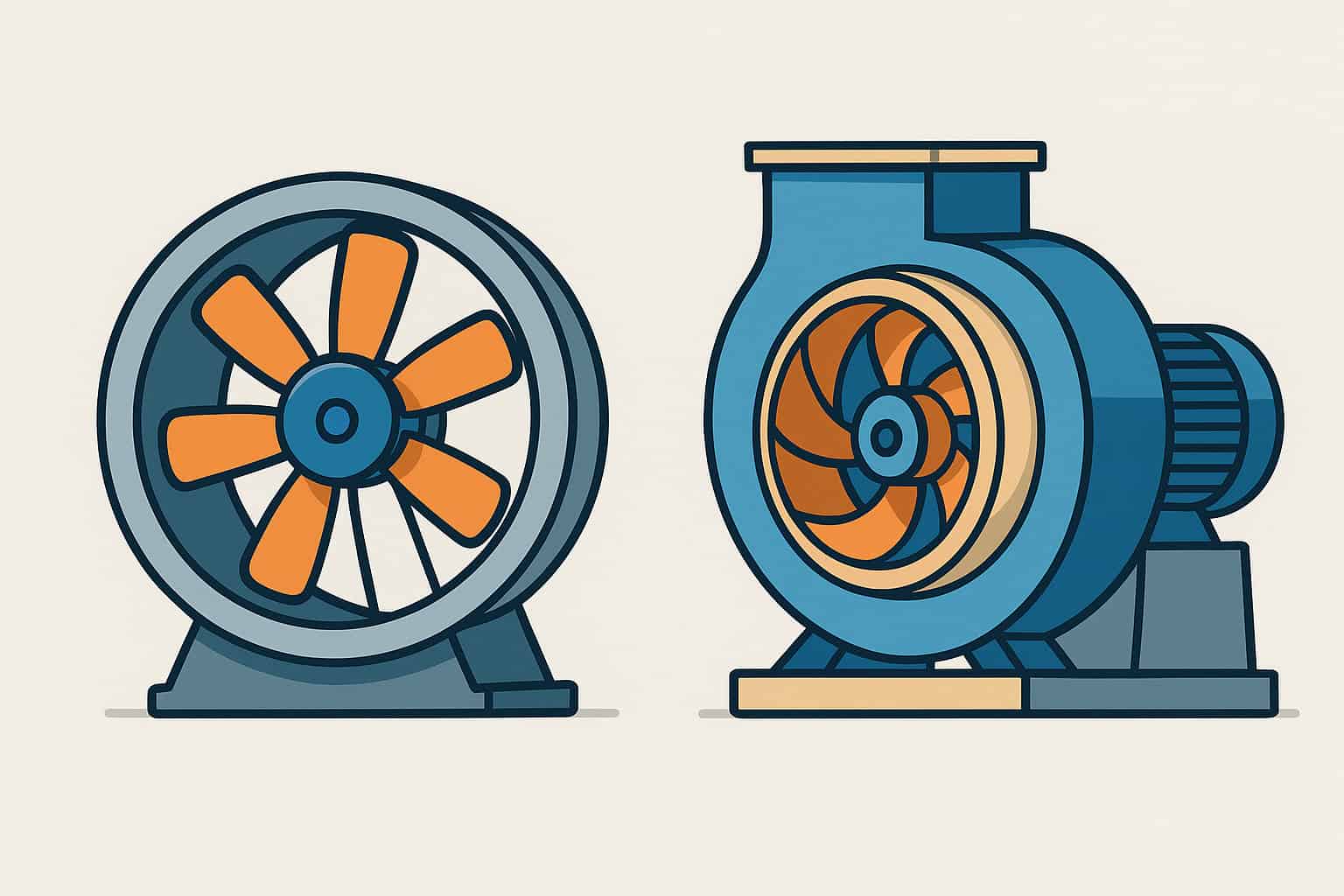
A 3-blade or 4-blade axial fan is not automatically better; the right choice depends on the duty, blade design, speed and noise requirements. In industrial and mining ventilation, engineers focus more on the fan’s performance curve and efficiency than on the simple blade count.
Three-blade axial fans are very common in large industrial and mining applications. Fewer blades mean less obstruction to the airflow, which can reduce losses and improve efficiency at a given diameter and speed. With a well-designed airfoil profile, a 3-blade fan can deliver high airflow and pressure with relatively low power consumption. The structure is also simpler and usually slightly lighter, which can help with balancing and mechanical reliability.
Four-blade axial fans add one more blade, which spreads the aerodynamic load over more surfaces. This can be useful when you need to reduce blade loading, lower vibration or meet specific noise targets. At the same duty, a 4-blade fan may be able to run at a slightly lower speed, which can reduce tip-speed-related noise. In some cases, adding a fourth blade also helps fit the desired performance into a limited diameter, for example when shaft or tunnel dimensions are constrained.
However, adding blades is not free. More blades mean more blockage and potentially higher drag, especially if the blade profiles are not optimised. A poorly designed 4-blade fan can be less efficient than a properly engineered 3-blade fan. The effect on airflow and pressure is determined by the combination of blade shape, chord length, twist, pitch angle and rotational speed, not by blade count alone.
Noise characteristics also depend on the details. The blade-passing frequency is proportional to blade count × rotational speed. A 4-blade fan at the same RPM as a 3-blade fan will have a higher blade-passing frequency, which can shift tonal components of noise into a different range. Sometimes this is beneficial; other times it can be more noticeable to people. Acoustic performance must be evaluated using manufacturer data, not assumptions.
In real projects, fan manufacturers offer complete performance curves for each model. These curves show airflow, pressure, power and efficiency for different speeds and pitch angles. When selecting between a 3-blade and 4-blade version, engineers compare these curves at the required duty point and also consider noise, cost, weight and structural limits.
In summary, neither 3-blade nor 4-blade axial fans are universally better. Many large industrial and mining fans use 3 blades for high efficiency, while 4-blade designs may be chosen for specific noise, size or loading reasons. The best option is the fan model whose performance curve and construction match your ventilation requirement, rather than a decision based only on blade count.
