
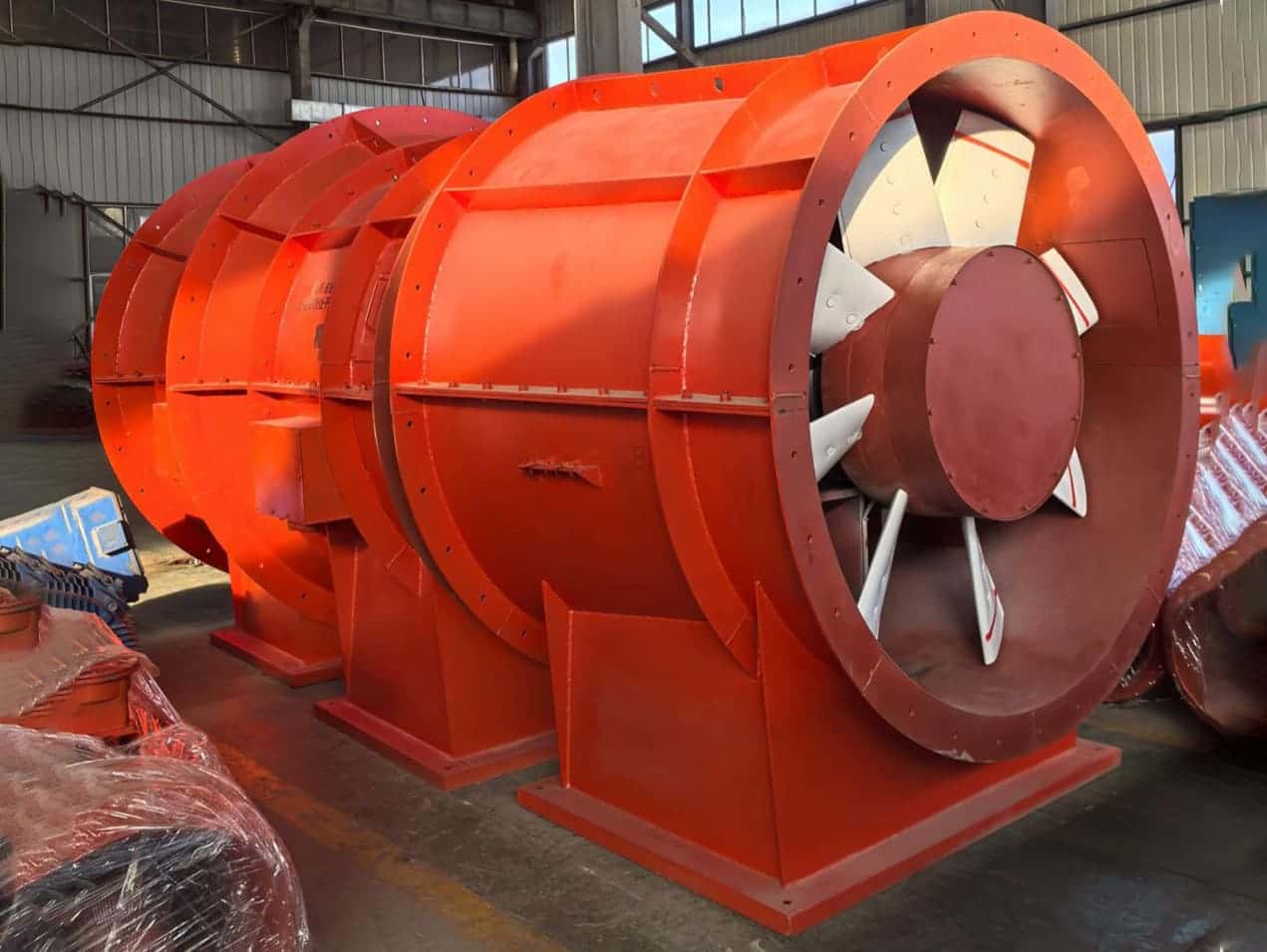
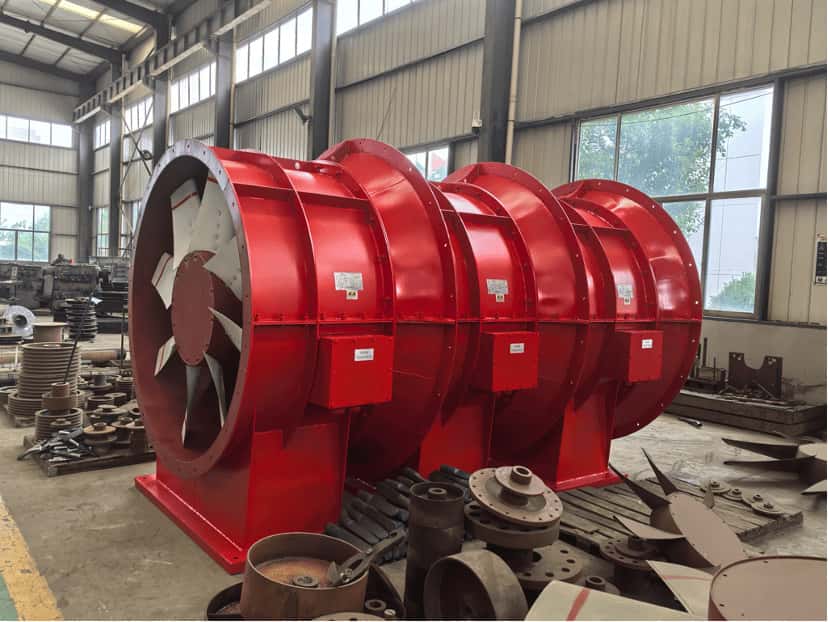
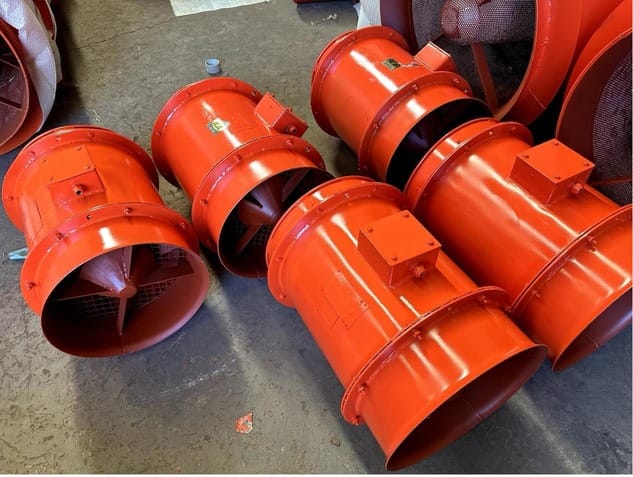
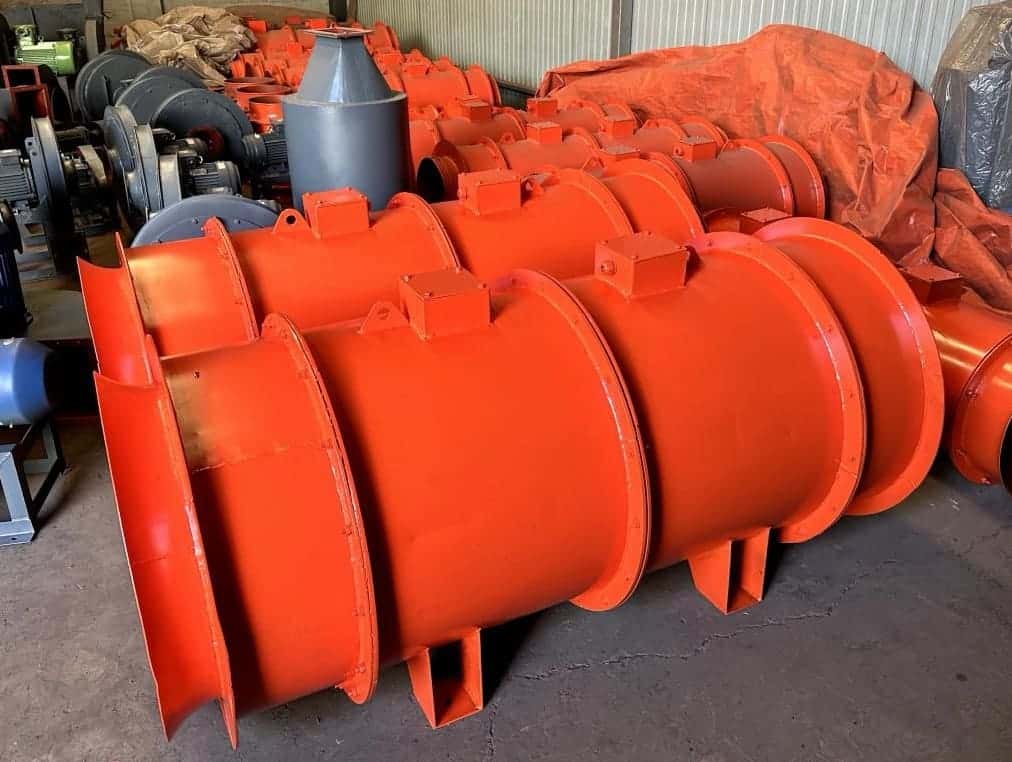
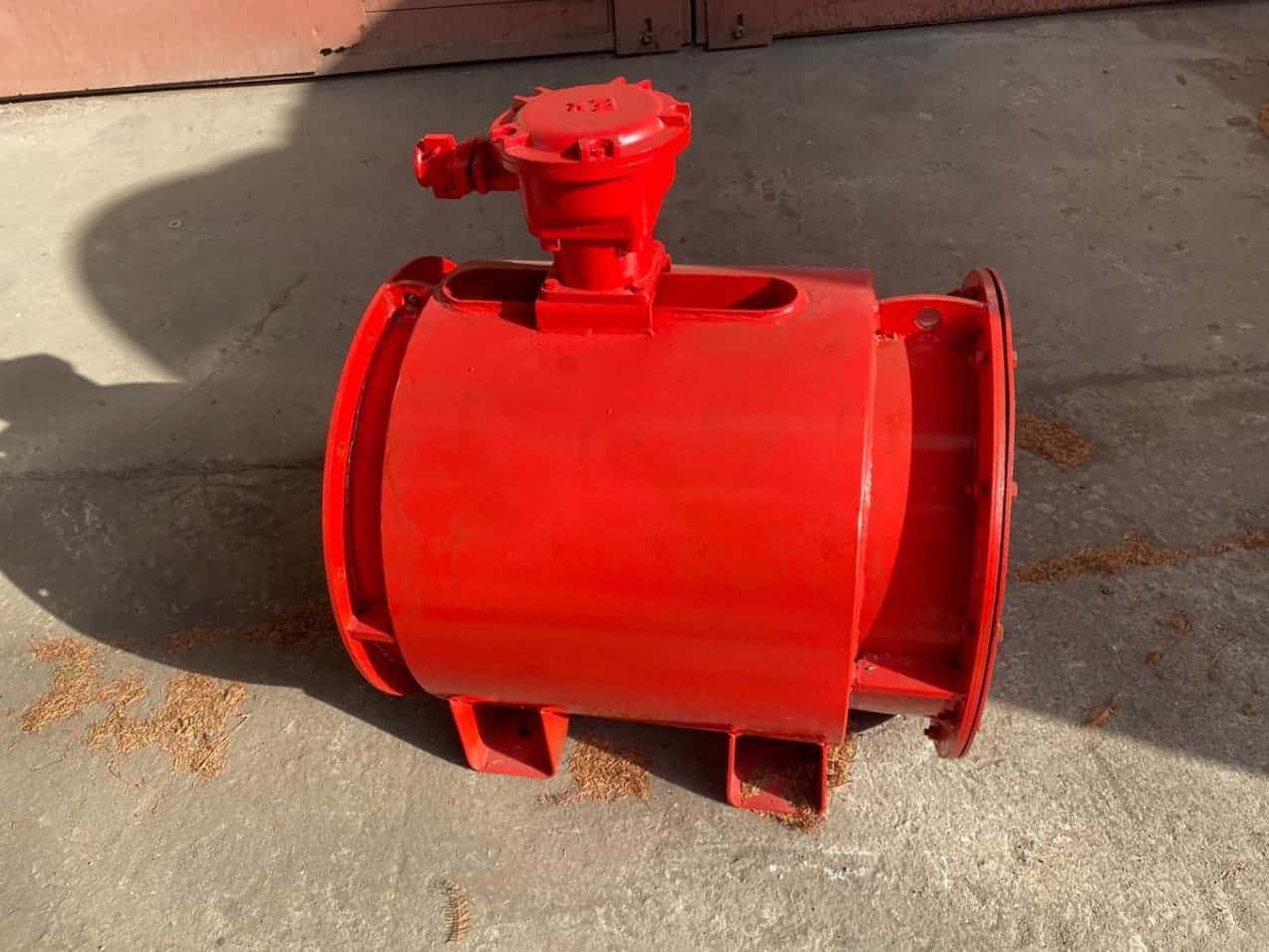
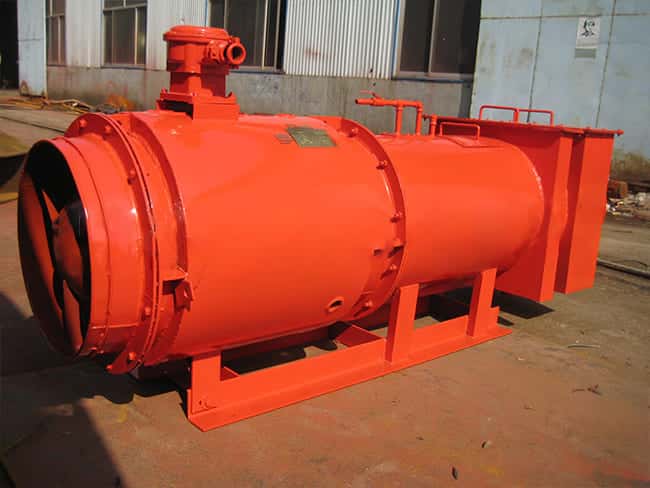
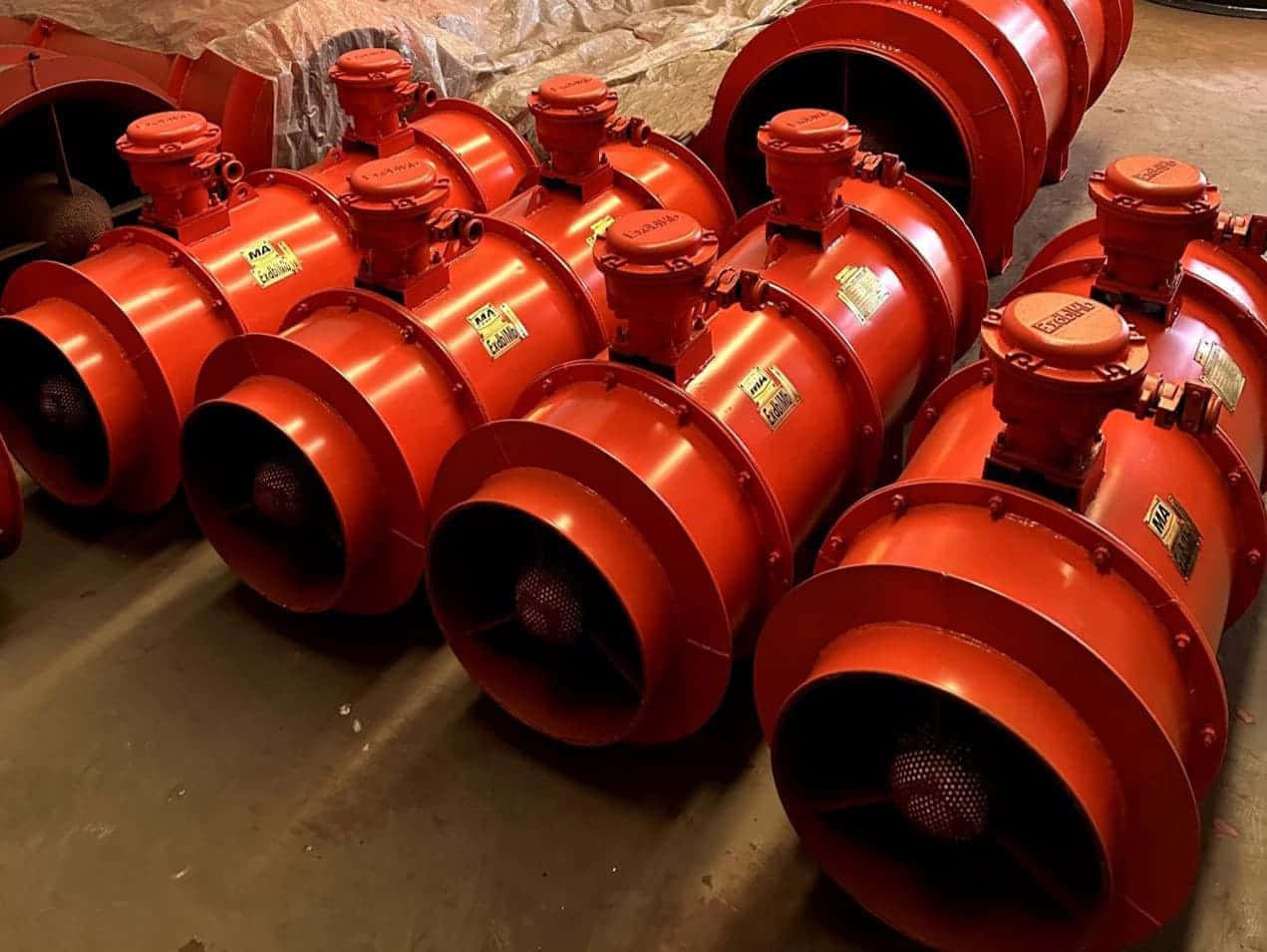
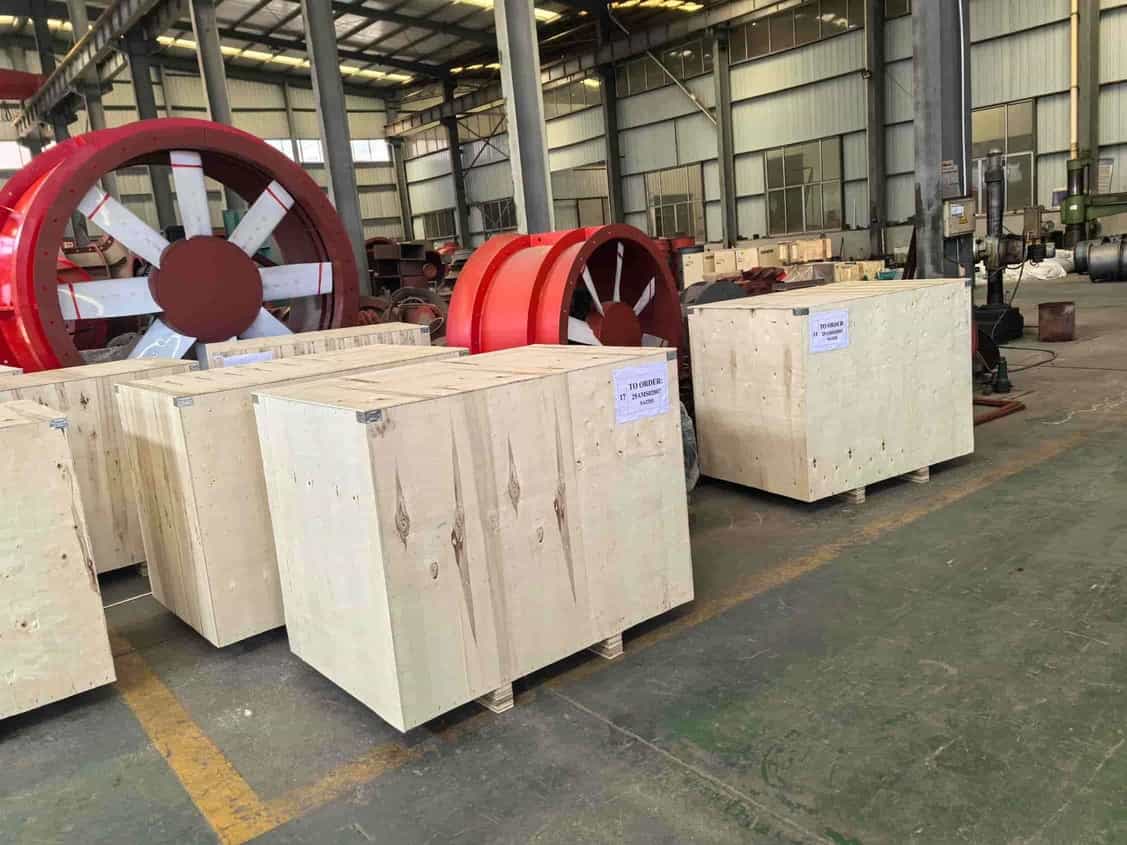
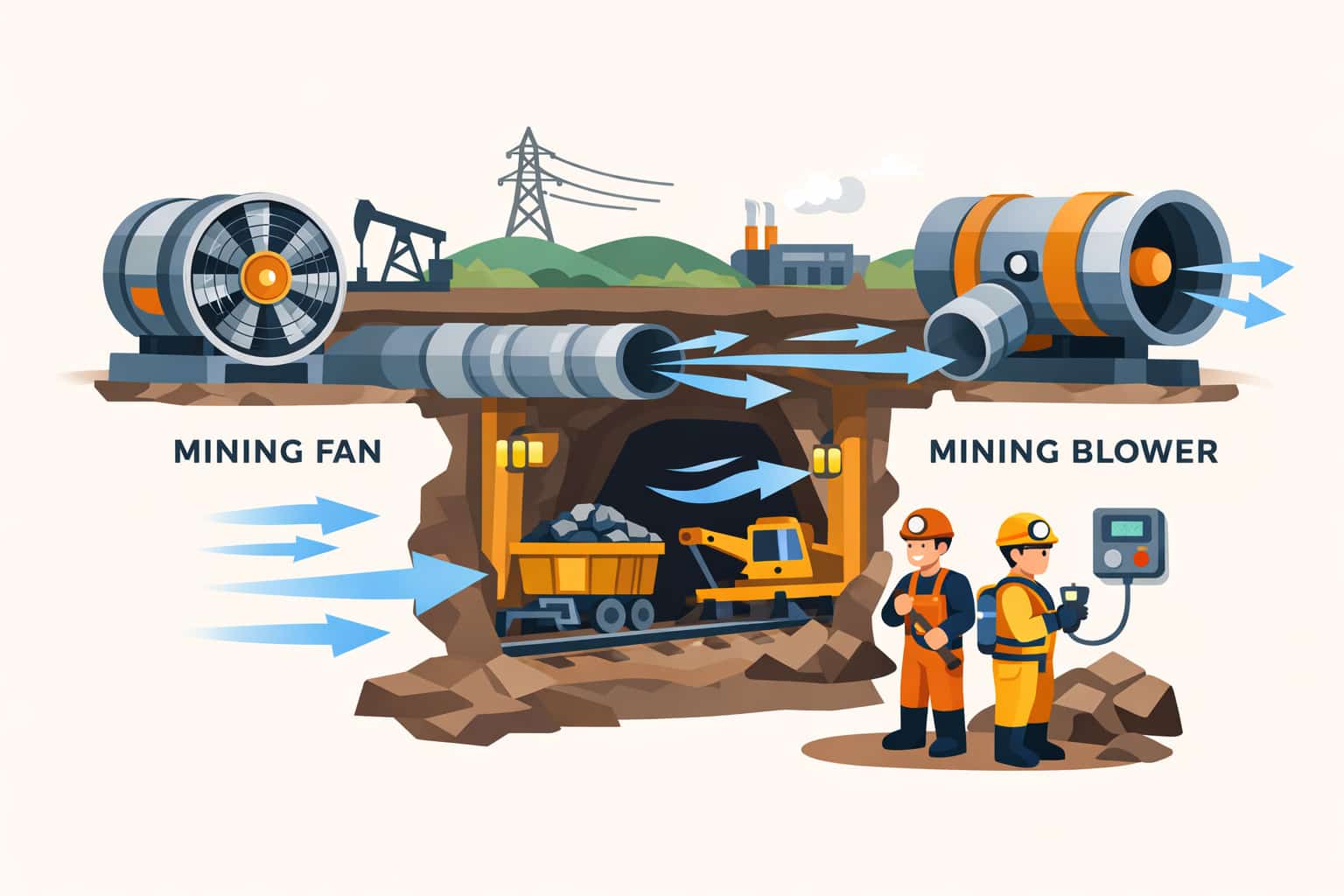
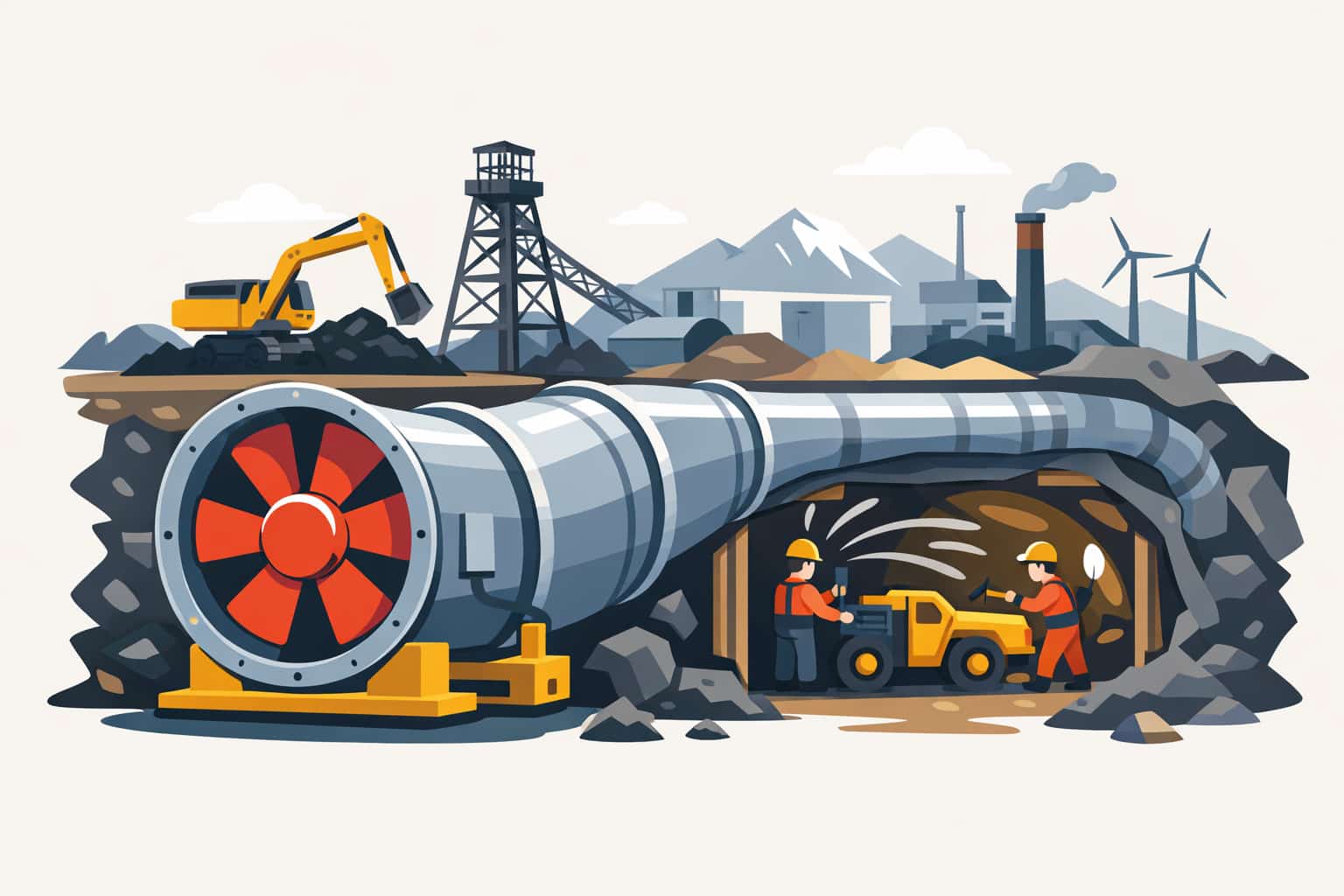
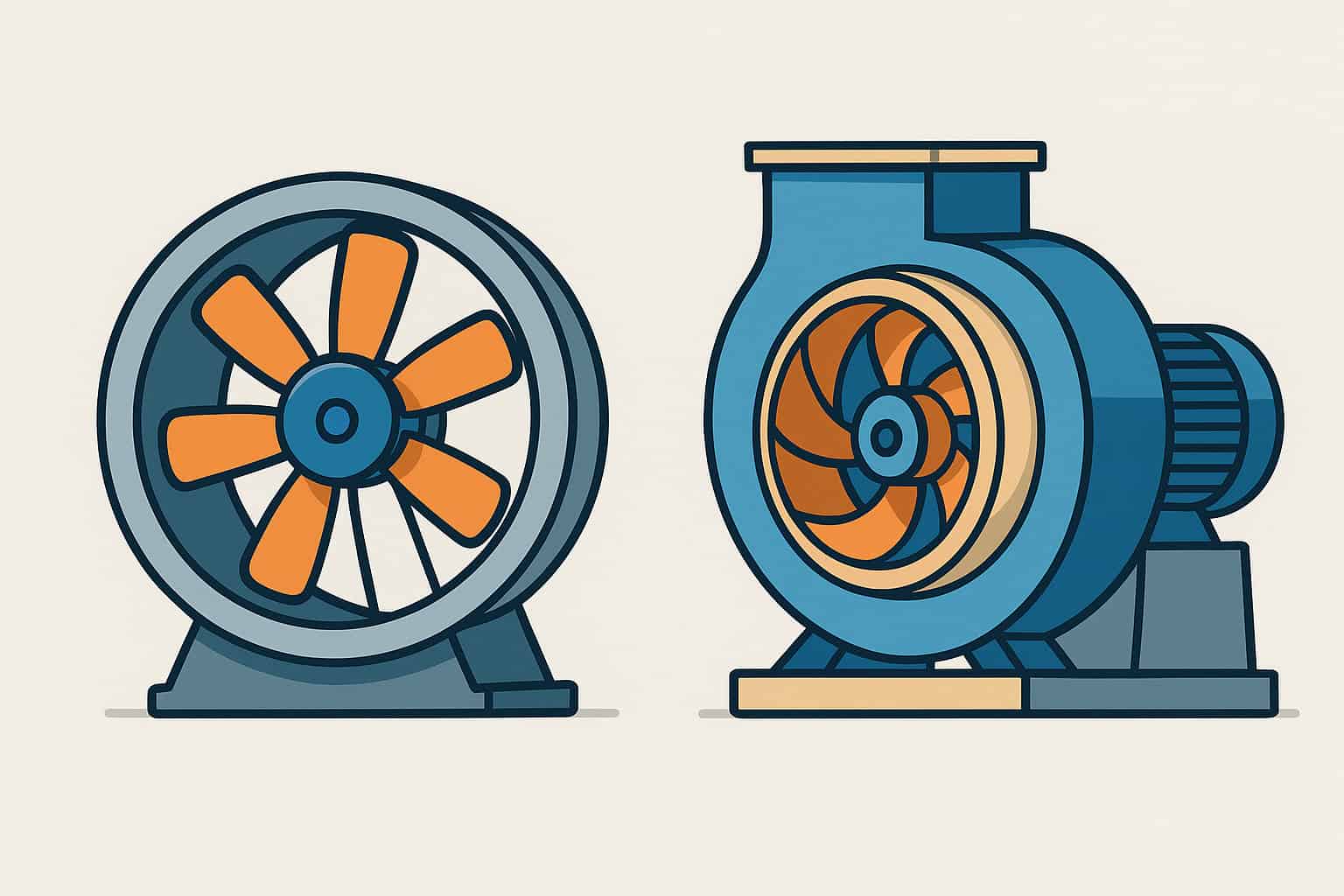
Fan rotation direction has a major impact on airflow, but the exact effect depends on whether the fan is axial or centrifugal. In all cases, the fan must rotate in the direction specified by the manufacturer to achieve its rated airflow and pressure in industrial and mining ventilation systems.
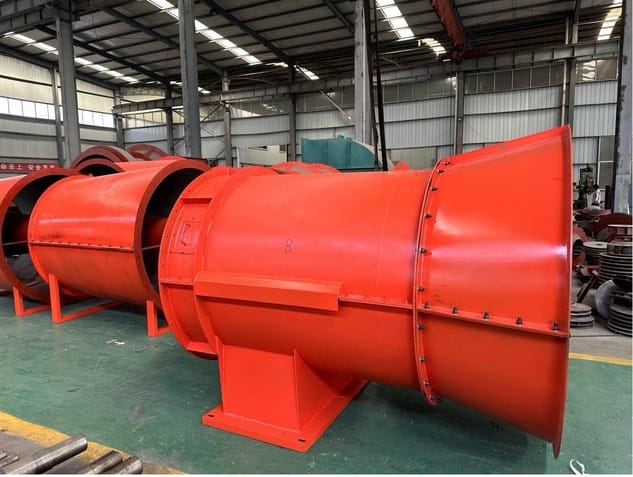
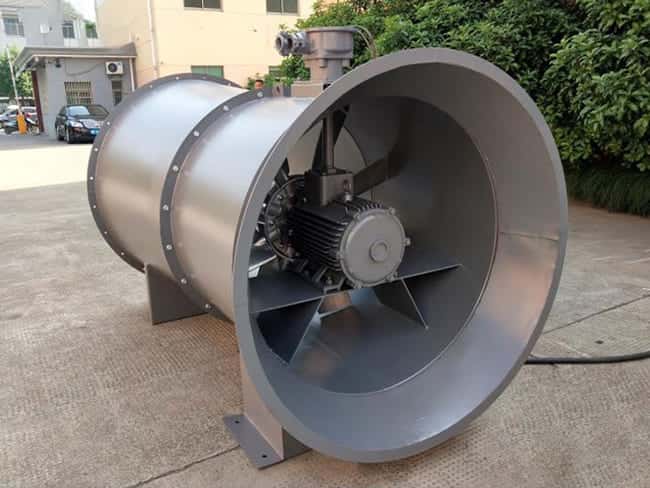
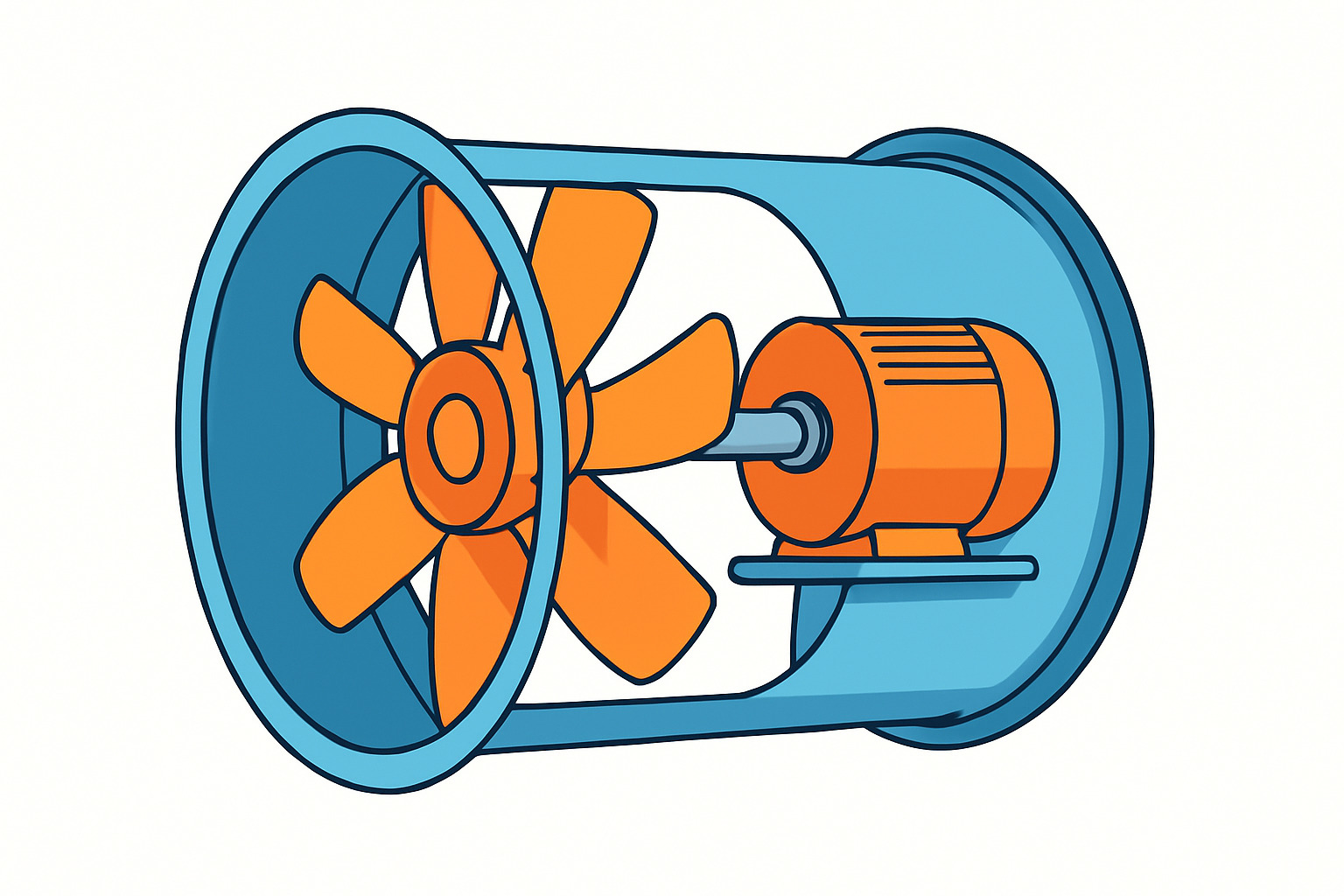
For a typical axial fan, the blades act like propellers. When the impeller rotates in the designed direction, the blades push air along the axis from inlet to outlet, producing the specified flow and pressure. If you reverse the rotation of many simple axial fans, the airflow direction may also reverse, but with much lower efficiency and pressure, because the blade profile is optimised for one direction. Some specially designed reversible axial fans use symmetrical blade profiles so that performance is more similar in both directions, but this is the exception rather than the rule.
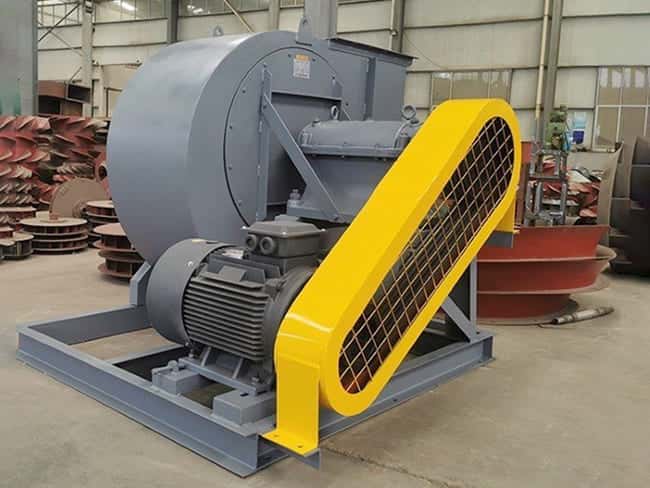
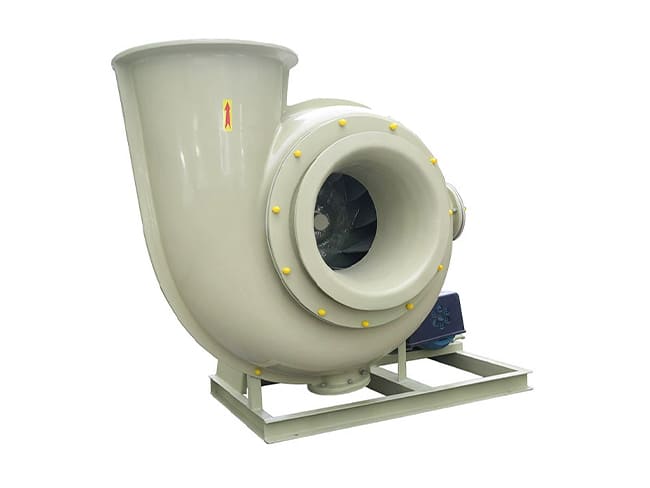
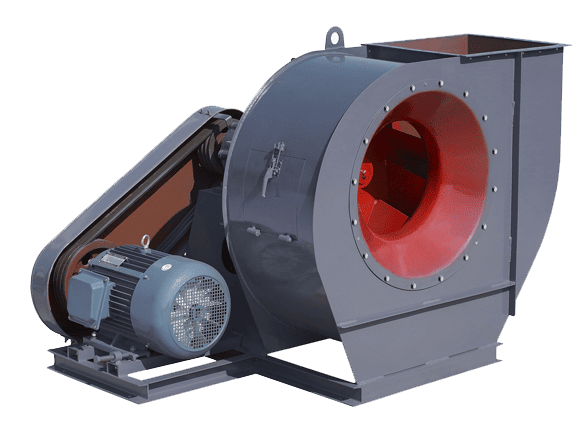
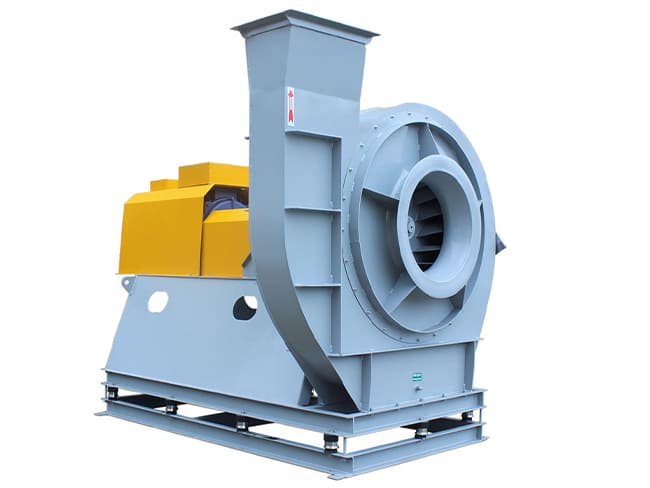
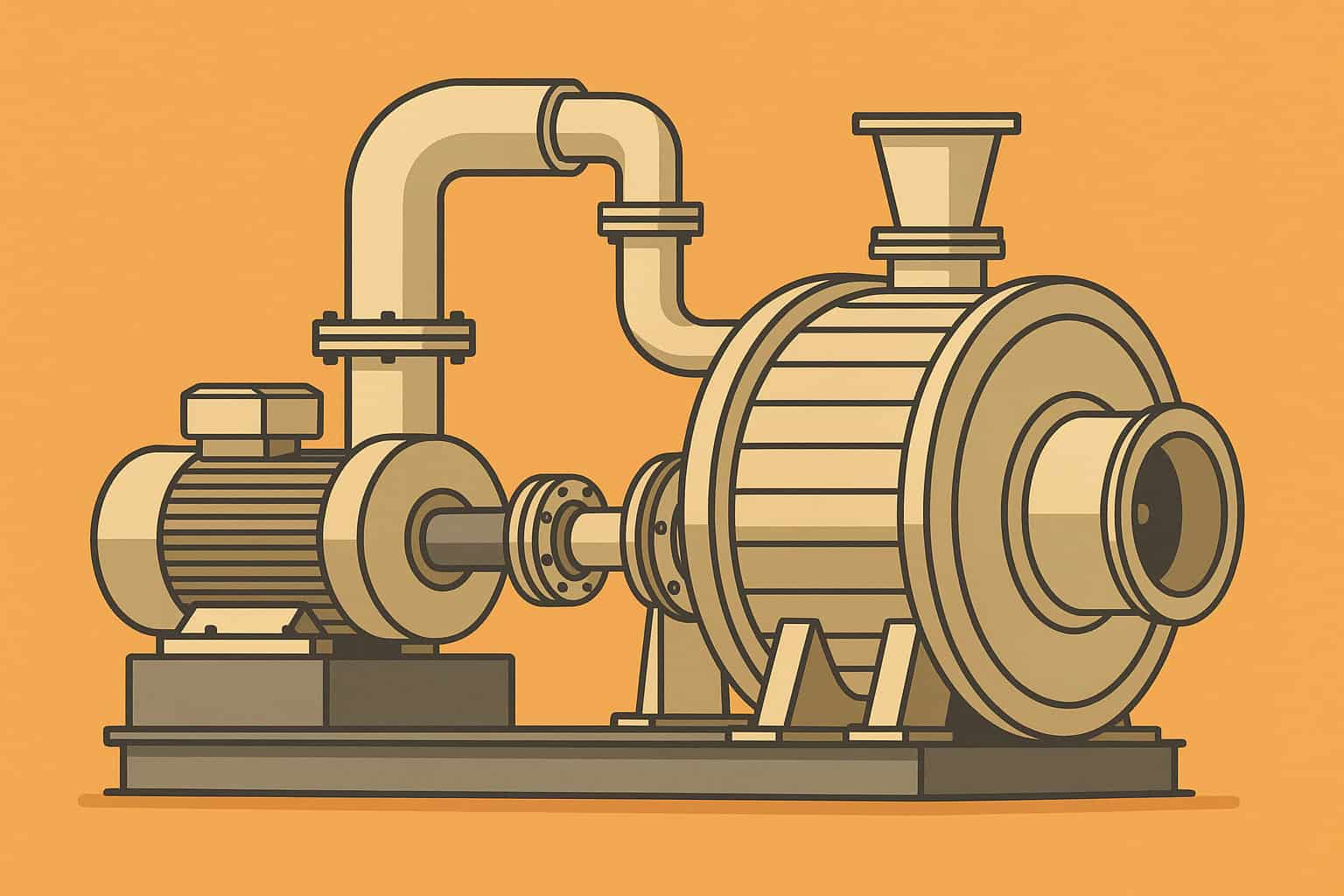
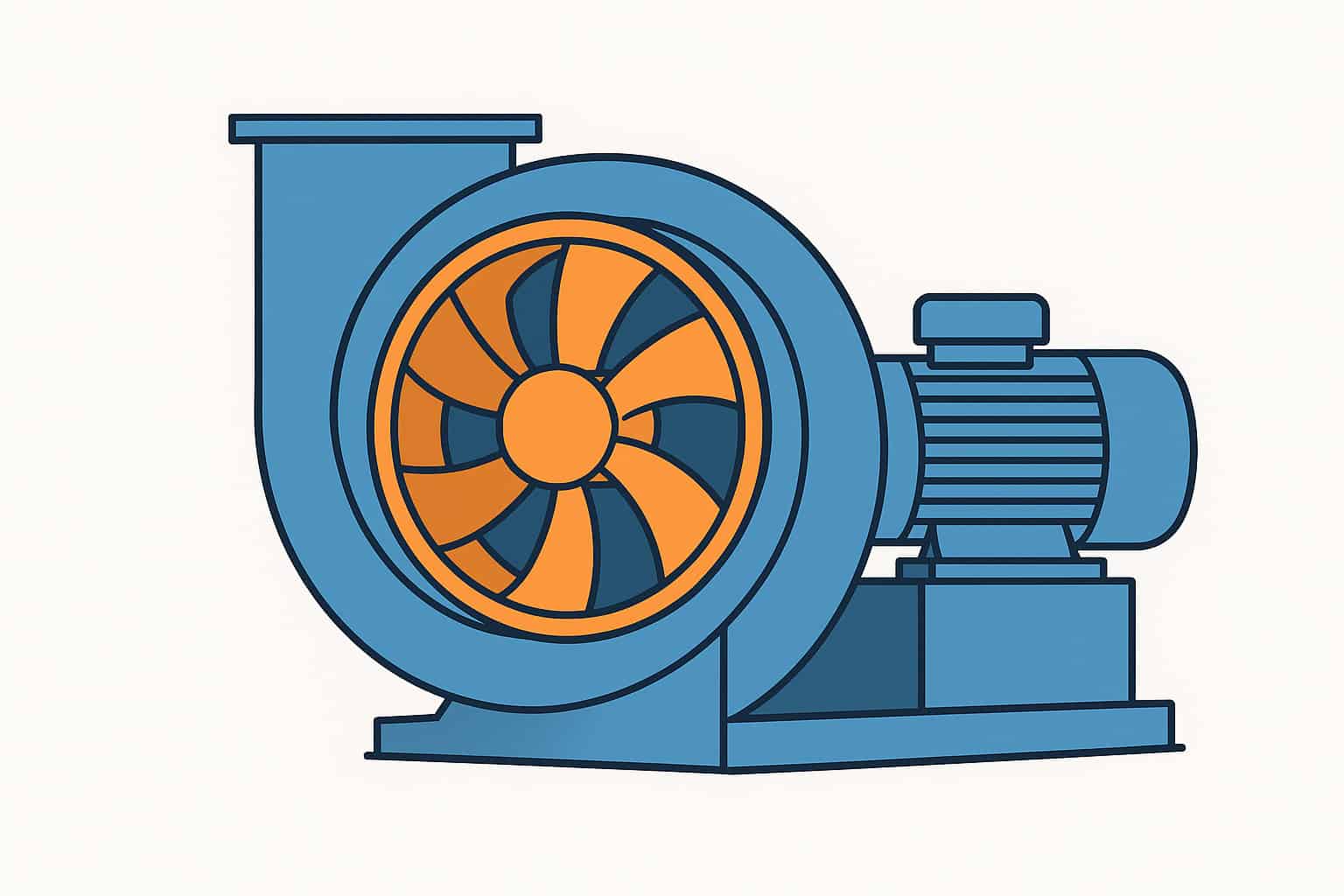
For a centrifugal (radial) fan, reversing rotation does not simply reverse airflow in a useful way. The impeller and scroll housing are designed so that, in the correct rotation, air enters near the shaft, is thrown outward by centrifugal force and is guided to the outlet. If you run a centrifugal fan backwards, the blades and housing no longer cooperate correctly. Airflow and pressure drop dramatically, the flow pattern becomes unstable, and the fan may stall or recirculate air internally. In practice, a backward-rotating centrifugal fan may move a small amount of air, but it will not deliver the required duty.
In industrial and mining applications, incorrect rotation is a common cause of poor fan performance. A newly installed fan that seems to turn “the wrong way” relative to housing arrows is almost always wired incorrectly. The fan may hum, move only a fraction of the expected air or fail to overcome system resistance. Correcting the motor wiring so the rotation matches the specified direction usually restores proper airflow.
It is also important to distinguish between airflow direction in the system and rotation direction of the impeller. For example, you can mount an axial fan so that it either blows into a duct (supply) or pulls from it (exhaust), even though rotation direction is the same. Changing rotation alone is not how you convert a supply fan into an exhaust fan; you must also consider fan orientation and the intended flow path.
In summary, fan rotation direction has a strong effect on airflow. Axial fans may produce reverse airflow with reversed rotation but usually with poor performance, while centrifugal fans provide very poor or unstable airflow if run backwards. Always ensure that rotation follows the manufacturer’s arrows and documentation to achieve the desired ventilation duty.