
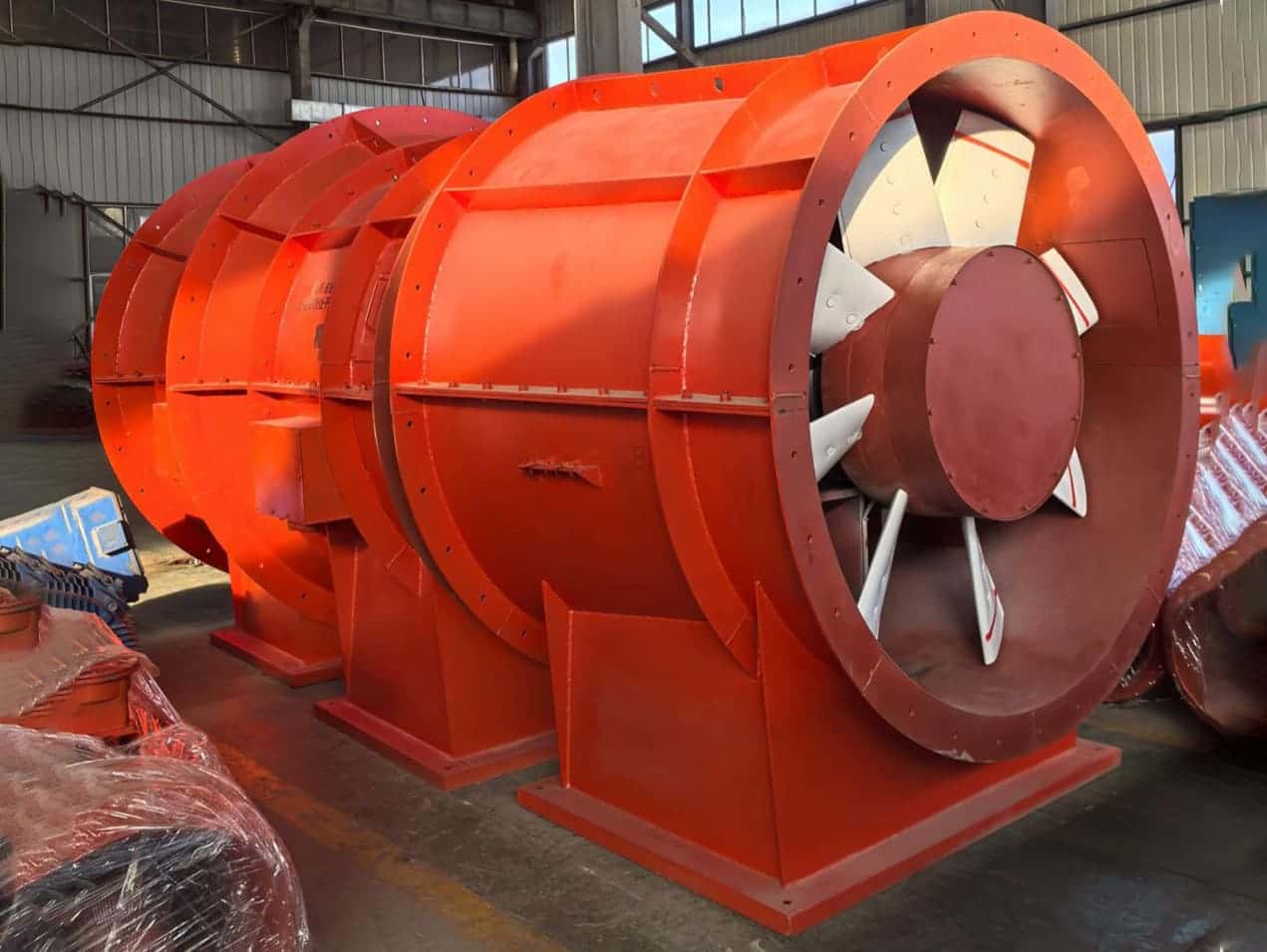
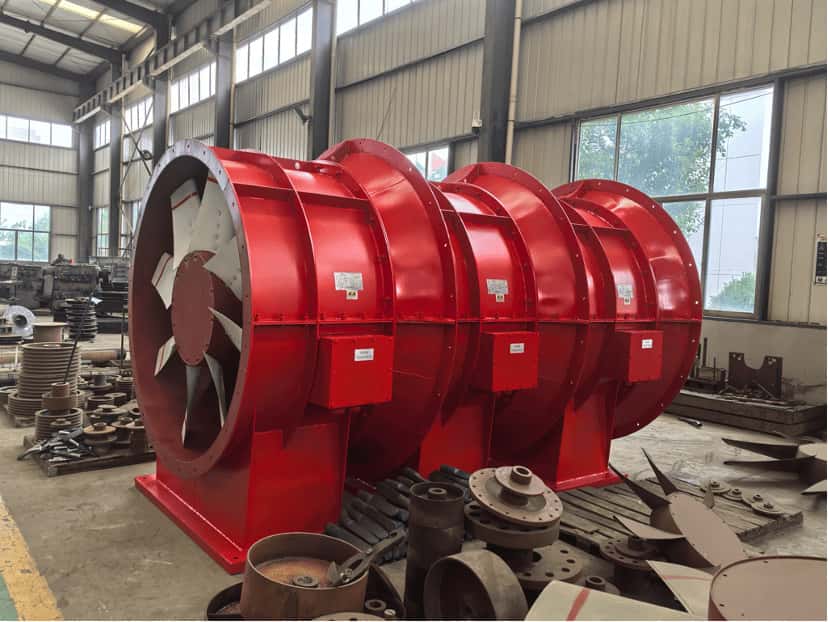
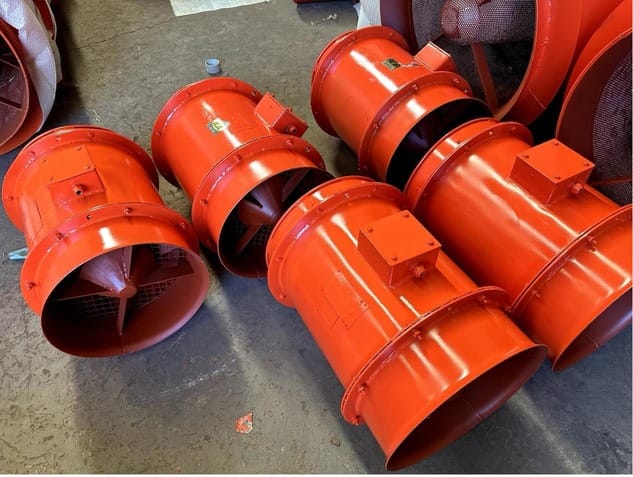
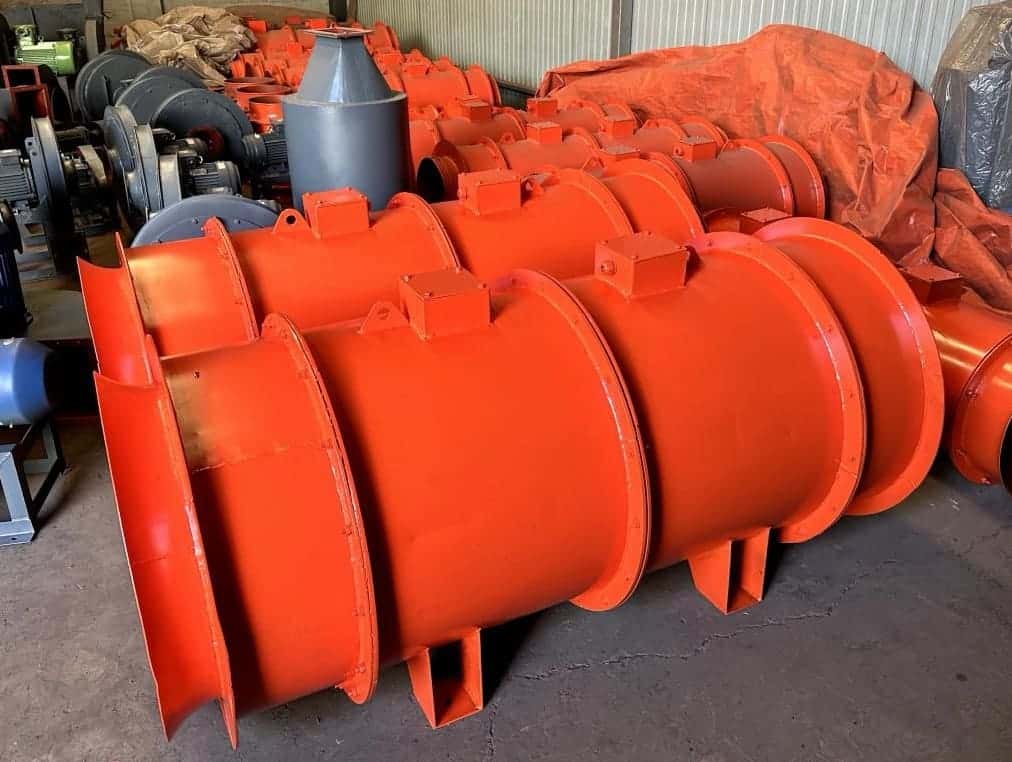
More RPM does mean the fan’s impeller is rotating faster, but whether that is “better” depends on what you are trying to achieve. Higher RPM generally increases airflow and pressure for a given fan, but it also increases noise, power consumption and mechanical stress. In industrial and mining ventilation, speed decisions must balance performance against reliability and energy use.
For a specific fan diameter and blade design, the fan affinity laws show that airflow is proportional to RPM. If you increase speed by 10%, airflow rises by about 10%, as long as the system allows that flow. Pressure rises roughly with RPM squared, so that same 10% speed increase gives about 21% more pressure. This is why a modest increase in RPM can significantly improve a fan’s ability to overcome resistance in ducts, filters or mine roadways.
However, the same laws show that power demand rises with RPM cubed. That means a 10% increase in speed requires approximately 33% more power. For large industrial and mining fans, this is a serious consideration because ventilation power is a major operating cost. In addition, higher RPM increases tip speed (the speed at the outer edge of the blades), which usually leads to more aerodynamic noise and can approach mechanical limits for the impeller.
In practical fan selection, engineers often have a choice between a smaller, faster fan and a larger, slower fan. The smaller fan runs at higher RPM to achieve the same duty, but it may be noisier and impose higher stresses on bearings and structures. The larger fan can run at a lower RPM for the same airflow, which often reduces noise and improves efficiency, provided there is space and budget for the bigger machine.
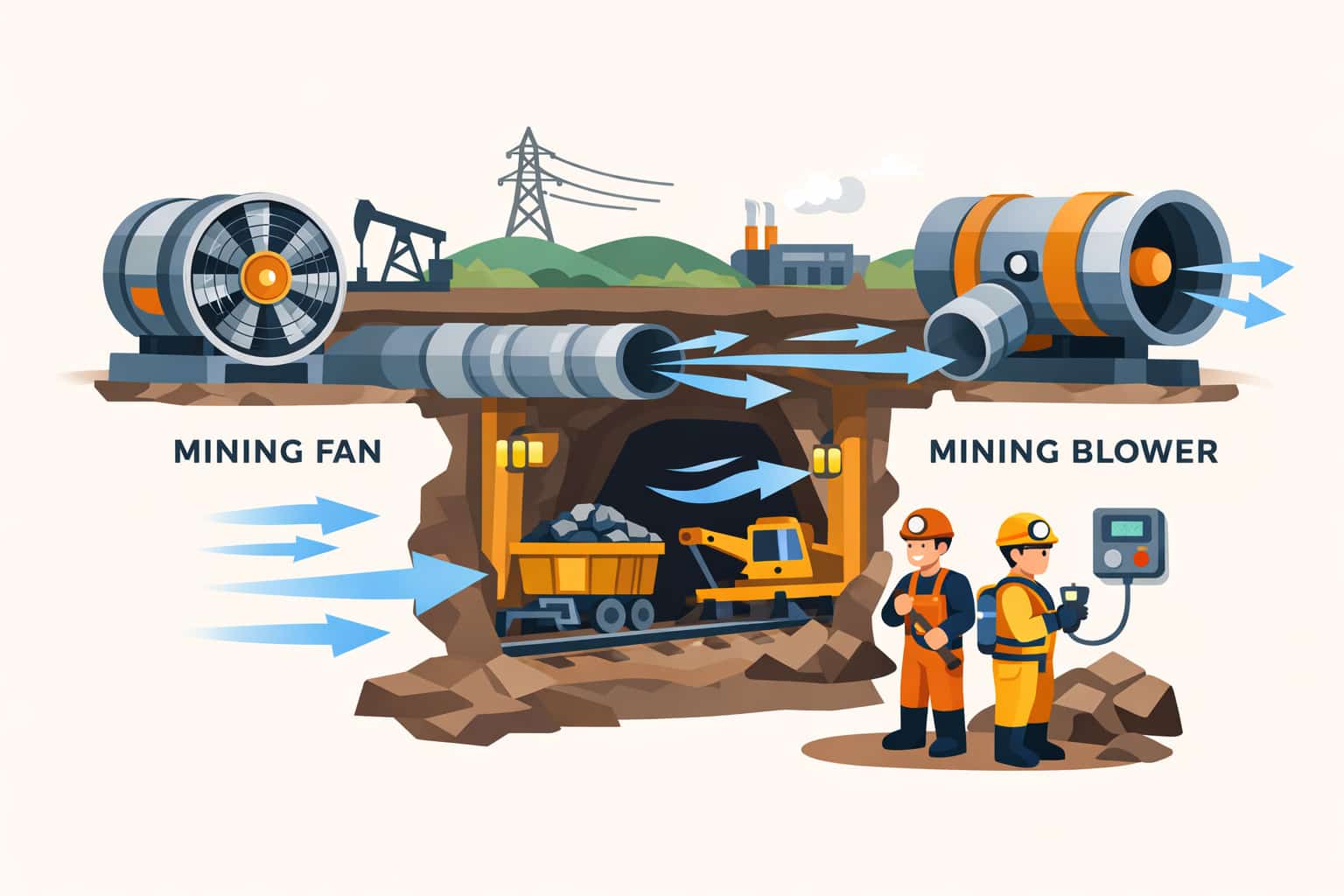
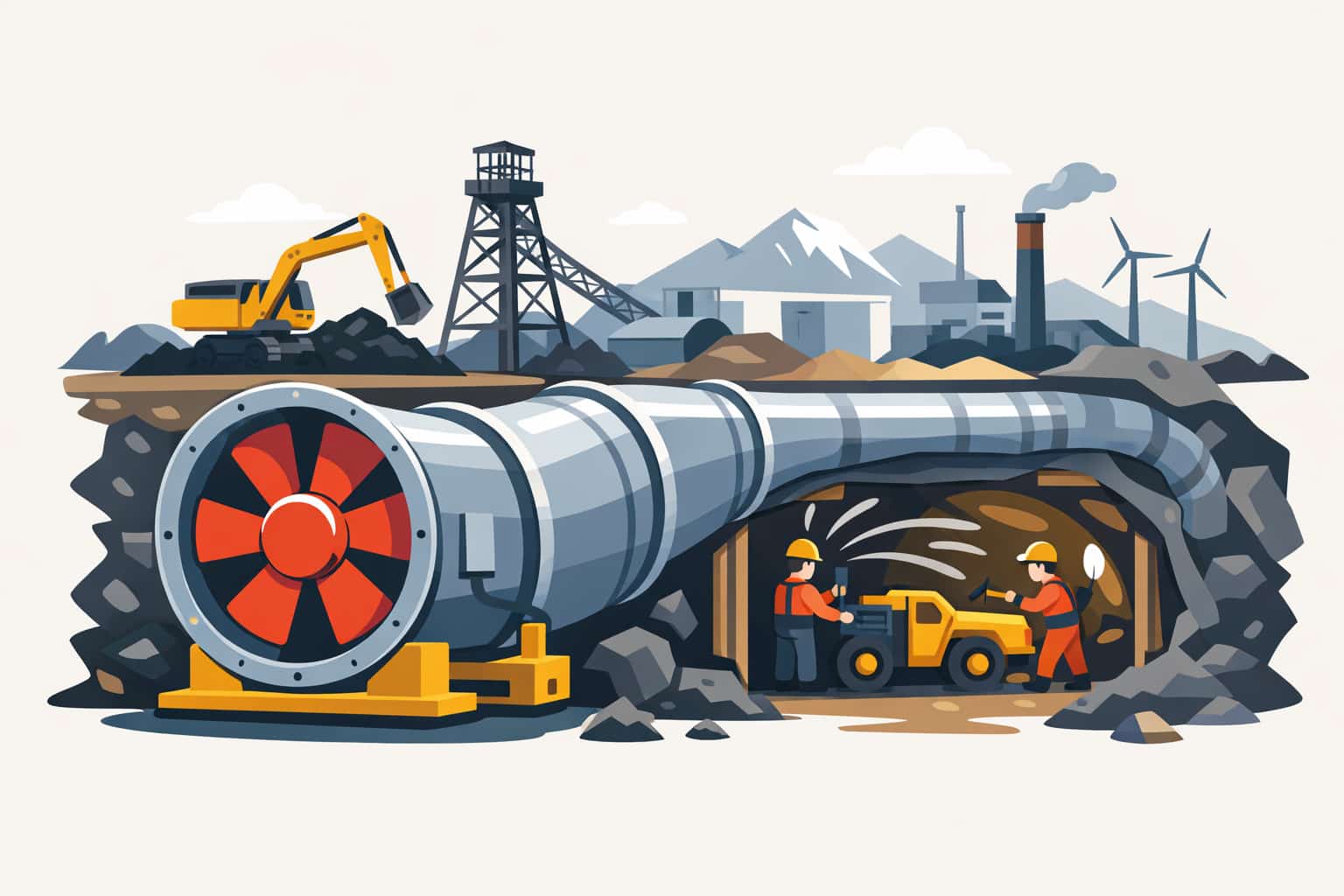
In mining ventilation systems, more RPM is sometimes used temporarily to deliver higher airflow during certain operations, but continuous over-speeding is avoided. Variable-frequency drives allow operators to adjust RPM to follow real demand, using lower speeds during normal operation to save energy and reserving higher speeds for short periods when extra ventilation is required.
In summary, more RPM does mean more rotational speed and usually more airflow and pressure for a given fan, but it comes with higher power consumption, noise and mechanical load. The best RPM is the one that meets ventilation requirements while keeping energy use and equipment stress within acceptable limits.