

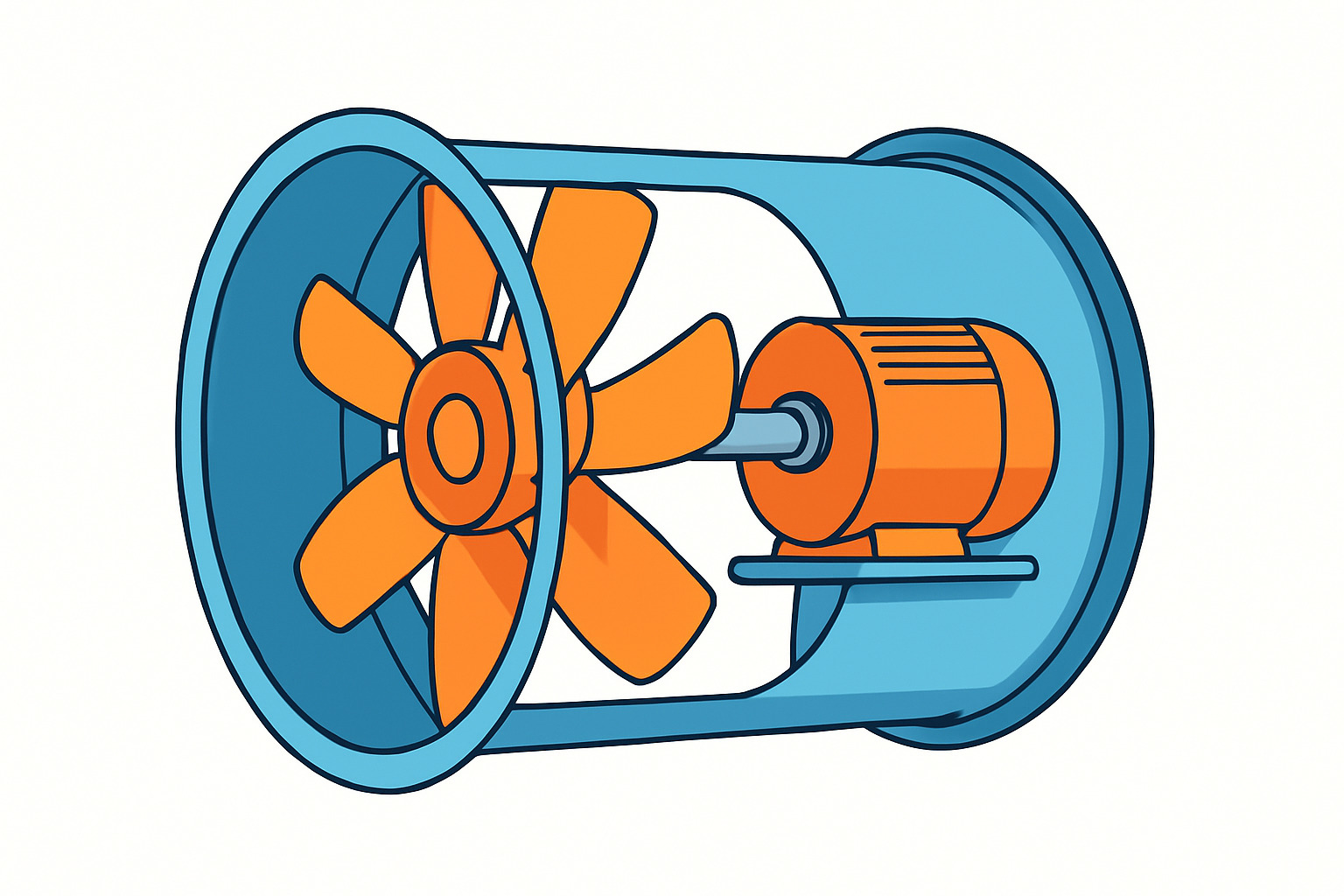

Calculating air pressure in a ventilation system means determining how much pressure exists at different points and how much is lost as air flows through ducts or mine airways. This information is essential for choosing the right fan and confirming that airflow will meet industrial or mining requirements.
In fans and ductwork, engineers usually work with static pressure, velocity pressure and total pressure. Static pressure is the portion that pushes on the duct walls; velocity pressure is associated with the speed of the air; total pressure is the sum of the two. Static pressure is typically what matters when sizing fans and ducts, because it represents the resistance that the fan must overcome.
One basic way to calculate air pressure is to use fluid flow and energy equations, such as the Darcy–Weisbach equation for pressure loss in straight ducts:
Δp = f × (L/D) × (ρ × v² / 2)
where Δp is pressure drop (Pa), f is the friction factor, L is duct length, D is hydraulic diameter, ρ is air density and v is average velocity. For fittings (elbows, tees, expansions, contractions), equivalent loss coefficients (K values) are used, and their pressure losses are calculated as Δp = K × ρ × v² / 2. By summing all straight duct and fitting losses, you can estimate the total static pressure required from the fan at a given airflow.
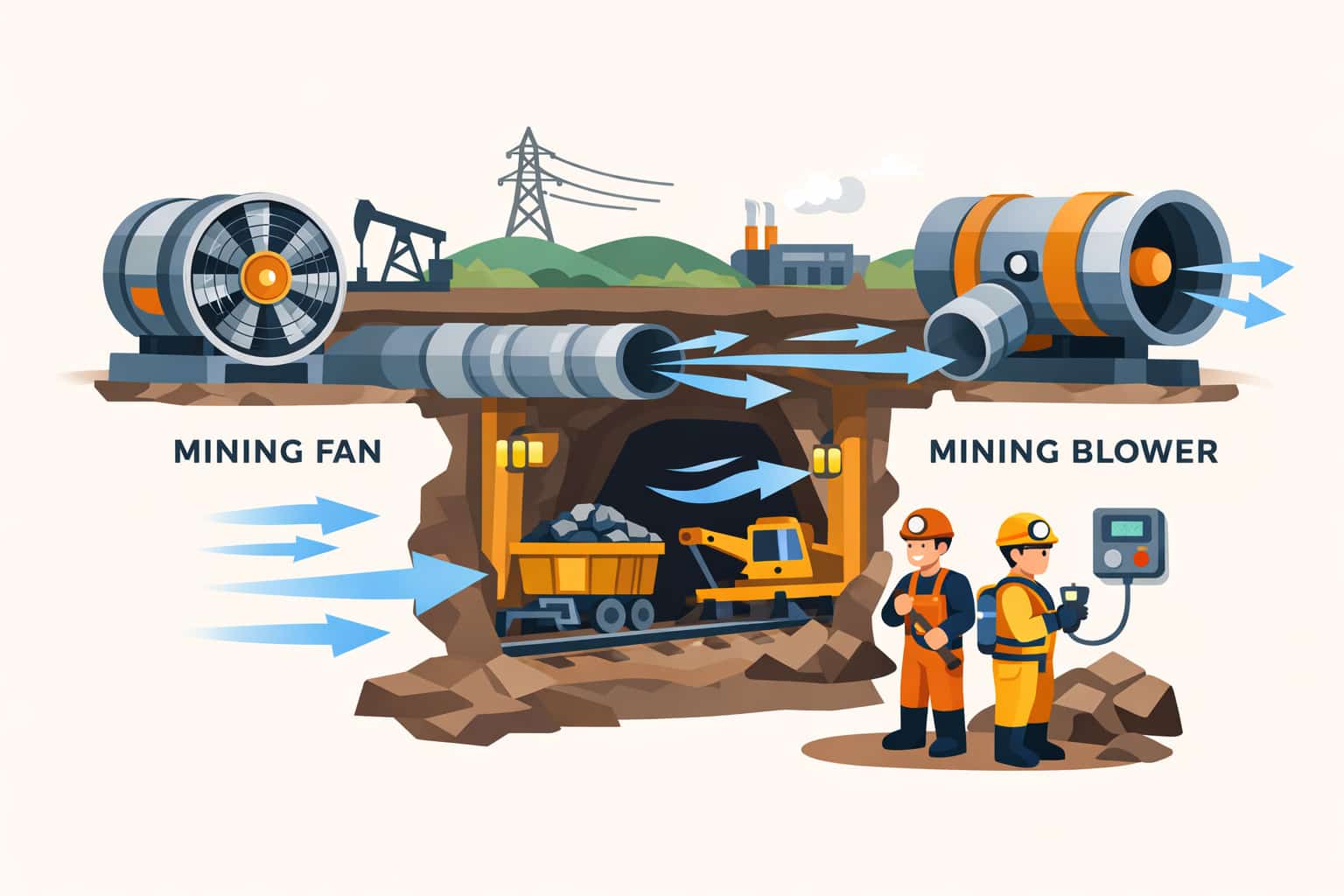
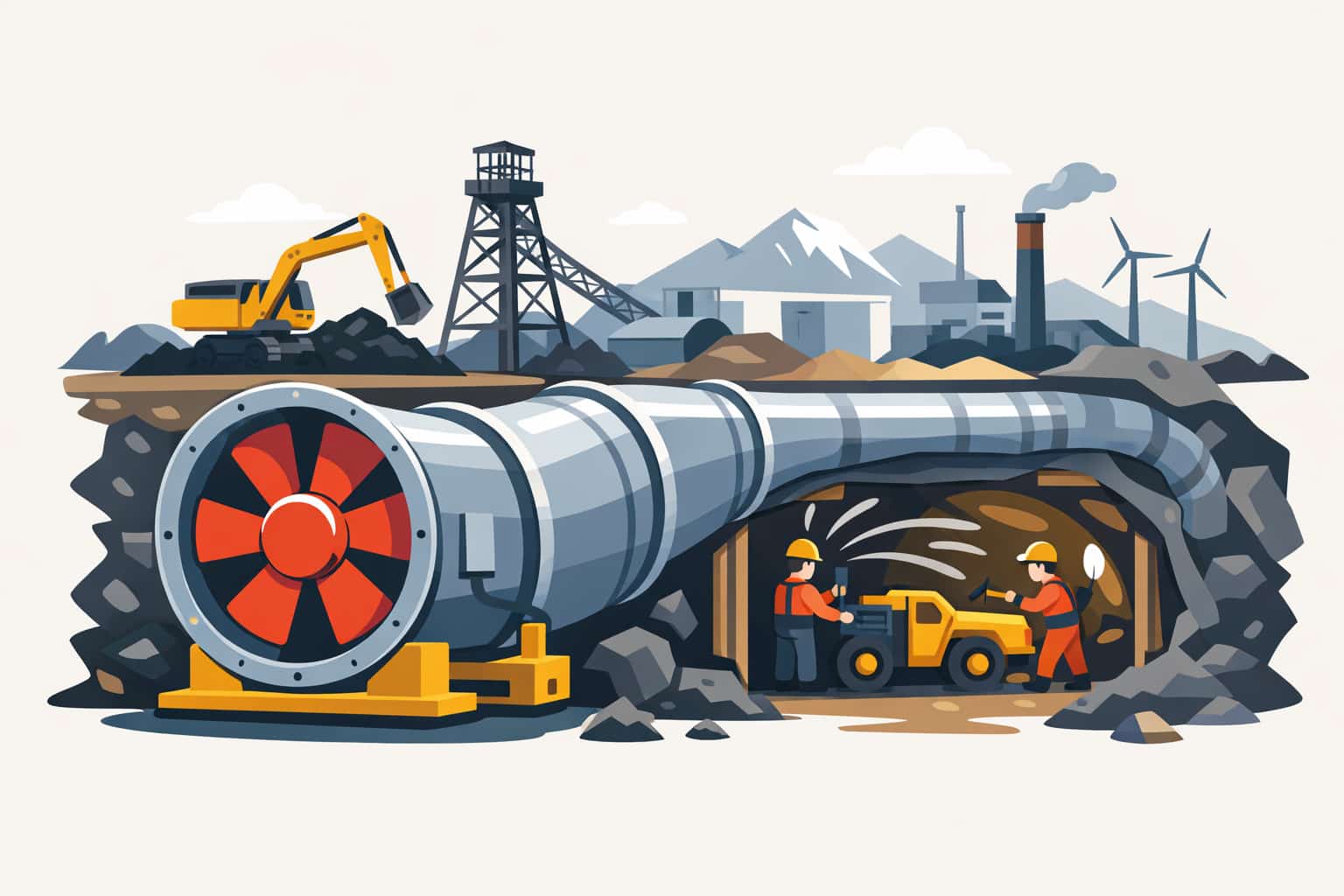
In mining ventilation, similar principles apply to mine roadways, raises and shafts. Empirical friction factors and loss coefficients for different excavation shapes and roughness levels are used to calculate pressure drops along intake and return airways. The total pressure required to drive the planned airflow from intake to return determines the duty of the main fan or fan station.
In practice, air pressure is also measured directly using manometers or differential pressure transmitters. Static pressure taps installed in ducts or at the walls of mine airways provide pressure readings relative to atmosphere. By measuring pressure at several points and comparing with calculated values, engineers can verify their models, detect blockages or leaks and confirm that the system is performing as intended.
For smaller, simple systems, rules of thumb or manufacturer resistance tables may be used instead of full calculations. However, in large industrial or underground networks, proper pressure calculations are necessary to avoid undersized fans, unstable operation or excessive energy use.
In summary, we calculate air pressure in ventilation systems by combining fluid flow equations, friction factors and loss coefficients with direct pressure measurements. This allows us to predict and verify how much pressure a fan must produce to move air through ducts, equipment and mine airways at the required flow rate.