
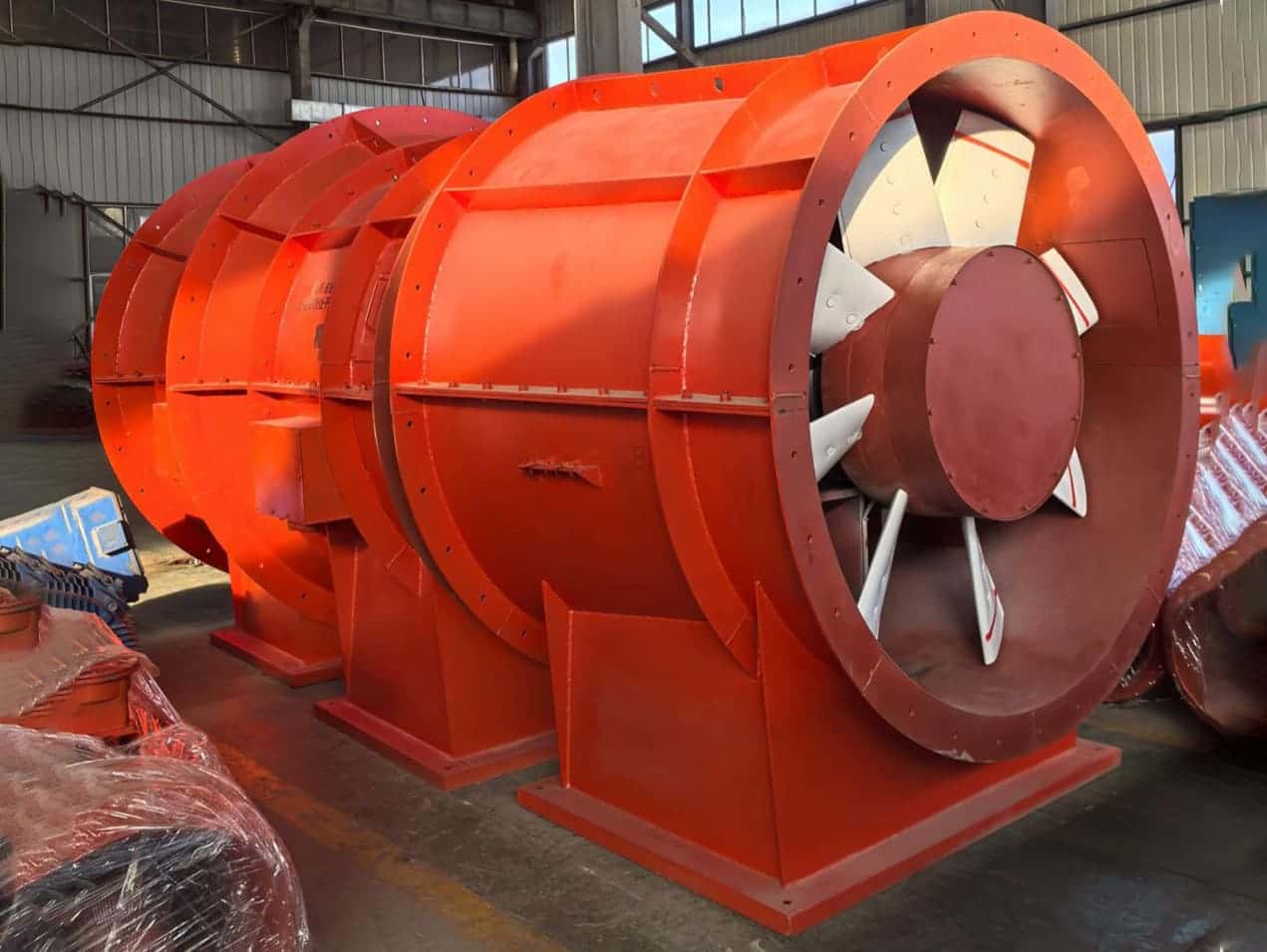
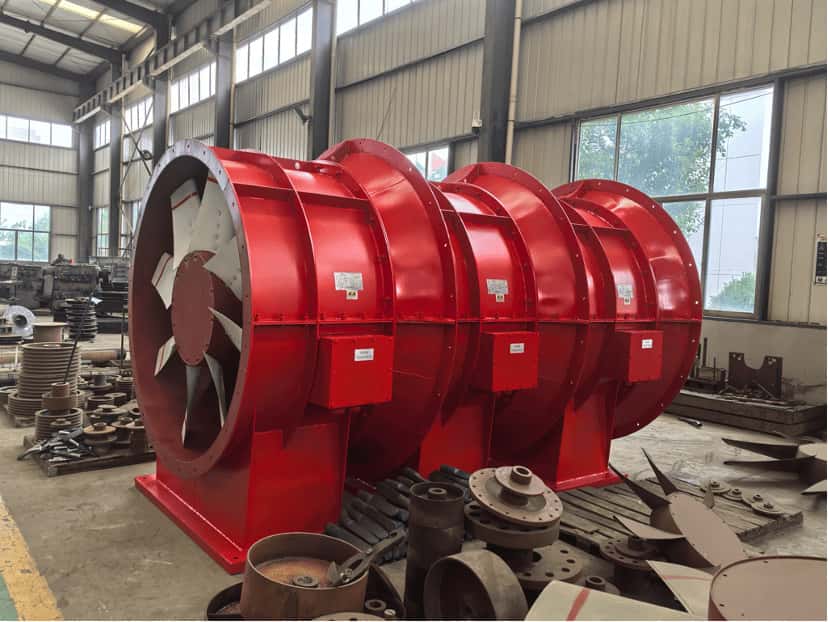
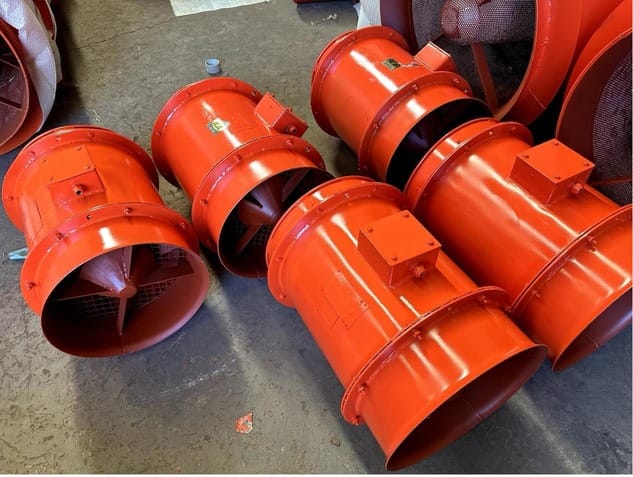
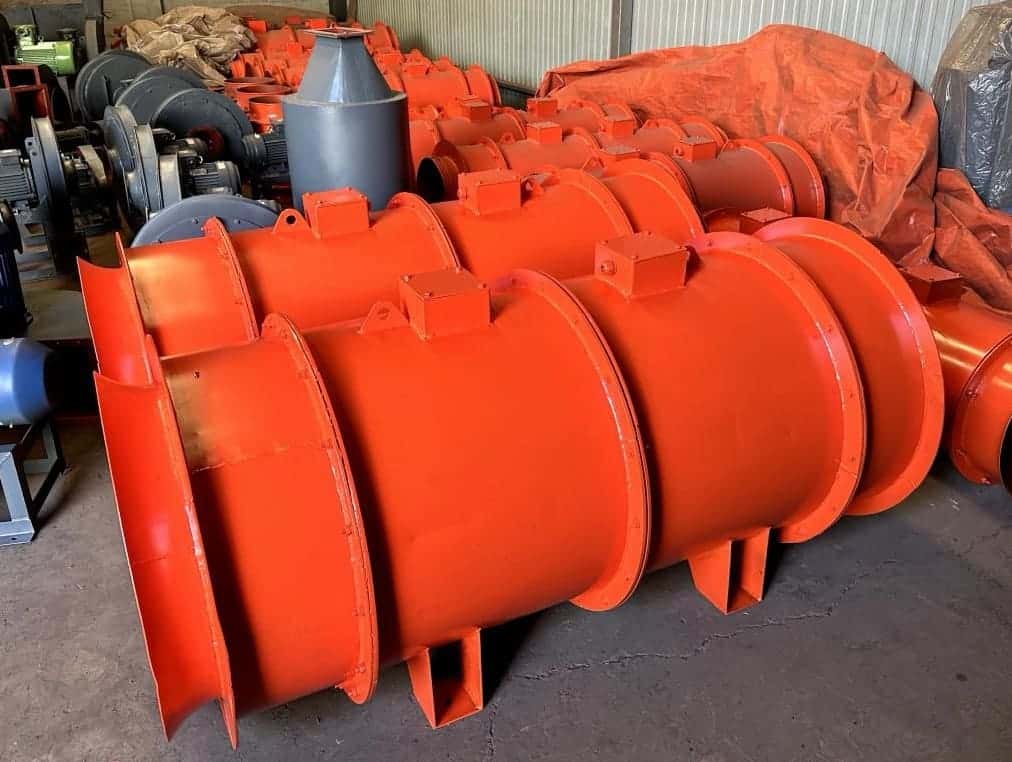
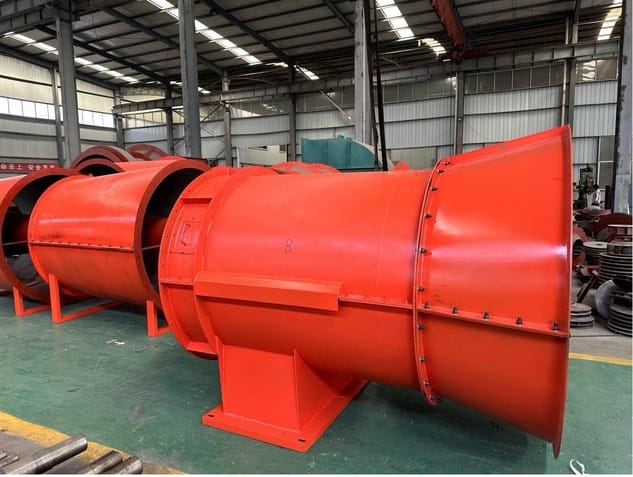
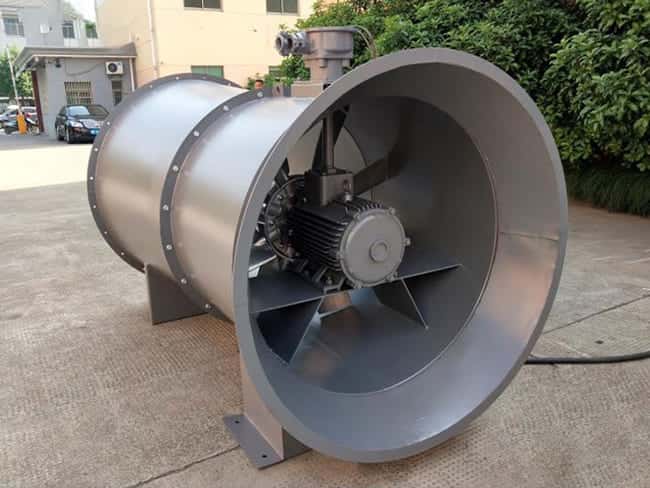
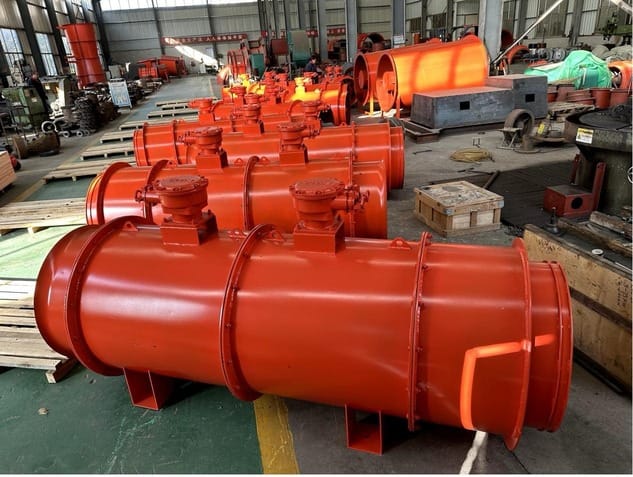
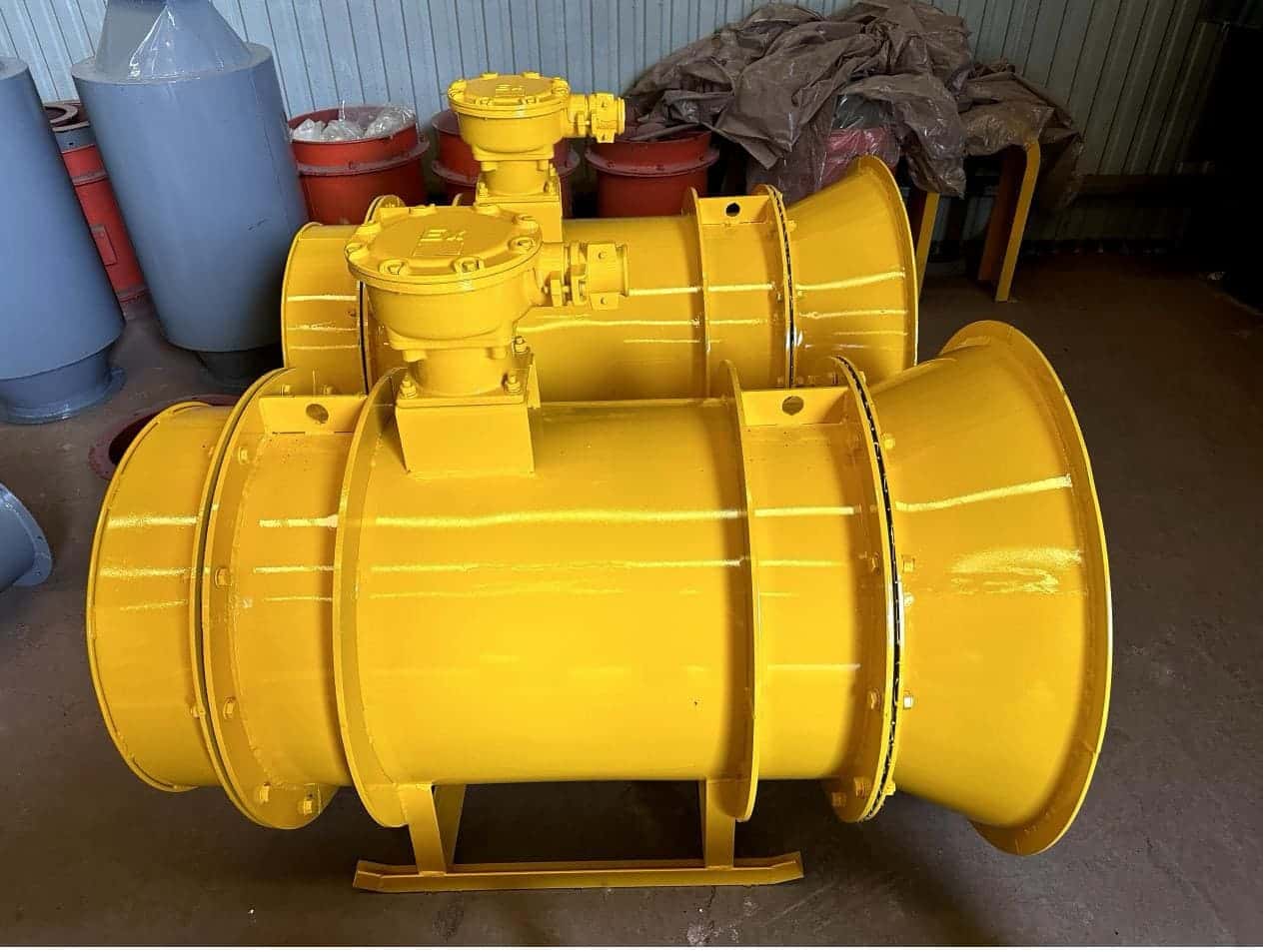

Reducing noise from an industrial fan starts with understanding where the noise comes from and then applying a combination of aerodynamic and mechanical solutions. In most plants and mines, effective noise control involves fan selection, system design, silencers and good maintenance practices rather than a single quick fix.
The first and often most powerful step is to reduce fan speed if possible. Fan aerodynamic noise rises very quickly with tip speed. If the fan has been oversized or if operating conditions have changed, installing a variable-frequency drive and running the fan slower while still meeting airflow requirements can significantly reduce noise and save energy. Where two smaller fans are running fast, replacing them with one larger, slower fan can also help.
Next, examine the duct layout and inlet/outlet conditions. Avoid sharp elbows close to the fan, sudden transitions, partially closed dampers and obstructions that create turbulence. Provide adequate straight duct on the inlet and, where possible, on the outlet to stabilise flow. Use smooth-radius bends and gradual transitions. In mining ventilation, this may involve reshaping regulators, doors and junctions around the fan chamber. Smoother flow means less turbulence and lower broadband noise.
Adding inlet and outlet silencers is a standard technique for large industrial and mining fans. Silencers are designed to absorb sound over specific frequency ranges while keeping pressure drop as low as practical. Proper sizing and regular inspection are important; clogged or damaged silencers may create extra pressure drop and noise. In some installations, lining sections of duct or the fan room walls with acoustic material also helps reduce radiated noise.
Mechanical noise and vibration must be addressed as well. Ensure that bearings are in good condition and correctly lubricated, belts are properly tensioned and aligned, and coupling elements are not worn. Have the impeller cleaned and dynamically balanced if there is evidence of imbalance. Install vibration isolators under the fan and motor base where appropriate, and use flexible connectors on ducts to prevent vibration from transmitting to building structures.
It is also important to verify that the fan is operating near its best efficiency point. A fan running deep in stall or at an unstable part of its curve can be noisy and difficult to control. In such cases, rechecking the duty, fan selection and damper settings may allow adjustments that move the operating point into a more stable, quieter region.
In summary, to reduce noise from an industrial fan you should lower speed where possible, improve duct and airway design, install silencers and acoustic treatment, maintain bearings and drives, balance the impeller and ensure the fan operates in a stable, efficient region of its performance curve. This systematic approach delivers quieter, more reliable ventilation for industrial plants and mines.