
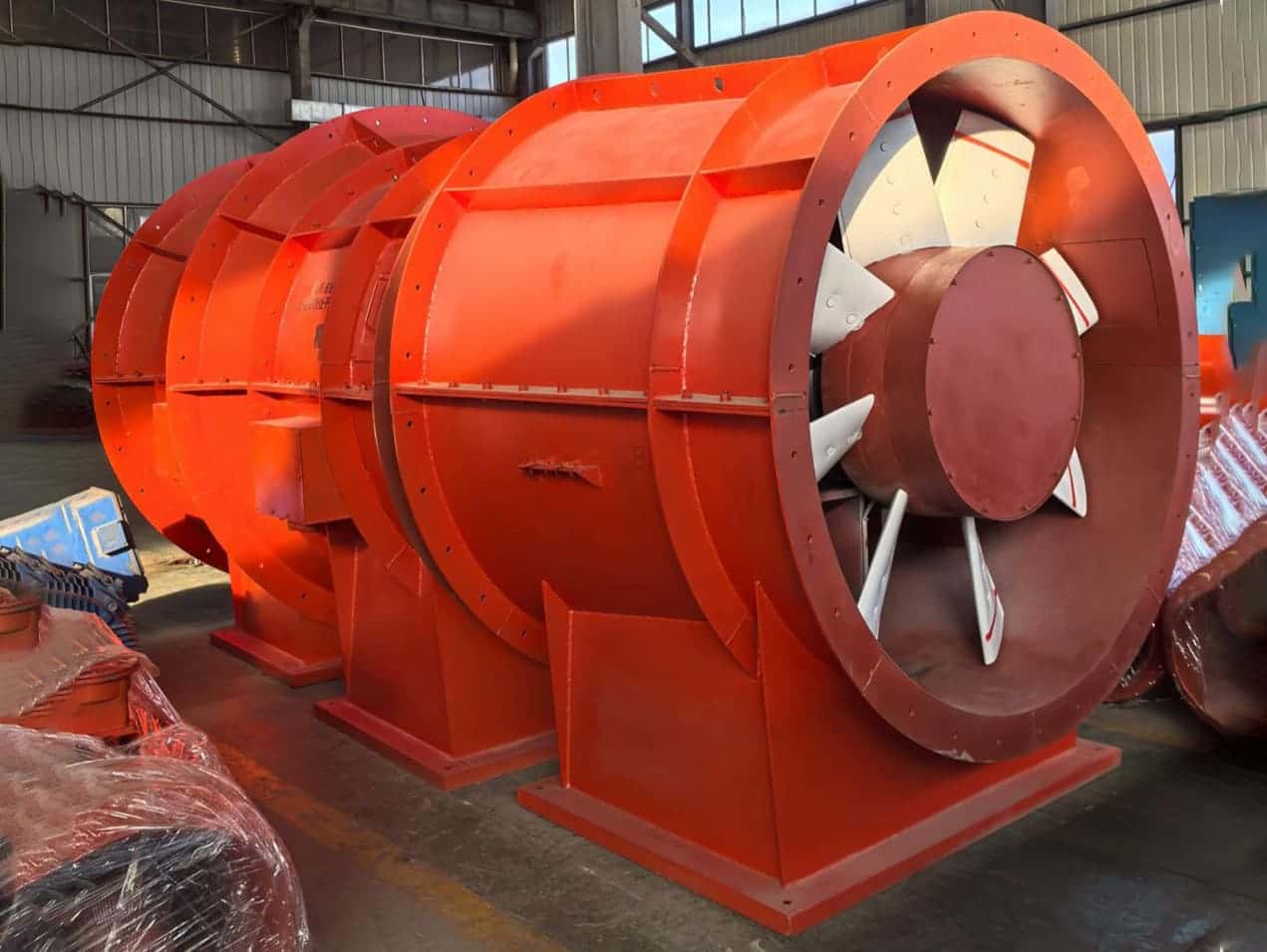
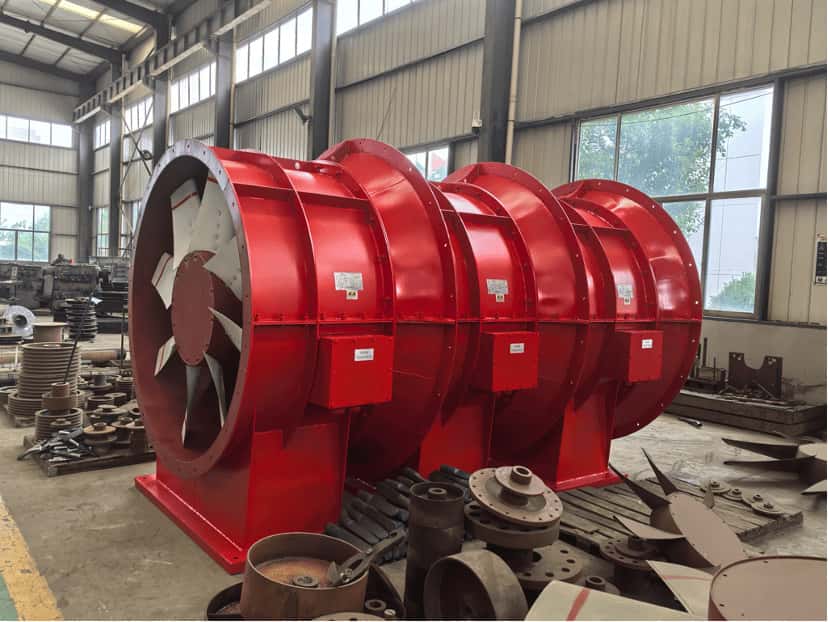
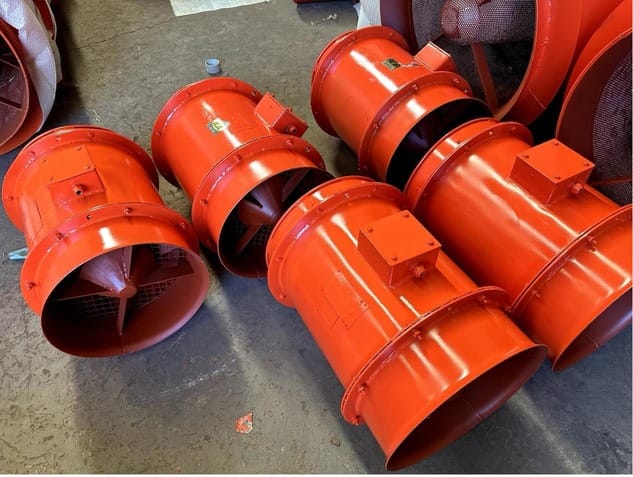
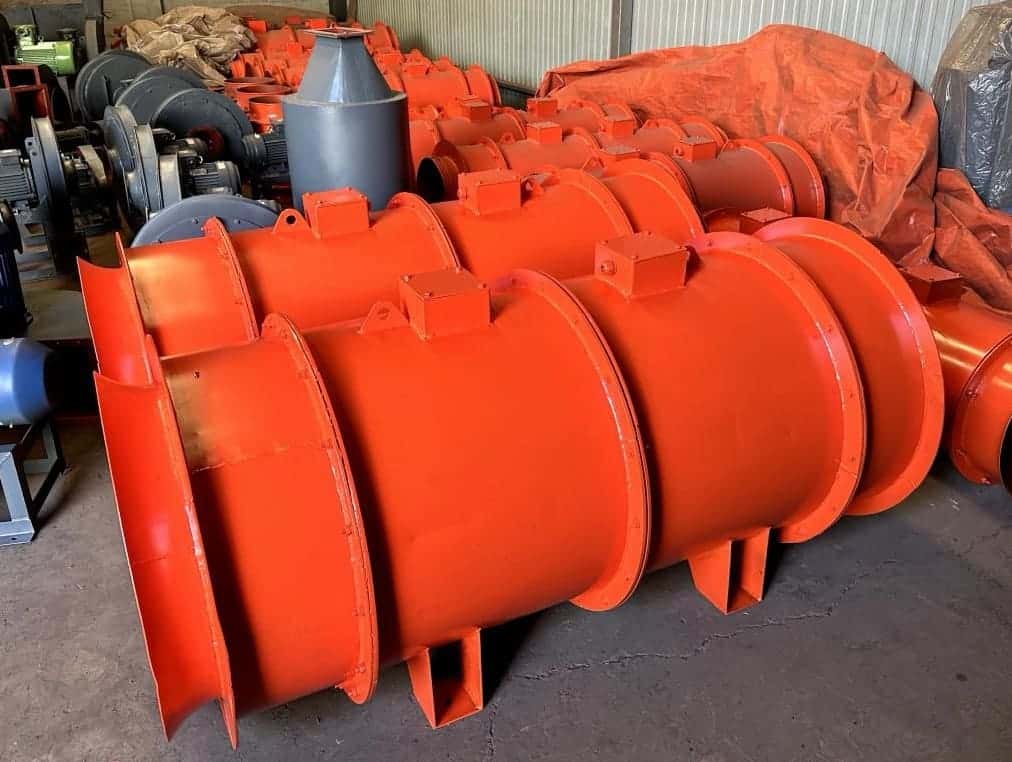
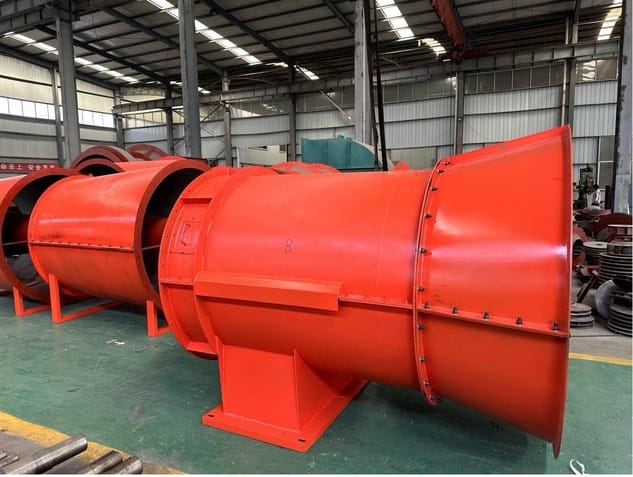
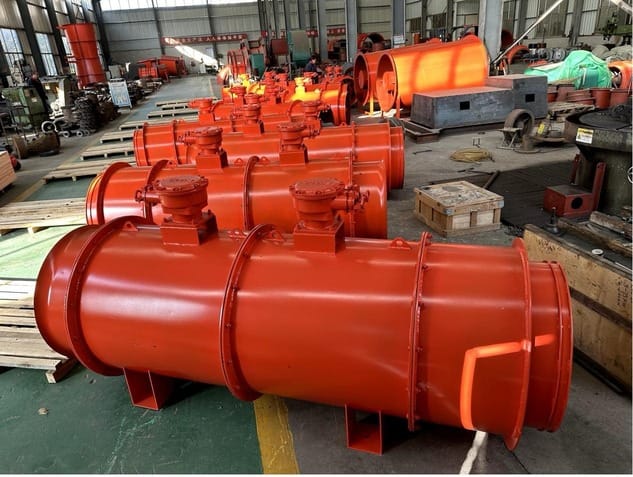
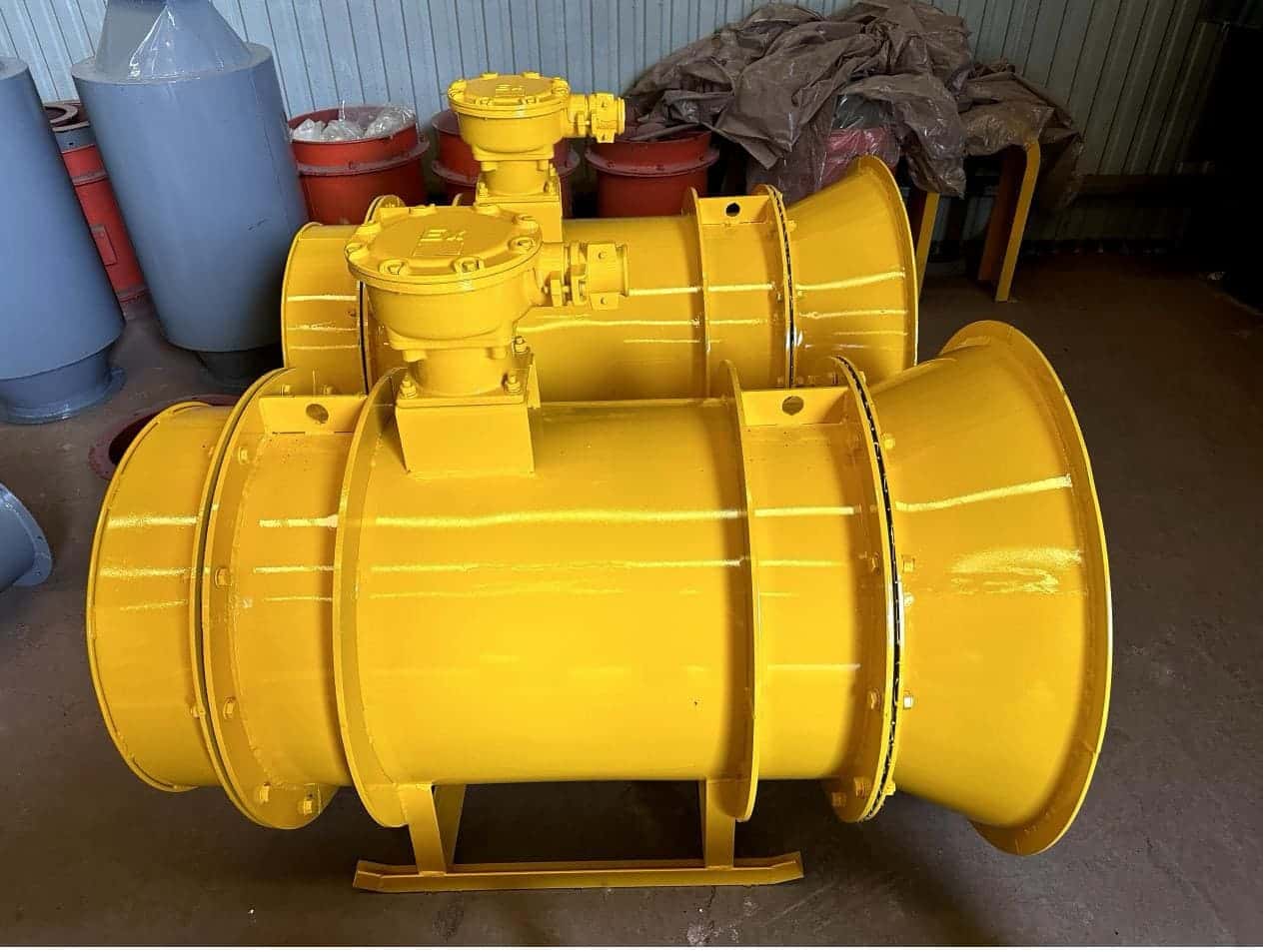
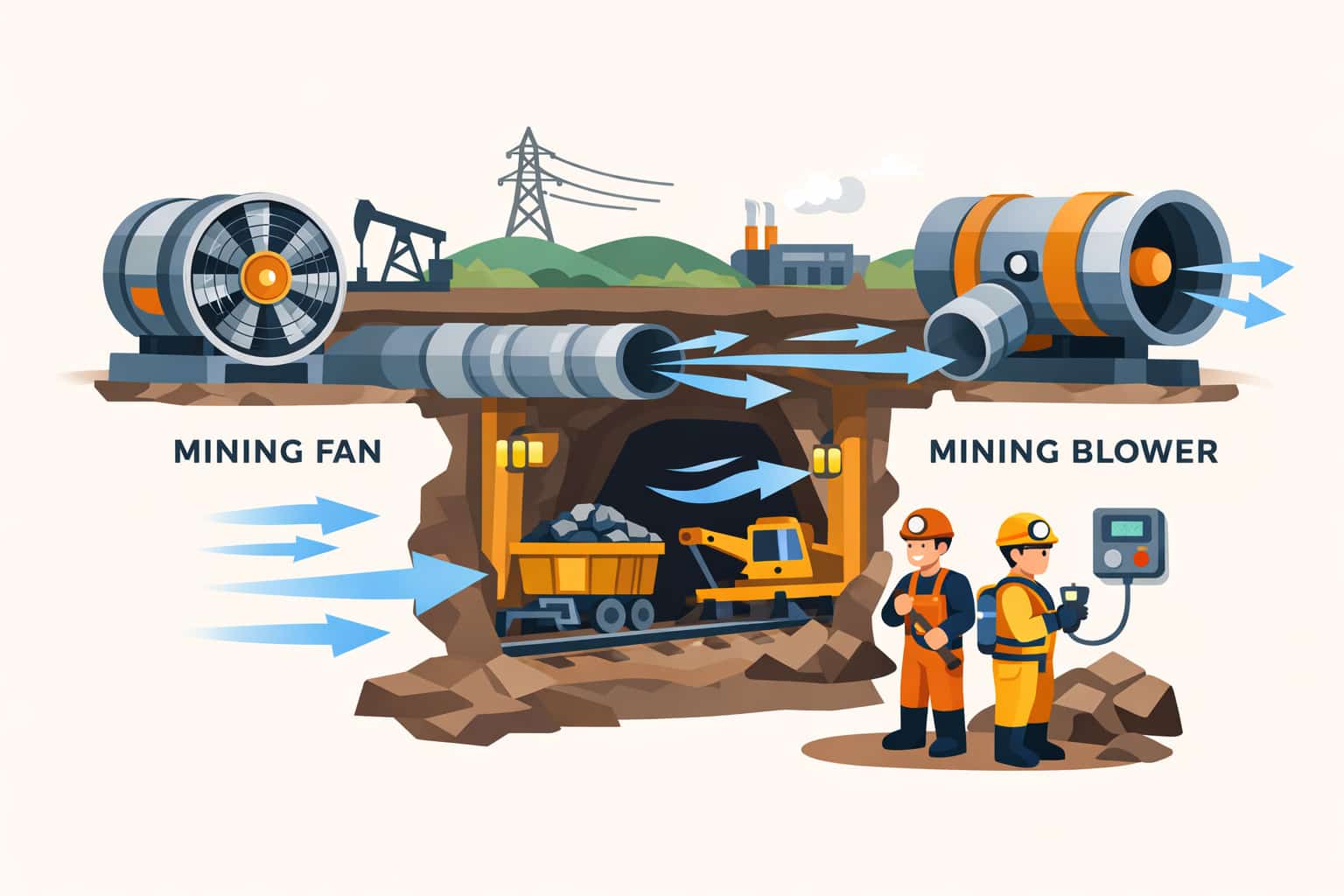
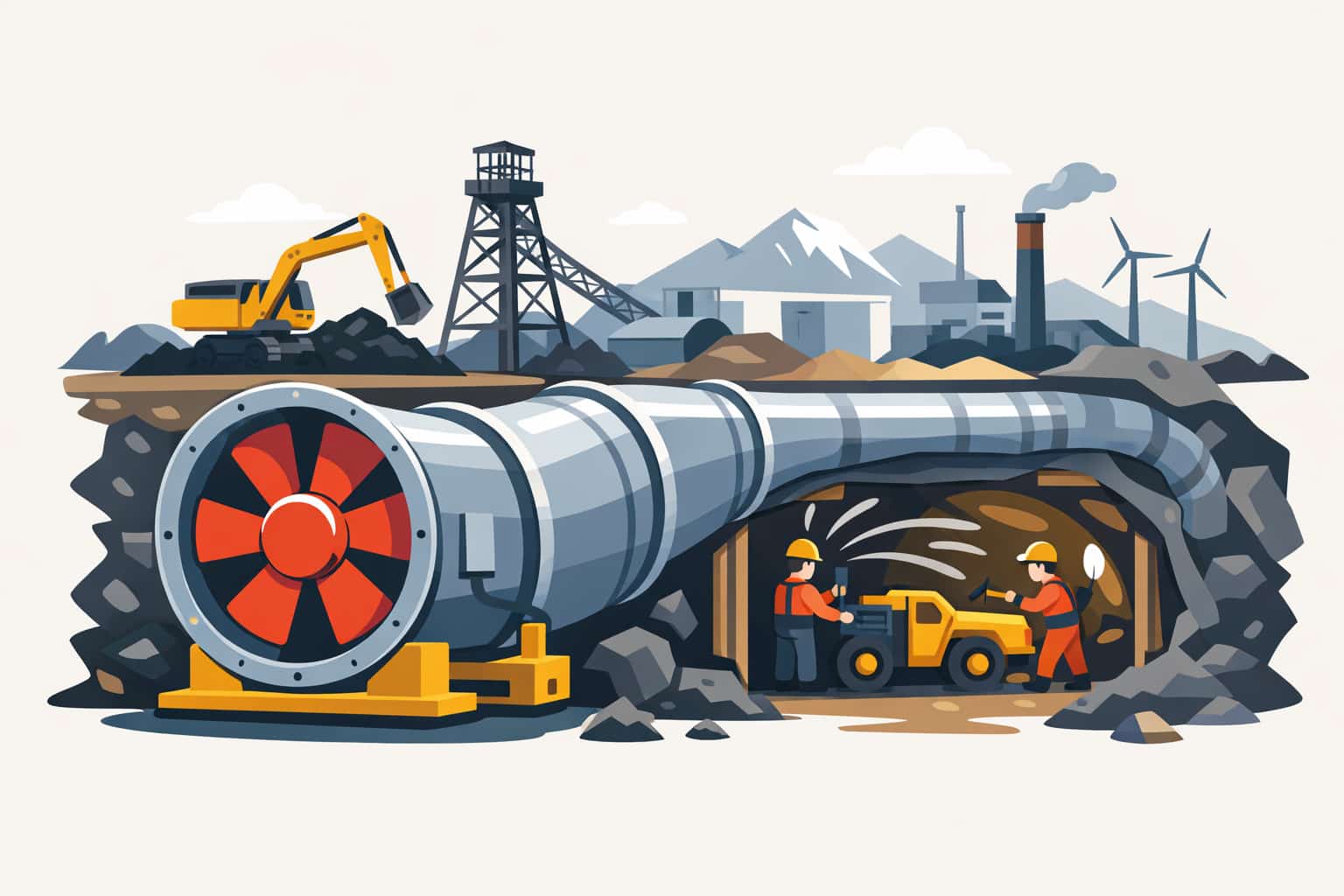

Industrial fans work by converting mechanical energy from an electric motor into airflow and pressure using rotating blades. Whether the fan is axial or centrifugal, the basic principle is to accelerate air and create a pressure difference so air flows from one place to another through ducts, equipment or mine airways.
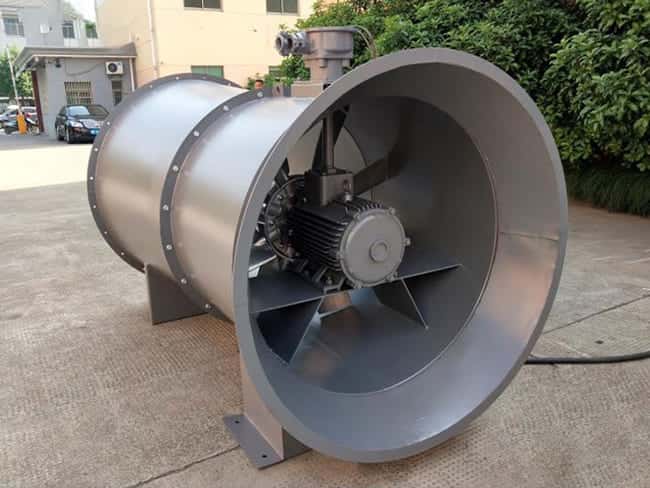
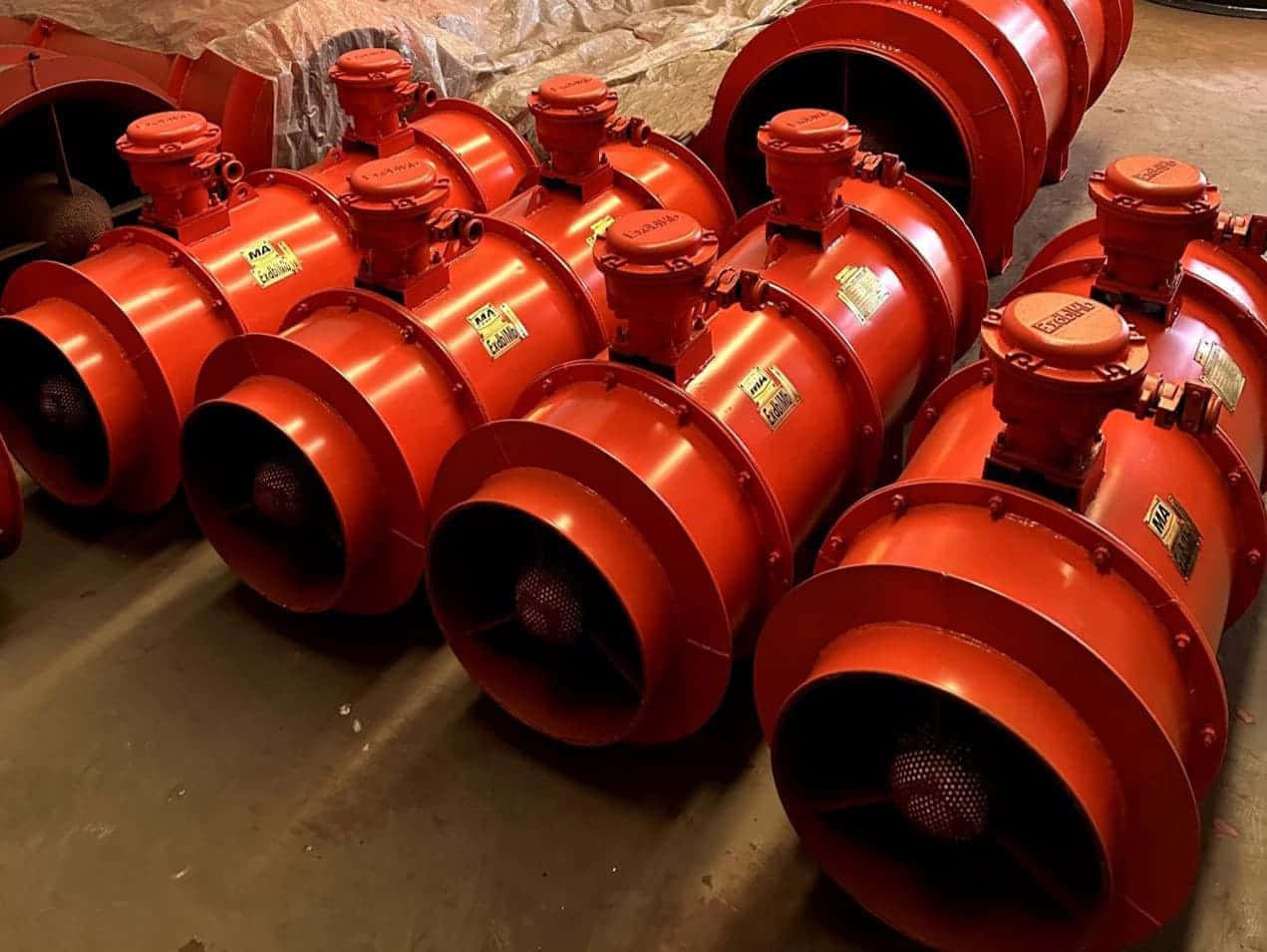
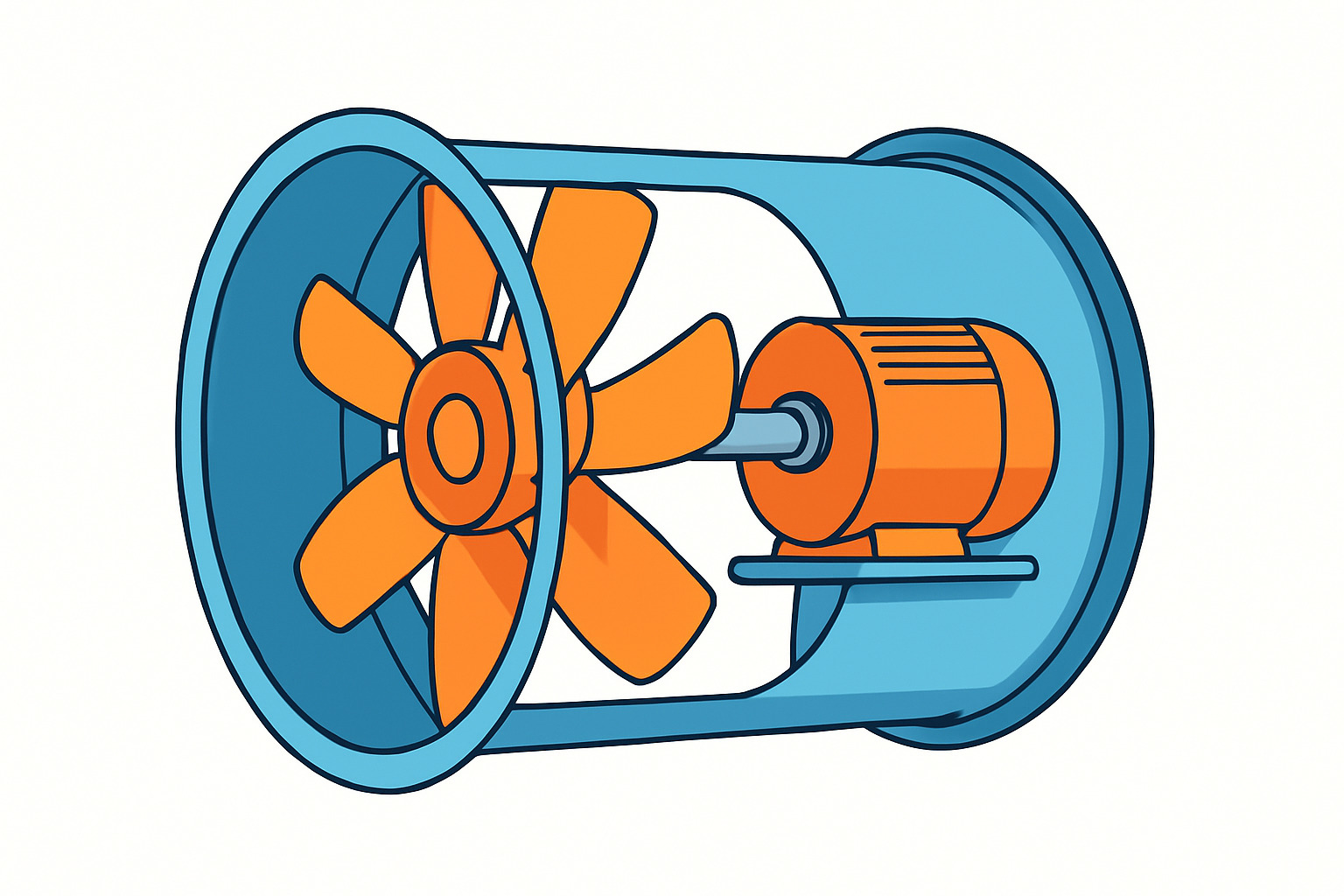
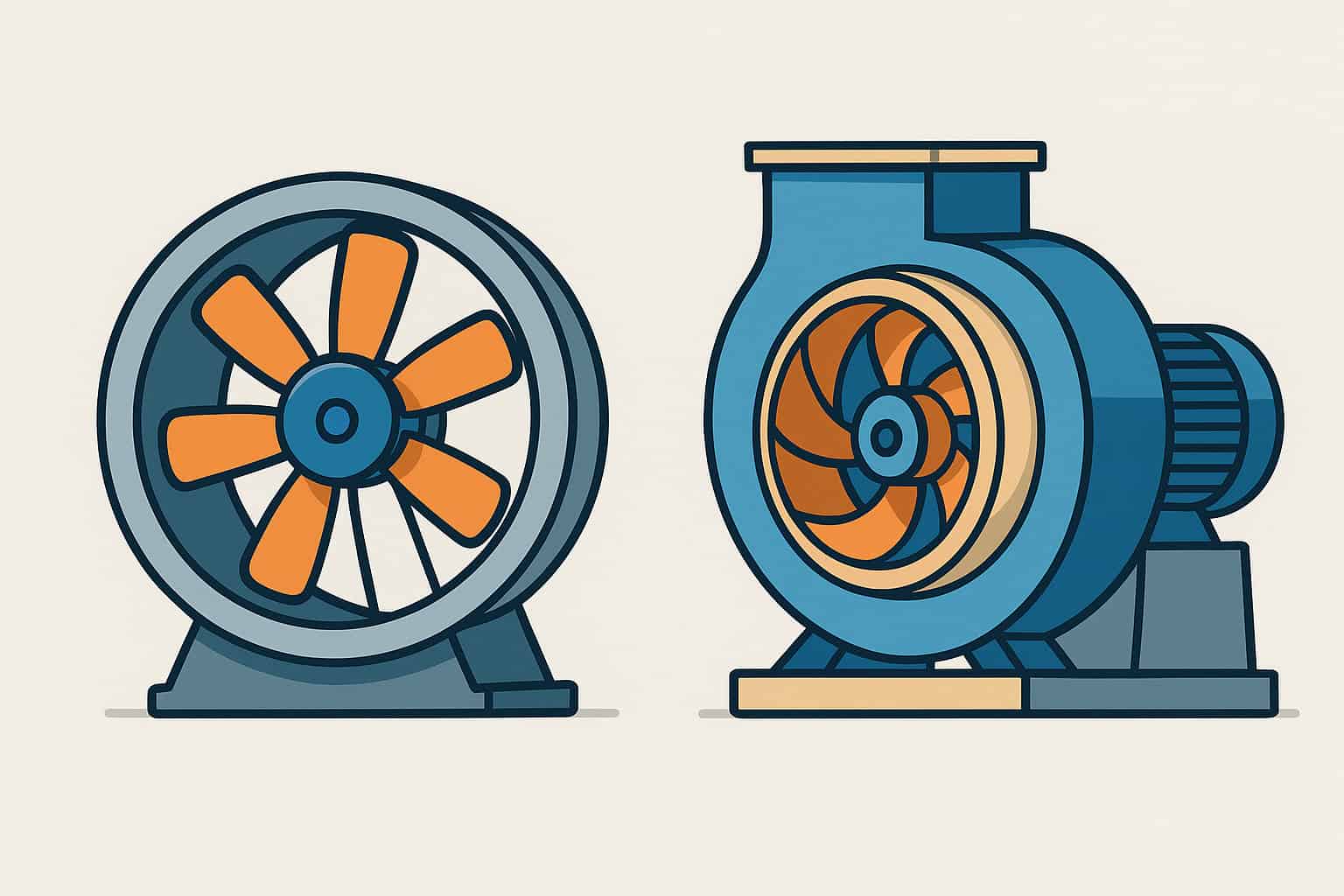
In an axial industrial fan, air flows parallel to the shaft, like a propeller. The motor turns a hub with blades shaped like airfoils. As these blades rotate, they create a pressure difference between the front and back surfaces, pulling air in and pushing it straight through. Axial fans are commonly used for high-volume, low-pressure duties such as tunnel ventilation, main mine ventilation in low-resistance shafts, cooling towers and large building exhaust.
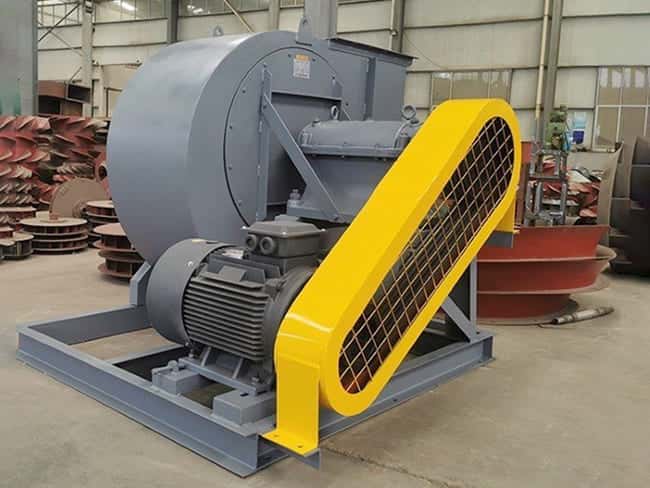
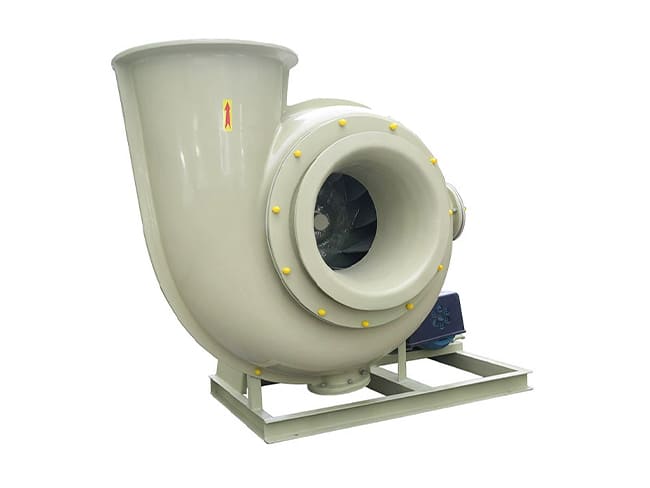
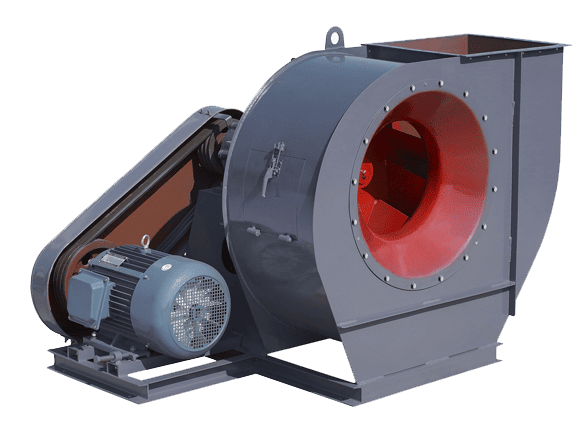
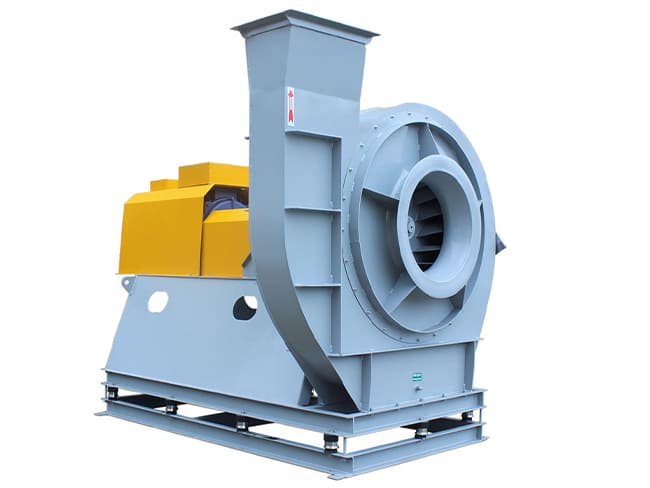
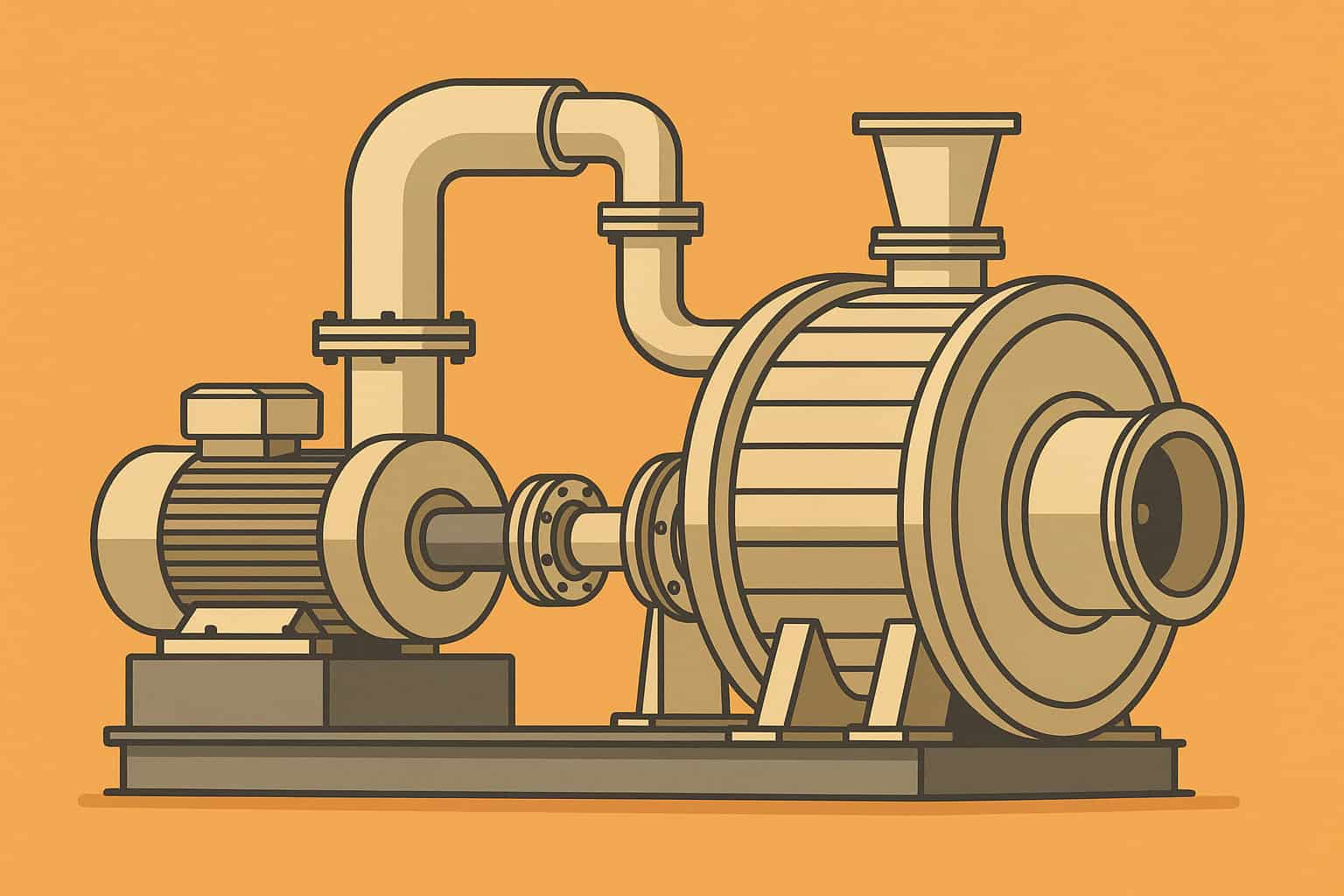
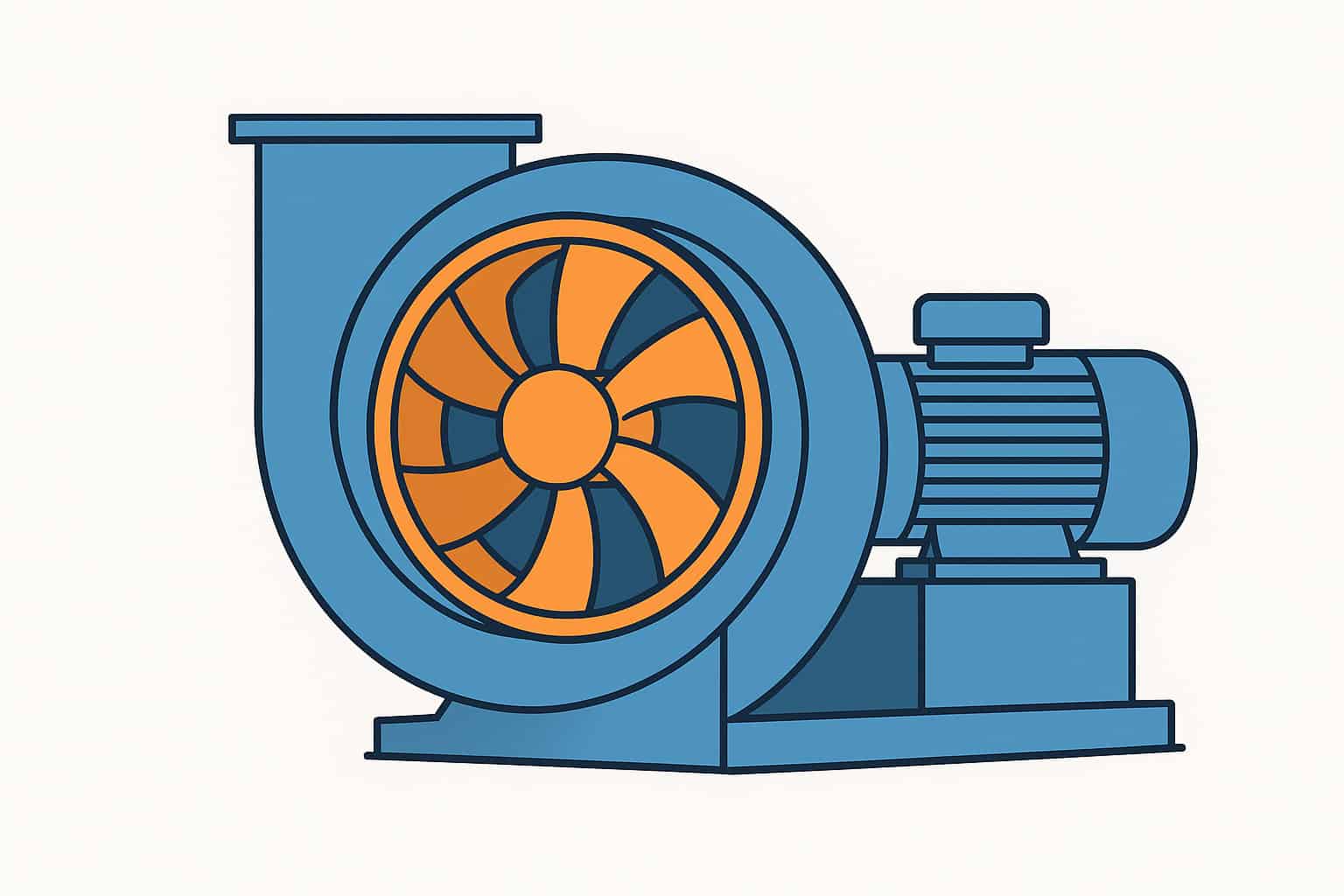
In a centrifugal industrial fan, air enters the impeller near the shaft (axially) and is thrown outward (radially) by centrifugal force as the impeller spins. The spiral scroll housing around the impeller collects this flow and converts part of its velocity into static pressure. This design allows centrifugal fans to develop higher static pressures, making them suitable for dust collectors, scrubbers, long duct systems and high-resistance mine airways.
Both axial and centrifugal fans rely on fan laws: airflow is roughly proportional to speed, pressure to the square of speed and power to the cube of speed, at constant air density. In modern industrial and mining ventilation systems, variable-frequency drives (VFDs) are widely used to adjust fan speed and therefore control airflow and pressure while saving energy compared with running at full speed and throttling with dampers.
Industrial fans operate against a system resistance curve created by ducts, filters, equipment and airways. The point where the fan’s pressure–flow curve intersects the system curve is the actual operating point. If filters clog, dampers move or mine development changes airflow paths, resistance changes and the operating point shifts. Good system design aims to place the operating point near the fan’s best efficiency region.
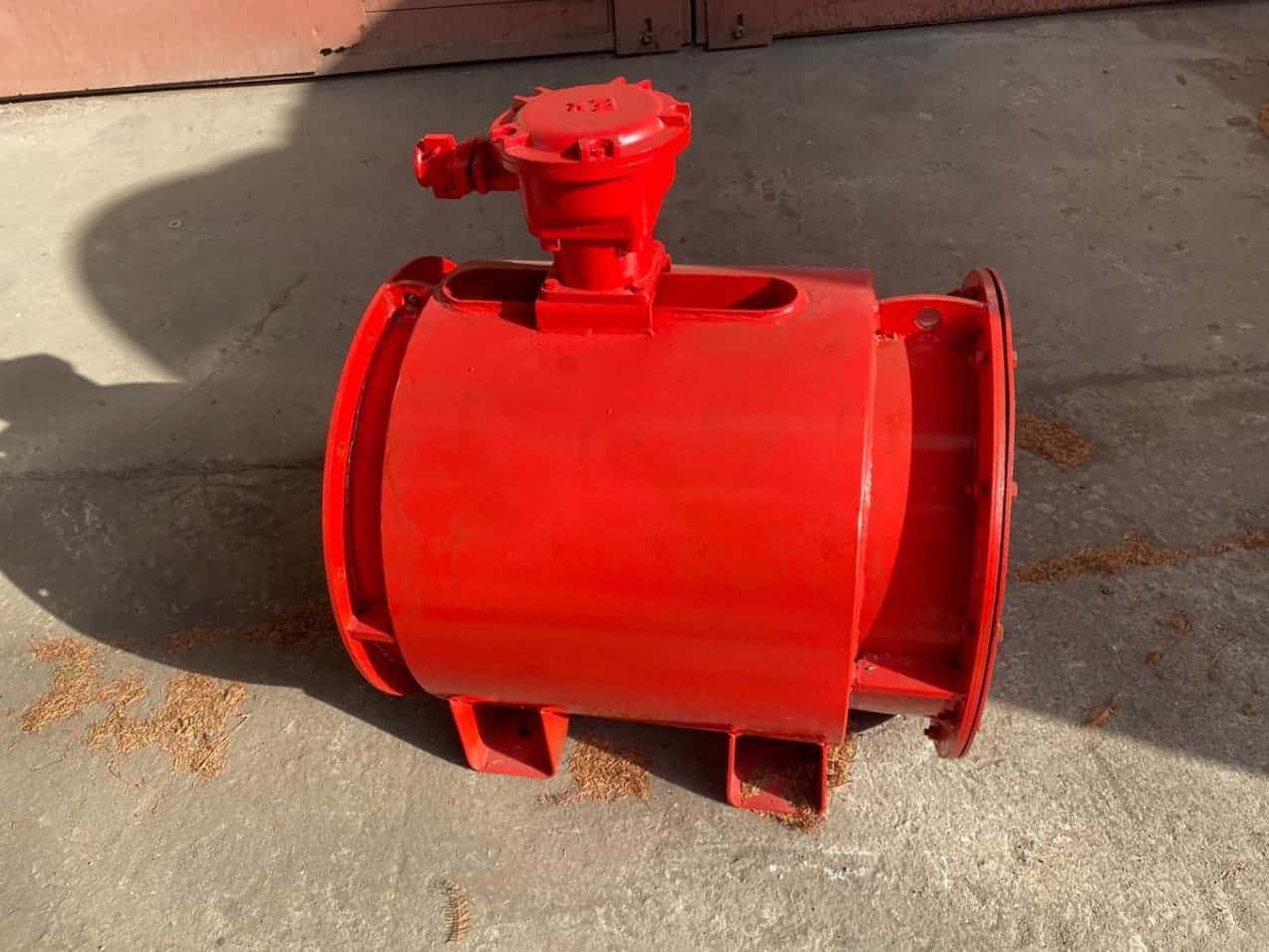
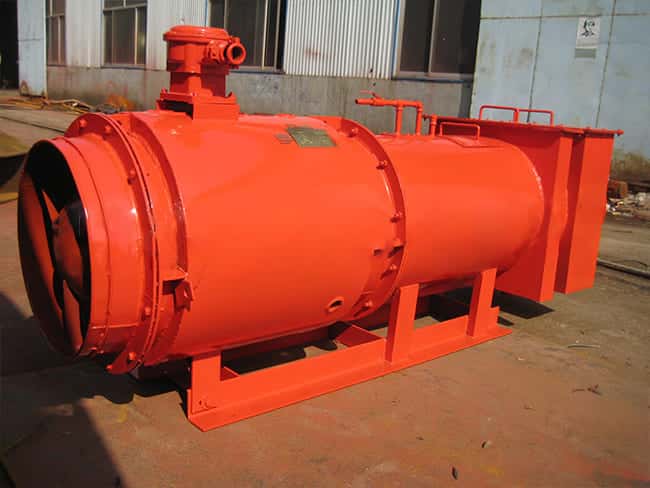
Key components include the motor, impeller, housing, bearings and supports. The motor provides torque to the impeller, either directly or via belts. Bearings support the shaft and must be lubricated and cooled. The housing guides the flow and allows connection to ducts or airways. Guards and safety devices protect personnel from rotating parts.
In summary, industrial fans work by using motor-driven impellers to accelerate air and create pressure differences that move air through industrial plants and mines. Axial fans move air straight through, while centrifugal fans discharge it radially into a scroll. Proper design matches fan type, size and speed to the ventilation duty, ensuring safe and efficient operation.
