
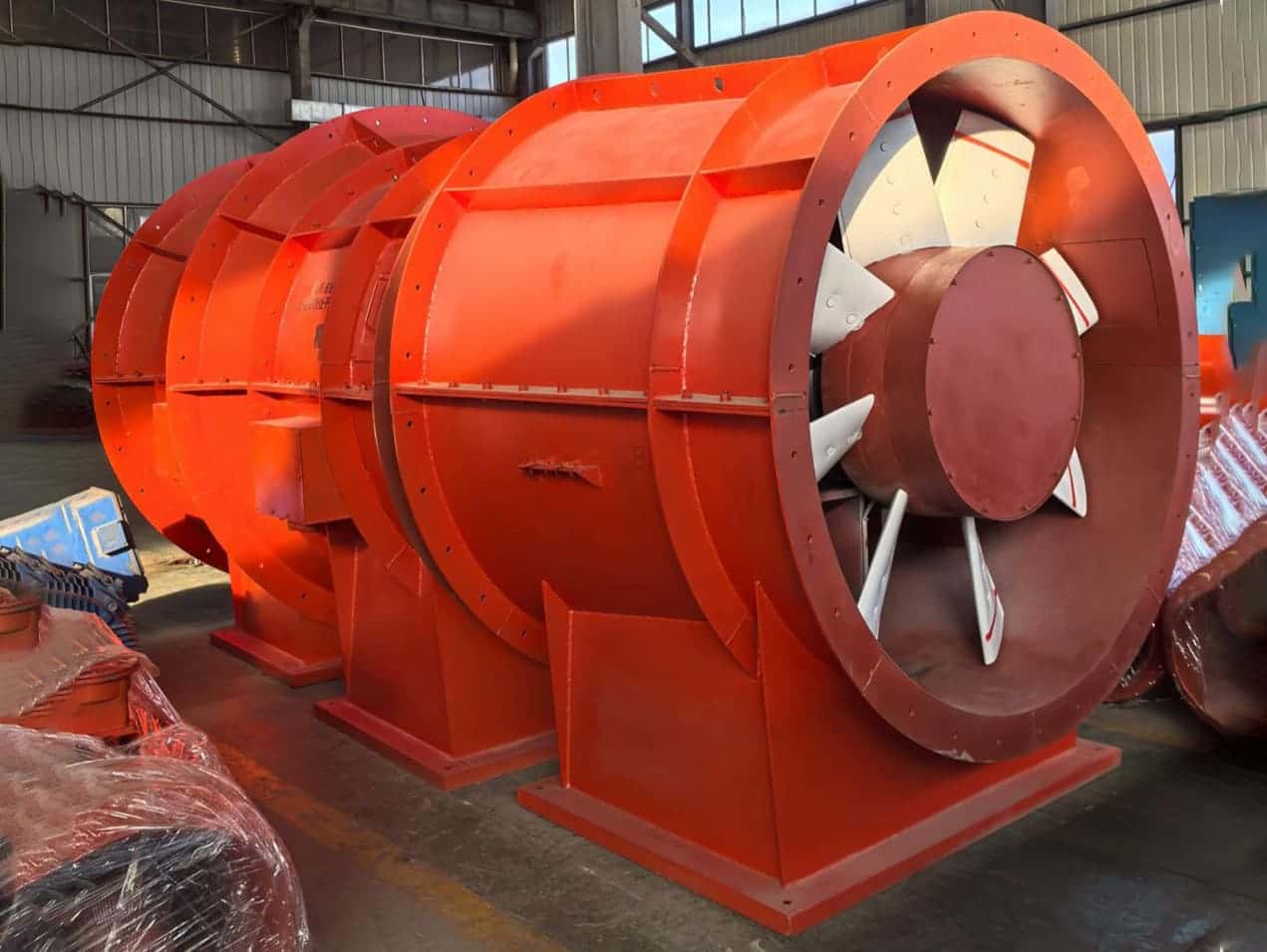
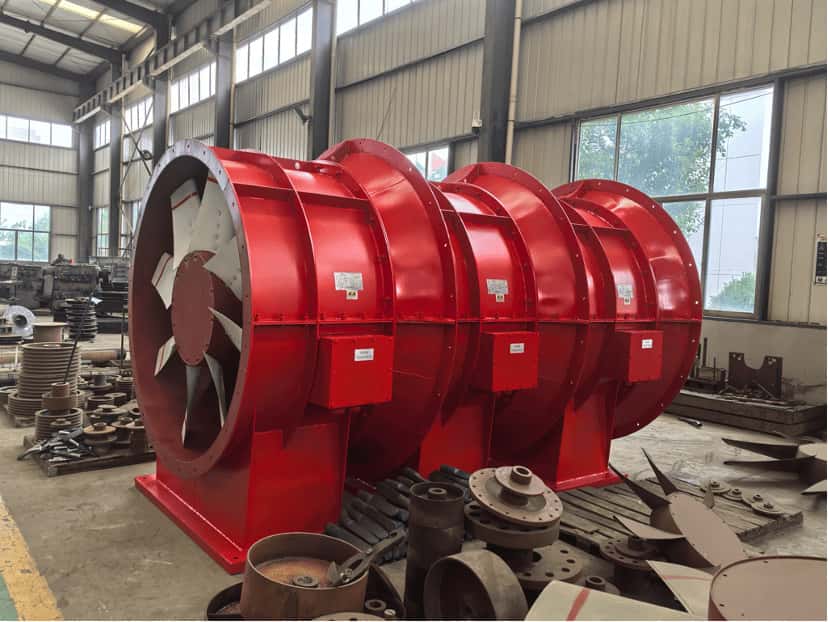
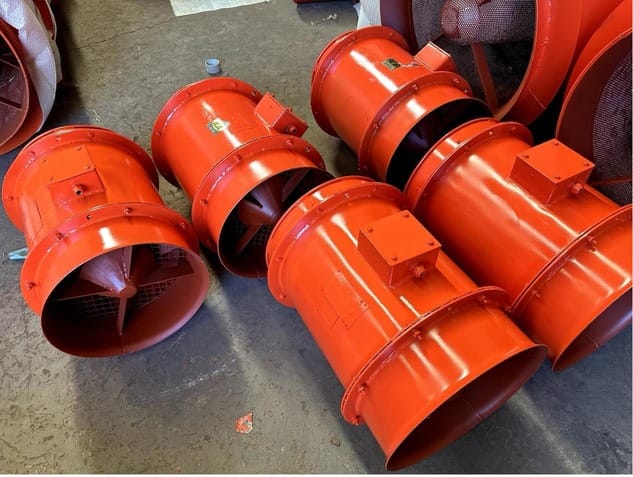
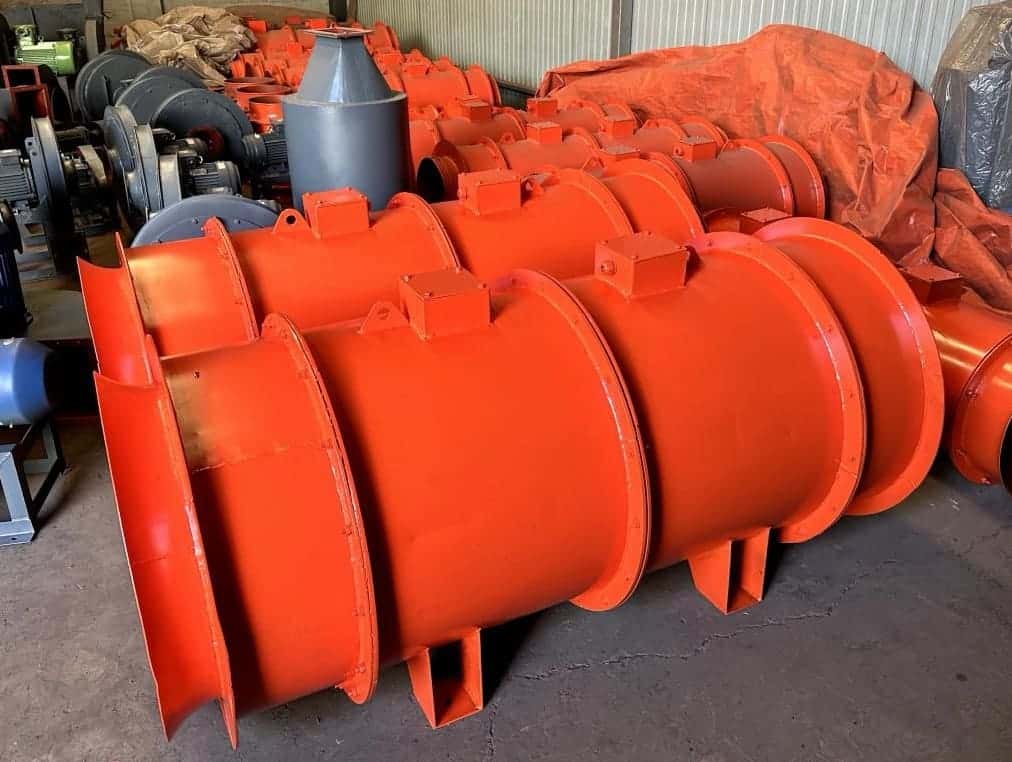
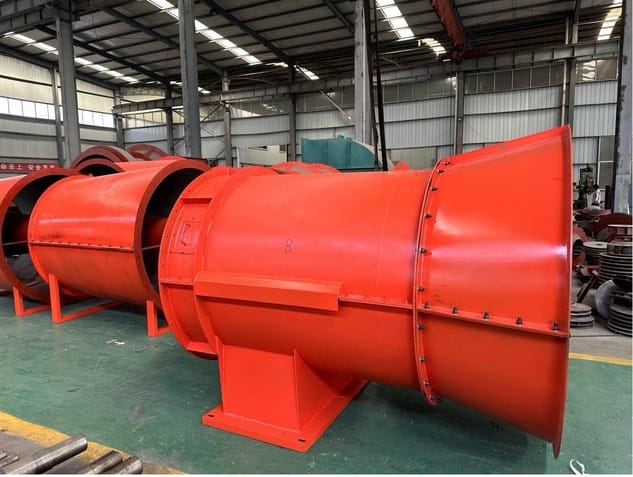
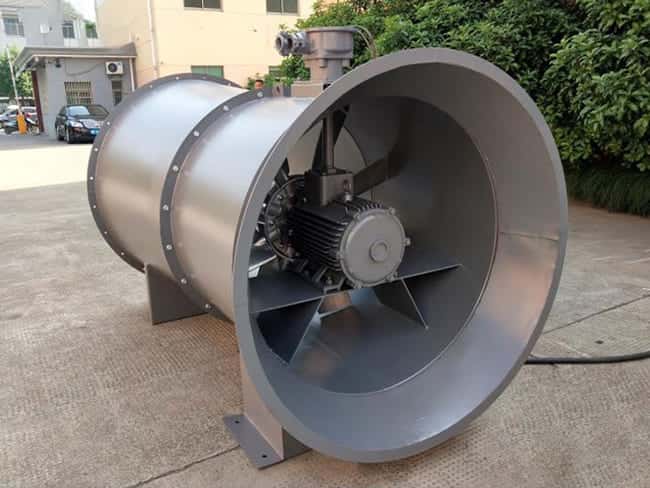
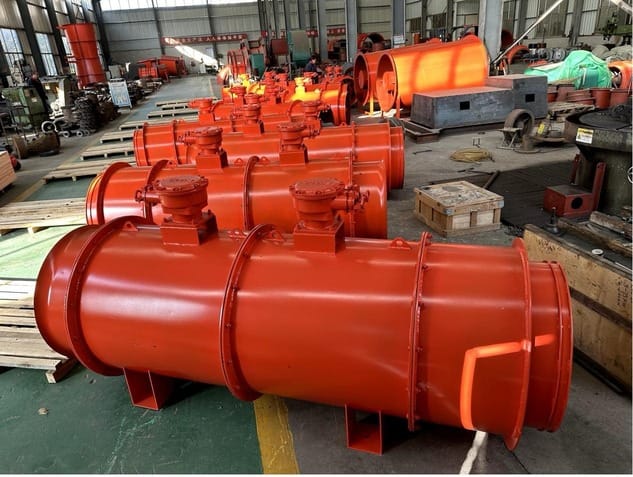
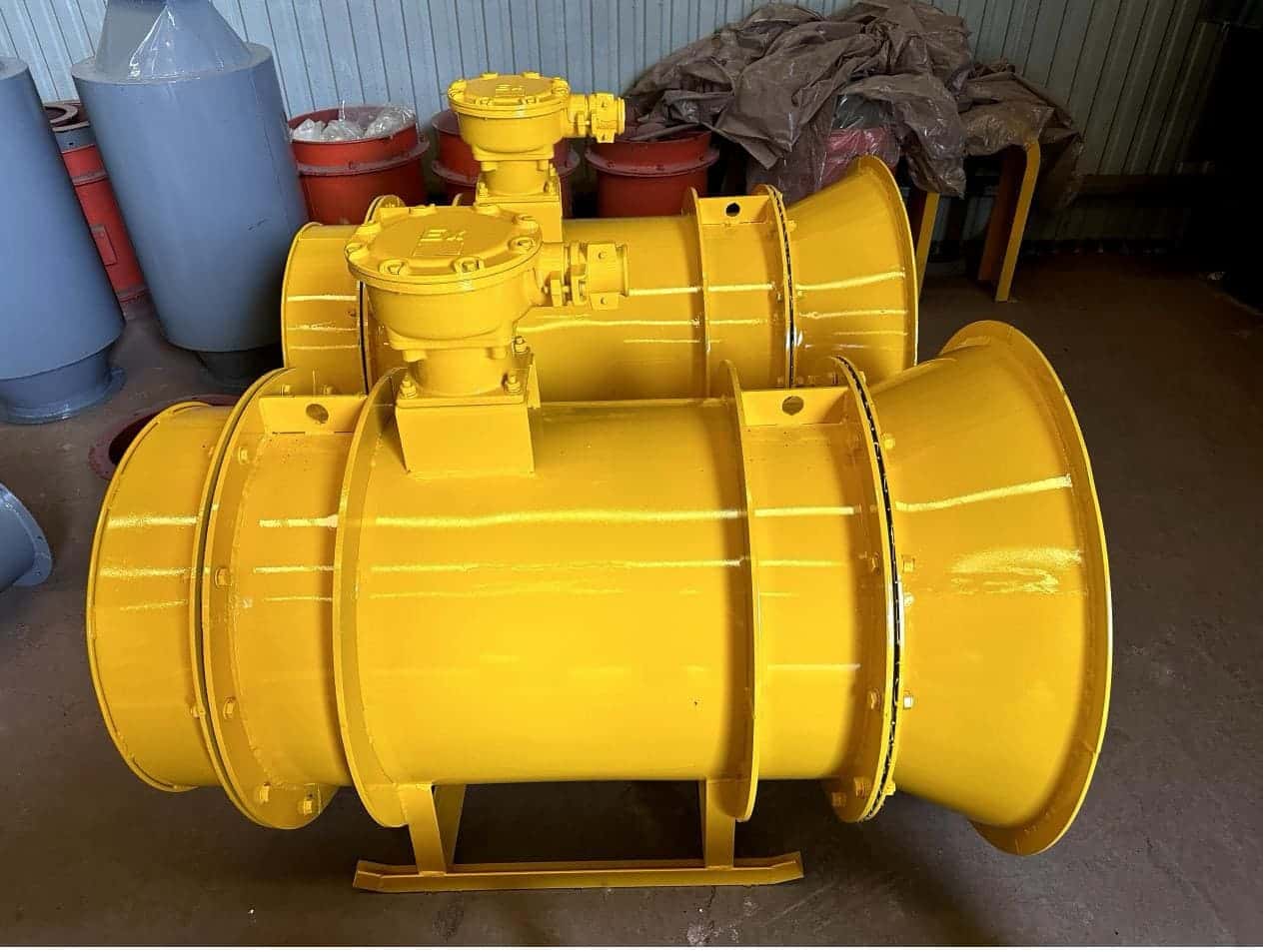
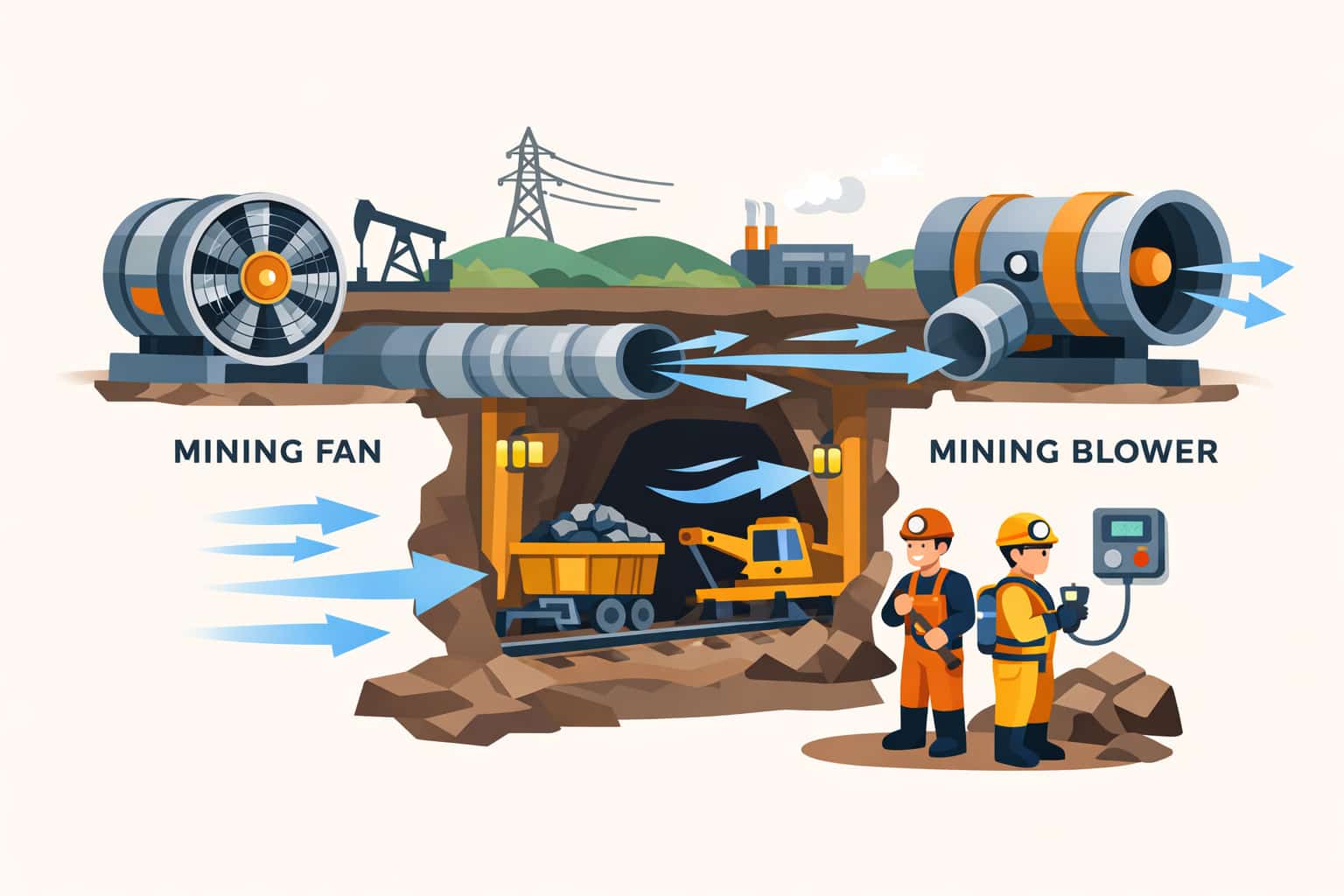
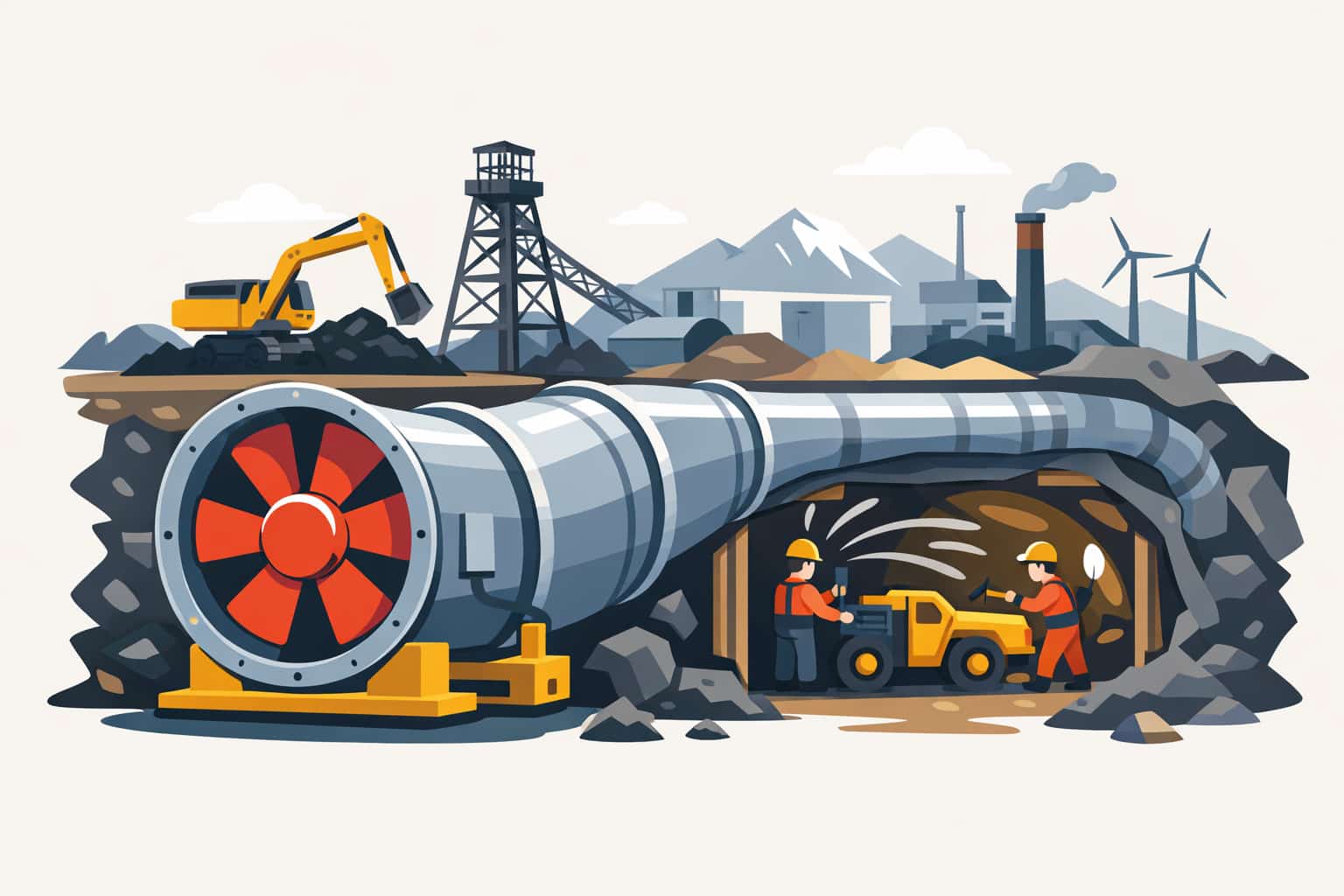
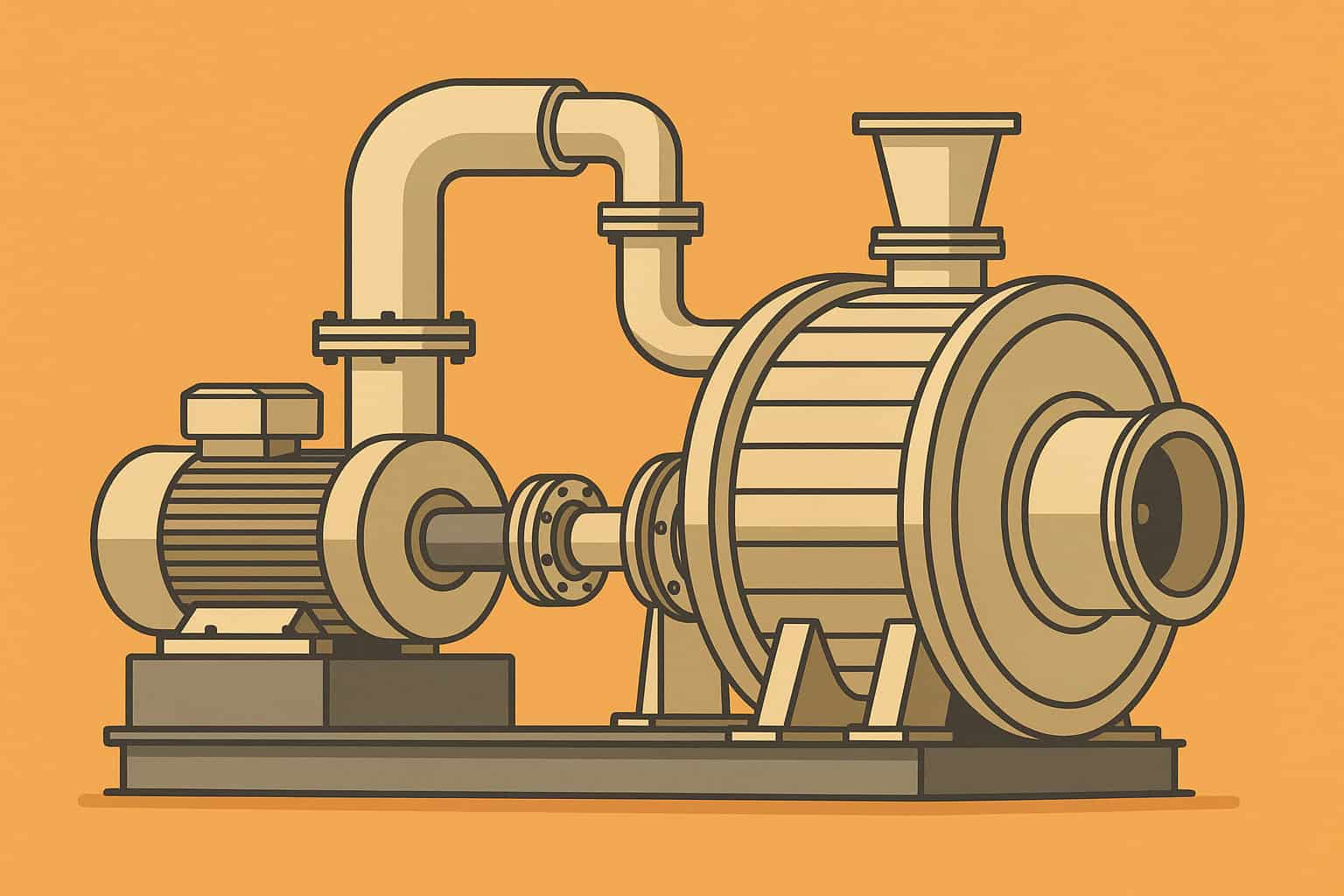

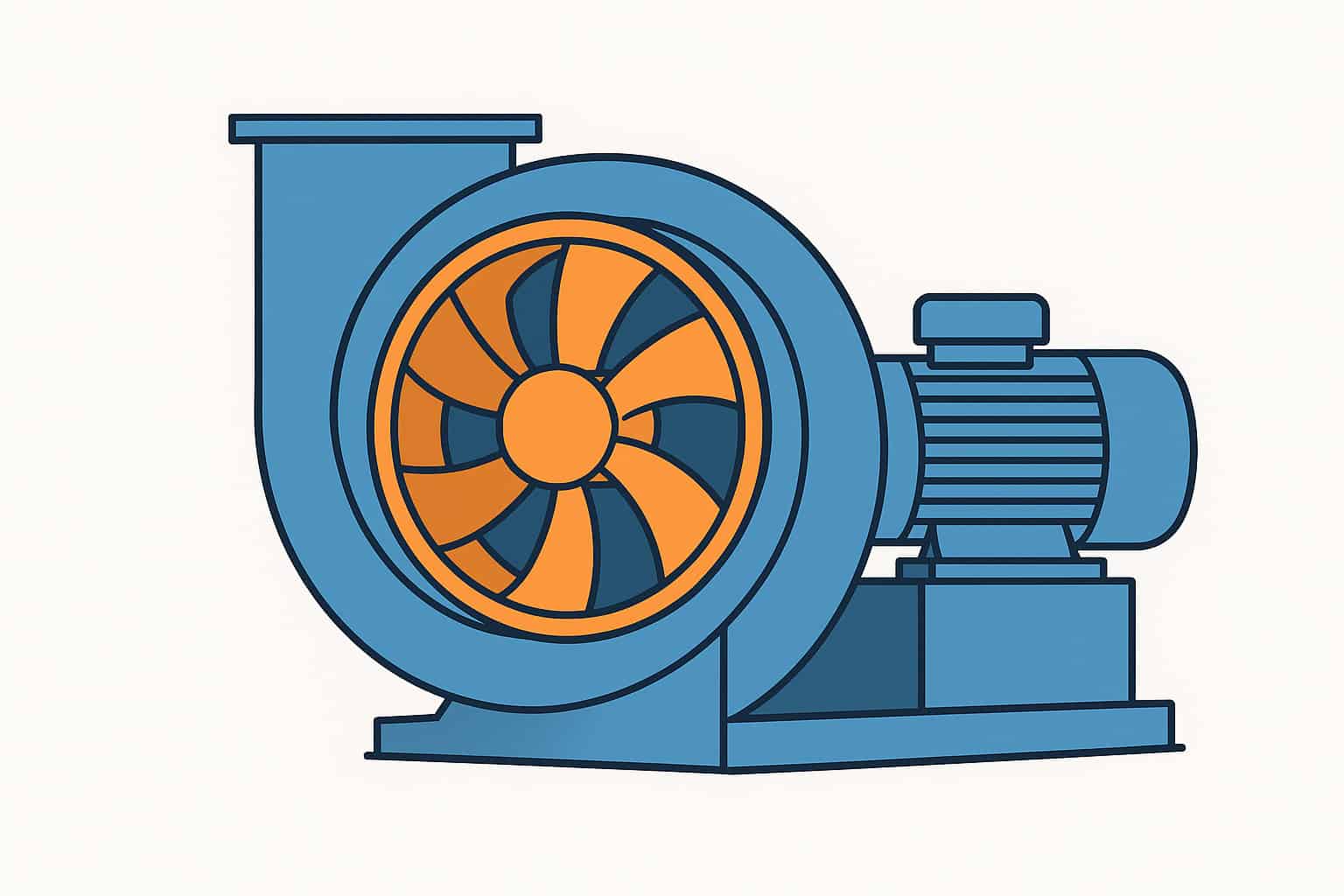
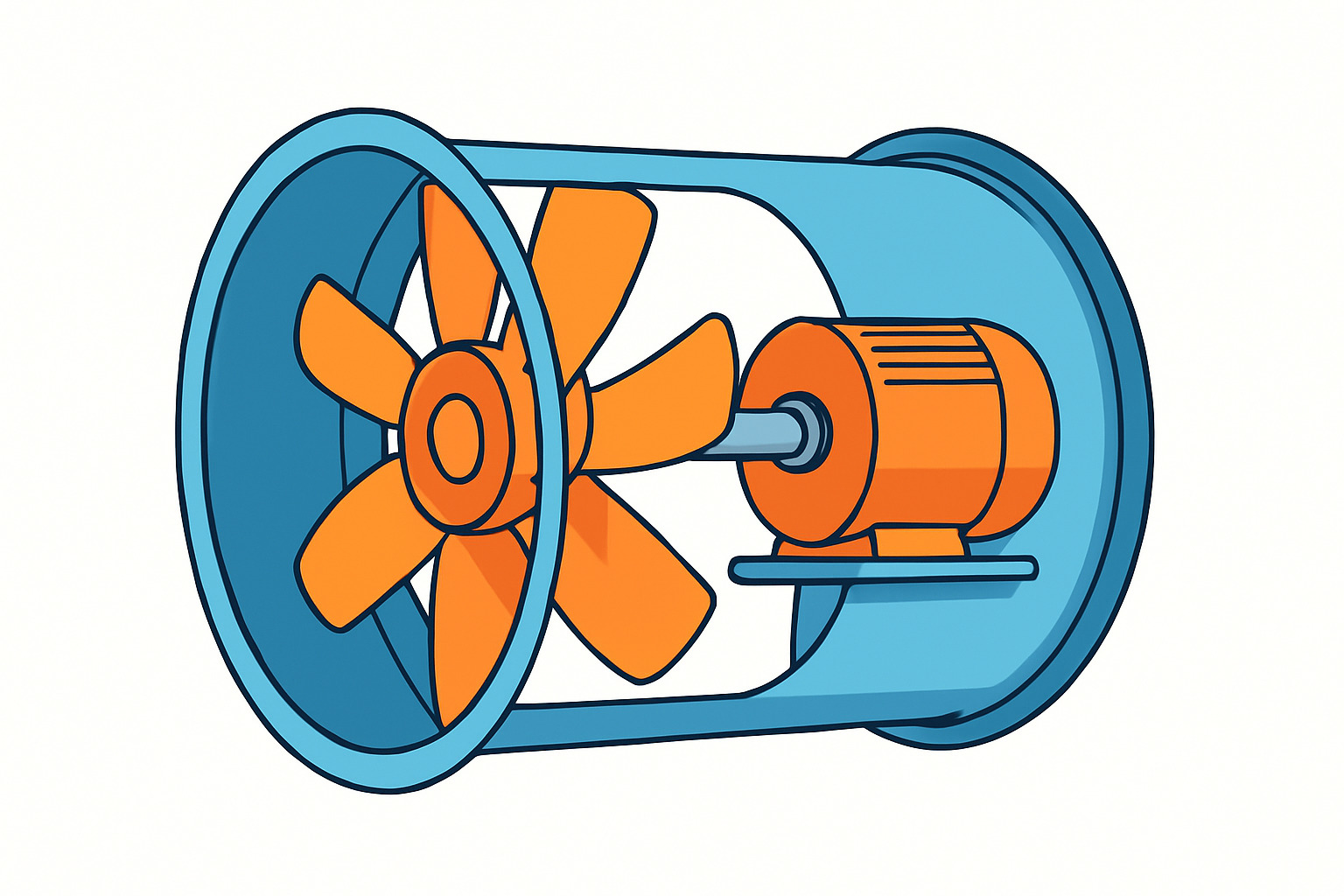
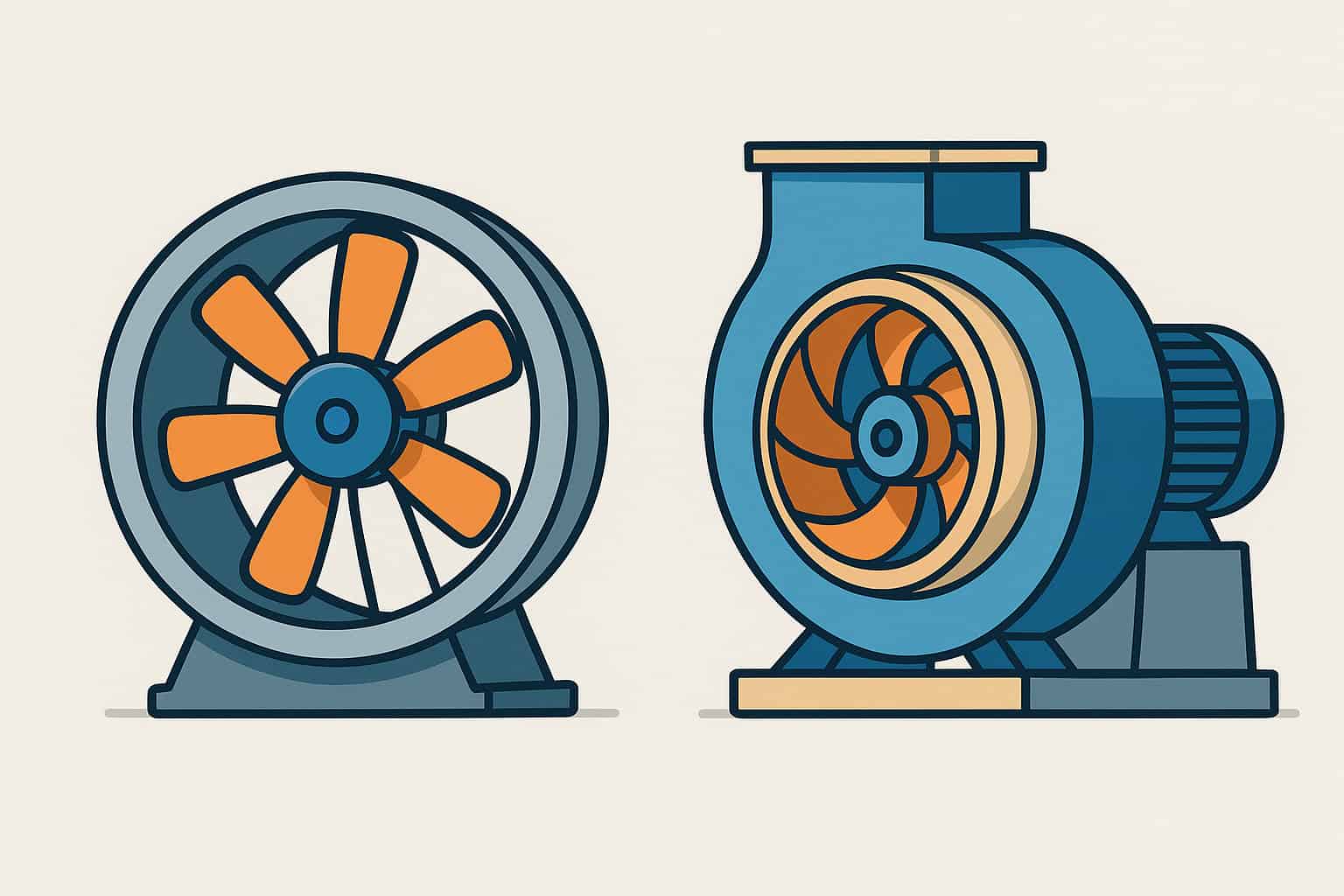
To reduce the noise in an industrial fan, you need to treat the fan and the ventilation system as a whole. Simply adding insulation around a noisy fan may help a little, but the biggest improvements usually come from selecting the right fan, running it at sensible speed, eliminating vibration and giving the air a smooth path through the system.
The first step is to look at fan selection and duty point. An industrial fan that is too small and forced to run at very high speed, or one that operates far from its best efficiency region, will usually be loud and inefficient. Where possible, choose a fan model and size that can deliver your required airflow and pressure at a lower speed and higher efficiency. For main mining or plant ventilation, larger low-speed fans are often quieter than small high-speed units doing the same job.
Next, focus on vibration and mechanical condition. Check that the fan is securely mounted to a rigid structure with suitable vibration isolators. Inspect bearings, shafts and couplings for wear. An out-of-balance impeller or misaligned drive can create rumbling and rattling noises that will not disappear until the underlying mechanical problem is fixed. Regular maintenance, including cleaning and balancing, is a key part of noise control.
Then improve aerodynamic conditions. Noisy airflow is often caused by abrupt duct fittings, sharp bends close to the fan, partially closed dampers or obstructions near the inlet or outlet. Where possible, provide straight inlet and outlet sections, use smooth transitions, and keep dampers and vanes fully open during normal operation. If you need to modulate flow, consider using variable-speed drives instead of throttling with dampers, as this can reduce both noise and power consumption.
After mechanical and aerodynamic issues are addressed, apply acoustic treatment. Install intake and discharge silencers designed for the fan’s flow and frequency spectrum, making sure to account for the additional pressure drop in your fan selection. Line critical duct sections with acoustic materials, build partial enclosures around especially noisy fans or fan rooms, and seal gaps where noise can leak into offices or neighbouring properties.
Finally, embed noise control into operating practices. Run fans only as fast as needed, especially during off-peak production; schedule noisy operations when fewer people are present; and monitor noise levels over time so that rising noise can signal developing mechanical problems. In industrial plants and underground mines, this systematic approach—selection, maintenance, aerodynamics and acoustics—is the most reliable way to reduce fan noise while preserving safe, effective ventilation.
