
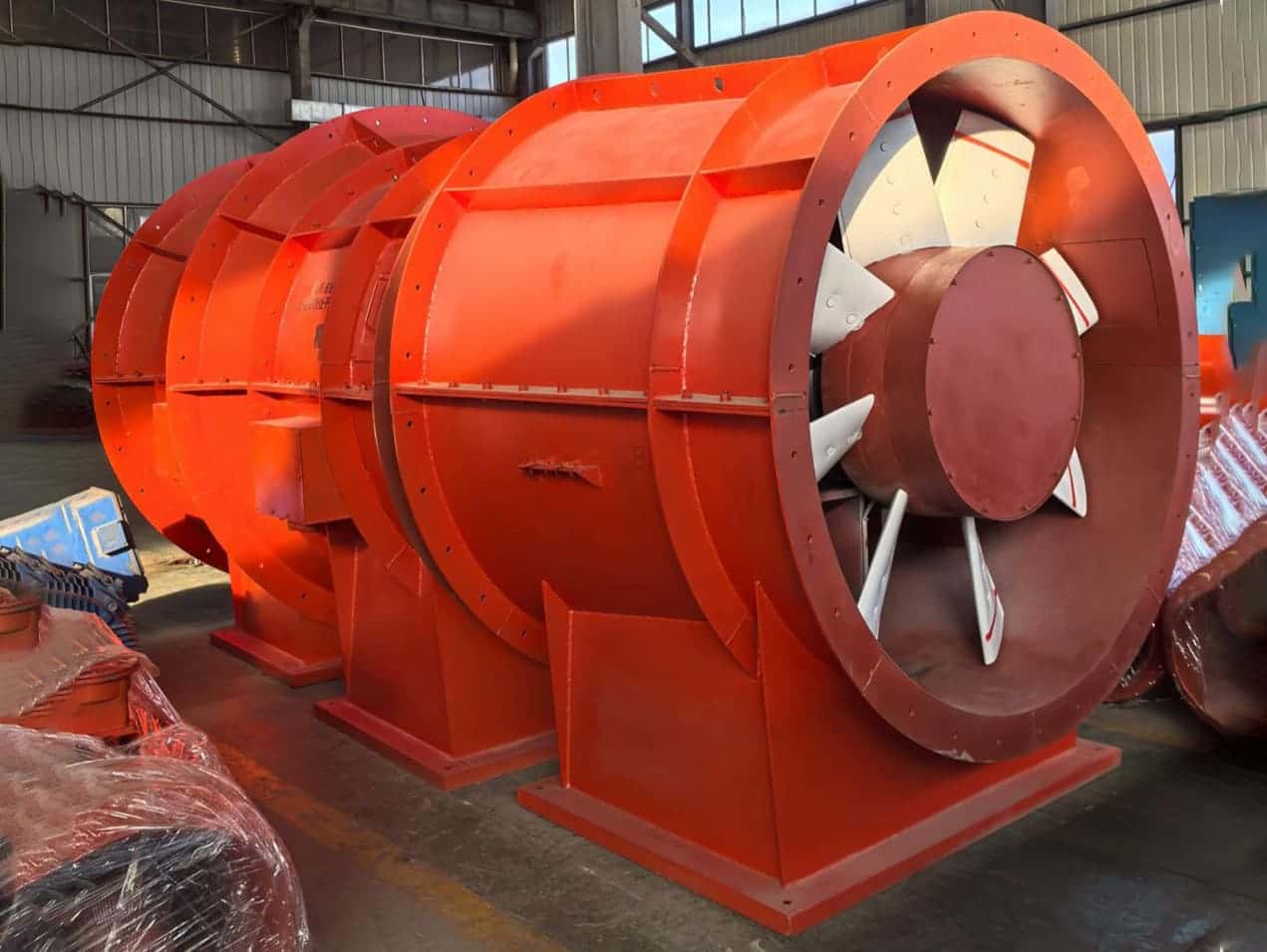
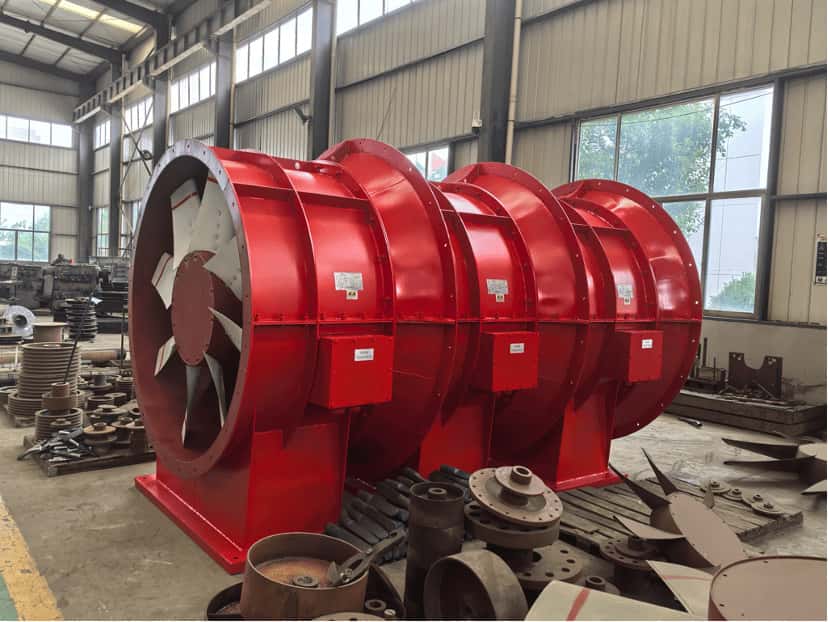
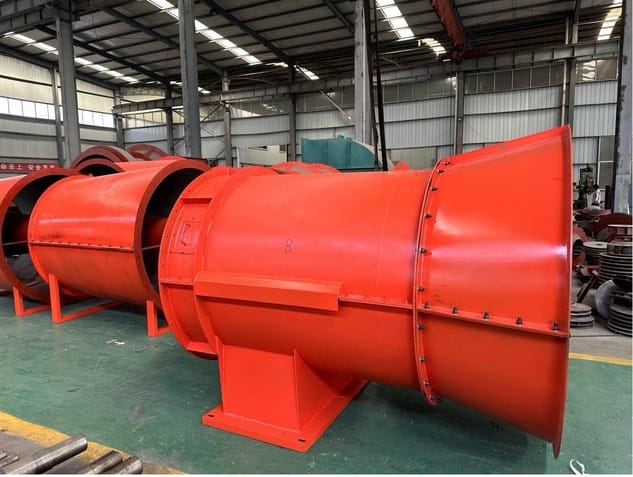
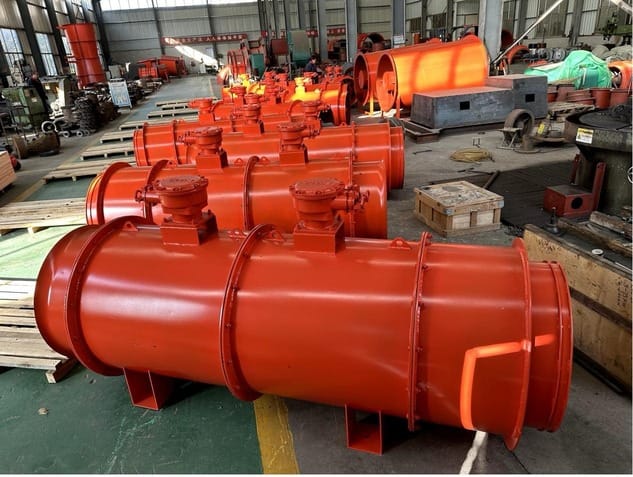
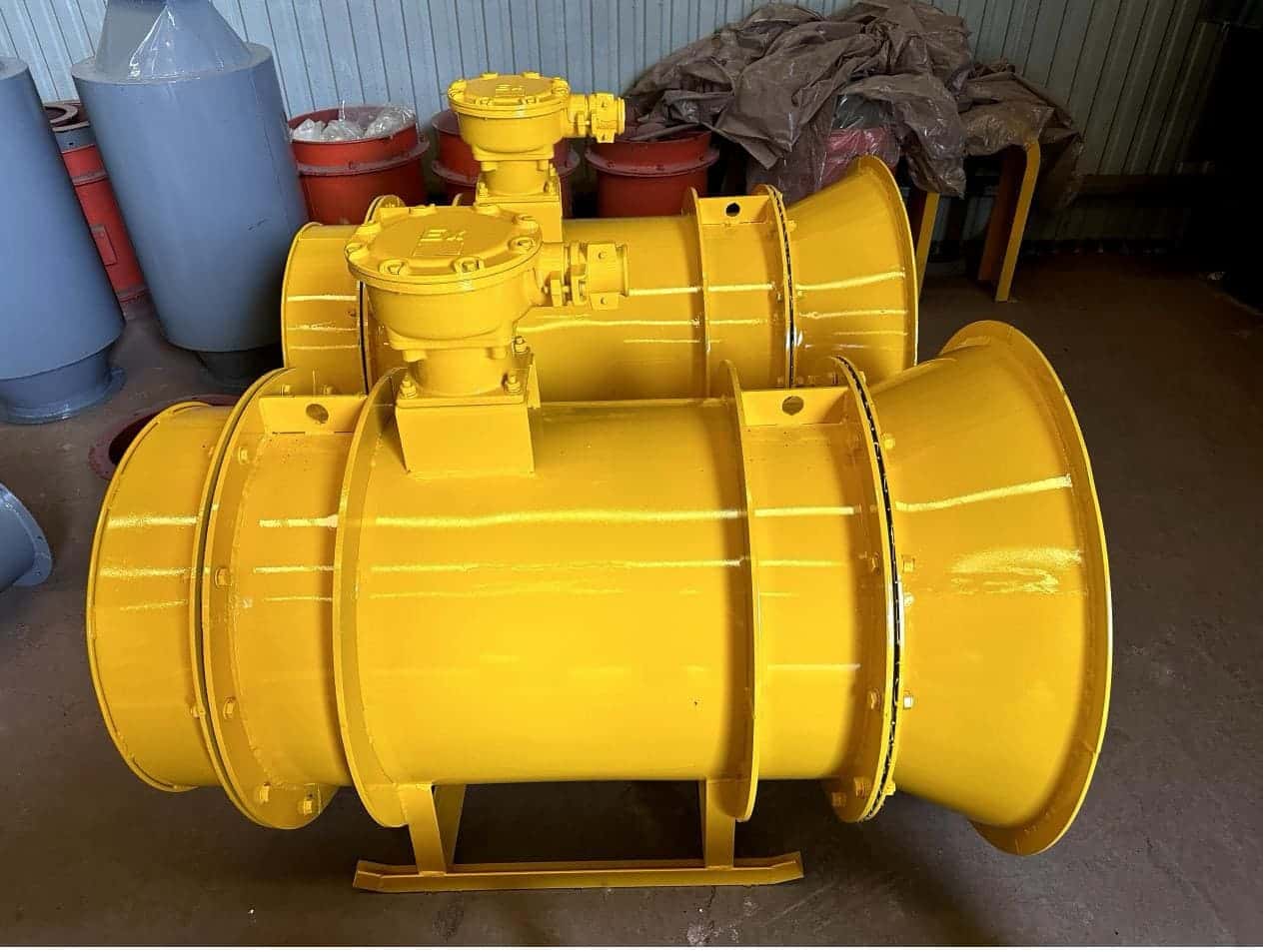

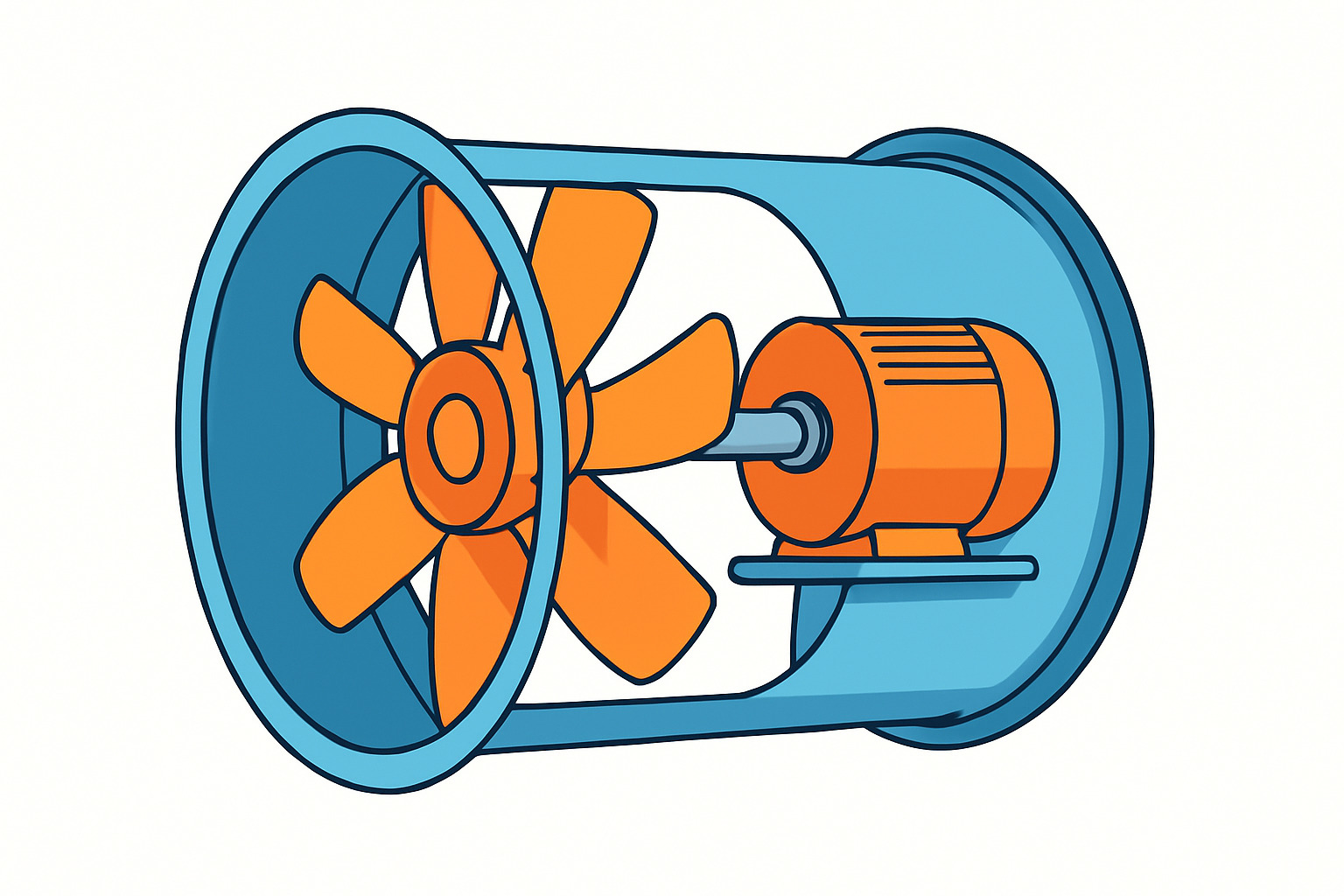
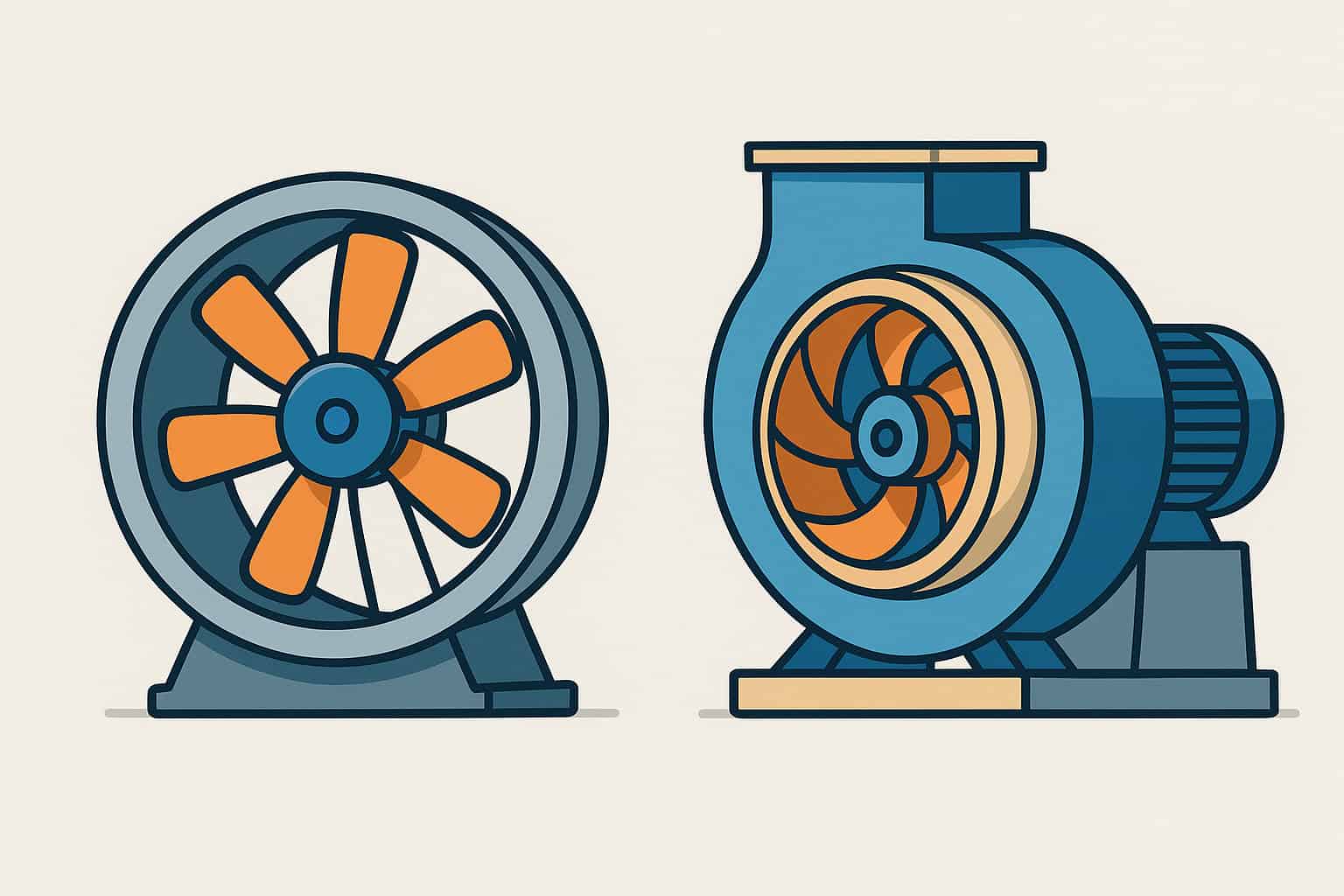
An axial fan works by using rotating blades shaped like airfoils to create a pressure difference that moves air parallel to the shaft. Instead of throwing air radially outward, as a centrifugal fan does, an axial fan pushes or pulls air straight through from the inlet to the outlet, much like a propeller on an aircraft or ship. This simple flow pattern is ideal for high-volume, low to medium pressure ventilation in industrial and mining environments.
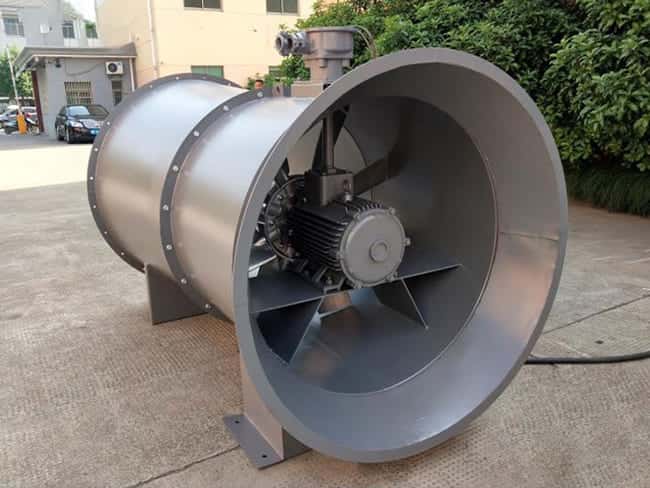
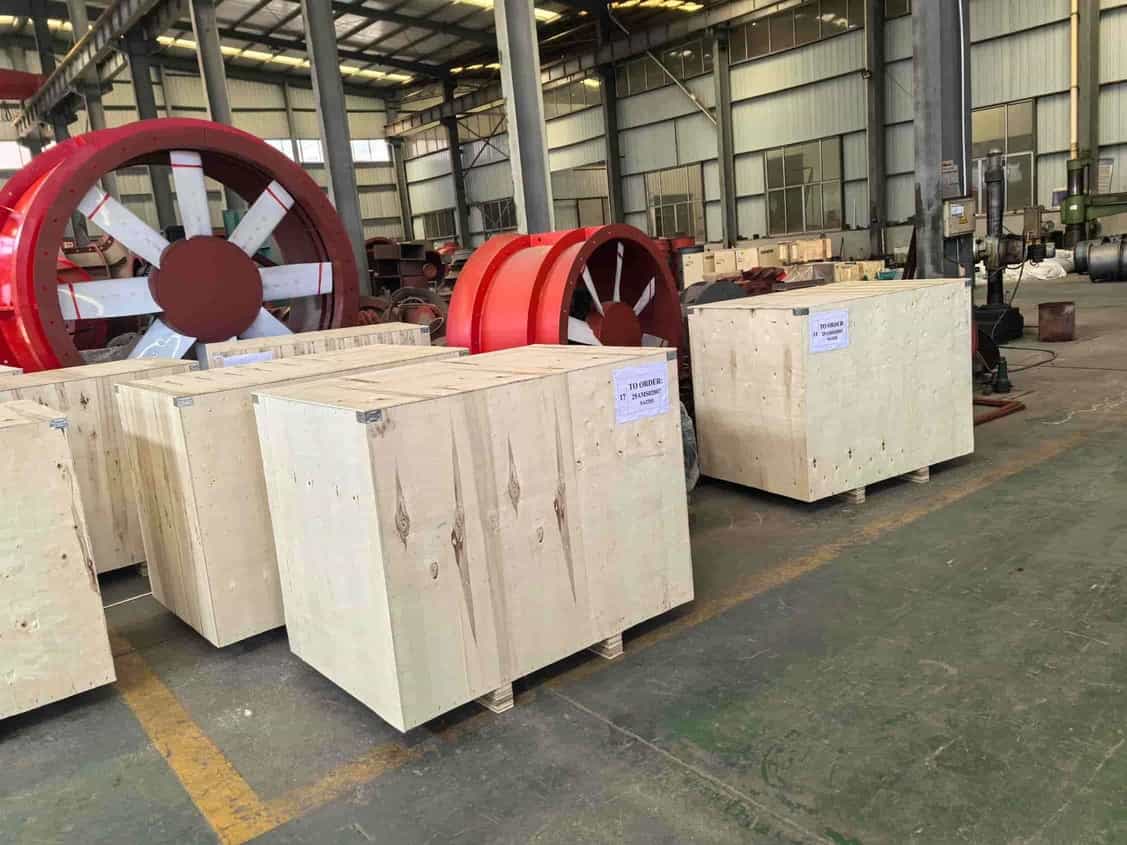
At the heart of an axial fan is the impeller, a set of blades fixed to a central hub. The hub is mounted on a shaft driven by an electric motor. When the motor turns, the blades spin and interact with the air. Their airfoil shape and angle of attack cause a drop in pressure on the suction side and an increase in pressure on the pressure side. This pressure difference produces lift in the axial direction, pushing air from the inlet toward the outlet.
Air enters the fan through an inlet cone or opening, where it is guided smoothly into the rotating blades. As the blades turn, they add energy to the air, increasing its velocity and slightly increasing its static pressure. The air leaves the fan with a combination of axial velocity (forward flow) and tangential velocity (swirl). In simple propeller or tube-axial fans, some of this swirl is carried into the downstream duct. In vane-axial fans, stationary guide vanes are installed after the rotor to straighten the flow and recover more static pressure from the swirl.
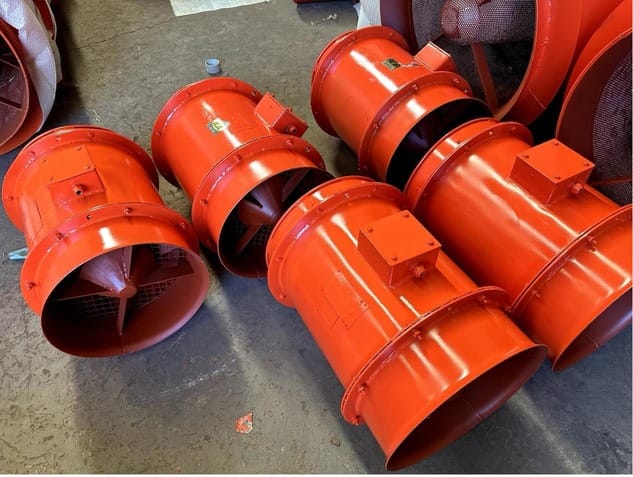
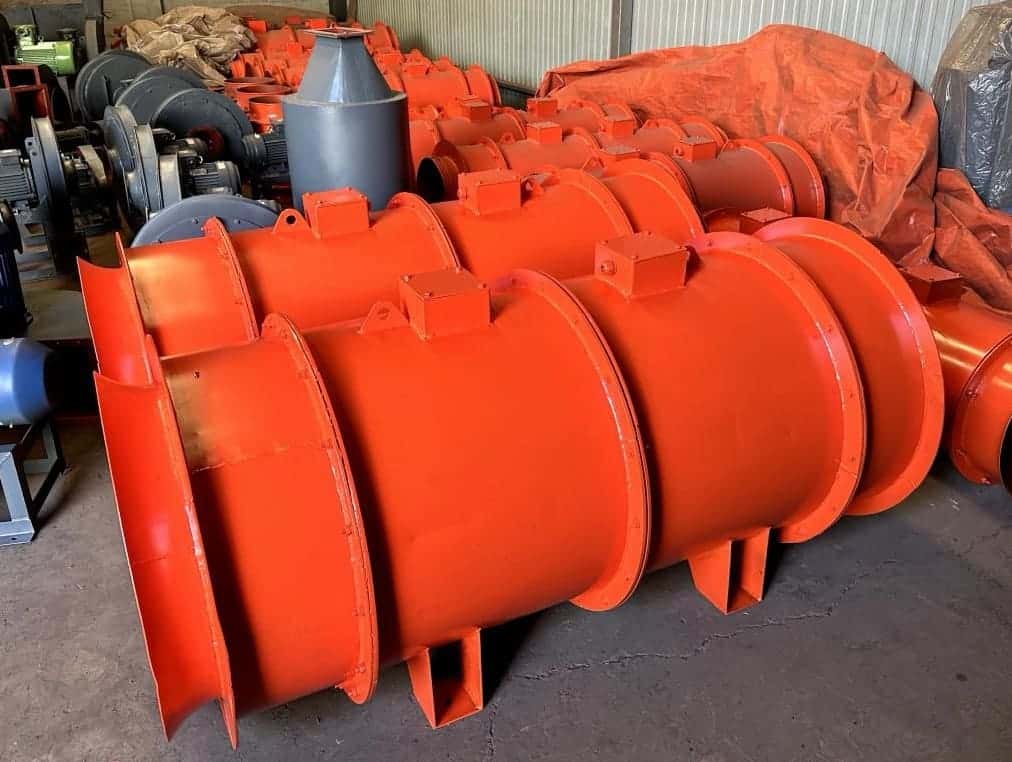
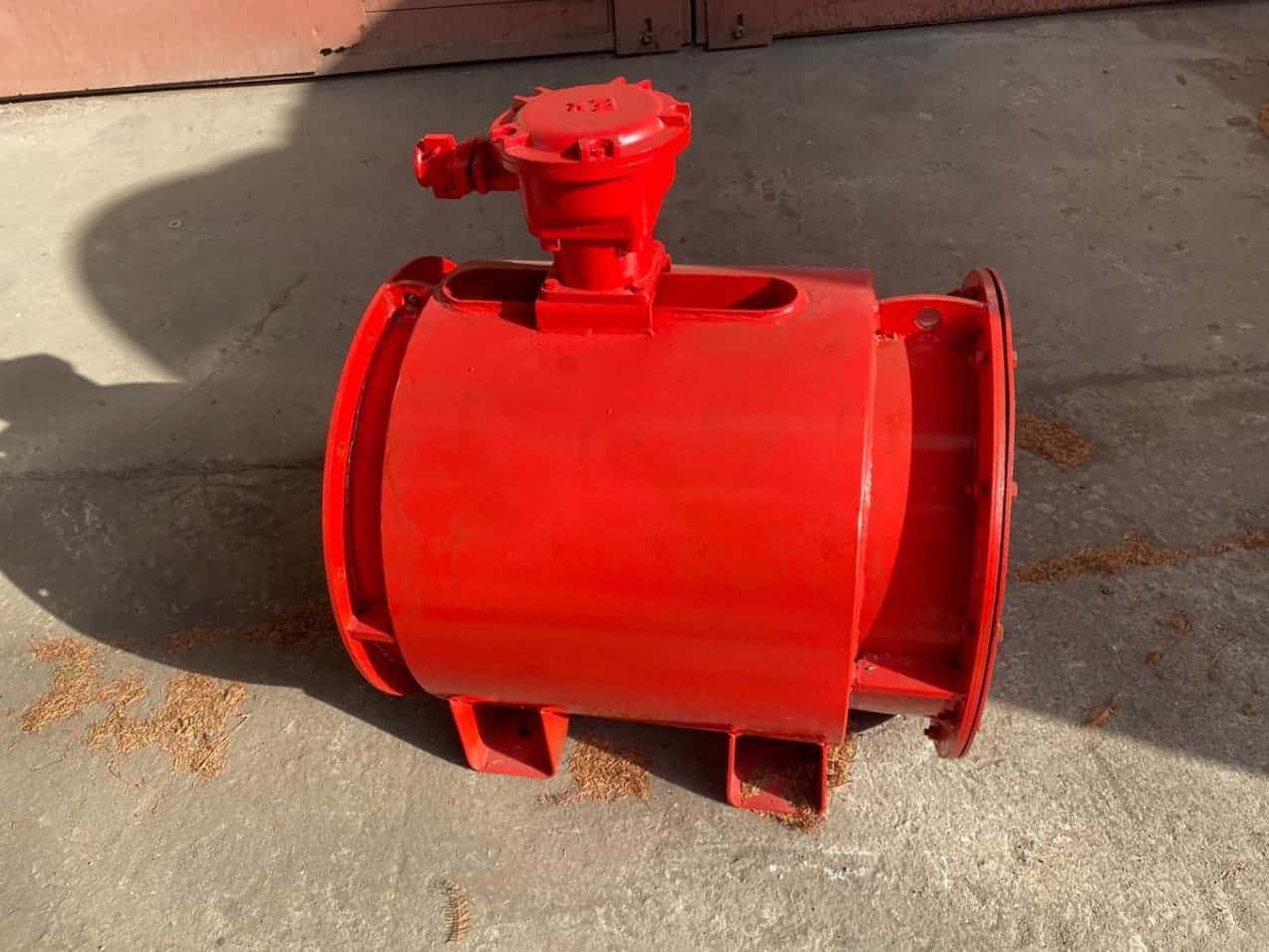
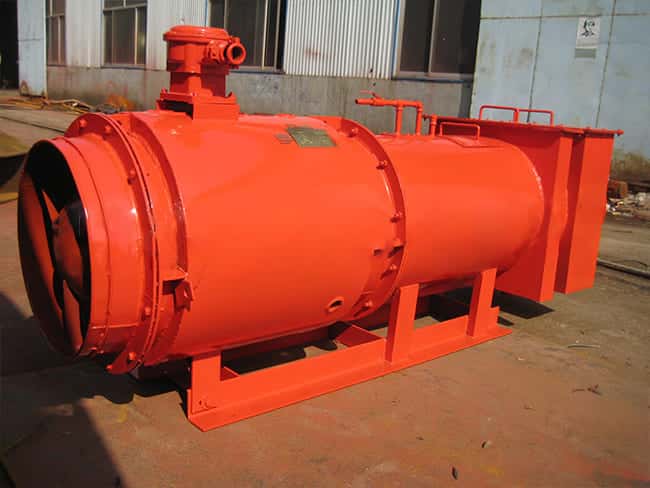
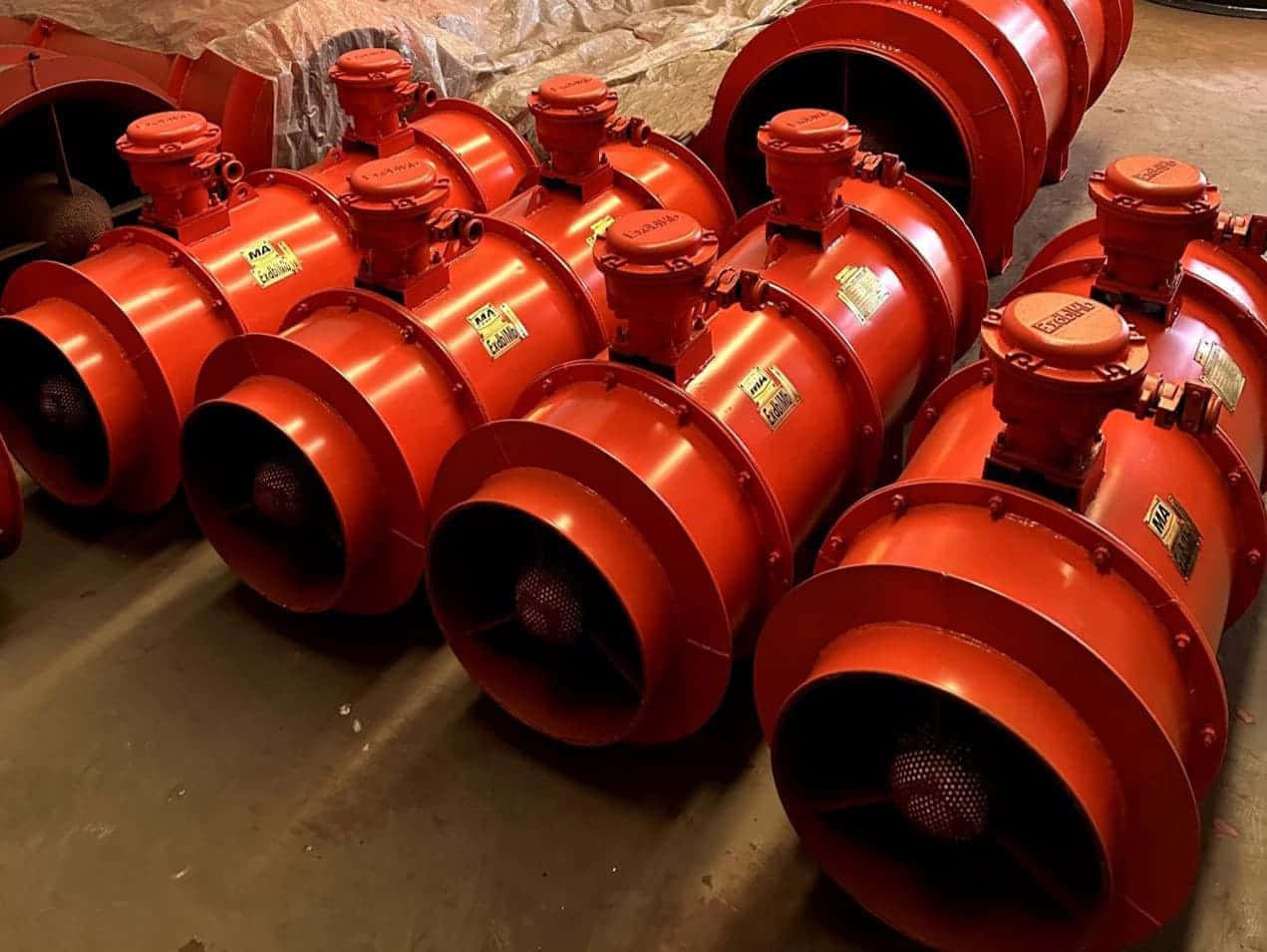
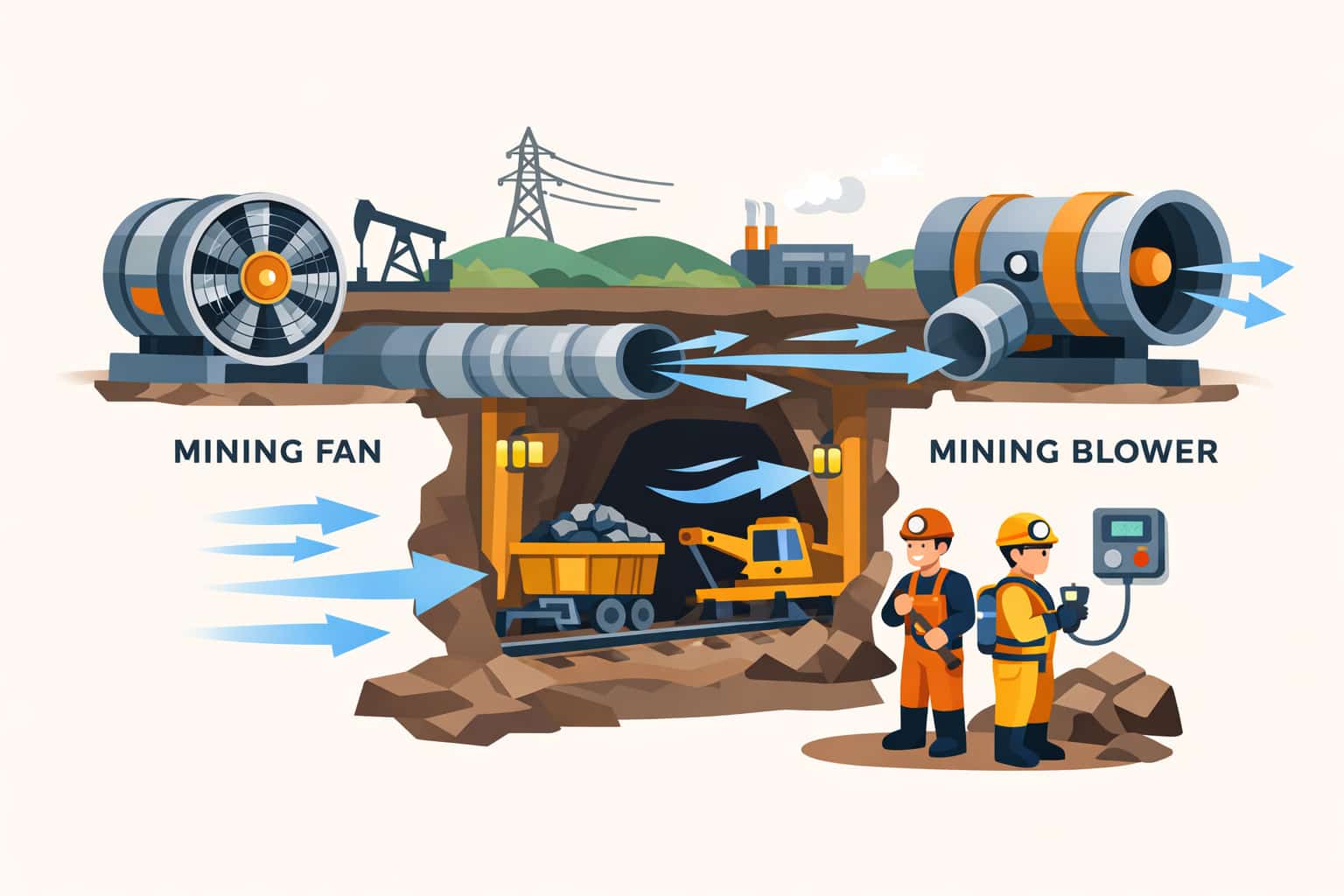
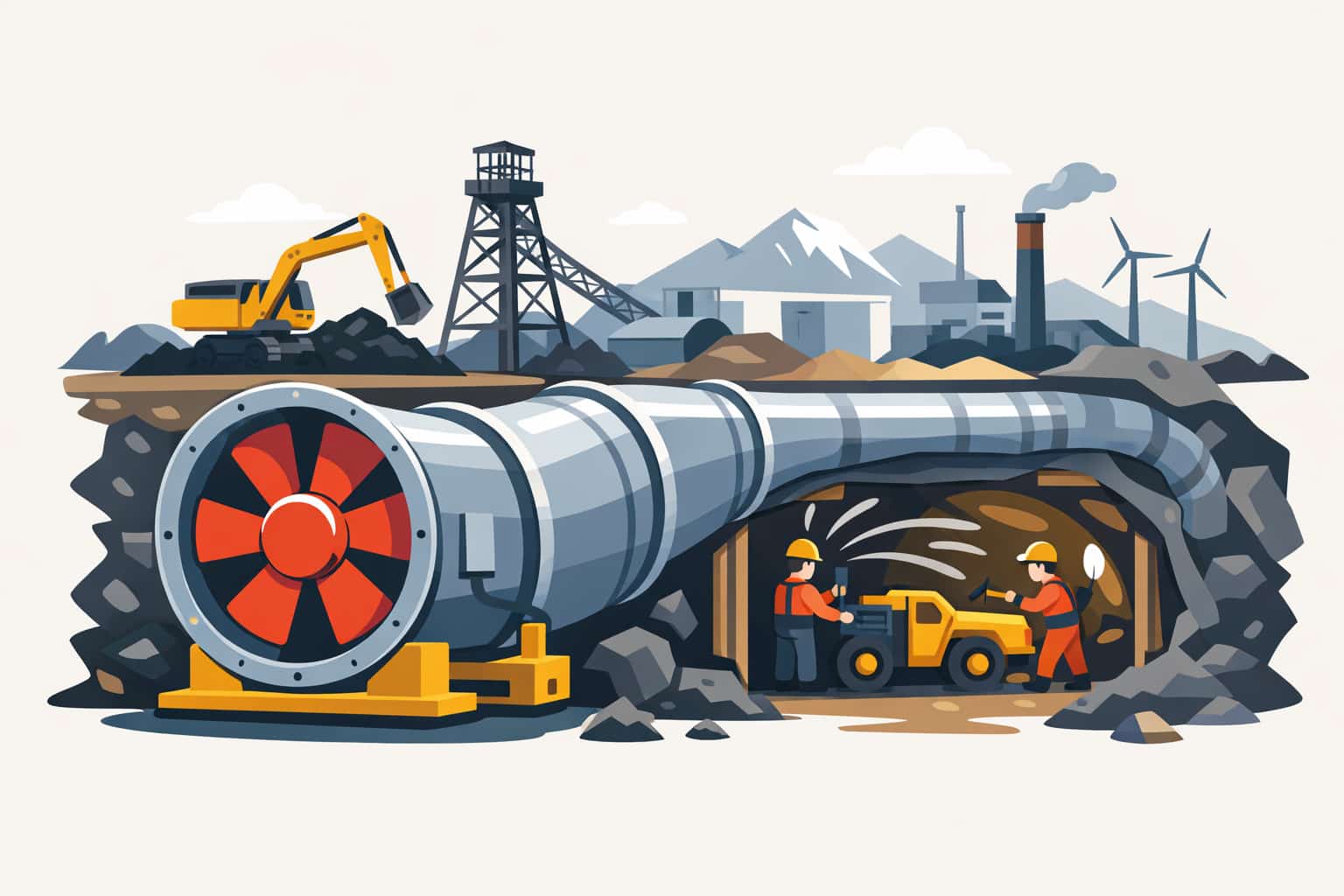
In mining and tunnelling, axial fans are installed in shafts, at portals or in ducts to move air through underground workings. The fan creates a pressure difference between the intake and return airways, driving air through drifts, stopes and headings. Auxiliary axial fans connected to flexible ducts deliver fresh air close to the working face or remove contaminated air, depending on whether the system is configured as forcing or exhaust ventilation.
In industrial buildings, axial fans work in the same way but on a different scale. Wall-mounted or roof-mounted axial fans act as exhaust or supply units, moving air through openings and short ducts to control heat, fumes and dust. Inline ducted axial fans can be installed directly in ventilation ducts to boost airflow where needed.
Overall, an axial fan works by converting mechanical power from the motor into airflow and pressure along a straight path. Its simple, efficient working principle makes it a key component in many mining and industrial ventilation systems.