
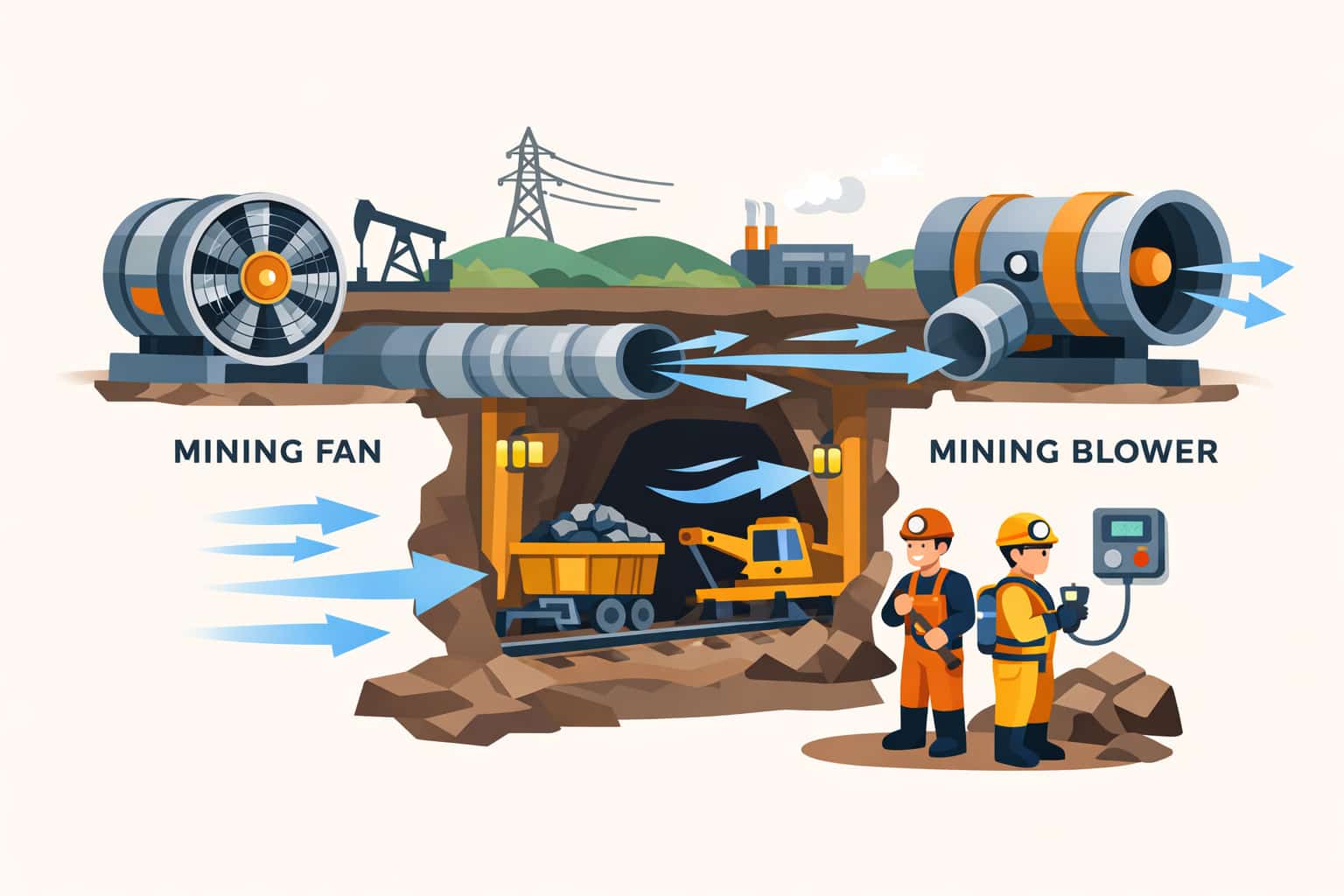
Underground ventilation works by using fans, shafts, airways and ducts to create controlled airflow circuits that carry fresh air into the mine and return contaminated air back to the surface. Instead of relying on natural drafts alone, modern mines use engineered ventilation systems to move very large air quantities through complex networks of drifts, ramps, raises and stopes.
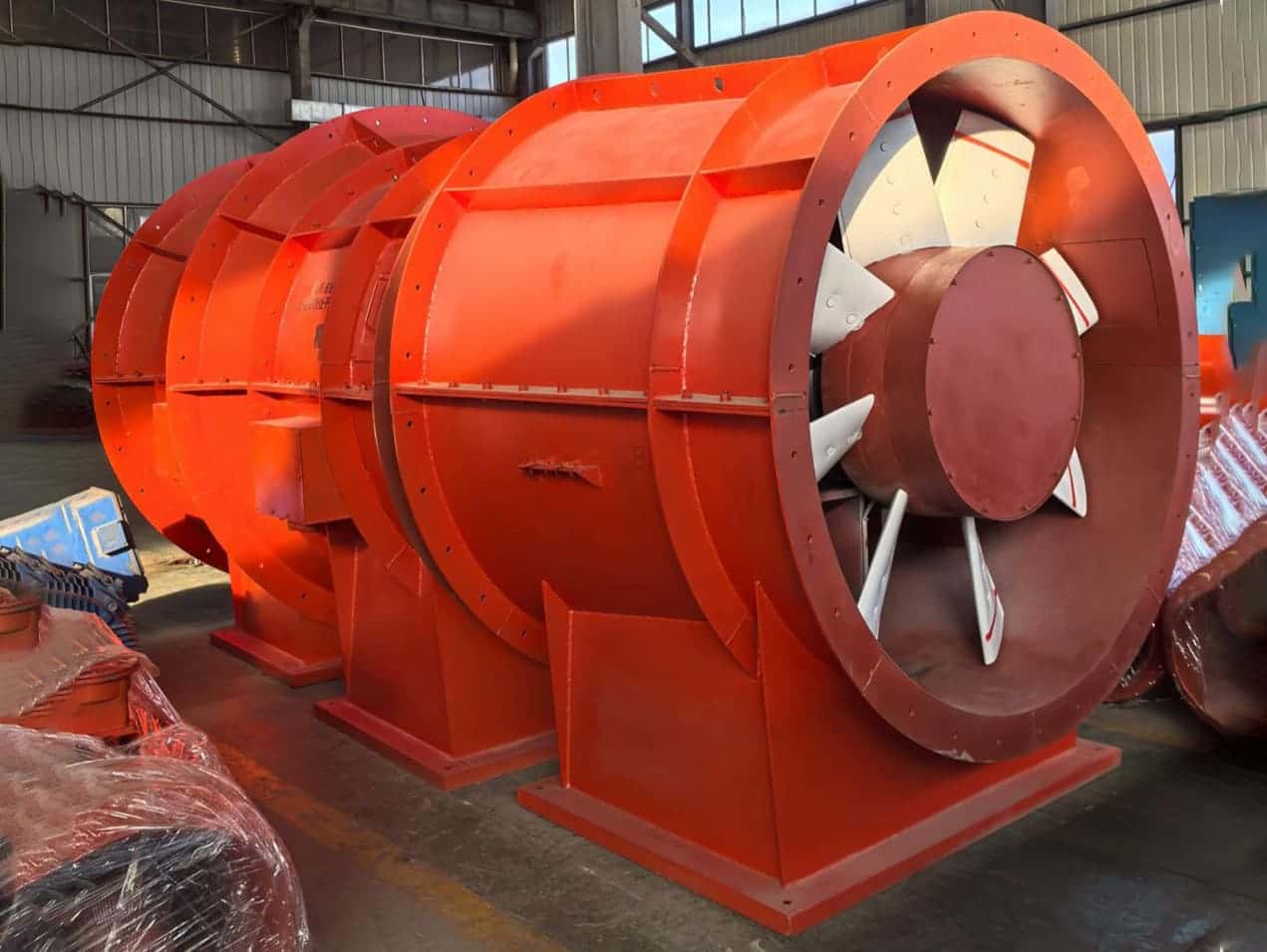
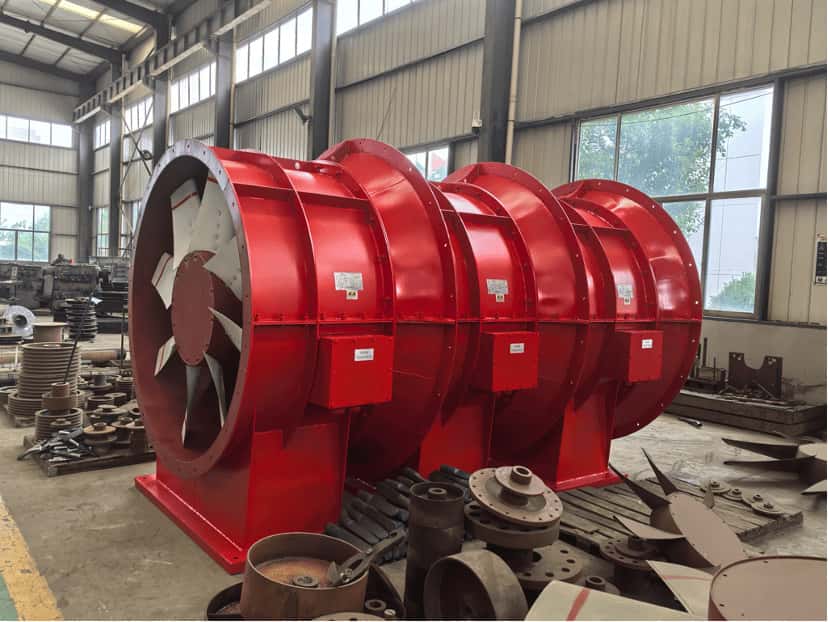
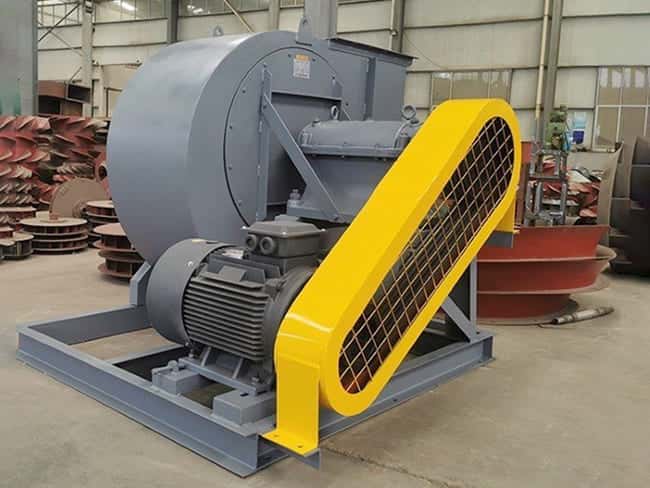
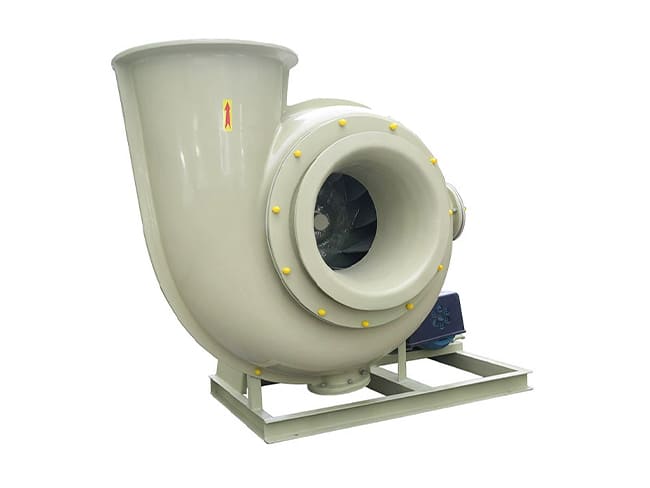
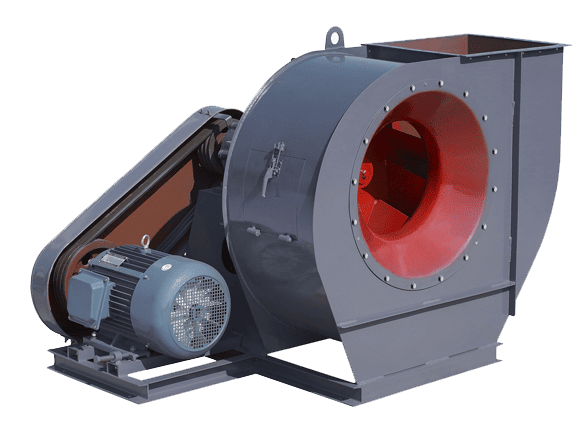
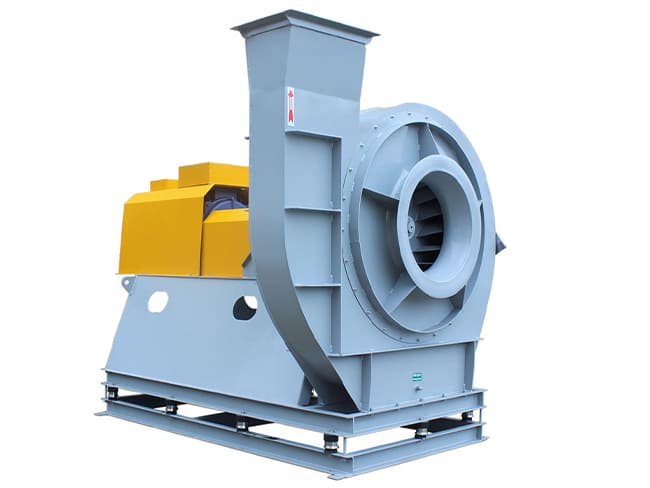
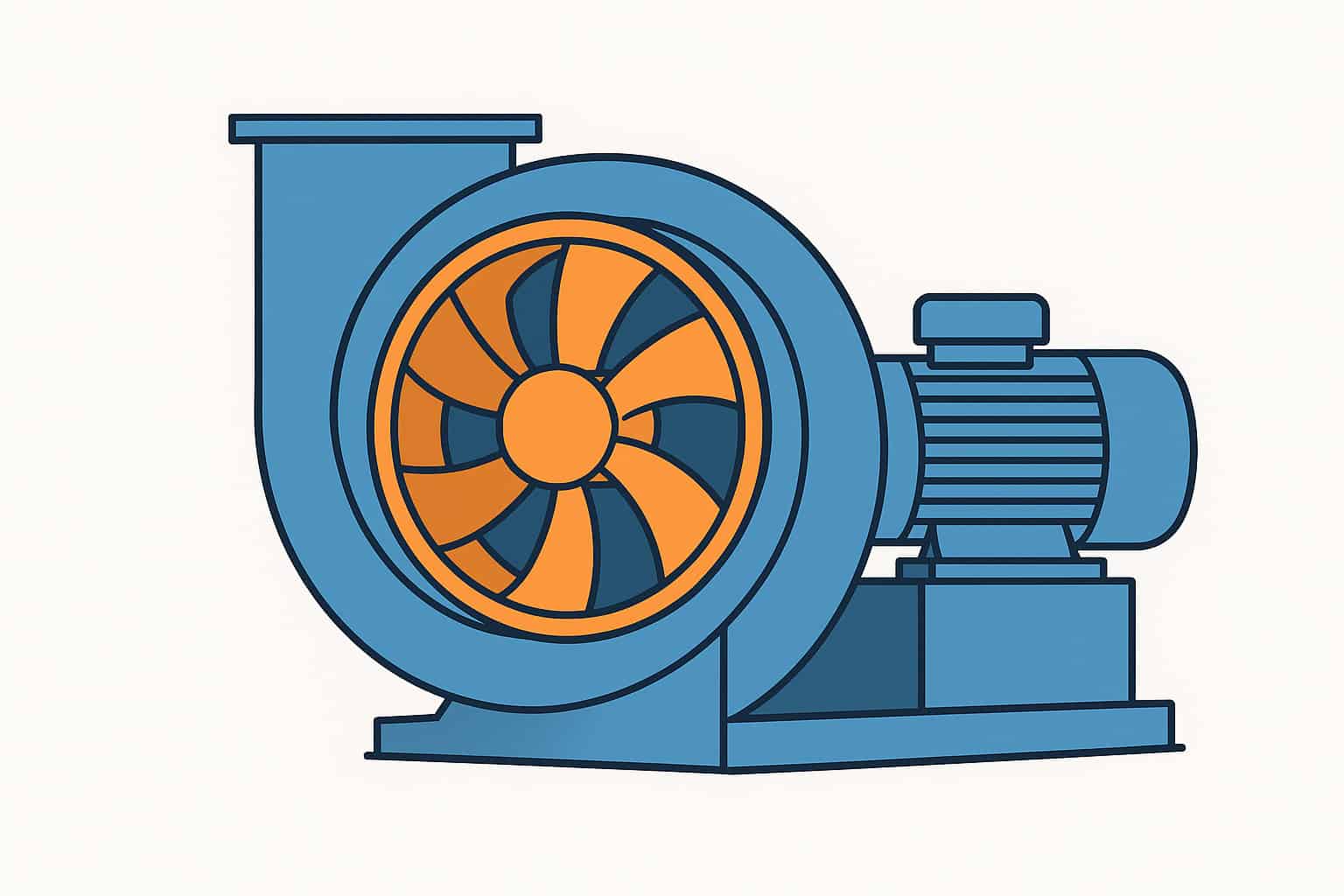
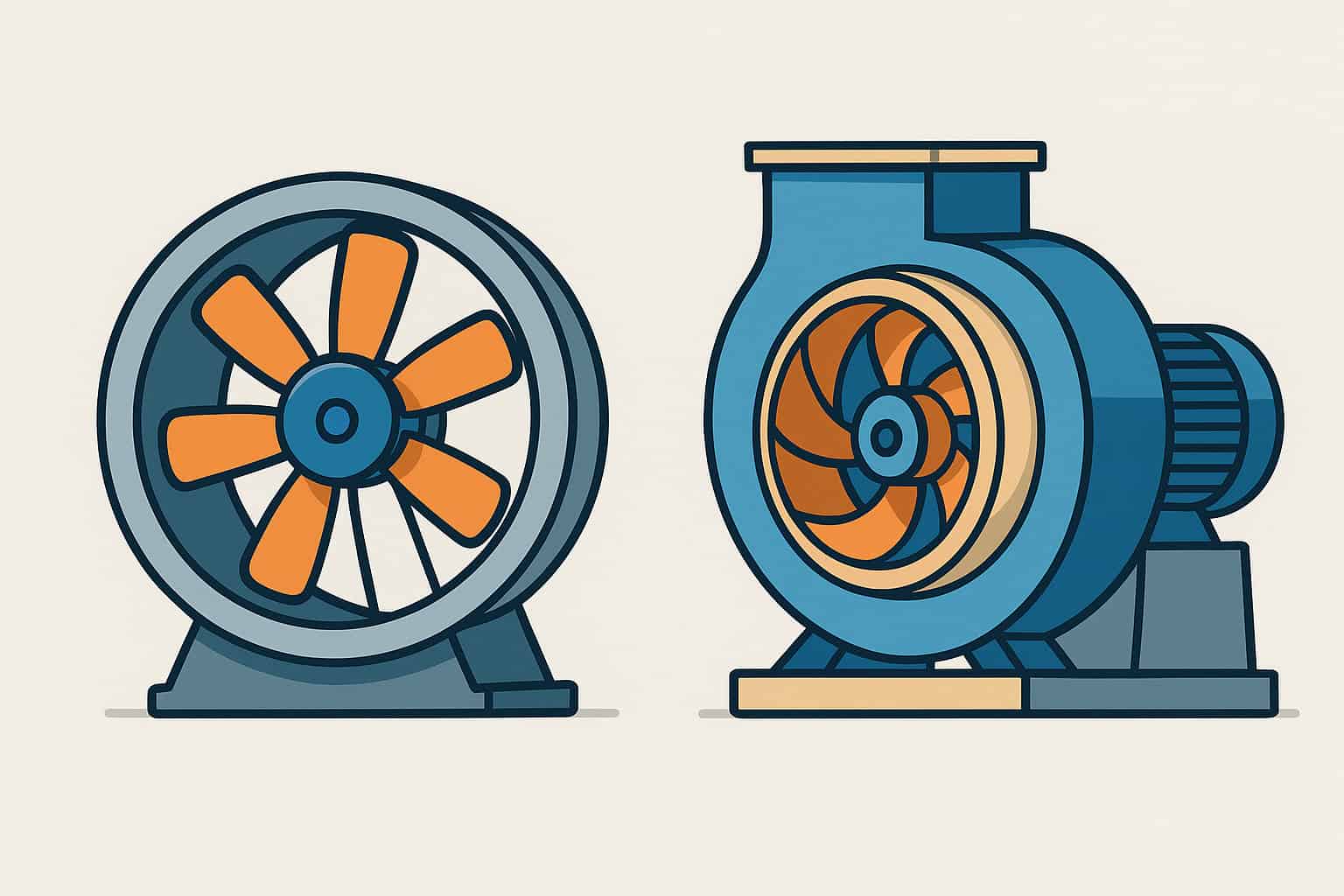
The process starts with the primary ventilation system. Large axial or centrifugal fans are installed at shafts or decline portals and connected to the main intake and return airways. When these fans run, they generate a pressure difference between intake and return circuits. This pressure difference is small compared with atmospheric pressure but large enough to overcome the resistance of the airways and to drive air through the mine.
Fresh air is drawn or pushed from the surface through intake shafts and ramps. It flows along primary intakes, passes through major haulage drifts and crosscuts, and then divides into branch circuits that feed different levels and districts. As the air moves, it picks up gases from the rock, emissions from diesel engines, blasting fumes, dust and heat from equipment. These contaminants are carried to designated return airways, which bring the used air back to exhaust shafts or portals, where it is discharged by return fans.
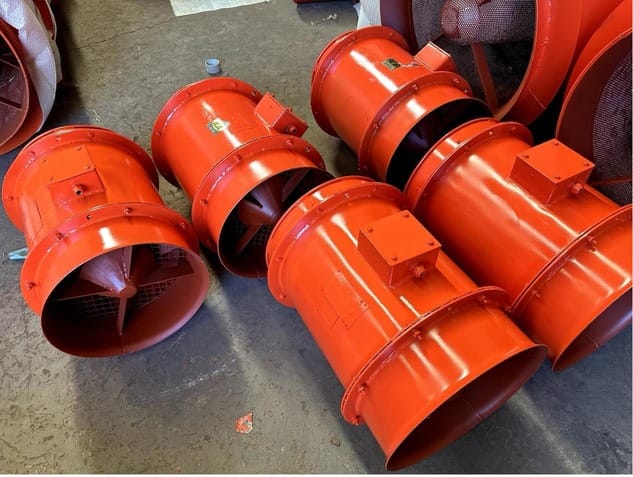
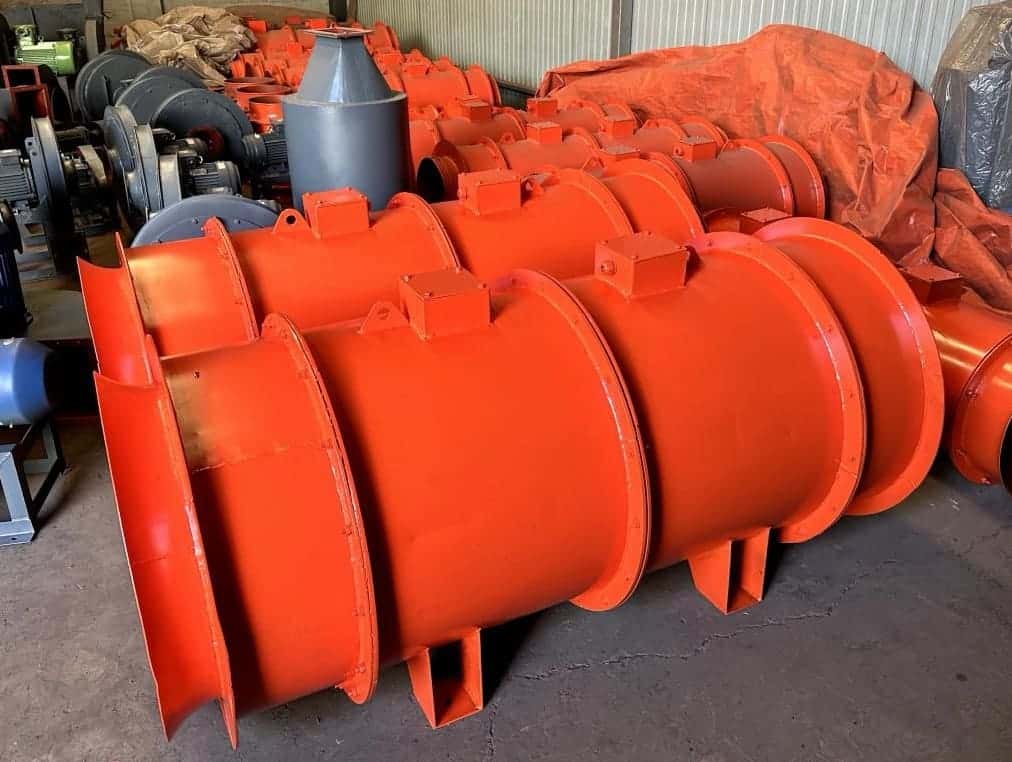
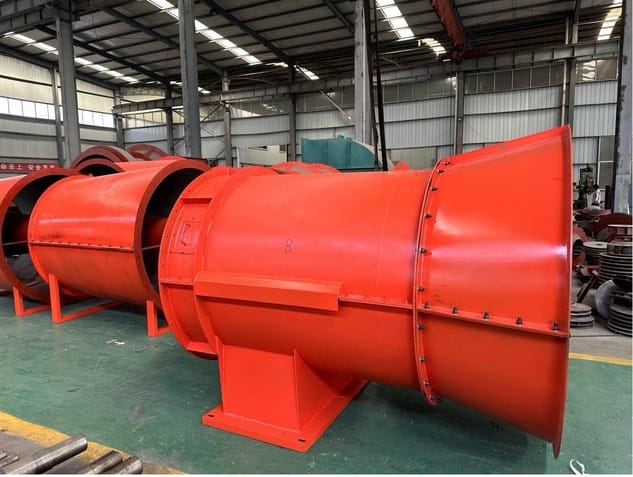
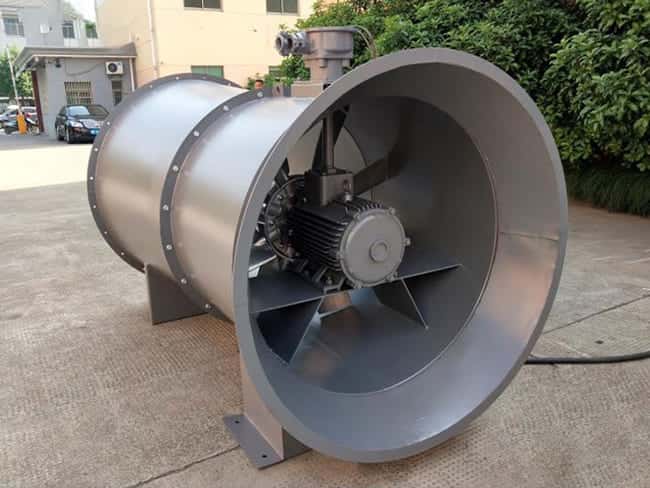
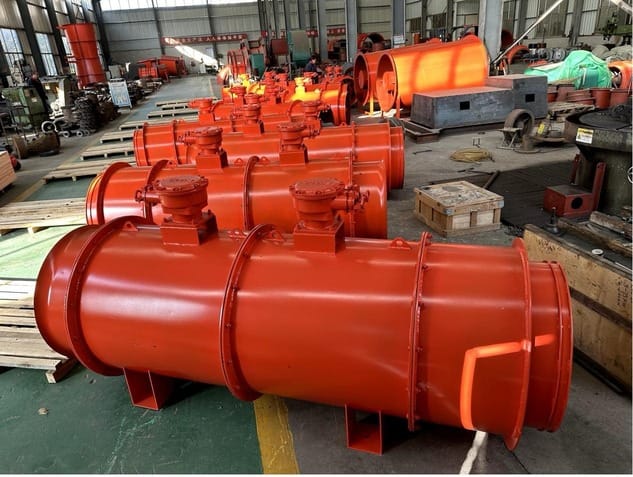
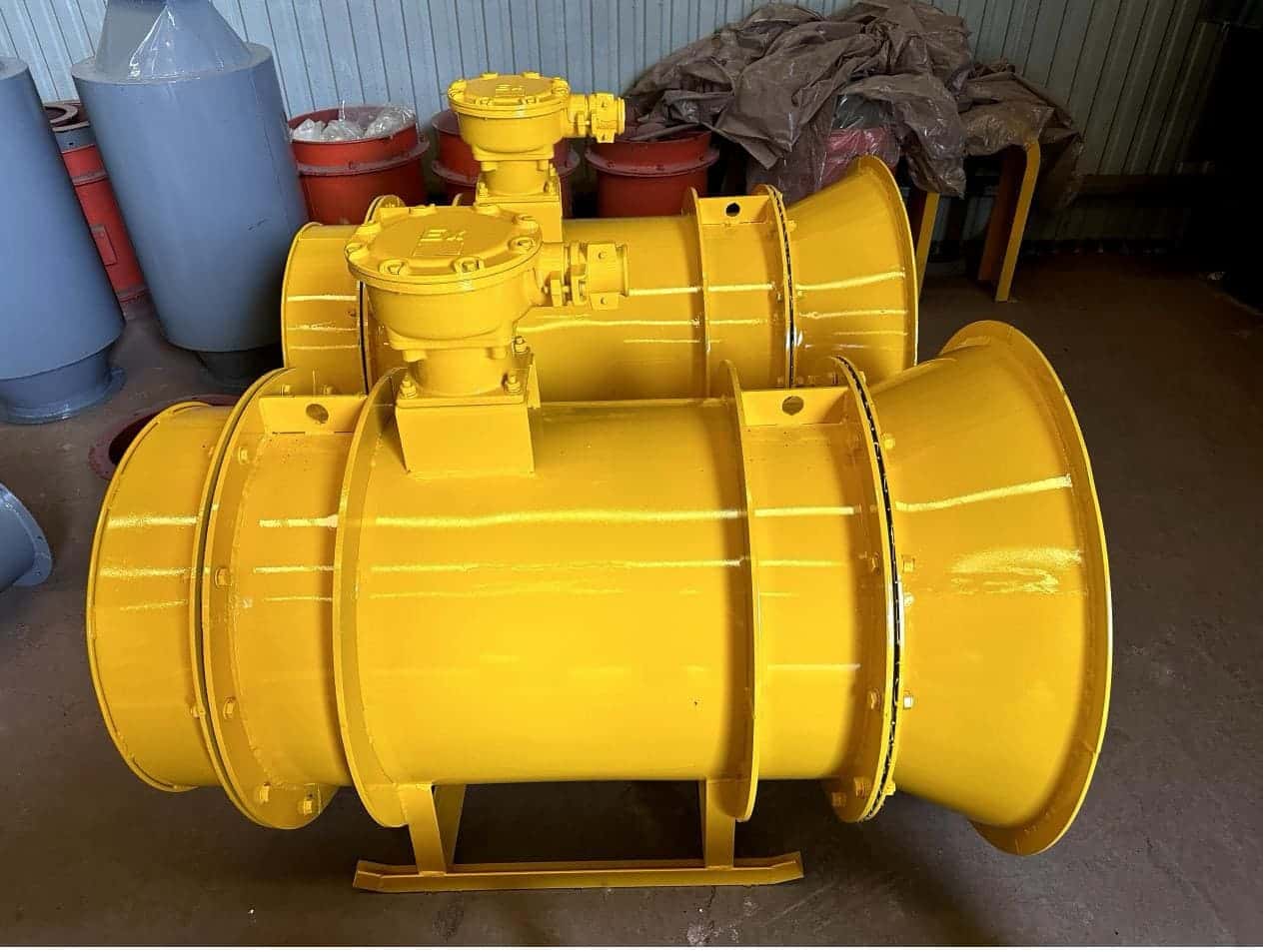
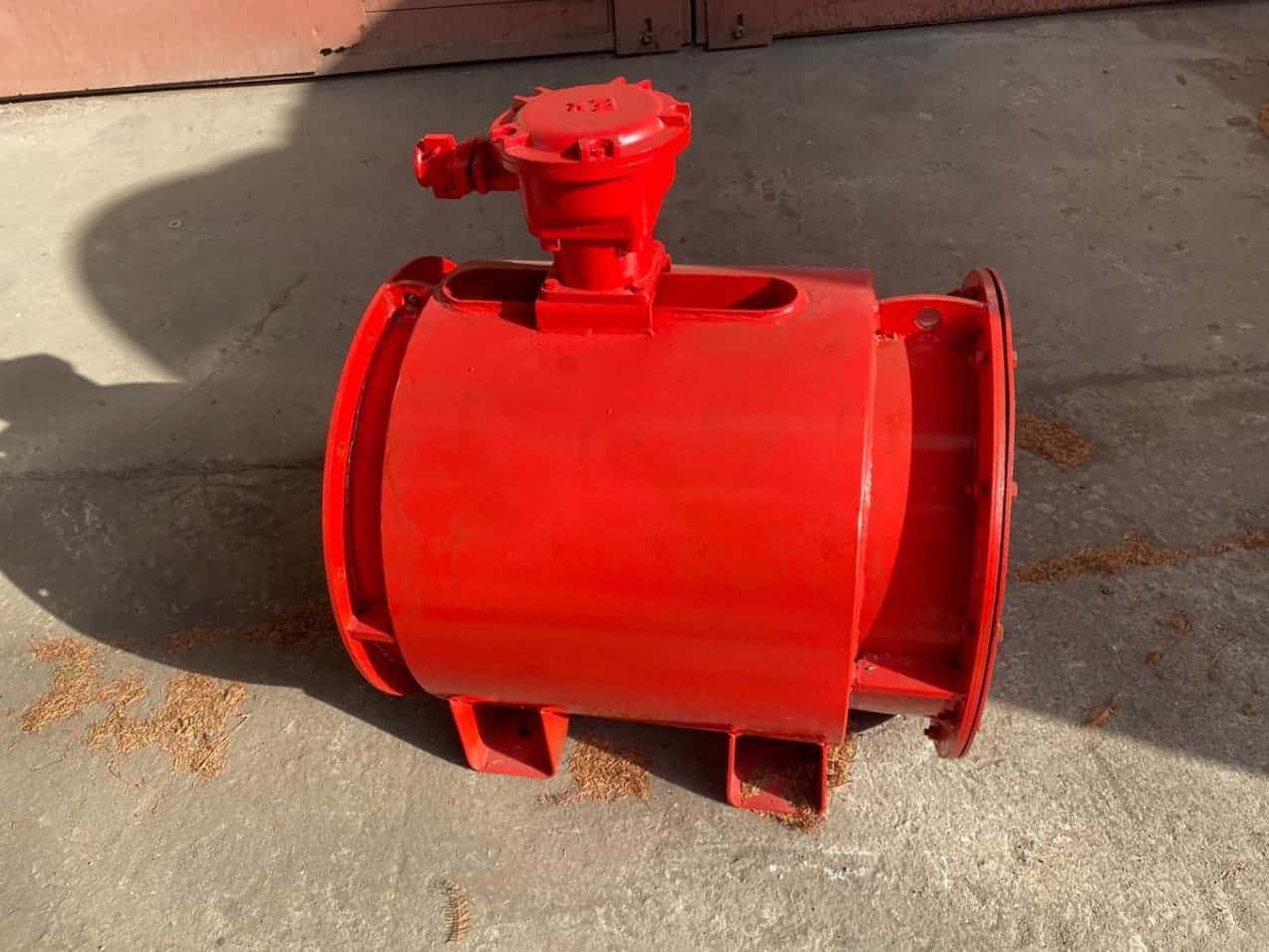
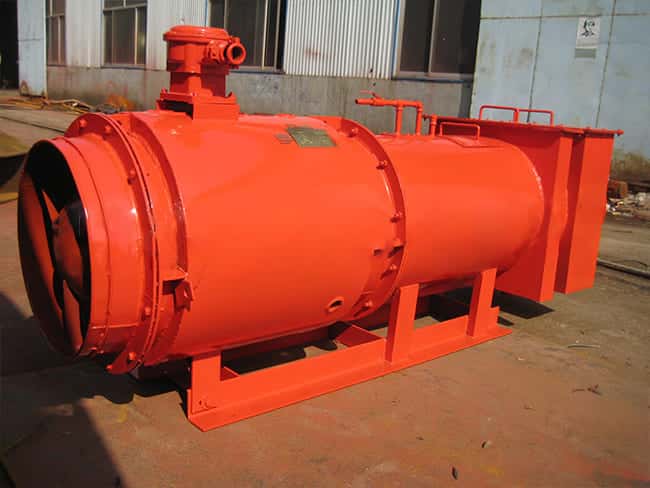
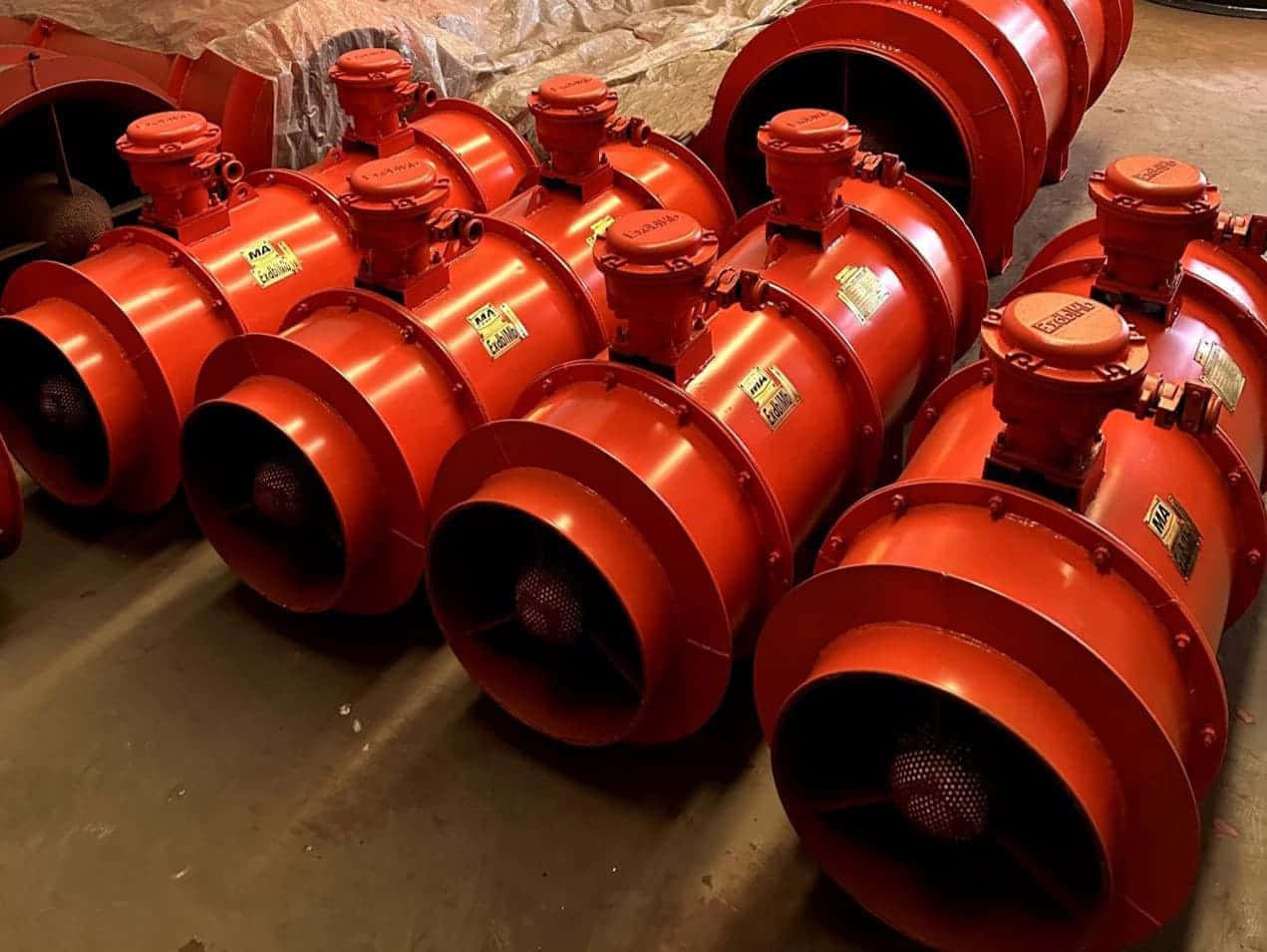
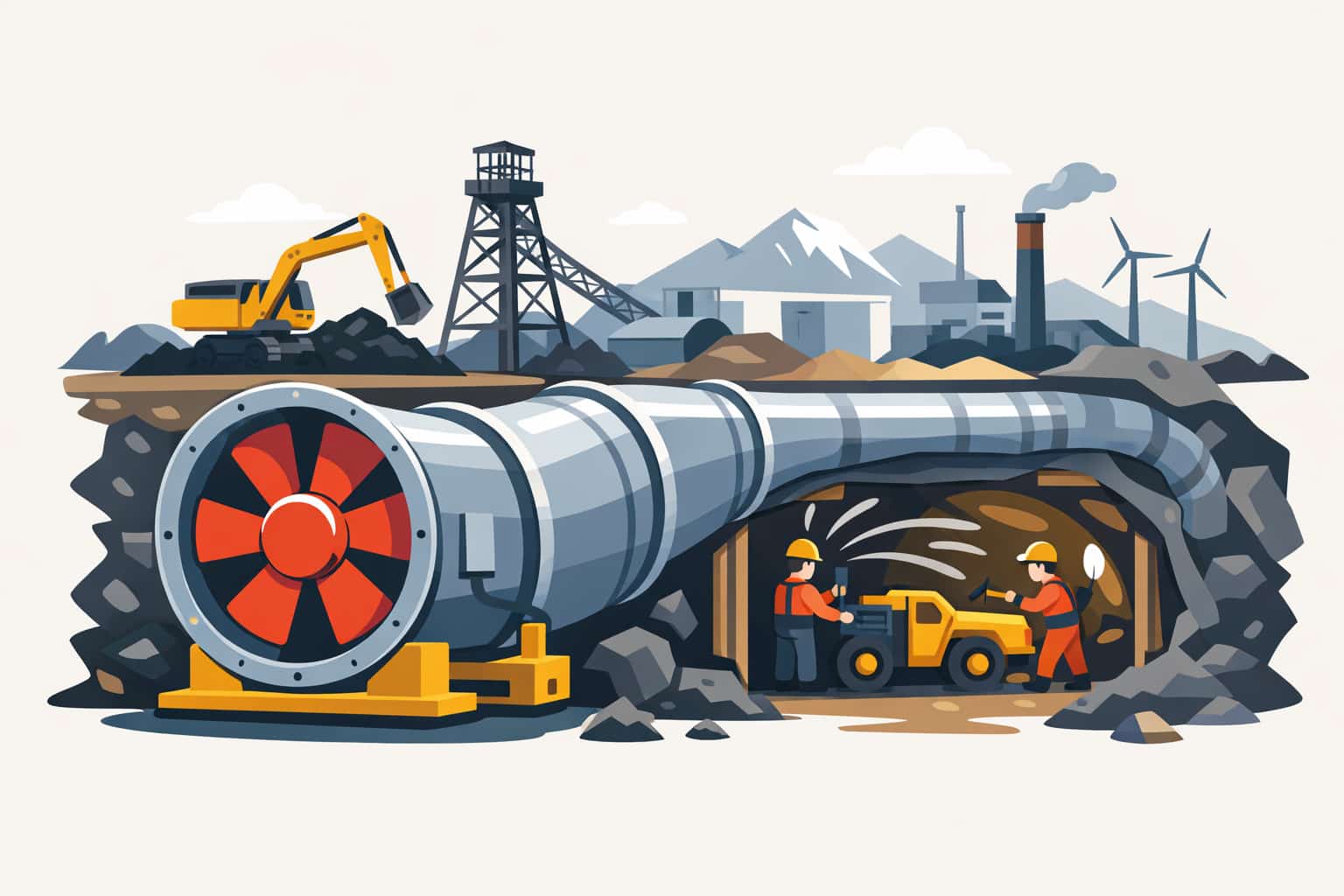
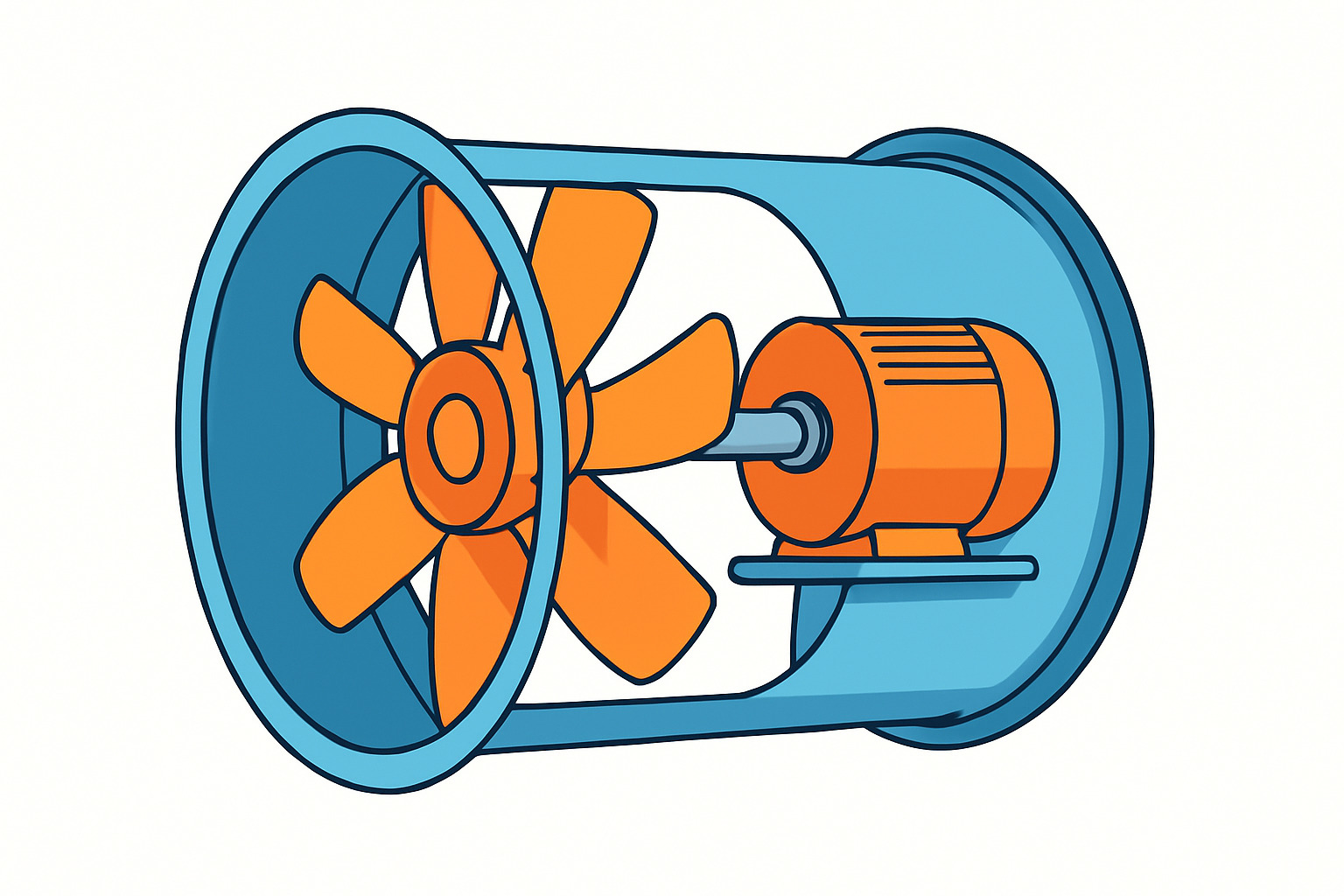
Because primary airways cannot reach every working place, underground ventilation also depends on secondary (auxiliary) ventilation. Auxiliary fans, usually axial fans, are connected to flexible or steel ducts that extend airflow to development headings and stopes. In a forcing system, the auxiliary fan blows fresh air through the duct to the face. In an exhaust system, the fan pulls contaminated air from the face through the duct to a return airway. The choice between forcing and exhaust depends on gas, dust and heat conditions, as well as local regulations.
Underground ventilation works effectively only when airflow is guided and controlled. Stoppings, bulkheads, walls, doors, overcasts and regulators are used to separate intake and return routes, prevent short-circuiting and balance airflows between parallel branches. In extensive mines, booster fans may be added to specific branches to overcome high resistance and deliver sufficient air to deep or remote areas.
Modern underground ventilation systems are monitored and adjusted using instrumentation and automation. Sensors measure gas levels, airflow and temperature; control systems adjust fan speeds and regulator settings; and ventilation-on-demand strategies can automatically increase airflow where people and equipment are working and reduce it in idle areas. Together, these elements ensure that underground ventilation works as a reliable life-support system for the entire mine.