
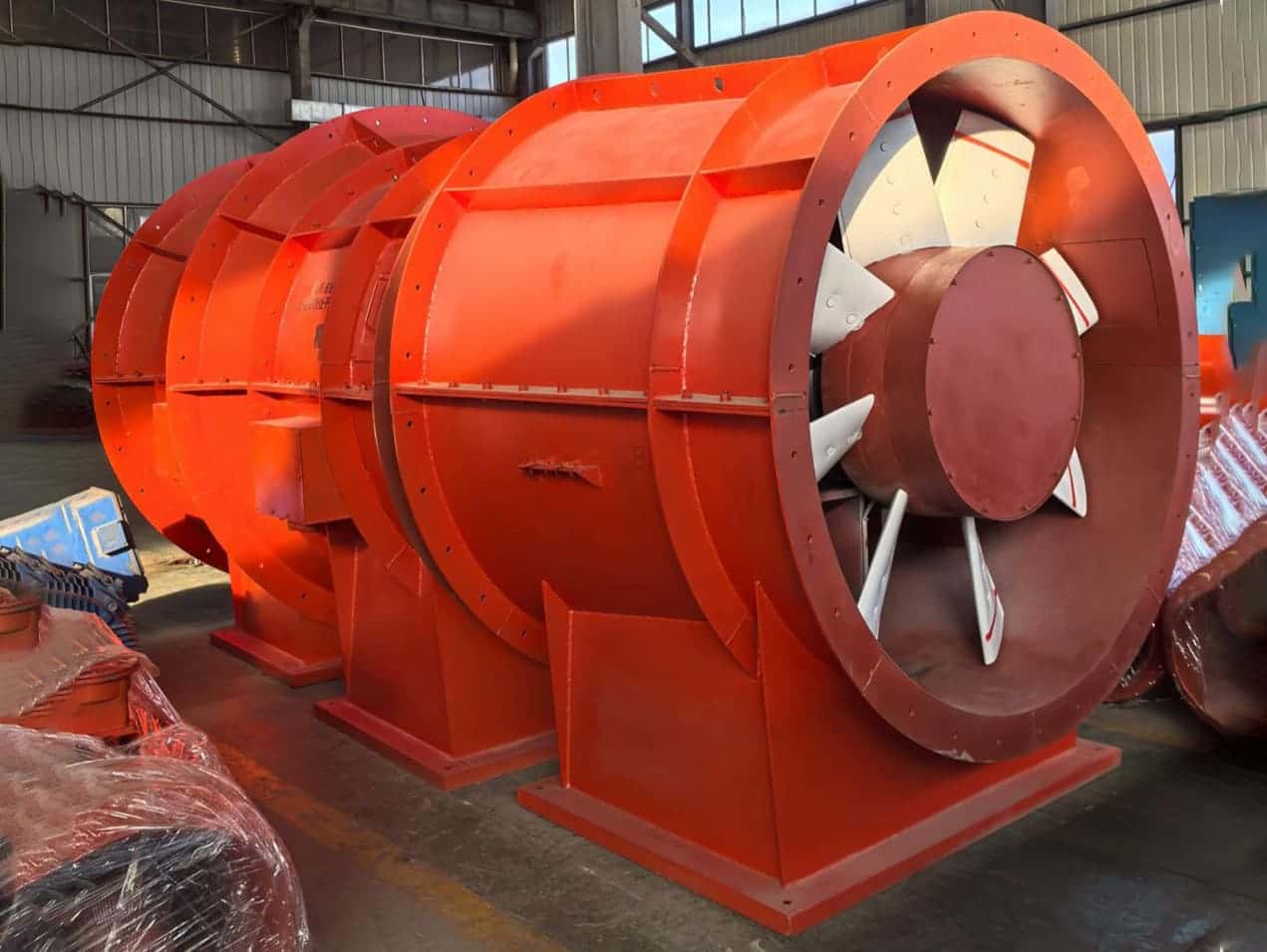
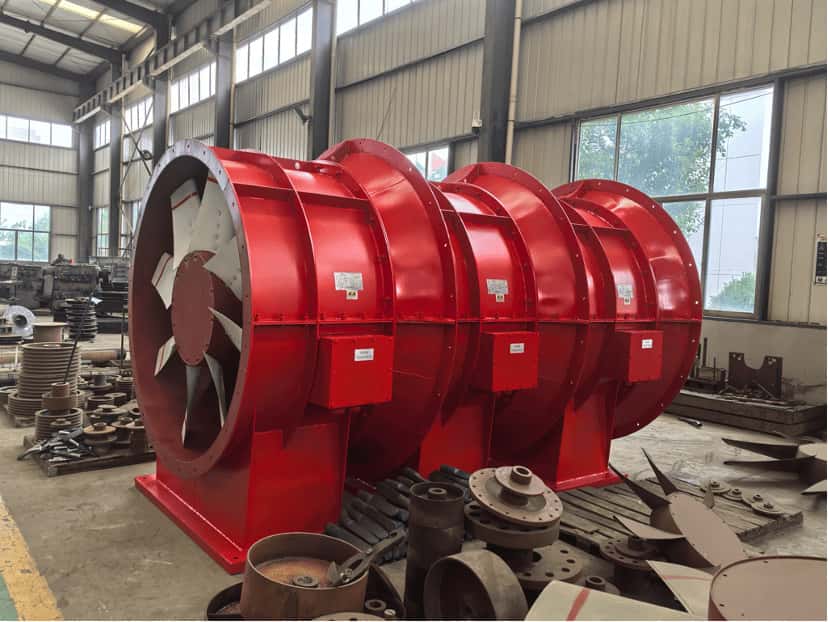
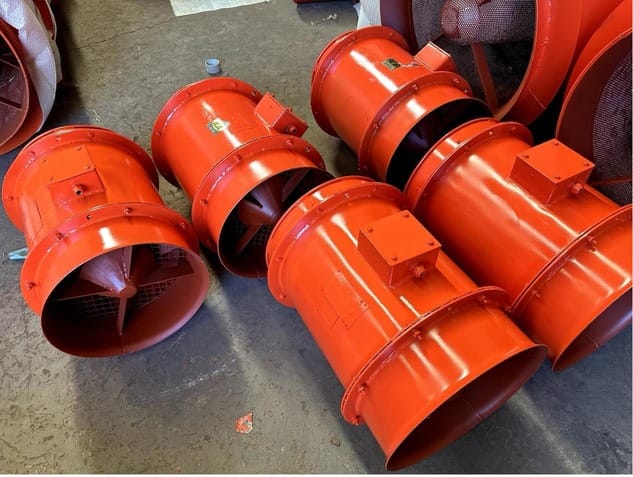
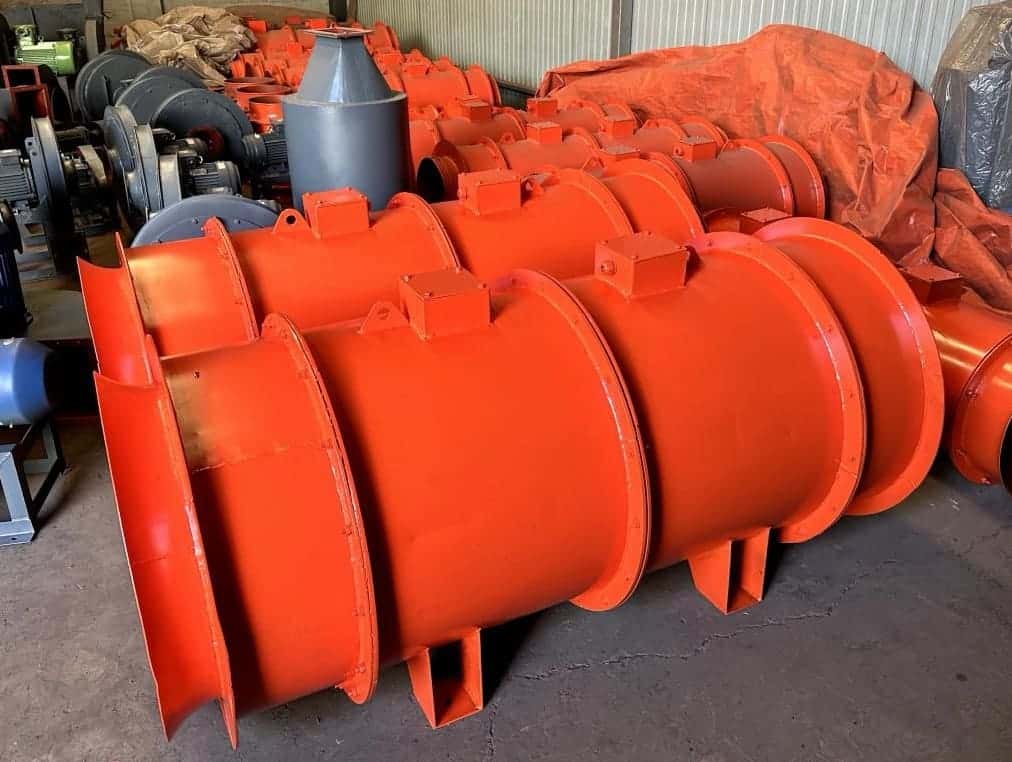






Fan airflow pressure is measured by comparing air pressure at the fan inlet and outlet using suitable instruments and defined test points. In industrial and mining ventilation, understanding this pressure rise is essential because it tells you whether the fan can overcome the resistance of ducts, filters, equipment and mine airways at the required airflow.
Engineers distinguish between static pressure, velocity pressure and total pressure. Static pressure is the pressure acting equally in all directions in the duct and is measured with pressure taps that face perpendicular to the flow. Velocity pressure reflects the kinetic energy of the moving air and is related to air velocity. Total pressure is the sum of static and velocity pressure. When evaluating a fan, we are interested in how much total or static pressure the fan adds to the air.
To measure fan pressure, technicians install pressure taps or Pitot tube stations at standard locations just upstream of the fan inlet and just downstream of the fan outlet, often in straight duct sections where the flow is relatively uniform. Using a manometer or electronic differential pressure gauge, they measure the static pressure at these points. If velocity pressure is also measured (through Pitot traverses or velocity probes), total pressure can be calculated. The difference between outlet and inlet values gives the fan’s pressure rise.
Two common performance values are used:
- Fan total pressure (FTP) = total pressure at outlet − total pressure at inlet
- Fan static pressure (FSP) = static pressure at outlet − static pressure at inlet
Which value is used depends on the standards applied and how system losses are expressed, but both rely on accurate pressure measurements around the fan.
In field conditions, measuring fan airflow pressure can be challenging because of limited straight duct, turbulence and access issues. Nonetheless, careful positioning of taps and multiple readings can provide a reasonable estimate of fan pressure rise. These measurements are often combined with airflow measurements and manufacturer fan curves to confirm that the fan is operating near its design duty.
In laboratory fan tests, fully defined test rigs with calibrated flow measuring devices, long straight ducts and correction factors are used to produce precise fan curves of pressure versus airflow. Industrial and mining engineers rely on this certified data when selecting fans; field measurements are then used to verify that the installed system behaves as expected.
In summary, fan airflow pressure is measured by taking static and sometimes velocity pressure readings at the fan inlet and outlet and calculating the pressure difference. This measured pressure rise, combined with airflow data, describes the real performance of the fan in a ventilation system.