
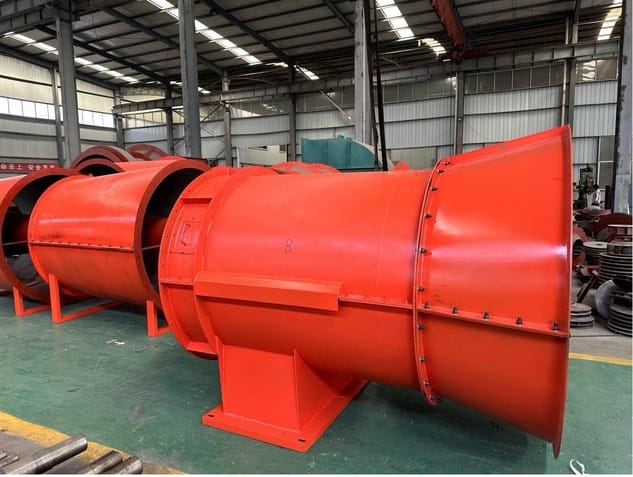
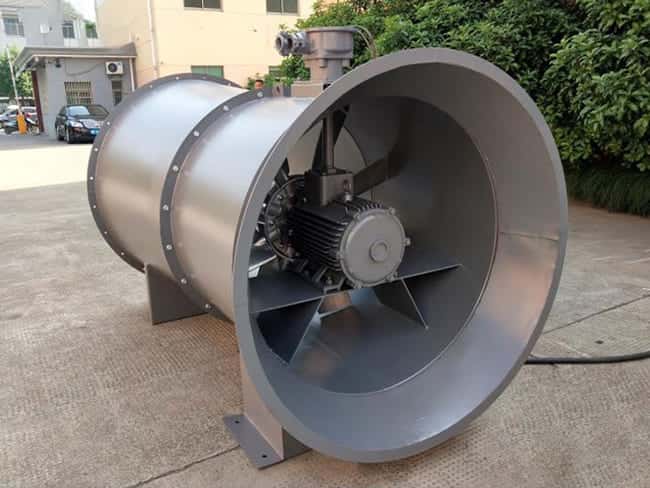
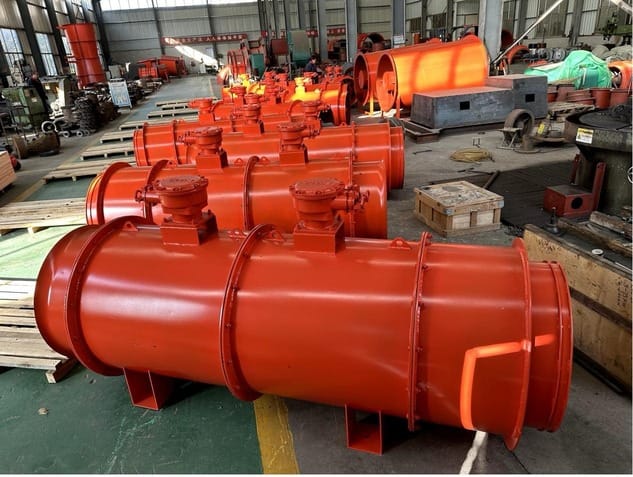
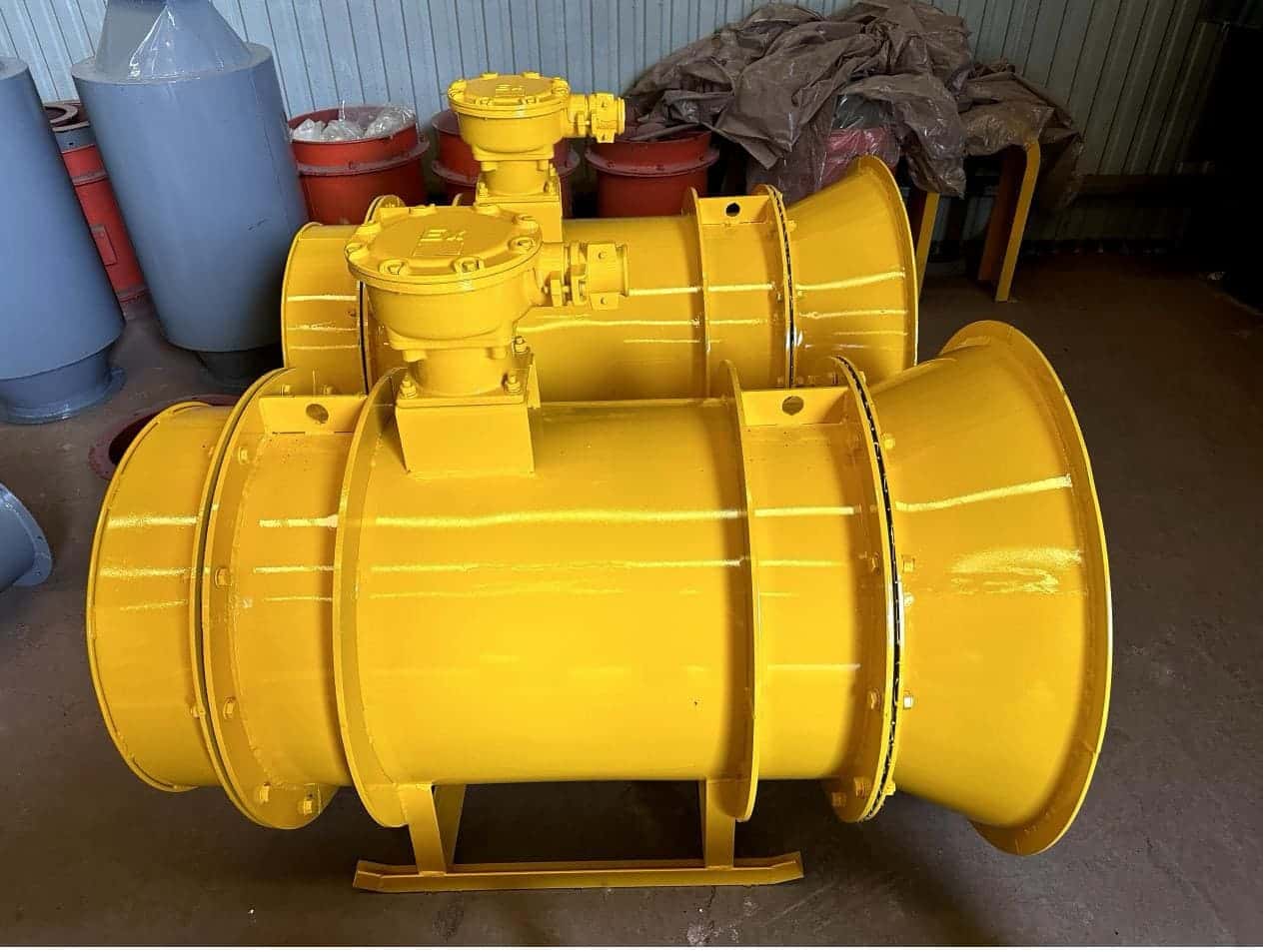


Fan Energy Index (FEI) is a dimensionless efficiency rating that compares the energy performance of a real fan to a standard reference fan at the same duty point. In simple terms, FEI tells you how much better or worse your fan is than a baseline fan when delivering the same airflow and pressure. A higher FEI means lower energy use for the same ventilation task, which is increasingly important in industrial plants and mining ventilation systems.
The basic idea behind FEI is to compare wire-to-air power (the electrical power drawn from the supply, including motor and drive losses) to the power that a reference fan would need to deliver the same airflow and pressure. The calculation follows standardized test methods and rating procedures, but conceptually it can be summarised as:
FEI = (Reference fan electrical input power at duty) / (Tested fan electrical input power at the same duty)
To determine FEI in practice, the manufacturer first tests the fan according to recognised standards. They measure airflow, pressure and electrical input at different operating points. For each point on the fan curve, they calculate the wire-to-air efficiency and compare this with a reference fan model defined by the FEI procedure. The reference fan represents a minimum acceptable efficiency level. If the tested fan uses less power than the reference at a given duty, the FEI is greater than 1.0; if it uses more power, the FEI is less than 1.0.
For industrial and mining engineers, FEI is useful because it combines several factors in one rating:
- It includes fan aerodynamics (how efficiently the impeller and housing produce airflow and pressure).
- It accounts for motor and drive losses, giving a true wire-to-air view.
- It is based on the actual duty point (airflow and pressure) rather than a single peak-efficiency point that might never occur in real operation.
When you select a fan using FEI, you typically specify a minimum FEI value for the operating range. For example, a plant or mine might require that all new fans used for continuous ventilation have FEI ≥ 1.0 or a higher value depending on local regulations and energy programmes. This ensures that the chosen fans are at least as efficient as the reference fan and often significantly better.
It is important to remember that FEI does not replace traditional engineering checks. Designers still need to verify that the fan meets all ventilation requirements for airflow, pressure, temperature, gas concentration and explosion protection. FEI simply adds a clear, comparable indicator of energy performance to help choose the most efficient option among several technically suitable fans.
In summary, Fan Energy Index is calculated by comparing the tested fan’s electrical input power at a given duty with that of a standard reference fan. The resulting FEI value helps industrial and mining users identify energy-efficient fans that meet both performance and regulatory requirements.