
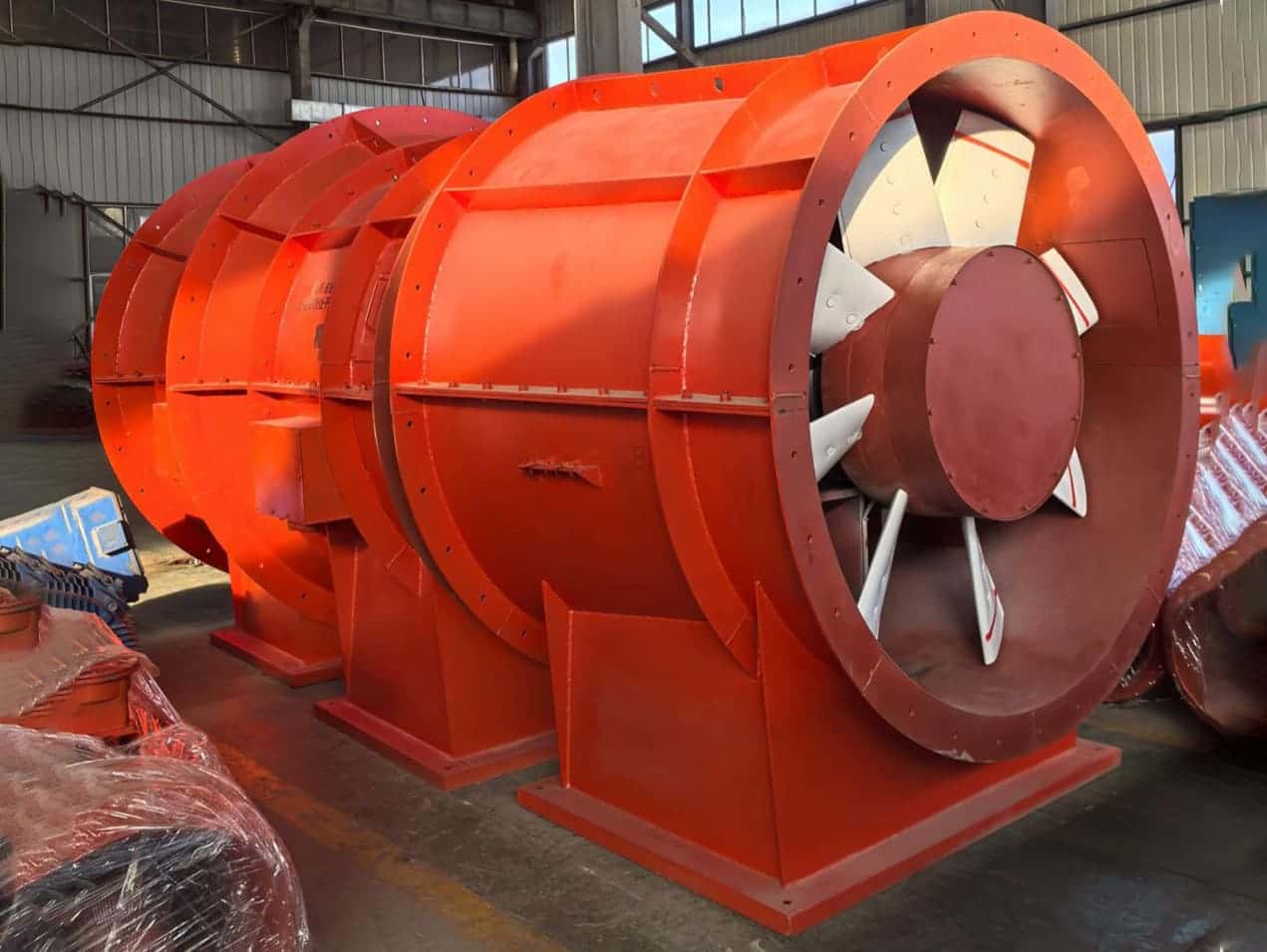
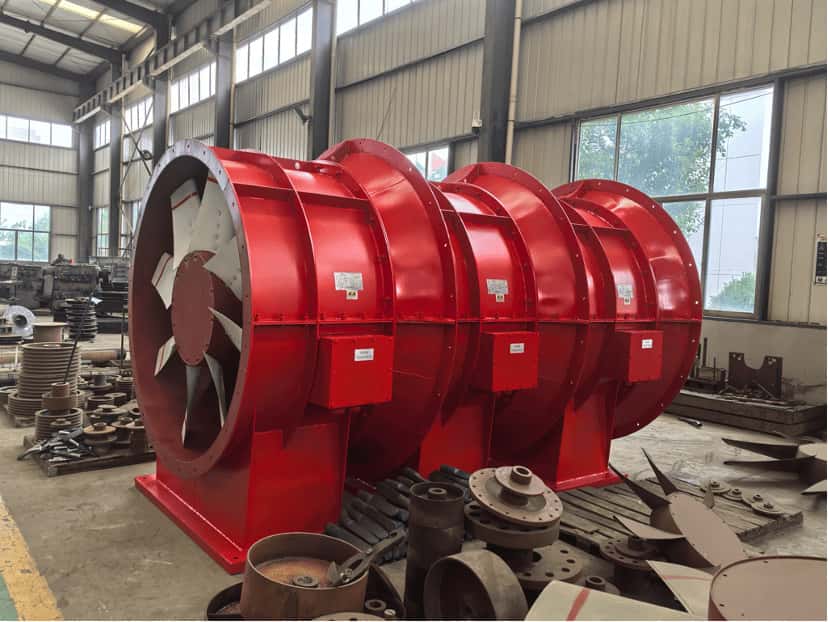
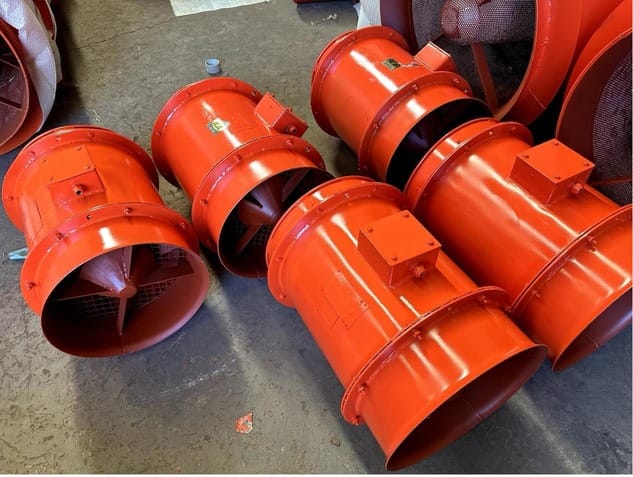
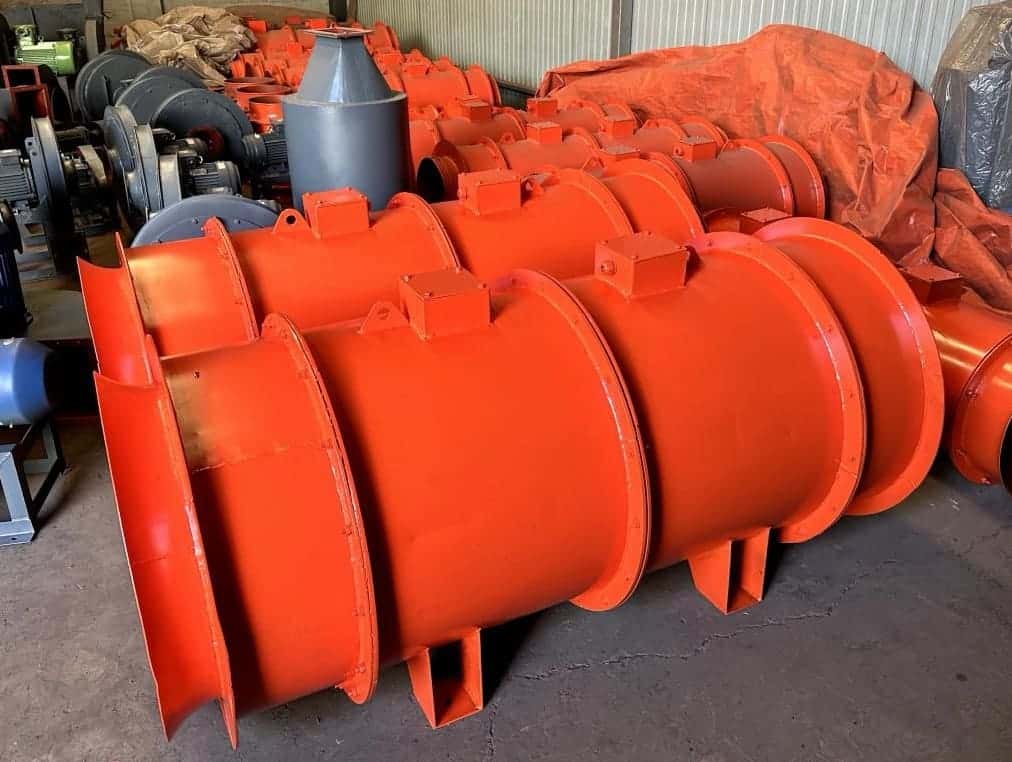
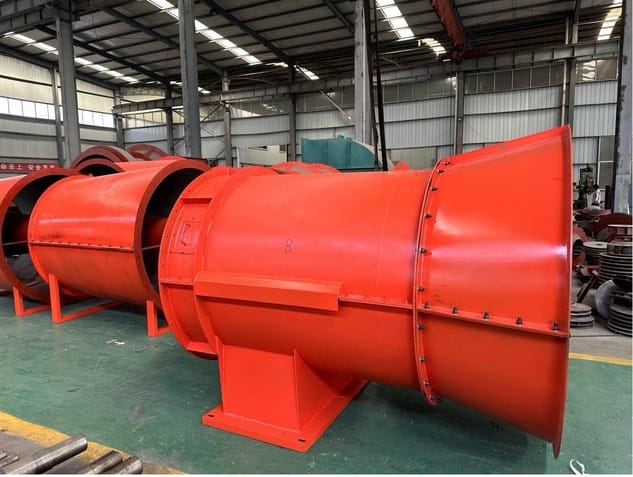
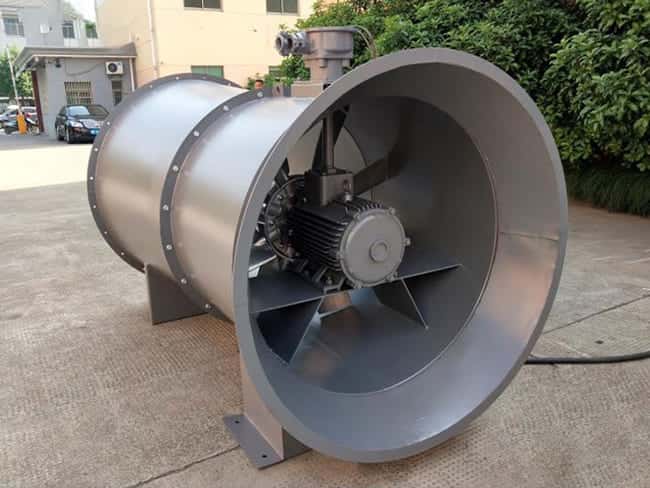
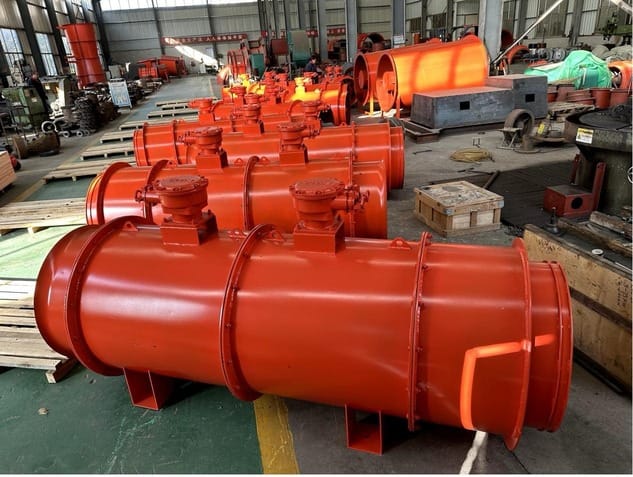
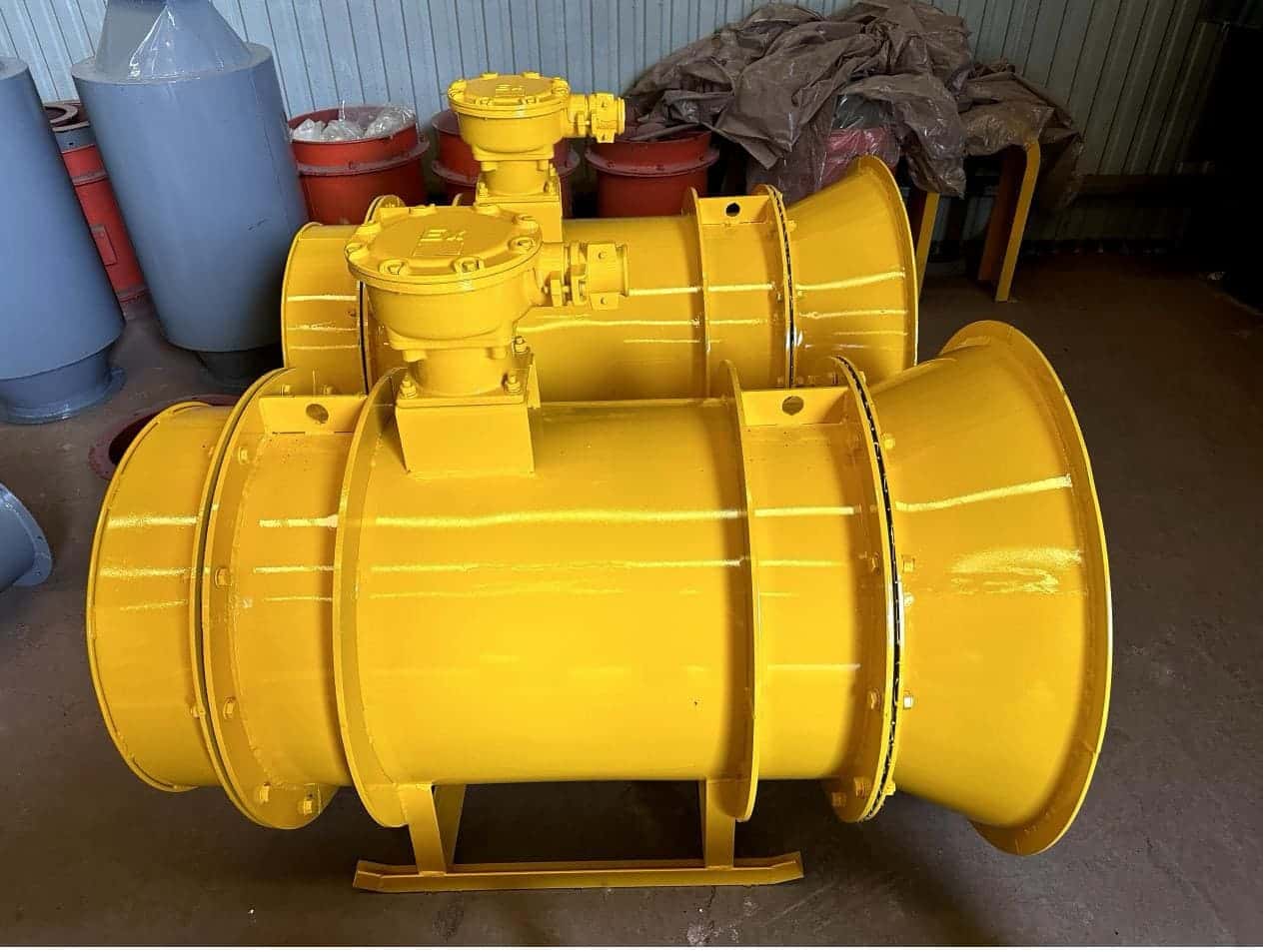
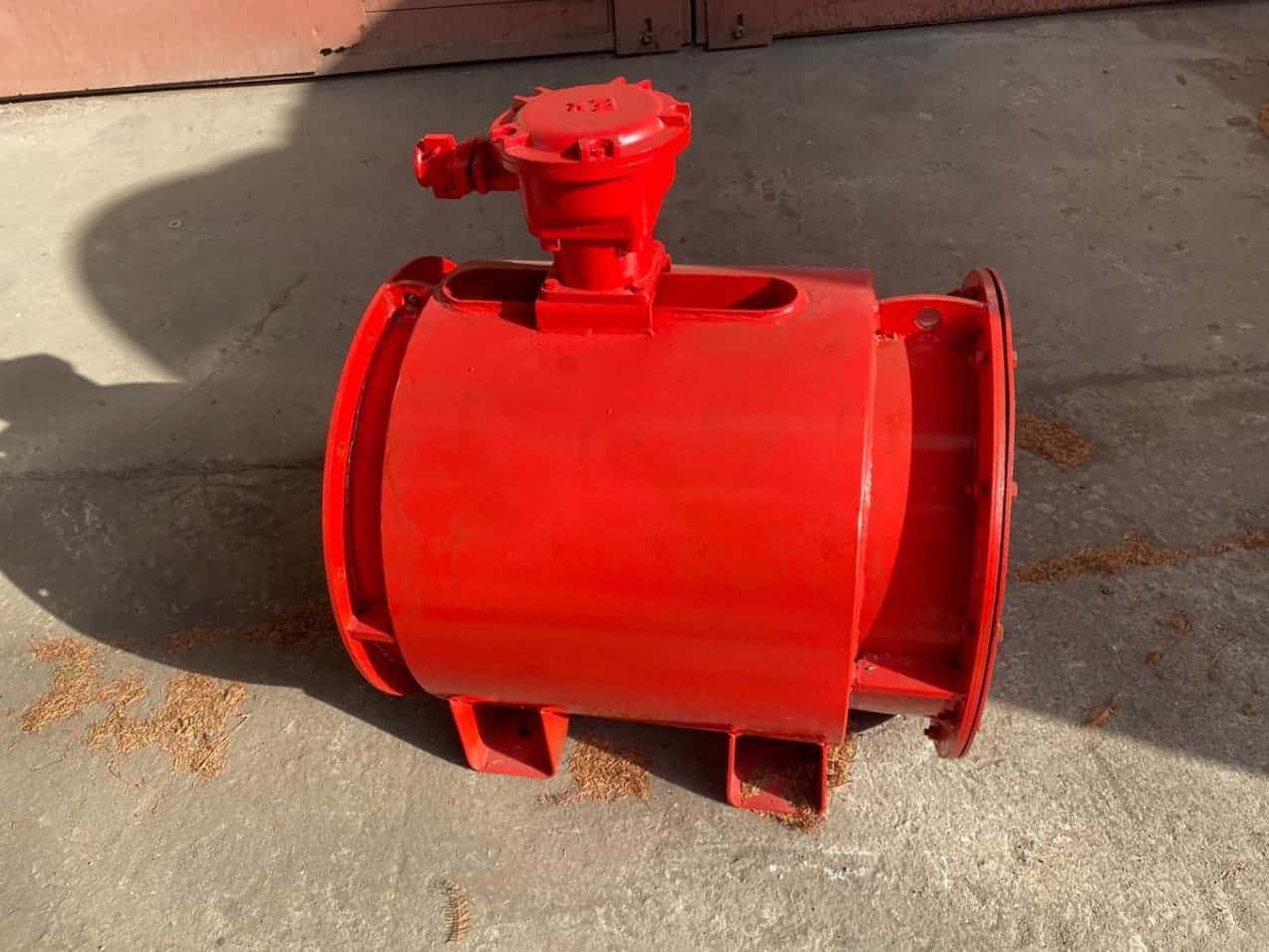
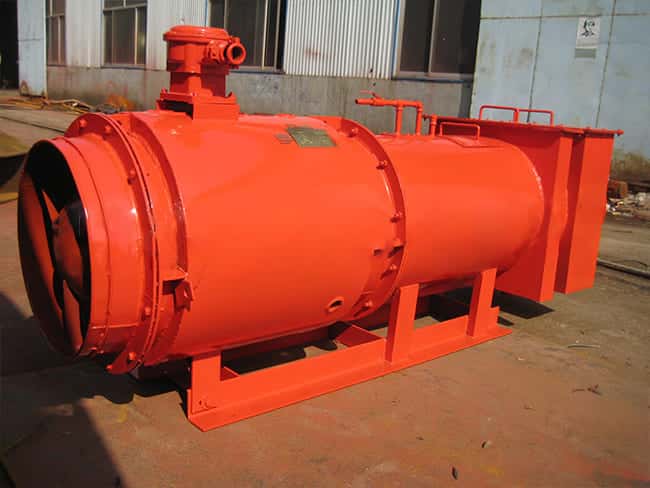
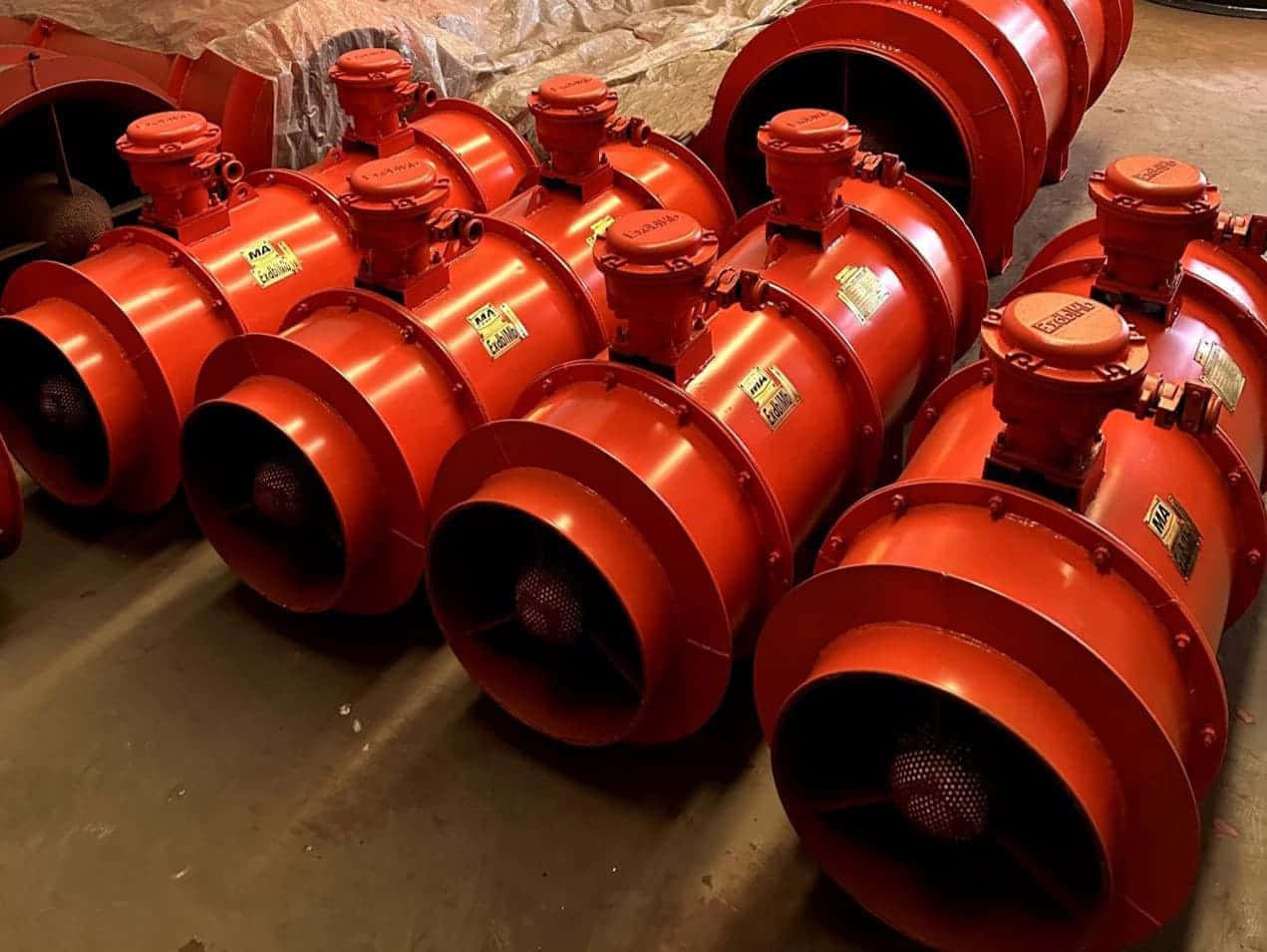
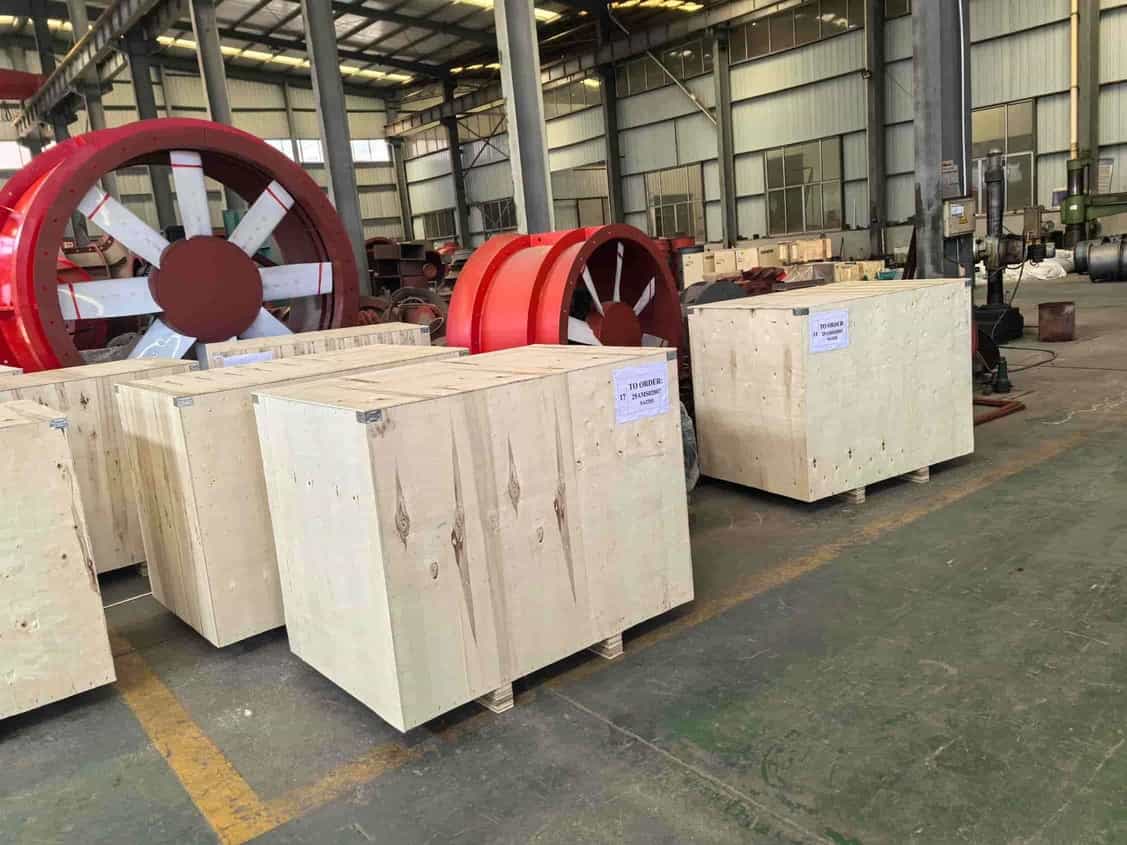
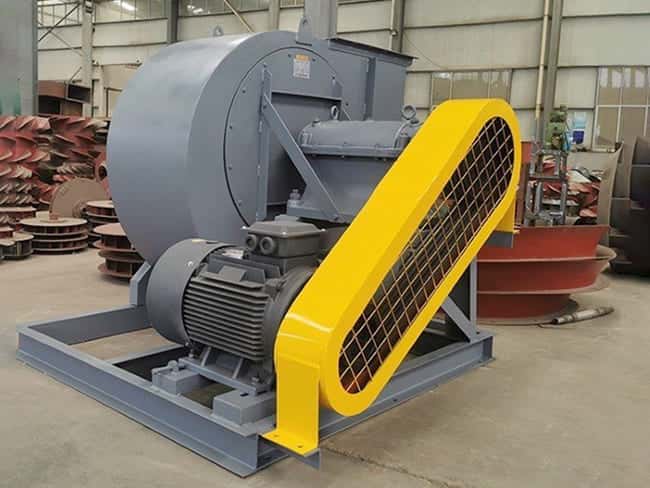
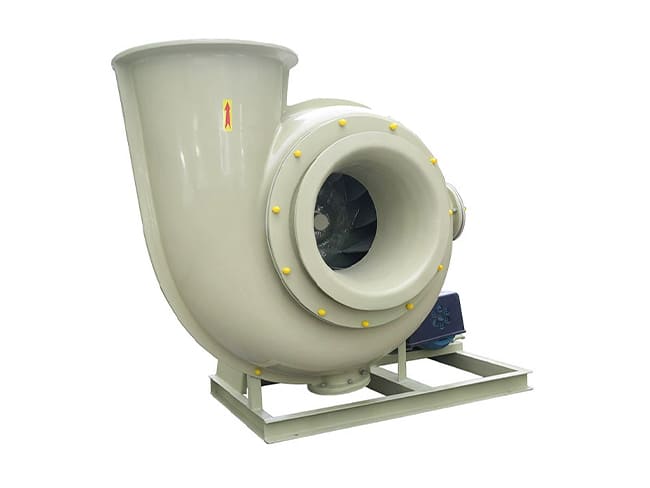
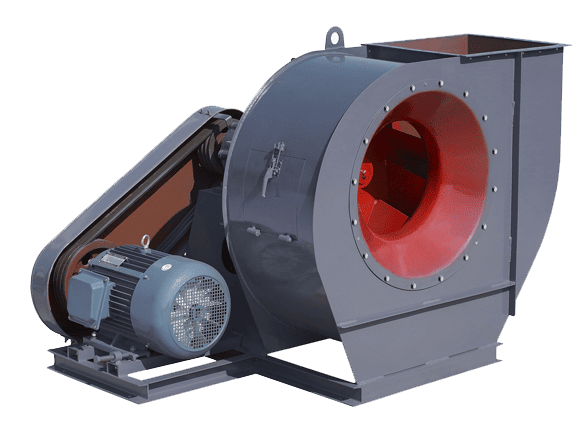
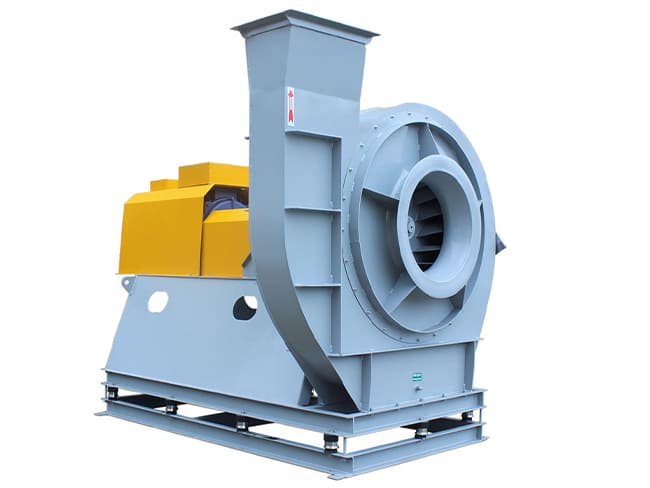
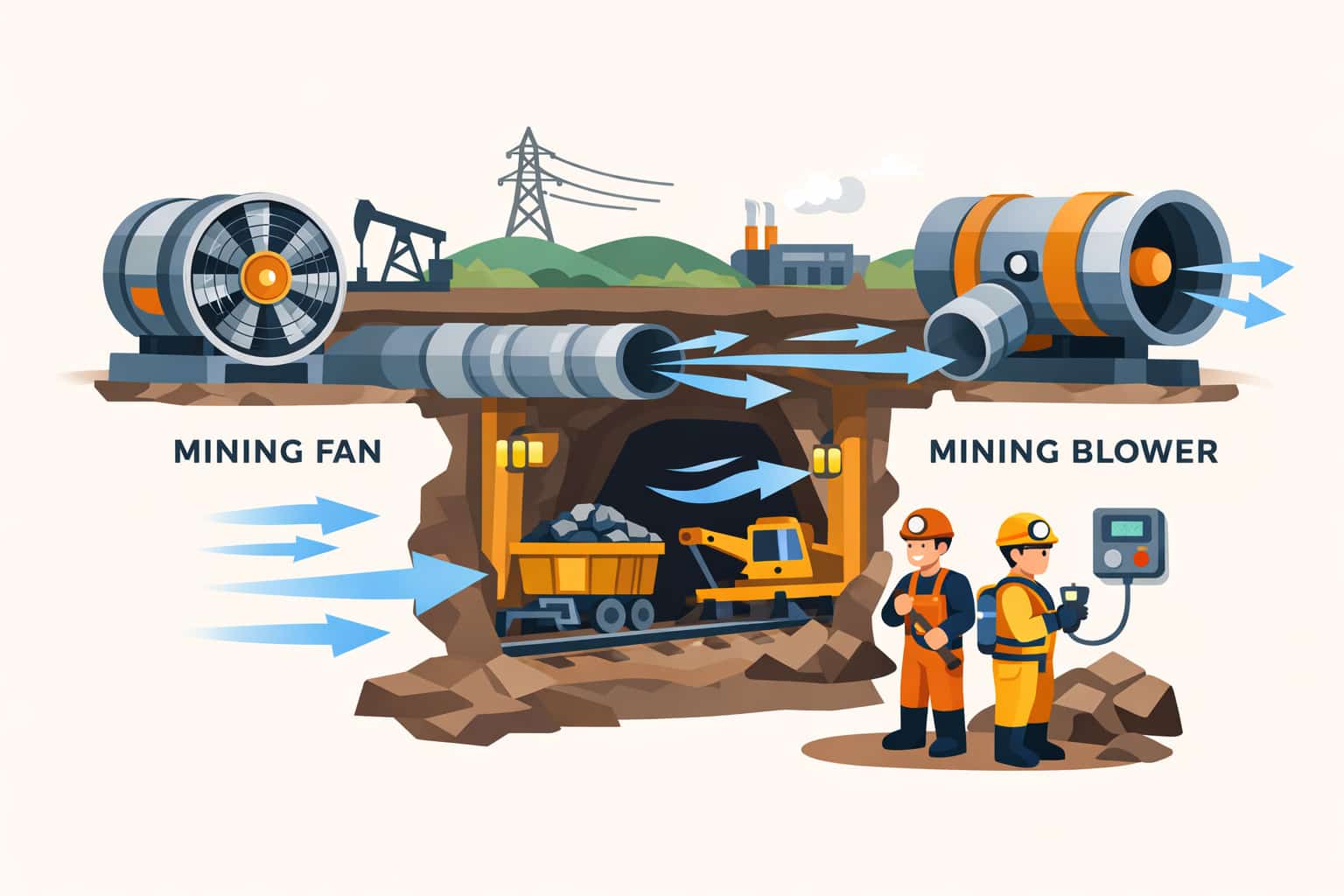

Most industrial fans are designed to run continuously, often 24 hours a day, seven days a week, as long as they are correctly selected, installed and maintained. In mining and heavy industry, main ventilation fans, process exhaust fans and dust-collection fans are expected to operate for very long periods without stopping, because they support critical safety and production processes.
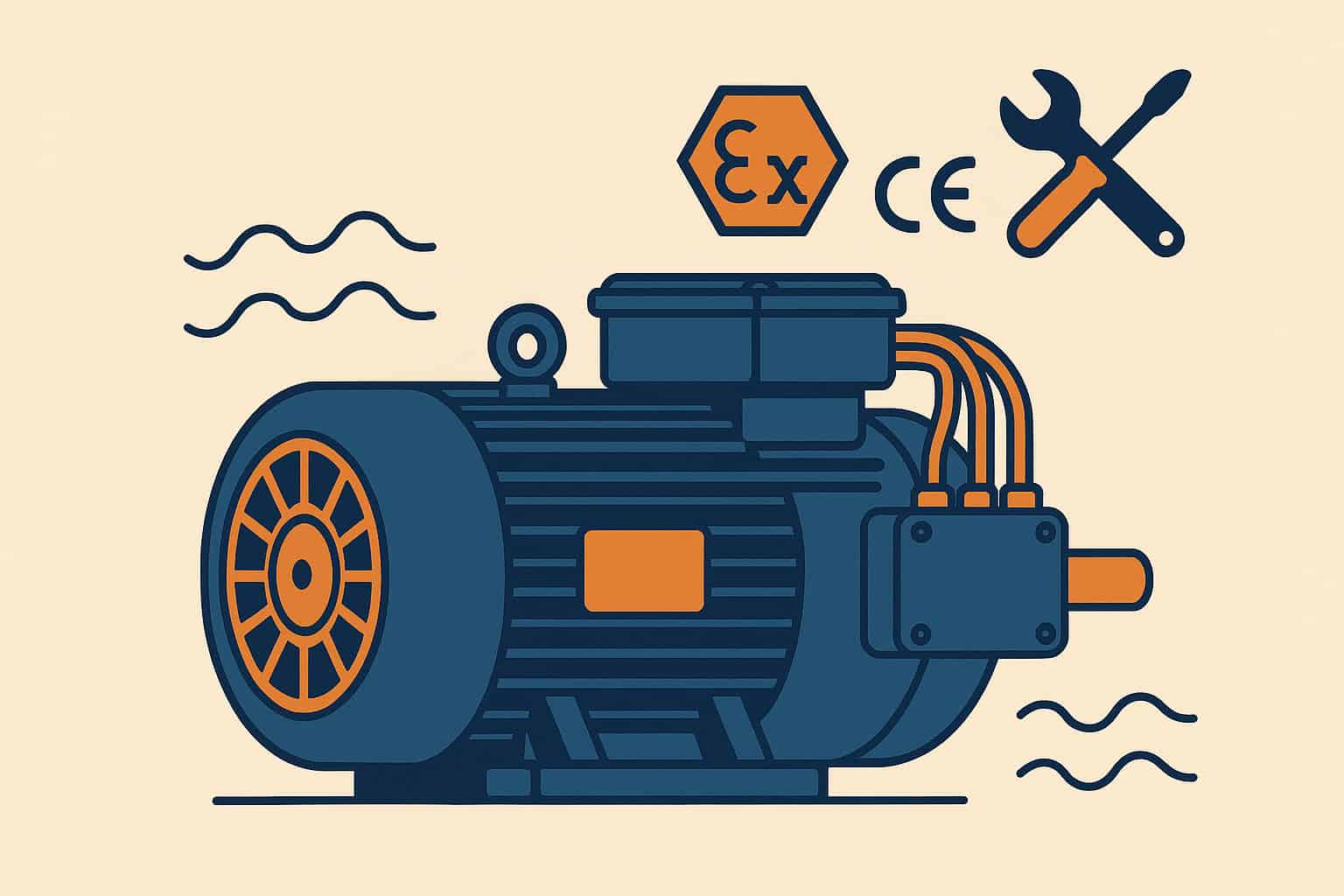
The key factor is the fan’s duty rating. Many industrial motors and bearings are rated for continuous duty (often marked S1 on motor nameplates). This means they can run indefinitely at their rated load and ambient temperature without overheating. When a fan is correctly sized so that the motor does not exceed its rated current and temperature, it can operate for thousands of hours per year.
Bearings are another important limitation. Industrial fans use rolling-element or sometimes sleeve bearings designed for long life, but bearing life depends on load, speed, lubrication, temperature and cleanliness. With proper lubrication at the intervals recommended by the manufacturer and protection from excessive vibration, bearings can run for many years. If lubrication is neglected or contamination enters the housings, bearing life and therefore safe runtime are reduced.
The surrounding environment and air quality also affect how long industrial fans can run. High dust loading, corrosive gases, very high temperatures or moisture can accelerate wear on impellers, housings, seals and motors. In mines and cement plants, for example, fans may run continuously but must be inspected and cleaned regularly to remove buildup and prevent imbalance and vibration.
Thermal conditions must be kept within limits. Motors and bearings rely on proper cooling. If inlet air is too hot, filters or screens are blocked, or cooling airflow around the motor is restricted, temperatures may rise and force unplanned shutdowns. Condition monitoring (temperature, current, vibration) helps operators detect problems early and schedule stops for maintenance rather than suffering unexpected failures.
In practice, many industrial and mining fans are planned to run continuously between scheduled maintenance windows, which may be weekly, monthly or even yearly depending on the plant. Runtime is then only limited by maintenance strategy, not by the fan design itself. Fans that need frequent manual intervention are usually a sign of poor selection, inadequate maintenance or harsh conditions outside the original design assumptions.
In summary, industrial fans can typically run continuously 24/7 when they are designed for continuous duty, properly cooled, correctly lubricated and operated within their rated load. Long, reliable runtime is achieved by combining a suitable fan and motor selection with good maintenance and monitoring practices.
