
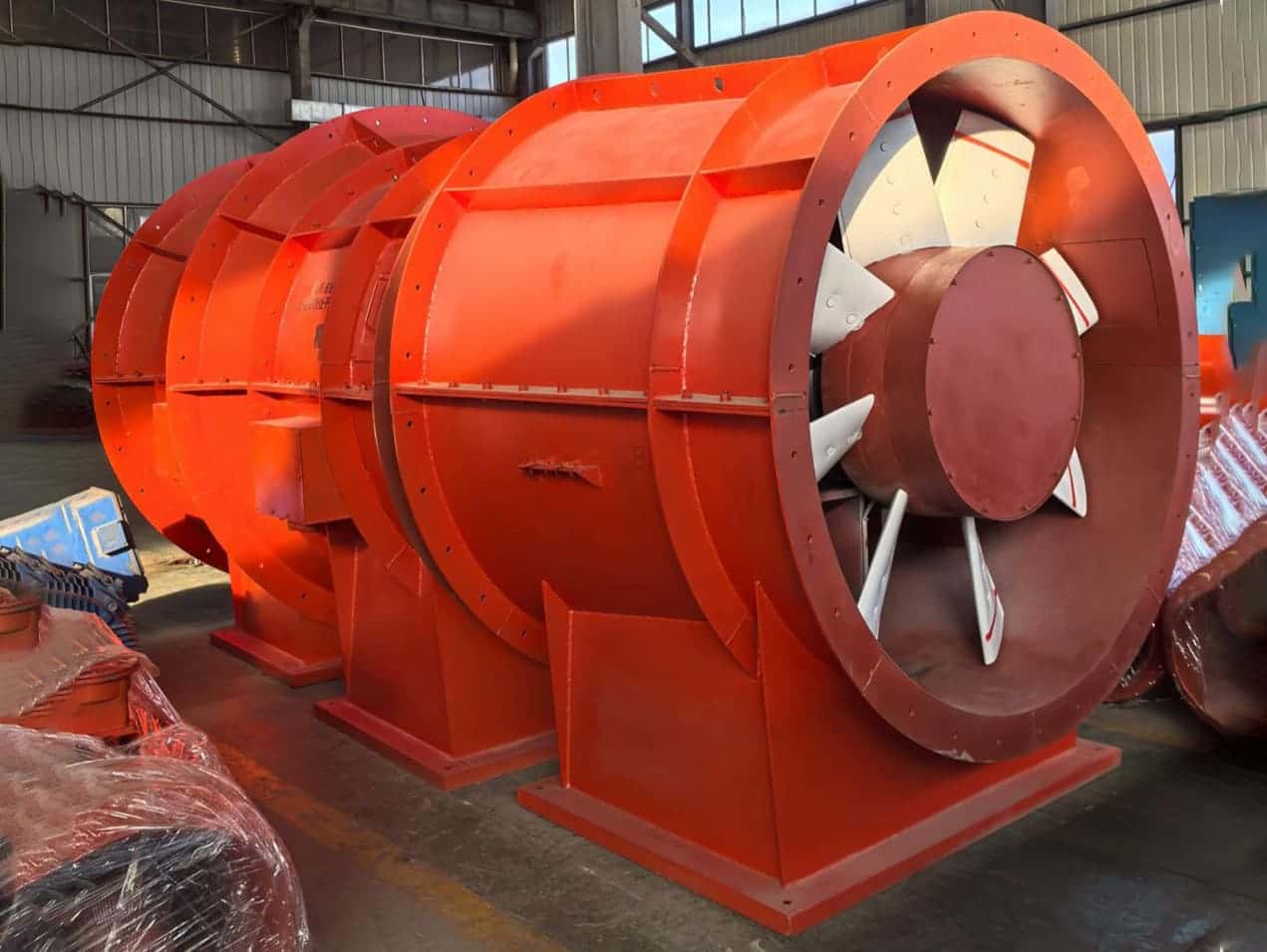
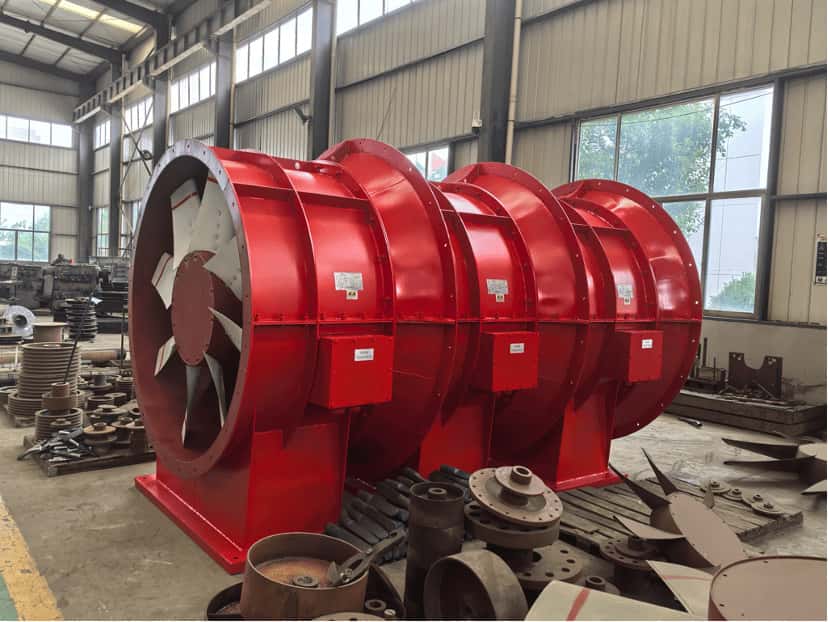
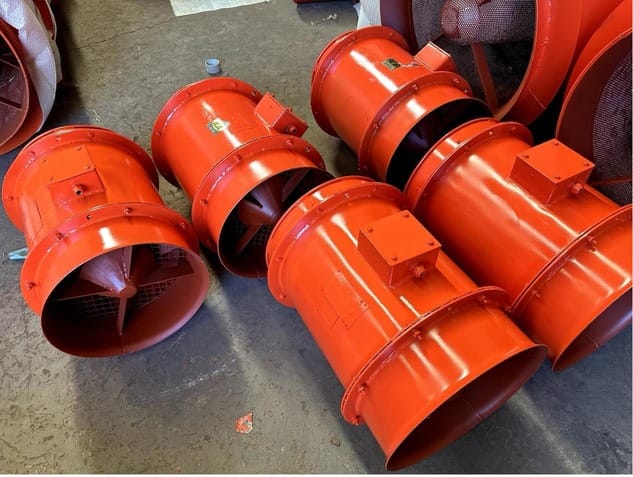
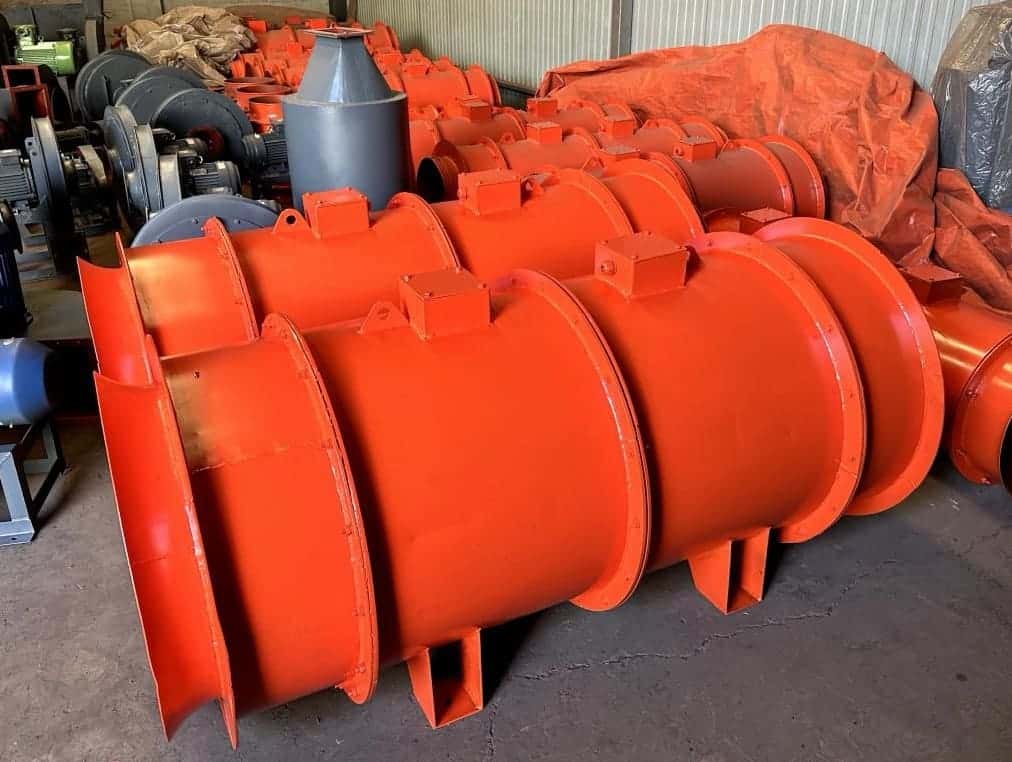
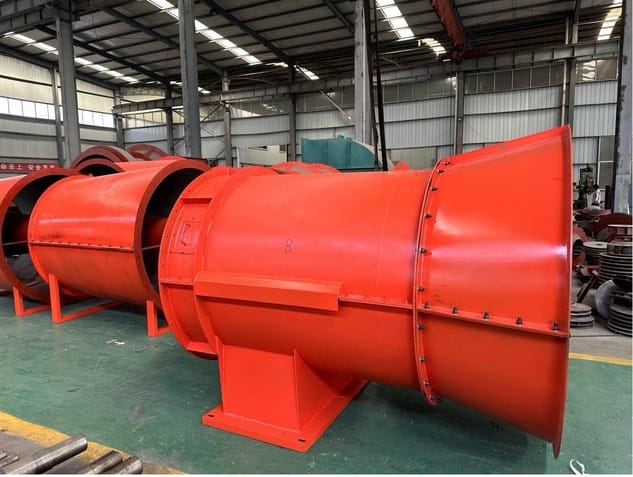
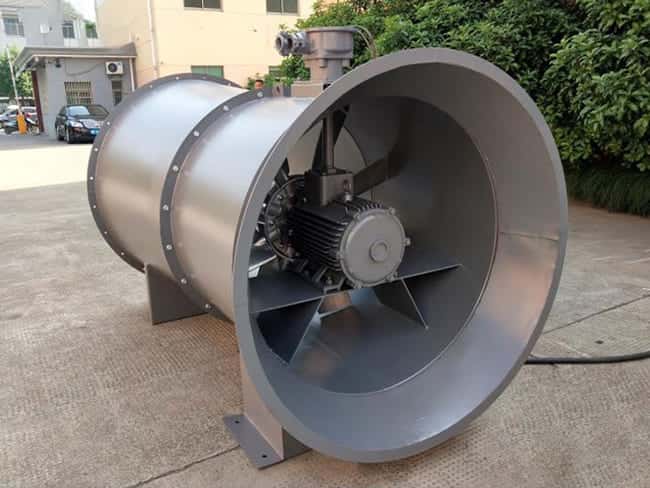
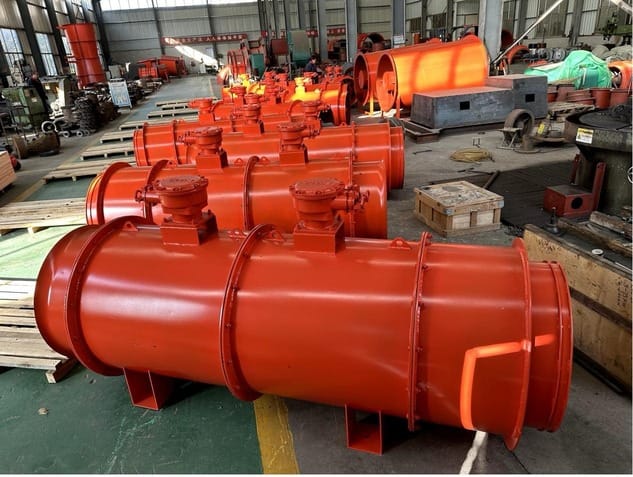
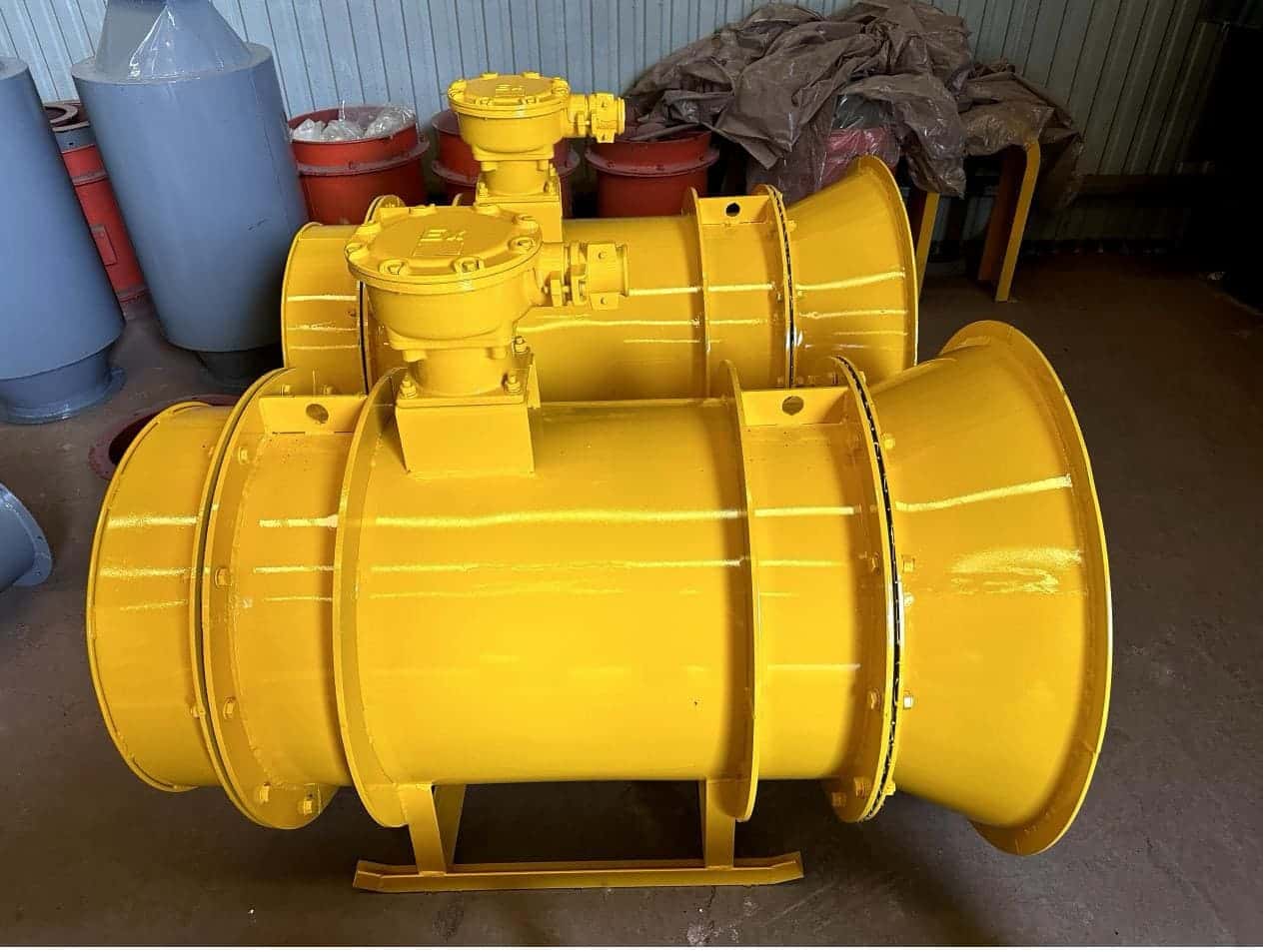
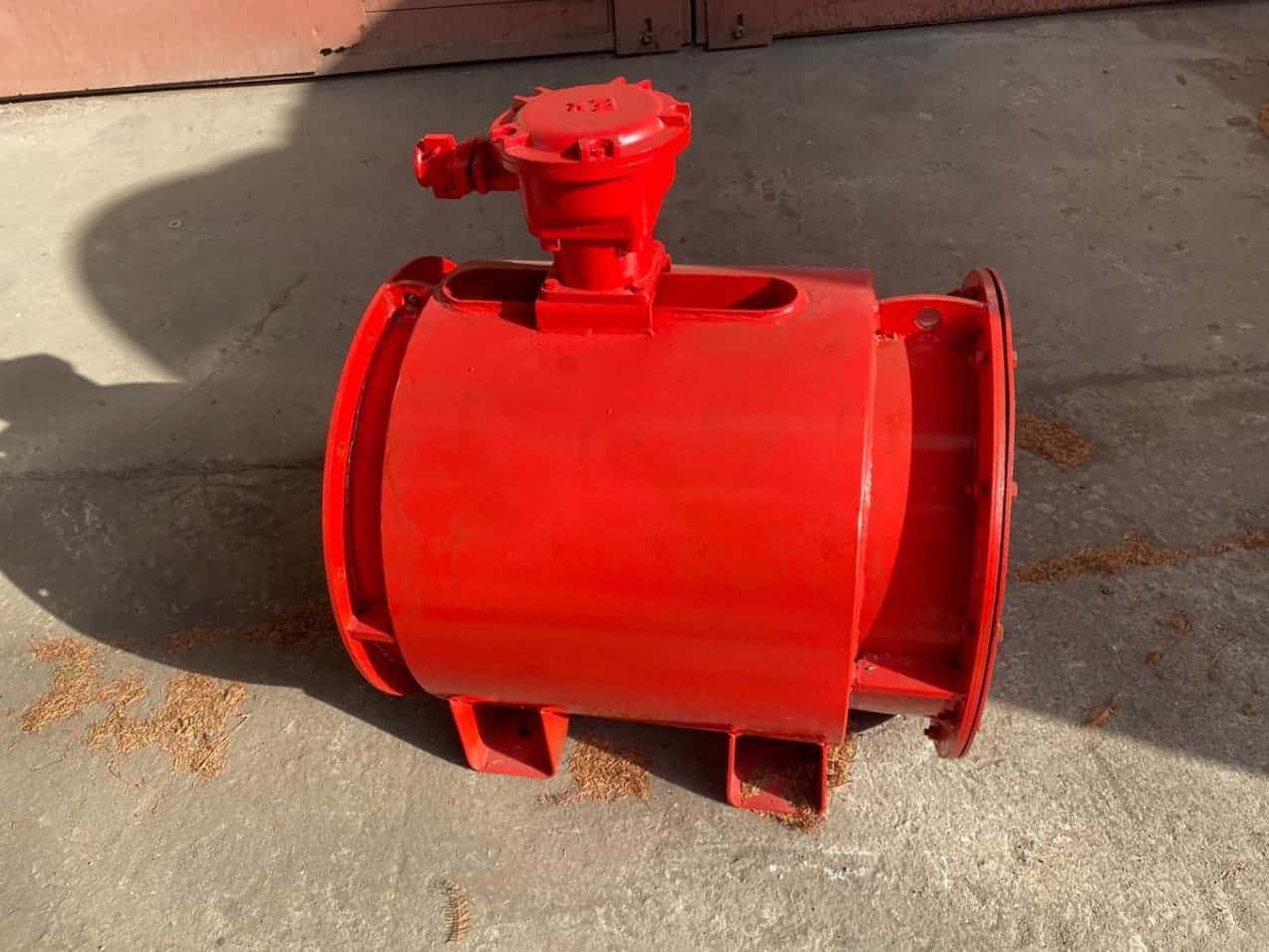
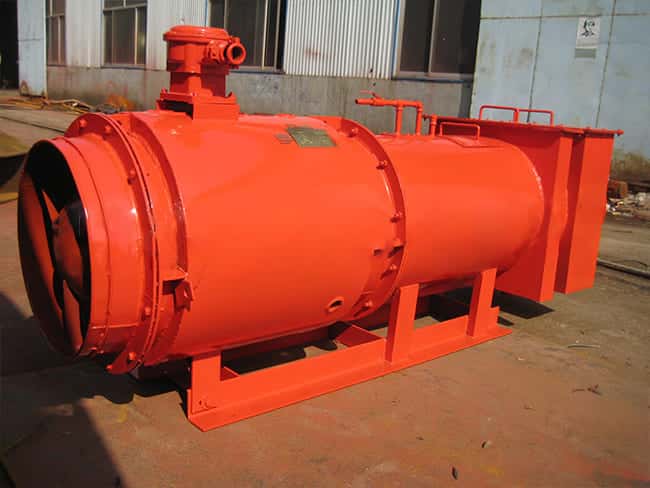
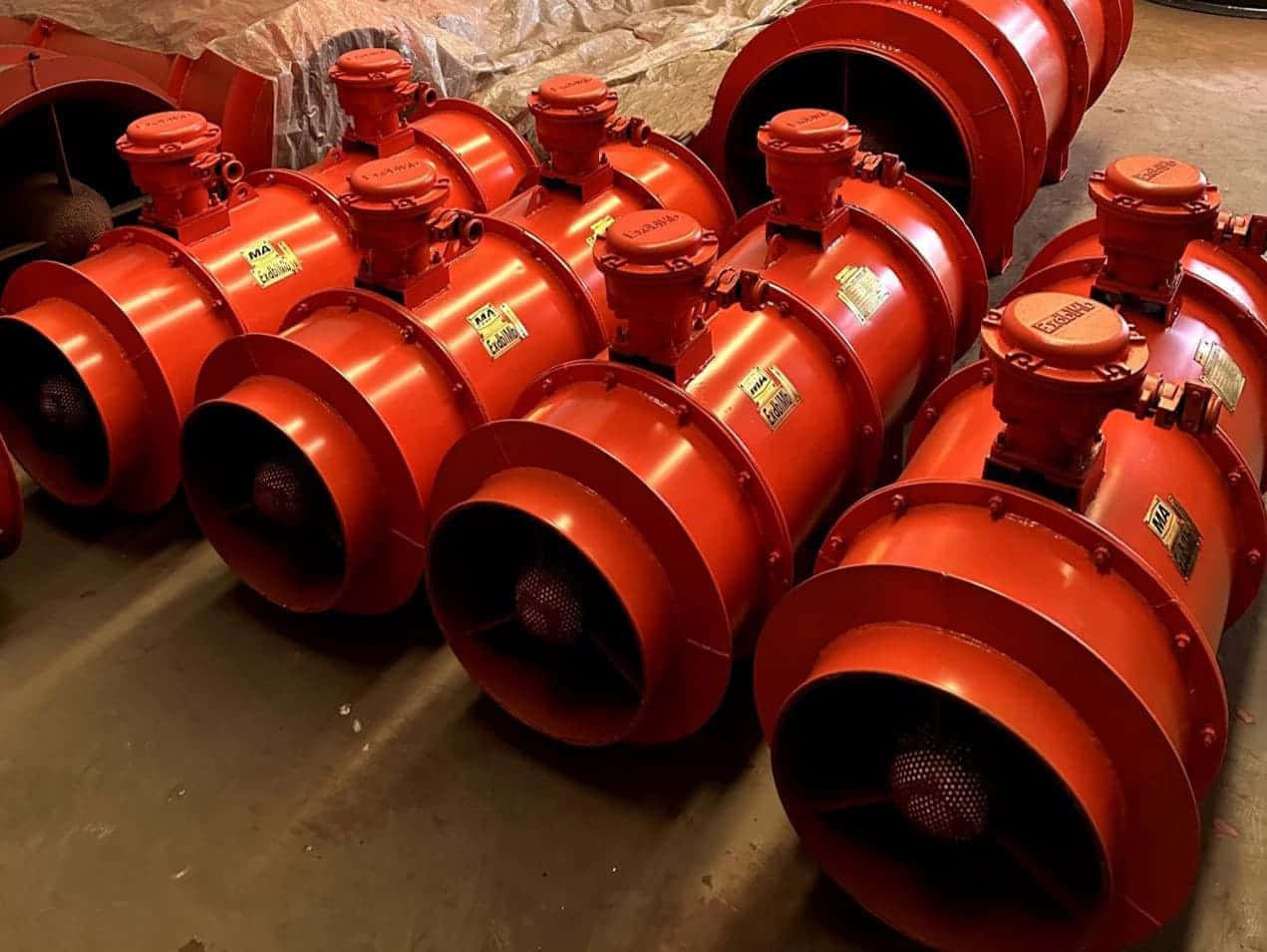
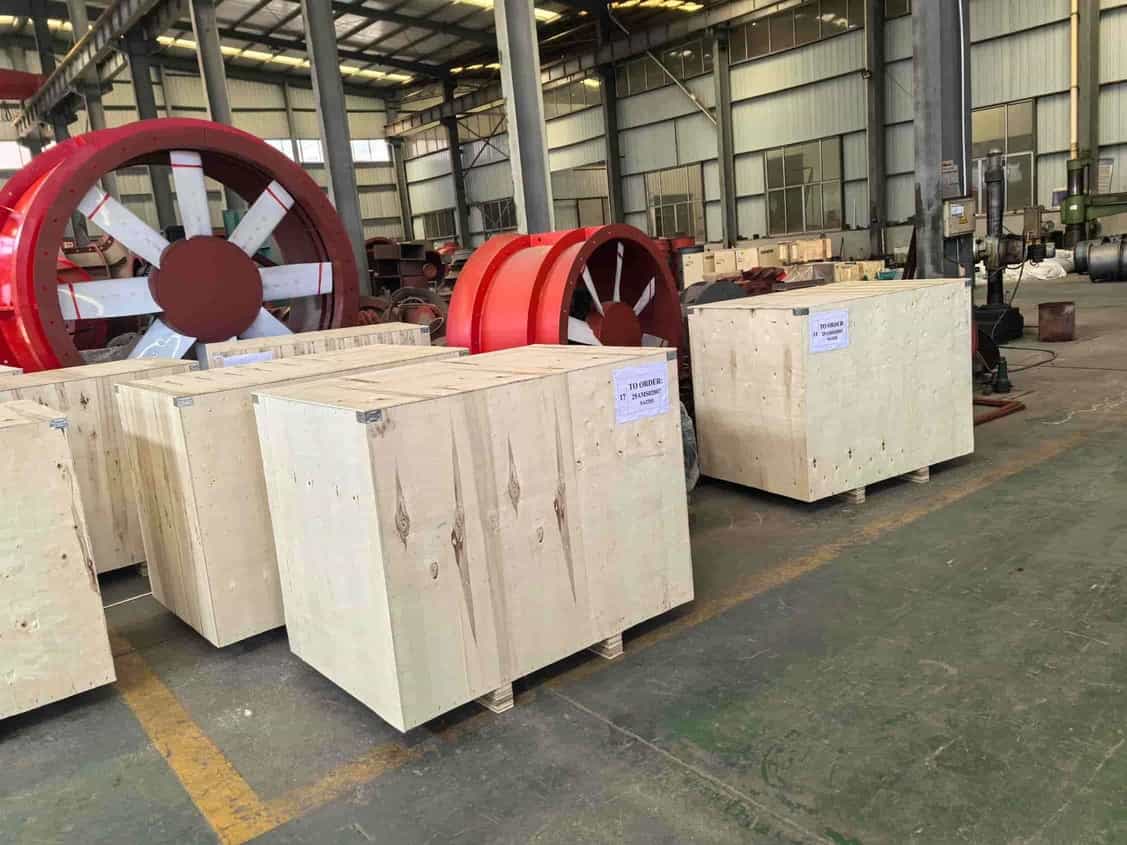
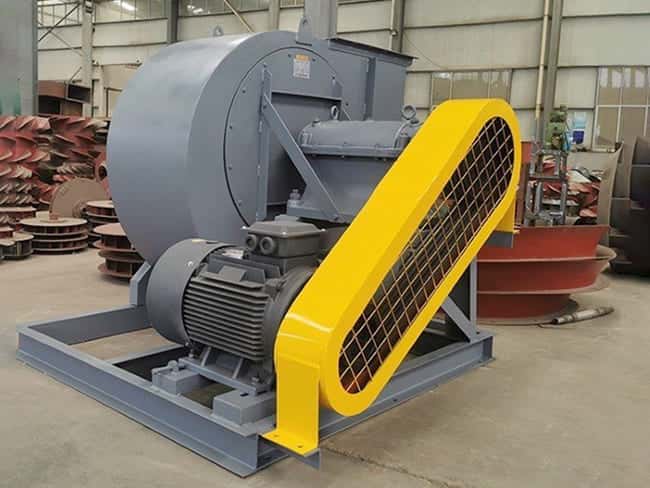
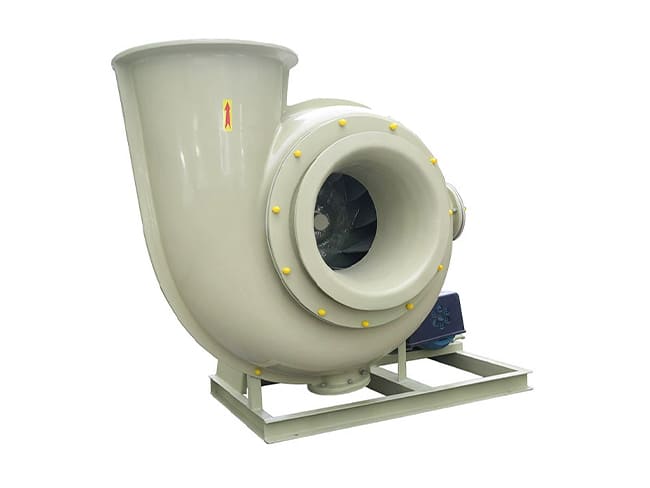
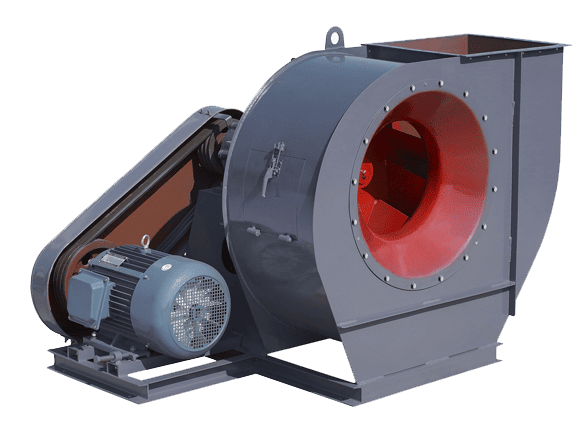
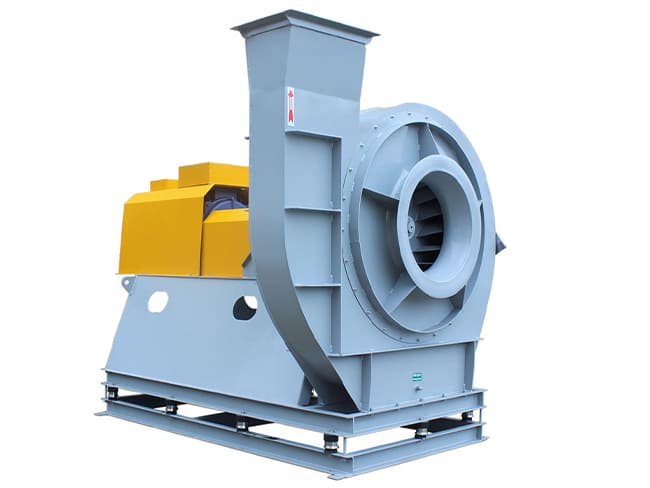
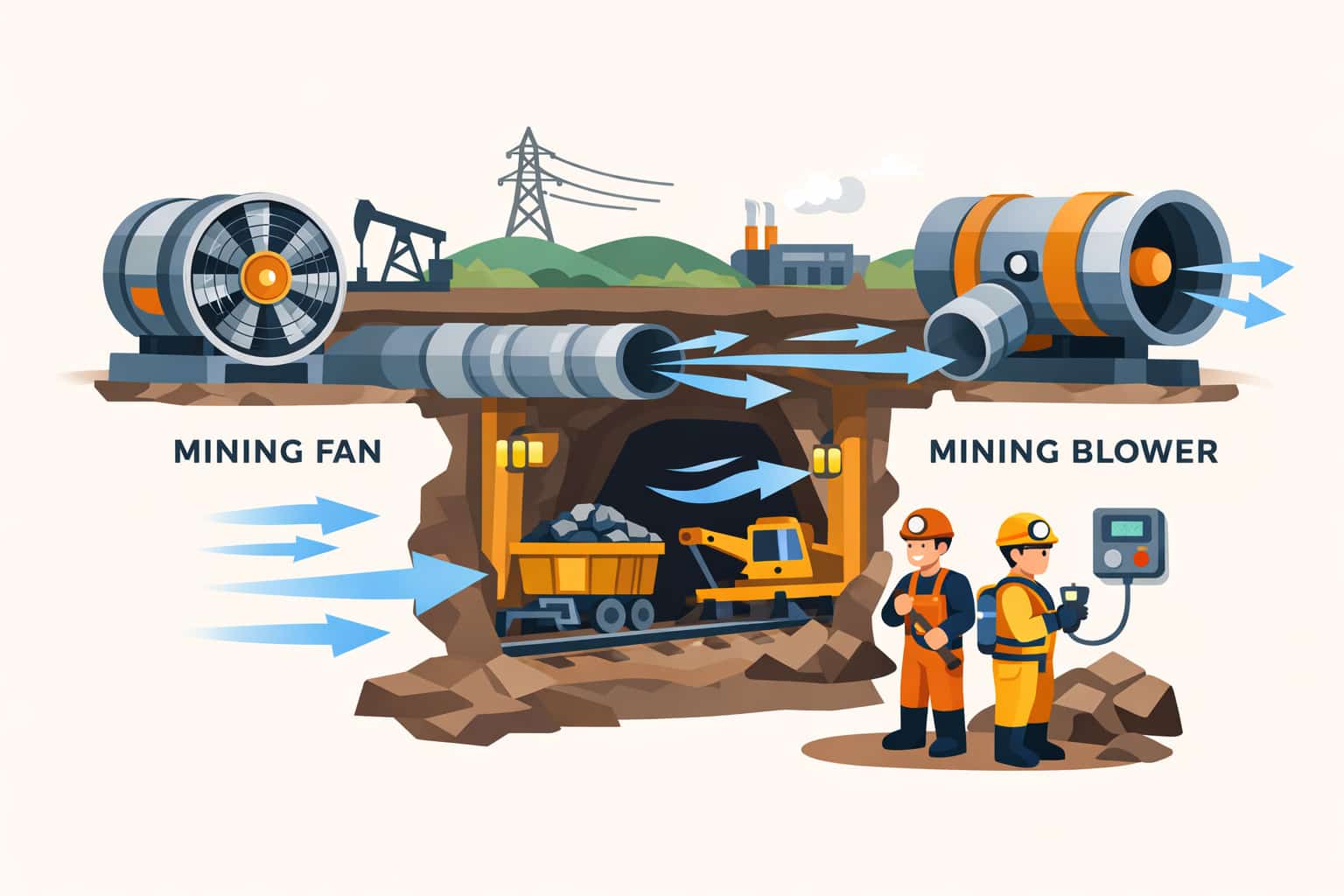
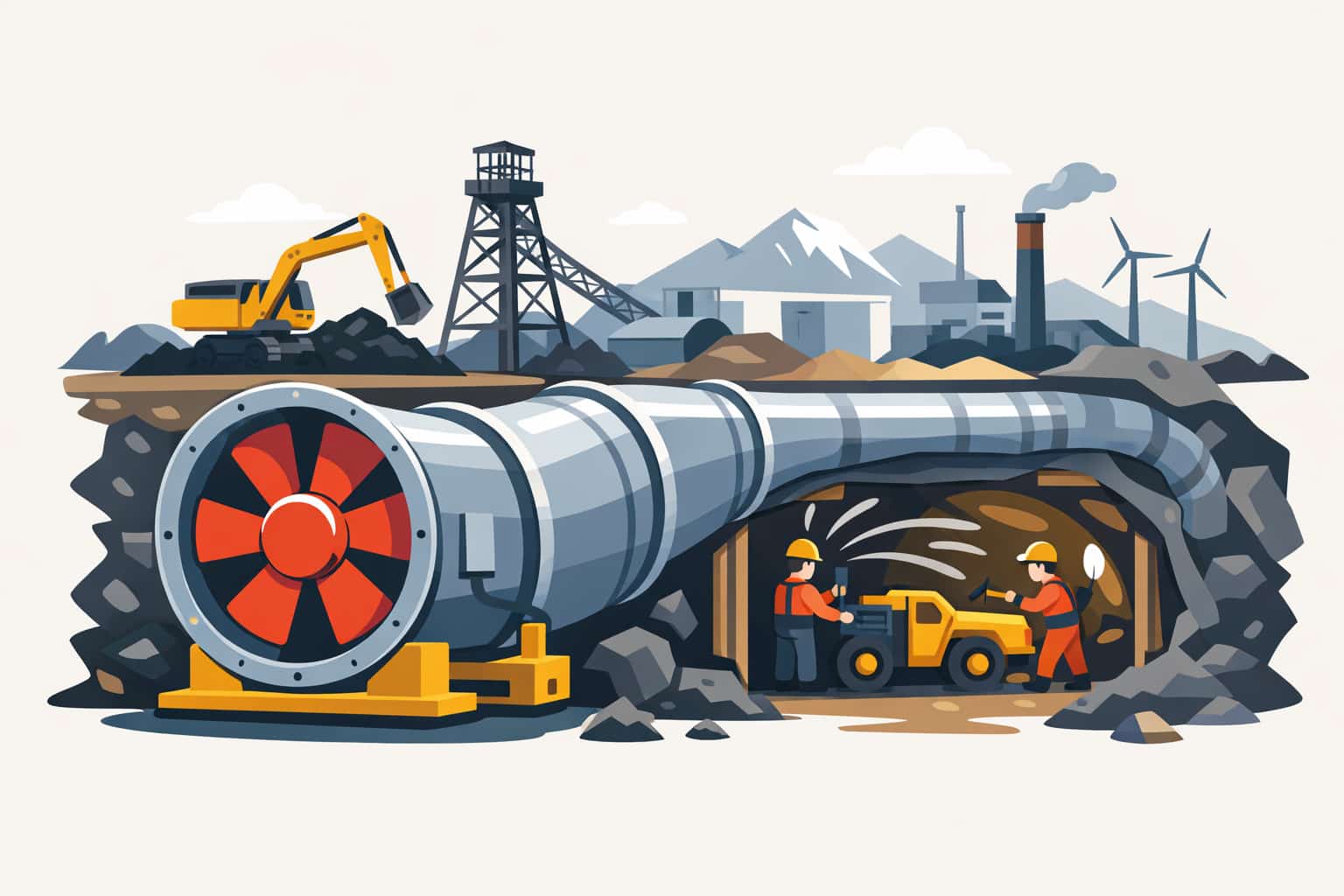
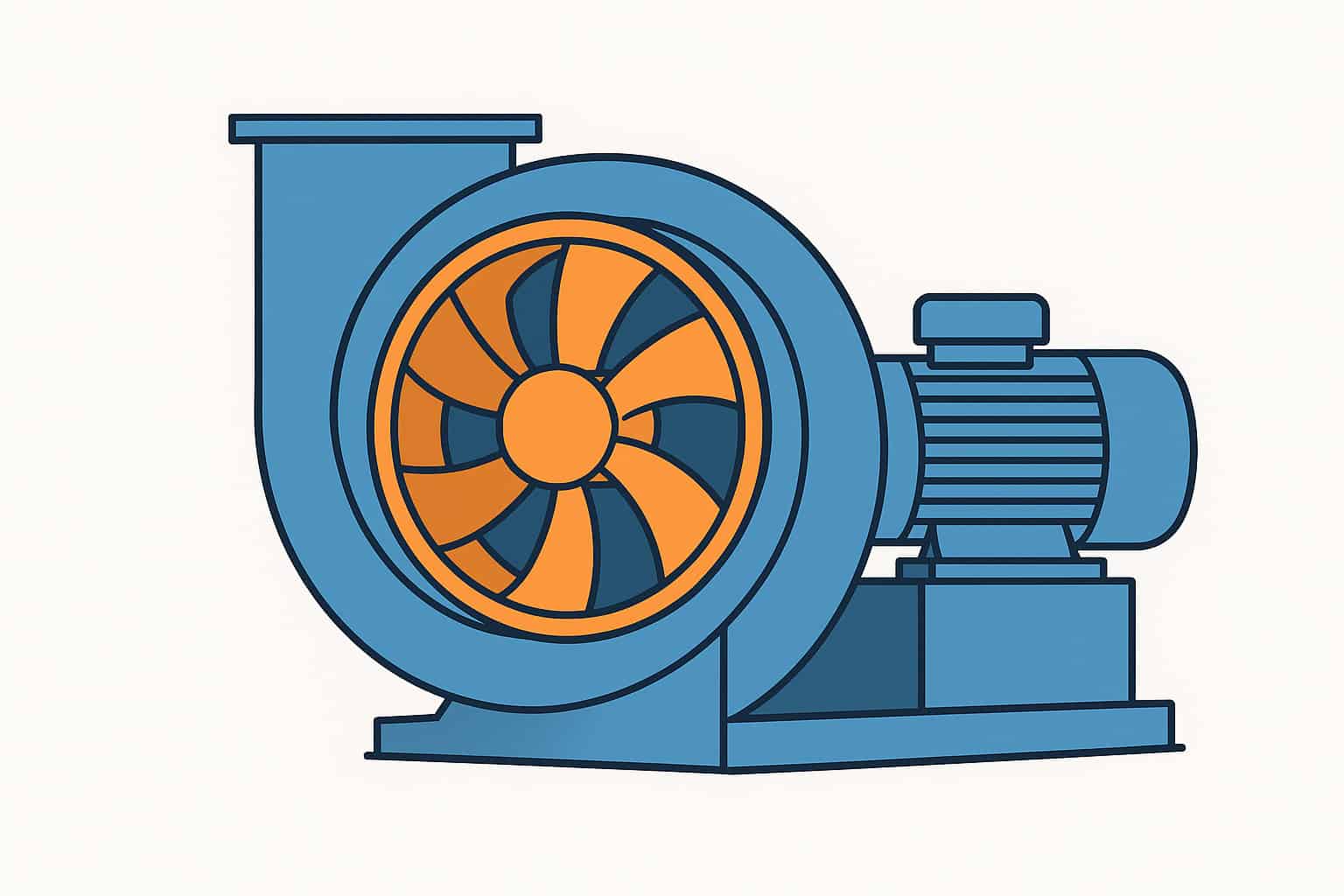
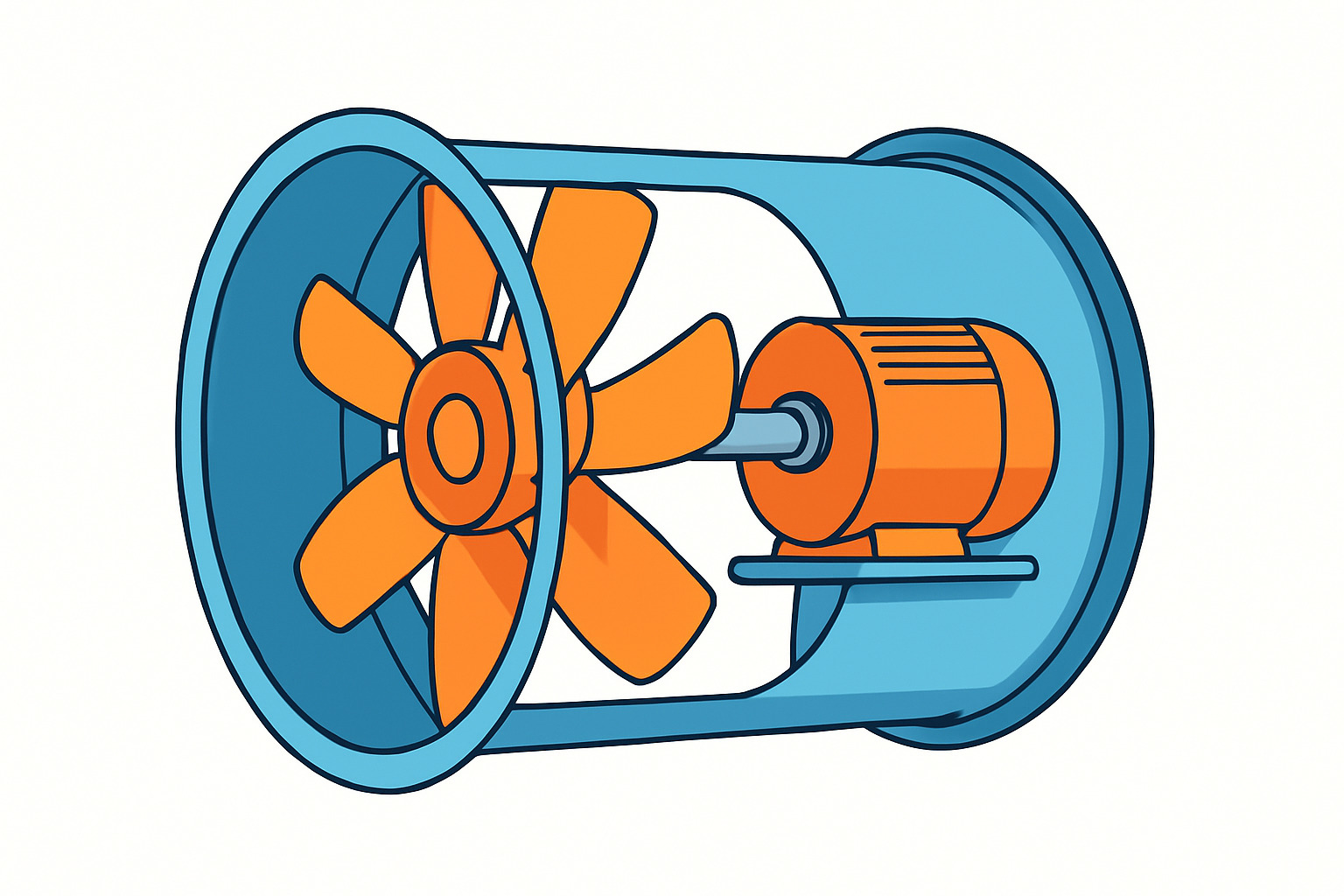
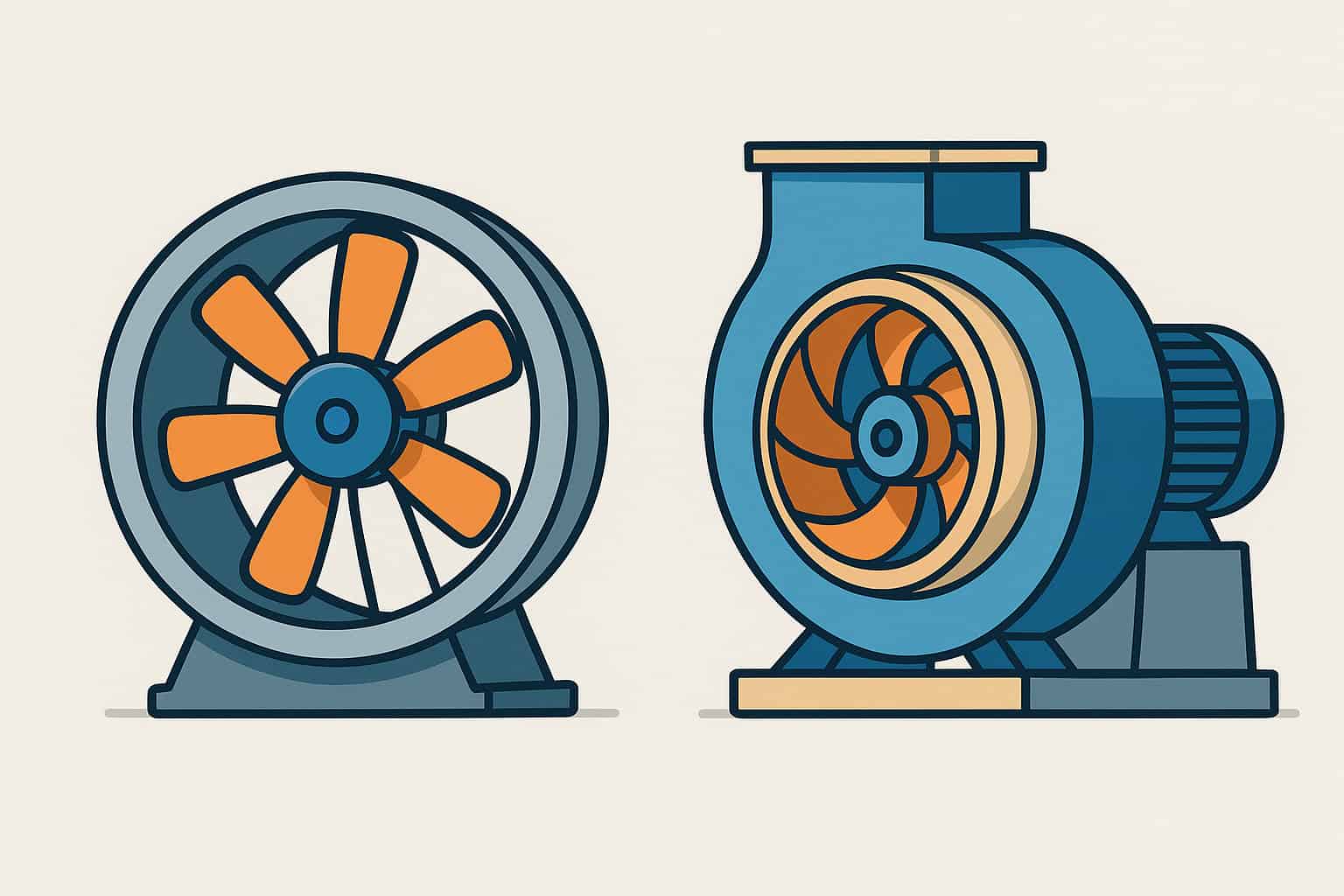
There is no single fixed number of intake and exhaust fans that every underground ventilation circuit must have. Instead, the required number and size of fans depend on the mine layout, production rate, depth, network resistance and safety standards. A small, shallow mine may need only one main exhaust fan and a few auxiliary fans, while a large, deep and highly mechanised mine may operate multiple main fans, booster fans and dozens of auxiliary fans to deliver the necessary airflow to all working areas.
At the highest level, most underground mines use one of several main ventilation configurations. Some rely on a single large main fan set (often with duty and standby units) at a main return shaft. Others may have two or more main fan stations in parallel or series, providing redundancy and flexibility as the mine expands. The minimum is usually one main exhaust fan installation, but many operations choose two or more for reliability, maintenance convenience and future capacity.
The number of intake fans is often smaller than the number of exhaust fans because many mines operate in exhaust mode, where main fans pull air from the workings and fresh air enters naturally through intake shafts and declines. In forcing or mixed systems, some intake fans may be used to pressurise intake airways or special zones. The decision to use intake fans and their quantity is based on mine geometry, gas conditions and the need to control leakage and natural ventilation effects.
Beyond the main fans, each ventilation circuit within the mine requires appropriate auxiliary ventilation. Heading development, stoping areas and remote workshops are supplied by auxiliary fans and ducting, usually in intake airways. The number of auxiliary fans depends on how many headings are being driven, their length and the air quantity required for diesel equipment and blasting fumes. It is common for a large mine to operate dozens of auxiliary fans of various sizes at any given time.
Ventilation engineers determine how many fans are needed by performing network calculations and simulations. They set air quantity targets for each working area based on regulations and equipment needs, estimate airway resistances, and then size and position fans to achieve those targets. They also consider redundancy: critical circuits may have backup fans or the ability to reroute air if a fan fails, so that safe conditions are maintained during maintenance or unexpected outages.
In summary, the number of intake and exhaust fans in an underground ventilation circuit is not a fixed rule but a design outcome. It is determined by airflow demand, network resistance, safety and health standards, and the desired level of reliability. Properly engineered systems combine main fans, booster fans and auxiliary fans so that each part of the mine receives adequate fresh air and contaminated air is safely exhausted to surface.