
When people ask how many types of blower there are, the answer depends on how detailed the classification should be. In industrial ventilation and process engineering, blowers are broadly divided into two main families: centrifugal blowers and positive-displacement blowers. Within each family there are several sub-types, each suited to particular flow and pressure ranges.
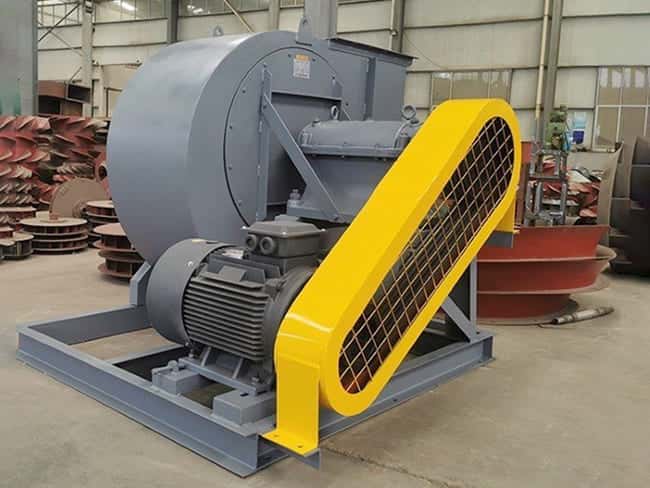
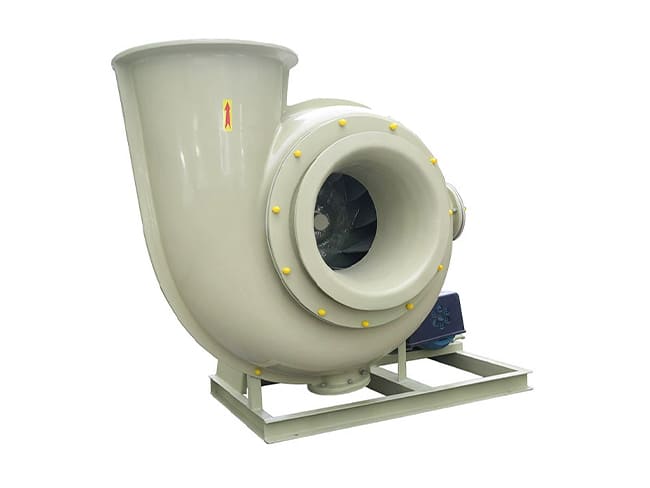
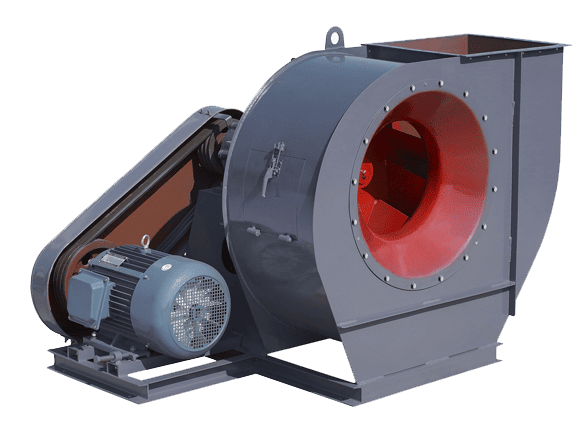
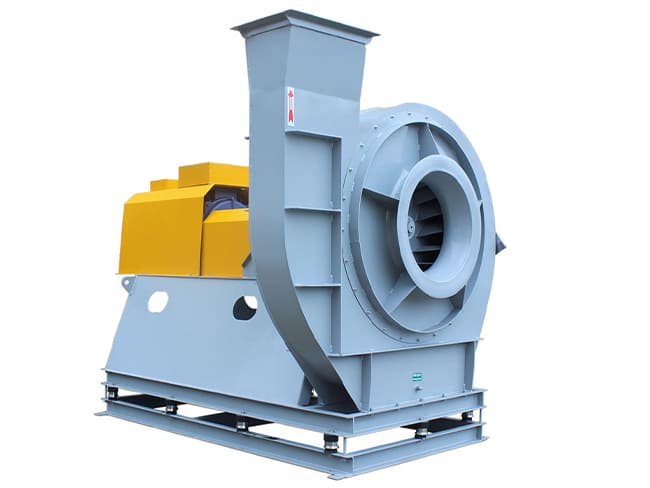
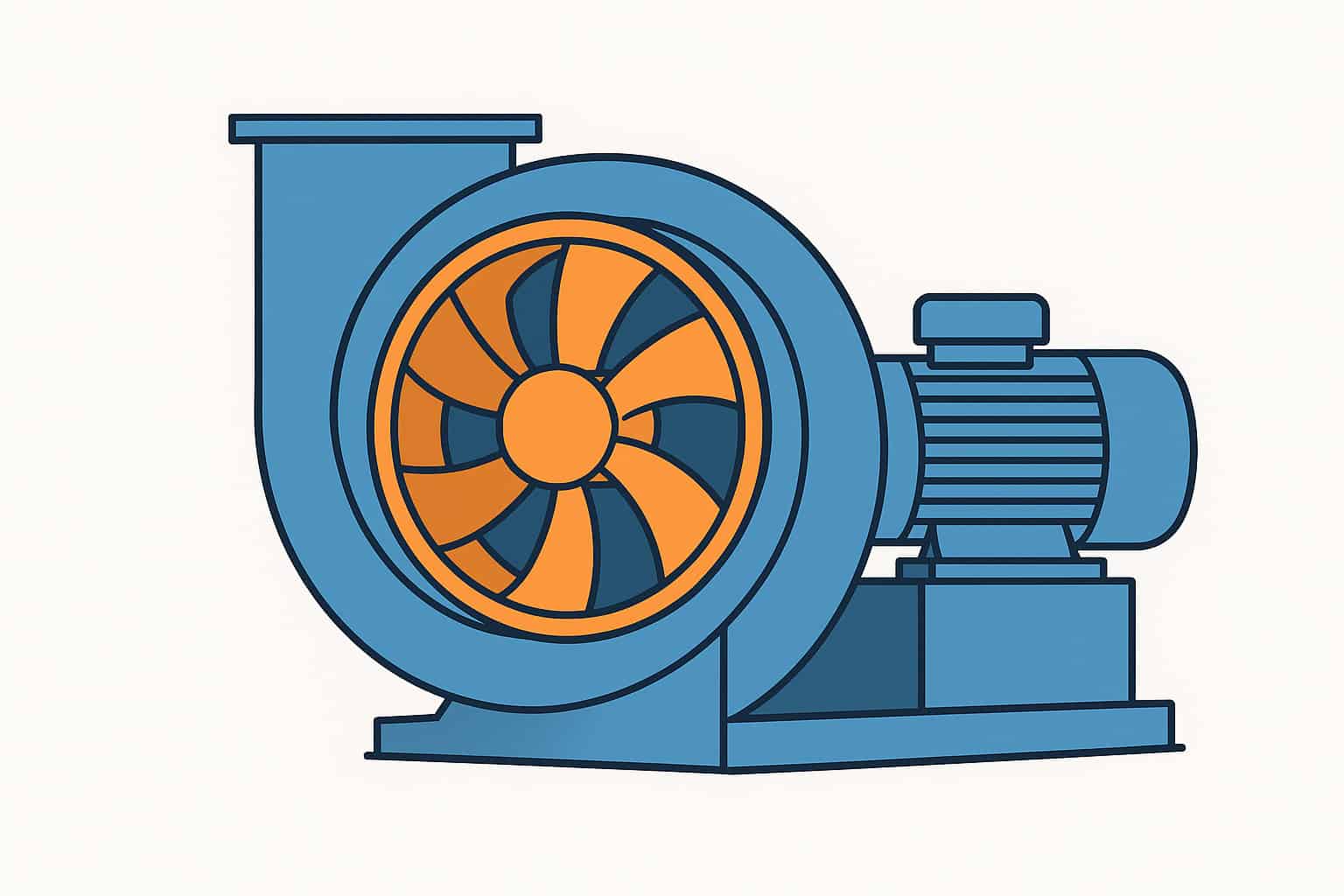
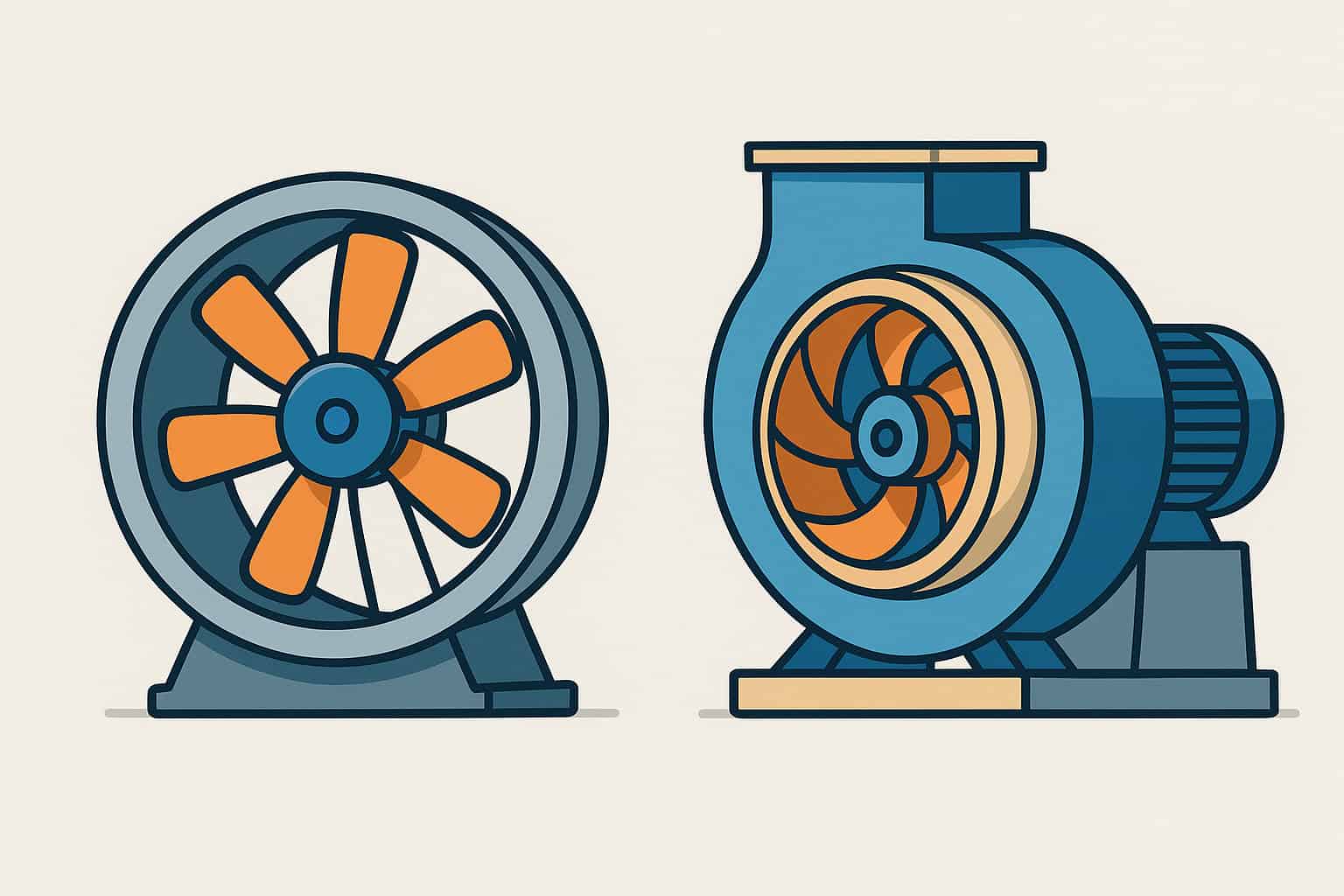
Centrifugal blowers use a rotating impeller to accelerate air outward and convert velocity into pressure in a scroll casing. They are similar in principle to centrifugal fans but are optimised for higher pressure. Common centrifugal blower sub-types include:
- Forward-curved blowers – compact units with many small blades, often used in HVAC equipment and small process systems where moderate pressure and low noise are needed.
- Backward-curved or backward-inclined blowers – more efficient designs suitable for higher pressure and continuous industrial service.
- Radial blade blowers – robust units with straight blades that handle dusty, abrasive or particle-laden air, often used in heavy industry and some mining applications.
Positive-displacement blowers move fixed volumes of air using rotating elements in close-clearance housings. They can generate higher pressures than many centrifugal blowers and deliver relatively constant flow regardless of small pressure changes. Important sub-types include:
- Roots blowers (lobed blowers) – use two or three lobed rotors that trap pockets of air and carry them from inlet to outlet. Widely used for aeration, pneumatic conveying and vacuum systems.
- Screw blowers – use intermeshing helical rotors to compress and move air smoothly, offering good efficiency and lower noise than some traditional Roots designs.
- Vane blowers – use a rotor with sliding vanes in an eccentric housing, more common in smaller or specialised applications.
In addition to these main groups, you will find special-purpose blowers like regenerative blowers (side-channel blowers), which use a spinning impeller and side channel to recirculate air and build moderate pressure, and multistage centrifugal blowers, which stack several impellers in series to reach higher pressures.
For practical selection in industrial and mining environments, engineers normally start by deciding between centrifugal and positive-displacement designs according to required pressure, flow stability, efficiency and gas characteristics. Within that family they then choose the specific sub-type—forward-curved, radial, Roots, screw and so on—that best fits the duty, noise limits and maintenance preferences.
In summary, blowers fall into two main families—centrifugal and positive-displacement—with several important sub-types in each. Instead of counting a fixed number of types, it is more useful to understand these families and select the blower design that matches your process and ventilation requirements.
