

When people ask how much air pressure drops per 1000 feet, they are usually talking about atmospheric pressure and altitude, not the friction loss in a duct. As you go higher above sea level, the weight of the air column above you is reduced, so atmospheric pressure and air density both decrease. This has a direct impact on fan selection and mine ventilation design at high-altitude sites.
Near sea level, a useful rule of thumb is that atmospheric pressure drops by about 3–4 kPa (around 0.5 psi, or roughly 1 inch Hg) for every 1000 feet (about 300 m) of elevation. In terms of percentage, that is roughly a 3–4 % reduction in pressure and air density per 1000 feet over the first few thousand feet. The exact relationship is exponential and depends slightly on temperature, but this simple rule is accurate enough for many ventilation calculations and for estimating fan derating with altitude.
For example, suppose your mine or plant is located at about 5000 feet (≈1500 m) above sea level. Using the 3–4 % per 1000 feet rule, you can expect the atmospheric pressure and air density to be roughly 15–20 % lower than at sea level. That means a ventilation fan that would develop a certain pressure and mass flow at sea level will produce proportionally lower pressure and mass flow at this altitude if it runs at the same speed and moves the same volume of air.
This reduction in air density has two main consequences for fan performance:
- For a given speed and volume flow, fan pressure (Pa) and power (kW) are directly proportional to density. At higher altitude (lower density), the developed pressure and absorbed power are both lower compared with sea-level values.
- If your design requires a certain mass flow (kg/s) of air for cooling or gas dilution, you will need a higher volume flow at altitude, because each cubic metre of air contains less mass.
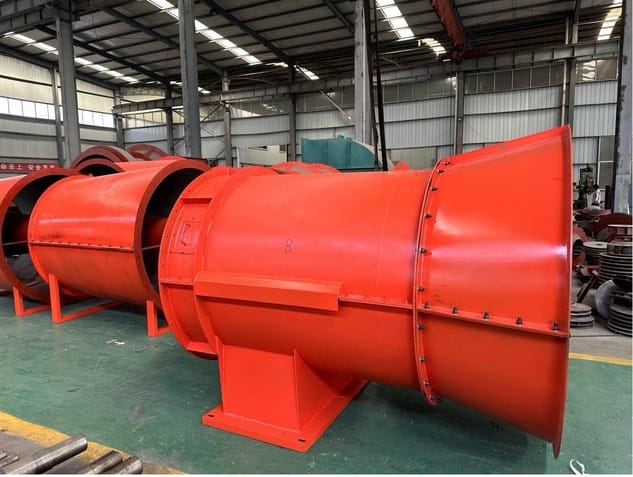
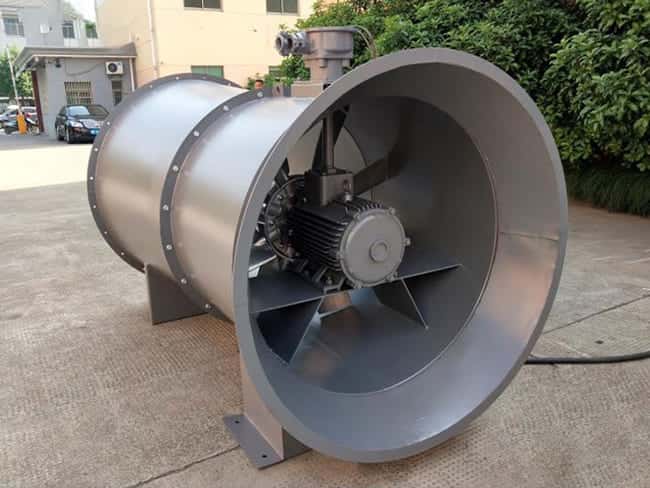
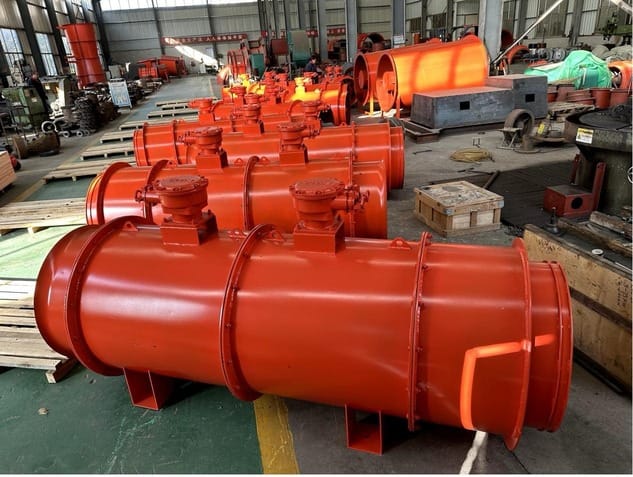
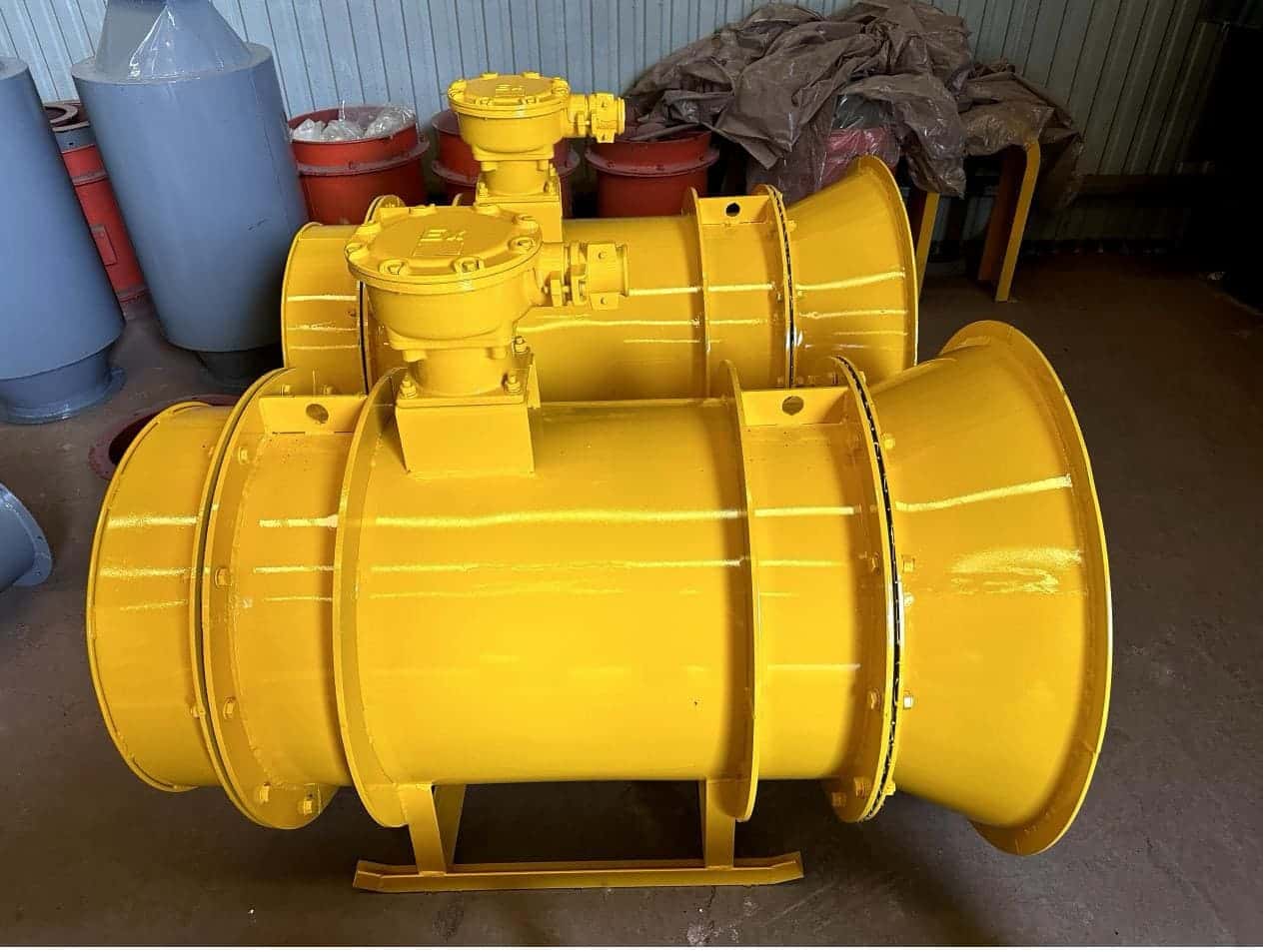
In mining ventilation and heavy industry, engineers therefore apply altitude corrections when sizing fans. Starting from site elevation and typical temperatures, they estimate air density, adjust the required pressure and mass flow to equivalent standard conditions, select a fan on the manufacturer’s standard-air curves, and then convert the selected performance back to site conditions. This ensures that the installed fan meets the ventilation requirements despite the lower atmospheric pressure.
In summary, atmospheric pressure drops by roughly 3–4 kPa, or about 3–4 %, per 1000 feet of elevation near sea level. This seemingly small change adds up quickly at high-altitude mines and plants, so it must be taken into account when designing ventilation systems and selecting mining and industrial fans.