
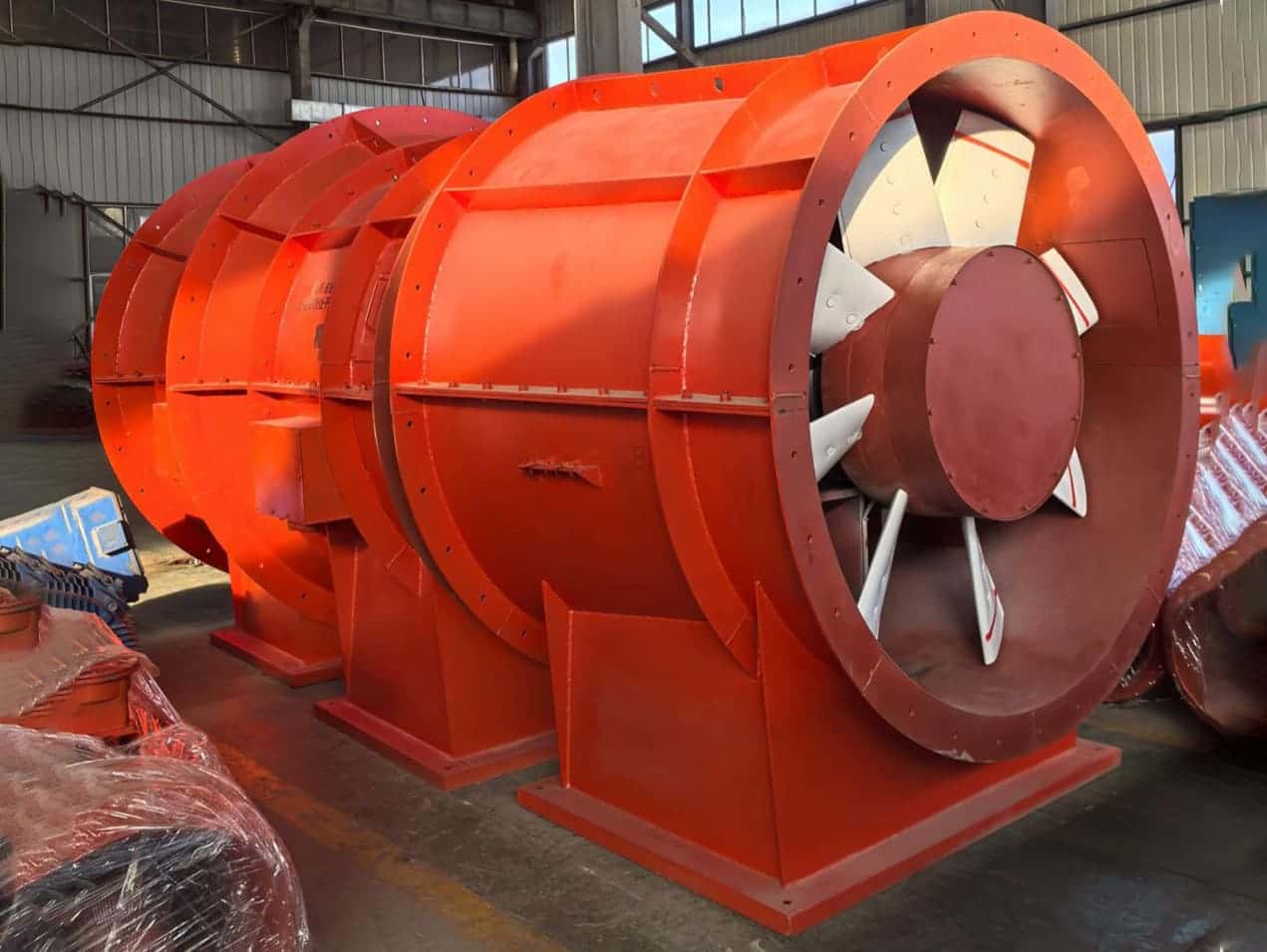
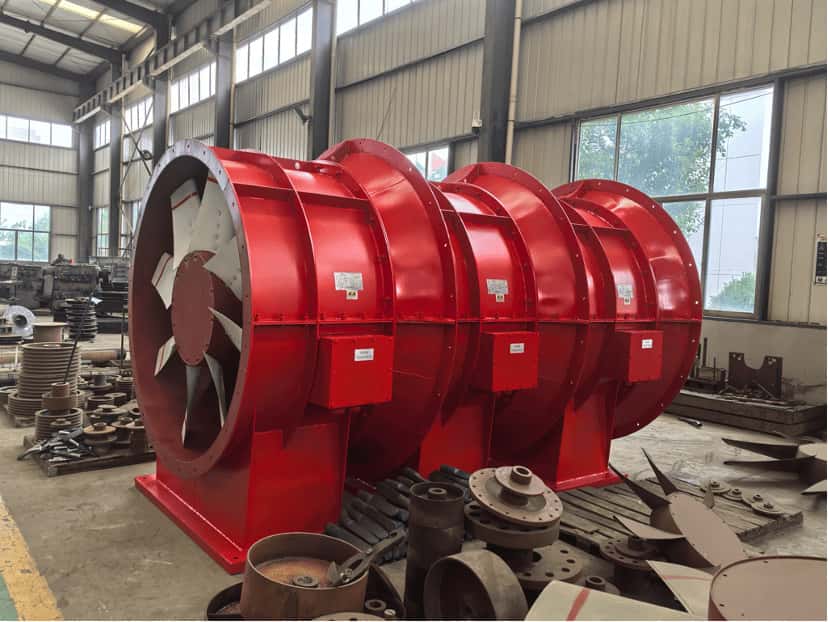
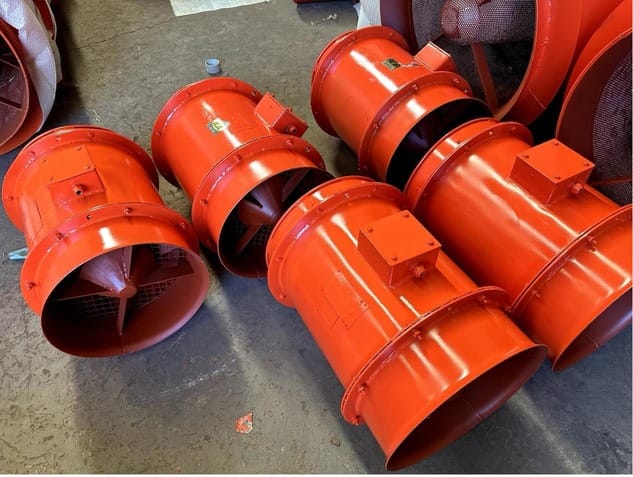
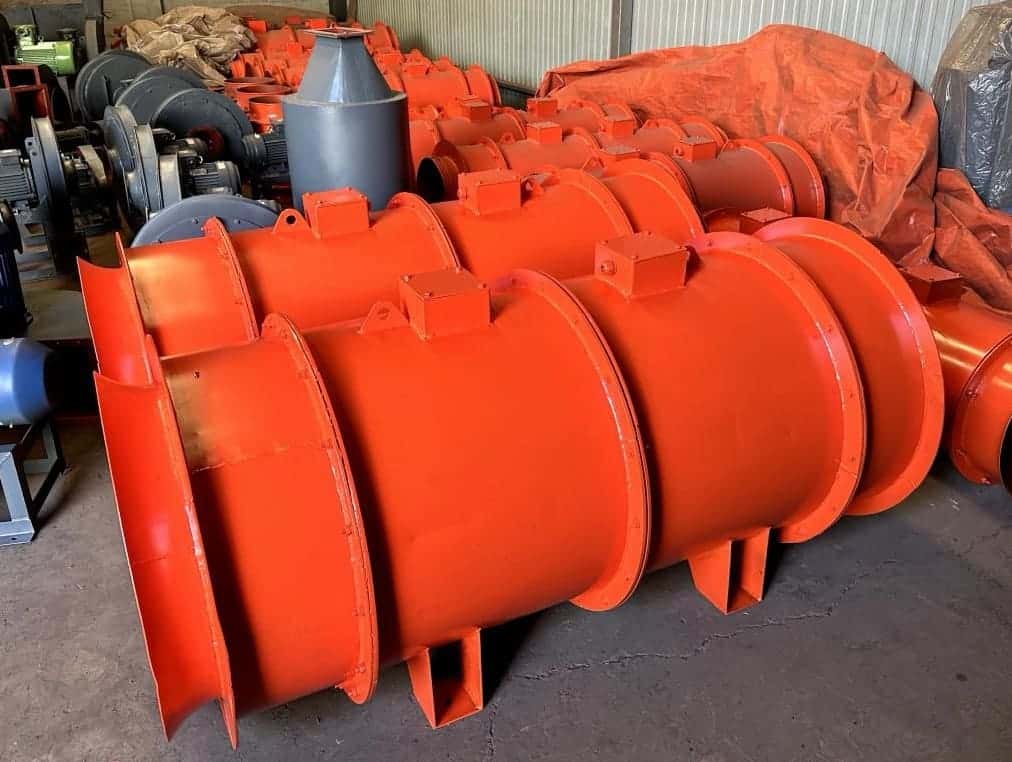
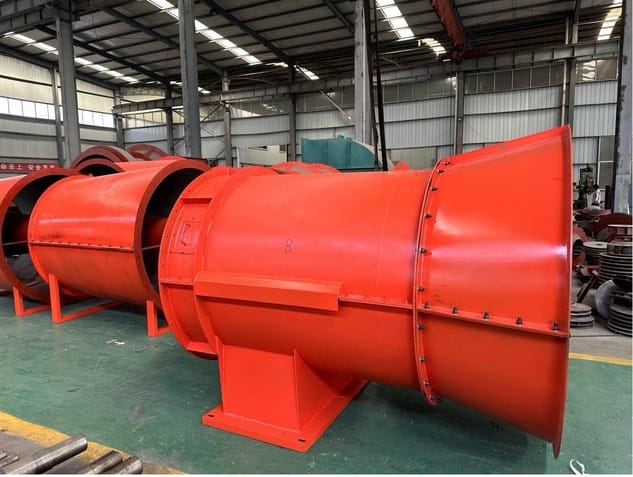
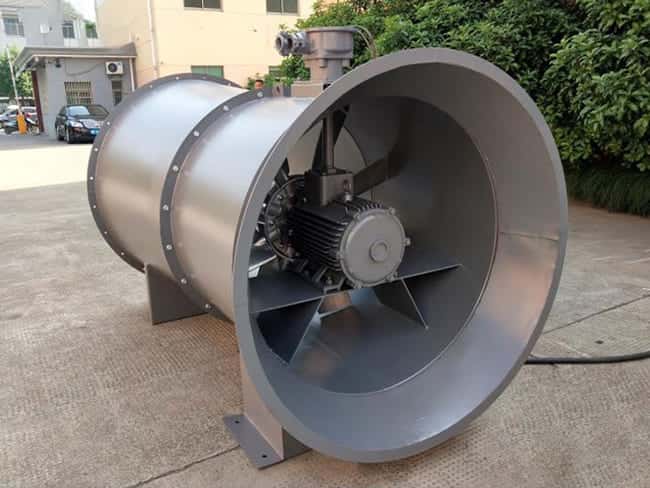
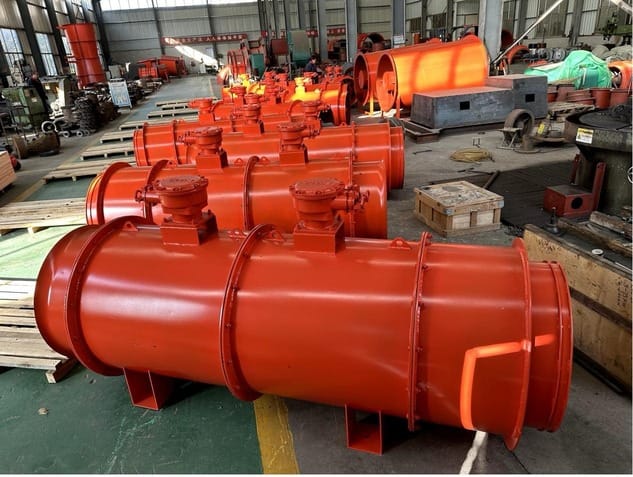
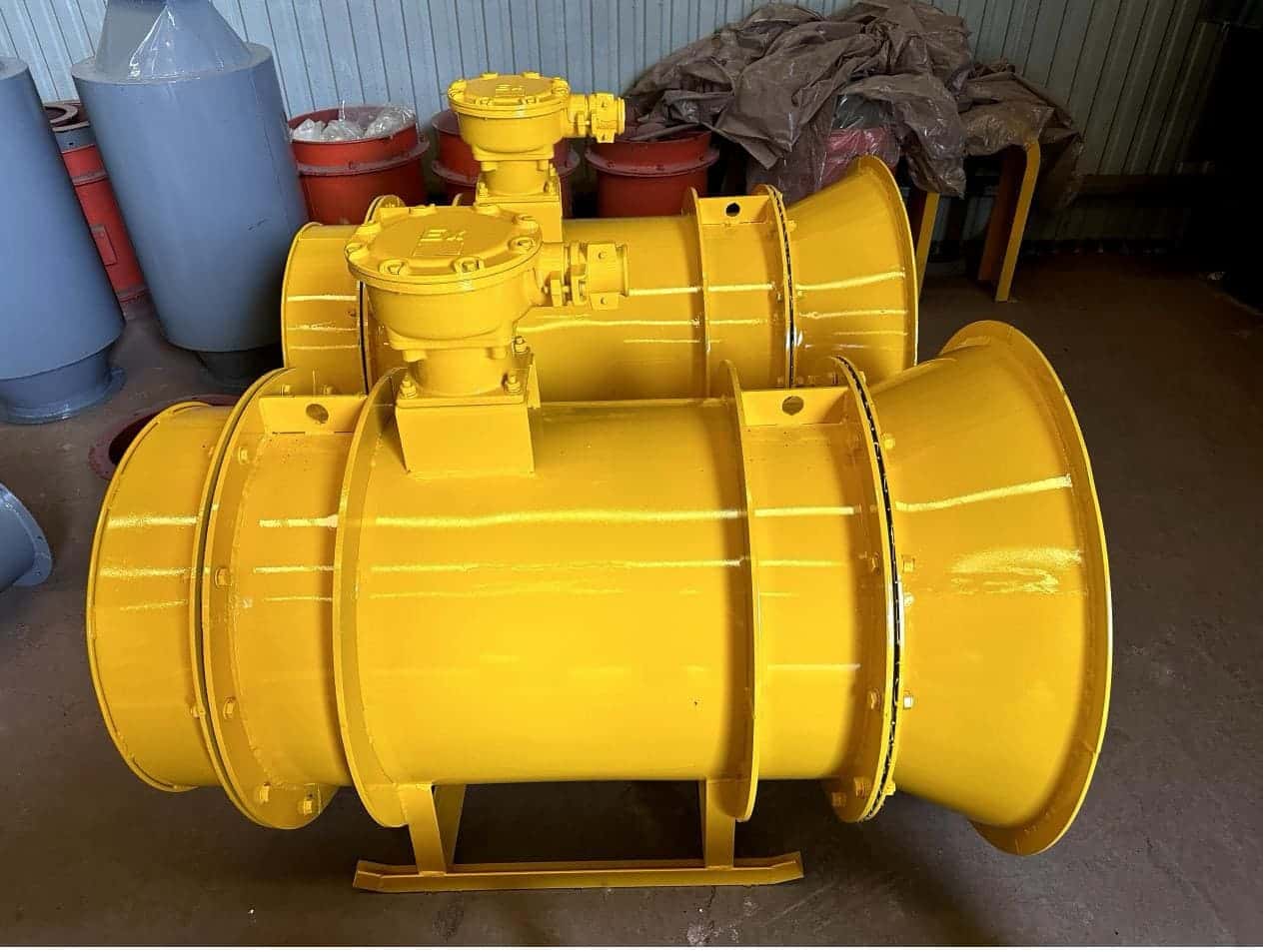
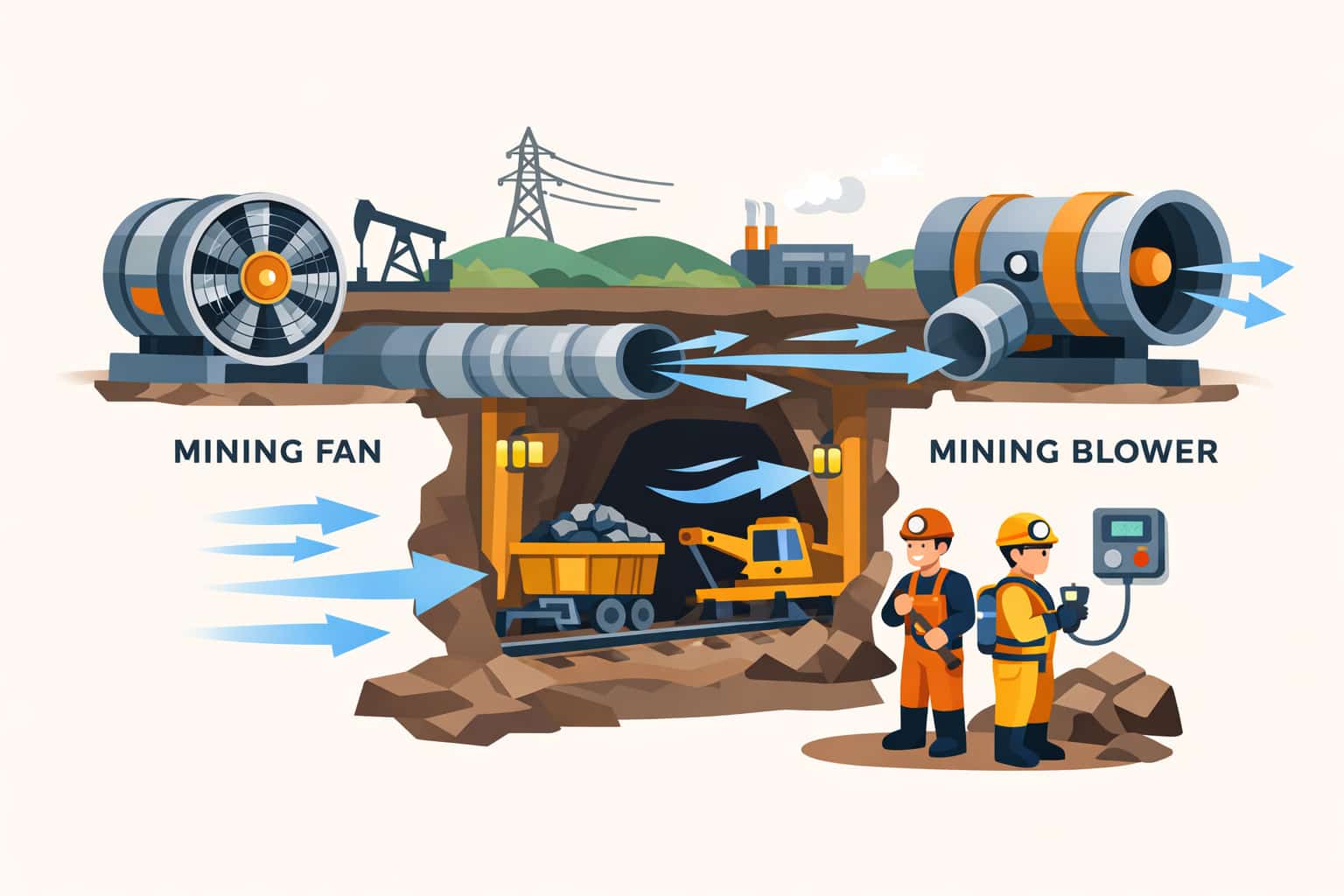
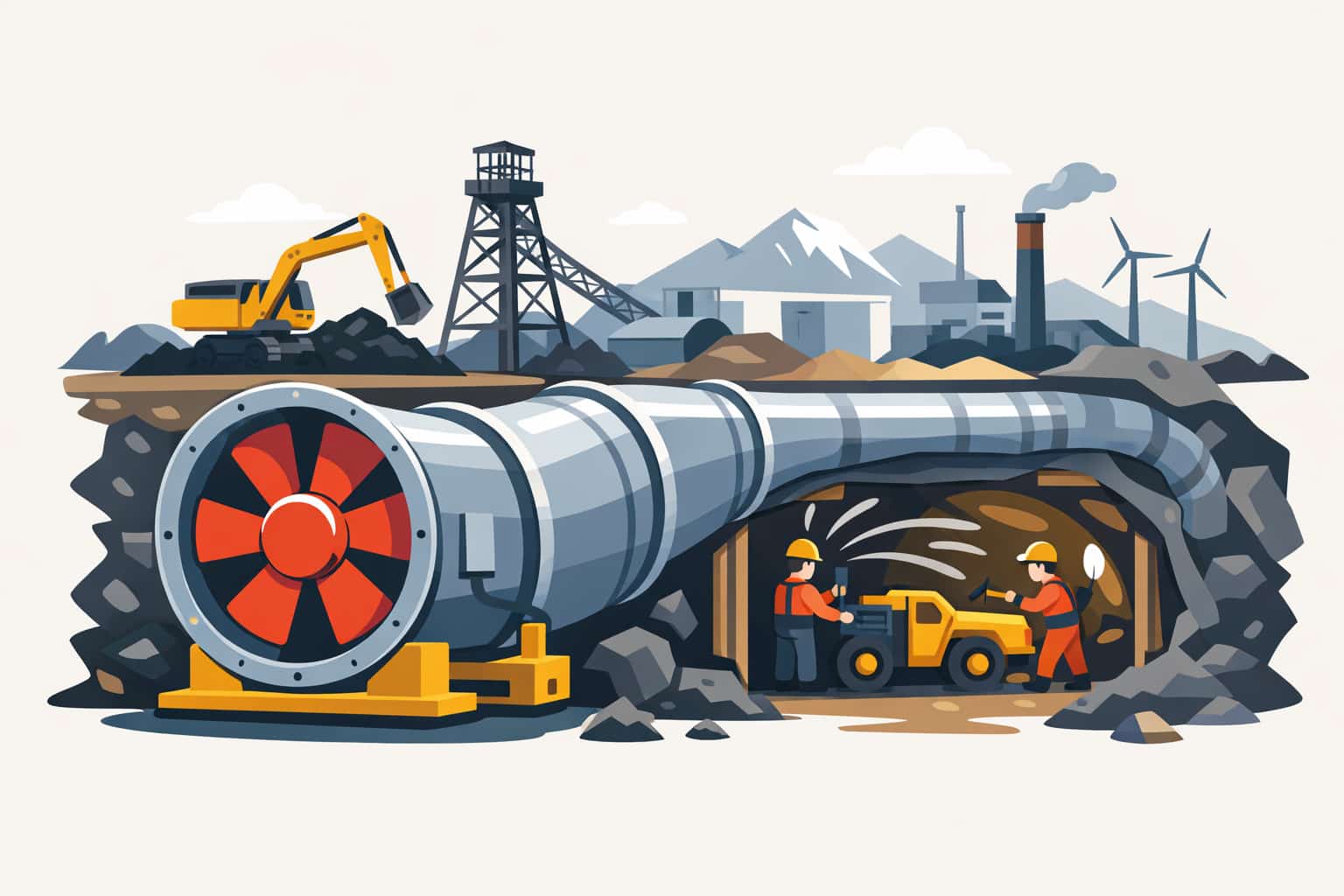
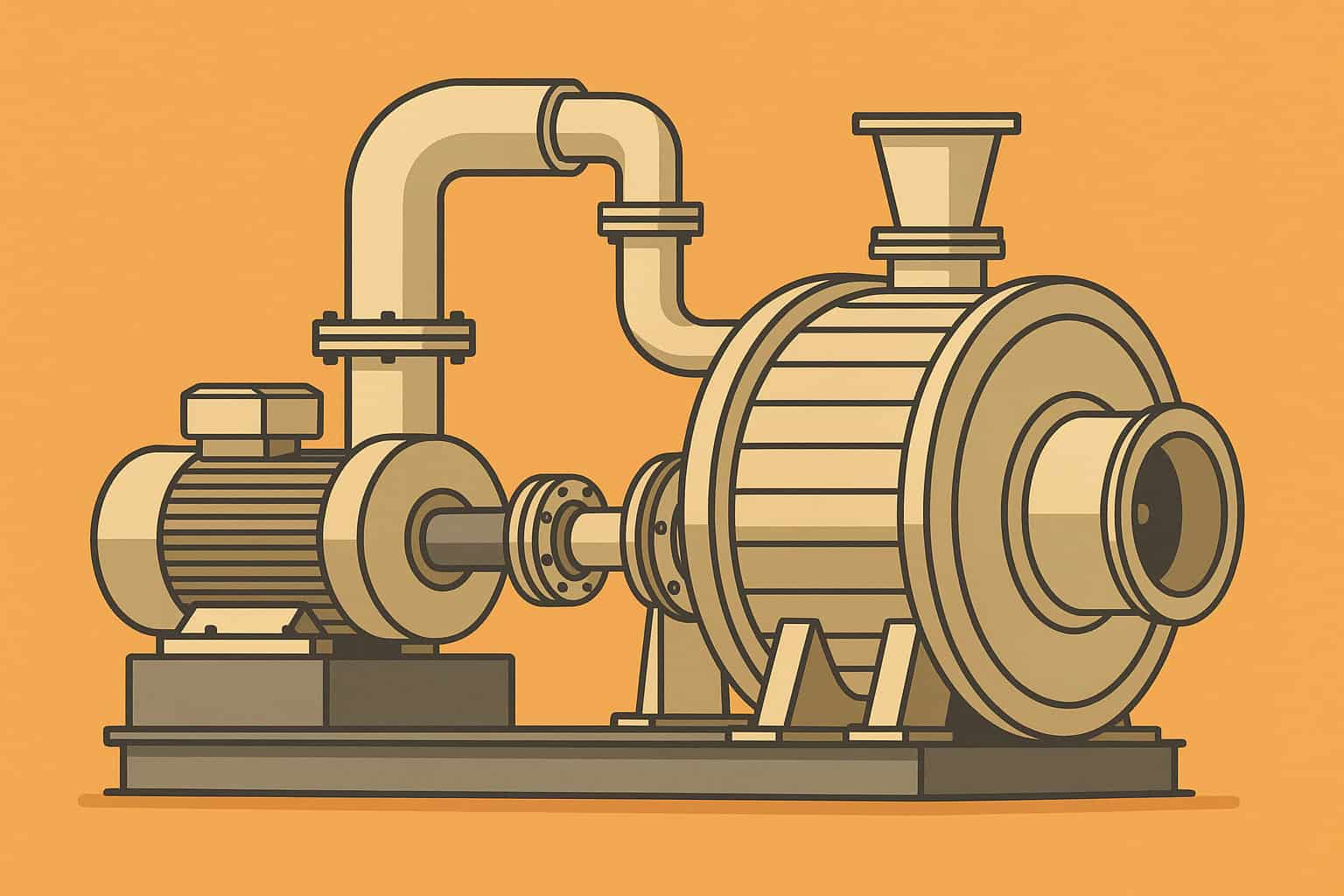
In line booster fans for underground mining are often smaller and more localized than major shaft mounted booster stations, but their installation still represents a significant investment. Rather than focusing on a single cost figure, it is more useful to understand the main cost components and design choices that influence the total budget. This helps mines compare the in line booster option with alternatives such as larger auxiliary fans, new raises or changes to primary ventilation.
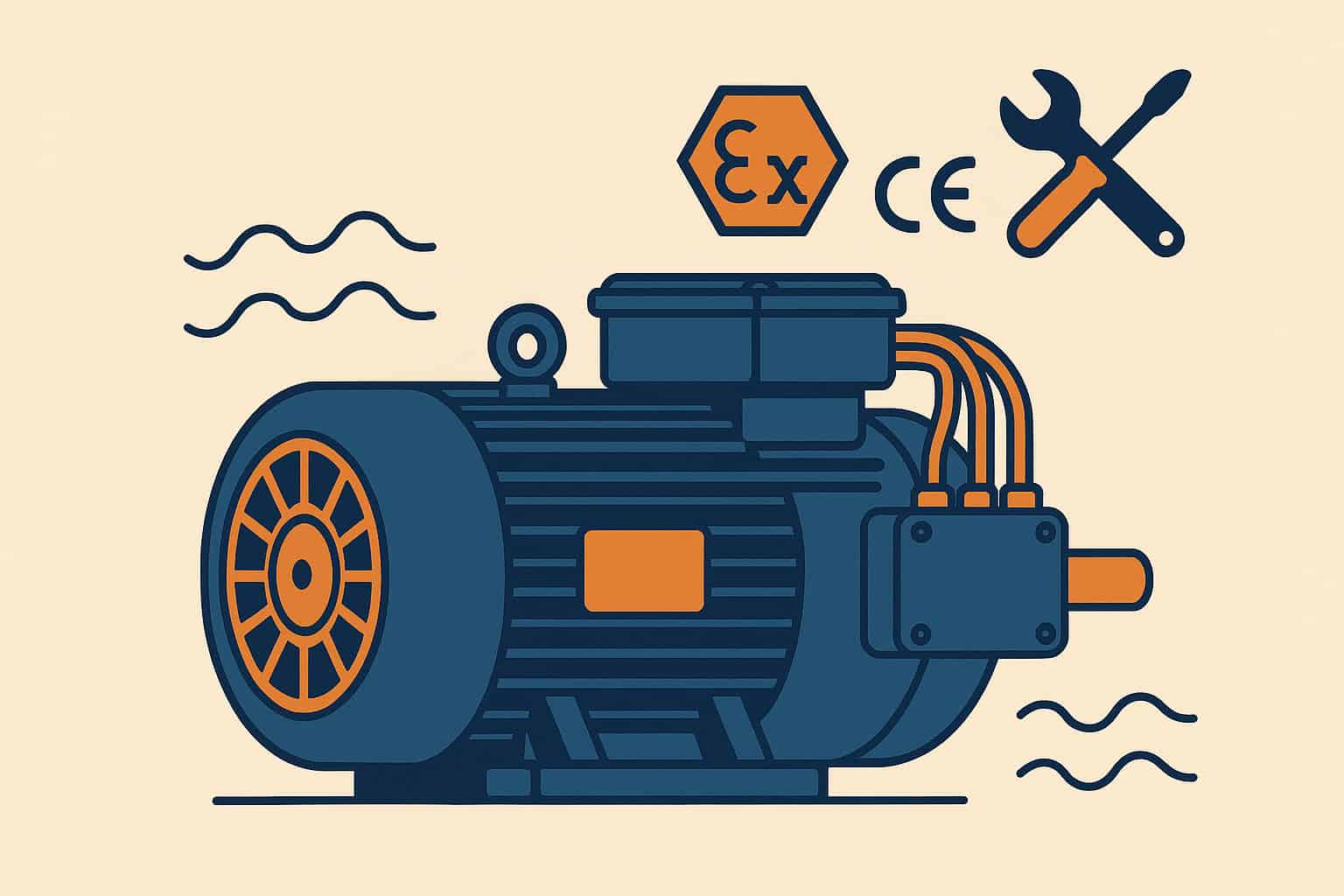
The first factor is the required duty of the in line booster fan. The airflow and pressure needed to overcome resistance in a particular branch or long duct run will determine the fan size and motor rating. A modest in line booster in a small heading may use a relatively small axial fan, while a fan intended to reinforce airflow to a large development district may require a much higher power unit. Fan purchase cost increases with diameter, pressure capability, efficiency and any special construction such as flameproof or explosion proof designs.
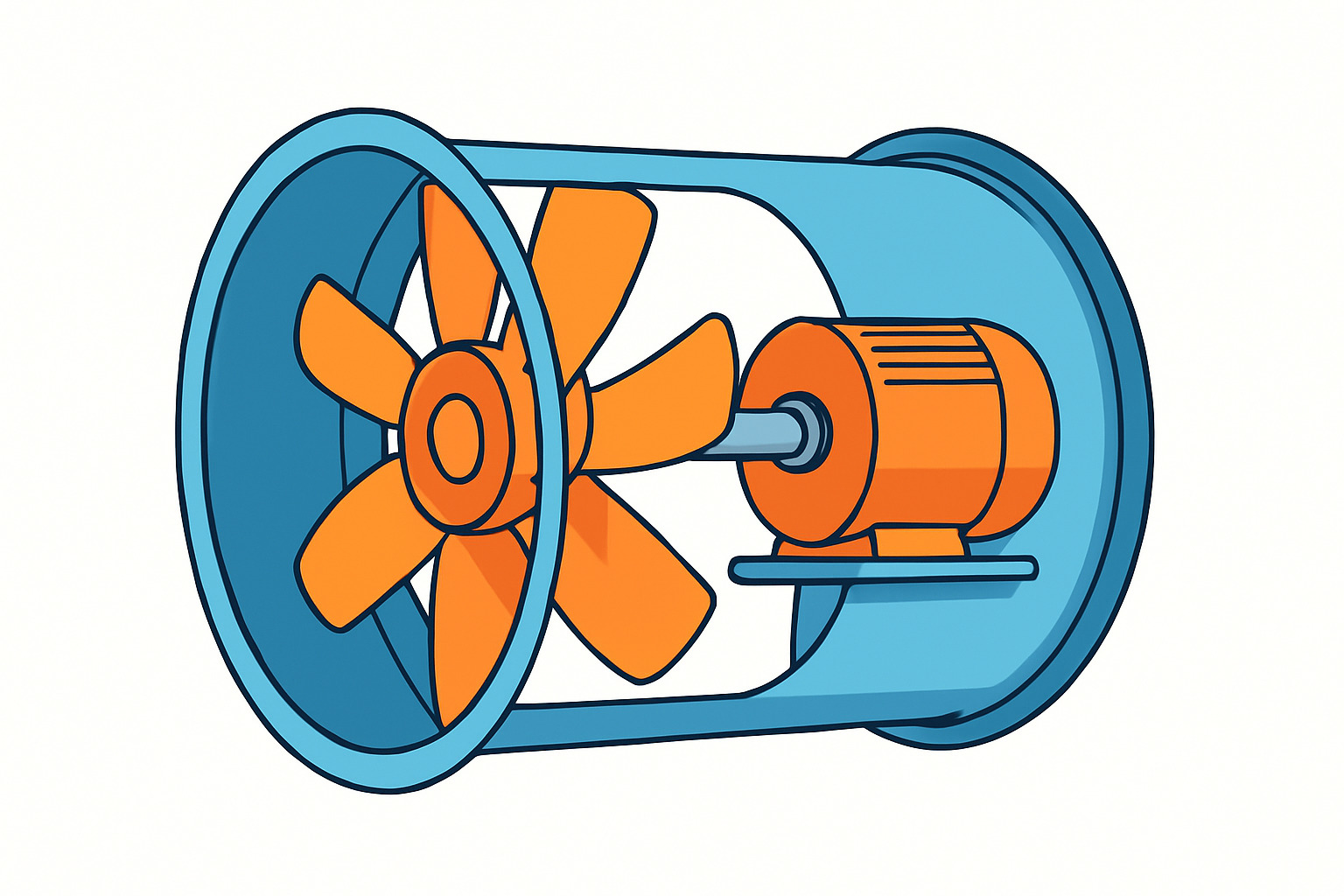
Installation costs are strongly affected by the ducting or airway arrangement. An in line booster fan is typically installed directly in a ventilation duct or in a concrete airway that forms part of the branch. This may require enlarging or reshaping the drift, building a short fan chamber, installing flanges, transitions and support steelwork, and fitting silencers to control noise. Flexible or rigid ducts must be suspended or supported correctly to avoid collapsing under suction or pressure, and their additional length and diameter can add material and labour costs.
Power supply and controls are another important component. Even relatively small in line booster fans need reliable power, switchgear and protection. Mines may also use variable speed drives to adjust the booster output as ventilation demands change, which adds to the initial cost but can reduce power consumption. Local and remote controls, interlocks with main fans and integration into the mine ventilation monitoring system are usually required for safe operation.
Because in line booster fans are installed underground, extra attention must be paid to access, safety and maintenance. Designing safe walkways, platforms, isolation dampers and bypasses so that fans can be serviced without stopping production can add structural and hardware costs. In coal or gassy metal mines, any booster fan must comply with strict rules regarding placement, electrical classification and the avoidance of recirculation, which may influence the overall design and cost.
From a planning perspective, the cost of an in line booster fan installation should be viewed alongside its benefits over the life of the mine. These benefits may include increased airflow to critical areas, improved gas and dust control, the ability to delay major primary ventilation upgrades or shafts, and support for higher production rates. Operating costs such as energy use and maintenance must also be considered when comparing options.
In summary, the cost to install an in line booster fan for underground mining is driven by fan size and specification, duct and airway modifications, power and controls, and safe access and maintenance requirements. The final budget is site specific and should be developed as part of an integrated mine ventilation design rather than as an isolated equipment purchase.