
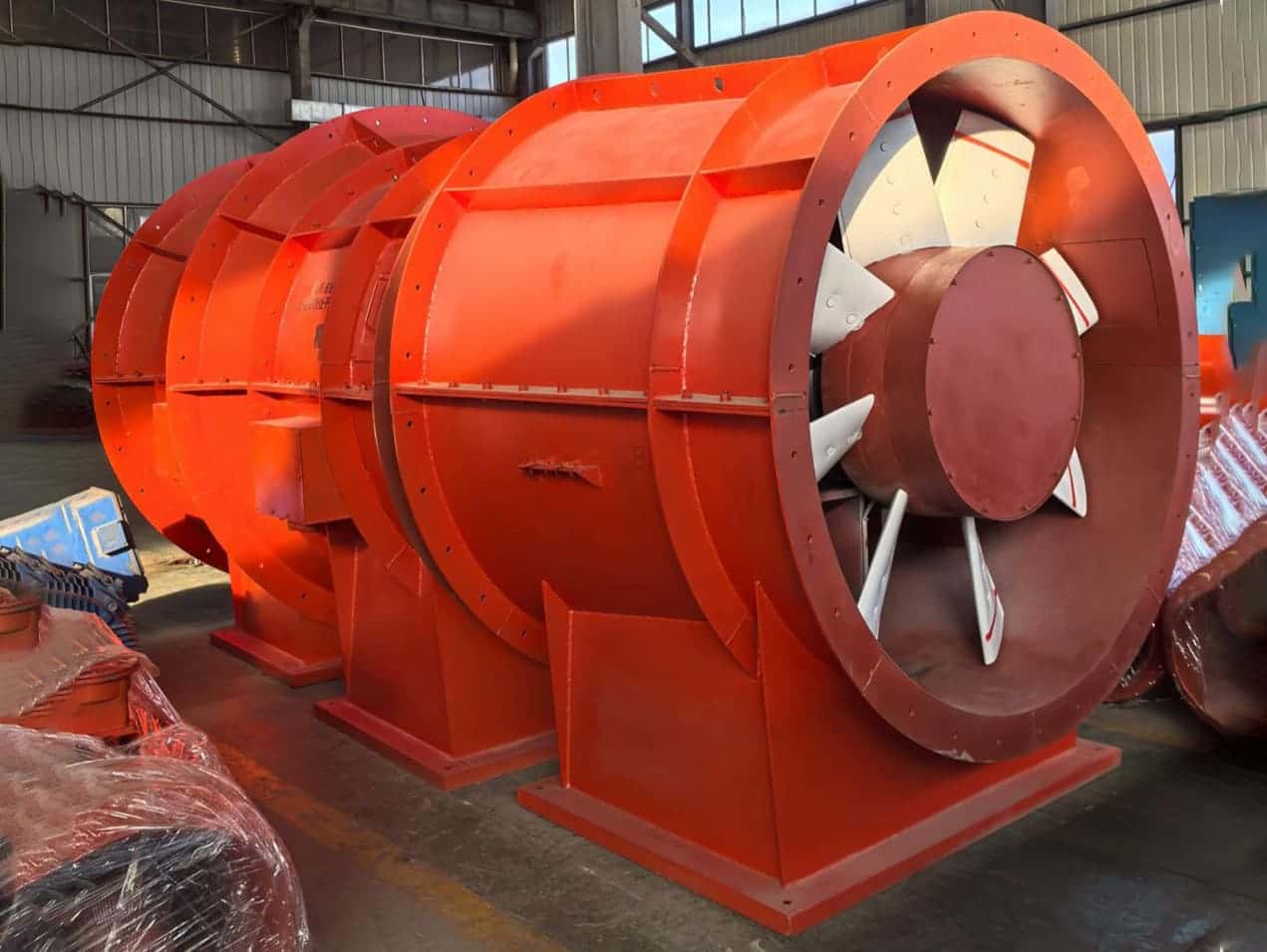
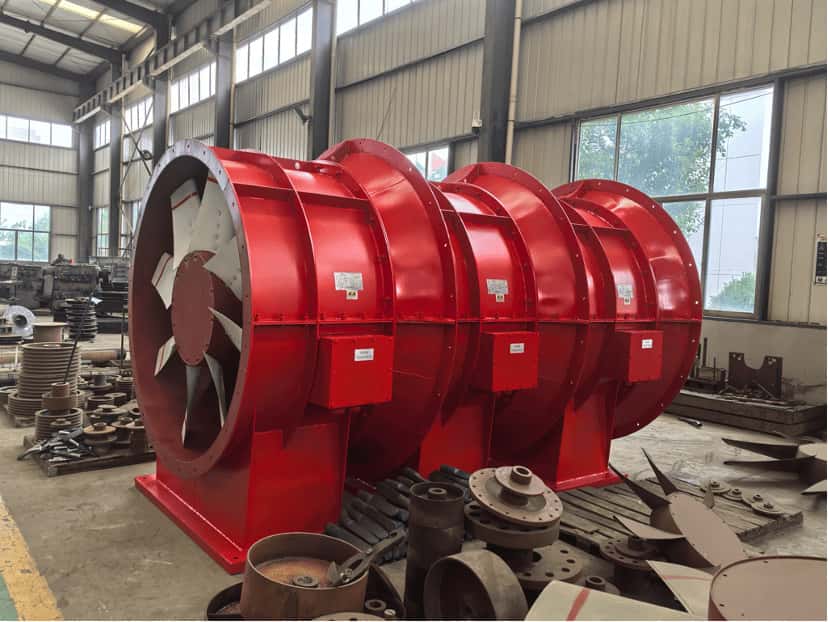
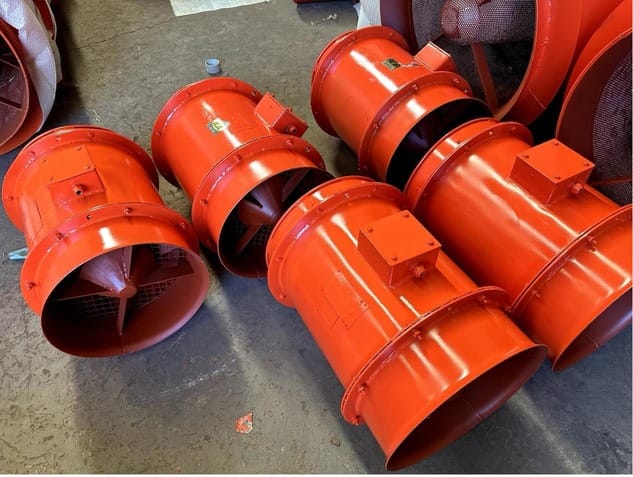
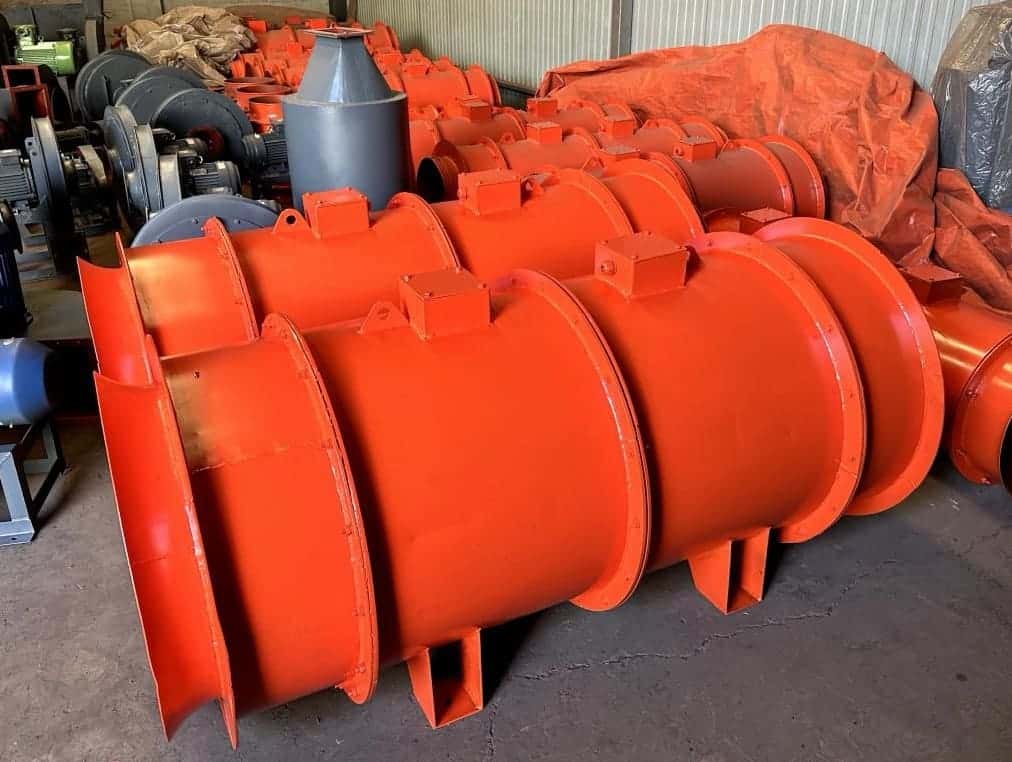
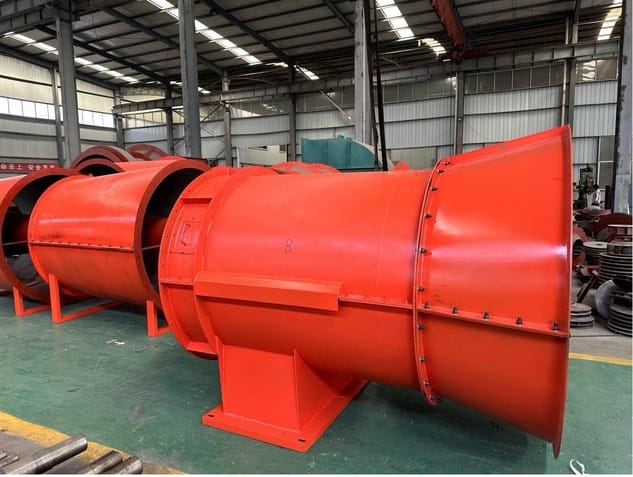
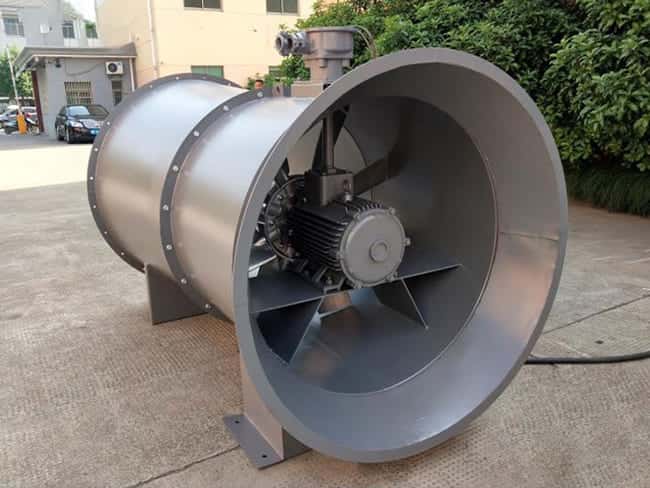
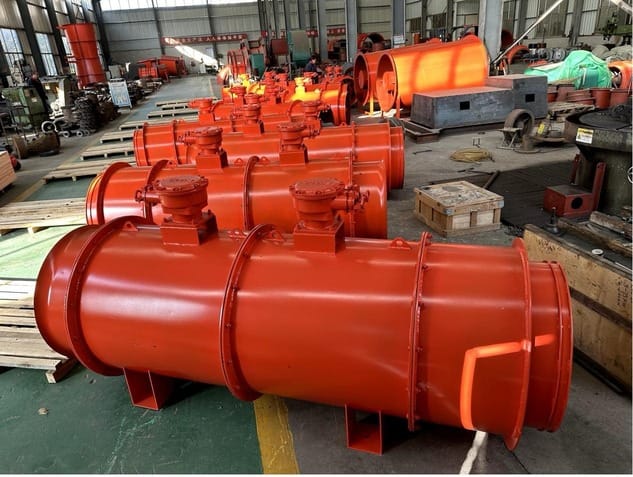
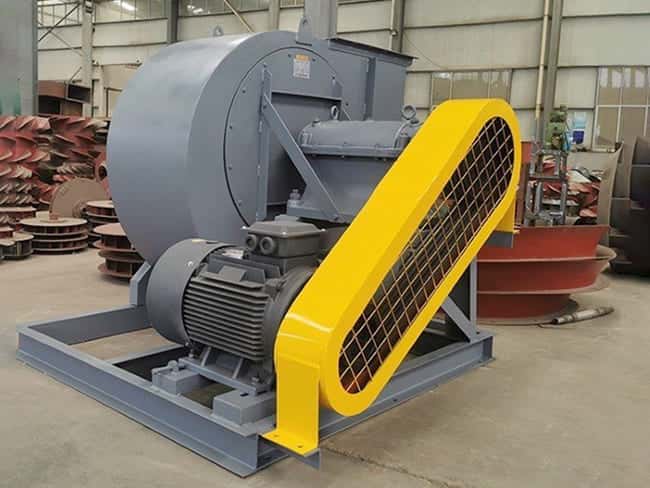
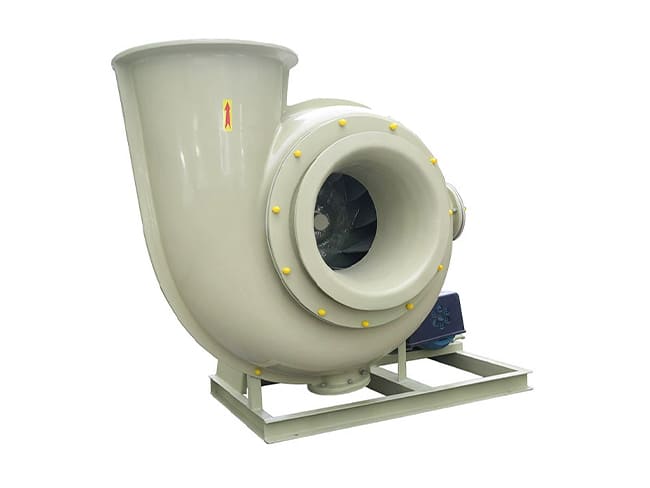
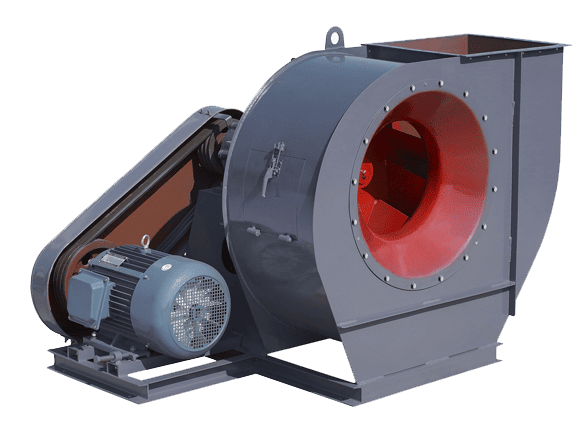
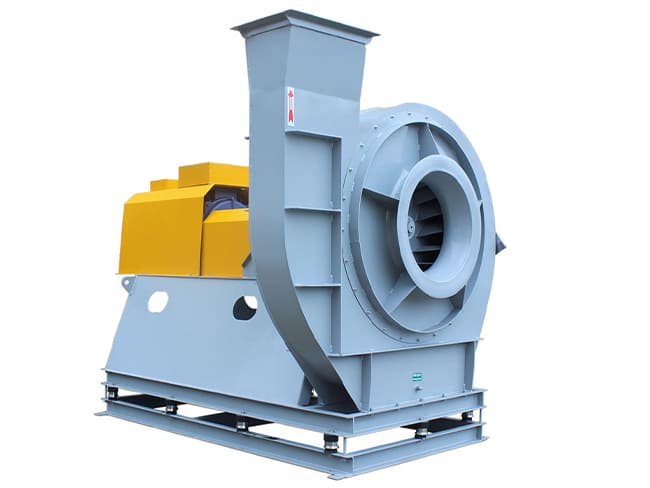



Balancing a fan shaft is really about balancing the entire rotating assembly: shaft, impeller, hub, blades and any coupling or pulley. In mining and industrial ventilation fans, an unbalanced rotor can cause high vibration, excessive bearing loads, noise and premature failures. Proper balancing restores smooth rotation around the shaft’s true axis of inertia so that the fan delivers the required airflow and pressure with minimal mechanical stress.
The first step is to inspect and clean the rotor assembly. Dirt, scale and product buildup on blades or hub can create significant unbalance, especially in dusty mining and process environments. Before any balancing attempt, the impeller and shaft should be thoroughly cleaned and visually checked for damage, cracked blades, bent shaft, loose fasteners or worn keyways. Any structural defects must be repaired or components replaced before balancing.
Balancing can be done either in a workshop (shop balancing) or on site (field balancing). In a workshop, the shaft and impeller are mounted on a balancing machine that measures vibration or unbalance at one or two planes. The machine calculates how much correction mass is needed and where it should be added or removed. Technicians then drill, grind or add balance weights at specified positions on the impeller or hub, and repeat the measurement until residual unbalance is within the specified tolerance class.
Field balancing is performed with the fan installed. A portable vibration analyzer or balancing instrument is attached to the fan bearings, and phase reference marks are placed on the shaft or coupling. With the fan running at normal speed, the instrument measures vibration amplitude and phase. The technician then adds a trial weight at a known angular position, repeats the measurement, and uses the change in vibration to compute the required permanent correction weight. This procedure may be done in one plane (for overhung rotors) or two planes (for longer shafts).
Correct balancing also requires attention to assembly practice and repeatability. Couplings, pulleys and impellers must be located accurately on the shaft using keys, tapers or interference fits, and tightening sequences must be consistent. If components are disassembled and reassembled frequently, it may be necessary to mark relative positions to preserve balance. In some cases, fans are supplied with factory-balanced impellers and shafts, but poor field assembly can still introduce unbalance.
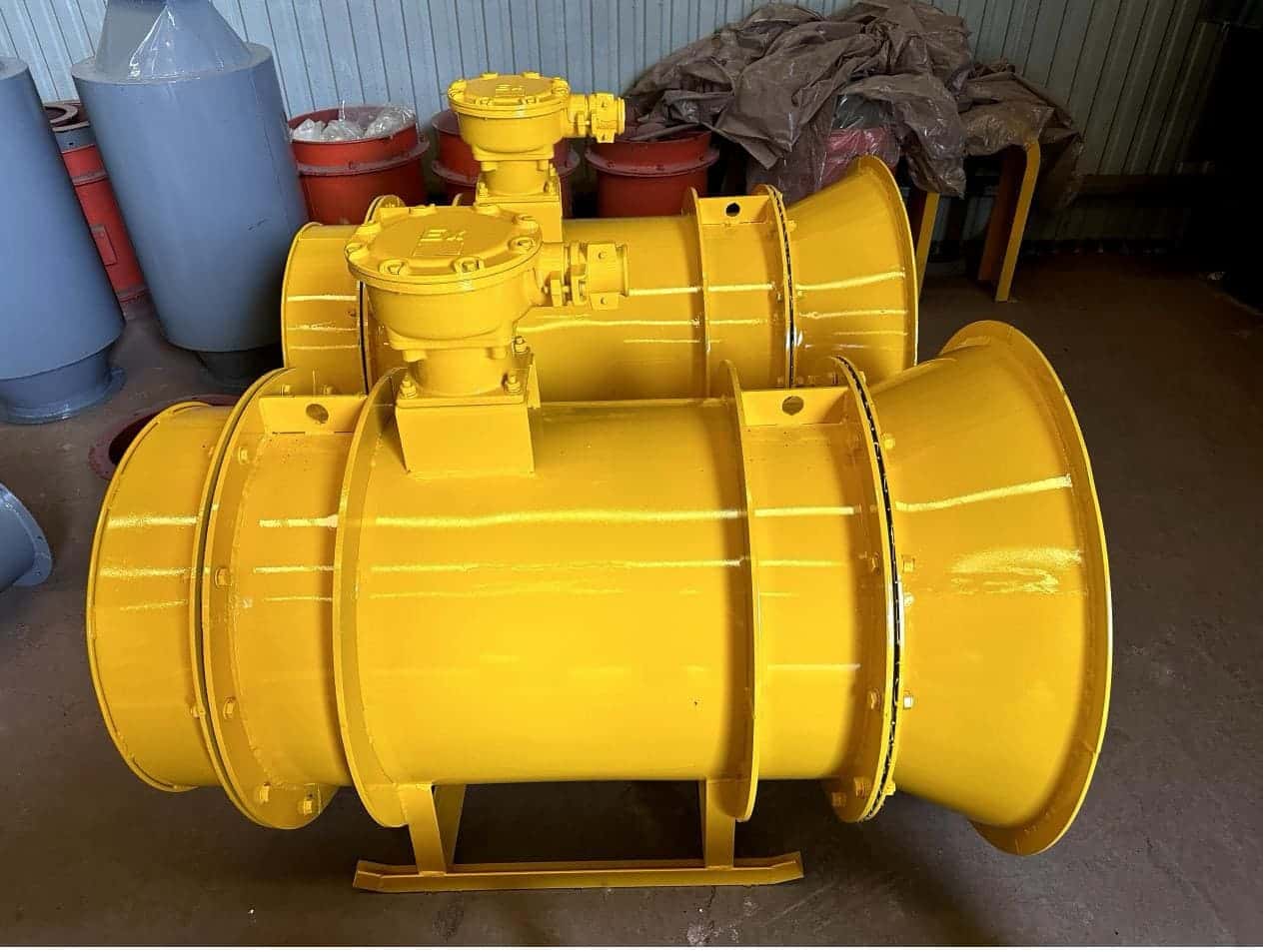
In mining and heavy industrial fans, it is important to consider operating conditions when balancing. For example, high-temperature operation or variable speed drives can excite critical speeds or resonances, and balancing should be done at or near the normal operating speed. If the fan operates in explosive atmospheres, balance corrections must be done with materials and methods that do not compromise explosion-proof certification.
In summary, to balance a fan shaft you clean and inspect the rotor, measure vibration with appropriate instruments, calculate correction weights in one or two planes, and apply those corrections to the impeller or hub. Proper balancing reduces vibration, protects bearings and structures, and ensures reliable operation of mining and industrial ventilation fans.