












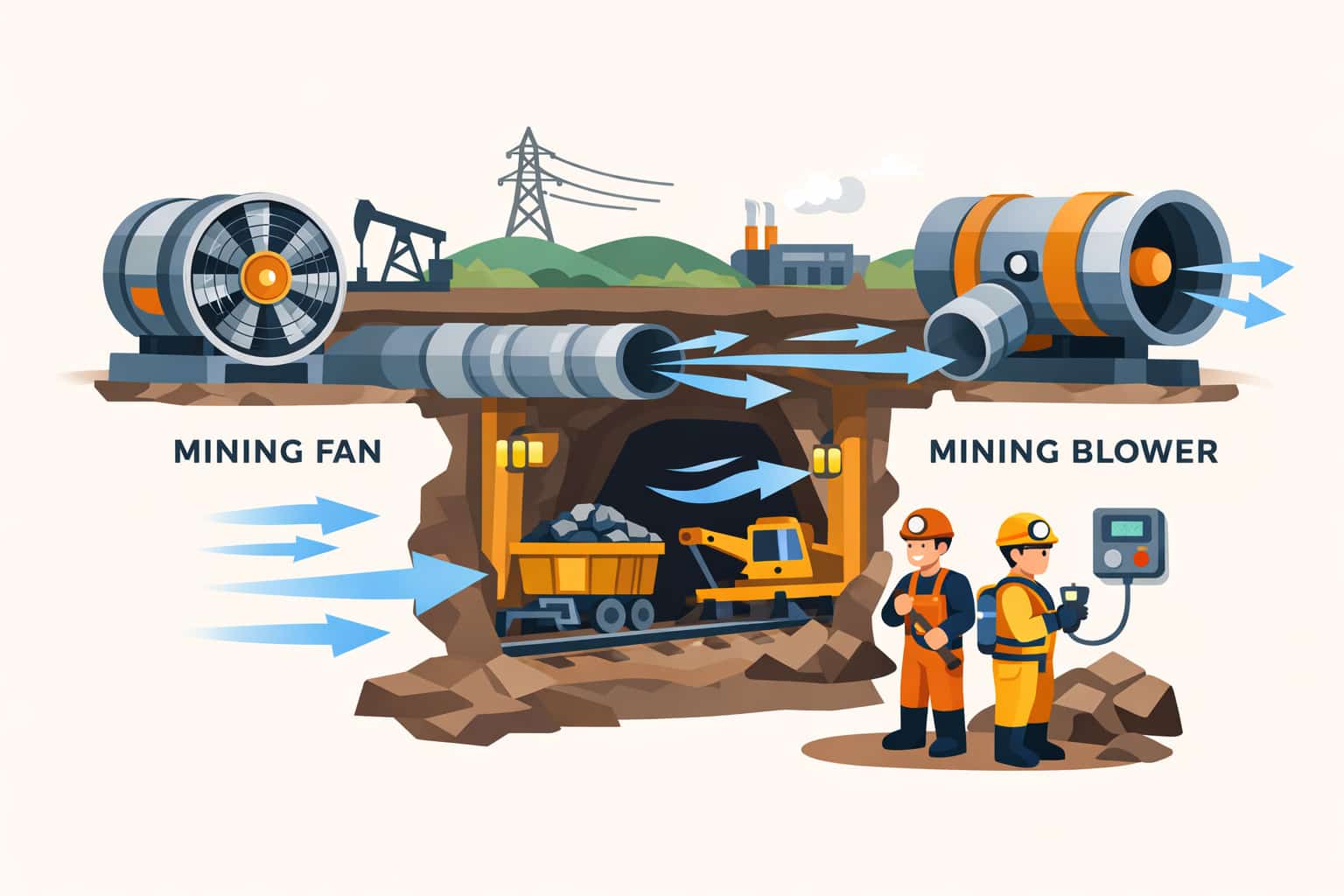
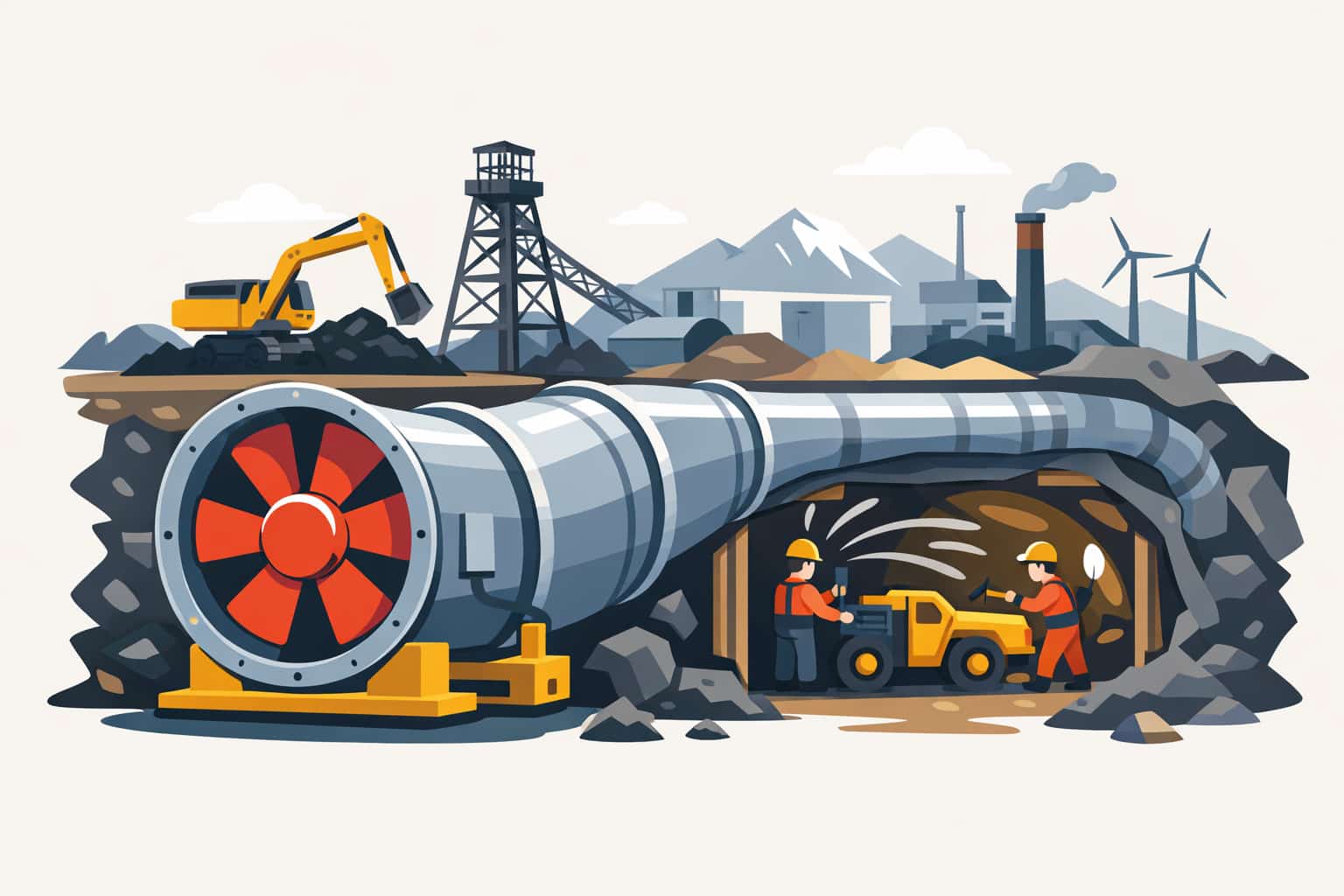

Knowing how to choose a ventilation fan is essential for anyone responsible for air quality in a building, factory, tunnel or mine. A fan that is too small, the wrong type or made from unsuitable materials will give poor performance and may even create safety issues. Correct fan selection starts with understanding the application, then defining airflow and pressure requirements, and finally choosing an axial or centrifugal design that matches the duty and environment.
The first step is to define the purpose of the fan. Are you trying to provide general building ventilation, local exhaust at a welding station, smoke control in a tunnel, or main ventilation in an underground mine? Each duty has different requirements. For example, a mine main fan must run continuously at high power and handle variable resistance as workings advance, while a small industrial exhaust fan may operate intermittently and handle light fumes only. Clarifying the purpose helps you set realistic performance and durability expectations.
The next step is to quantify the required airflow and pressure. Airflow is determined by the volume of the space, number of people, process emissions and any regulatory requirements for air changes or dust and gas dilution. Pressure depends on the resistance of ducts, filters, louvers, stoppings, regulators and airways. Engineering calculations or software are used to build a system curve describing how much pressure is needed for each airflow. The fan must be selected so that its performance curve intersects the system curve at the required operating point.
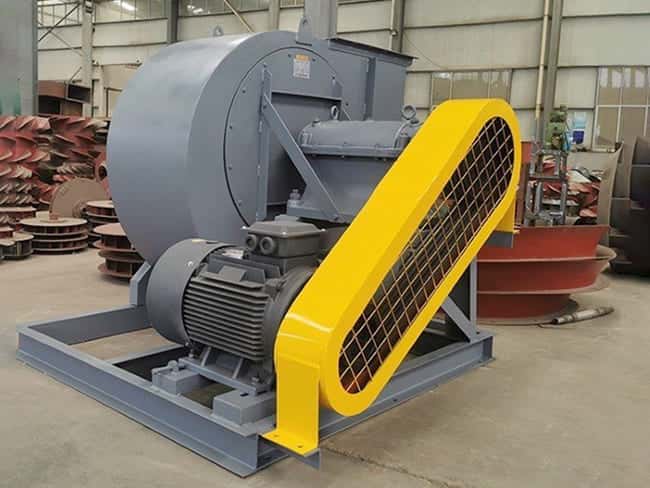
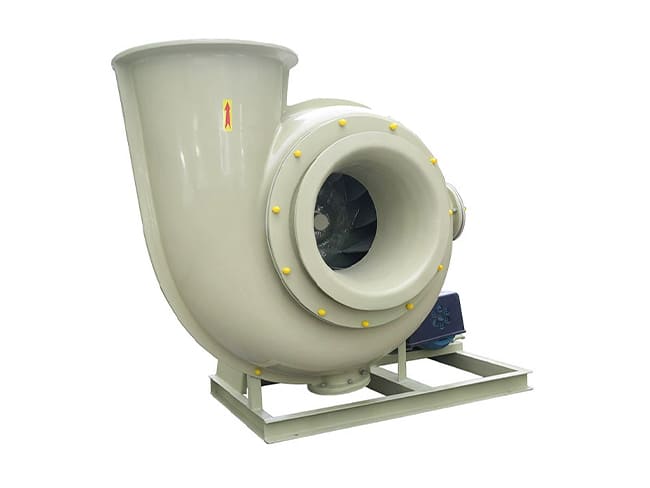
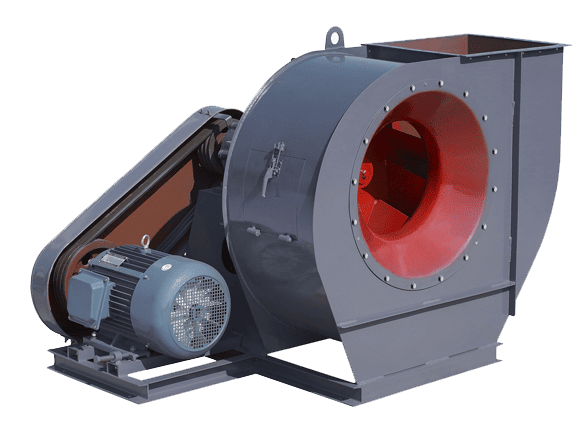
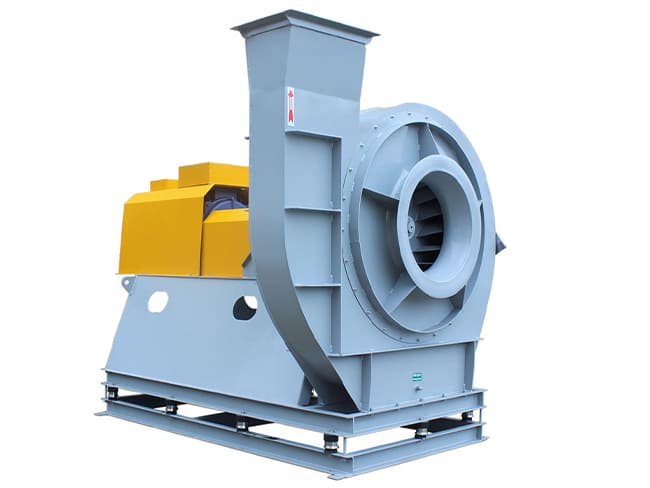
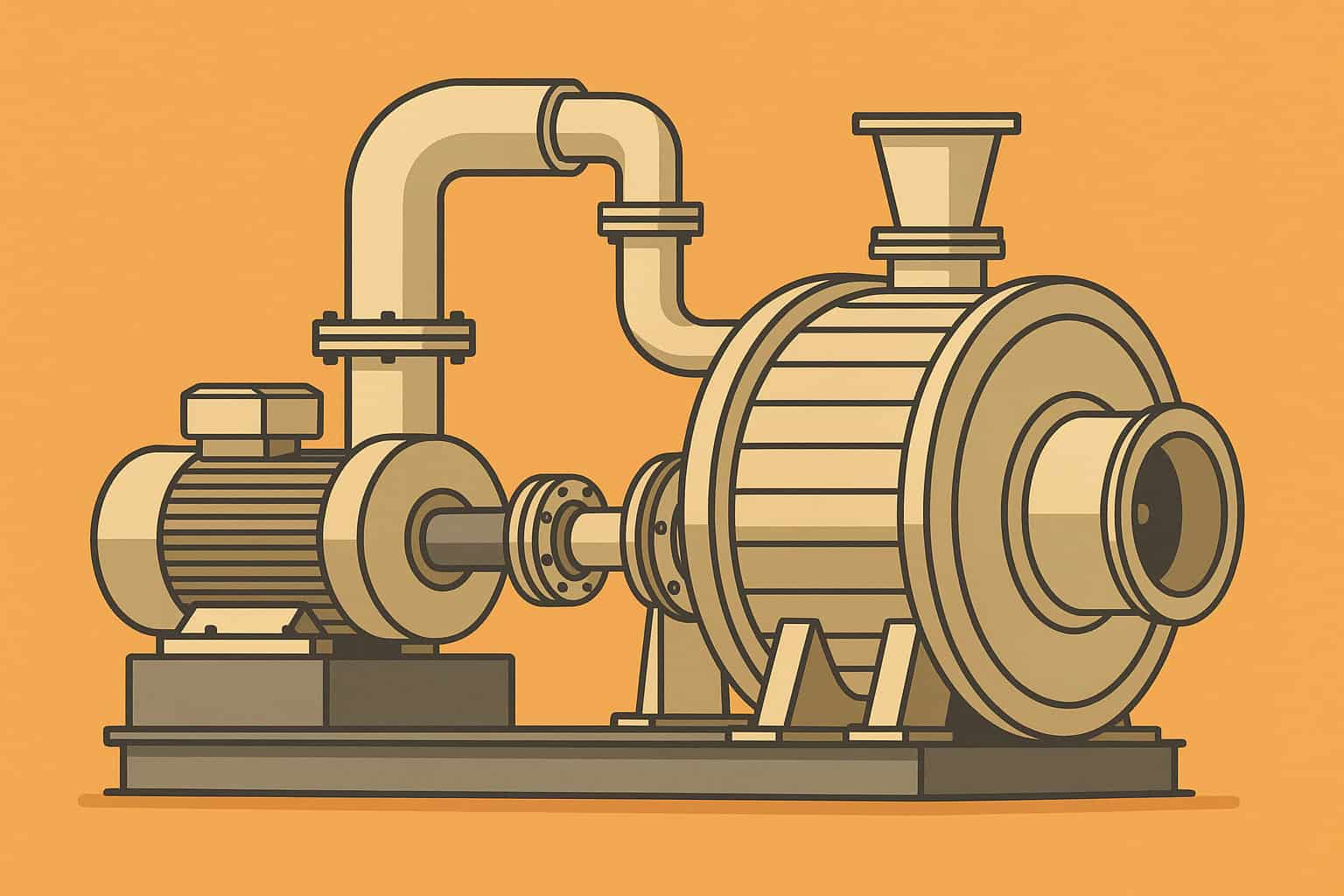
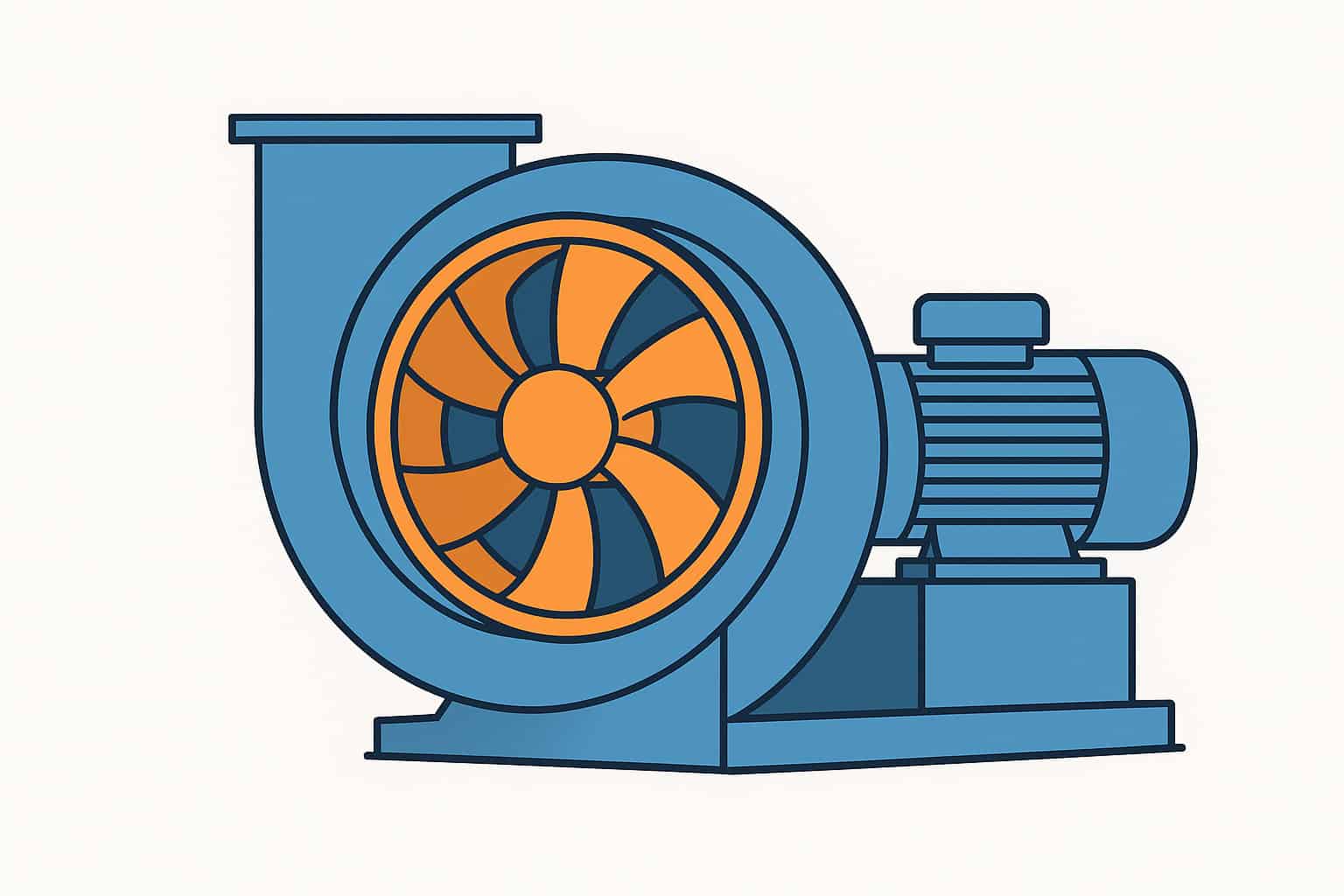
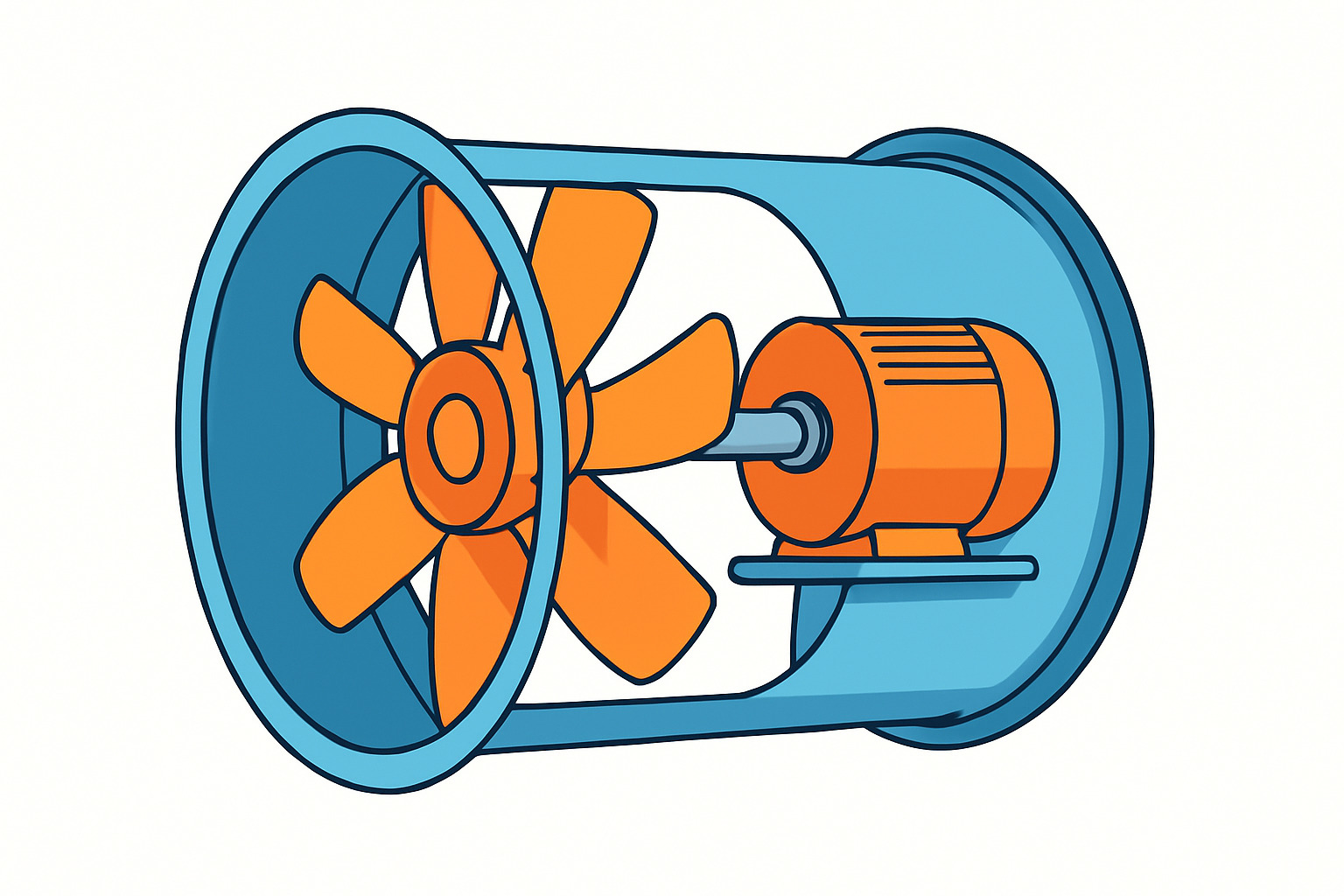
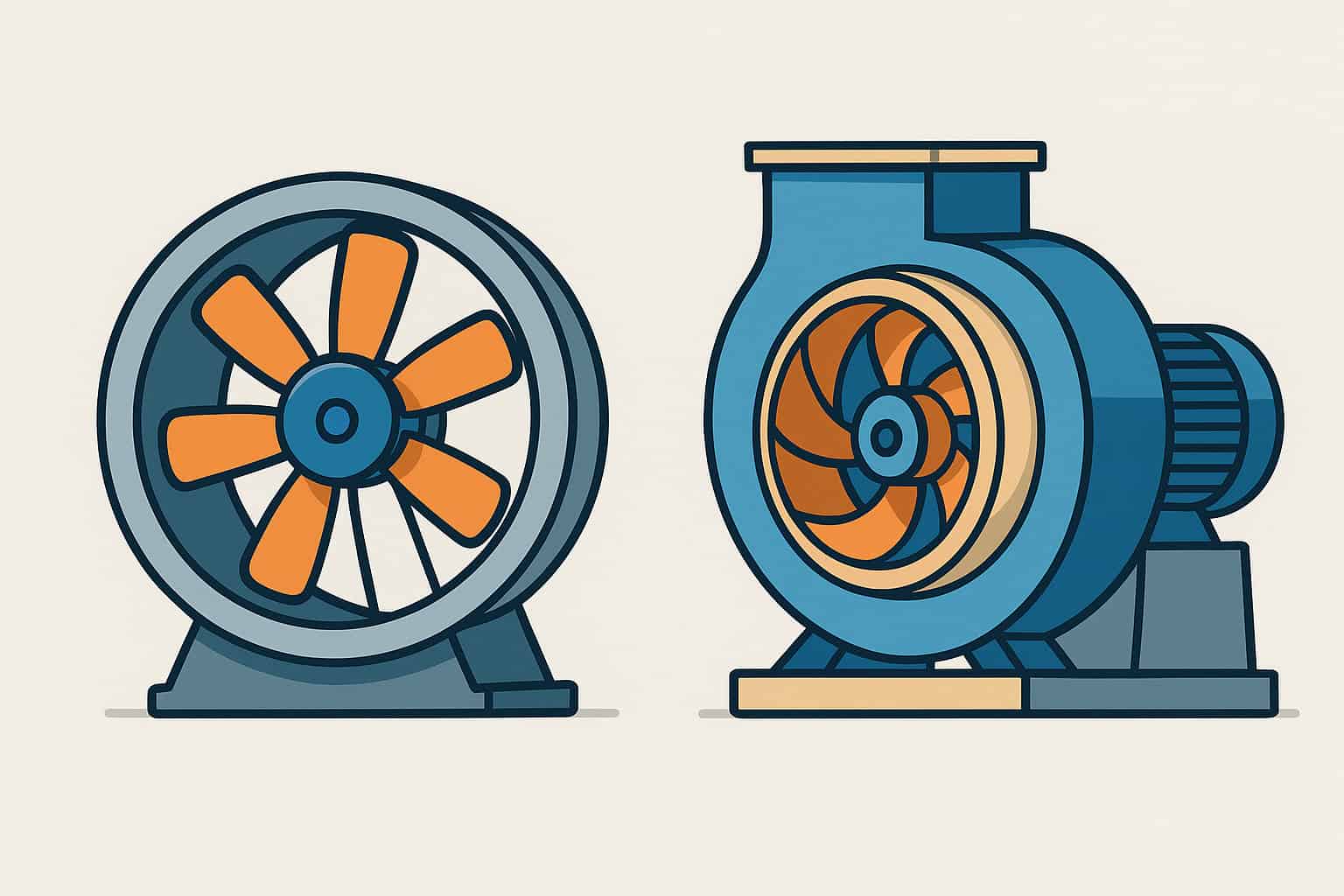
With duty defined, you can choose between axial and centrifugal fans. Axial fans move air parallel to the shaft and are generally preferred for high volume, low to medium pressure applications such as mine main fans, tunnel fans and large industrial hall ventilation. Centrifugal fans move air radially outward and are better at delivering higher pressure for systems with long ducts, filters or scrubbers, such as dust collection and process exhaust. Mixed flow fans sit between these two and may be chosen in some special cases where space and pressure requirements demand a hybrid solution.
Materials, motor type and classification are just as important. Fans handling dusty, corrosive or hot gases may require heavy-gauge steel, stainless steel or coated components. Motors must be sized correctly and may need to be explosion-proof or flameproof in hazardous areas. In mining and many industrial applications, certification for hazardous zones is mandatory. You should also consider efficiency and control: high efficiency fans with variable speed drives can reduce energy costs, especially where airflow demand varies over time.
Finally, practical considerations such as available space, noise limits, maintenance access and installation method must be taken into account. Large axial fans may suit shaft or wall mounting, while centrifugal fans may fit better in plant rooms with ducted connections. Noise can be managed by choosing low noise models or adding silencers. Good access for inspection and repair will reduce downtime and lifecycle costs.
In summary, choosing a ventilation fan involves defining the duty, calculating airflow and pressure, selecting an appropriate axial or centrifugal design with suitable materials and certification, and considering efficiency, noise and maintenance. Working with a knowledgeable fan manufacturer or ventilation engineer helps ensure that your final choice delivers safe, reliable and energy-efficient performance.
