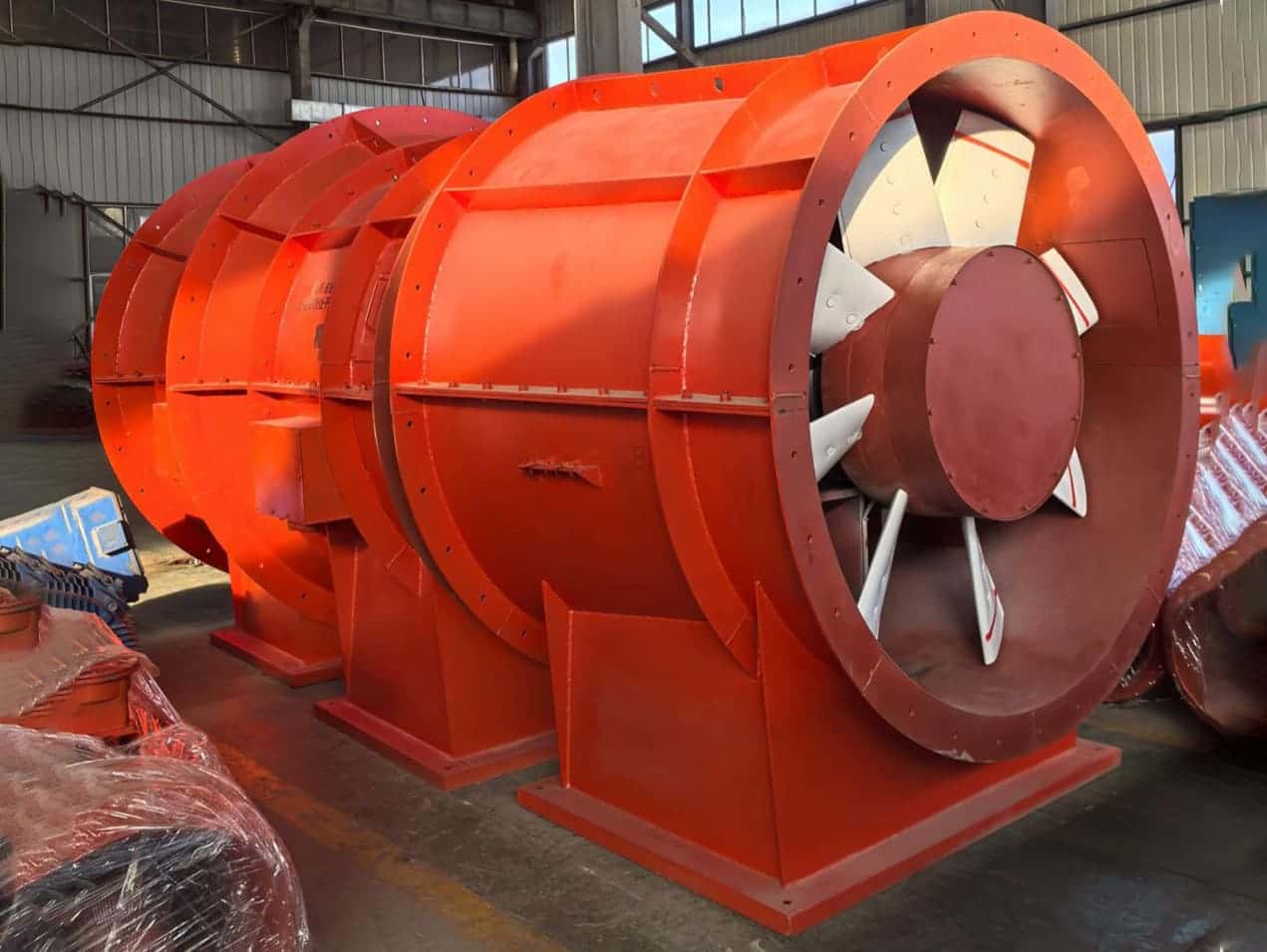
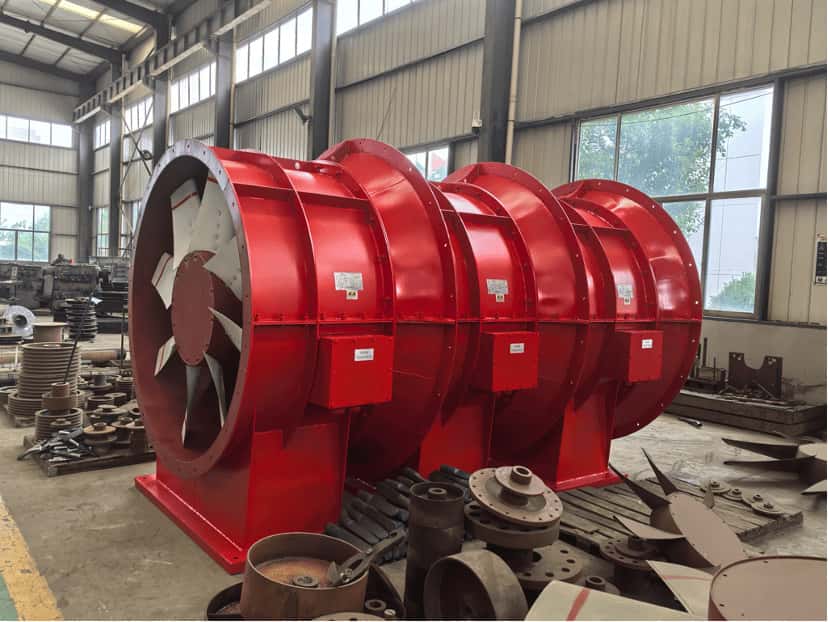
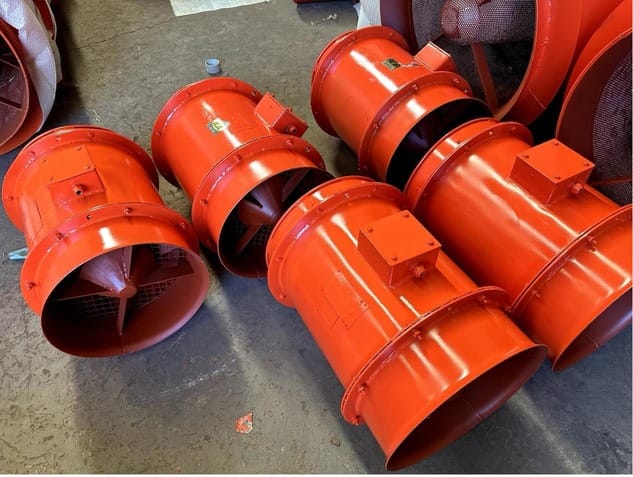
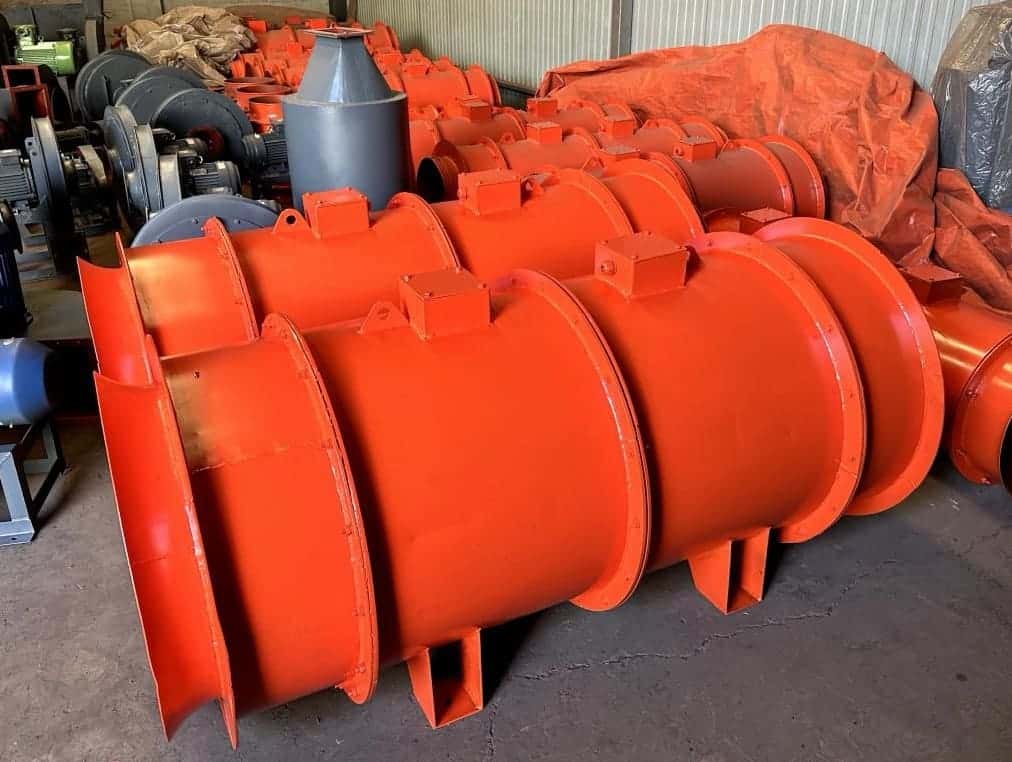
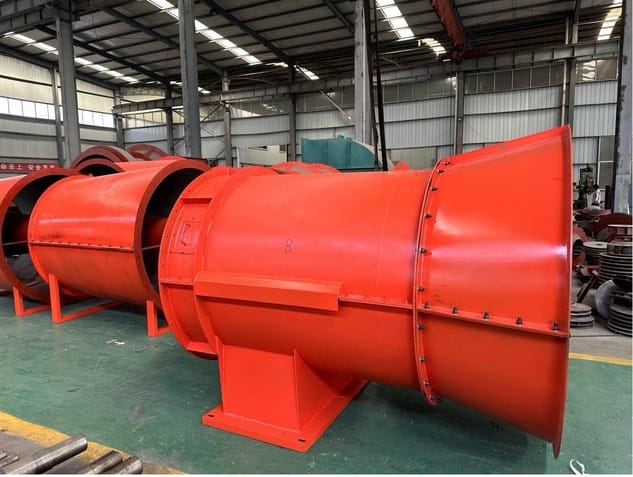
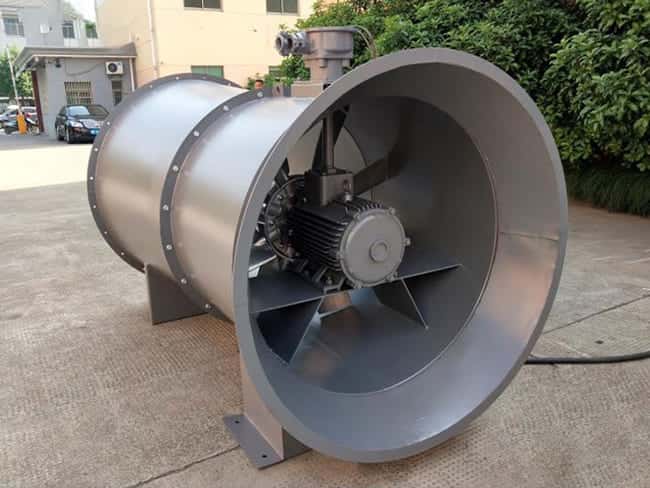
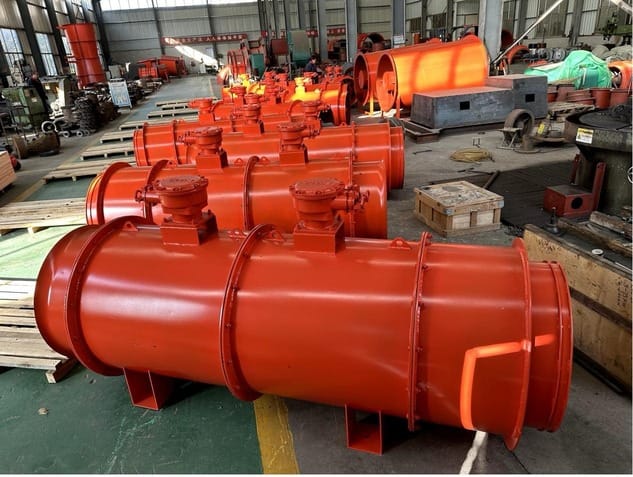
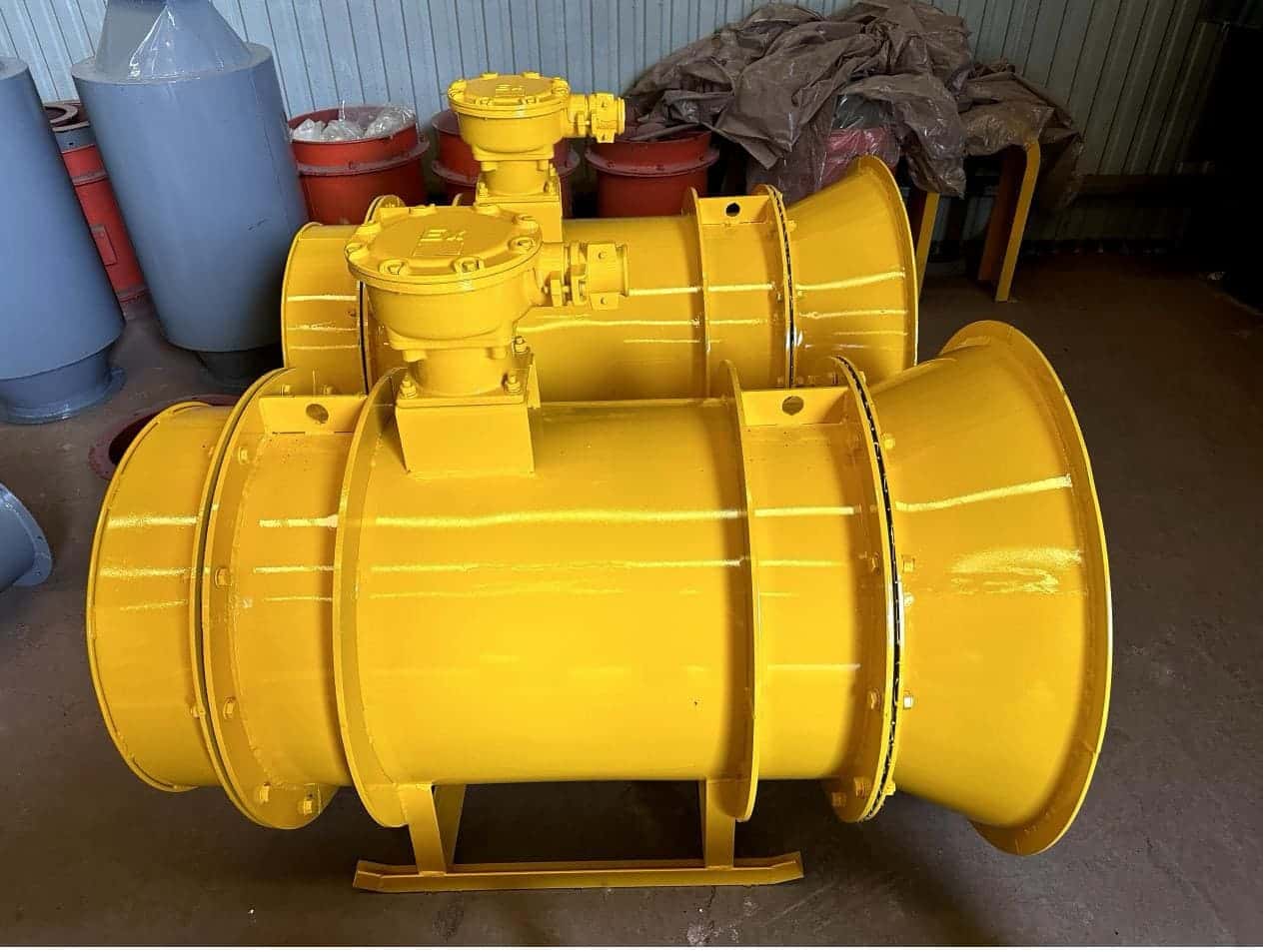
Vibration or wobble in industrial ventilation fans is a warning sign that should never be ignored. In mining and plant ventilation systems, excessive vibration can damage equipment, shorten bearing life, crack ductwork and even compromise safety. Fixing the problem means finding and correcting the root cause, not just tightening bolts.
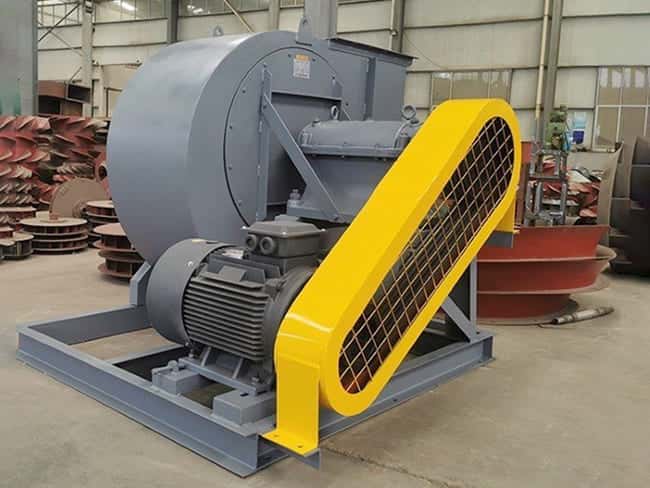
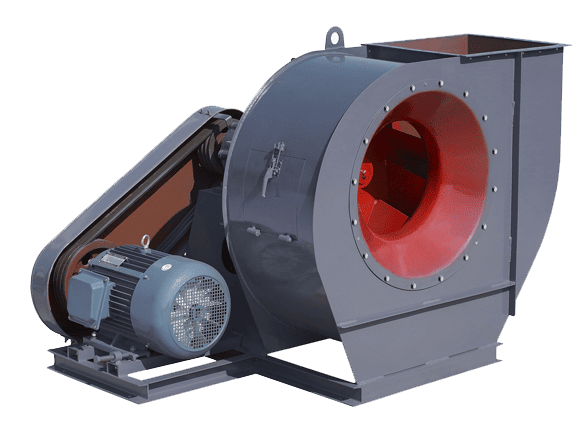
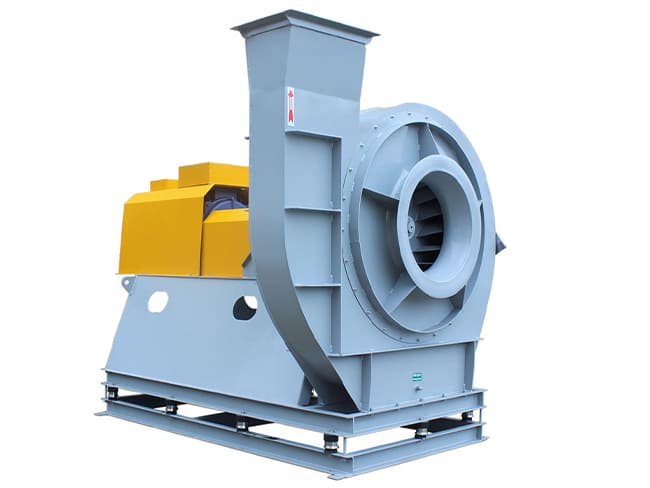
The first step is to inspect the mechanical installation. Check that the fan is firmly mounted on a stable foundation or support structure. Loose anchor bolts, warped baseplates or flexible steelwork can allow the fan to move, amplifying vibration. Shimming and re-grouting may be needed to ensure the base is level and well supported. For belt-driven fans, misaligned sheaves and incorrect belt tension are common contributors to vibration and should be corrected.
Next, examine the rotating parts. Bent shafts, worn bearings and damaged couplings will all cause wobble. Listen for bearing noise and check for excessive play. If bearings are worn, they must be replaced and the shaft journal inspected. Couplings should be aligned according to manufacturer tolerances; poor alignment between motor and fan shafts is a frequent cause of vibration in large ventilation fans.
Blade condition and cleanliness are also critical. Uneven dust or material buildup on blades changes the mass distribution and causes imbalance. In mines and dusty plants, deposits can accumulate quickly. Thoroughly clean the impeller and check that all blades are present, straight and securely fastened. Even small differences in blade angle or damage to a single blade can create significant vibration at high speed.
If the mechanical installation and impeller condition are satisfactory but vibration persists, a dynamic balancing procedure is often required. Specialist technicians use vibration analyzers and balancing weights to measure and correct imbalance while the fan is running under controlled conditions. For critical main fans in underground mines, dynamic balancing is a routine part of commissioning and periodic maintenance.
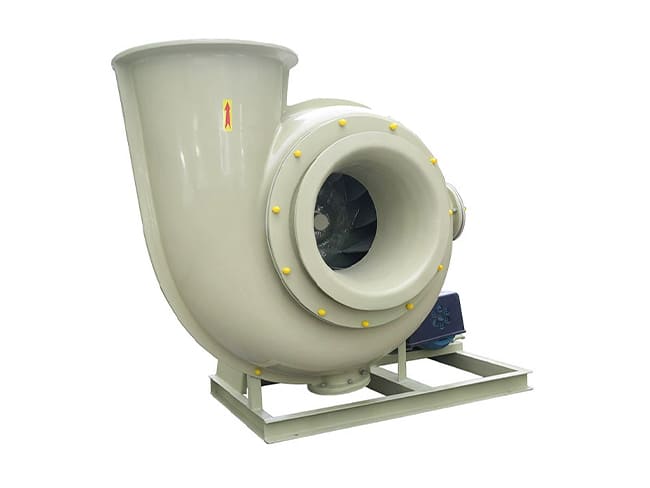
Do not forget the system side. Severe flow distortion at the inlet or outlet—caused by elbows too close to the fan, partially closed dampers or blockages—can create uneven aerodynamic loading on the impeller, which shows up as vibration. Providing straight inlet runs, bellmouth inlets and well-designed diffusers helps reduce this effect. In some cases, changes to ductwork or mine airway geometry are necessary to stabilise airflow.
In summary, to fix vibration or wobble in industrial ventilation fans you must systematically check foundations, alignment, bearings, impeller condition, cleanliness, balance and airflow conditions. Proper diagnosis and corrective work not only stop the wobble, but also extend fan life and improve the reliability of the entire ventilation system.