
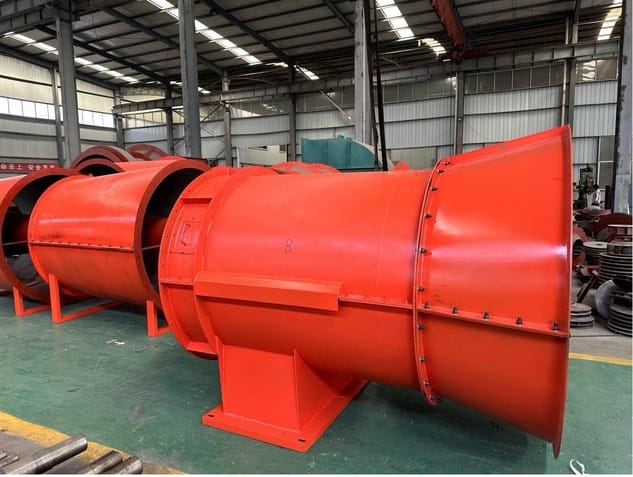
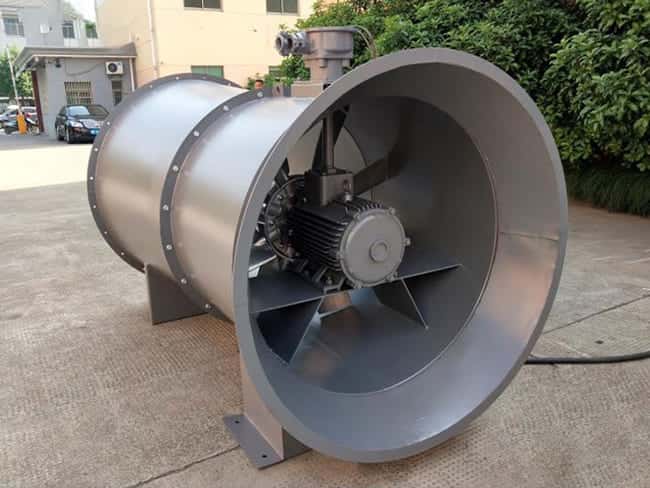
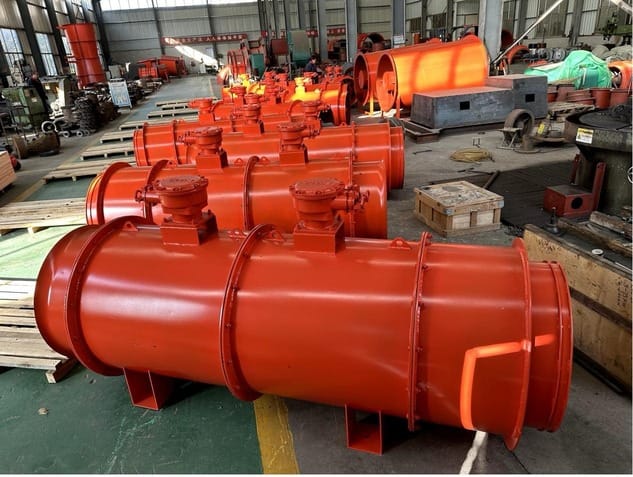
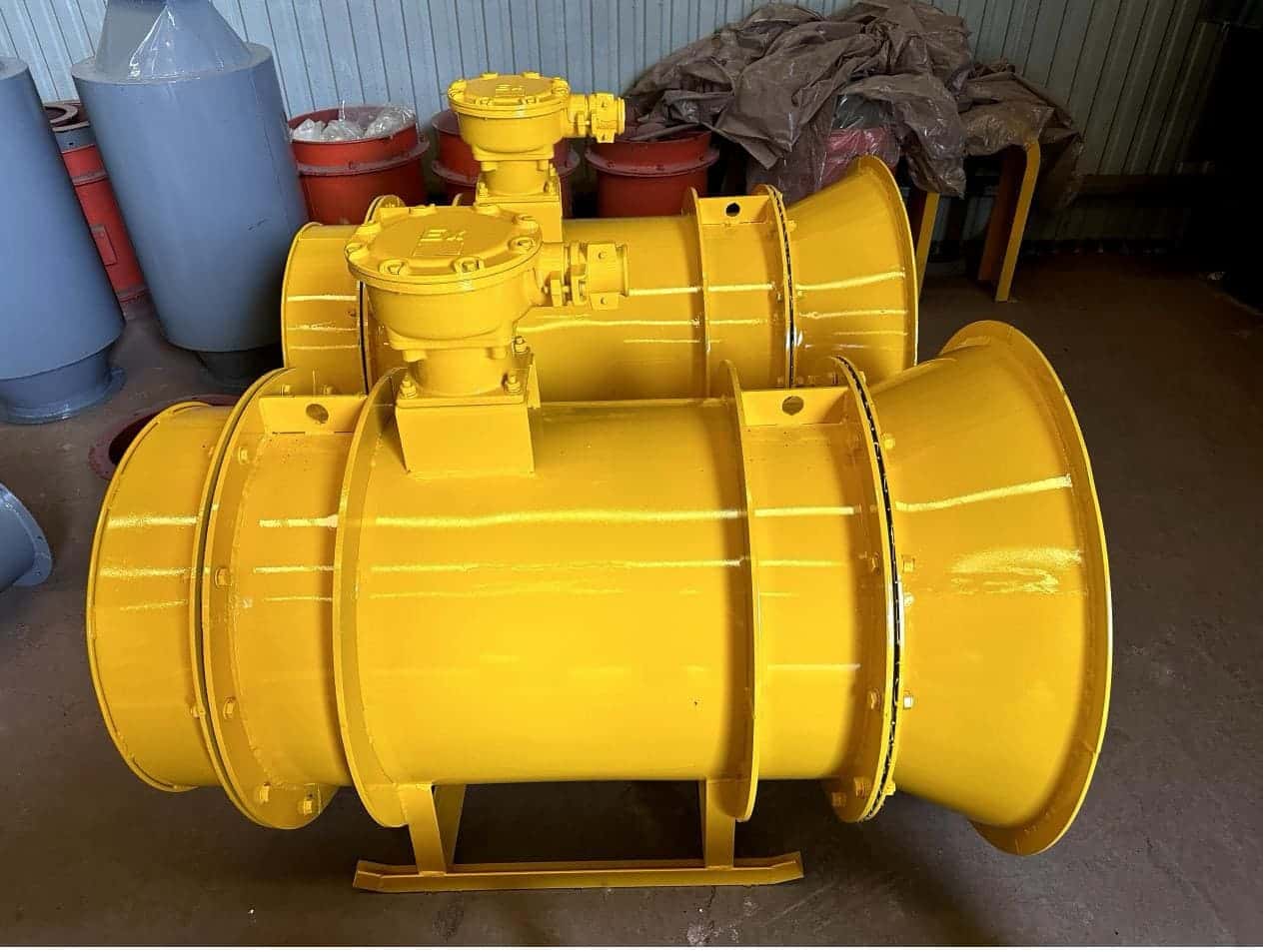




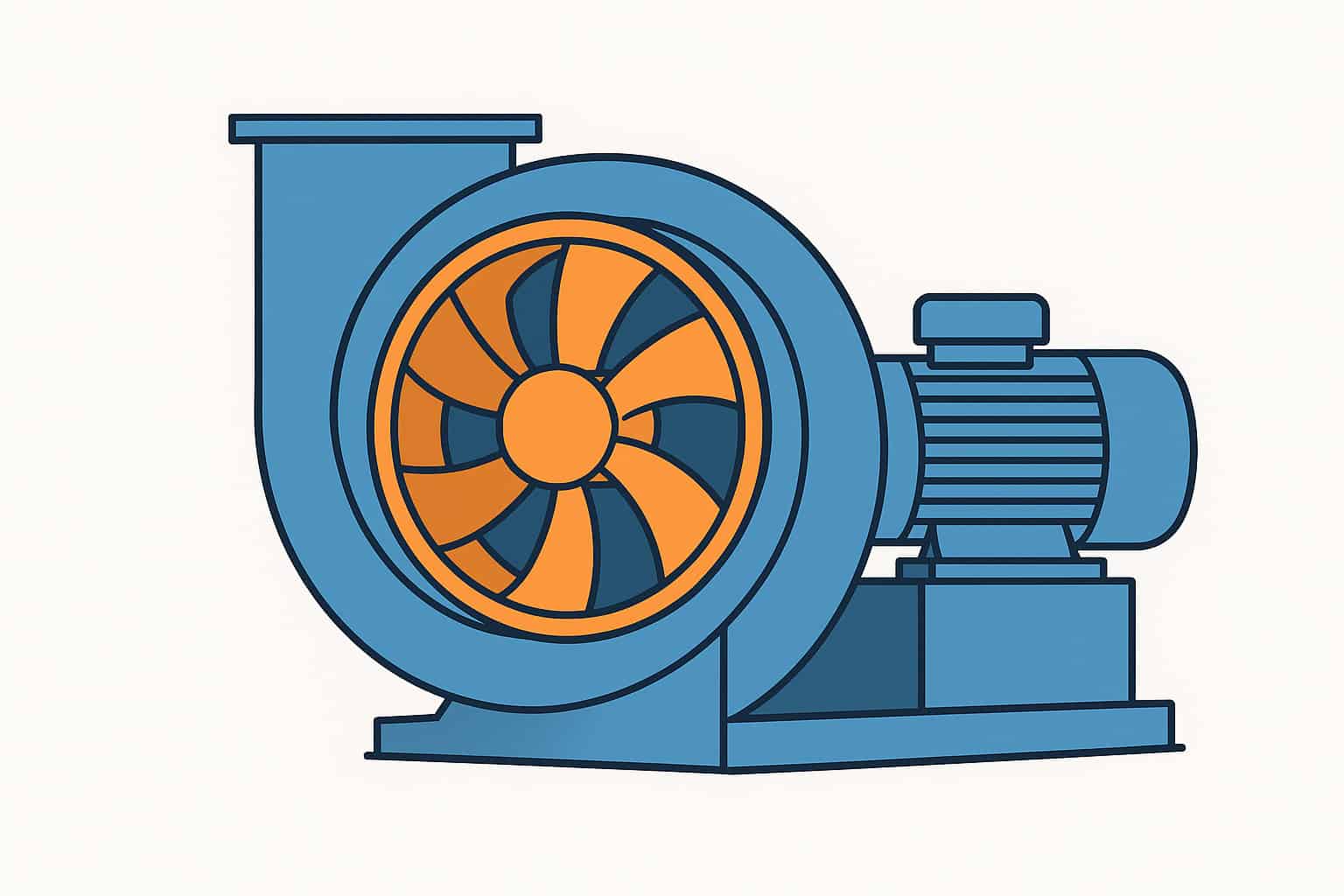


To control fan speed effectively in industrial plants and mines, you should focus on methods that adjust the fan’s rotation speed rather than just throttling the airflow. True speed control improves energy efficiency, reduces noise and gives you precise control over ventilation rates.
The most widely recommended solution today is a variable-frequency drive (VFD). A VFD changes the frequency and voltage supplied to an electric motor, allowing you to smoothly vary fan speed from low to full speed. Because fan power roughly follows the cube of speed, even a modest reduction in speed can deliver large energy savings. In mine ventilation or large industrial exhaust systems, VFDs make it possible to increase airflow during production peaks and reduce it during off-shift periods while still meeting air quality regulations.
Another approach is to use multi-speed motors or pole-changing motors. These motors have two or more fixed synchronous speeds (for example 4-pole and 8-pole). By changing the wiring configuration, you can switch the fan between discrete speed steps. This method is robust and simple, but it does not offer the fine, continuous control of a VFD, and the number of speed options is limited.
Some older systems rely on fan regulators, autotransformers or series resistors to reduce voltage to the motor and slow the fan. While this can work for small fans, it has disadvantages: energy is wasted as heat in the regulator, speed steps are often coarse and motors may hum or overheat at low voltage. For medium and large ventilation fans, especially in critical mining applications, this method is generally not recommended as the primary form of control.
In ducted systems, you will also see dampers and inlet vanes used to control airflow. By partially closing dampers or adjusting inlet guide vanes, the system resistance is increased and the operating point moves along the fan curve. This can be useful for balancing airflow between branches, but it does not actually reduce fan shaft power as efficiently as slowing the fan itself. Combining damper control for balancing with VFD speed control for overall volume is often the best strategy.
In summary, to control fan speed in a professional way you should prioritise VFDs for continuous, efficient speed variation, use multi-speed motors where simple stepped control is acceptable, and reserve regulators or pure throttling for small fans or fine adjustments. Correct fan speed control is a key tool for optimising energy use and ventilation performance in both industrial and mining environments.