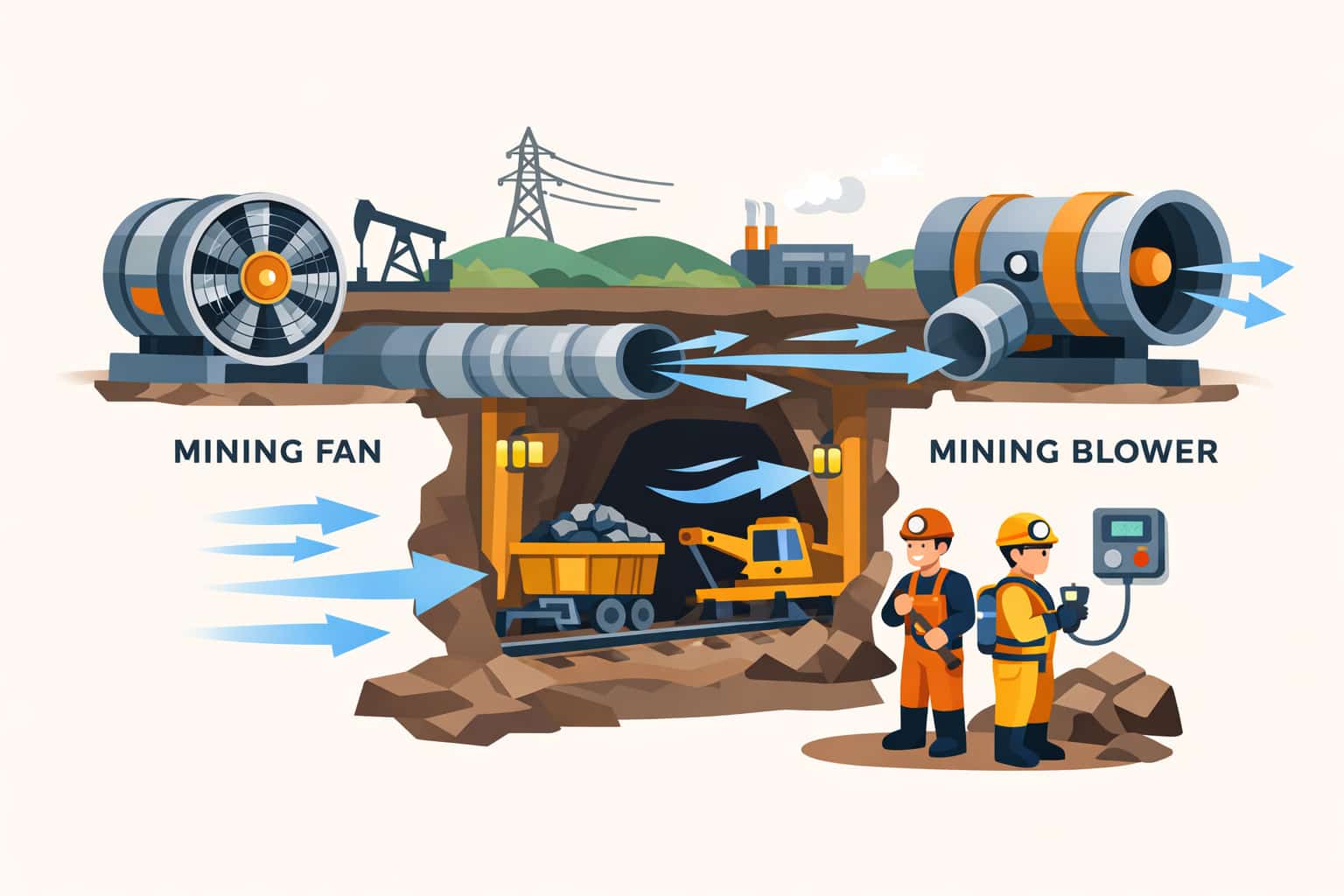


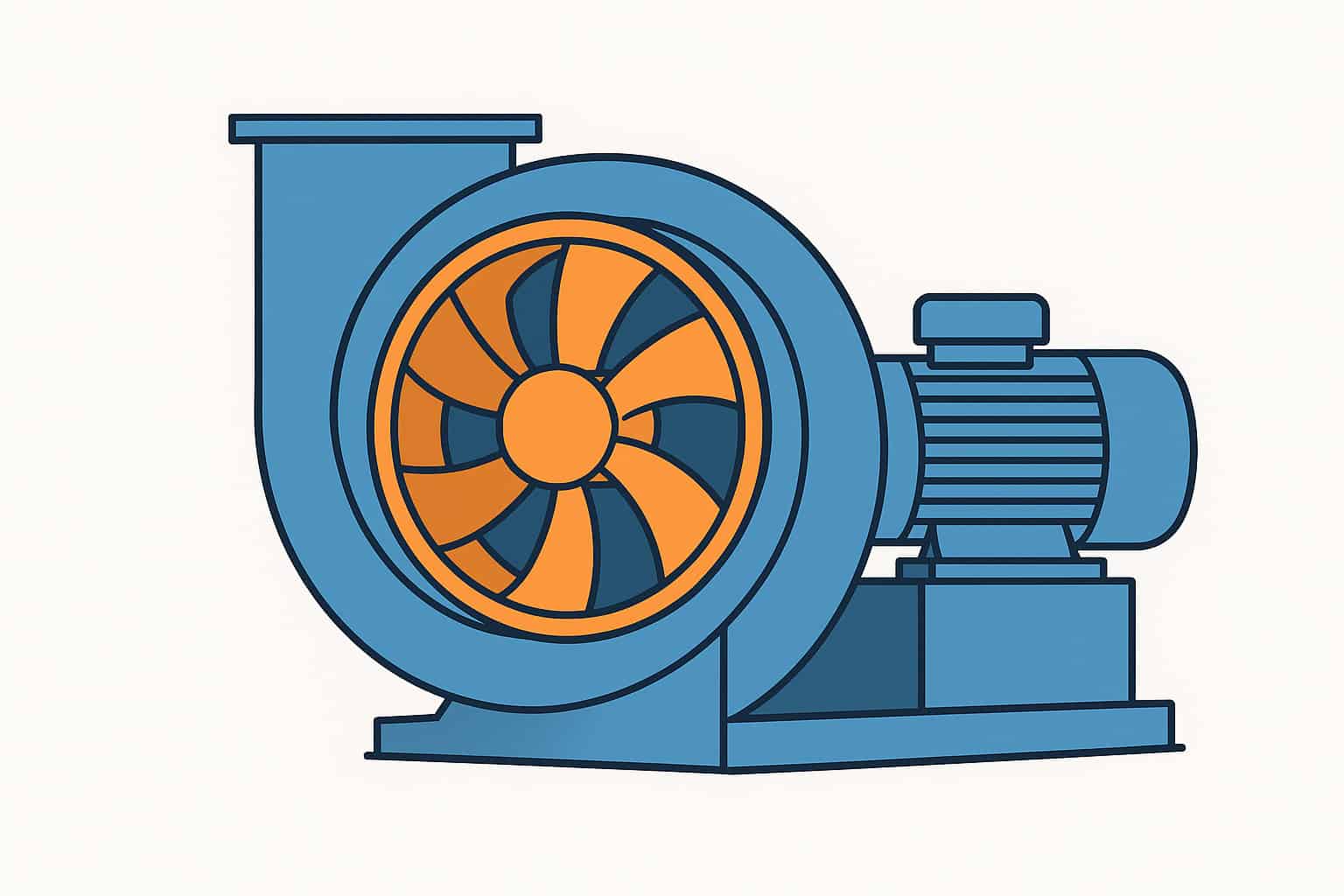
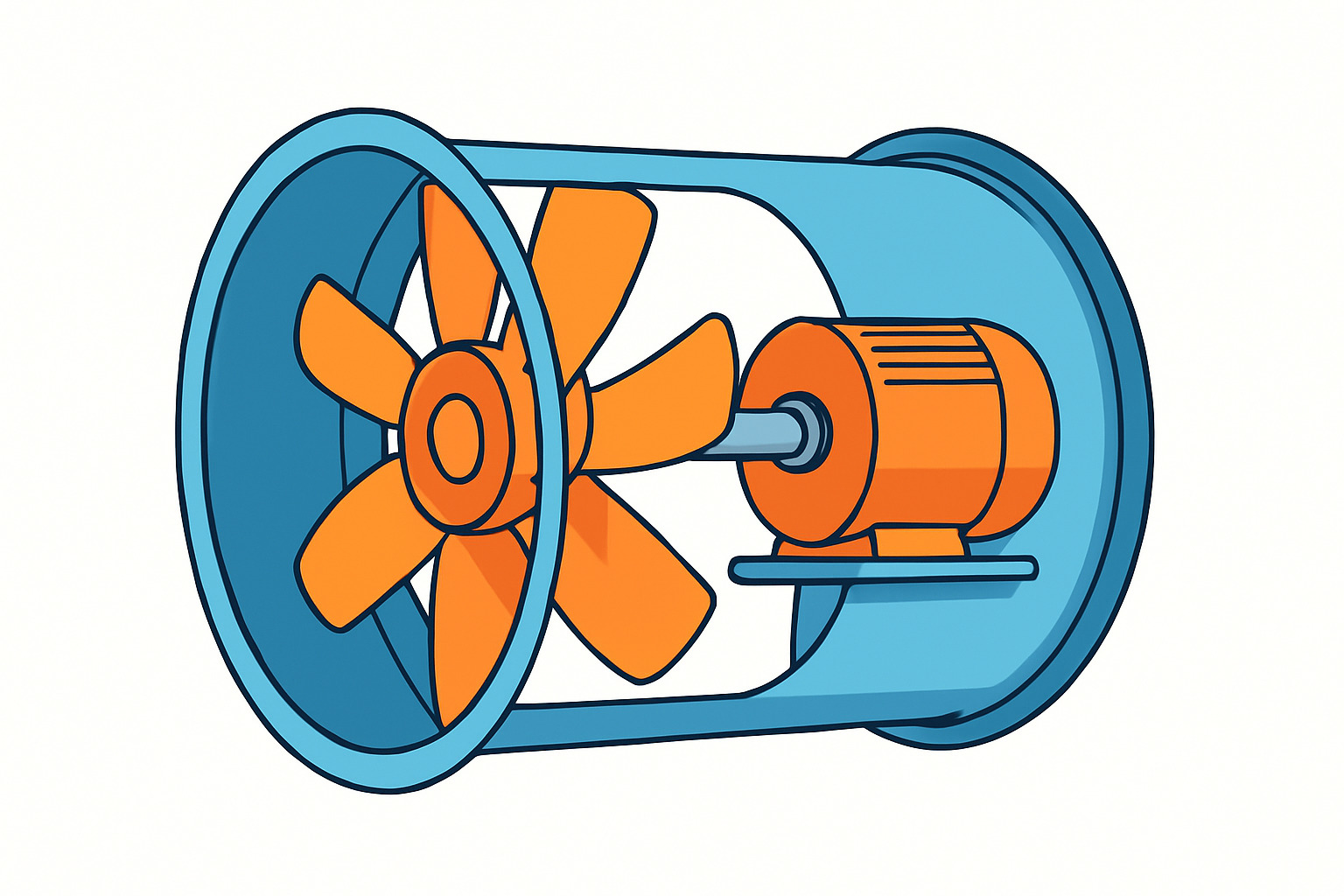
Reducing duct noise and fan noise in industrial ventilation is important for worker comfort, communication, regulatory compliance and community relations. In mines, factories and processing plants, noisy fans and ducts can create a harsh environment and may exceed legal noise limits. Effective noise control combines good fan selection, careful duct design, vibration control and acoustic treatment.
The first strategy is to select and operate the fan correctly. Oversized fans running at high speed create more aerodynamic noise than necessary. Where possible, use larger-diameter fans running at lower speeds to deliver the same airflow, especially for continuous-duty systems. Avoid operating fans in stall or at unstable points on the performance curve, as this can generate strong low-frequency noise. Variable-frequency drives can help fine-tune speed to reduce noise while still meeting ventilation requirements.
Next, address turbulence and flow disturbances that generate noise in the ductwork. Sudden changes in direction, sharp elbows close to the fan, abrupt transitions and partially closed dampers all create turbulence, which increases both pressure loss and sound. Providing smooth, gradual transitions, using long-radius elbows, keeping dampers fully open where possible and ensuring adequate straight runs before and after fans and fittings all help to quiet the system. Proper sizing of ducts to keep air velocities within reasonable limits is also crucial.
Vibration isolation tackles structure-borne noise, where fan vibration travels through foundations and duct supports into building structures. Mounting fans on vibration isolators, using flexible connections between fan outlets and ducts, and bracing ducts with resilient supports reduces transmission of mechanical noise. Ensuring that impellers are well balanced and bearings are in good condition lowers vibration at its source.
Acoustic treatments such as duct silencers and lining are powerful tools for reducing residual noise. Inlet and discharge silencers on main fans, and lined sections of ductwork near noise-sensitive areas, absorb sound while allowing airflow. Silencers must be selected to provide enough attenuation at critical frequencies without causing excessive pressure drop. In dust-laden systems, attention must be paid to materials that resist erosion and are easy to clean.
Finally, duct terminations and outlets influence how noise is perceived. Well-designed discharge stacks, hoods and grilles can reduce noise radiation to the surrounding environment. In outdoor installations, directing outlets away from homes or occupied buildings and using barriers or enclosures can significantly reduce noise impact. In underground mines, strategic placement of fans and silencers relative to working areas can lower noise exposure.
In summary, reducing duct and fan noise in industrial ventilation means combining lower-speed, well-chosen fans with smooth duct layouts, vibration isolation, silencers and good outlet design. A systematic approach can deliver quiet, efficient ventilation without sacrificing airflow or safety.