
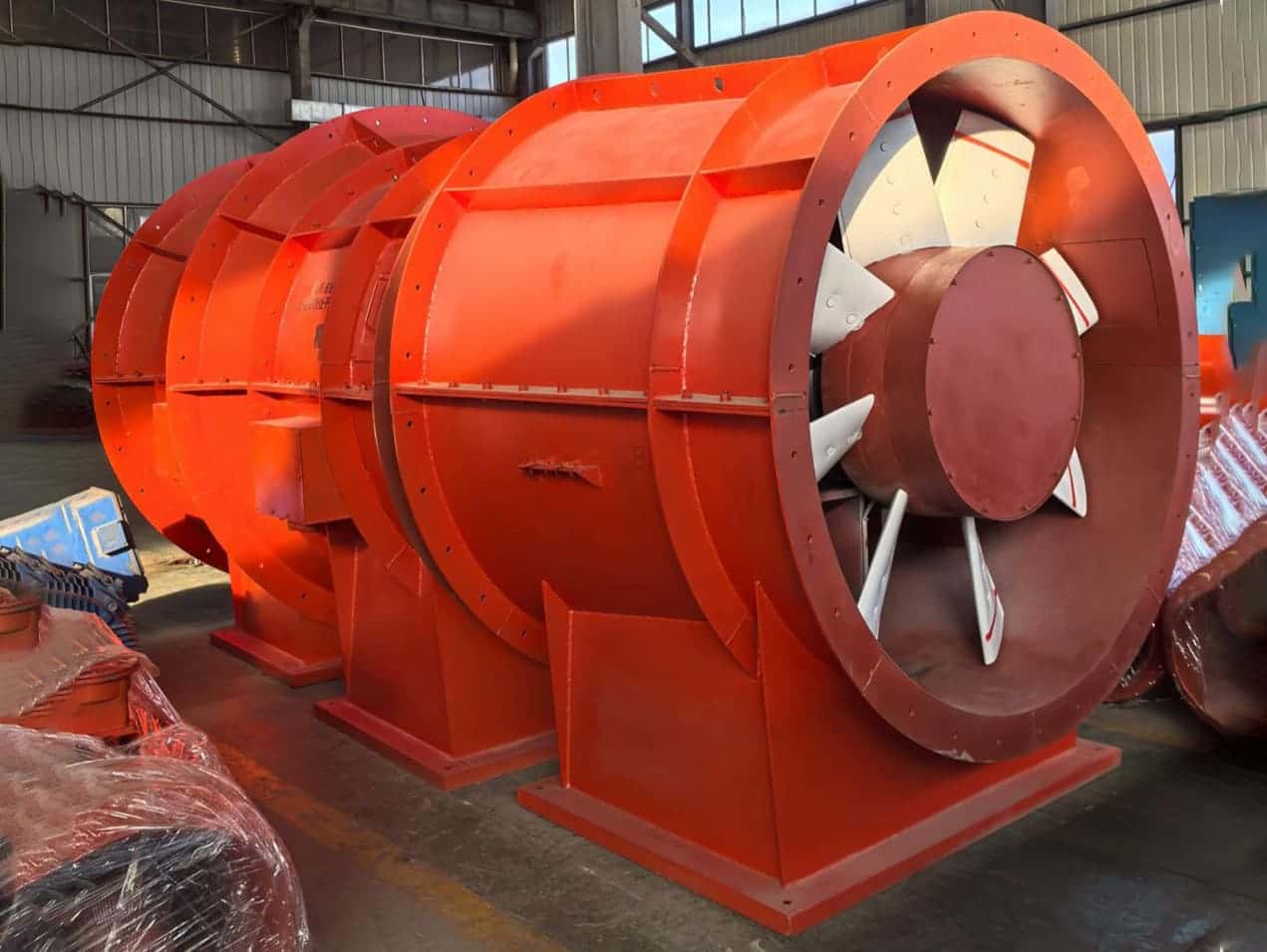
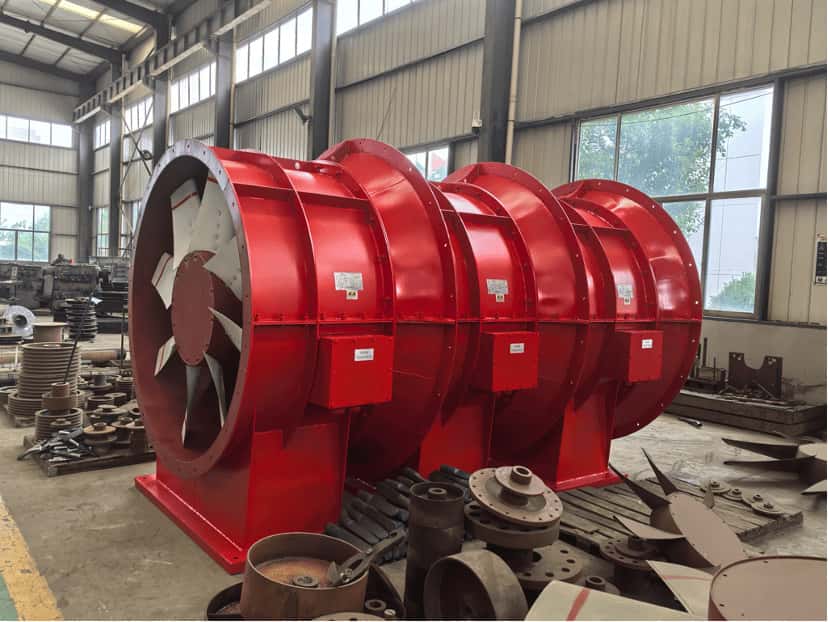
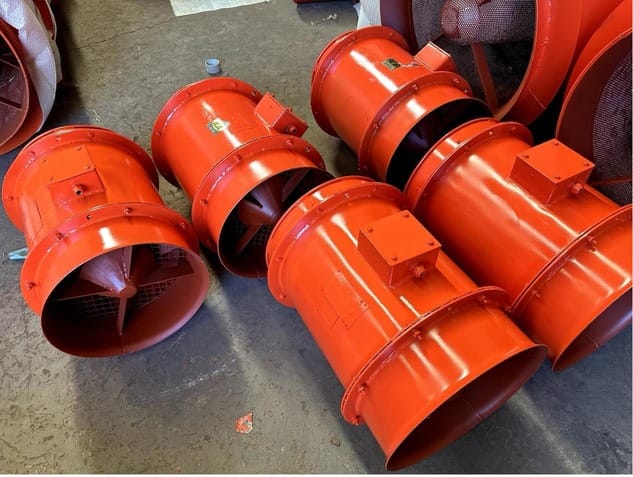
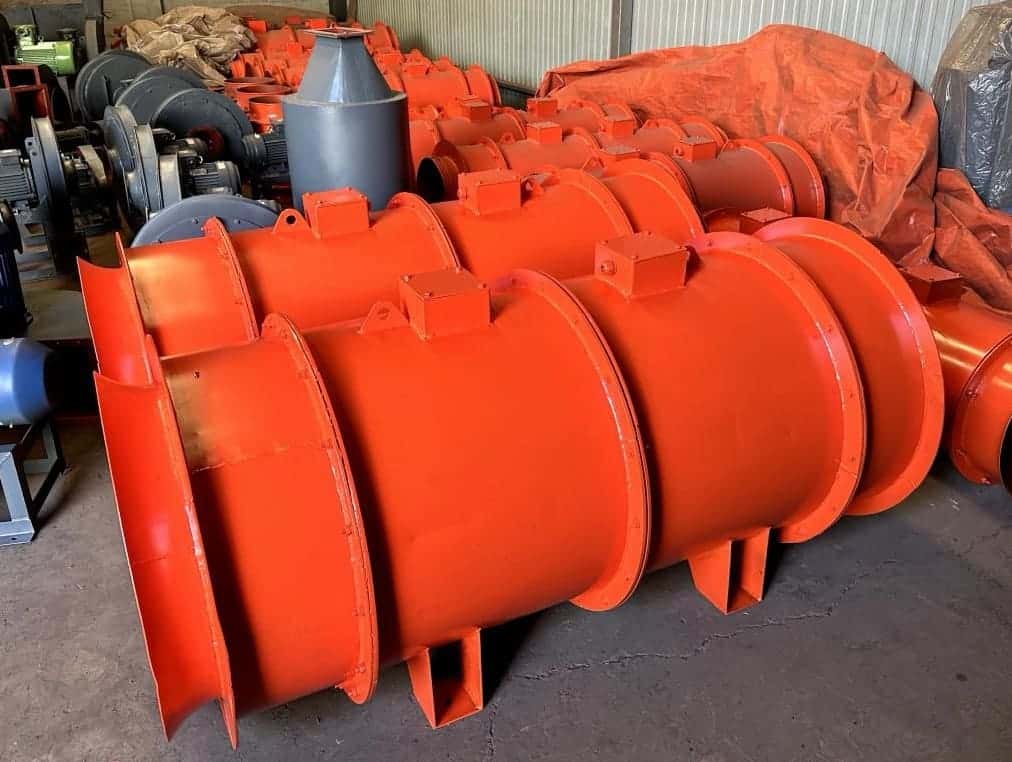
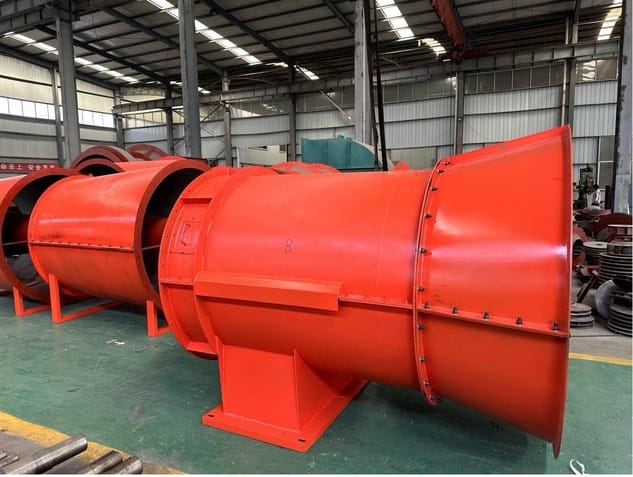
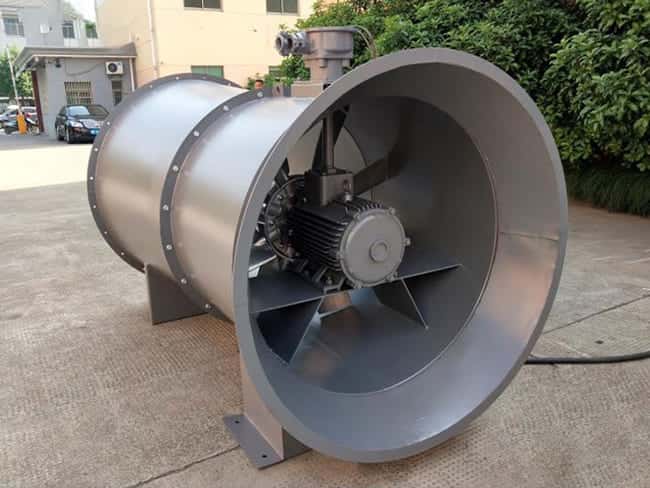
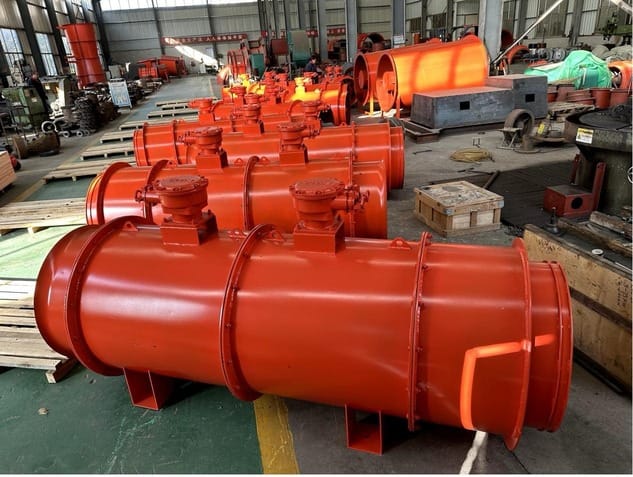
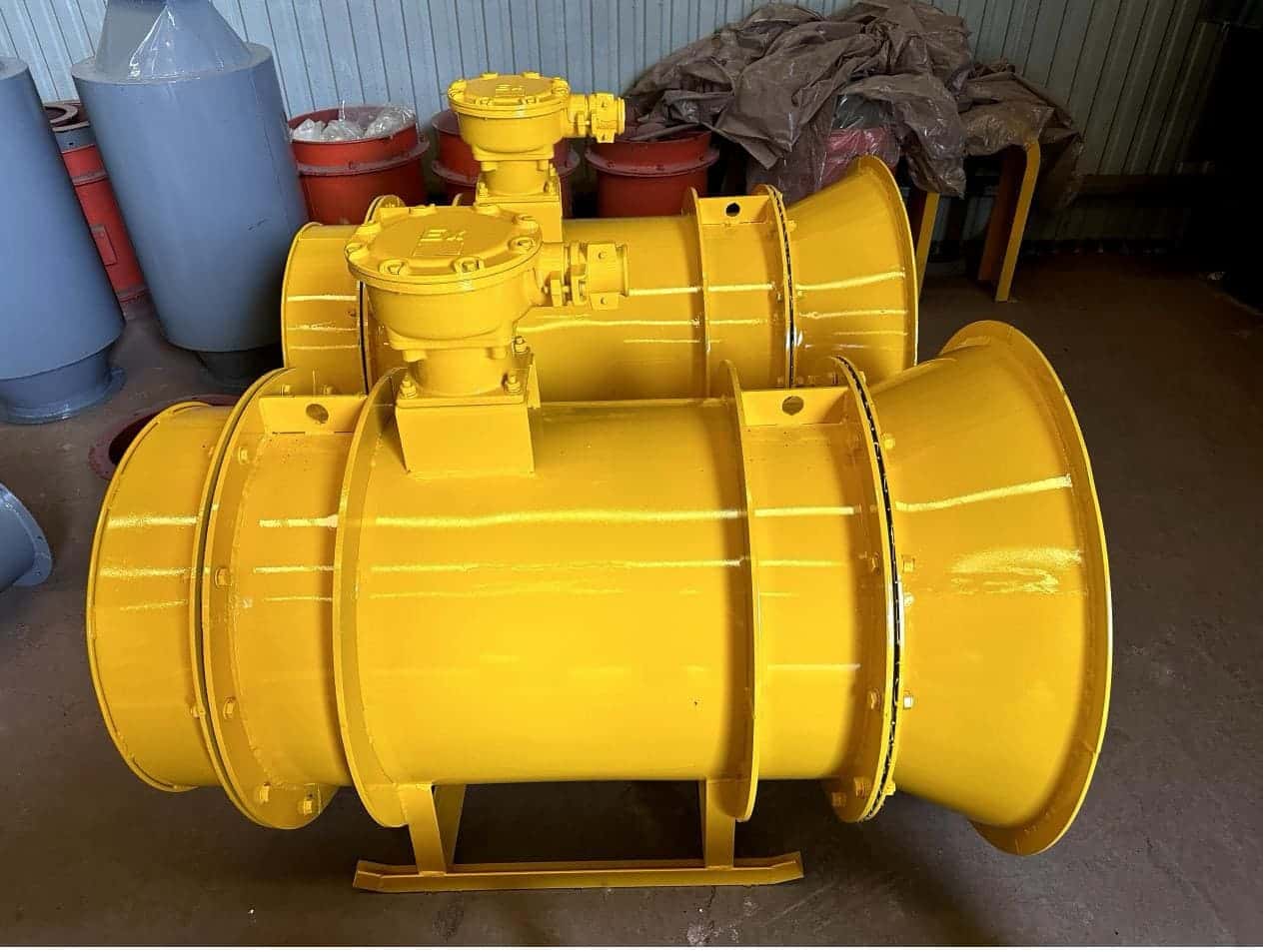
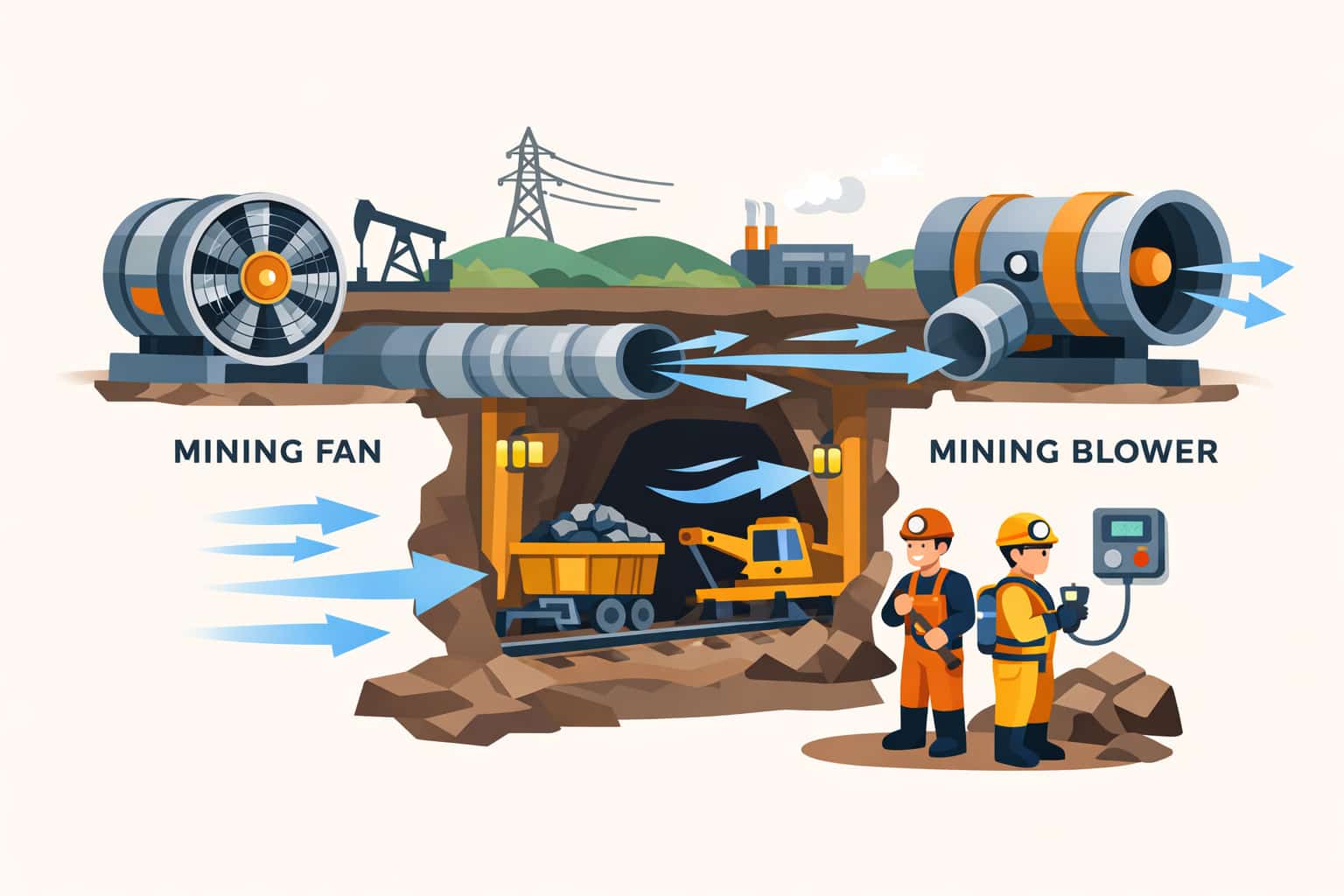
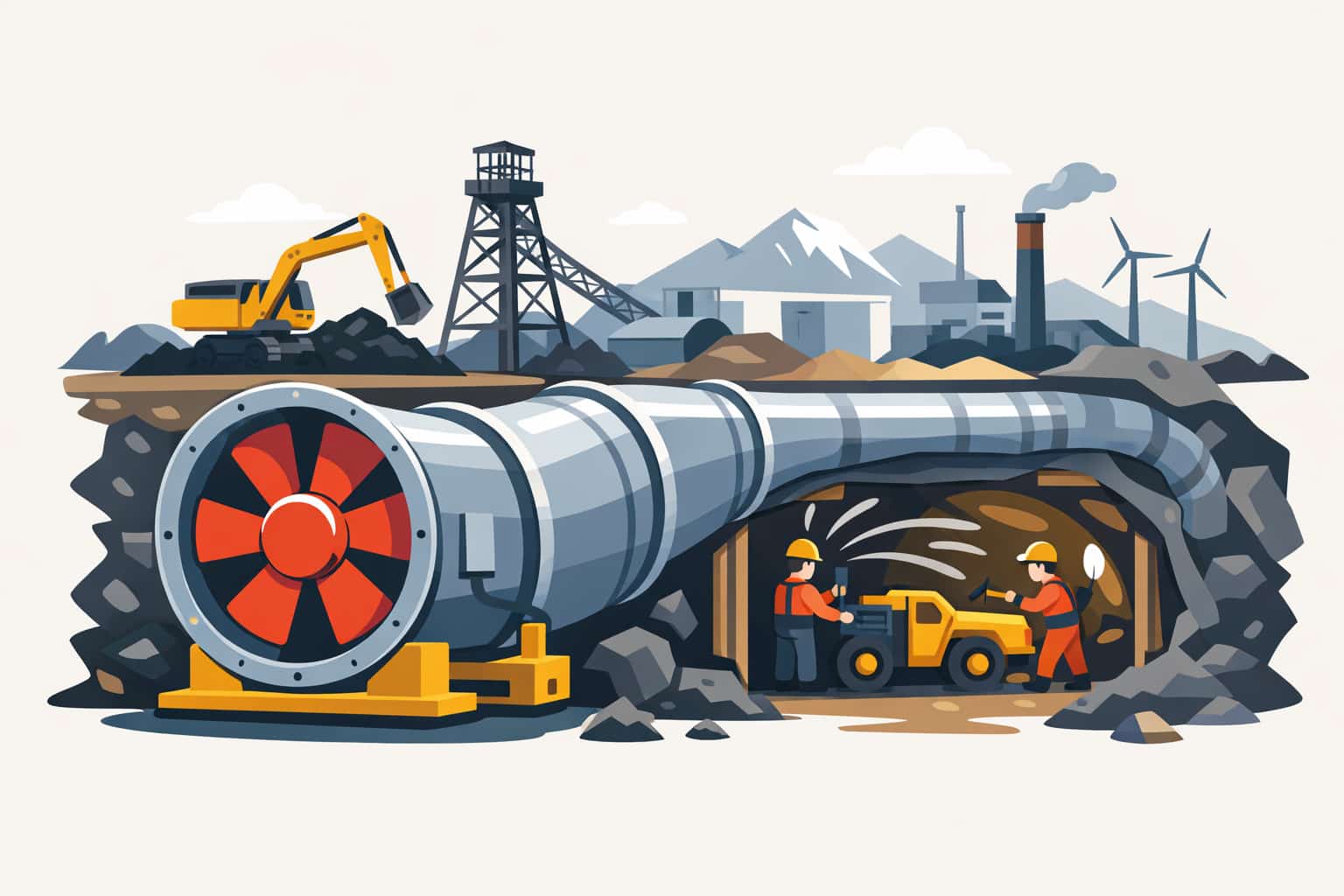
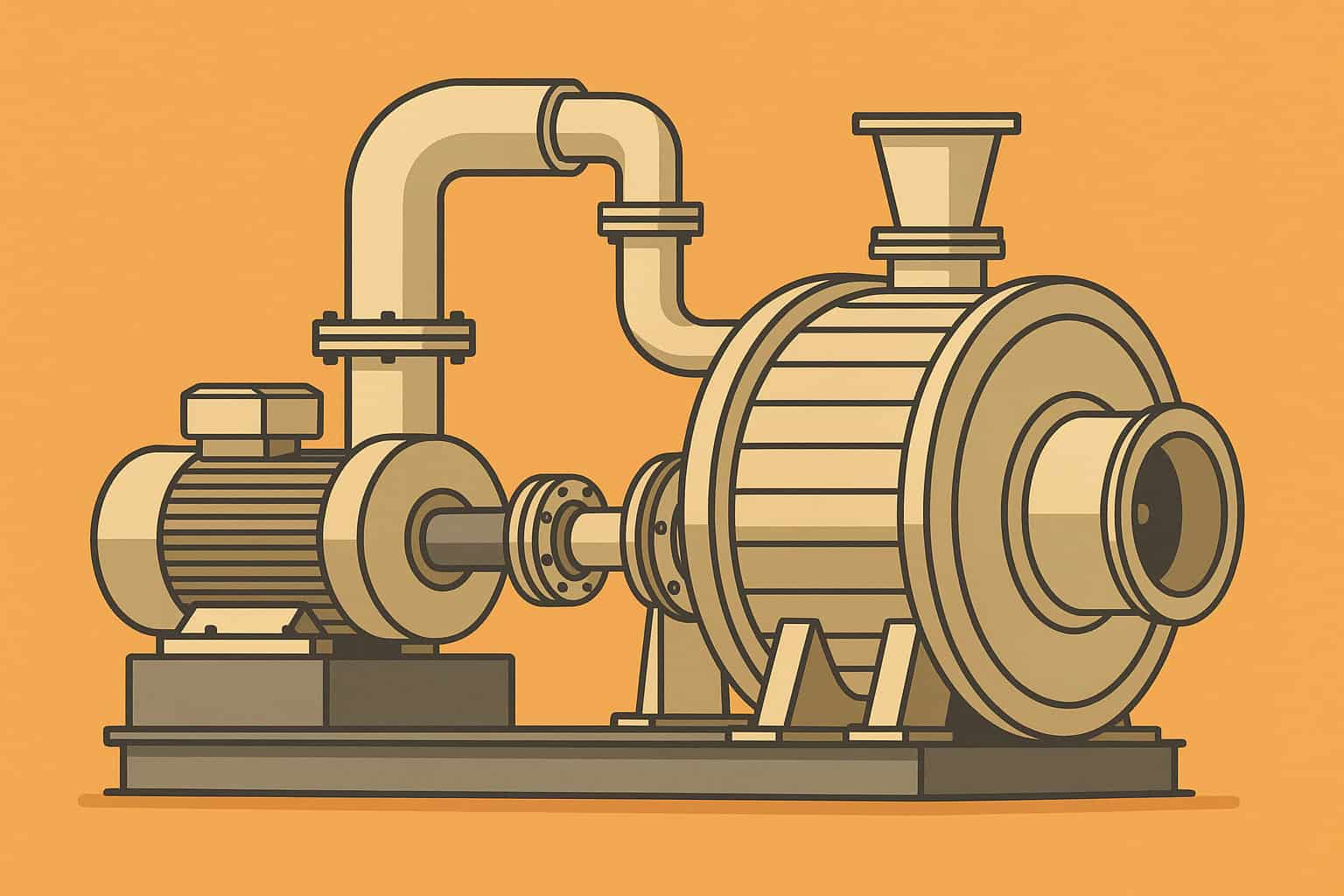
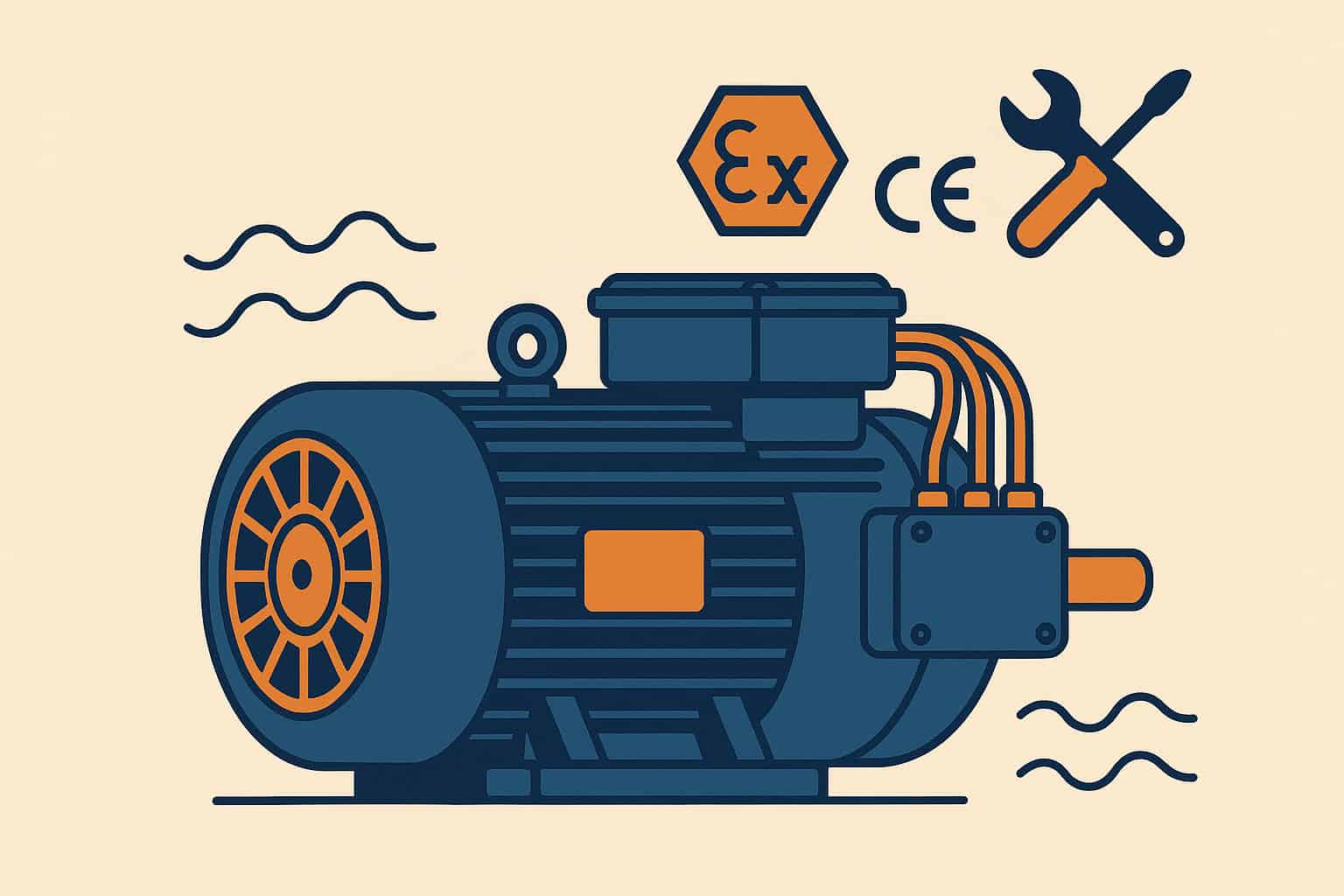
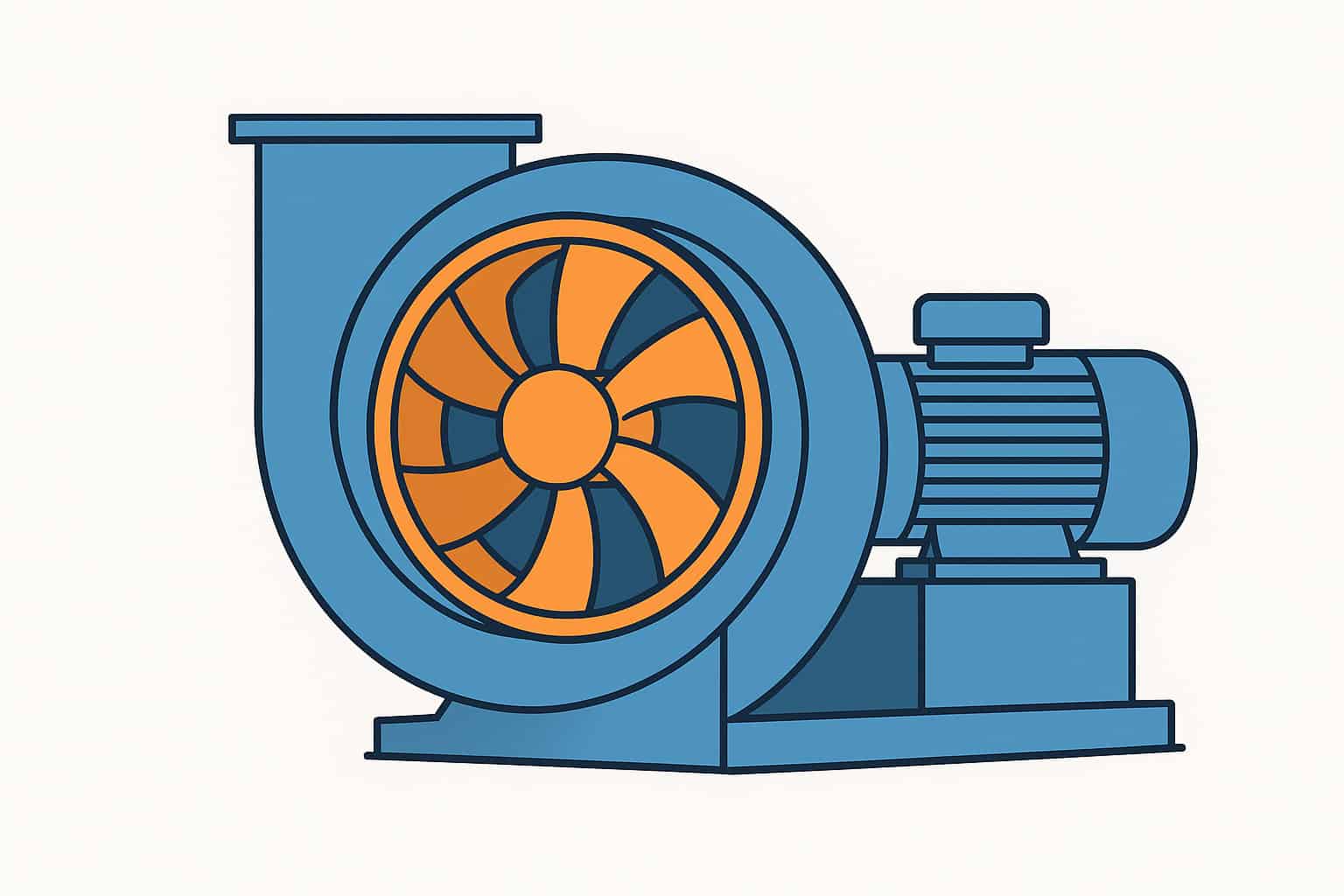
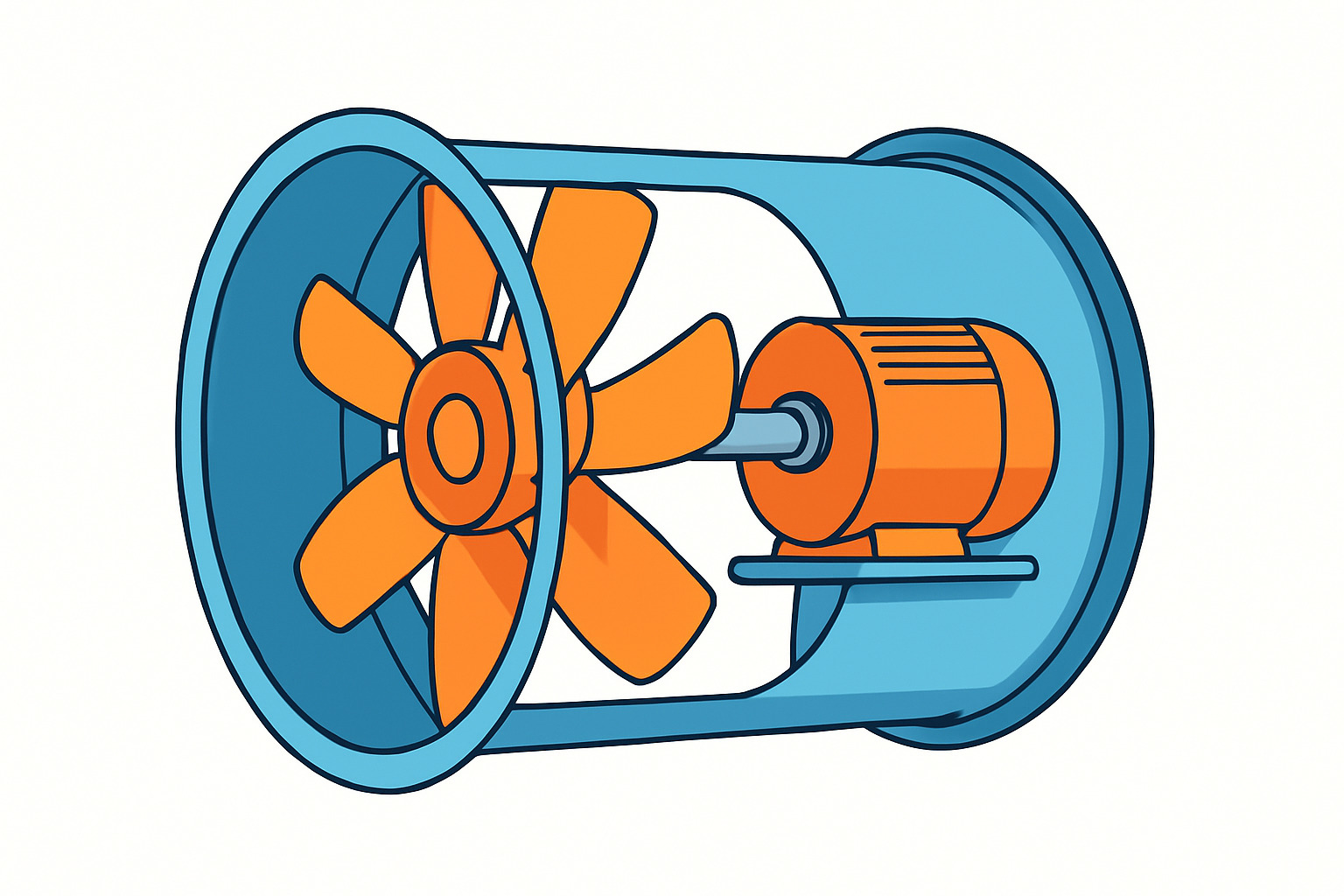
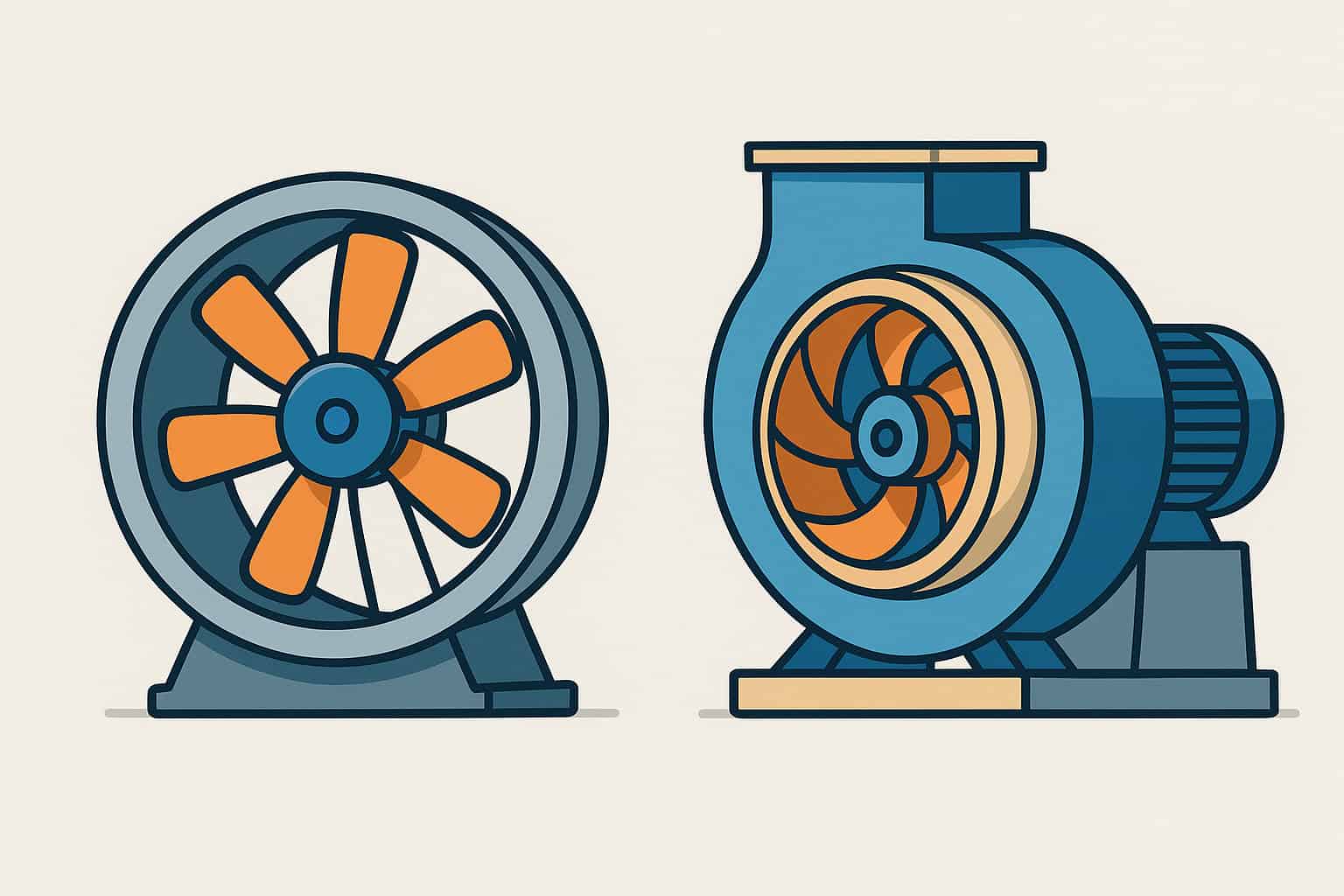
Suppressing fan noise is a common challenge in industrial plants and underground mines. Ventilation fans move large volumes of air and can generate significant sound from blades, turbulence and mechanical vibration. Effective noise control usually combines several measures: selecting a quieter fan, adjusting operating conditions, isolating vibration and installing acoustic treatment such as silencers.
The first and often most powerful step is to look at fan selection and speed. Fans running at very high RPM or far from their best efficiency point are usually noisier. If possible, choose a fan type and size that can deliver the required airflow and pressure at a lower speed and higher efficiency. Larger, slower-running fans often produce less noise for the same duty, especially in mining and heavy industry where main fans operate continuously.
Next, consider fan silencers. Intake and discharge silencers are specially designed acoustic devices installed directly on the fan or along the duct. They reduce noise by absorbing sound energy in their internal baffles while allowing airflow to pass. When specifying silencers, you must balance noise reduction with additional pressure loss; the main fan or fan system must be sized to overcome the extra resistance without losing required airflow.
Mechanical noise and vibration can be reduced by proper installation and isolation. Use flexible connectors between the fan and rigid ducts to prevent vibration from transmitting through the structure. Install fans on robust foundations with vibration isolators or pads where appropriate. Ensure that the impeller is balanced, bearings are in good condition and any belt drives are aligned and tensioned correctly. Mechanical faults often show up as tonal or rattling noises that can be fixed by maintenance rather than acoustics.
Airborne noise travelling along ducts and through openings can be mitigated by duct design and acoustic treatment. Avoid sudden changes in direction or area that cause extra turbulence and noise. Use lined ducts or acoustic cladding where noise breakout is a concern. At discharge points, such as mine portals or industrial exhaust stacks, acoustic louvers or diffusers can help reduce noise levels in nearby communities or offices.
Finally, good operational practices help keep fan noise under control. Running fans only as fast as necessary, cleaning blades to maintain smooth surfaces and checking for loose components all contribute to quieter operation. In mining and industrial environments, combining these design and maintenance measures is the most effective way to suppress fan noise without compromising ventilation performance.
