
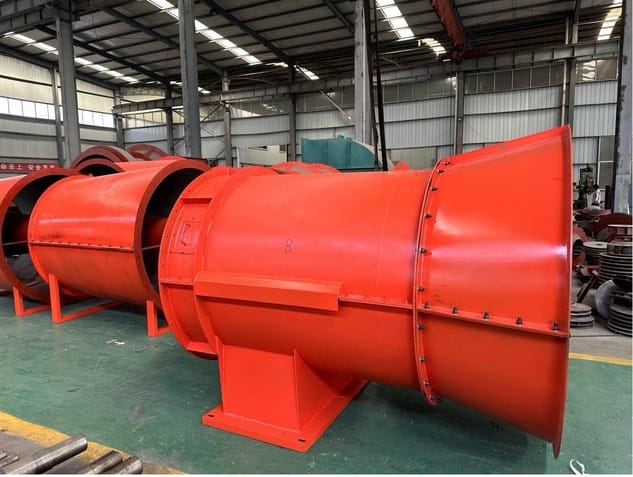
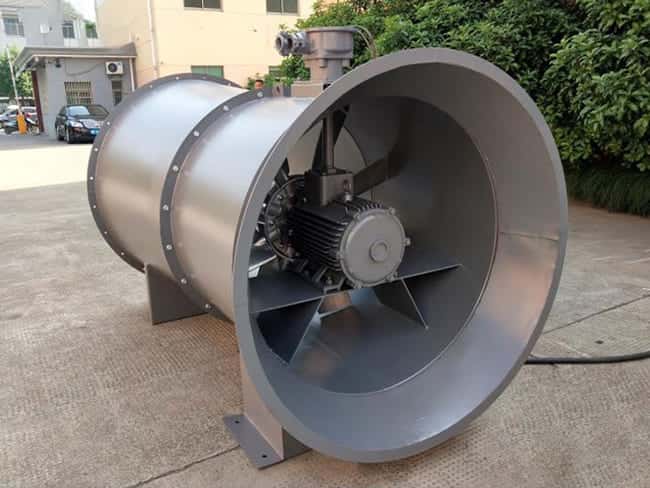
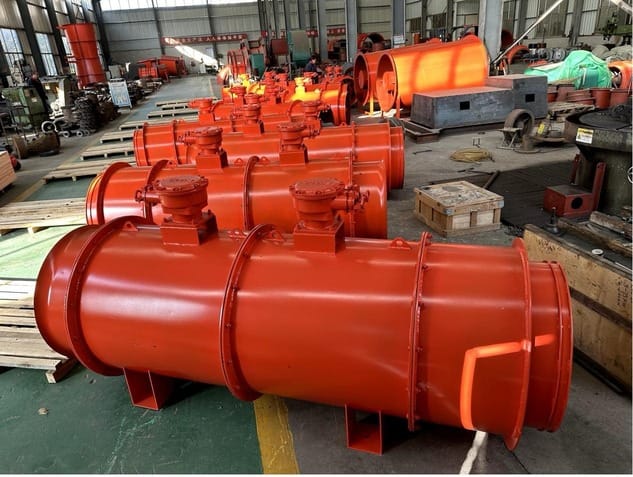
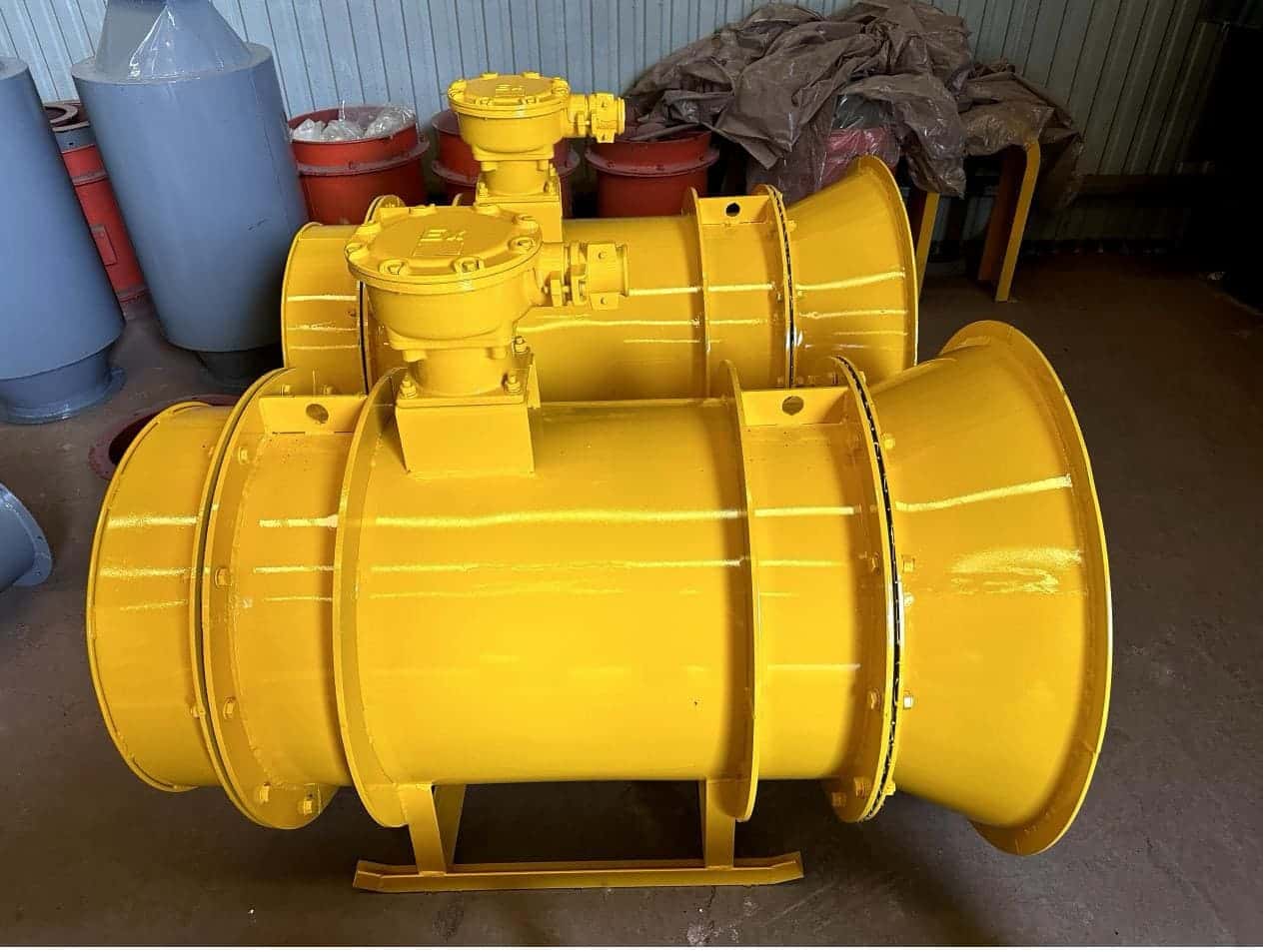
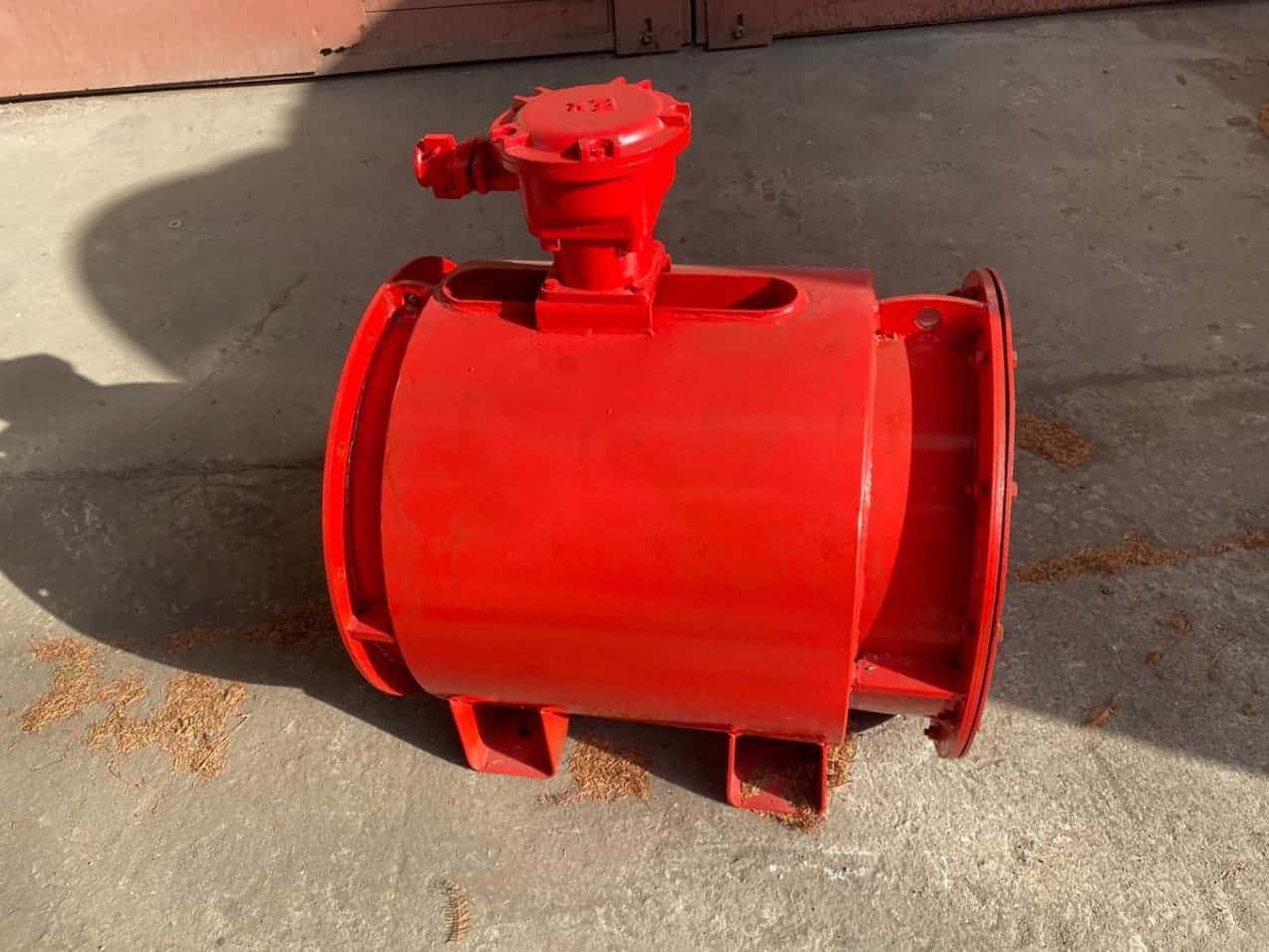
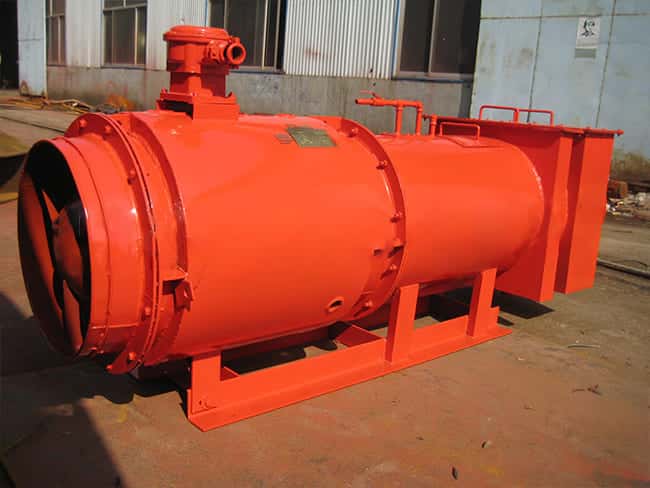
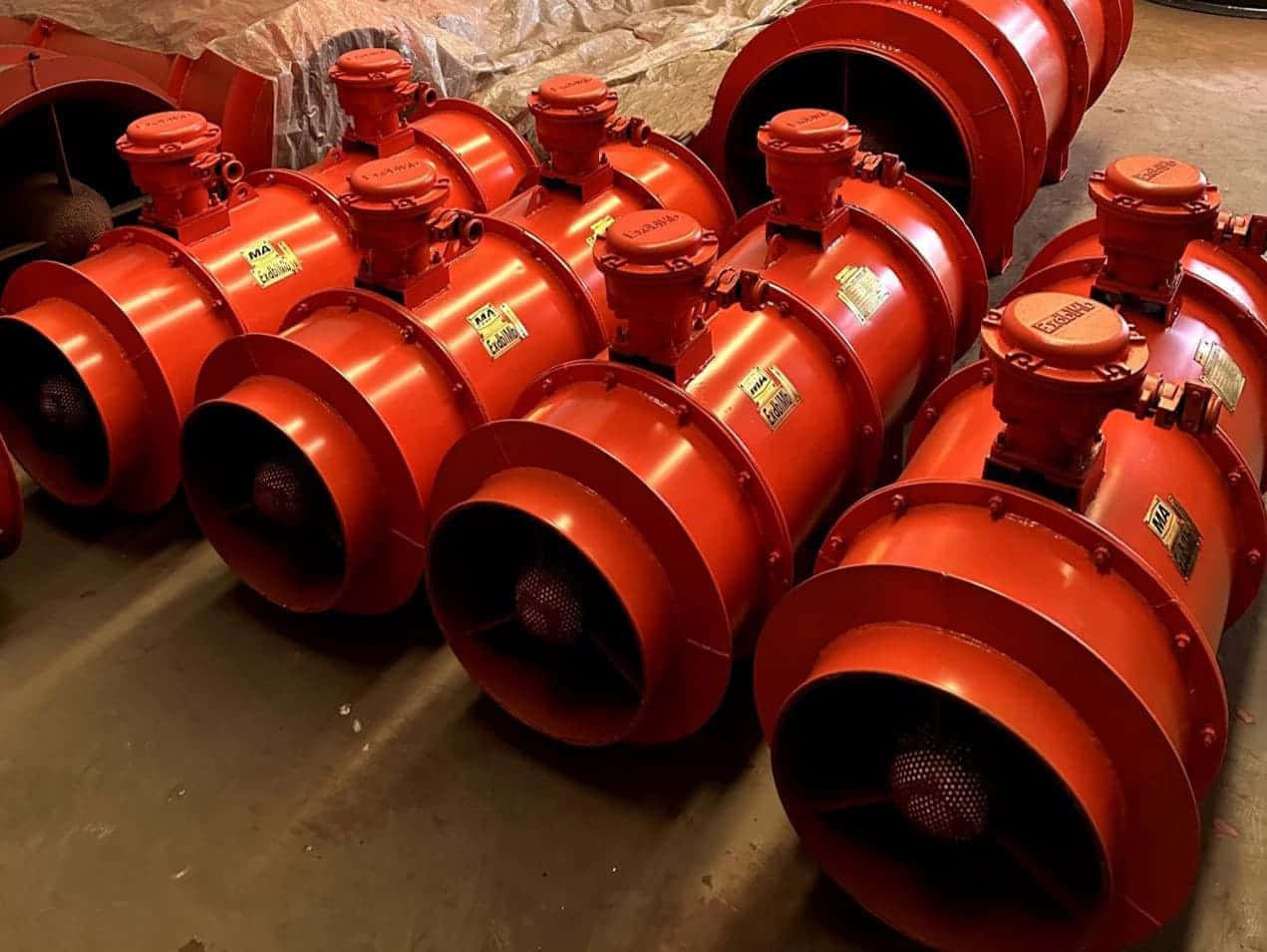
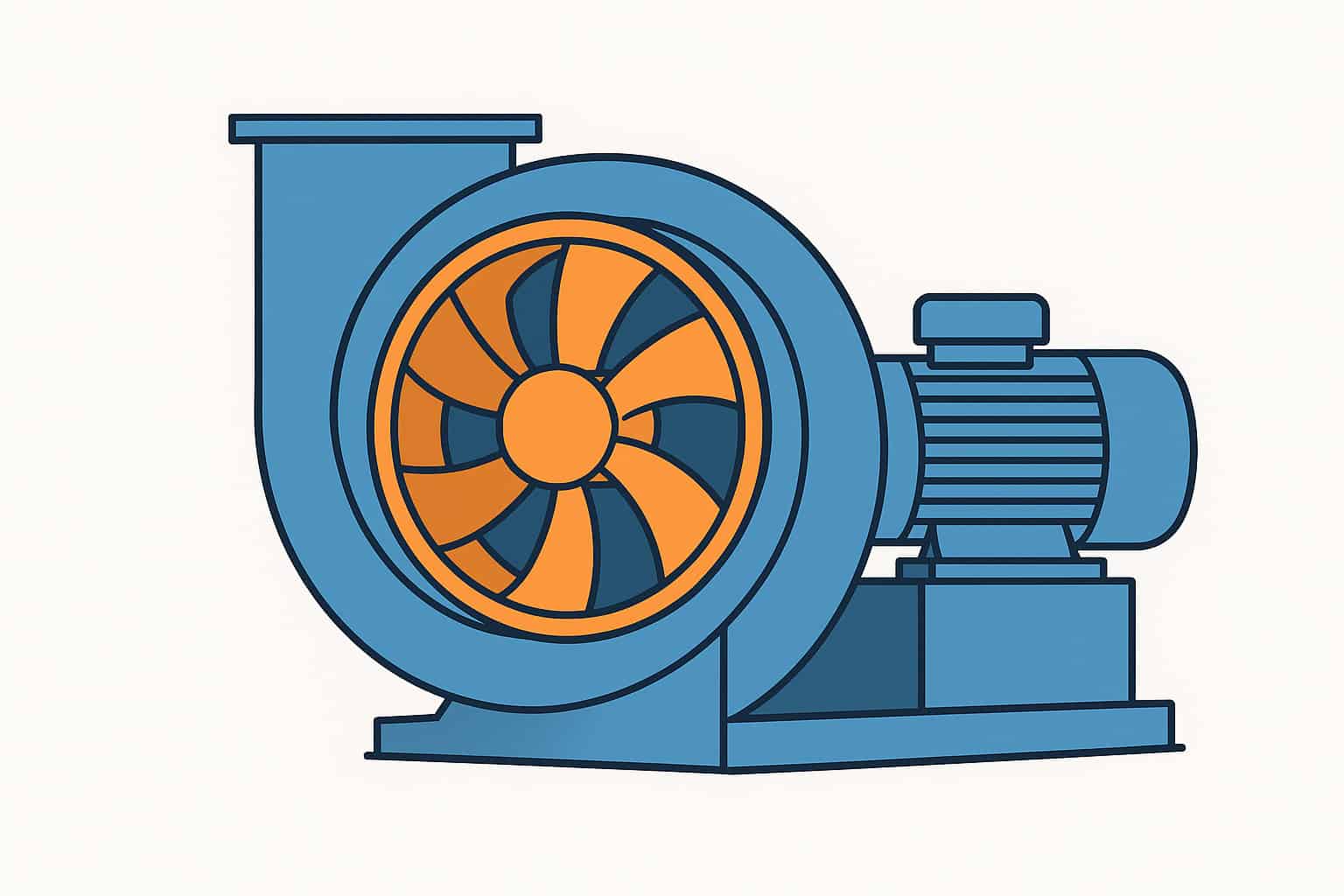
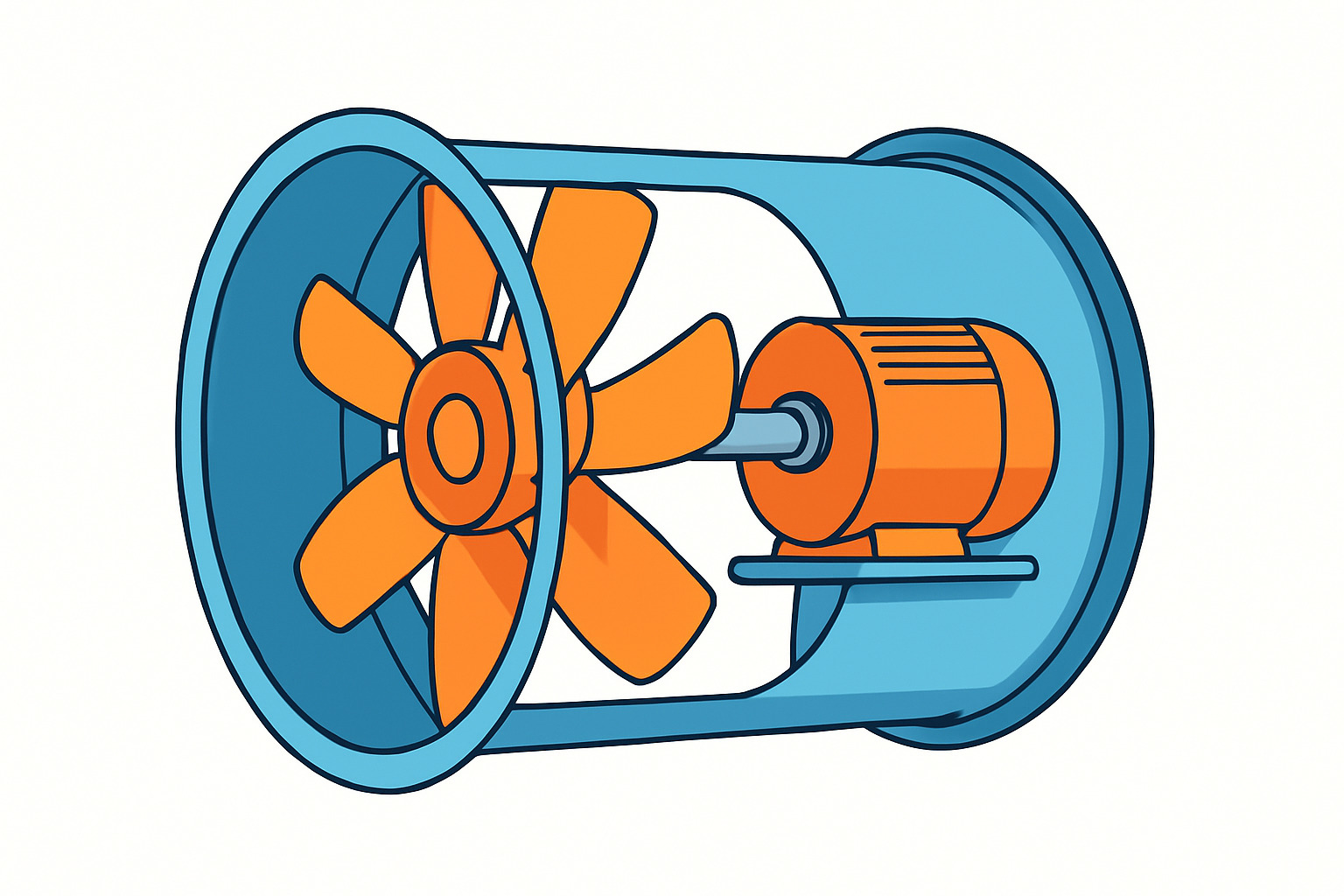
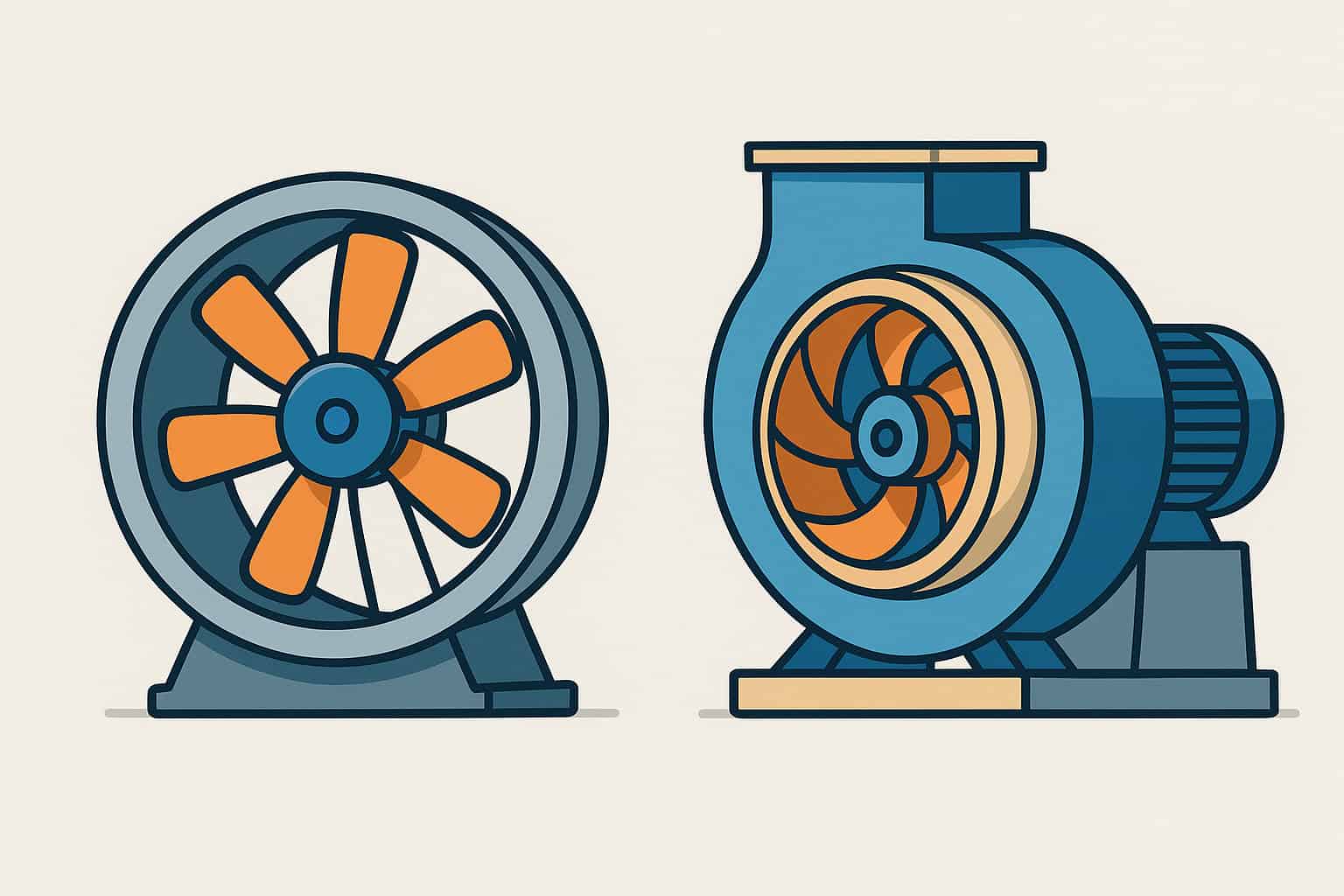
Knowing how to tell if an industrial fan motor is burned out, and why it happens, is essential for keeping ventilation systems reliable in factories and mines. A failed motor can shut down a critical exhaust or main ventilation fan, affecting safety and production. Diagnosis starts with obvious sensory checks and then moves to basic electrical measurements and mechanical inspection.
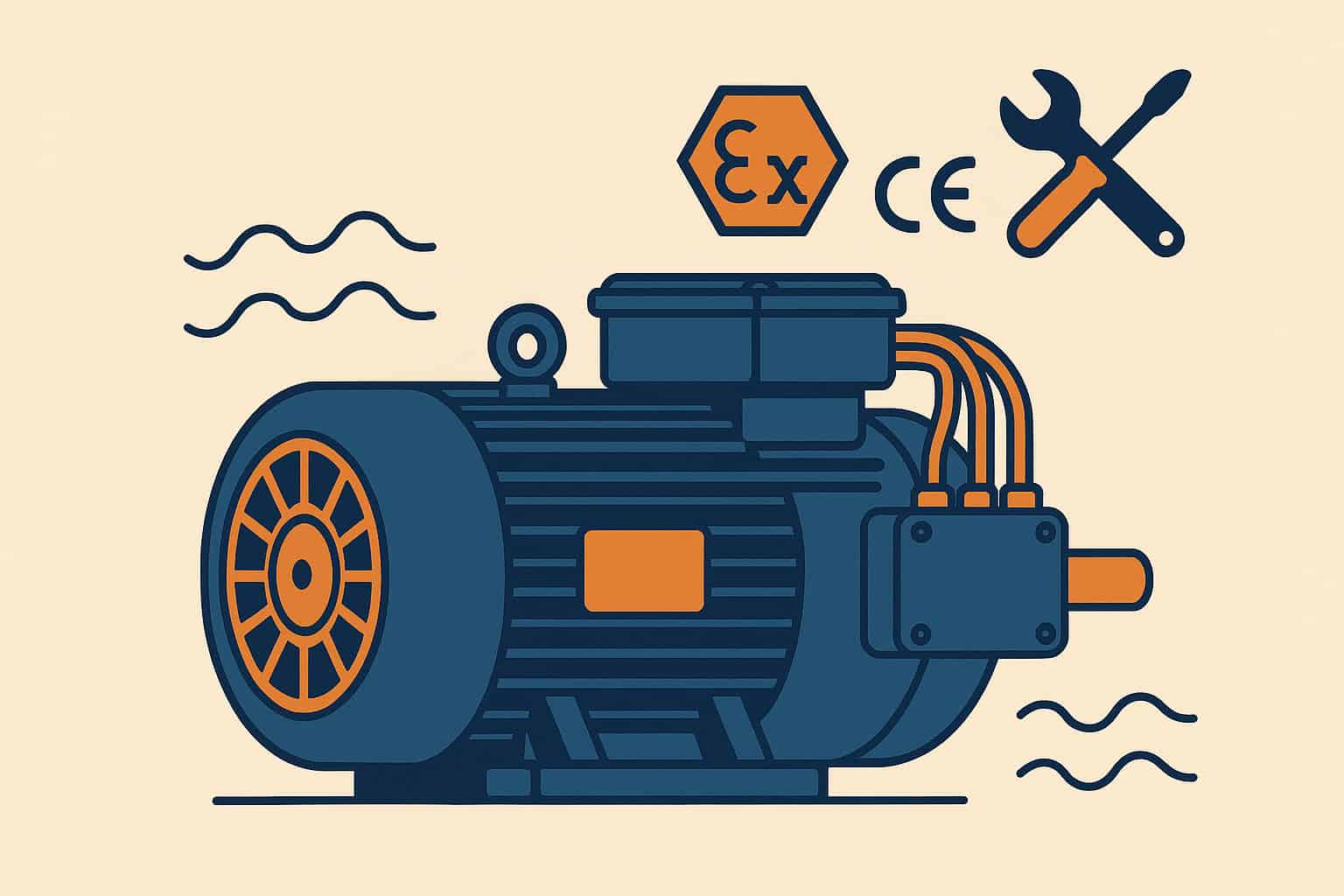
One of the most common signs of a burned-out motor is a strong burnt smell around the motor housing, sometimes with visible discolouration of the paint. If windings have overheated, the insulation may be charred, producing a distinctive odour. In severe cases, there may be smoke or evidence of melted insulation inside the terminal box. If the fan will not start, trips the breaker immediately, or hums without turning, the motor windings may be shorted or open.
Electrical tests help confirm the diagnosis. With the power safely isolated, technicians measure phase-to-phase resistance and insulation resistance to earth. On a healthy three-phase motor, winding resistances are similar between all phases. If one phase is significantly lower (shorted turns) or infinite (open circuit), the motor is likely burned out. Low insulation resistance (for example due to moisture or carbonised insulation) is another strong indicator that the motor is no longer safe to operate.
Mechanical symptoms can also point to motor damage. Very high vibration or grinding noise may mean that bearings have failed and allowed the rotor to rub the stator, overheating the windings. A motor that runs extremely hot to the touch, even at moderate load, may be close to burning out. Visual inspection under the terminal box cover can reveal darkened insulation, brittle leads or melted connectors.
Understanding why fan motors burn out helps prevent future failures. The main cause is overheating, which can result from overloading the fan, blocked ventilation openings, high ambient temperature, dirty cooling fins or restricted airflow over the motor. Poor power quality, such as undervoltage, phase imbalance or single-phasing, forces the motor to draw higher current and run hot. Frequent start–stop cycles, improper overload protection or incorrectly sized motors also contribute to premature burnout.
In mining and industrial ventilation, motors may be exposed to dust, moisture and corrosive gases. Dust build-up on the motor surface acts as insulation, trapping heat, while moisture can degrade insulation. Regular cleaning, proper sizing, correct overload settings and monitoring of temperature and vibration are the best ways to avoid burned-out fan motors and keep ventilation systems running safely.